
Science activities for the classroom
What science looks like at every grade from kindergarten to 8th, tied to the standards it answers to. Pick your grade for the investigation rebuilt there and every Mission that fits it.
Who we are. Mission.io makes Missions: teacher-led, whole-class simulations where students use what they’re learning to work through a real scenario together.
Building them took years of research and development, and these pages share what we learned, free. Take whatever helps. (In one Mission, the only clue to where RALF went is a fossil of RALF.)
On this page
What science activities are, K to 8
Science activities for the classroom are lessons where students do what scientists do: notice something, ask why, plan a test, collect the data, and argue for an explanation from the evidence. In K-8 classrooms they answer to NGSS, which pairs each grade’s content with eight science and engineering practices. A good one leaves every student answerable for a part of it.
This hub is a map: each grade’s line links to its page. Then five marks of a good science activity, four Missions to start with, and the method guides.
Find your grade: science from K to 8th
The eight practices hold for all nine years. The content they’re pointed at changes every year, and so does how much of the planning students can carry.
Kindergarten
Pushes and pulls, what plants and animals need to live, and how the sun and the weather change a place (K-PS2, K-PS3, K-LS1, K-ESS2, K-ESS3). All subjects: Kindergarten STEM activities.
Ramps, rebuilt · 14 Missions. Kindergarten science activities →
1st grade
Sound and light, how living things use their parts and resemble their parents, and the patterns of the sun, moon, and stars (1-PS4, 1-LS1, 1-LS3, 1-ESS1). All subjects: 1st grade STEM activities.
Rubber band guitar, rebuilt · 16 Missions. 1st grade science activities →
2nd grade
What materials are like and how heating and cooling change them, what plants need, habitats, and how wind and water reshape the land (2-PS1, 2-LS2, 2-LS4, 2-ESS1, 2-ESS2). All subjects: 2nd grade STEM activities.
Plants, light, and water, rebuilt · 16 Missions. 2nd grade science activities →
3rd grade
Balanced and unbalanced forces and magnets, life cycles and traits, fossils, and weather and climate (3-PS2, 3-LS1 to 3-LS4, 3-ESS2, 3-ESS3). All subjects: 3rd grade STEM activities.
Magnet strength, rebuilt · 16 Missions. 3rd grade science activities →
4th grade
Energy and waves, the structures plants and animals survive with, rock layers, erosion, and natural hazards (4-PS3, 4-PS4, 4-LS1, 4-ESS1 to 4-ESS3). All subjects: 4th grade STEM activities.
Build a circuit, rebuilt · 14 Missions. 4th grade science activities →
5th grade
Particles of matter, gravity, food webs, Earth’s spheres and its water, and the sun as a star (5-PS1, 5-PS2, 5-LS2, 5-ESS1 to 5-ESS3). All subjects: 5th grade STEM activities.
Mystery powders, rebuilt · 18 Missions. 5th grade science activities →
6th grade
The 6 to 8 band begins, ordered by your state; 6th grade Missions cover weather, states of matter, plate tectonics, and the solar system (MS-ESS1, MS-ESS2, MS-PS1). All subjects: 6th grade STEM activities.
Water cycle in a bag, rebuilt · 15 Missions. 6th grade science activities →
7th grade
Cells and photosynthesis, body systems, waves, and atoms (MS-LS1, MS-PS4, MS-PS1). All subjects: 7th grade STEM activities.
Naked egg, rebuilt · 14 Missions. 7th grade science activities →
8th grade
Atoms and molecules, forces and motion, and waves, before high school (MS-PS1, MS-PS2, MS-PS4). All subjects: 8th grade STEM activities.
Sealed-bag reaction, rebuilt · 13 Missions. 8th grade science activities →
Each count is every science and engineering design Mission at that grade, as its grade page lists them. A Mission built for a span of grades counts at every grade it fits, so the nine numbers overlap.
What makes a good science activity
- It starts from something the class can see. A shadow that creeps across the playground raises the question before any vocabulary does. NGSS calls it asking questions, practice 1.
- The students plan the test. What changes, what stays the same, and what gets measured, decided before anyone pours anything (planning and carrying out investigations, practice 3).
- The data decides. The class reads what the test showed before anyone says what it means (analyzing and interpreting data, practice 4).
- They model what they can’t see. A drawing or a build of the particles, the cell, or the water cycle that the class can argue over (developing and using models, practice 2).
- It ends in an argument from evidence. Each team defends an explanation and answers the team that disagrees with it (constructing explanations and engaging in argument from evidence, practices 6 and 7).
These five are science’s view of the six things every page here checks for. A kit that ends when the worksheet is filled in usually skips the first and the last.
Our part · We make Missions
Science Missions to start with
A Mission is a teacher-led, whole-class simulation: the class can become the crew, the crisis is built from the unit you just taught, and the only way through is using it together. Here are four for science. Start with the first one.
Communication first, then four for science
Communication Mission briefs by grade: K to 1, 2 to 3, 4 and up. One device per student, plus your projector. 5 minutes of prep, with the Teacher Preview.
- The Communication MissionRun this one first. It gives your class the training to run any Mission in the library.
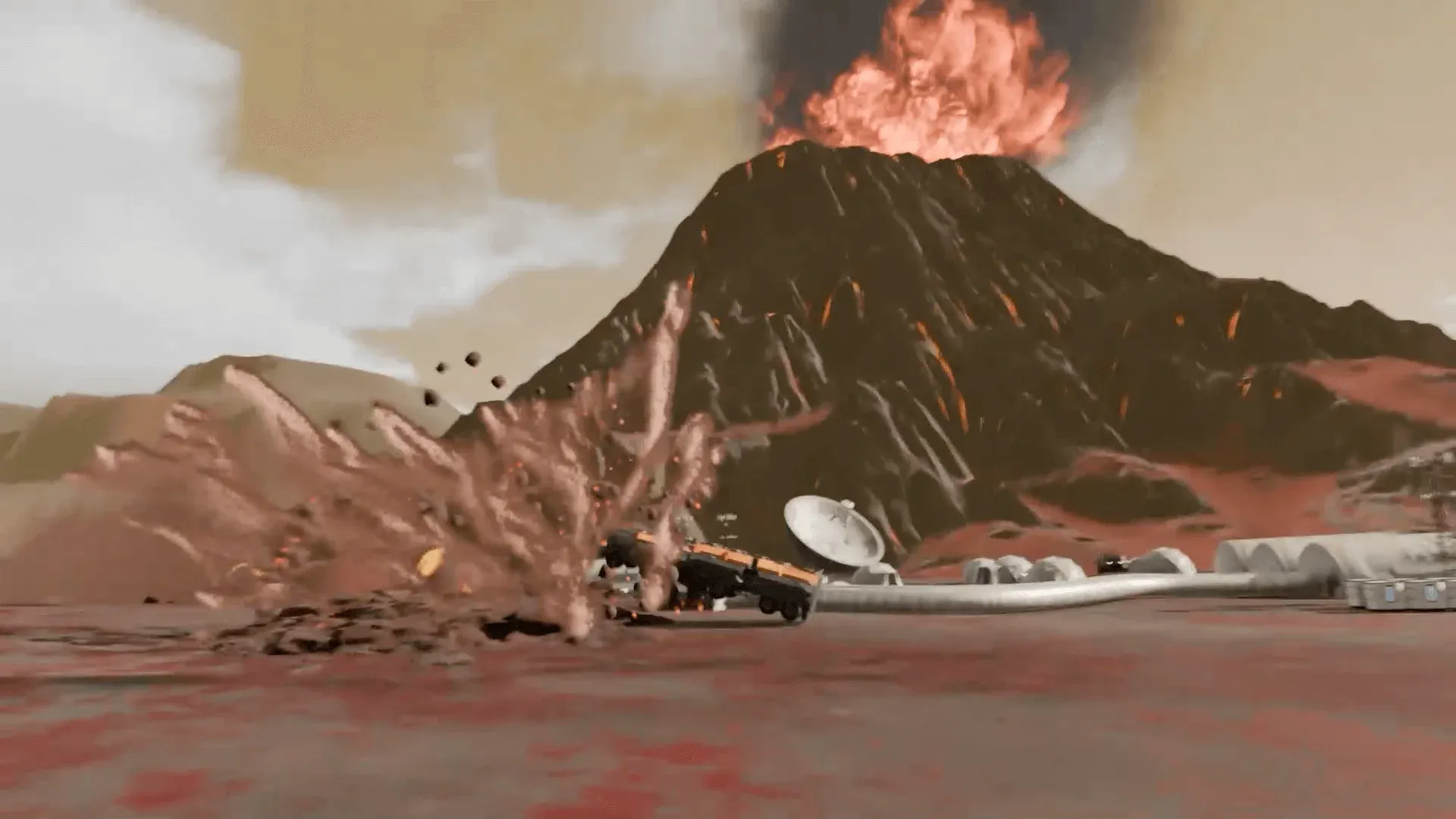
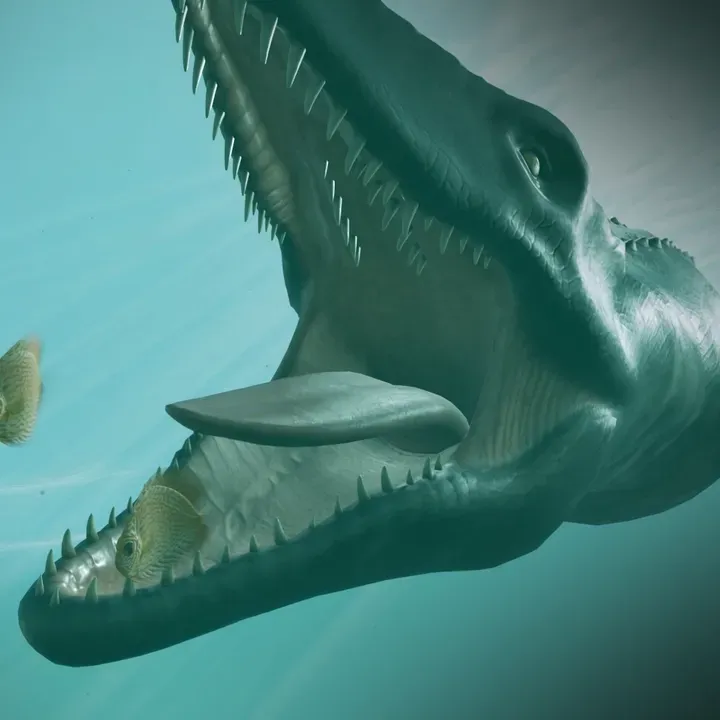
- Dark Side of the MoonDug has noticed Earth’s moon slowly disappearing. The class works out what’s really going on before anyone blames Moodoo (1-ESS1-1).
- Era of the UnknownAn experiment went wrong, and RALF is stuck in an unknown geological period. Teams read fossils and rock layers to find out which one (3-LS4-1, 4-ESS1-1).
- Hydro HeistThe Gal-Delilahs stole the ship’s water, and a debris field is closing in. Teams read where a passing planet keeps its fresh water and pick the spot to pull from (5-ESS2-2).
- The State of ThingsA new element, vitrolium, is too corrosive to contain as it is. Teams investigate how its particles respond to thermal energy and propose a safe way to handle it (MS-PS1-4).
Will it work in my room?
Students join with a class code on Chromebooks, laptops, or tablets, with no student accounts or passwords, and their data is covered by COPPA and FERPA and by the Student Privacy Pledge we signed.
Who's behind it
Mission.io is the research and design organization behind them: over a million students have run a Mission, the research is funded by the National Science Foundation and the U.S. Department of Education’s Institute of Education Sciences, and Mission.io meets ESSA Level II standards, as validated by Instructure.
START FREEFree teacher account, no card. Run the Communication Mission first, after its 5-minute Teacher Preview.
Methods, skills, and the curriculum guide
By teaching method
The named structures, with steps, and where whole-class Missions fit (and where they don’t). For your whole staff, run one with adults: the Faculty Mission.
By human skill
Every investigation is also a group-work problem. Each skill has its own hub, with a page for every grade, K to 8.
For science leaders choosing a curriculum
Eleven NGSS programs on one rubric, with EdReports by grade band, cost structure, and a verdict for each.
Start with your grade’s science page
Each one rebuilds an investigation teachers already run against its standard, with a printable to run it and every Mission at that grade.