7th grade science activities

The naked egg rebuilt so 7th graders model what a cell membrane does, five more investigations by NGSS standard, a free printable, and every 7th grade science Mission.

Who we are. Mission.io makes Missions: teacher-led, whole-class simulations where students use what they’re learning to work through a real scenario together.

Everything on this page works without us. Every 7th grade science Mission is at the end, by standard, free. (The one we’d run in 7th grade has a four-inch-tall villain wrecking photosynthesis across a whole planet. By comparison, the eggs are the calm part of the week.)

On this page

What 7th grade science looks like

Seventh grade science activities are investigations in which the class gathers evidence about something the standards name, has to argue from that evidence, and leaves each student answerable for a piece. NGSS writes middle school as one 6 to 8 band, and each state orders it its own way. Most sequences put life science in 7th, so this page does too, with an investigation and a Mission for each standard where one exists. The 7th grade STEM activities page carries the build challenges.

The year is the one where a cell stops being a diagram and starts being a working thing: cells and their parts (MS-LS1-1, MS-LS1-2), the body as systems of cells (MS-LS1-3), photosynthesis and food (MS-LS1-6, MS-LS1-7), ecosystems and resources (MS-LS2), inheritance and variation (MS-LS3), and natural selection (MS-LS4).

The activity that usually stands in for the cell is an egg in a cup of vinegar. Two days later the shell is gone, somebody holds the egg up to the window, and the class learns that eggs are strange. That’s a spectacle, and a spectacle is a fine two minutes. Science is what happens when the class has to weigh it, say which way the water moved, and prove it.

Six things that turn a demo into an investigation

Inquiry-based science teaching outperformed traditional instruction across 37 studies, and the surprise inside the finding is who leads it: teacher-led inquiry beat student-led by a clear margin (Furtak, Seidel, Iverson, and Briggs, 2012). Hands-on helped most when students also had to think and talk about what they saw (Minner, Levy, and Century, 2010). The uncomfortable part is where the band ends: on the 2024 national science test, 38% of 8th graders scored below Basic, up 5 points from 2019 (NAEP 2024). For a 7th grader that test is a year away, which is why the life science year can’t be spent watching.

  1. 1. A real problem with stakes the class can feel.

    “Watch the egg” is a show. “Tell the hospital what the wrong IV does to a cell” is a problem.

  2. 2. Apply, don't recall.

    A second round that only works with the data from the first. If the activity can be finished without the science, it isn’t a science activity.

  3. 3. Group goals with individual accountability.

    The one most science classics miss: one kid with the spoon, three kids watching the egg. When the group shared a goal and each student answered for a part, 84% of studies found a positive effect; without both, 17% (Slavin, 1991).

  4. 4. The teacher leads the thinking.

    The inquiry finding above settles it. Three questions at the cups beat a worksheet of twenty at the desk.

  5. 5. A debrief where the class argues it out.

    The investigation is the setup. The argument afterward is where the model gets tested: which way did the water move, and what’s the evidence?

  6. 6. A way to see who did what.

    If you can’t tell which student explained the mass change and which one copied the number, you can’t teach the practice. You can only hope for it.

An egg in a cup is a curiosity. An egg on a scale is evidence.

The sheet at the end of the next section has the eggs ready to run on the lab table: the role cards, the team’s mass table and cell model, the hospital report, and the tally. Get the sheet →

The naked egg, rebuilt for 7th grade (MS-LS1-2)

A raw egg soaks in vinegar for two days until the shell dissolves, then moves to water, then to corn syrup, and swells and shrinks as water crosses its membrane. It’s on 7th grade science lists, and it’s on 2nd grade lists too, which is why 7th grade has to do more with it. Usually it runs with one egg, one kid holding it, and everyone else watching. Here’s the version that weighs every change and hits all six.

Time
Four short sessions across a week: 10 minutes to set up, three 10-minute weigh-and-move sessions, and a 25-minute debrief. On a 45-minute period, run the debrief on the final day with the last weigh.
Groups
Fours. With 29 students, six groups of four and one of five, where the fifth student is a second Modeler who checks the arrows.
Supplies for eight teams
10 raw eggs (two spares; shells crack), 2 liters of white vinegar, a bottle of corn syrup, 24 plastic cups, 8 spoons, and a scale per two teams (kitchen scales, about $12 each if the room has none). About $15 beyond the scales.
Standards
MS-LS1-2 (use a model to describe how parts of a cell contribute to its function). The egg is a model of the membrane’s job, and the sheet calls it a model.
  1. Teach first, 10 minutes, on day oneApply

    Drop a tea bag in water and ask what passes through and what doesn’t. Name the idea: a membrane lets some things through and not others, and water moves toward where there’s less water and more dissolved stuff. Name the model: the shell-less egg is a membrane bag, and the yolk and white stand in for the inside of a cell.

  2. The problemStakes

    A hospital needs to know what happens to a patient’s cells if the IV fluid is mixed wrong, too salty or too dilute. The team’s egg is the patient’s cell, and the team owes the hospital a one-page report with numbers: what a cell does in pure water and in syrup, and which way water moves in each. Say the stakes out loud: a wrong IV is a real harm, and the class gets to see it on an egg instead.

  3. Four roles, one job eachAccountability

    On the sheet, and everyone signs their role’s box. Egg Handler and Weigher swap at round two.

    • Egg Handler

      The only hands on the egg; moves it between cups with a spoon.

    • Weigher

      Zeros the scale and reads every mass aloud to a tenth of a gram.

    • Modeler

      Keeps the cell diagram current, with arrows for which way water moves.

    • Recorder

      Keeps the mass table and works out the percent change.

  4. You lead the thinkingTeacher leads

    Three questions, asked at the cups: Which way is water moving right now, and what’s your evidence? What is the membrane letting through, and what is it stopping? What happens to the patient’s cell in each fluid? The hardest part is not saying “osmosis” for them. Let them get there.

  5. Two rounds, so the numbers have to be usedApply

    Round one is the vinegar soak, two days, and the first weigh. Round two is a day in water (weigh), then a day in syrup (weigh). Round two only means something against round one’s mass, so a team that skipped a weigh finds out when the percent change won’t work.

  6. The debrief, on the last dayDebrief

    Every team’s percent changes on the board. In which fluid did the egg gain, in which did it lose, and by how much across the room? Where in the egg model is the membrane, and what part of a real cell does it stand for? Which IV mistake is more dangerous for the cell, too salty or too dilute, and what’s your evidence? Who on your team caught a weighing error?

  7. See who did whatSee who did what

    The observation sheet, four behaviors per student: explained a mass change in membrane words, measured accurately, disagreed with a reason, changed their mind when the data said to. Any one session catches about a third of the room; across the week, the tally catches most of it. The roles keep the other tables weighing while you watch one.

(Somebody will drop an egg on day one. That’s what the two spares are for.)

These are raw eggs, so hands get washed after every weigh, and nothing from the cups gets tasted.

The naked egg, free

Emailed now, ready to copy: the teacher page, four role cards (Egg Handler, Weigher, Modeler, Recorder), the team’s mass table from start to syrup with the percent change, the cell model box with arrows for each stage, the hospital report frame, a key to what to expect, and the four-behavior tally.

It’s on its way.

Check your inbox for the naked egg.

Email me the sheet. It comes as a PDF, ready to print. Unsubscribe anytime.

Five more 7th grade investigations, by standard

Five more from 7th grade lists: what each one is, how it usually runs, and the fix, in the order the standards run.

Cells, ecosystems, heredity, and evolution

2. Elodea bubbles under light (MS-LS1-6)

Needs a sprig of elodea in water, a lamp, a timer. Teams of three: a Counter, a Timer, and a Lamp Lead.

A sprig of elodea sits in water under a lamp, and the class counts the oxygen bubbles it gives off with the lamp close and then farther away. It puts photosynthesis where seventh graders can count it. As usually run, though, it’s a demo at the front, and the numbers can’t be traced to any student.

The fix

  1. Give every setup a Counter, a Timer, and a Lamp Lead.
  2. The Lamp Lead sets each distance, the Timer runs the same length of time at both, and the Counter counts the bubbles.
  3. Each team posts its counts with the Counter’s name on them, and the class explains the difference from the posted counts.

Chloroplast Chaos, in the tables below, is the Mission on this standard.
3. Yeast and sugar balloons (MS-LS1-7)

Needs yeast, warm water, sugar, a bottle, a balloon, a measuring tape. Teams, one sugar each, with a Measurer.

Yeast, warm water, and sugar go in a bottle with a balloon stretched over the top, and as the yeast break down the sugar they give off carbon dioxide that fills the balloon. It shows seventh graders food being rearranged into new molecules and energy, which is the standard. As usually run, though, it’s a demo of “it’s alive,” with the balloon growing and nobody measuring it.

The fix

  1. Give each team a different sugar to test, with the same yeast and warm water in every bottle.
  2. A Measurer wraps the tape around the balloon every five minutes and calls the number out for the log.
  3. Each team makes its claim about food and energy from the log.

No Mission on this standard, so this one carries it.

4. Owl pellet dissection (MS-LS2-2)

Needs an owl pellet per team. Teams of three: a Sorter, an Identifier, and a Recorder.

Each student pulls apart an owl pellet, sorts the tiny bones, and works out what the owl ate. The evidence is real, and the teacher usually leads it well. As usually run, though, it’s a solo lab, so the findings never meet and nobody builds the food web the bones point to.

The fix

  1. Put a team of three at every pellet: a Sorter who pulls the bones apart, an Identifier who matches them to the bone chart, and a Recorder.
  2. The Recorder logs each animal the pellet held.
  3. End with one class food-web chart, built from what every team found.

Ecosystem Patterns, in the tables below, is the Mission on this standard.
5. Jelly bean genetics (MS-LS3-2)

Needs jelly beans, a bag.

Students draw jelly beans from a bag to stand for alleles, one from each parent, and build the traits of an offspring. It asks seventh graders to use a model of why offspring vary, which is what the standard is after. As usually run, though, it’s a worksheet with candy: nothing rides on the result, and nobody can see what any one student worked out.

The fix

  1. Give it a question the class cares about: why do siblings with the same two parents look different?
  2. Each student draws and records their own offspring on their own card.
  3. Line the cards up and ask how the same two parents produced so many different kids.

No Mission on this standard.

6. Bird beak natural selection (MS-LS4-4)

Needs tweezers, spoons, and clips as beaks; beans as food. Teams, with a Recorder.

Students use tweezers, spoons, and clips as beaks and race to pick up beans as food, and the class finds out which beak eats best. The stakes are built in, since a bird whose beak can’t get food doesn’t make it. As usually run, though, it’s a frantic grab: the counts are loose, and nobody can say which beak, or which student, did what.

The fix

  1. Rotate the beaks between rounds, so every student tries more than one and a fast pair of hands can’t skew one beak’s numbers.
  2. A Recorder logs every student’s count, every round.
  3. Argue which trait survives from the log.

No Mission on this standard; the Recorder’s log is the evidence.

  • Our part · We make Missions

    Then the unit has somewhere to go

    Plenty of teachers rebuild these by hand every unit, and it works. A Mission is a teacher-led, whole-class simulation on a middle school standard: your class becomes the crew, the scenario is built from a unit you teach, and the only way through is using it together. The egg belongs to the cells unit, and Chloroplast Chaos belongs to the photosynthesis unit (MS-LS1-6). No Mission is built on the egg’s own standard, MS-LS1-2. The nearest is System Shutdown, on cells, tissues, and organs, in the life science table below.

    You're at the helm, not on the hook.

    Chloroplast Chaos: the Mission we'd run in 7th grade

    Chloroplast Chaos · Grades 7 and 8 · About 31 minutes · One device per student, plus your projector · Free with a teacher account

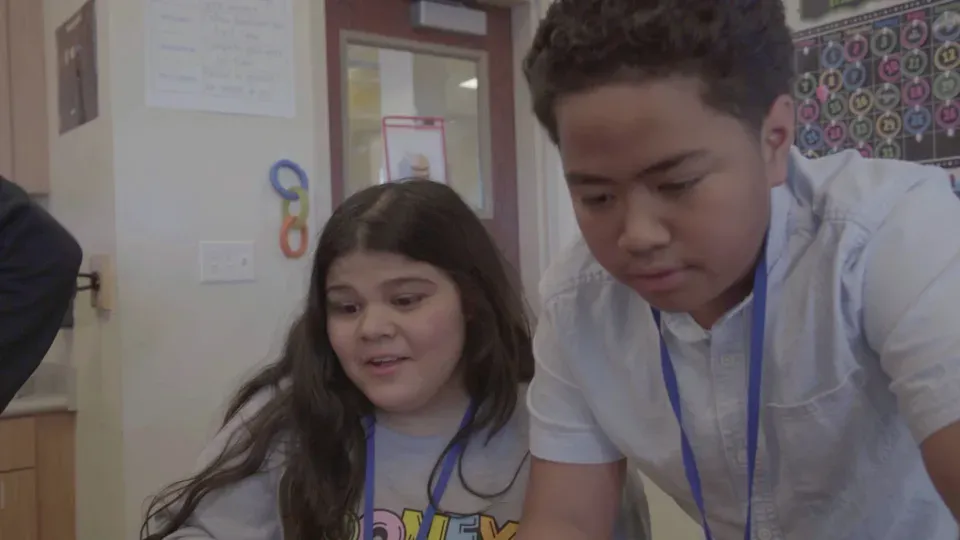
    A girl and a boy in blue lanyards bend toward the same screen, her mouth open on a word while he keeps reading.
    Two students in blue lanyards lean toward the same screen, one talking while the other reads.

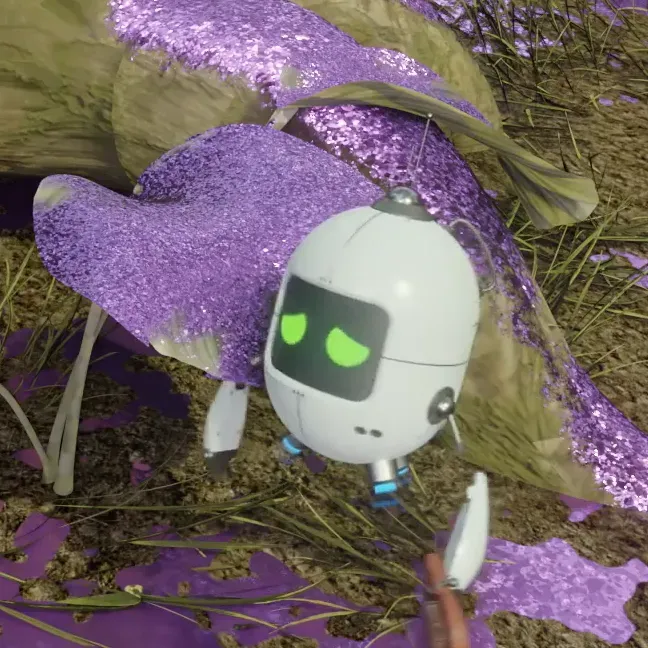
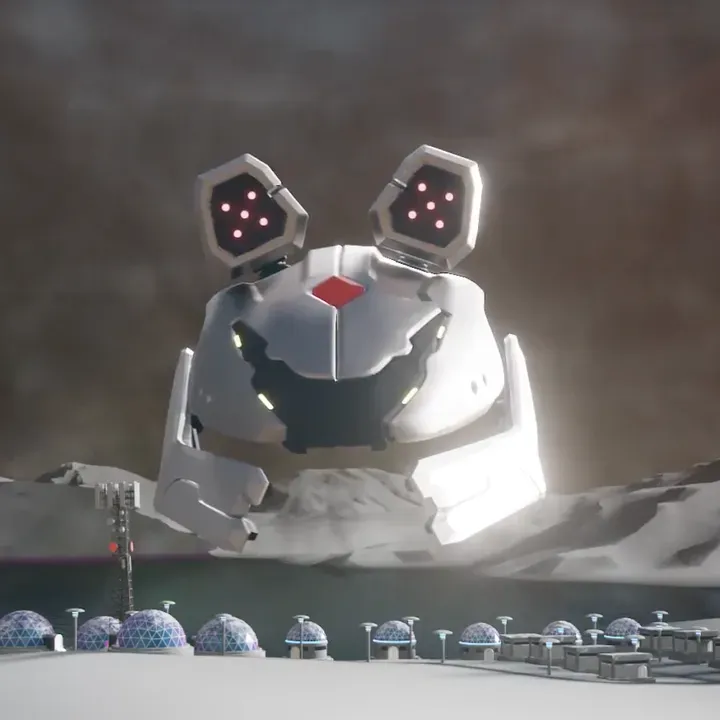
    Moodoo, the four-inch-tall leader of the Fofa Alliance, is wrecking the planet Tellenor several ways at once, and the plants are dying. Nobody knows exactly why. The crew has to investigate and analyze data to work out which of his plans is breaking photosynthesis, then deal with the threat and restore balance before it’s too late. The story plays on the projector. The work happens at seven stations (Command, Engineering, Medical, Security, Science, I.T., Operations) and in the arguments between them.

    Every student is assigned to a team, and each team’s work is themed to it, from its own information and challenge to the same problem the rest of the crew is solving. The team gives a student a role in the story and people to lean on while you move between teams. You’re at the helm, asking what a plant needs to make food and which plot takes it away.

    It’s built to MS-LS1-6, the role of photosynthesis in moving matter and energy into and out of organisms. It asks that students already know plant cells, chloroplasts included, and the basics of photosynthesis, so it fits the end of that unit. Tell the class it’s coming the day the unit starts: they’re going to need what a chloroplast does when the plants on Tellenor start dying. The lesson prepares them. The Mission is what they’re preparing for.

    “What I love most is that it’s low-prep but high-impact.”

    Ginger Marsh, Middle school teacher, Cedar Middle School

    Will it work in my room?

    Students join with a class code: no student accounts, no student email, no passwords. Chromebooks, laptops, or tablets, plus your projector. Free for teachers, no credit card. Student data is covered by COPPA and FERPA, and we signed the Student Privacy Pledge. Teach five sections of the same course? Run the Mission with each one, and every student still gets a report. On a shared cart it’s the day you have the cart, and that’s fine, as long as the class knows from the start of the unit where it’s headed. At about 31 minutes, Chloroplast Chaos fits inside a 45-minute period with about 14 minutes left to talk.

    START FREE →

    Communication first, then plants, then cells

    What the report shows

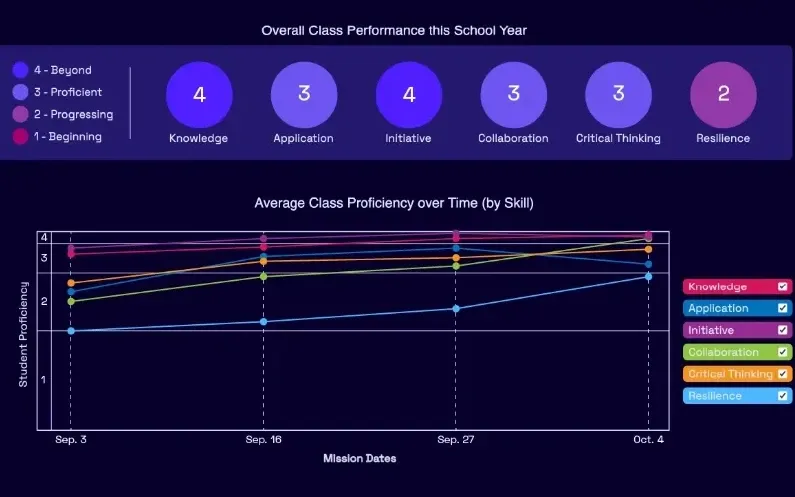
    A Mission.io class report: the class score in each of six skills, from knowledge and application to collaboration, critical thinking, and resilience, with the class chart across the year below.
    A class report from a real Mission: the class score in each of six skills, then each skill across the year.

    Every Mission produces a report for every student, built from what that student did across the whole Mission, on the skills the Mission captured. The six it can capture are Knowledge, Application, Initiative, Collaboration, Critical Thinking, and Resilience. The first two are what a test already sees. The other four are the human skills every school promises. The test shows what they know. The report shows the rest. SEE THE EVIDENCE →

    You taught it. Now find out who can use it.

    Who's behind it

    Mission.io is a research and design organization with one job: make collaborative, active learning something a teacher can run every unit instead of once a semester, and put a report in your hands when it’s over. Over a million students have run a Mission. The research behind them is funded by the National Science Foundation and the U.S. Department of Education’s Institute of Education Sciences, and Mission.io meets ESSA Level II standards, as validated by Instructure.

    7th grade science Missions by NGSS standard

    Chloroplast Chaos is one. There are 14 science and engineering Missions at 7th grade, numbered 7 to 20 below, and each one is where a unit can end: photosynthesis ends at Chloroplast Chaos, body systems end at System Shutdown, waves end at Cold Dark Planet. Every lesson finally has somewhere to go. The 6 to 8 standards are one band that each state orders its own way, so the tables group every Mission we run at 7th grade by the band’s codes, whatever year your state teaches them. Each code links to its standard on nextgenscience.org.

    Physical science (MS-PS1, MS-PS2, MS-PS4)

    Four, for the states that teach some physical science in 7th. Cold Dark Planet is one of two Missions on this page made for grades 7 and 8 alone.

    Physical science Missions at 7th grade, by NGSS code.
    NumberThe standardMissionMinutes
    7MS-PS1-1 How atoms join into simple molecules, used to turn toxic air into something safe (grades 6 to 8)Escape Route34
    8MS-PS1-4 What adding or removing thermal energy does to particles, temperature, and state (grades 6 to 8)The State of Things40
    9MS-PS2-2 Balanced and unbalanced forces, mass, and how an object’s motion changes (grades 5 to 8)Laser Labyrinth32
    10MS-PS4-1, MS-PS4-2 How a wave’s amplitude sets its energy, and what different materials do to light (grades 7 and 8)Cold Dark Planet34

    Life science (MS-LS1 to MS-LS4)

    The year’s home table if your state puts life science in 7th, and the other Mission made for grades 7 and 8 alone is here. Four standards here have no Mission, and an investigation on this page teaches each one.

    Life science Missions at 7th grade, by NGSS code, with the four standards that have no Mission.
    NumberThe standardMissionMinutes
    11MS-LS1-3 The body as systems of cells, tissues, and organs (grades 5 to 8)System Shutdown34
    12MS-LS1-6 Photosynthesis and how matter and energy move into and out of organisms (grades 7 and 8). On this page: 2. Elodea bubbles.Chloroplast Chaos31
    13MS-LS2-2 Patterns in how organisms interact across ecosystems (grades 3 and 6 to 8). On this page: 4. Owl pellets.Ecosystem Patterns39
    MS-LS1-2 How the parts of a cell, the membrane among them, work for the cell as a whole. On this page: 1. The naked egg.No Mission
    MS-LS1-7 How food is rearranged in an organism to release energy and build new molecules. On this page: 3. Yeast and sugar balloons.No Mission
    MS-LS3-2 Why offspring of sexual reproduction vary in what they inherit. On this page: 5. Jelly bean genetics.No Mission
    MS-LS4-4 How variations in traits help some individuals survive and reproduce. On this page: 6. Bird beak natural selection.No Mission

    Earth and space (MS-ESS1, MS-ESS2)

    Three, and Storm Front at 16 minutes is the shortest Mission on the page.

    Earth and space Missions at 7th grade, by NGSS code.
    NumberThe standardMissionMinutes
    14MS-ESS1-3 Scale properties of objects in the solar system, read from data (grades 6 to 8)Encrypted Escape30
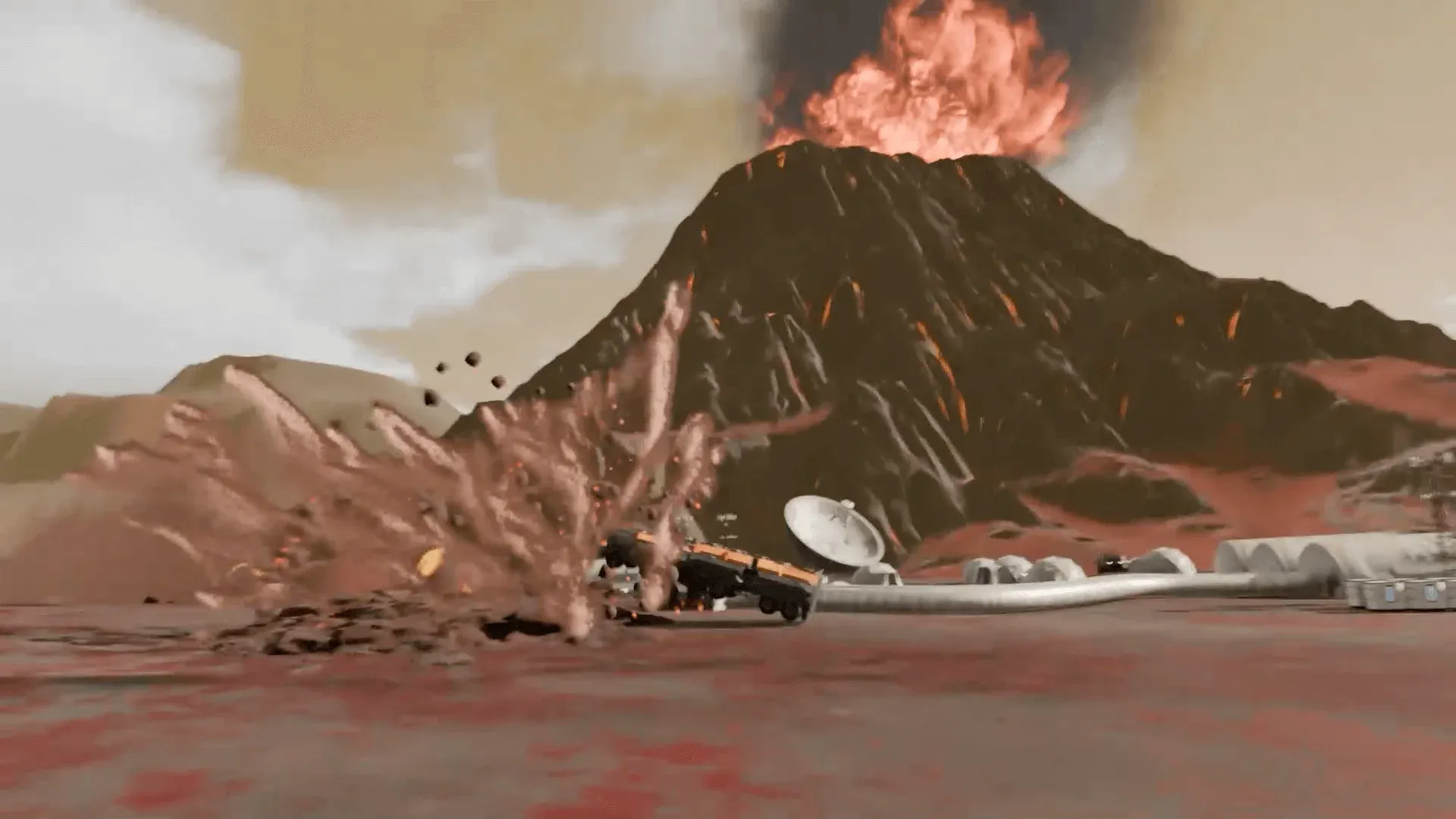
    15MS-ESS2-2 How geoscience processes change Earth’s surface (grades 5 to 8)Mount Katastrofi24
    16MS-ESS2-5 Evidence from weather data that colliding air masses change the weather (grades 6 to 8)Storm Front16

    Engineering design (MS-ETS1)

    Three on the band’s engineering design standards. Spine-Backed Globster carries three of the band’s four engineering codes in one story, plus two ecosystem codes. The 7th grade engineering activities page maps these standards with the design challenges that teach them.

    Engineering Missions at 7th grade, by NGSS code.
    NumberThe standardMissionMinutes
    17MS-ETS1-1, MS-ETS1-2, MS-ETS1-3, MS-LS2-4, MS-LS2-5 Define, compare, and combine design solutions to protect a reef’s biodiversity (grades 6 to 12)Spine-Backed Globster36
    18MS-ETS1-2 Evaluate competing solutions, with the area of a polygon as the tool (grades 6 to 9)Infection34
    19MS-ETS1-3, MS-ETS1-2, 3-5-ETS1-1, 3-5-ETS1-2 Define the problem and compare solutions for three islands in a tsunami’s path (the grades 5 to 8 build)Tsunami33

    Also at 7th grade, on a 5th grade standard

    One more that runs at 7th grade on another grade’s code, and it’s 25 minutes.

    The science Mission that runs at 7th grade on a 5th grade standard.
    NumberThe standardMissionMinutes
    205-PS2-1 Earth’s gravity pulls objects down (grades 5 and 7)Defying Gravity25
    START FREEMISSION BRIEF →

    Free teacher account, no card. Start with the Communication Mission, marked Start here in your library, then the Mission for your unit, each after its 5-minute Teacher Preview.

    Also at this grade

    The 7th grade STEM activities page lists the math, technology, and career Missions; the 7th grade engineering activities page rebuilds a build of its own; and the Collaboration and Critical Thinking Missions live on the 7th grade collaboration activities and 7th grade critical thinking activities pages.

Questions 7th grade science teachers ask

I have a 45-minute period. Which of these fit?

The egg fits any period: its hands-on sessions are 10 minutes each, and on a 45-minute period the debrief runs on the last day with the final weigh. Most Missions fit one period with time left to talk, and three on this page run 25 minutes or less: Storm Front (16 minutes), Mount Katastrofi (24), and Defying Gravity (25).

Which NGSS standards do these 7th grade activities map to?

NGSS sets middle school as one 6 to 8 band, and each state decides what lands in 7th. This page follows the common order, life science in 7th: the egg is MS-LS1-2, and the five run MS-LS1-6, MS-LS1-7, MS-LS2-2, MS-LS3-2, and MS-LS4-4; MS-LS1-2, MS-LS1-7, MS-LS3-2, and MS-LS4-4 have no Mission. The tables map every 7th grade Mission across physical science (MS-PS1, MS-PS2, MS-PS4), life science (MS-LS1, MS-LS2), Earth and space (MS-ESS1, MS-ESS2), and engineering (MS-ETS1).

My students did the naked egg in 2nd grade. Why run it again?

Because in 2nd grade they watched it, and in 7th they weigh it. The rebuild turns the same egg into a model with numbers: a mass at every stage, a percent change, arrows for which way the water moved, and a report the hospital could act on. A student who remembers the egg from 2nd grade starts the week ahead.

Is the naked egg really a model of a cell?

It’s a model of one part’s job, the membrane, and the sheet calls it a model and stops there. The yolk and white stand in for the inside of a cell; what the class measures is water crossing the membrane toward the side with more dissolved stuff. MS-LS1-2 asks students to use a model to explain how a cell part contributes to the cell’s function, and that’s the whole claim the egg has to carry.

How do I grade the egg lab fairly when the eggs don't all behave?

Grade the explanation and the behaviors. The hospital report is one grade: which way water moved in each fluid, with the mass change as evidence. The four-behavior tally across the week is the other. A cracked egg or a drifting scale is data the debrief can use: which team caught it, and how did they know?