























FOR SCHOOLS & DISTRICTS

Same teachers.
Same curriculum.
More impact.

You’ve already invested in your teachers and your curriculum. Missions help both pay off in every classroom.

Your portrait of a graduate, measured.

Everyone promises human skills: collaboration, critical thinking, initiative, and resilience. In a Mission, the class uses them to solve a real problem together, and every student gets a report on how well they did.

The skills a school promises its graduates, practiced in a Mission, and measured on every student’s report.

Promised

Your portrait of a graduate

  1. Takes initiative
  2. Collaborates with anyone
  3. Thinks critically
  4. Keeps going when it gets hard

Practiced

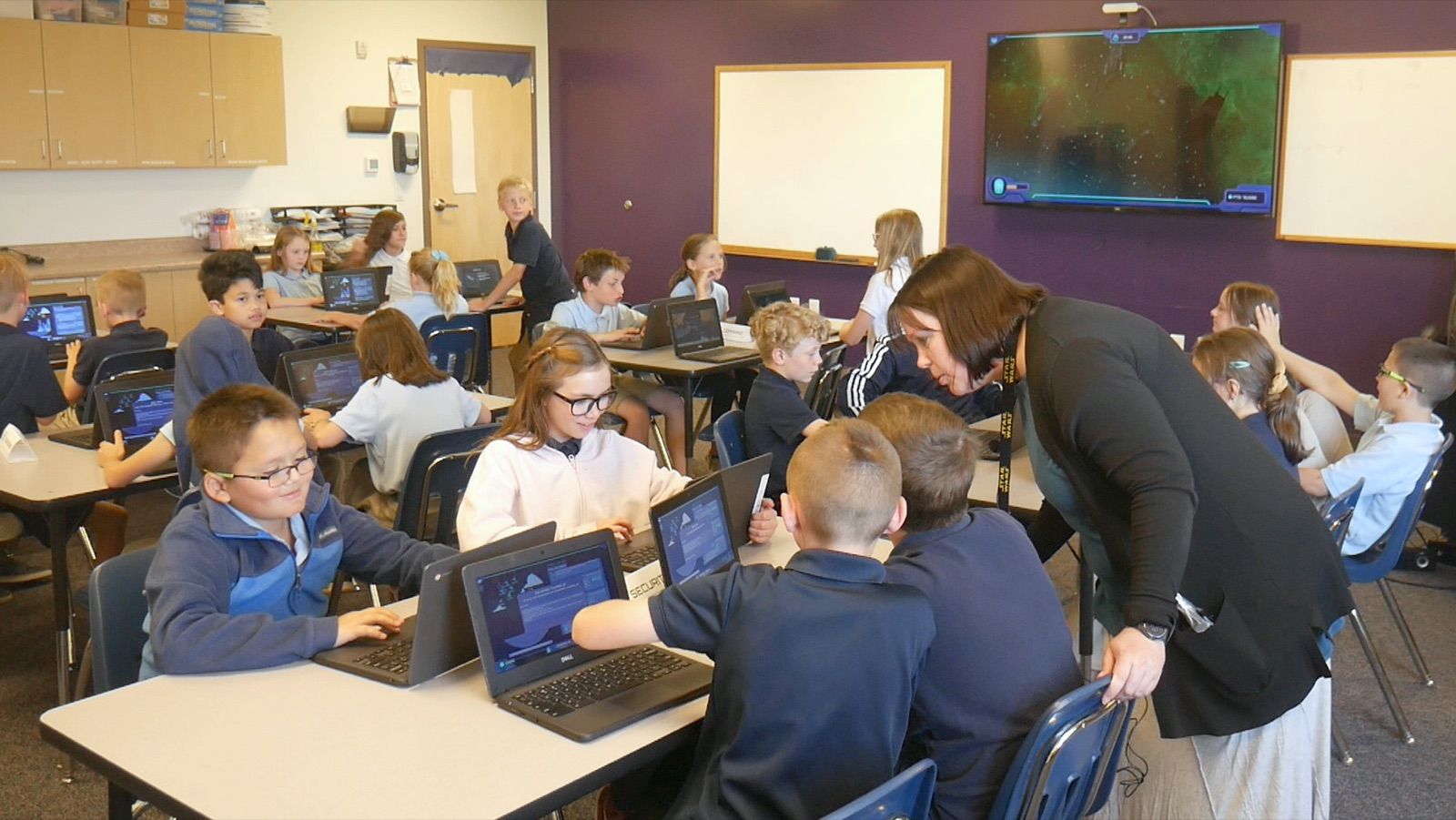
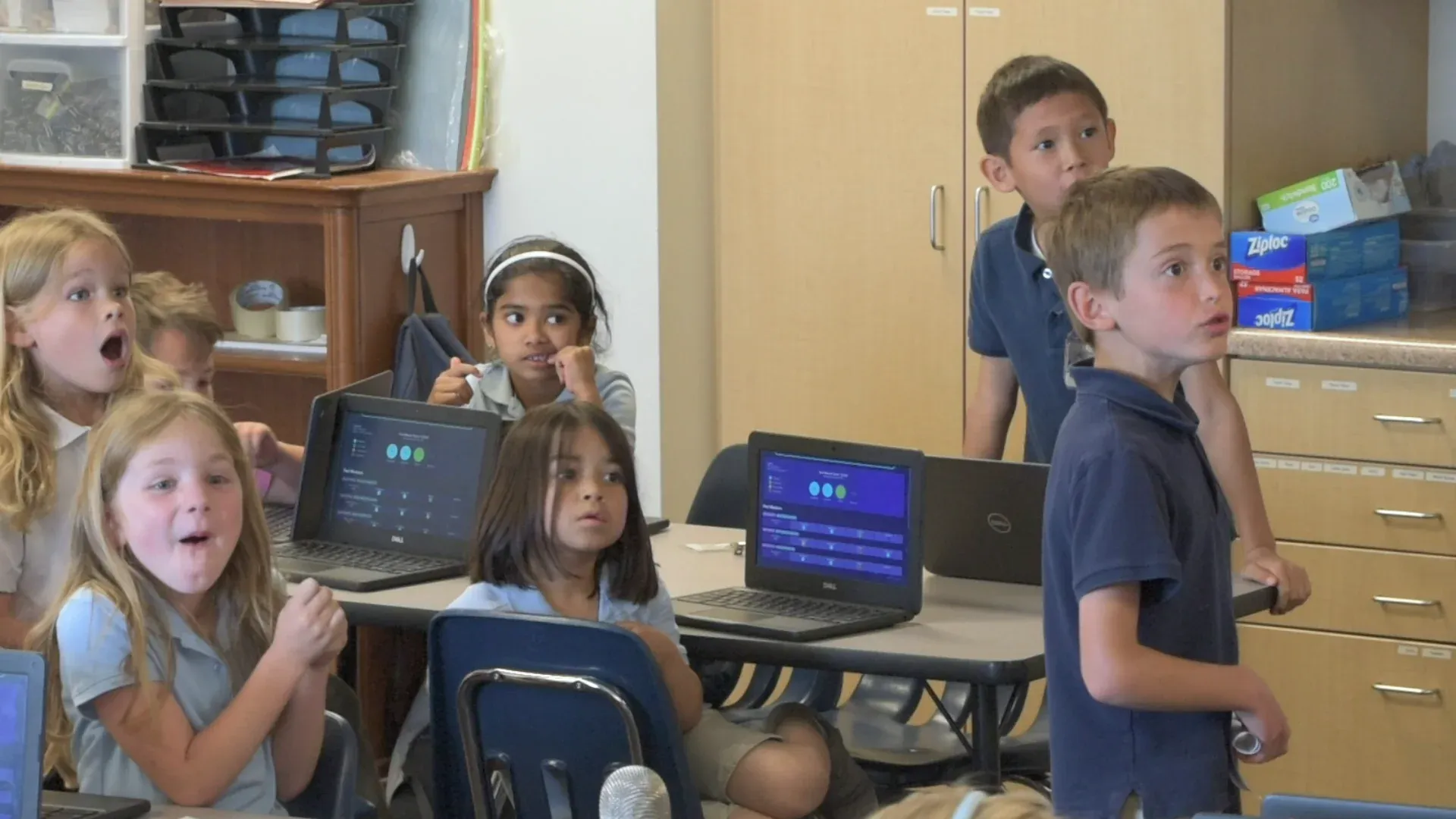
Students crowded around their laptops in the middle of a Mission, some seated, some standing to see.

Nobody gets through a Mission alone.

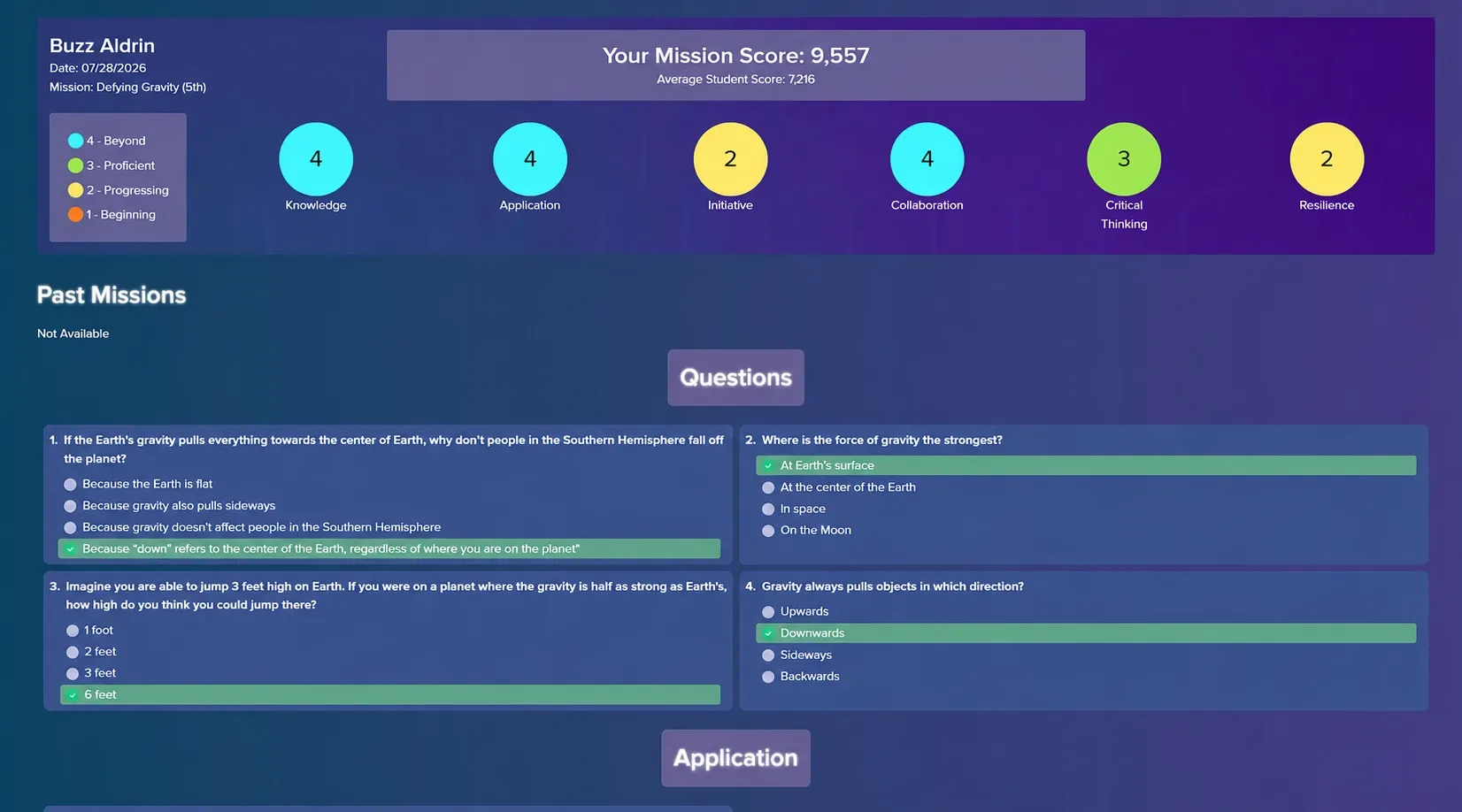
Measured

4 Beyond · 3 Proficient · 2 Progressing · 1 Beginning

Each report covers the skills that Mission is built to capture.

That’s our demo student. He’s still working on two of them.

“Students who don’t like to participate and share in class often are the students that take the most initiative and share the most during missions.”
Jennifer Jellum, South Kearns Elementary, Granite School District, UT
TALK TO US

It rides on the curriculum you already bought.

A district license maps Missions to the units your teachers already teach, one by one. The lesson becomes their preparation; the Mission is where they use it.

EXPLORE THE LIBRARY
Illustration · one month of a Grade 5 scope and sequence
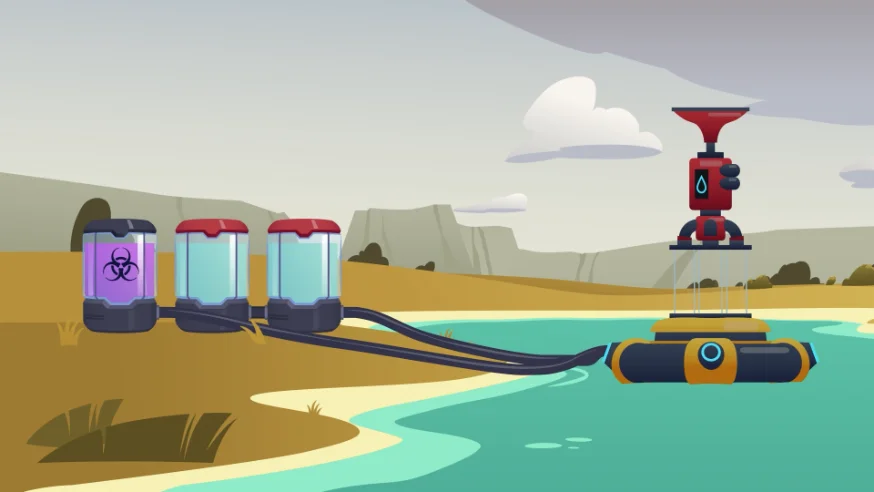
  • Unit 1 ends in Tackling Toxins
  • Unit 2 ends in Pave the Way
  • Unit 3 ends in Mount Katastrofi

What you won’t need

  • Not needed: A new curriculum adoption
  • Not needed: A new job for your teachers
  • Not needed: Hours of prep

What you get

Less than 5 minutes of prep.

  1. The lesson they already planned lands harder.
  2. Students use collaboration, critical thinking, initiative, and resilience, and every student gets a report on how well they did.
  3. Teachers see who can use what they taught.
“After we have learned about a standard my students are able to apply their acquired knowledge to complete a mission together.”
Nicole Thorpe, Traverse Mountain Elementary, Alpine School District, UT

Already running Missions

  • Los Angeles Unified School District
  • Alpine School District
  • Orange County Public Schools
  • Granite School District
  • Jordan School District
  • Muskegon Area Intermediate School District
  • Calhoun Intermediate School District
  • Utah Rural Schools Association
  • Piute County School District
  • Rumson School District
  • IGNITE Entrepreneurship Academy
  • Early Light Academy
  • Lakeview Academy
  • Columbia Elementary
  • Cook Elementary School

The more Missions a class runs, the more students grow.

In a study of 1,039 fifth graders, funded by the U.S. Department of Education’s Institute of Education Sciences and conducted by Instructure, students who ran Missions knew more, wrote better, and were more engaged.

Content-knowledge gain, percentage points
Content-knowledge gain by Missions a class ran: 0.9 points after 1 Mission, 8.5 after 9, 18.8 after 20.
  1. +0.91MISSION
  2. +8.59MISSIONS, STUDY AVERAGE
  3. +18.820MISSIONS, TOP OF THE RANGE
  • Knew more.

    52% vs. 45% correct

    g = 0.335, p < .001 · +0.94 percentage points per Mission (p < .001)

  • Wrote better.

    2.69 vs. 2.39 on a 6-point rubric, independent raters

    g = 0.269, p = .015 · +0.035 rubric points per Mission (p = .049)

  • More engaged.

    Measured on an independent scale

    g = 0.173, p = .009

About the study

A quasi-experimental study of 1,039 fifth graders in 53 classrooms in one district, 2025-26, by Instructure (Bautista et al., 2026). It meets What Works Clearinghouse baseline equivalence standards. The favorable effects were concentrated in classes where a STEM teacher ran Missions on rotation; classes where the core teacher ran them showed no significant favorable effects. The content test was co-developed by Mission.io and Instructure.

SEE THE EVIDENCE

Mission.io meets ESSA Level II standards, as validated by Instructure.

National Science FoundationU.S. Department of EducationInstitute of Education Sciences

Utah’s largest district, 2021-22 to 2023-24

331 to 508 active teachers

It went district-wide in 2021. By 2023-24, Missions per teacher had doubled on average.

District case study · Mission.io (2026a)

READ THE STORY
“For teachers in our district, the biggest value lies in how the program aligns with our focus on 3D science, while requiring minimal prep for teachers.”
Lorilee Johnson, Specialist, Alpine School District, UT
  • SETDAShowcase winner, 2023
  • FETC, the Future of Education Technology Conference: National PitchfestWild Card winner, 2023
  • SIIA Innovation ShowcaseFinalist, 2020
  • Tools CompetitionFinalist, 2023-24
  • AWS EdStartInaugural cohort, 2023-24

One school, or every school.

One school

School license

Every teacher and class in the building.

  • The full Mission library
  • Every teacher and class, specialists included
  • An admin dashboard and school-wide reporting
  • Guided onboarding and faculty training

Priced by the size of your school. See yours in a minute.

PRICE YOUR SCHOOL
A whole district

District license

Every Mission for every teacher in every school.

  • Mapped to your standards, unit by unit
  • Your district’s question banks
  • A dedicated point of contact
  • Your scope and sequence, built with you

Quoted per K-8 student, built to cost less than licensing your schools one at a time.

REQUEST A QUOTE

Either way, your teachers get the same Missions.

Every purchase gets questioned. This one has answers.

Asked about screen time? Most screen time makes kids look down, alone. A Mission makes the whole class look up: at each other, at the problem, at their teacher.

Forwarding this to your business office? This is the row.

Try it with your staff before anyone signs.

  1. A free faculty Mission

    Run one at your next leadership or staff meeting. Your team works through it as a crew, the way students do.

    RUN A FACULTY MISSION
  2. A full-school trial

    Any time of year, we’ll set up a trial for your whole staff before anyone signs anything, so your teachers run Missions with their classes and you see the impact for yourself.

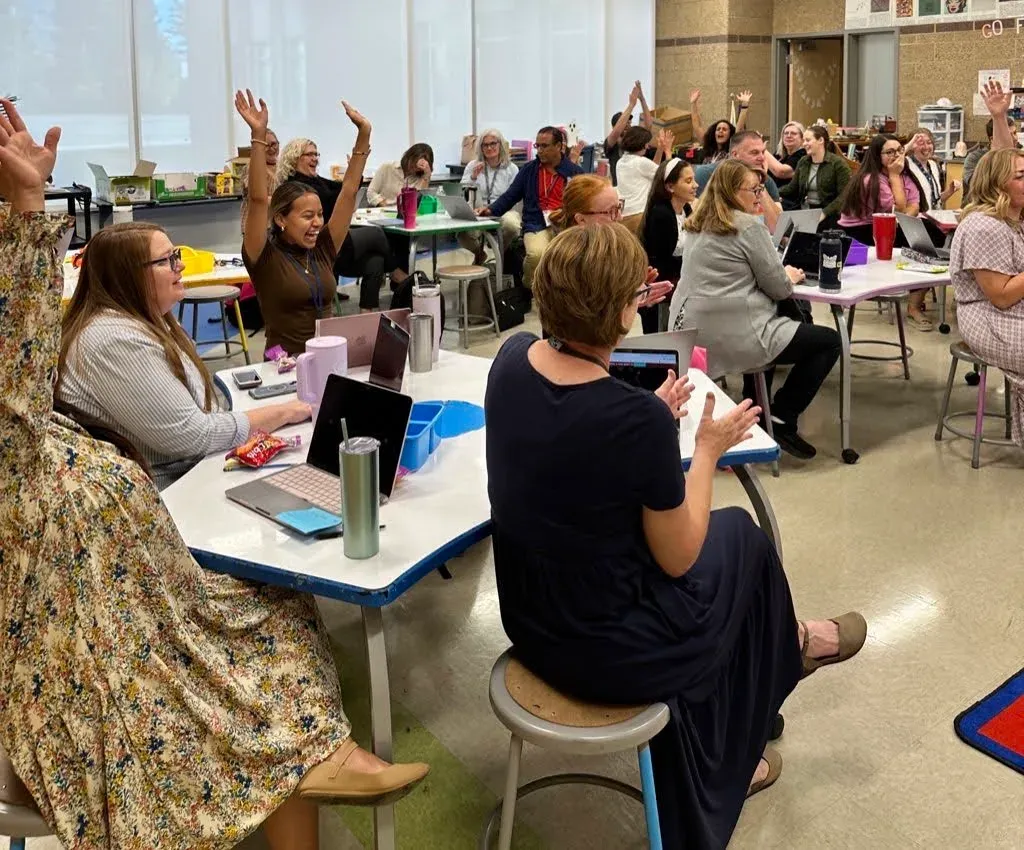
A school staff in a faculty Mission, teachers at tables with laptops, several with their hands in the air.
“The moment I’m done running [teachers’] first mission with their students, they want me to help them set up their accounts and launch one on their own.”
Neisha Coutlee, Nebo School District, UT

What leaders ask first.

Do we need a new curriculum?

No. Missions map to the curriculum you already teach. The lesson becomes your students’ preparation; the Mission is where they use it.

How much prep do teachers need?

5 minutes. Watch the Teacher Preview and you’re ready to lead. Missions typically run 30 to 45 minutes.

How is pricing built?

A school license is priced by the size of your school, and you can see yours in a minute. A district license is quoted per K-8 student and built to cost less than licensing your schools one at a time. PRICE YOUR SCHOOL →

What does a district license include?

Every Mission for every teacher in every school, mapped to your standards. You also get district question banks your teachers can pull from and customize, a dedicated point of contact who builds your scope and sequence with you, and a report on every student after every Mission.

Is student data safe?

Yes. We’re FERPA and COPPA compliant, a Student Privacy Pledge and Project Unicorn signatory, and happy to sign your district’s DPA. NEED A SIGNED DPA? →

Can our leaders try a Mission first?

Yes. Run a Faculty Mission at your next leadership or staff meeting. Your team works through it as a crew, the way students do. RUN A FACULTY MISSION →

We help your teachers make your students more capable.

Tell us about your schools. We’ll show you how Missions fit your curriculum and plan the rollout with you.