Collaboration activities for students

Twelve classics and the fix each needs, what collaboration looks like at every grade from kindergarten to 8th, the six things that separate it from a seating chart, a free observation sheet, and a Mission built to measure it.

Who we are. Mission.io makes Missions: teacher-led, whole-class simulations where students use what they’re learning to work through a real scenario together. We build every one on the six things this page teaches, and every student gets a report on how well they did.

You don’t need us to use this page: the classics, the fixes, and the observation sheet all work on their own. But the Mission we built to train collaboration is waiting at the end, free. (It’s won us a few awards. We try not to bring it up at parties.)

On this page

What is a collaboration activity?

Collaboration activities are classroom tasks in which a small group has to reach one result none of them could reach alone, with each student answerable for a named part. Most things called collaboration activities don’t meet that definition, and you know the table where it shows. Four kids, one poster, and by minute six it’s one kid’s poster.

That isn’t a collaboration problem. It’s a design problem, and design problems are fixable, because collaboration is a skill, and a skill means two things most group work forgets. It can be taught, so it has to be built into the activity on purpose instead of hoped for. And it can be seen, so you should be able to walk past any table and say who proposed, who built on it, who disagreed with a reason, and who changed their mind.

The standard asks for exactly that: participate in collaborative conversations and build on others’ ideas from kindergarten on, and carry out assigned roles from 4th grade (CCSS Speaking and Listening SL.K.1 through SL.8.1). This page is about the activities that make it happen, and each grade’s page shows you how to run one.

Six things that make group work build collaboration

What separates group work that builds the skill from group work that fills a period? The research is blunt about it, and specific.

Start with the study built for this question. 148 studies, more than 17,000 students ages 12 to 15, and cooperative goals beat both competitive and individual ones, on achievement and on how students treated each other (Roseth, Johnson, and Johnson, 2008). The same research names what the activity has to look like.

  1. 1. A real problem with stakes the class can feel.

    A topic to cover is not a problem to solve. Students who wrestle with a problem before they’re taught the answer learn more from the teaching that follows (Sinha and Kapur, 2021).

  2. 2. Apply, don't recall.

    Hands-on only moved learning when students had to think with the content, not just touch it (Minner, Levy, and Century, 2010).

  3. 3. Group goals with individual accountability.

    One most classics miss, and the one the research is loudest about. When the group shared a goal and each student answered for a part, 84% of studies found a positive effect. Without both, 17% (Slavin, 1991). Walk past any group of four and you’ll see why: one kid holding the marker, one holding the floor, two waiting. Across dozens more studies, students who learn in cooperative groups outscore students taught from the front, and the effect is larger for primary students than for secondary (Kyndt et al., 2013); England’s Education Endowment Foundation puts collaborative learning at five months of additional progress for very low cost, on limited evidence (EEF Toolkit).

  4. 4. The teacher leads the thinking.

    “Guide on the side” is a slogan, not a finding. When researchers compared the two, teacher-led inquiry beat student-led by a clear margin (Furtak et al., 2012).

  5. 5. A debrief where the class argues it out.

    The activity is the setup. The talk afterward is the learning, and classroom discussion sits near the top of Hattie’s 2017 synthesis of what moves achievement (d = 0.82).

  6. 6. A way to see who did what.

    If you can’t tell which student carried the group and which one hid, you can’t teach collaboration. You can only hope for it.

Group work is a seating chart. Collaboration is a skill.

Every grade page on this site takes one classic and rebuilds it to hit all six, step by step, with a printable. Get the free observation sheet that works for any of them →

Find your grade: what changes from kindergarten to 8th

The skill changes shape every year, which is why the activity has to. Kindergartners have to be taught to keep a conversation going past one turn. Eighth graders have to be taught to lose an argument with the evidence still in their hands. Same skill, nine different jobs. One line per grade, one page per grade, and the classic you’ll see rebuilt there.

  1. Kindergarten

    Sharing materials, taking turns, continuing a conversation past one exchange.

    Turn and talk, rebuilt. Kindergarten collaboration activities →

  2. 1st grade

    Following two-step group directions and listening before answering.

    Save Fred, rebuilt. 1st grade collaboration activities →

  3. 2nd grade

    Building on a partner’s idea instead of restating your own; eight-year-olds love group work and pick projects that are too hard.

    The cup stack, rebuilt. 2nd grade collaboration activities →

  4. 3rd grade

    The first year a kid can hold a role for a whole task without drifting back to doing whatever the group is doing.

    Literature circles, rebuilt. 3rd grade collaboration activities →

  5. 4th grade

    Moving from taking turns to coordinating roles, and arguing about who’s right.

    The marshmallow tower, rebuilt. 4th grade collaboration activities →

  6. 5th grade

    Ten-year-olds can hold a perspective that isn’t theirs, which is what jigsaw asks of every expert.

    Jigsaw, rebuilt. 5th grade collaboration activities →

  7. 6th grade

    The clique year; group work means negotiating who’s in and who’s heard.

    Lost on the Moon, rebuilt. 6th grade collaboration activities →

  8. 7th grade

    Negotiating disagreements and adapting roles when the plan fails.

    Gallery walk, rebuilt. 7th grade collaboration activities →

  9. 8th grade

    Drawing on preparation and evidence to move a group, and seeing both sides while arguing one.

    Fishbowl, rebuilt. 8th grade collaboration activities →

Developmental lines from Responsive Classroom’s Common Developmental Traits by Age (2024); the grade pages carry the rest of the sources.

Twelve collaboration classics, and the fix each needs

If you’ve ever quietly stopped assigning group work, one of these twelve is probably why. They’re on every list. Here is what each one is, how it usually runs, the tweaks that make it earn the word, and the grade page that rebuilds it start to finish.

A filled dot means the classic, as it usually runs, has that criterion; a ring means it usually misses it. Tap a number to read the criterion.

(Look down columns 3 and 6: eight of the twelve usually miss accountability, and ten miss a way to see who did what.)

Twelve collaboration classics against the six criteria above, as they usually run.
#Activity1 Stakes2 Apply3 Accountability4 Teacher leads5 Debrief6 See who did whatSee it rebuilt
1Turn and talkK to 2Usually misses: stakes, accountability, seeing who did whatmisses Stakeshas Applymisses Accountabilityhas Teacher leadshas Debriefmisses See who did whatKindergarten
2Save Fred1 to 3Usually misses: apply, accountability, seeing who did whathas Stakesmisses Applymisses Accountabilityhas Teacher leadshas Debriefmisses See who did what1st grade
3Cup stack2 to 6Usually misses: apply, teacher leads, debrief, seeing who did whathas Stakesmisses Applyhas Accountabilitymisses Teacher leadsmisses Debriefmisses See who did what2nd grade
4Literature circles3 to 6Usually misses: stakes, teacher leadsmisses Stakeshas Applyhas Accountabilitymisses Teacher leadshas Debriefhas See who did what3rd grade
5Think-pair-shareK to 8Usually misses: stakes, accountability, seeing who did whatmisses Stakeshas Applymisses Accountabilityhas Teacher leadshas Debriefmisses See who did whatCooperative learning
6Marshmallow tower3 to 5Usually misses: apply, accountability, debrief, seeing who did whathas Stakesmisses Applymisses Accountabilityhas Teacher leadsmisses Debriefmisses See who did what4th grade
7Jigsaw3 to 8Usually misses: stakes, teacher leads, debriefmisses Stakeshas Applyhas Accountabilitymisses Teacher leadsmisses Debriefhas See who did what5th grade
8Human knot3 to 8Usually misses: apply, accountability, teacher leads, seeing who did whathas Stakesmisses Applymisses Accountabilitymisses Teacher leadshas Debriefmisses See who did whatNo page
9Lost on the Moon5 to 8Usually misses: apply, seeing who did whathas Stakesmisses Applyhas Accountabilityhas Teacher leadshas Debriefmisses See who did what6th grade
10Gallery walk5 to 8Usually misses: accountability, seeing who did whathas Stakeshas Applymisses Accountabilityhas Teacher leadshas Debriefmisses See who did what7th grade
11Fishbowl6 to 8Usually misses: accountability, seeing who did whathas Stakeshas Applymisses Accountabilityhas Teacher leadshas Debriefmisses See who did what8th grade
12Group postersK to 8Usually misses: everything but applymisses Stakeshas Applymisses Accountabilitymisses Teacher leadsmisses Debriefmisses See who did whatNo page
How many have it7 of 12 have Stakes7 of 12 have Apply4 of 12 have Accountability7 of 12 have Teacher leads8 of 12 have Debrief2 of 12 have See who did what

K to 2

1. Turn and talk (K to 2)

Needs nothing. Pairs. 5 minutes.

You ask a question, and partners turn to each other and talk for a minute, usually as a pause in a read-aloud. It’s quick, and it gets every child talking. As usually run, though, there’s nothing to decide and no record of who said what, so the quiet kid stays a rumor.

The fix

  1. Give the pair one decision to agree on, like which character was the bravest.
  2. Hand them a sentence frame for disagreeing, like “I think it’s ___ because ___.”

See it rebuilt for kindergarten, with the decision, the frame, and a way to hear both partners →

2. Save Fred (1 to 3)

Needs gummy worms, gummy rings, plastic cups, paper clips. Groups of three or four. 20 minutes.

A gummy worm sits on an upturned cup with a gummy life preserver trapped underneath, and the team has to get Fred into the preserver using paper clips only. The rescue has real stakes, and kids love it. As usually run, though, it’s a fun ten minutes with a lot of grabbing, nothing to apply, and no way to see who did what.

The fix

  1. Assign the paper clips to named hands, one clip per student.
  2. Set a step limit before anyone starts.
  3. Have one student narrate every attempt out loud.

See Save Fred rebuilt for 1st grade, named hands and narrator included →

3. Cup stack (2 to 6)

Needs six cups, one rubber band, four strings. Groups of four. 15 minutes.

Nobody may touch the cups: the team stretches a rubber band with strings tied on to move six cups into a pyramid. Every student holds a string, so everyone has a part. As usually run, though, it’s a race, and a race is won by the kid with the fastest hands.

The fix

  1. Make the pyramid a build spec with a reason behind it.
  2. Add a Caller who may only speak and never pull.
  3. Debrief on whose instruction worked.

See the cup stack rebuilt for 2nd grade, Caller included →

3 to 5

4. Literature circles (3 to 6)

Needs one shared book. Groups of four or five. Weekly.

Small groups read the same book and meet with roles: discussion director, connector, word finder. Every student has a job, and the book gets used. As usually run, though, role sheets get filled in beforehand and read aloud in turn while the other four wait, and there’s no question the circle has to settle.

The fix

  1. Give the circle a question about the book it has to answer by consensus.
  2. Sit with one circle for the whole meeting instead of circulating.

See literature circles rebuilt for 3rd grade around one question the circle has to answer →

5. Think-pair-share (K to 8)

Needs nothing. Pairs. 3 minutes.

You ask a question, students think in silence for a minute, trade answers with a partner, then pairs report. It builds in thinking time and a partner to test an idea on. As usually run, though, it’s a two-minute break in a lecture with hands up at the end, so nothing rides on it and nobody knows who said what.

The fix

  1. Give the pair a decision to make.
  2. Have both partners sign it.
  3. Tally who reported what.

See it rebuilt step by step, with the other structures that earn the word →

6. Marshmallow tower (3 to 5)

Needs twenty sticks of spaghetti, a yard of tape, a yard of string, one marshmallow. Groups of four. 45 to 55 minutes done right.

Teams get spaghetti, tape, string, and a marshmallow, and the tallest freestanding tower in eighteen minutes wins. The clock gives it stakes. As usually run, though, it’s a race with a cheer at the end, with nothing to apply, no part anybody owns, and no talk about why the towers fell.

The fix

  1. Tell them what “wins” means before anyone touches the spaghetti.
  2. Give it four roles and two rounds.
  3. Hold the debrief at the base of the tallest tower.

See the tower rebuilt for 4th grade: four roles, two rounds, and a debrief fourth graders will actually argue in →

7. Jigsaw (3 to 8)

Needs four short readings. Groups of four. About 60 minutes.

Split a topic into four parts, send students to expert groups to learn one part each, then re-form home groups so every member teaches their piece. It’s the one structure built so each student holds a piece nobody else has. Jigsaw has its own meta-analysis, with a large average effect on achievement that runs smaller in bigger studies (Cochon Drouet et al., 2023). As usually run, though, it’s a reading rotation that ends when the last expert finishes, so it has no problem, no teacher at the table, and no debrief.

The fix

  1. Give the home group a question the four pieces answer only together.
  2. Add a Challenger who has to ask each expert “how do you know?” before the next one speaks.

See jigsaw rebuilt for 5th grade, where the four pieces become evidence and the home group becomes a jury →

8. Human knot (3 to 8)

Needs nothing. Whole class. 5 minutes.

Everyone grabs two hands across a circle, and the group untangles without letting go. It’s five minutes of laughing. As usually run, though, there’s nothing to apply, the tallest kid tends to solve it, and nothing shows who did what.

The fix

  1. Run it as a five-minute energizer and don’t call it collaboration.

No page for this one; the page would be three sentences.

6 to 8

9. Lost on the Moon (5 to 8)

Needs the 15-item list. Groups of four or five. 45 minutes.

Students rank 15 survival items alone, then as a crew, then check against NASA’s ranking. It gives every student a stake and a vote. As usually run, though, it’s a one-period consensus exercise that ends with the answer key, which means it ends with NASA doing the thinking.

The fix

  1. Tie each item to the science the class just learned.
  2. Score the gap between each student’s solo ranking and the crew’s.

See Lost on the Moon rebuilt for 6th grade, every item tied to the science the class just learned →

Needs posted work, sticky notes. Whole class. 20 minutes.

Groups post work on the walls and rotate past each other’s, adding comments. It gets everyone reading other groups’ work. As usually run, though, it’s a tour, with sticky notes that say “nice job” in four different handwritings.

The fix

  1. Give every student a specific question to answer at every stop.
  2. Make the notes signed.

See the gallery walk rebuilt for 7th grade, every stop with a question and every note with a name →

11. Fishbowl (6 to 8)

Needs chairs in two circles. Whole class. 30 minutes.

An inner circle discusses while an outer circle watches, then they swap. It puts a real discussion in front of the class. As usually run, though, it’s a discussion with spectators, and the outer circle’s job is to sit.

The fix

  1. Give each student in the outer circle a tally sheet on the inner circle.
  2. Put the inner circle’s names on the sheet, so every tally belongs to one speaker.

See the fishbowl rebuilt for 8th grade, where the outer circle gets a tally sheet with names on it →

12. Group posters (K to 8)

Needs a poster, four markers. Groups of four. A period.

A group of four gets a topic, a poster, and four markers. It puts the content to use. As usually run, though, it’s a work period that ends in a wall display, which makes it a worksheet with markers.

The fix

  1. Write a question at the top that the poster has to answer.
  2. Give each of the four a role and a marker color, so every part has a name on it.
  3. Debrief at the wall, with each group defending its answer.

No page for this one either; with those three changes it becomes one of the other eleven.

The observation sheet, for any activity in any grade

Free, emailed now, ready to print: the six as a checklist, with room to write how your activity hits each one, three questions to ask at the table (What’s your plan? What did the last try tell you? What are you changing and why?), and the four-behavior tally (proposed an idea, built on someone else’s, disagreed with a reason, changed their mind with a reason).

It’s on its way.

Check your inbox for the observation sheet.

Email me the sheet. It comes as a PDF, ready to print. Unsubscribe anytime.

  • Our part · We make Missions

    Or run all six as a Mission, in one class period

    Plenty of teachers rebuild these by hand every unit, and it works. A Mission is a teacher-led, whole-class simulation: your class can become the crew, the crisis is built from what you just taught, and the only way through is using it together. It does the same six things in one class period and carries the story, the setup, and the measuring. The thinking stays yours.

    You're at the helm, not on the hook.

    The Collaboration Mission

    Collaboration (4+) · Grades 4 to 8 · About 24 minutes · One device per student, plus your projector · Free with a teacher account

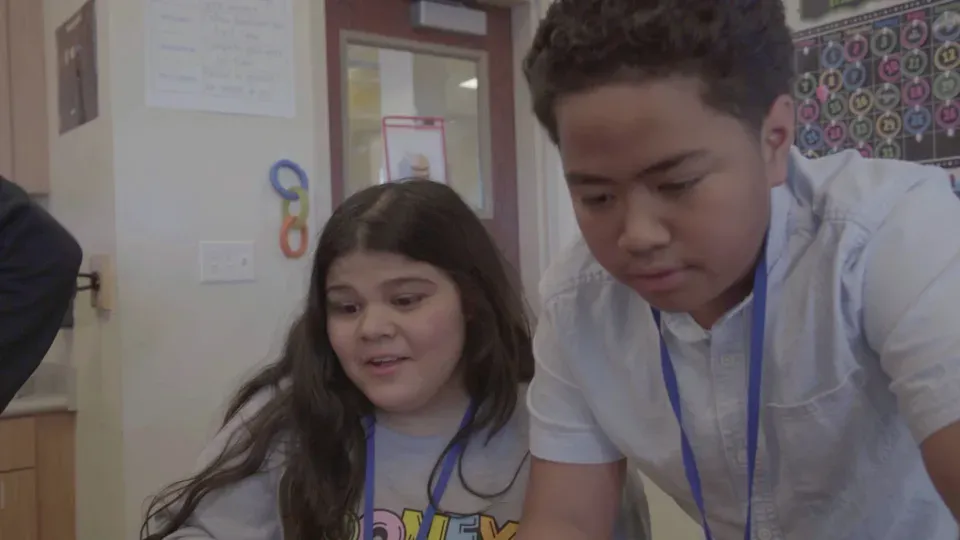
    Two middle schoolers lean in together to study a screen.
    What you'll see: twenty-some kids looking up at the same projector, one station telling another what it can't see from its own screen, and you moving between them instead of standing at the front.

    There are three collaboration Missions, one for each band. This is the 4 and up build; the K to 1 and 2 to 3 builds run about 15 minutes, and your grade’s page names yours.

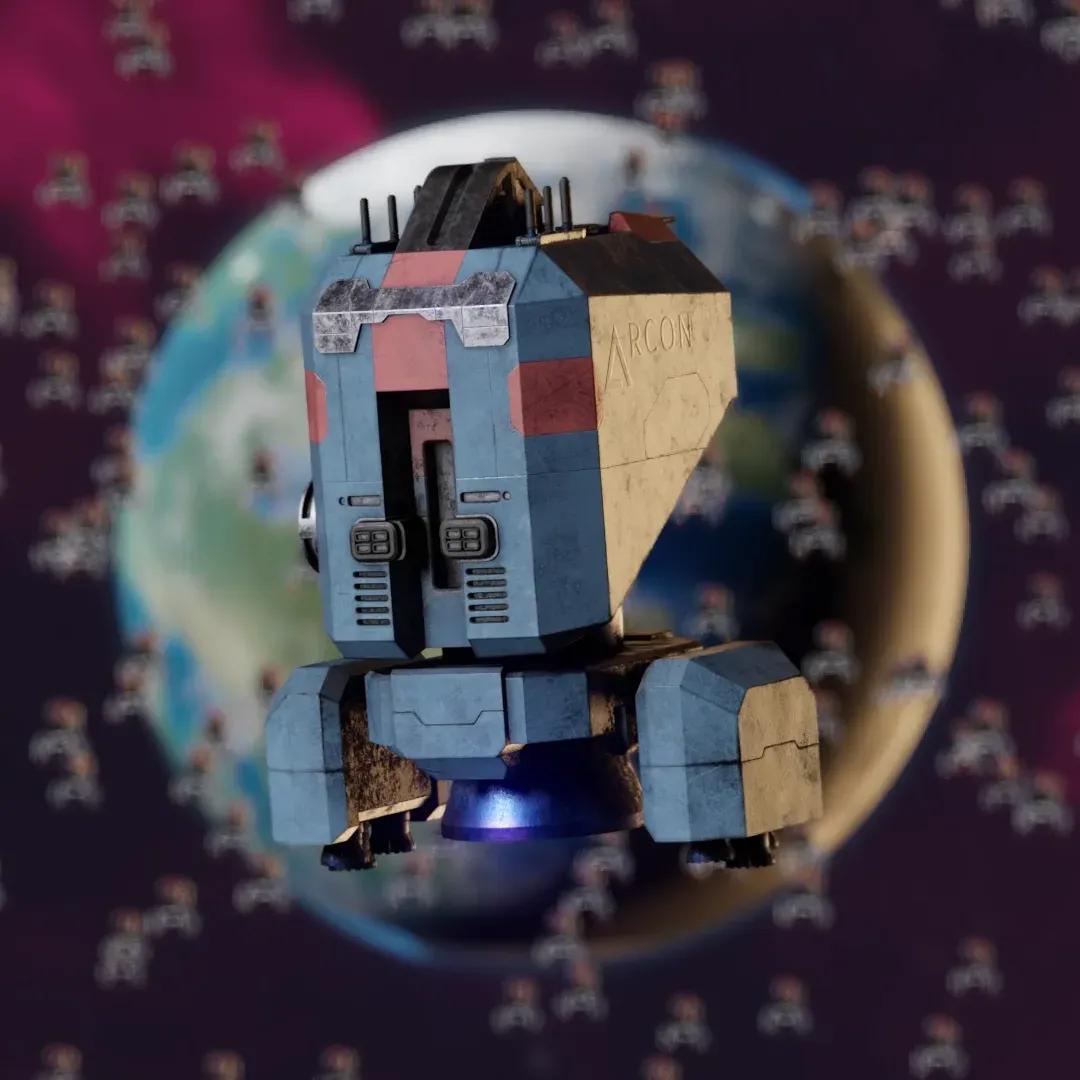
    A swarm of malfunctioning GAL-Delilah robots is attacking planets, and the only way to lead them off is to re-program an old one. Breaking into its processor has rules, and the rules only work if the crew follows them together. The story plays on the projector. The work happens at seven stations (Command, Engineering, Medical, Security, Science, I.T., Operations) and in the arguments between them.

    In K to 2 the class runs as one crew with you leading the talk and modeling the thinking. From 3rd grade up every student is assigned to a team, and each team’s work is themed to it, from its own information and challenge to the same problem the rest of the crew is solving. The team gives a student a role in the story and people to lean on while you move between teams. You’re at the helm, asking who has the piece they need.

    It’s built to the collaborative-discussion standards for grades 4 through 8 (CCSS SL.4.1 to SL.8.1): come prepared, build on others’ ideas, carry out assigned roles. The processor only opens if the crew collaborates by the rules. The two criteria that are hardest to build by hand, stakes the class can feel and a way to see who did what, come built in: the swarm doesn’t wait, everyone works the problem on a team, and every student gets a report on how well they did when it’s over.

    “Even my quiet or reluctant students participate because the missions are structured in a way where everyone’s voice matters.”

    Adriana Lopez, Junior high teacher, Clint Jr. High School

    Will it work in my room?

    Students join with a class code; no student accounts, no student email. Chromebooks, laptops, or tablets, plus your projector. Free for teachers, no credit card.

    START FREE →

    Three builds, one for each band

    This is one Mission. There are more than 100 built the same way, from fossils to fractions, each one somewhere for a unit to go: a unit that ends this way, then the next one, then the one after that, with a report on every student each time. Every lesson finally has somewhere to go. Every grade page above names the Mission built for its grade.

    What the report shows

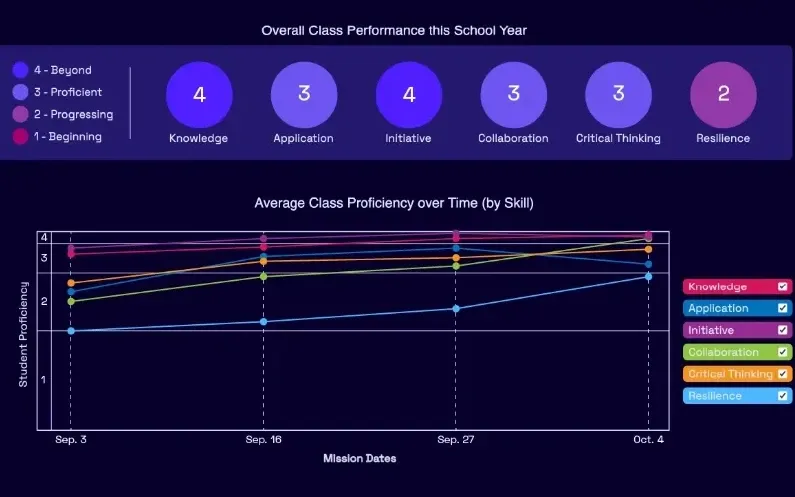
    A Mission.io class report: the class score in each of six skills, from knowledge and application to collaboration, critical thinking, and resilience, with the class chart across the year below.
    A class report from a real Mission: the class score in each of six skills, then each skill across the year.

    Every Mission produces a report for every student, built from what that student did across the whole Mission, on the skills the Mission captured. The six it can capture are Knowledge, Application, Initiative, Collaboration, Critical Thinking, and Resilience. The first two are what a test already sees. The other four are the human skills every school promises: collaboration, critical thinking, initiative, and resilience. The test shows what they know. The report shows the rest. This is where collaboration gets practiced, and the only place it gets measured. SEE THE EVIDENCE →

    You taught it. Now find out who can use it.

    Who's behind it

    Mission.io is a research and design organization with one job: make collaborative, active learning something a teacher can run every unit instead of once a semester, and put a report in your hands when it’s over. Over a million students have run a Mission. The research behind them is funded by the National Science Foundation and the U.S. Department of Education’s Institute of Education Sciences. Mission.io meets ESSA Level II standards, as validated by Instructure, and the work has won multiple national awards. Districts bring us in to elevate the curriculum they already own. The six criteria above are the ones we build to, in every one of the 100+ Missions.

    “Unlike other tech programs in the district that often have students working in isolation or in pairs, Mission.io emphasizes true collaboration.”

    Lorilee Johnson, District specialist, Alpine School District, UT
    START FREEMISSION BRIEF →

    Free teacher account, no card. Your account opens on the Mission library, with the Communication Mission marked Start here. Run it, then the Collaboration Mission for grades 4 to 8, each after its 5-minute Teacher Preview. Teaching K to 3? Your grade’s page names yours.

Questions teachers ask about collaboration

How do I stop one student from doing all the work?

Give the group a goal it can only reach together and give each student a piece only they hold, then put a name on every piece. That is criterion 3, and it’s the difference between group work and a group sitting near a worker.

How do I grade collaboration fairly?

Grade the behaviors and let the poster be the poster. Four countable things per student (proposed, built on, disagreed with a reason, changed their mind with a reason) over two or three activities gives you a pattern you can defend to a parent. A beautiful poster made by one kid shows up as three empty rows.

Are team-building activities the same as collaboration activities?

Close, and usually no. Team-building builds trust and comfort, which matters. A collaboration activity builds a skill: there’s a result the group has to reach together and a part each student answers for. Most team-building games skip the second half, which is why the human knot above gets five minutes and no page.

Is collaboration the same as cooperative learning?

Cooperative learning is the structured version: named roles, individual accountability, group processing, the five elements from Johnson and Johnson. Collaboration is the skill those structures build. Our cooperative learning strategies guide has the named structures with steps.

My class has never done this. Where do I start?

Think-pair-share with a decision to sign, for a week. Then one of the twelve above, rebuilt the way your grade’s page shows. The grade pages start every grade where it actually is.

Sources