4th grade collaboration activities

One classic rebuilt so 4th graders actually collaborate, five more fixed, a free sheet, and the whole-class Mission we’d run with 4th graders.

Who we are. Mission.io makes Missions: teacher-led, whole-class simulations where students use what they’re learning to work through a real scenario together.

Everything on this page works without us. The Mission we’d run with 4th graders is at the end, free. (Its crew builds a fusion reactor instead of a tower. Nobody has to sweep up spaghetti.)

On this page

What collaboration looks like in 4th grade

Fourth grade collaboration activities are group tasks in which four nine-year-olds have to reach one result together, with each one answerable for a named part. This page rebuilds the marshmallow tower so it actually does that.

Fourth graders are ready for real collaboration and bad at it in a specific way: they argue. Nine-year-olds want to know how and why, they compete, and group work turns into a debate about who’s right. That’s not a problem to manage. It’s the raw material.

The standard asks them to engage in collaborative discussions, follow agreed-upon rules, and carry out assigned roles (CCSS ELA SL.4.1). The activity below gives the arguing somewhere to go.

Six things that make group work build collaboration

Active learning works, and a 2014 review put it bluntly. Across 225 studies of college STEM courses, lecture classes had 55% more failures than active-learning ones (Freeman et al., 2014). Nobody has run that review on fourth graders. The K-12 research points the same way, and it’s more specific about what the activity has to look like. Here is each of the six at 4th grade; the K to 8 guide has the studies.

  1. 1. A real problem with stakes the class can feel.

    A tower that’s tall for no reason is a craft. A sensor that has to beat the next storm is a problem, and nine-year-olds will fight for it.

  2. 2. Apply, don't recall.

    At 4th grade the content can be the engineering standard itself: criteria, constraints, and a fair test (NGSS 3-5-ETS1-1 and 3-5-ETS1-3).

  3. 3. Group goals with individual accountability.

    The one most classics miss. Walk past any group of four and you’ll see one kid holding the tape, one holding the floor, two waiting. When the group shared a goal and each student answered for a part, 84% of studies found a positive effect; without both, 17% (Slavin, 1991).

  4. 4. The teacher leads the thinking.

    Three questions, asked at the base of every tower instead of from the front. By the third tower, they’ll answer before you ask.

  5. 5. A debrief where the class argues it out.

    Fourth graders will argue about whose idea saved the tower. Give that argument ten minutes and a reason to be made out loud.

  6. 6. A way to see who did what.

    If you can’t tell which student carried the group and which one hid, you can’t teach collaboration. You can only hope for it.

Worksheets have answers. Problems have consequences.

Most of the classics teachers search for hit two or three of the six. Here’s the marshmallow tower, rebuilt to hit all six. The free sheet at the end of it has every piece, ready to copy →

The marshmallow tower, rebuilt to hit all six

You know it. Twenty sticks of spaghetti, a yard of tape, a yard of string, one marshmallow, eighteen minutes, tallest freestanding tower wins. It’s a great eighteen minutes. It also teaches almost nothing about collaboration, because the standard version has no content to apply, no individual accountability, and no debrief beyond “whose is tallest.”

Watch any class run it: the marshmallow goes on in the last minute, and that’s when the tower falls. Two rounds with a test between them fixes that.

Time
55 minutes with the debrief it deserves. In a 45-minute block, write the criteria and constraints the day before and cut each build to 6 minutes. Keep the debrief whole; the debrief is the lesson.
Groups
Fours. With 27 kids, make six groups of four and one of three; in the three, the Recorder also tests.
Supplies for seven groups
140 sticks of dry spaghetti (one box), seven yards of masking tape, seven yards of string, seven marshmallows, scissors. Under ten dollars; the sheet has the list.
Standards
NGSS 3-5-ETS1-1 and 3-5-ETS1-3, CCSS SL.4.1b (carry out assigned roles).
  1. The problemStakes

    The marshmallow is a sensor. A storm just took the antenna off a mountain research station, and the crew has to get the sensor as high as it will go before the next one hits, in one build. Say the stakes out loud: a tower that falls at the last second is a sensor lost in the snow.

  2. Apply, don't recallApply

    Before anyone touches spaghetti, each team writes the criteria (what counts as success: height, freestanding, sensor on top) and the constraints (materials, the clock). That’s ETS1-1 in one box on the sheet, and it’s the first time most fourth graders find out that “tallest” and “doesn’t fall” are two different goals.

  3. Roles with individual accountabilityAccountability

    Four roles, each with one thing only that student does, written on the sheet. Between rounds, the Tester becomes the Builder and the Builder becomes the Tester, so nobody owns the tower. Each student signs their role’s box on the sheet.

    • Builder

      The only hands on the tower.

    • Tester

      Calls a check every 3 minutes: hands off, count to five, does it stand?

    • Recorder

      Sketches the design and writes down what happened at each check.

    • Decider

      Makes the one change between rounds, and has to say why.

  4. You lead the thinkingTeacher leads

    Your job during the build is three questions, asked at the base of every tower, not from the front: What’s your criteria? What did the last test tell you? What are you changing and why? Resist the urge to point at the wobble.

  5. Two roundsApply

    8 minutes, test, 2 minutes to change one thing, 8 minutes, final test. One change only, so the Decider has to choose and the Recorder has to write down whether it worked (that’s ETS1-3).

  6. The debriefDebrief

    10 minutes, whole class, towers still standing or not. Three questions in order: What did your team change between rounds, and did it work? Who in your group said something that changed the design? Which role was hardest, and why? The second question is the one that matters.

  7. See who did whatSee who did what

    The observation sheet, one page, four behaviors per student: proposed an idea, built on someone else’s idea, disagreed with a reason, changed their mind with a reason. Tally marks while you walk the seven towers. You’ll catch about half the room in one period; that’s enough to see the pattern, and the pattern is your collaboration grade instead of a guess. The other half you’ll catch next time.

(Yes, the Tester gets to tell the Builder hands off. Expect them to enjoy it.)

Fourth graders will name the quiet kid who pointed out the base was too narrow, and that kid will remember it.

The marshmallow tower, free

Emailed now, ready to copy: the teacher page with the supply list, four role cards, one team sheet (the criteria and constraints box, the design sketch, the test log, and the one change), and the four-behavior tally.

It’s on its way.

Check your inbox for the marshmallow tower.

Email me the sheet. It comes as a PDF, ready to print. Unsubscribe anytime.

Five more classics, and the fix each needs

You stopped assigning group work for a reason. Three kids colored, one kid wrote, and you graded a poster. Every classic below can be fixed with the same lens.

Five more for 4th grade

1. Save Fred (1 to 4)

Needs gummy worms, gummy rings, plastic cups, paper clips. Groups of three or four. 20 minutes.

A gummy worm sits on an upturned cup with a gummy life preserver trapped underneath, and the team gets Fred into it with paper clips only. The story gives it stakes, and the debrief works if you hold one. As usually run, though, there’s nothing to apply, no part anyone owns, and no record of who did what.

The fix

  1. Assign each paper clip to a named student, and only that student moves it.
  2. Have the Recorder narrate each attempt out loud and write down what happened.

See Save Fred rebuilt for 1st grade →

2. The human knot (3 to 8)

Needs nothing. Whole class. 5 minutes.

Everyone grabs two hands across a circle, and the group untangles itself without letting go. It’s great energy for five minutes. As usually run, though, there’s zero content, and the tallest kid solves it while everyone else waits.

The fix

  1. Run it as a five-minute warmup before the real group work, and don’t call it collaboration.

No page for this one; the page would be three sentences.

3. Jigsaw reading (3 to 8)

Needs four short readings. Groups of four. About 60 minutes.

Students learn one section of a reading in expert groups, then teach it to their home groups. It’s the one classic here with its own review: jigsaw’s average effect on achievement is large across 43 studies, though results vary widely and shrink in bigger samples (Cochon Drouet et al., 2023). It puts the reading to use, every student holds a piece nobody else has, and the teaching back works as a debrief. As usually run, though, nothing rides on the answer, and nothing records who taught what.

The fix

  1. Give the expert groups a question the home group needs all four sections to answer.
  2. As each expert teaches their section, mark it on the tally sheet, so the sheet shows who taught what.

See jigsaw rebuilt for 5th grade →

4. Paper bridges (3 to 5)

Needs index cards, pennies, two stacks of books. Groups of four. 30 minutes.

Teams span a gap between two stacks of books with index cards, then load the bridge with pennies until it fails. The pennies give it stakes, the build puts the engineering to work, and if you ask about load you’re leading the thinking. As usually run, though, one builder does most of it, and nothing shows who did what.

The fix

  1. Hand out the four tower roles above, straight across: Builder, Tester, Recorder, Decider.
  2. Have the Recorder log the penny count at every Tester check, on the same sheet.
  3. Between rounds, the Decider makes the one change and says why.

Run it with the tower’s roles; same sheet.

5. Group posters (K to 8)

Needs a poster, four markers. Groups of four. A period.

A group of four gets a topic, a poster, and four markers for a period. It puts the content to work. As usually run, though, it’s a worksheet with markers, and by the end of the period it’s often one kid’s poster and three kids coloring.

The fix

  1. Give each student a role, written on the poster next to their part.
  2. End with a debrief where each group explains its poster and takes one question.

No page for this one; with roles and a debrief it becomes one of the others.

  • Our part · We make Missions

    Or let a Mission carry everything but the thinking

    Plenty of teachers run this by hand every unit, and it works. A Mission is a teacher-led, whole-class simulation that does the same six things in one class period and carries the story, the setup, and the measuring. The thinking stays yours.

    You're at the helm, not on the hook.

    Reactor Revamp: a whole-class Mission for 4th grade

    Reactor Revamp · Grades 3 to 6 · About 45 minutes · One device per student, plus your projector · Free with a teacher account

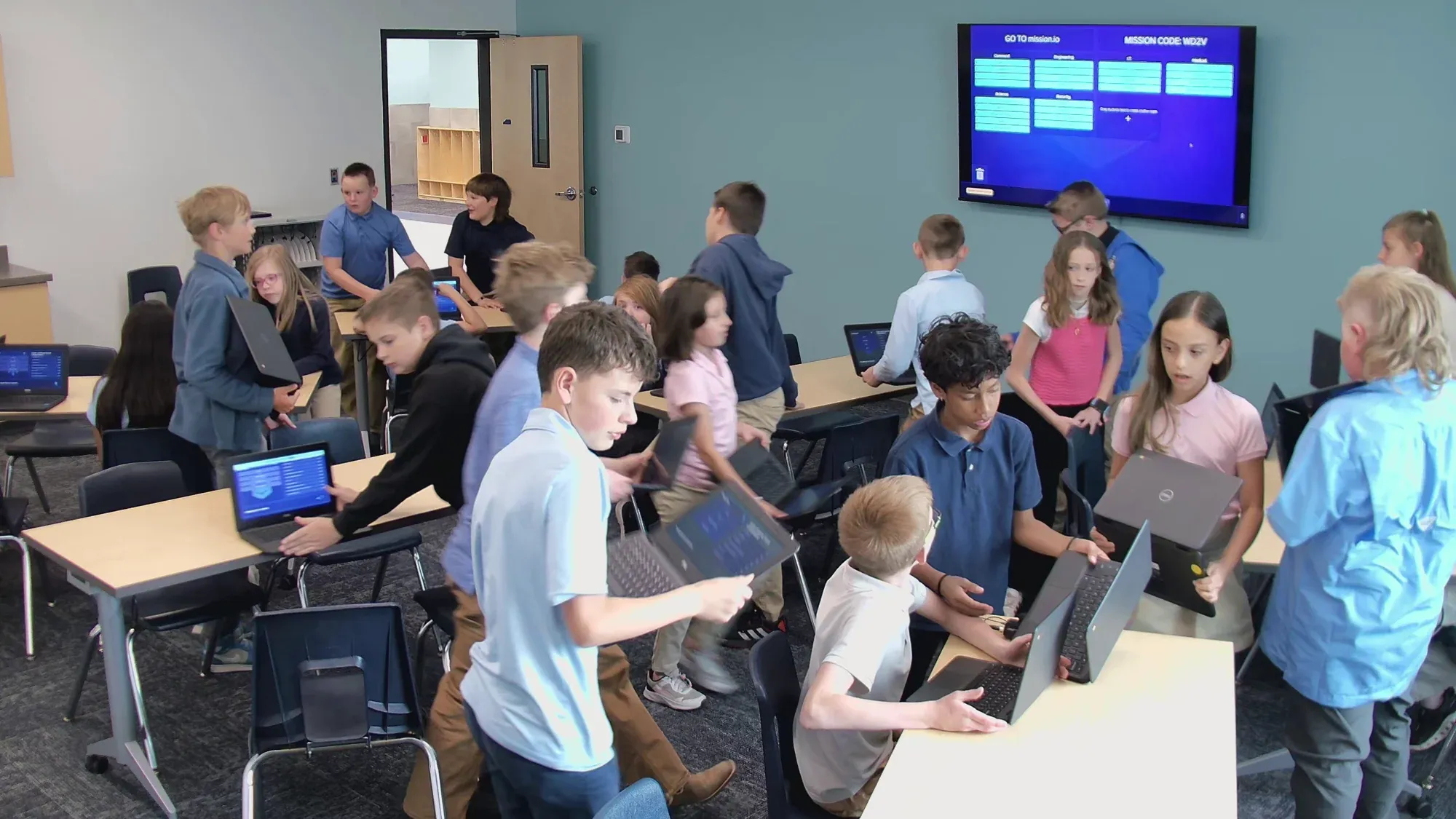
    A class of upper-elementary students moves into crews with their Chromebooks while the screen at the front lists the stations.
    What you'll see: a room full of kids moving into crews, then looking up at the same projector, talking each other through a design that just failed its test, and you at the base of it, not the front.

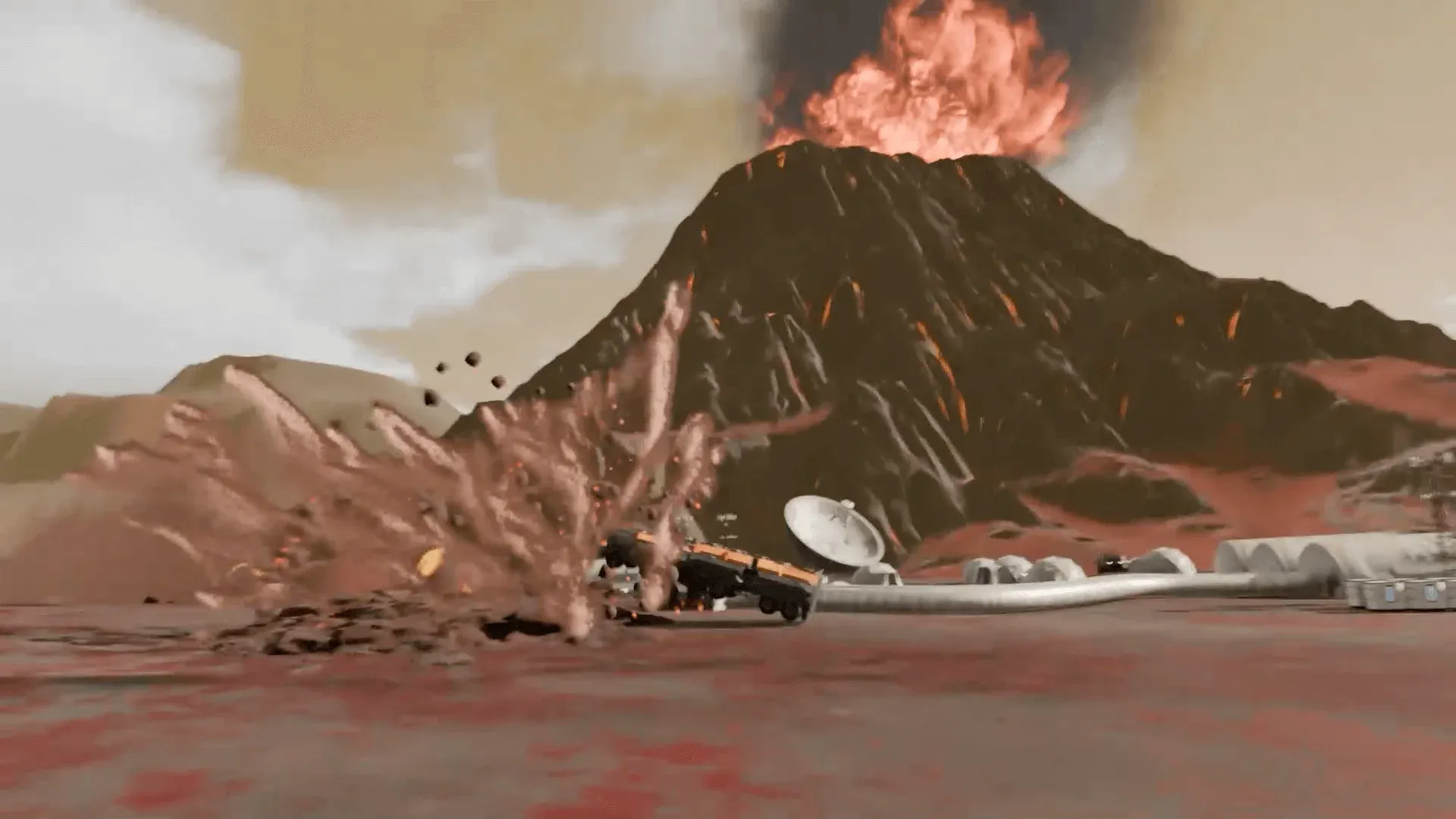
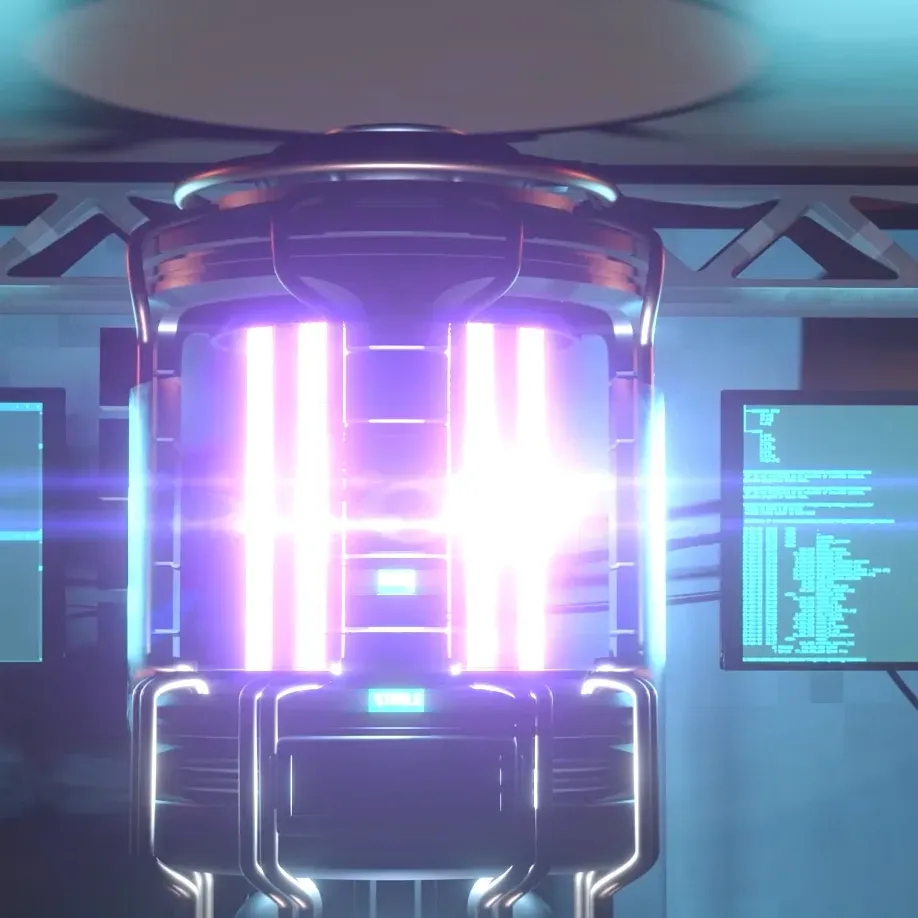
    An EMP has damaged the fusion reactor that powers Koré’s protective shield, and with asteroids incoming, your class is the crew that has to design and build a better one. The story plays on the projector. The work happens at seven stations (Command, Engineering, Medical, Security, Science, I.T., Operations) and in the arguments between them.

    Every student is assigned to a team, and each team’s work is themed to it, from its own information and challenge to the same problem the rest of the crew is solving. The team gives a student a role in the story and people to lean on while you move between teams. You’re at the helm, asking which change they’d make and why.

    Against the six:

    • Stakes. Asteroids are incoming, and Koré’s shield needs a working reactor.
    • Apply. The reactor is unstable, and the crew fixes it by changing the original design, choosing from a variety of materials for the best power output (NGSS 3-5-ETS1-3, improving a prototype from test results).
    • Accountability. Every student is assigned to a team, and each team’s work is themed to it.
    • Teacher leads. You watch the 5-minute Teacher Preview, press Start, and work the room while the Mission carries the story: Which material are you choosing? What does it do to the power output? What would you change next?
    • Debrief. The Mission Guide lists four follow-up activities, an egg drop challenge among them.
    • See who did what. Every student gets a report on how well they did, shaped by what this Mission asked of them.

    “My students ask every time they walk in the door, ‘IS IT A MISSION DAY?’”

    Kate Fallon, Teacher, St. Amelia School, NY

    Will it work in my room?

    Students join with a class code: no student accounts, no student email, no passwords. Chromebooks, laptops, or tablets, plus your projector. Free for teachers, no credit card. Student data is covered by COPPA and FERPA, and we signed the Student Privacy Pledge. No projector or devices? The tower needs neither, and the sheet still works.

    START FREE →

    Communication first, then this one

    This is one Mission. There are more than 100 built the same way, from fossils to fractions, each one somewhere for a unit to go, with a report on every student each time. Every lesson finally has somewhere to go.

    What the report shows

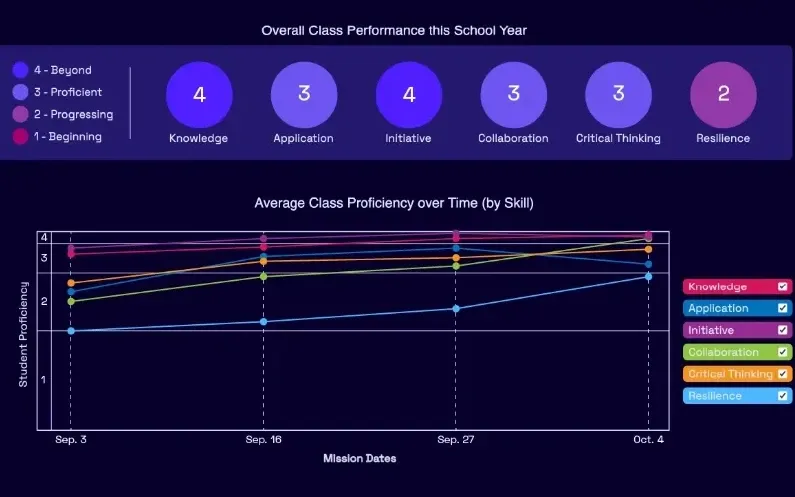
    A Mission.io class report: the class score in each of six skills, from knowledge and application to collaboration, critical thinking, and resilience, with the class chart across the year below.
    A class report from a real Mission: the class score in each of six skills, then each skill across the year.

    Every Mission produces a report for every student, built from what that student did across the whole Mission, on the skills the Mission captured. The six it can capture are Knowledge, Application, Initiative, Collaboration, Critical Thinking, and Resilience. The first two are what a test already sees. The other four are the human skills every school promises. The test shows what they know. The report shows the rest. This is where collaboration gets practiced, and the only place it gets measured. SEE THE EVIDENCE →

    You taught it. Now find out who can use it.

    Who's behind it

    Mission.io is a research and design organization with one job: make collaborative, active learning something a teacher can run every unit instead of once a semester, and put a report in your hands when it’s over. Over a million students have run a Mission. The research behind them is funded by the National Science Foundation and the U.S. Department of Education’s Institute of Education Sciences, and Mission.io meets ESSA Level II standards, as validated by Instructure.

    “This is the most fun they have all week, and they’re learning the whole time. I’m not going back.”

    Lisa Free, Mission Lab specialist, Cook Elementary School, UT
    START FREEMISSION BRIEF →

    Free teacher account, no card. Start with the Communication Mission, marked Start here in your library, then Reactor Revamp, each after its 5-minute Teacher Preview.

Questions 4th grade teachers ask

My 4th graders argue instead of collaborating. Is the activity failing?

No. Nine-year-olds argue; it’s developmentally on schedule. The activity fails when the arguing has nowhere to go. Give it a decision to land on (the Decider’s one change) and a reason to be made out loud, and the argument becomes the collaboration.

How do I grade a group activity fairly?

Grade the behaviors, not the tower. The observation tally gives you four countable things per student. A tall tower built by one kid while three watched shows up on the sheet as three nearly empty rows, and now you can say why.

How do I group 4th graders who won't work together?

Make the groups yourself, and make the roles do the work. A role gives a reluctant kid one job nobody else can do, and swapping Builder and Tester between rounds means the two kids who argue most each get a turn with their hands on it. Change the groups every activity so nobody gets stuck with the same three.

Is this the same as cooperative learning?

Close cousin. Cooperative learning is the structured version with named roles and individual accountability (criterion 3 comes straight from Johnson and Johnson), and 4th grade is where assigned roles enter the standard (SL.4.1b). Our cooperative learning strategies guide covers the named structures with steps.

Collaboration you can finally see

Two ways to run the same six things this week: the tower by hand with the sheet, or Reactor Revamp after a 5-minute Teacher Preview.