1st grade collaboration activities

Save Fred rebuilt so every 1st grader has a hand on the rescue, five more favorites fixed, the Save Fred sheet, and the whole-class Mission we’d run with 1st graders.

Who we are. Mission.io makes Missions: teacher-led, whole-class simulations where students use what they’re learning to work through a real scenario together.

Everything on this page works without us. The Mission we’d run with 1st graders is at the end, free. (It has a greenhouse full of glowing plants and zero gummy worms, so nobody eats the evidence.)

On this page

What collaboration looks like in 1st grade

First grade collaboration activities are small-group tasks where three or four six-year-olds have to get one thing done together, and each child has a job the others can’t do for them. This page rebuilds the gummy-worm rescue every 1st grade team has tried, so it builds exactly that.

Six-year-olds like to compete, and they like working in groups. They ask a lot of questions, they often take on projects bigger than they can finish, and criticism stings them hard. So the best 1st grade task has an obvious goal and a failure that’s funny instead of personal: the worm falls off, nobody does. Working memory is still short at six, which is why the rules below number three, not eight (Harvard’s Center on the Developing Child).

In the Common Core’s words, 1st graders should be listening with care and speaking one at a time, building on what classmates say through several back-and-forth exchanges, and asking questions when something is confusing (CCSS ELA SL.1.1). The rebuild below gives every child a reason to do all four in twenty minutes.

Six things that make 1st grade groups collaborate

Most of a 1st grader’s day isn’t group work at all. When researchers sat in more than 2,500 first, third, and fifth grade classrooms, about 90% of the time went to whole-group lecture or seatwork, and small groups got under 10% (Pianta et al., 2007). That matters, because active learning pays: a review of 225 college STEM course studies found lecture-based sections failing 55% more students than active sections (Freeman et al., 2014). College isn’t 1st grade, so this is what the six look like with six-year-olds; the research for each sits in the K to 8 guide.

  1. 1. A real problem with stakes the class can feel.

    Fred can’t swim. That’s the whole pitch, and six-year-olds will treat a gummy worm’s rescue like breaking news.

  2. 2. Apply, don't recall.

    The content can be the K to 2 design practice itself: come up with more than one way to solve it, try one, compare (NGSS practice 6). Add a retell with first, next, then, and the literacy block gets a turn too.

  3. 3. Group goals with individual accountability.

    Hand a table of 1st graders four paper clips and one child ends up holding all four. Give each clip to a named child and the rescue needs everybody. Slavin counted: of the methods pairing a group goal with a part for each student, 84% came out positive in the studies, against 17% for methods without that pairing (Slavin, 1991).

  4. 4. The teacher leads the thinking.

    Crouch at each table with three short questions instead of cheering from the front. Six-year-olds will answer you, and then they’ll start answering each other.

  5. 5. A debrief where the class argues it out.

    Six minutes on the rug, while the candy is still uneaten, is enough for a class to argue about whose idea got Fred closest.

  6. 6. A way to see who did what.

    When every clip has an owner, you can see from the doorway who’s doing the work. Mark it down and you have a record that doesn’t depend on who talks loudest.

Four clips. Four kids. One worm.

Most 1st grade team-builders score well on stakes and poorly on everything else. Here’s the gummy-worm favorite, with all six put in. Get the Save Fred sheet →

Save Fred, rebuilt to hit all six

You’ve probably run it. Fred, a gummy worm, sits on an upturned plastic cup, his gummy life preserver is trapped underneath, and the team has to get the ring onto Fred with paper clips only, no hands on Fred, the ring, or the cup. Six-year-olds love it. As usually run, though, it has no content to apply, one child does the rescue while three watch, and any wrap-up happens only if the bell allows.

Give Fred a story, give every paper clip a named owner, and swap two of the owners halfway through.

Time
21 minutes of running time: 5 for the story and the three rules, 3 to hand out roles and clips, 4 for round one, 1 to swap, 2 for round two, 6 to debrief (and eat Fred). With setup and cleanup, plan 35 to 40 minutes, which fits a 45-minute block.
Groups
Fours. A class of 22 splits into four fours and two threes, and in each three the Recorder also Lifts.
Supplies per group
One gummy worm, one gummy ring, one 9-ounce plastic cup, four paper clips. A bag of each covers a class for about eight dollars. Check allergies first, and keep a pipe cleaner worm with a rubber band ring for any child who needs one.
Standards
CCSS SL.1.1b (build on others’ talk through multiple exchanges) and SL.1.1c (ask questions to clear up confusion), with the K to 2 practice of generating and comparing solutions (NGSS practice 6).
  1. The problemStakes

    Tell it like news: “Fred fell off his boat in a storm, and he can’t swim. His life preserver is stuck under the boat. We can’t touch Fred, the ring, or the boat, because they’re slippery. We have four paper clips and five minutes before the next wave.” Then show the three rules on the board in pictures.

  2. Apply, don't recallApply

    Before the first try, each team says two ways it could get the ring on Fred and picks one. After every try, the Recorder tells the story back with first, next, then. Generating and comparing solutions is the K to 2 design practice, and the retell is the same sequencing your class uses in reading.

  3. Every clip has an ownerAccountability

    Four roles, one job each, printed on the role cards. No child may touch another child’s clip. That one rule is what turns four kids poking at a worm into a team that has to talk.

    • Lifter

      One clip. Lifts the edge of the cup, and only the cup.

    • Hooker

      One clip. Hooks the ring, and only the ring.

    • Mover

      One clip. Moves Fred, and only Fred.

    • Recorder

      Holds the emergency clip and draws what happened after each try.

  4. You lead the thinkingTeacher leads

    At each table, three questions: Whose clip is on Fred right now? What did you try that didn’t work? What are you trying next, and who’s doing it? Keep your hands in your pockets. A 1st grader who watches you fix it learns that grown-ups fix it.

  5. Swap and go againAccountability

    After four minutes, stop everyone. The Lifter and the Mover trade clips, and the team gets two more minutes. The swap is where the second child finds out the job was harder than it looked from across the table, which is a lesson no poster teaches.

  6. The debriefDebrief

    Six minutes on the rug, Fred still uneaten. Three questions in order: Which try got Fred closest, and whose idea was it? What did you say to your team when Fred fell? If we did it again, what would you change first? Wait on the first one until a child names a teammate, not themselves.

  7. See who did whatSee who did what

    Four marks go on the tally for each child: said an idea, waited for their turn with the clip, asked a teammate a question, changed the plan with a reason. Round one is loud and easy to read, since you can see who’s holding which clip, so roughly half the class gets marked. Start round two at the tables you missed and you’ll catch the rest.

(Fred is edible. Announce that after the debrief, not before.)

Six-year-olds will tell you whose idea saved Fred, by name, before you’ve finished asking.

The Save Fred challenge, free

Emailed now, ready to copy: the teacher page, four role cards, Fred’s story with the three rules, the Recorder’s first, next, then, last strip, and the four-behavior tally.

It’s on its way.

Check your inbox for the Save Fred challenge.

Email me the sheet. It comes as a PDF, ready to print. Unsubscribe anytime.

Five more classics, and the fix each needs

First grade teachers run a lot of these in September, because six-year-olds love a team and a challenge. Most of them need only a couple of changes to start building the skill.

Five more for 1st grade

1. Cup stack challenge (2 to 6)

Needs six cups, one rubber band, four strings. Groups of four. 15 minutes.

A team of four shares one rubber band with four strings tied on, and they stretch and pull to stack six cups into a pyramid without a hand touching a cup. Every child holds a string, so nobody sits out, and a falling cup gives it real stakes. As usually run, though, it’s a race with a second try, with no content in it, no adult at the table, no talk afterward, and no record of who did what.

The fix

  1. It’s a 2nd grade classic, and it’s fine to run a year early: give each team a Caller who may only speak, never pull.
  2. Tape a test log to the table, and after every lift have one child mark it: cup number, landed or fell.

See the cup stack rebuilt for 2nd grade →

2. Picture pieces

Needs a picture card, one paper square per child, crayons. Groups of four. An art period.

Each child gets one paper square and draws their part of a picture from a card, and the group puts the squares together into a mural. Accountability is built in, since every square has an artist. As usually run, though, it’s an art period with a surprise ending, where the picture has no reason to exist and nobody talks about it once it’s up.

The fix

  1. Give the picture a job, like a map of the classroom for a new student.
  2. Have each child write their name on their square before it goes into the mural.
  3. When it’s assembled, ask the group what they’d change so the new student could find her way.

No page; names on the squares make the mural your record.

3. Back-to-back drawing

Needs a simple picture, paper, pencils. Pairs. 10 minutes.

Partners sit back to back: one describes a picture, and the other draws it without looking. Six-year-olds love the moment they turn around. As usually run, though, it’s a laugh at the results, with no problem to solve, one partner doing all the talking, and no talk afterward.

The fix

  1. Use a picture of three shapes the class knows, like a circle on a square next to a triangle.
  2. Let the drawer ask two questions along the way, so one long description becomes an exchange.

No page for this one at 1st grade; the two questions are the fix.

4. Partner puzzles

Needs one small jigsaw puzzle. Pairs. A center rotation.

Two children share one small jigsaw puzzle at a center and build it together. It’s calm, and both children have their hands on the same picture. As usually run, though, there’s nothing at stake, no content in it, and no way to tell who placed what.

The fix

  1. Before the center opens, color the backs of one child’s pieces, so you can see who placed what.
  2. Give the pair a question first that the finished picture answers, like “Where is the dog hiding?”

No page for this one; the colored backs are your record.

5. Paper chain challenge

Needs one sheet of paper, tape, scissors. Groups of four. 10 minutes.

Teams of four get one sheet of paper, tape, and scissors, and ten minutes to make the longest chain they can. There’s a clear goal and a clock, so every team cares how it turns out. As usually run, though, it’s a race, so the fastest scissors win and the planning never happens.

The fix

  1. Give it four jobs: a cutter, a taper, a measurer, and a planner who says how wide to cut the strips.
  2. Give the chain a reason to be long, like reaching all the way across the classroom door.

See more 1st grade STEM activities →

  • Our part · We make Missions

    Or let a Mission tell the story. You keep the questions

    Save Fred works by hand, and you can run it with nothing but a bag of candy. A Mission is a teacher-led, whole-class simulation that runs the same six things in 21 minutes. It tells the story, puts every station on a screen, and keeps the record, so your energy goes to the questions.

    You're at the helm, not on the hook.

    Botanical Break-In: the whole-class Mission we'd run with 1st graders

    Botanical Break-In · Grades 1 to 2 · About 21 minutes · One device per student, plus your projector · Free with a teacher account

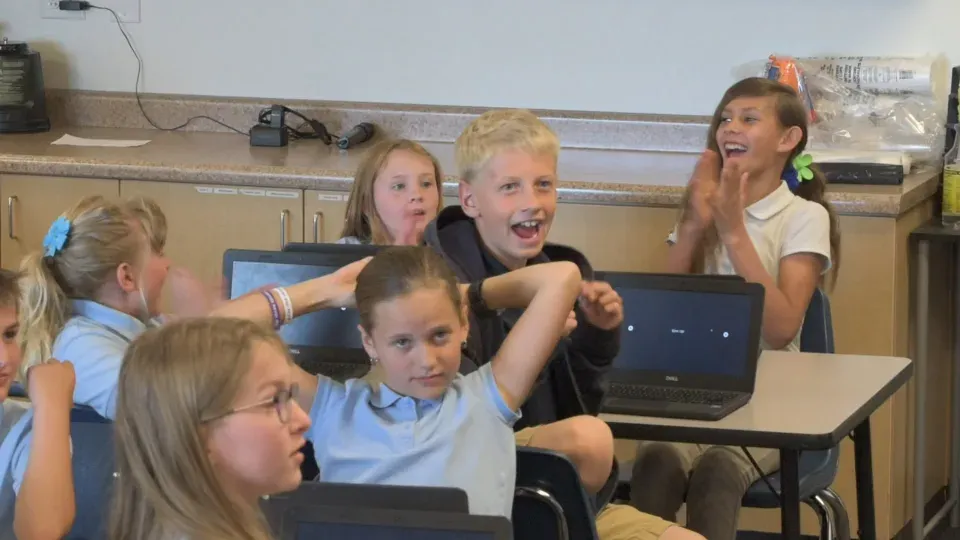
    Young students at their laptops cheer, clap, and throw their arms over their heads together.
    What you'll see: a class of small kids cheering at the same moment because the crew just got it right, and every one of them sure it was their station that did it.

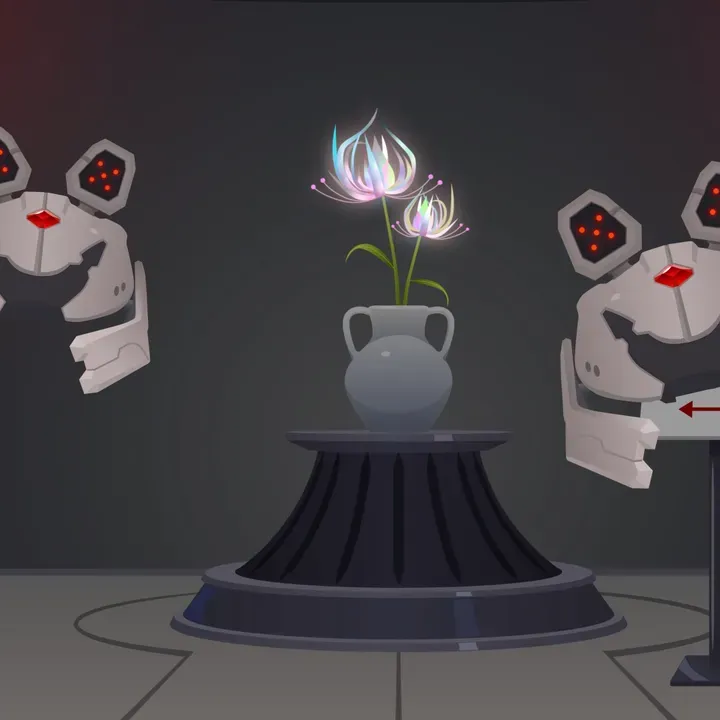
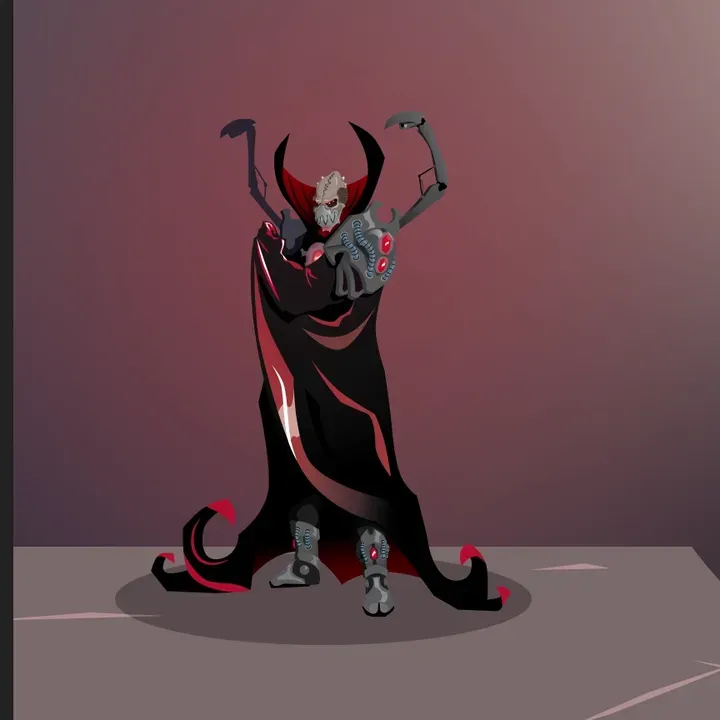
    Moodoo has stolen the Luminous Lykoris from Tellenor and hidden it among glowing plants that respond differently to sunlight and water. The crew sneaks into his greenhouse, Moodoo traps them, and to find the plant and escape they have to work out how those plants grow. The story plays on the projector. The work happens at seven stations (Command, Engineering, Medical, Security, IT, Operations, Science) and in the arguments between them.

    Every student is assigned to a team, and each team’s work is themed to it, from its own information and challenge to the same problem the rest of the crew is solving. The team gives a student a role in the story and people to lean on while you move between teams. You’re at the helm, asking which plant they’re sure about and why.

    Against the six:

    • Stakes. The crew is trapped, and has to find the plant and get out fast.
    • Apply. Teams investigate how sunlight and water change each plant’s growth (NGSS 2-LS2-1, a grade 2 standard).
    • Accountability. The investigation is teamwork, and each station adds its own piece.
    • Teacher leads. After the five-minute Teacher Preview, walk the teams asking: How does this plant respond to sunlight? To water? Which plant is the one we want, and how do you know?
    • Debrief. The Mission Guide suggests five follow-ups, including a “Plant Light Maze.”
    • See who did what. Every student gets a report on how well they did, shaped by what this Mission asked of them.

    “The missions are so engaging and entertaining my students don’t realize I am giving them an assessment.”

    Savannah Watson, Teacher, Orchard Elementary, UT

    Will it work in my room?

    Students join with a class code: no student accounts, no student email, no passwords. Chromebooks, laptops, or tablets, plus your projector. Free for teachers, no credit card. Student data is covered by COPPA and FERPA, and we signed the Student Privacy Pledge. No projector or devices? Save Fred needs neither, and the sheet still works.

    START FREE →

    Communication first, then this one

    This is one Mission. Over a hundred more are built this way, from glowing greenhouses to a vanishing moon, so a unit can land on one, and you get a report on each student when it does. Every lesson finally has somewhere to go.

    What the report shows

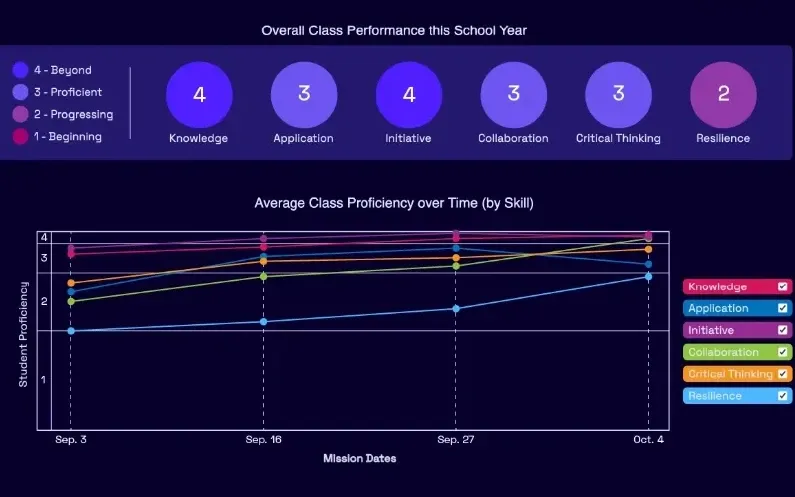
    A Mission.io class report: the class score in each of six skills, from knowledge and application to collaboration, critical thinking, and resilience, with the class chart across the year below.
    A class report from a real Mission: the class score in each of six skills, then each skill across the year.

    Every Mission produces a report for every student, built from what that student did across the whole Mission, on the skills the Mission captured. The six it can capture are Knowledge, Application, Initiative, Collaboration, Critical Thinking, and Resilience. The first two are what a test already sees. The other four are the human skills every school promises. The test shows what they know. The report shows the rest. This is where collaboration gets practiced, and the only place it gets measured. SEE THE EVIDENCE →

    You taught it. Now find out who can use it.

    Who's behind it

    Mission.io is a research and design organization with one job: make collaborative, active learning something a teacher can run every unit instead of once a semester, and put a report in your hands when it’s over. Over a million students have run a Mission. The research behind them is funded by the National Science Foundation and the U.S. Department of Education’s Institute of Education Sciences, and Mission.io meets ESSA Level II standards, as validated by Instructure.

    “Observe a mission in another classroom. It will change the way you think about them.”

    Danica Puente, Teacher, Holbrook Elementary, UT
    START FREEMISSION BRIEF →

    Free teacher account, no card. Order matters: the Communication Mission, marked Start here in your library (1st graders run the K to 1 version), then Botanical Break-In. Watch the 5-minute Teacher Preview that comes with each.

Questions 1st grade teachers ask

Are 1st graders ready to work in groups of four?

For a short task with one job each, yes. At six, collaboration means learning to offer an idea, wait a turn, and hear that a teammate sees it differently, and at this age most kids are eager to try it. Keep it to about twenty minutes and three rules, and save open-ended group projects for later in the year.

What do I do when one child grabs all the paper clips?

Make the clips personal before anyone starts: one clip per named child, and nobody touches another child’s clip. Most grabbing stops once the clip has a name on it. If it doesn’t, freeze the table and ask the Recorder to tell you what just happened. Six-year-olds police a rule they can all repeat.

Is it okay to use candy for Save Fred?

Check every allergy and your school’s food rules first. A pipe cleaner worm and a rubber band ring work just as well, and the child who gets the non-candy Fred shouldn’t be the only one. If your school says no food, make every Fred a pipe cleaner and skip the eating.

My 1st graders pick challenges that are way too hard. Should I make Save Fred easier?

Keep the challenge and shrink the rules. Six-year-olds really do reach for challenges beyond them, and that’s part of the fun; what overwhelms them is remembering eight instructions. Three rules in pictures, one job per child, and a swap halfway through keep it hard in the right way.

Collaboration you can finally see

This week, run Save Fred with a bag of gummy worms and the sheet, or run Botanical Break-In once you've watched the five-minute preview.