2nd grade collaboration activities

The cup stack rebuilt so the fastest hands don’t win it, five more team-builders fixed, a printable for tomorrow, and the whole-class Mission we’d run with 2nd graders.

Who we are. Mission.io makes Missions: teacher-led, whole-class simulations where students use what they’re learning to work through a real scenario together.

Everything on this page works without us. The Mission we’d run with 2nd graders is at the end, free. (Its bots dropped Earth’s animals in the wrong habitats, and your class gets to tell a robot it’s wrong.)

On this page

What collaboration looks like in 2nd grade

Second grade collaboration activities are tasks four seven-year-olds can’t finish unless all four of them do their part at the same moment, and where each child’s part is theirs alone. This page rebuilds a team-builder that’s impossible to do solo, so it teaches the talking as well as the pulling.

Many seven-year-olds prefer working alone or with one friend. They tend to steer clear of risks, and mistakes bother them. They’re also careful listeners and precise speakers, which is exactly what a good Caller needs. The cup stack suits seven because nobody can do it alone, and when a cup falls, the mistake belongs to the rubber band, not the child.

The standard asks 2nd graders to gain the floor in respectful ways, listen with care, build on others’ talk by tying what they say to a classmate’s remark, and ask for clarification when they need it (CCSS ELA SL.2.1). Calling a lift is all four, out loud, with a cup on the line.

Six things that turn a team-builder into collaboration

Doing beats listening, and a college review says so plainly: pooling 225 college STEM course studies, researchers found 55% more failures where instructors lectured than where students worked actively (Freeman et al., 2014). K to 12 science adds a condition. Hands-on work alone wasn’t enough; what predicted learning was active thinking, with discussion to make sense of what students did (Minner, Levy, and Century, 2010). That’s the whole case against a cup race. Six things, each at seven years old; find every study behind them in our K to 8 guide.

  1. 1. A real problem with stakes the class can feel.

    “Stack the cups” is a goal. “The crane is broken and the tide is coming in” is a problem, and a dropped cup becomes a crate in the water.

  2. 2. Apply, don't recall.

    Seven-year-olds can predict, then count. A pyramid of three, two, one is six cups; how many for four rows? The Recorder writes the number sentence, and the test log is data about whether the tool works (NGSS K to 2 practice 4).

  3. 3. Group goals with individual accountability.

    The tool does half the work here: four strings, four hands, and the band won’t open unless everyone pulls. What’s missing is a record of who called, who aimed, and who just pulled. In Slavin’s synthesis, 37 of 44 studies of methods with a group goal and individual accountability found gains (84%), and just 4 of the 23 that lacked them did (17%) (Slavin, 1991).

  4. 4. The teacher leads the thinking.

    In most cup races the teacher holds a stopwatch. Put it down and crouch at the table with three questions about the last cup.

  5. 5. A debrief where the class argues it out.

    Seven-year-olds speak precisely when they’re given a reason to. “Who said the thing that fixed it?” is that reason.

  6. 6. A way to see who did what.

    A pyramid at the end tells you the team finished. A tally with four names on it tells you which of the four learned to call a lift.

Four strings. Nobody pulls alone.

Most 2nd grade team-builders are races, and a race is won by the fastest hands. Here’s the one on nearly every team-building list, with a Caller, a test log, and all six. Get the cup stack sheet →

The cup stack, rebuilt to hit all six

You’ll find it on nearly every list of team-builders for kids. Four kids, six cups, and one rubber band with four strings tied to it; the team pulls the strings to open the band, moves each cup, and stacks a pyramid without anyone’s hands touching a cup. It’s good, because nobody can do it alone. As usually run, though, it’s a race with no content, the teacher holds the stopwatch, and the wrap-up is a quick show of hands.

Turn the pyramid into a job the class needs done, give one child the only voice during a lift, and let each team change one of its own rules between rounds.

Time
The parts add to 32 minutes: 5 to show the tool and the roles, 2 to hand out, 4 for round one, 3 for each team’s rule change, 5 for round two, 8 for the debrief, 5 to collect. Plan 40 to 45 minutes in all; a 45-minute block works only if the tools are tied the night before (about ten minutes).
Groups
Fours exactly, because the tool has four strings. With 26 children, that’s six fours and a pair; the pair gets a two-string tool and three cups.
Supplies
Six to ten cups per group (a sleeve of 50 is about four dollars), a bag of rubber bands (about two dollars), and a ball of string (about three dollars). About ten dollars for the room, and the tools last for years.
Standards
CCSS SL.2.1a (gain the floor in respectful ways) and SL.2.1b (link comments to the remarks of others), with NGSS practice 4 for K to 2: analyze data from tests of a tool to see if it works as intended.
  1. The problemStakes

    “These cups are cargo on a dock, and the crane is broken. The only tool we have is the band and the strings. The cargo has to be stacked in a pyramid before the tide comes in, and a dropped cup is a crate in the water.” Point at the clock when you say “tide.”

  2. Apply, don't recallApply

    Before the first lift, each team predicts: three rows takes how many cups? Four rows? The Recorder writes the number sentences (3 + 2 + 1 = 6, then 4 + 3 + 2 + 1 = 10) on the prediction box. Now the pyramid is arithmetic with a reason to check it.

  3. Four strings, four jobsAccountability

    Everyone holds a string, and everyone has one more job, printed on the role cards. The Caller hands the job to the next child every three cups, so every child calls at least once.

    • Caller

      Says "pull," "ease," and "hold." The only voice during a lift.

    • Aimer

      Watches the cup and tells the Caller "left," "right," or "down."

    • Steady

      Holds the string still when the Caller says "hold."

    • Recorder

      Marks the test log after every lift: cup number, landed or fell.

  4. You lead the thinkingTeacher leads

    Crouch at the table and ask three questions: Who’s talking during a lift, and is it only the Caller? What happened on the last cup, and why? What are you changing on the next one? If two voices are calling, don’t fix it. Ask the Aimer what she heard.

  5. Two rounds, one rule changeApply

    Round one: six cups, four minutes. Stop, and give each team three minutes to change one rule of its own (how the Caller calls, who aims). Round two: ten cups, five minutes. The test log from round one is the evidence for the change: test data deciding whether the tool works.

  6. The debriefDebrief

    Eight minutes with the whole class. Ask, in this order: Which cup fell most, and what did you change? Who said the thing that fixed it? What was harder, pulling or calling? Hold out for answers to the middle one, because it makes a seven-year-old name someone else’s idea.

  7. See who did whatSee who did what

    On the tally, each child gets four columns: gave a clear call, built on a teammate’s call, asked for a redo with a reason, changed their mind for a reason. One period gets you through roughly half the room. With the Caller job rotating, watching each team’s rotation once gives every child at least one mark for a clear call.

(The pair with the two-string tool will tell everyone it had the hardest job. It did.)

When a cup drops, seven-year-olds who hate mistakes get to blame the rubber band, and they pick the string back up faster.

The cup stack challenge, free

Emailed now, ready to copy: the teacher page, the Caller, Aimer, Steady, and Recorder cards, the pyramid prediction box with the rule-change card, the test log (cup, landed or fell, what we changed), how to tie the tool, and the four-behavior tally.

It’s on its way.

Check your inbox for the cup stack challenge.

Email me the sheet. It comes as a PDF, ready to print. Unsubscribe anytime.

Five more classics, and the fix each needs

Second graders will happily do any of these, and most of them build more giggling than collaboration. Each one below gets the changes that give every child a part you can see.

Five more for 2nd grade

1. Save Fred (1 to 3)

Needs gummy worms, gummy rings, plastic cups, paper clips. Groups of four. 20 minutes.

A gummy worm named Fred sits on an upturned cup, his gummy life preserver trapped underneath, and the team has to get him into it using only paper clips. Second graders love the story, and the rescue has real stakes. As usually run, though, it’s a giggle with no lesson inside it, and nobody’s clip to point at when it works.

The fix

  1. Hand out one clip per child and name its owner, so nobody touches anybody else’s clip.
  2. Before each move, the Recorder says what the team will try next, and nobody moves until it’s said.

See Save Fred rebuilt for 1st grade →

2. Zoom (the picture book)

Needs a copy of Istvan Banyai's Zoom, pages separated. One page per child. A read-aloud block.

Each child holds one page of Istvan Banyai’s wordless book, Zoom, and the group has to line the story up without anyone showing a page. Every page has one holder and the puzzle is real, so it has stakes and a part for everyone. As usually run, though, it ends with a reveal and leaves no trace of who described what.

The fix

  1. Before the group talks, each child writes a line on the tally sheet describing their page.
  2. Each child also names the two pages they think come right before and after theirs.

No page for this one; the describing on paper is the fix.

3. Partner reading with a question card

Needs one book and one card per pair. Pairs. A daily routine.

Two children share one book and a question card to answer at the end. It’s a steady routine that keeps both partners reading. As usually run, though, nothing rides on the card, and nobody hears the answer.

The fix

  1. Turn the card into a choice, like “Which character would you want on your team, and why?”
  2. Have both partners initial the card once they agree.
  3. Pick three pairs to defend their choice to the class.

No page for this one; the decision on the card does the work.

4. Paper bridge

Needs index cards, tape, a jar of pennies, books for the gap. Fours. Half an hour.

A team of four spans a gap between two books with index cards and tape, then loads the bridge with pennies until it sags. Counting pennies gives the test real stakes. As usually run, though, the strongest builder does it all, and nobody keeps track of who did what.

The fix

  1. Hand out the four cup stack role cards from above, one per child.
  2. Have the Recorder log pennies instead of cups, one line per test.

See the index card bridge rebuilt for 2nd grade engineering →

5. Group story chart

Needs chart paper, markers. Whole class. A shared writing block.

The whole class writes a story together on chart paper, with you as the scribe. It’s shared writing, and the words are right there for everyone to read. As usually run, though, the quickest hands supply most of the words, and the chart can’t show who wrote what.

The fix

  1. Give each child a word card, like a word from this week’s read-aloud, that has to make it into the story.
  2. As you write each sentence, add the name of the child whose word it used.

No page for this one; names beside sentences turn the chart into the record.

  • Our part · We make Missions

    Or hand a Mission the setup while you work the tables

    The cup stack earns its spot every fall in plenty of 2nd grade rooms. A Mission is a teacher-led, whole-class simulation, 24 minutes long, with the six built in; it tells the story, runs every station, and keeps the record for you. The questions, and the crouching at tables, stay yours.

    You're at the helm, not on the hook.

    All Mixed Up, a whole-class Mission written for 2nd grade

    All Mixed Up · Grade 2 · About 24 minutes · One device per student, plus your projector · Free with a teacher account

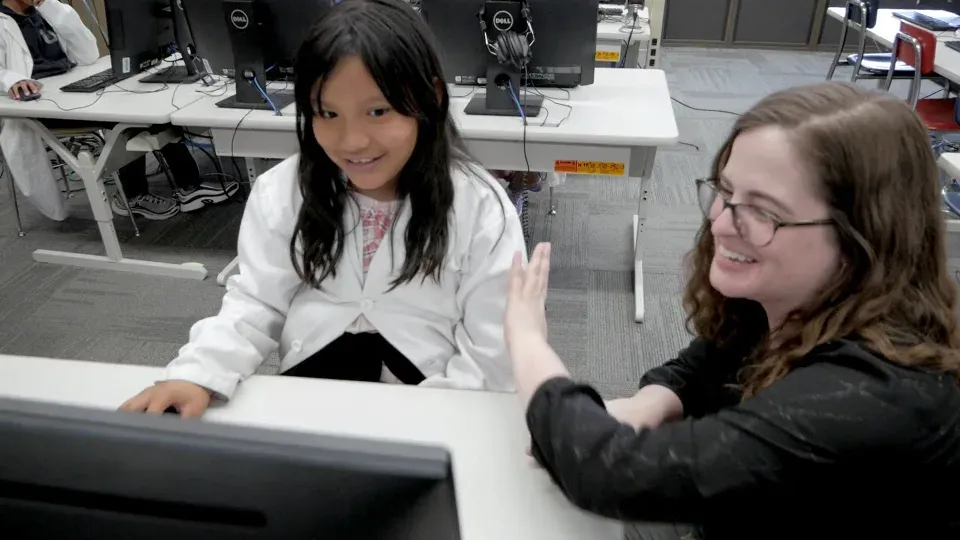
    A teacher laughs and high-fives a student in a white lab coat while they look at her computer screen together.
    What you'll see: a second grader in a lab coat who just got her station's answer, a high five from you, and a crew waiting to hear what she found.

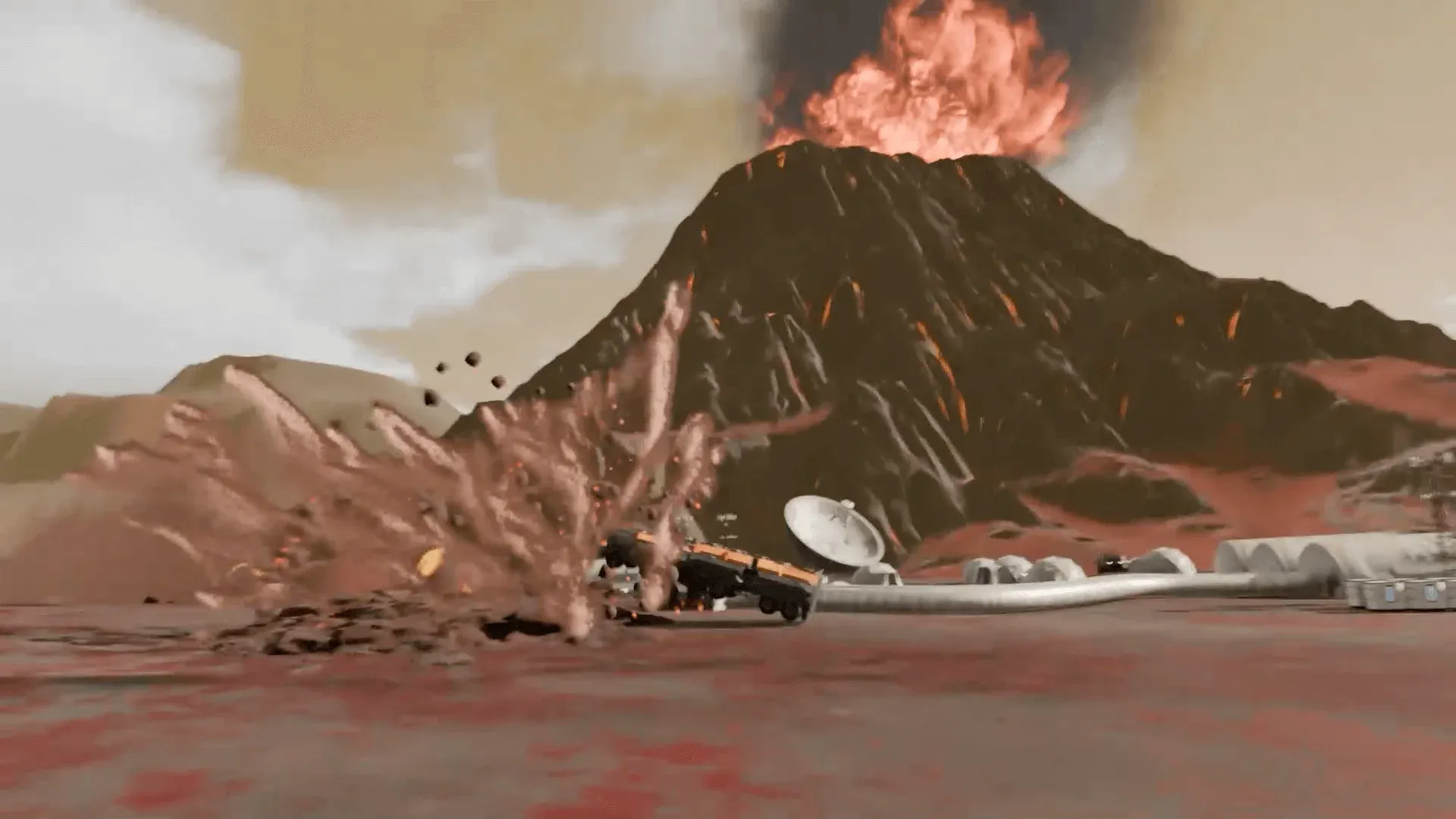
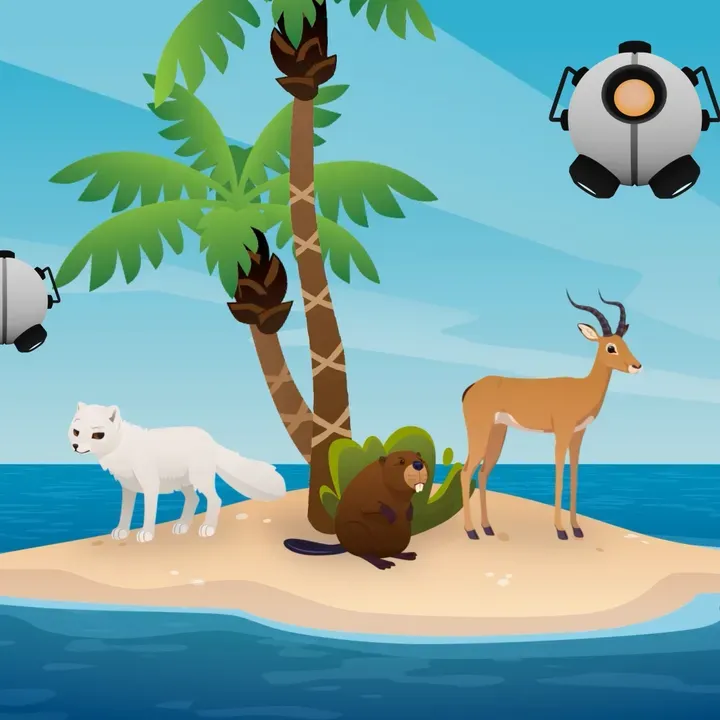
    Faulty terraforming bots have misplaced Earth’s animals. The crew studies several ecosystems, compares two as a team on a Venn diagram, and uses that to reprogram the bots. The story plays on the projector. The work happens at seven stations (Command, Engineering, Medical, Security, Science, I.T., Operations) and in the arguments between them.

    Every student is assigned to a team, and each team’s work is themed to it, from its own information and challenge to the same problem the rest of the crew is solving. The team gives a student a role in the story and people to lean on while you move between teams. You’re at the helm, asking what lives in one place and not the other.

    Against the six:

    • Stakes. The animals are all mixed up until the class reprograms the bots.
    • Apply. Teams compare two ecosystems on a Venn diagram (NGSS 2-LS4-1, comparing the diversity of life in different habitats).
    • Accountability. The comparison is a team job, done on every student’s own screen.
    • Teacher leads. After the five-minute Teacher Preview, go team to team asking: What lives here and not there? What do both places share? What does the bot need to know?
    • Debrief. The debrief is yours: which comparison fixed the bots, and whose idea was it?
    • See who did what. Every student gets a report on how well they did, shaped by what this Mission asked of them.

    “What I love most is that it’s low-prep but high-impact.”

    Ginger Marsh, Middle school teacher, Cedar Middle School

    Will it work in my room?

    Students join with a class code: no student accounts, no student email, no passwords. Chromebooks, laptops, or tablets, plus your projector. Free for teachers, no credit card. Student data is covered by COPPA and FERPA, and we signed the Student Privacy Pledge. No projector or devices? The cup stack needs neither, and the sheet still works.

    START FREE →

    Communication first, then this one

    This is one Mission. Past this one sit more than 100 others, ecosystems and landforms included, each designed as where a unit is heading, each ending with a report you can read student by student. Every lesson finally has somewhere to go.

    What the report shows

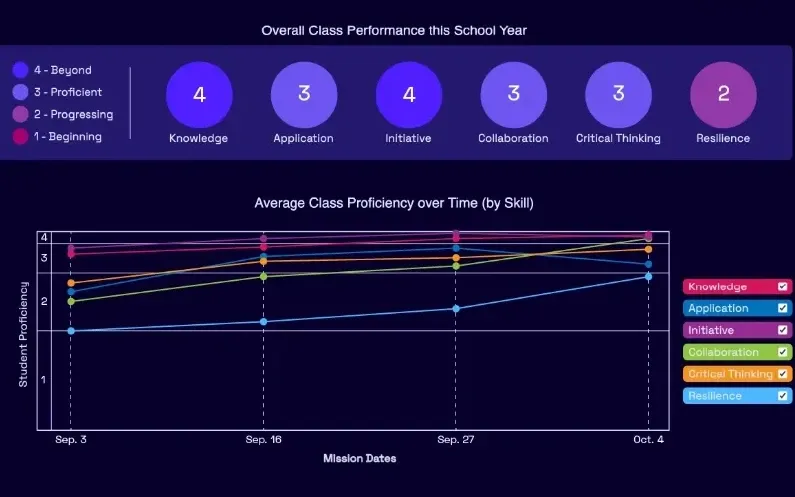
    A Mission.io class report: the class score in each of six skills, from knowledge and application to collaboration, critical thinking, and resilience, with the class chart across the year below.
    A class report from a real Mission: the class score in each of six skills, then each skill across the year.

    Every Mission produces a report for every student, built from what that student did across the whole Mission, on the skills the Mission captured. The six it can capture are Knowledge, Application, Initiative, Collaboration, Critical Thinking, and Resilience. The first two are what a test already sees. The other four are the human skills every school promises. The test shows what they know. The report shows the rest. This is where collaboration gets practiced, and the only place it gets measured. SEE THE EVIDENCE →

    You taught it. Now find out who can use it.

    Who's behind it

    Mission.io is a research and design organization with one job: make collaborative, active learning something a teacher can run every unit instead of once a semester, and put a report in your hands when it’s over. Over a million students have run a Mission. The research behind them is funded by the National Science Foundation and the U.S. Department of Education’s Institute of Education Sciences, and Mission.io meets ESSA Level II standards, as validated by Instructure.

    “This is the only thing I’ve used in 24 years of teaching that I love just as much as my students do.”

    Evelyn Fowles, 6th grade teacher
    START FREEMISSION BRIEF →

    Free teacher account, no card. Your 2nd graders start on the Communication Mission, marked Start here in your library (theirs is the 2 to 3 version), then All Mixed Up, with a 5-minute Teacher Preview for you ahead of each.

Questions 2nd grade teachers ask

My 2nd graders would rather work alone. Should I let them?

Sometimes, and not for this. Lots of seven-year-olds prefer working alone or with one friend, so pick tasks they can’t do alone. Four strings on one band means the stack only moves when all four kids move together, and nobody has to be talked into it.

A cup falls and a child melts down. What do I do?

Point at the tool. A mistake stings at seven, which is why the test log says “fell,” not who dropped it, and the next line is “what we changed.” Ask the team what the band did wrong, then hand the child the string again.

How do I stop one child from bossing the whole group?

Give the bossing a job and a time limit. The Caller is the only voice during a lift, and the job passes to the next child every three cups. The bossy child gets to call, then has to aim and listen to someone else’s calls, and the tally shows whether they built on them.

What does building on a partner's idea sound like at seven?

Short and specific: “Call it like Maya did, but slower,” or “Pull when I say, then wait.” That’s SL.2.1b, linking a comment to what someone else said. When you hear it, tally it, and in the debrief ask the class whose call got borrowed.

Teamwork you can finally count

Tie the tools tonight and run the cup stack with the sheet, or give the five-minute preview a look and run All Mixed Up. Either way, all six show up.