For parents

“We ran a Mission today.” A parent’s guide to what that means.

It means your child’s teacher led the whole class through a simulation built from what they’re learning. This guide covers what happens, why your school chose it, your part at home, and screen time.

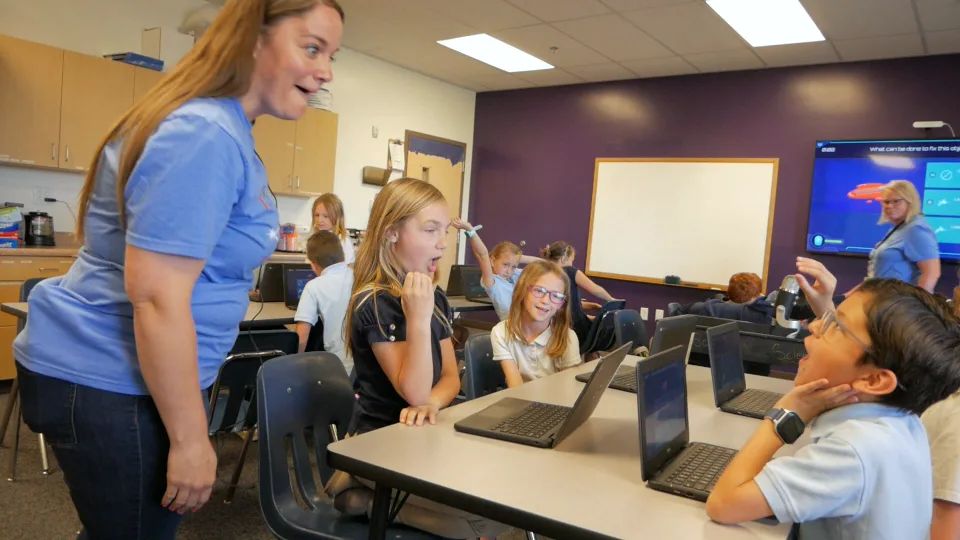
  • A teacher leans in with a gasp as two students at their team table gasp right back, the Mission question on the wall screen behind them.
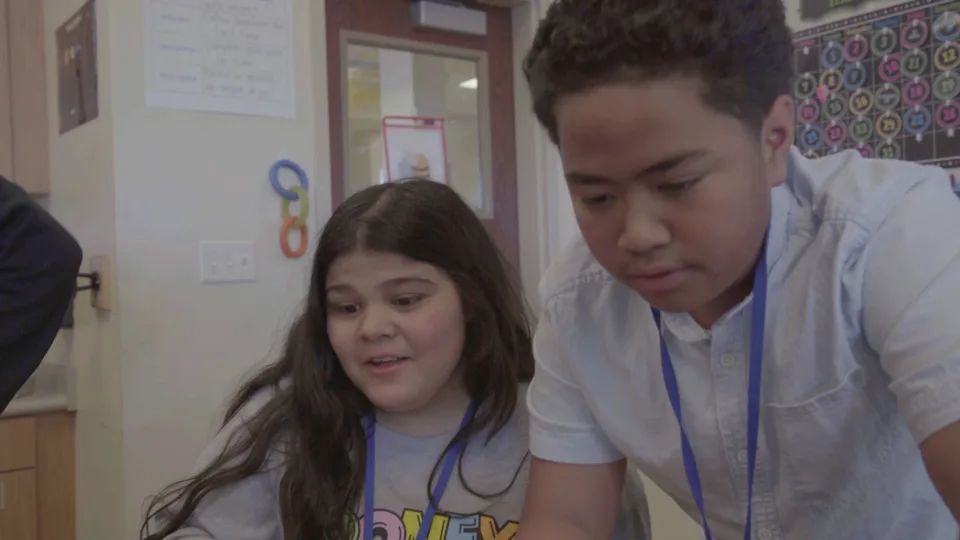
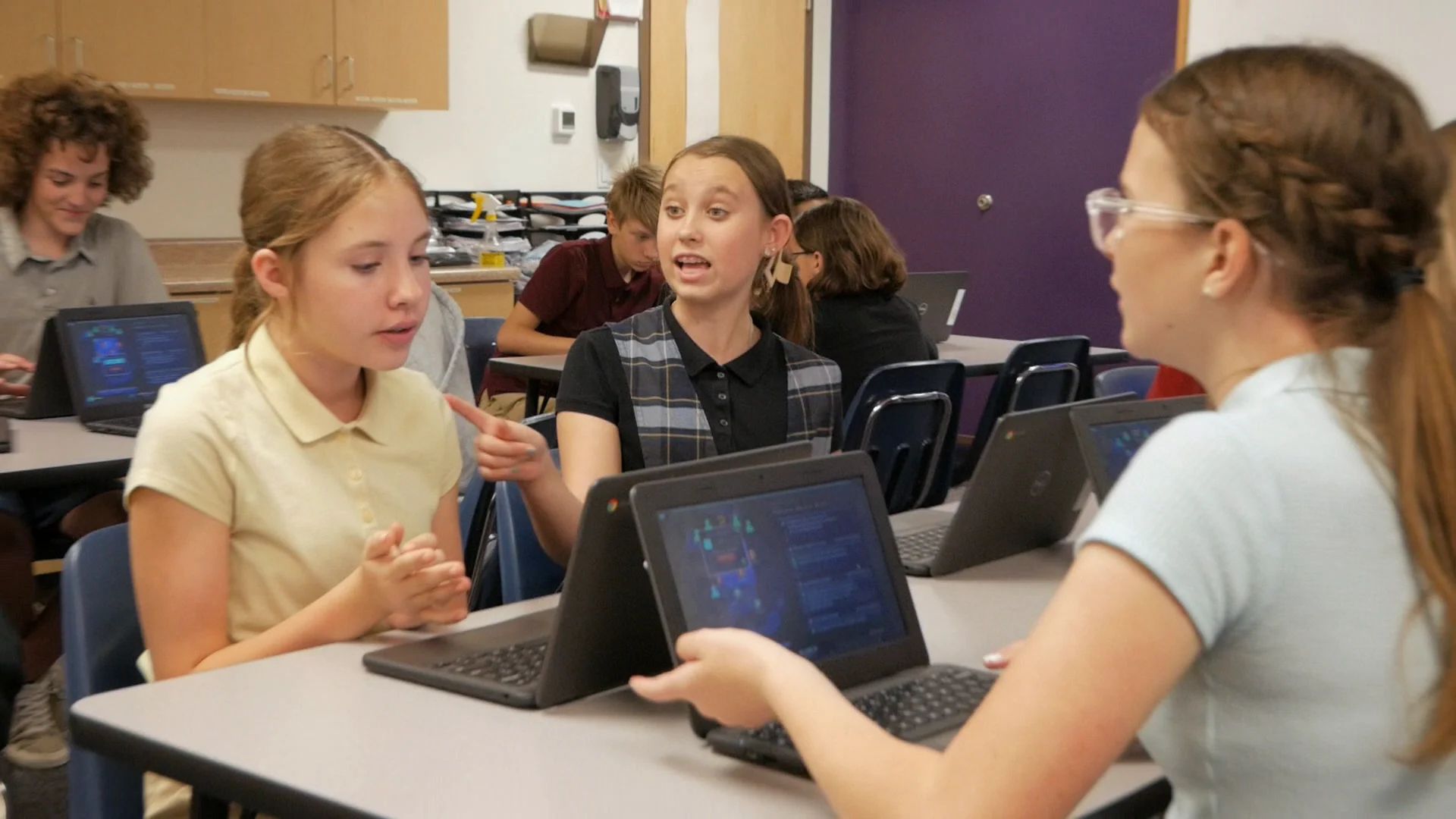
  • Two middle schoolers lean in together to study a screen.
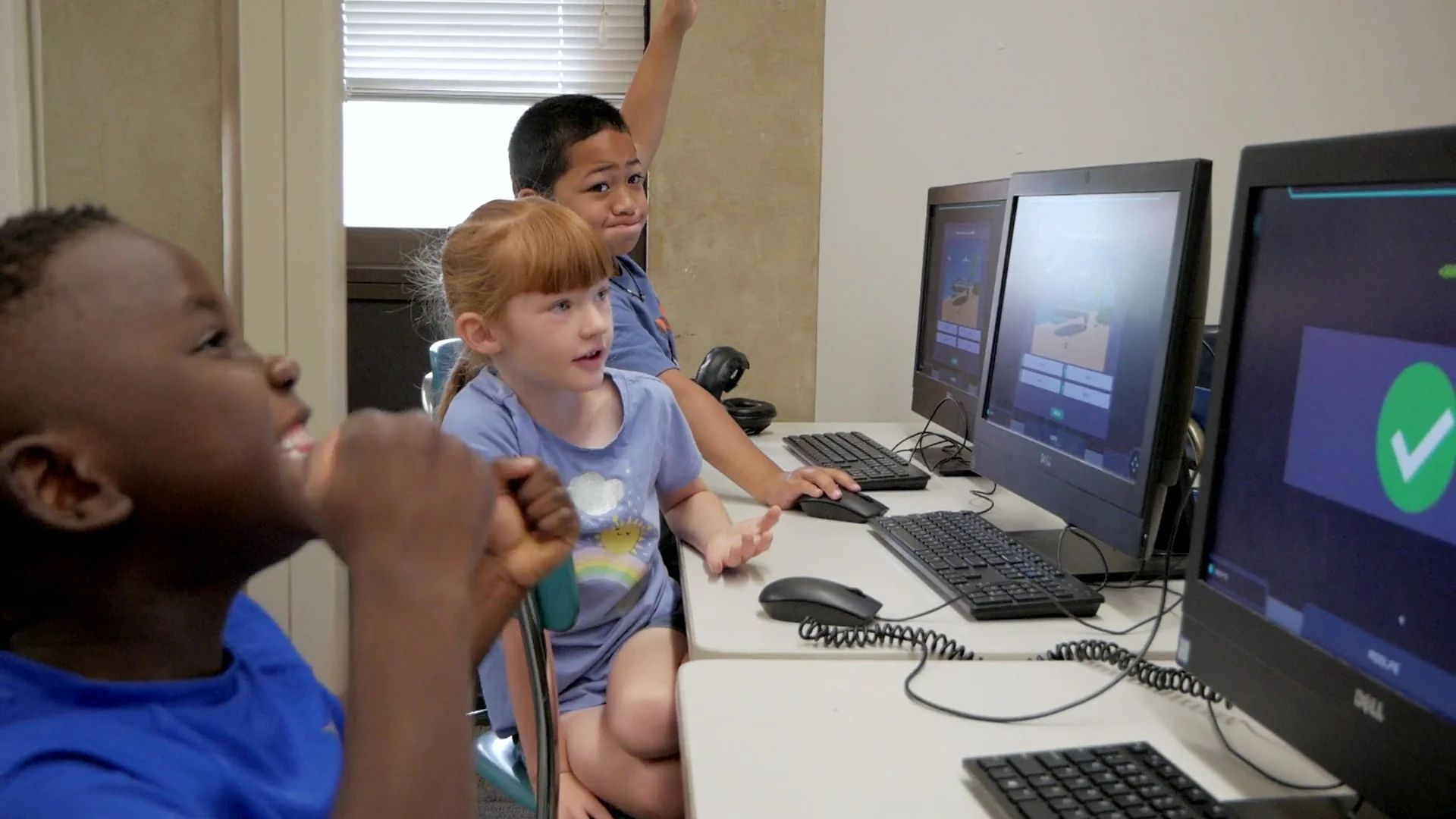
  • A young student beams with a fist at his chin as a green check mark appears on the screen beside him.
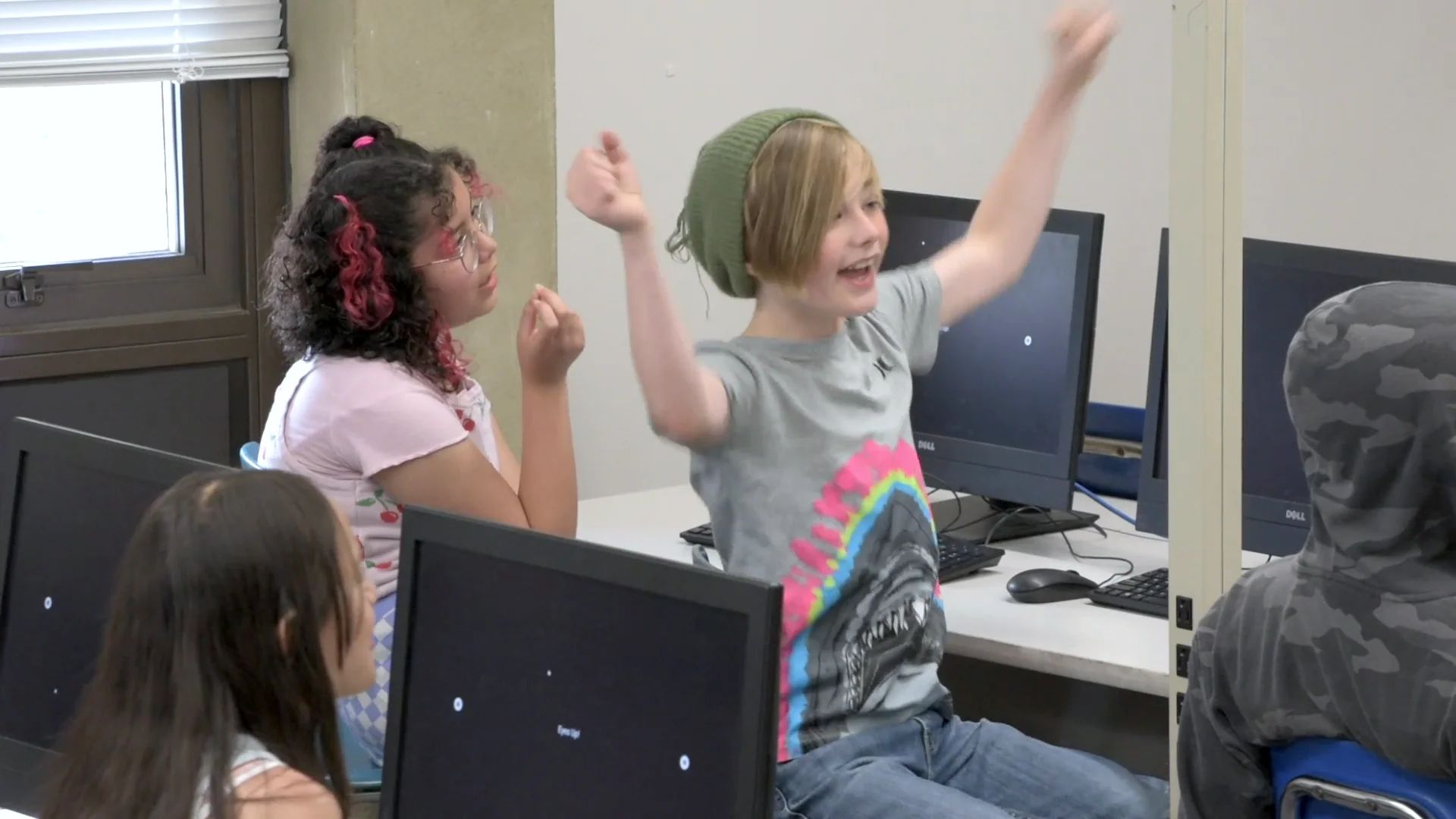
  • A student in a green beanie throws both arms up mid-cheer at a computer lab desk.
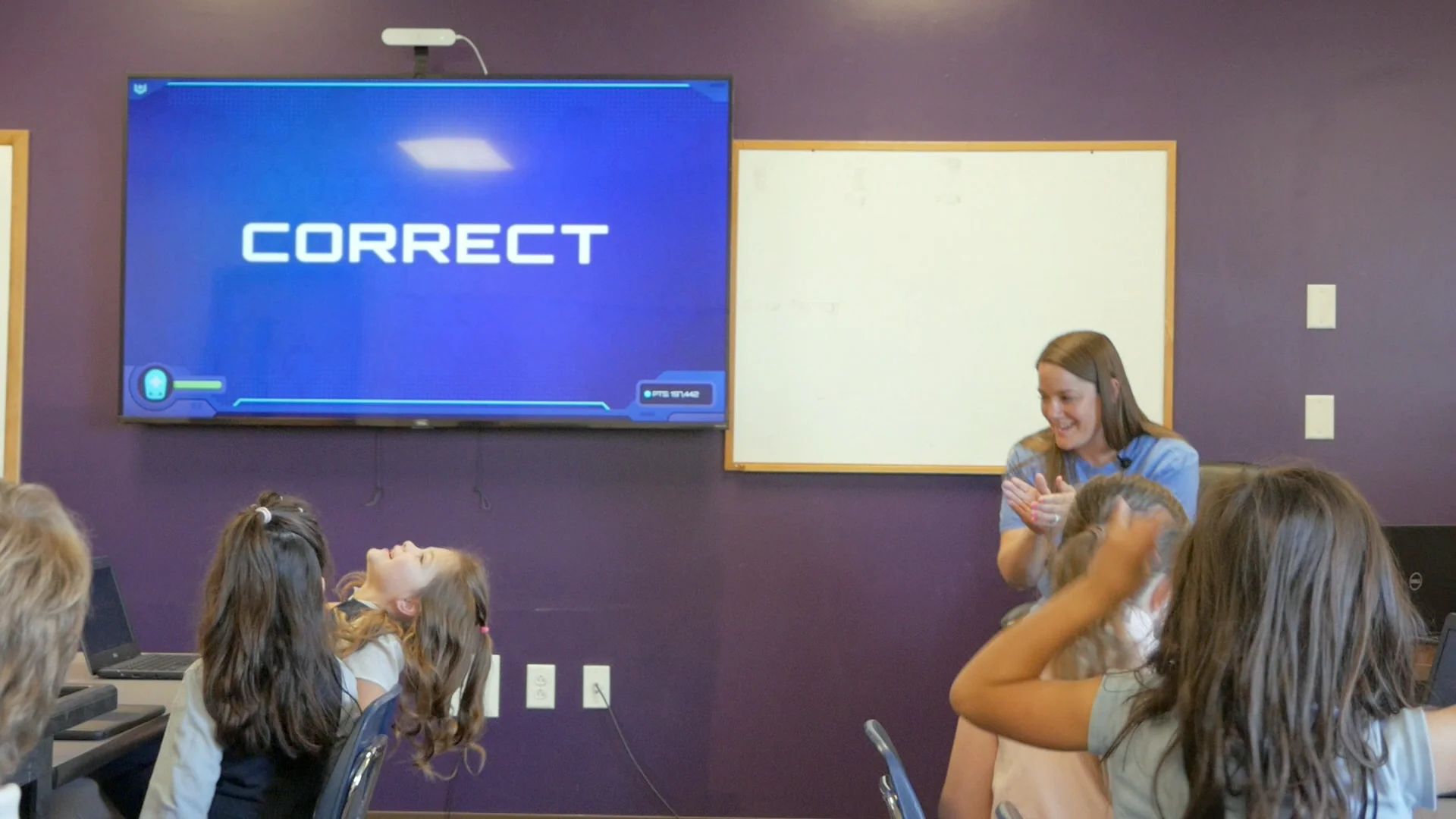
  • CORRECT shows on the wall screen as students react, one girl tipping her head back laughing.

What a Mission is

A Mission is a teacher-led, whole-class simulation built from what the class has been learning. The classroom becomes a spaceship, a time machine, or a command center, and a crisis hits. Every student has a job on a team, and the only way through is to use what they know.

Grades
K to 8
Subjects
Science, math, reading and writing, social studies
Length
20 to 45 minutes, led by the teacher
How often
The finale of a unit, often every couple of weeks
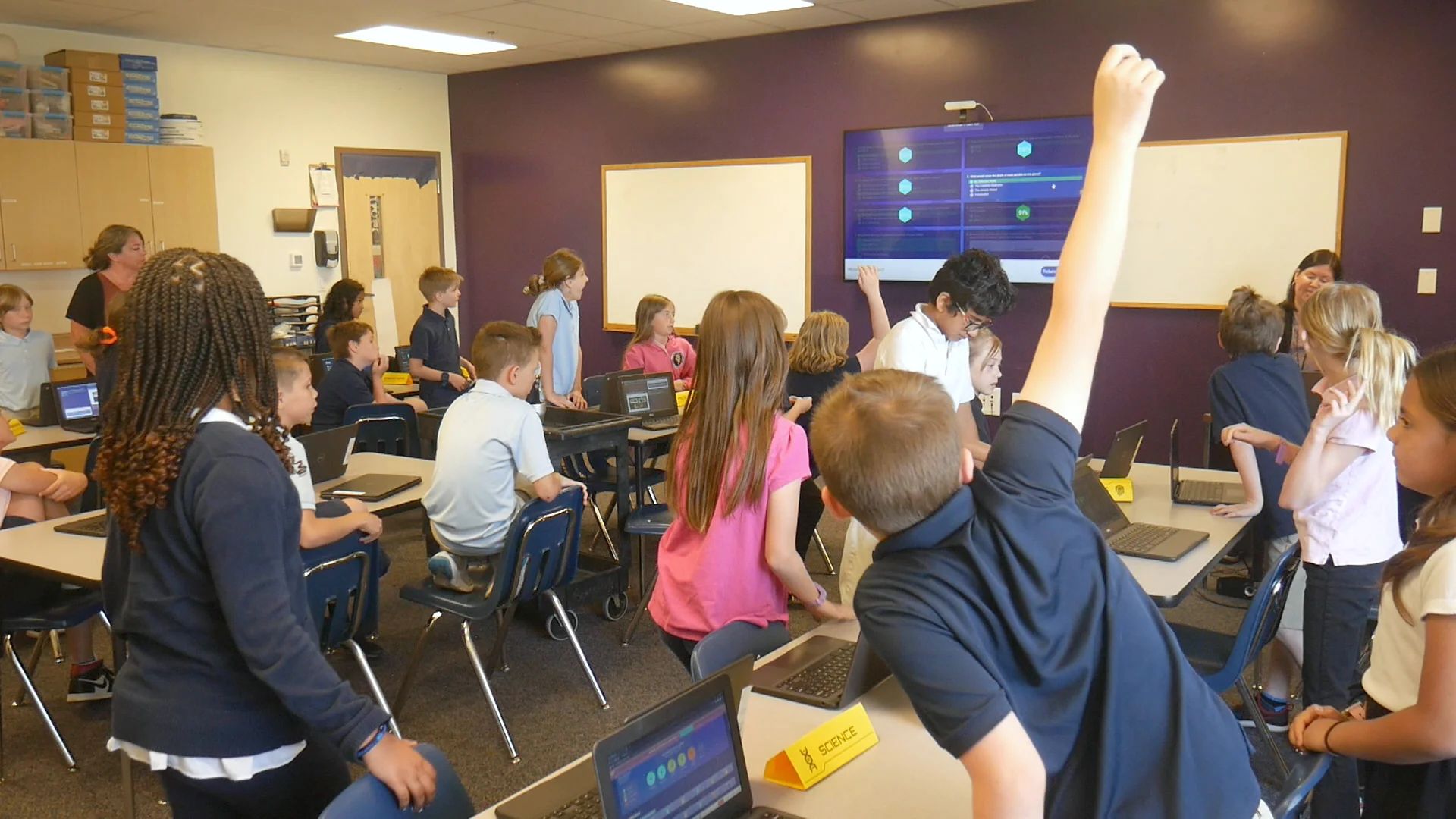
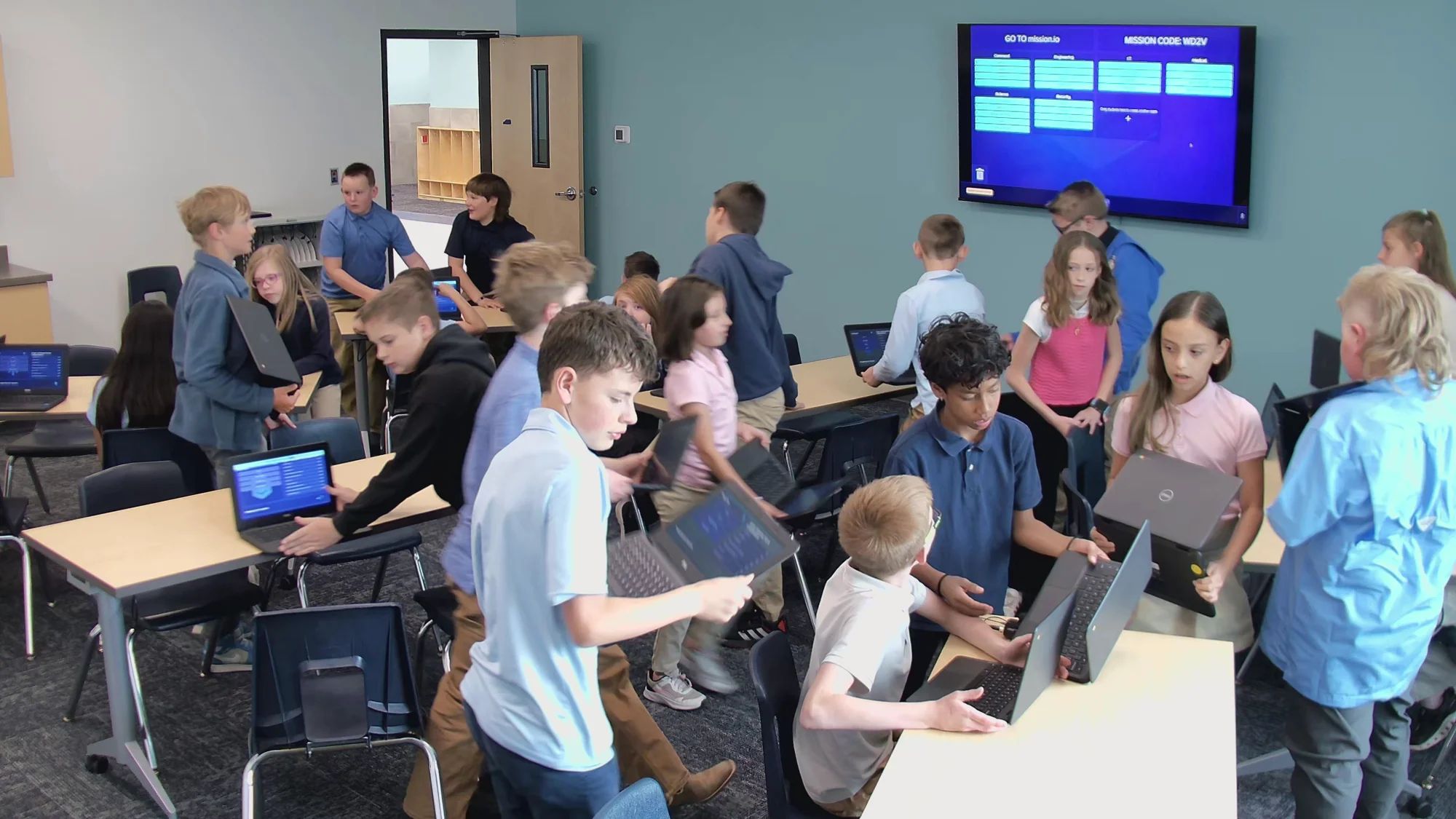
A class on its feet mid-Mission, turned toward the big screen, one student’s hand stretched high.

Why your school chose it

The learning

Every lesson gets a destination.

The class knows the Mission is coming, so the unit builds toward something bigger than a worksheet. Students stop asking “when will we ever need this?” and start using what they know, and that lets their teacher push them further.

The human skills

Practice for what machines can’t do.

Machines keep getting better at facts and answers. Working through a hard problem with other people is still a human job. Every Mission is a whole-class experience, so students get practice in:

  • Working as a team
  • Thinking a problem through
  • Taking initiative
  • Sticking with it when it gets hard

A proven track record

It improves learning

The more Missions a class ran, the more students learned.

Content-knowledge gain, percentage points
Students gained about 1 point after 1 Mission, 8.5 points after 9, and 18.8 points after 20.
  1. +0.91MISSION
  2. +8.59MISSIONS
  3. +18.820MISSIONS
Content knowledge g = 0.335, p < .001, +0.94 points per Mission (p < .001). Writing g = 0.269, p = .015, rising with each Mission (p = .049). Fifth graders, 53 classrooms; funded by the U.S. Department of Education’s Institute of Education Sciences, conducted by Instructure (Bautista et al., 2026).

The skills, measured inside Missions

In one district, platform-measured collaboration scores went from 46% to 85% over three years.

Platform-measured collaboration scores, Alpine School District, 2021 to 2024. Measured inside Mission.io, not an outside test (Mission.io, 2026a).
SEE THE EVIDENCE →

Somebody at your school picked this on purpose. The last section is how you thank them.

What it looks like in your child’s grade

Here’s one Mission from each grade band, start to finish.

Grades K-2

The Speed of Change

Grade 2 science

  1. Fast and slow changes to the Earth

    1Before

    Their teacher teaches the unit and tells the class they’ll need it. The Mission is where the teacher holds them to it.

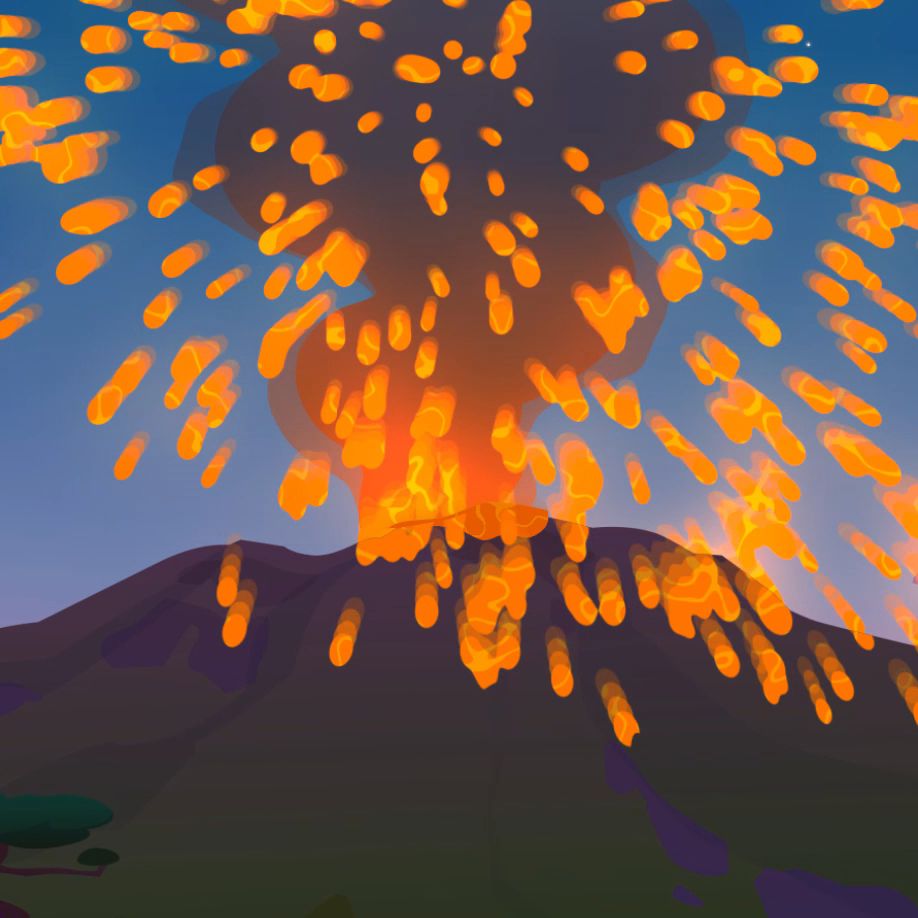
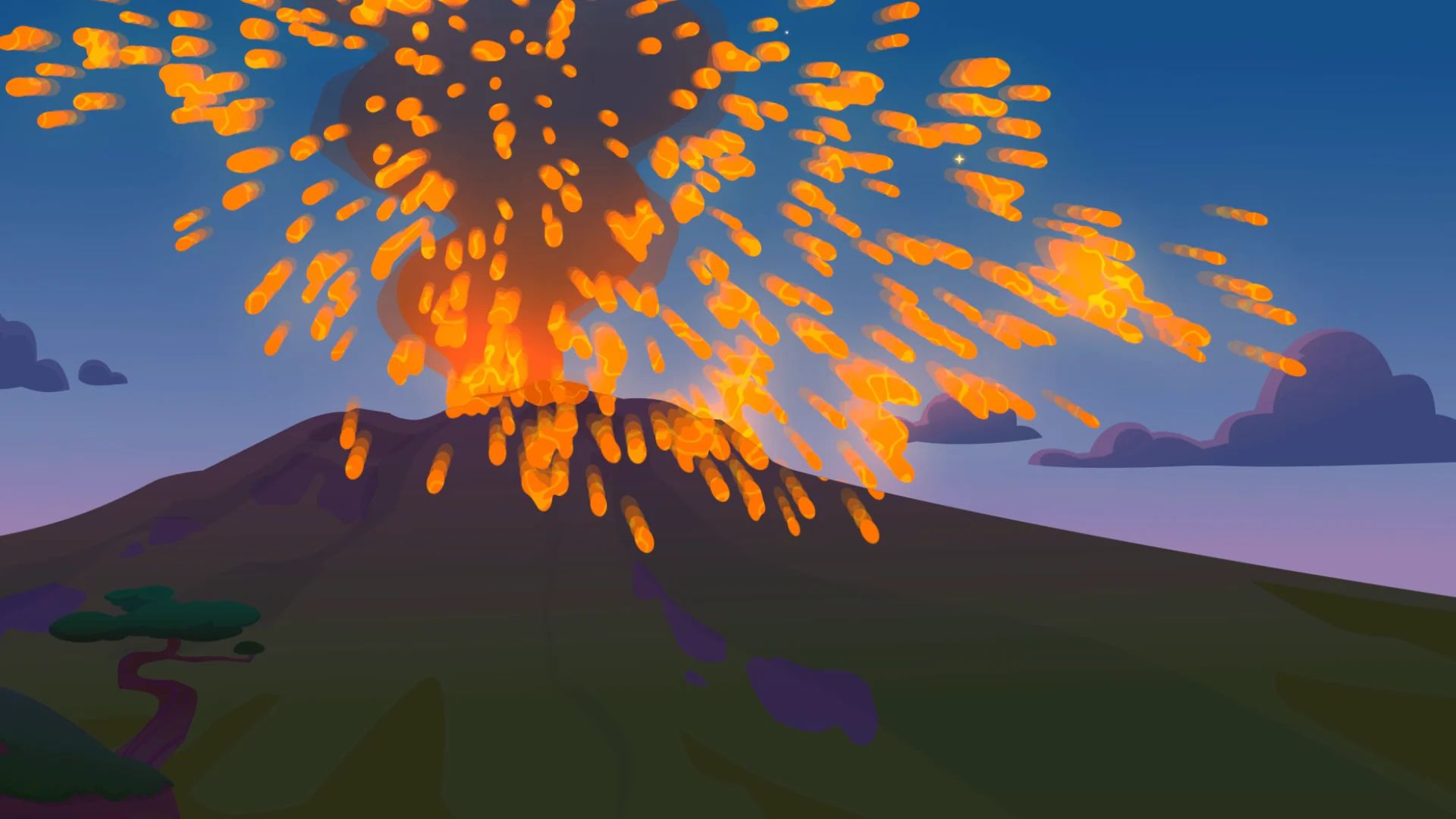
  2. A volcano erupts in an animated scene.

    2The crisis

    The AI that manages Earth’s surface glitched and scrambled the history of natural events.

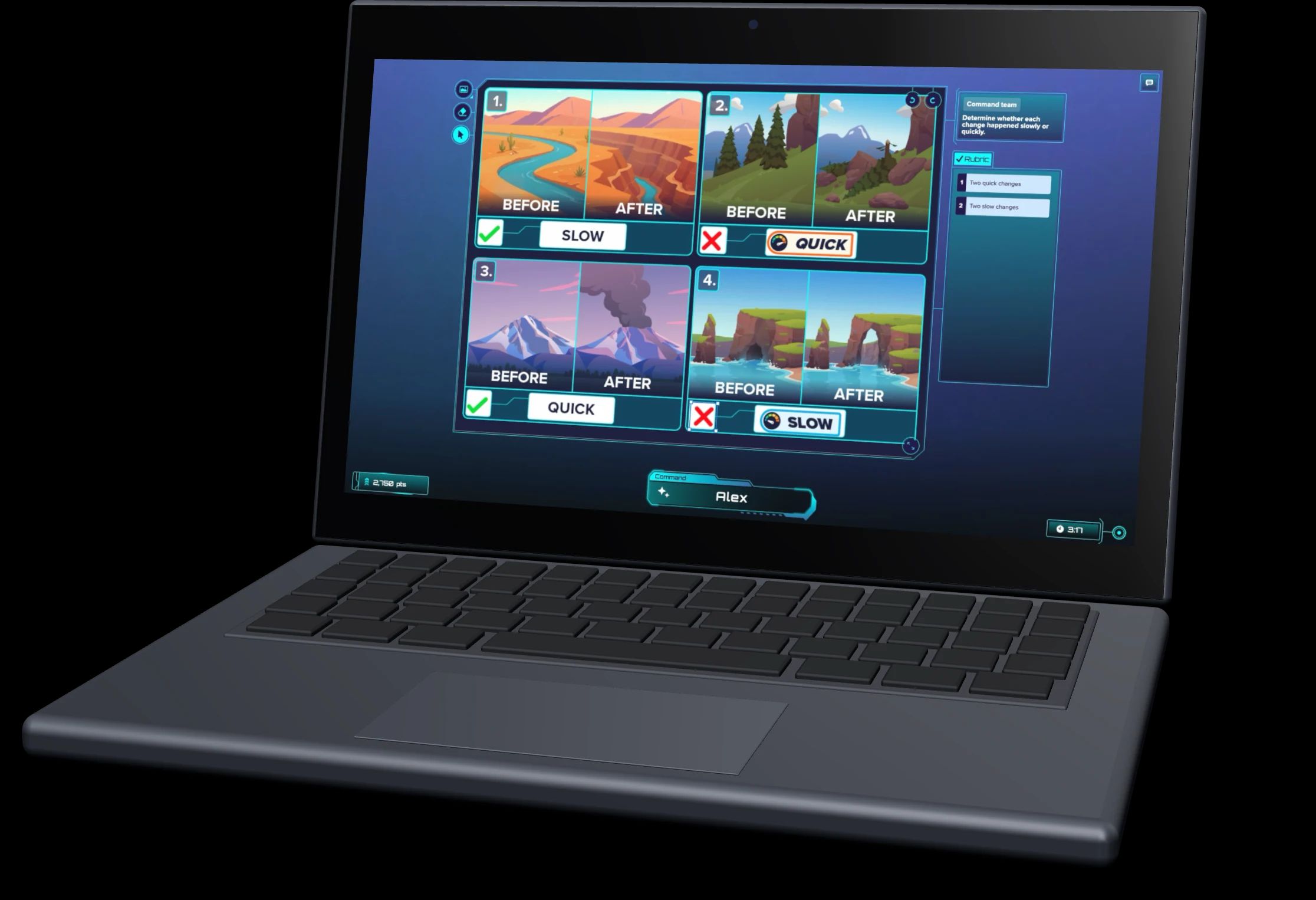
  3. A student’s screen shows before-and-after landscape pairs to label as quick or slow changes.

    3Their job

    Each team gets different Earth changes to analyze: quick or slow?

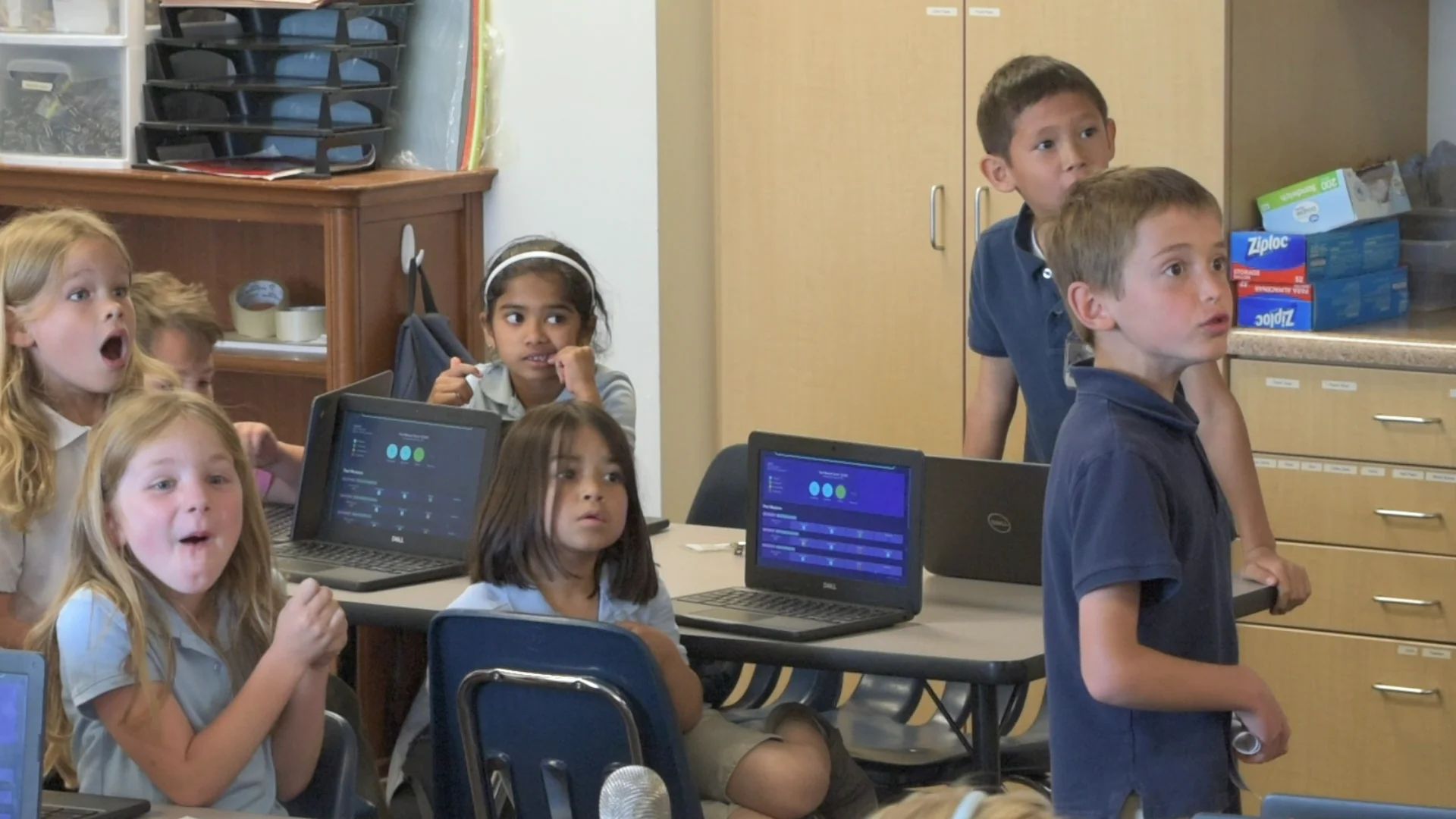
  4. Young students react at their team tables, one girl in front with her mouth open in surprise.

    4The call

    Teams sort the evidence to set the record straight.

Grades 3-5

Tsunami

Grades 3-5 engineering

  1. Designs that protect towns from natural hazards

    1Before

    Their teacher teaches the unit and tells the class they’ll need it. The Mission is where the teacher holds them to it.

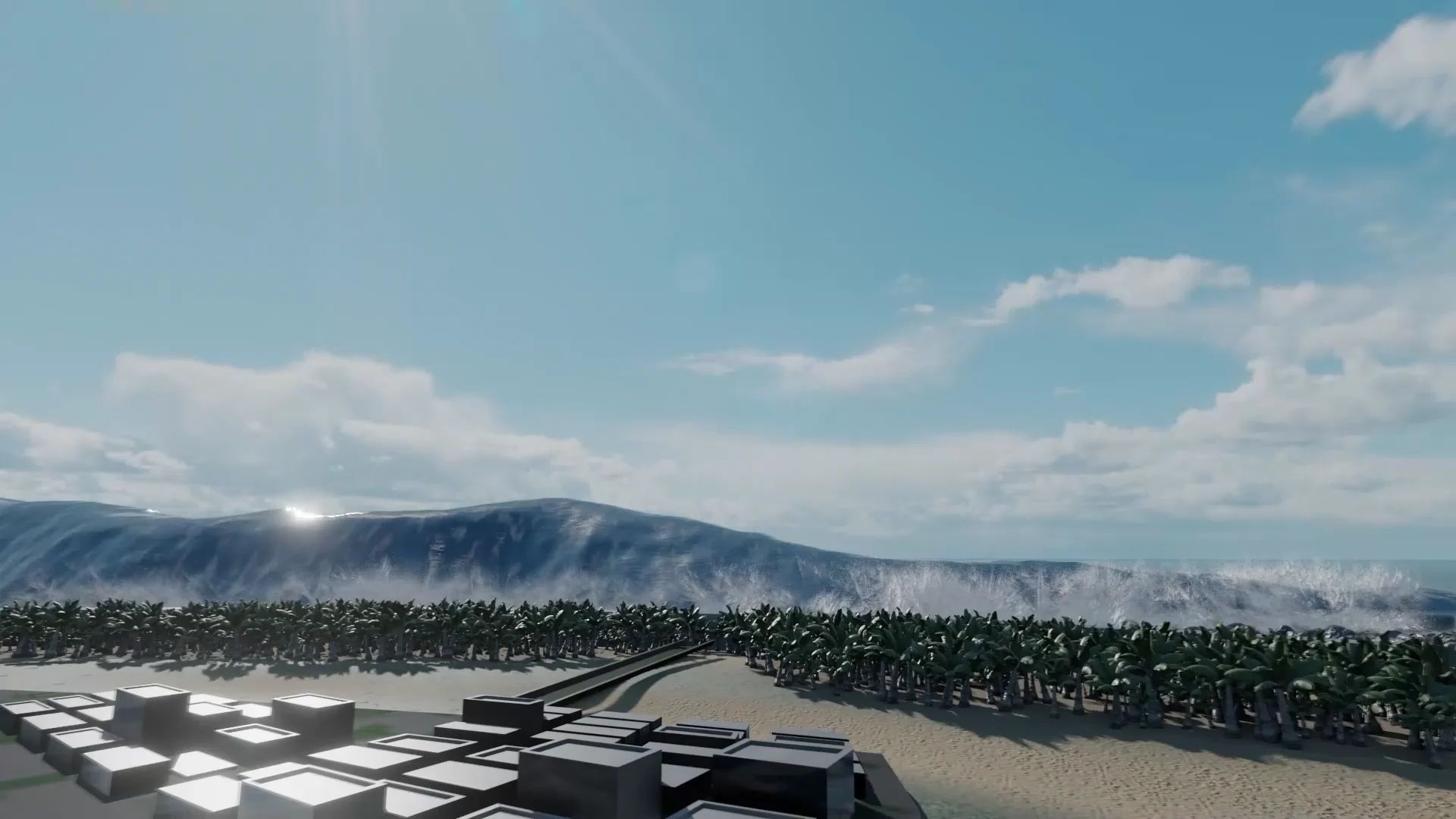
  2. A giant wave rolls toward a forest and a town of white buildings.

    2The crisis

    A tsunami is headed for the populated islands of Viper I.

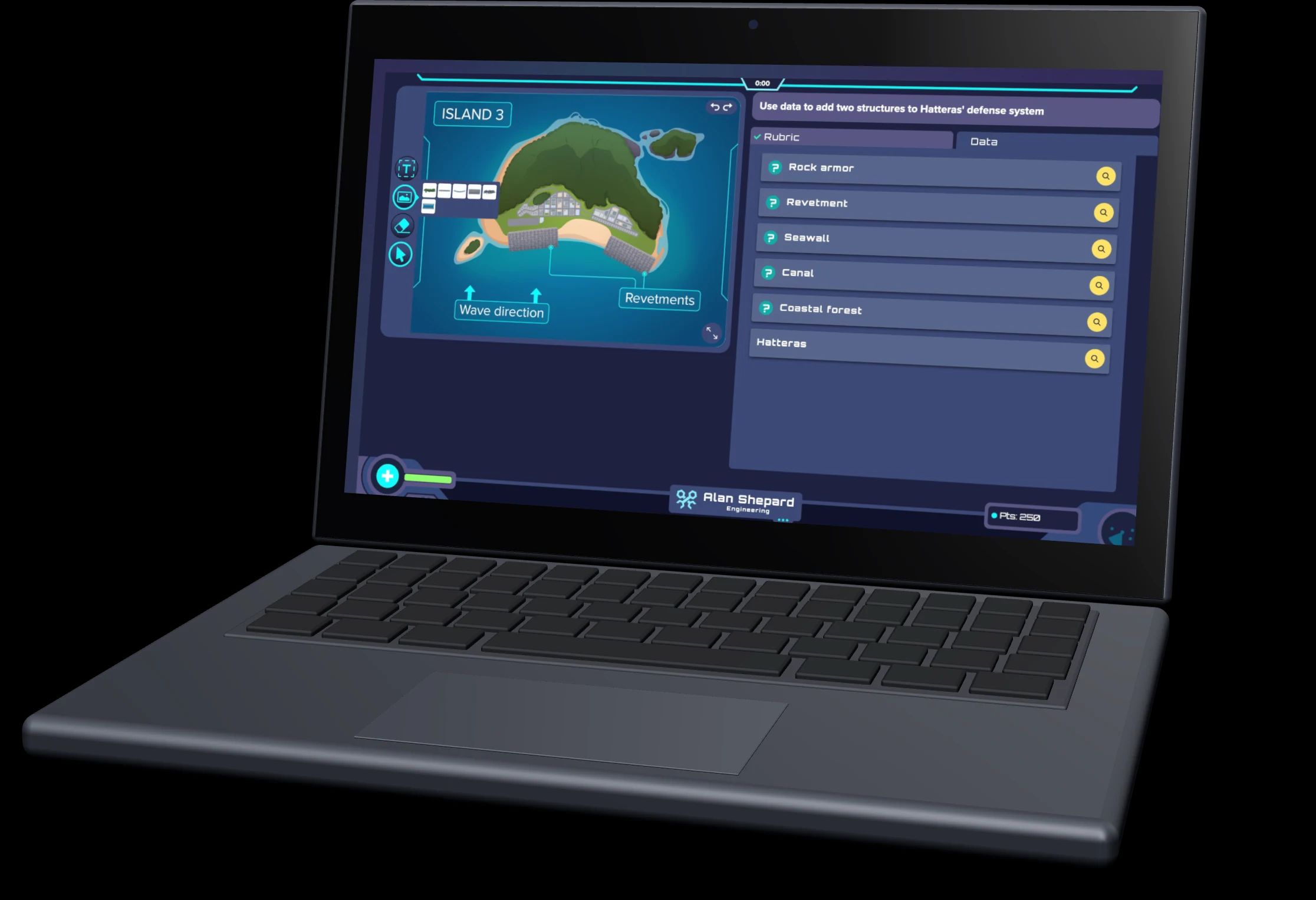
  3. A student’s screen shows a map of island 3 with its revetments and the wave’s direction.

    3Their job

    Each team gets a different island and must analyze which defenses will protect it best.

  4. Teams of students gather around their desks in a busy classroom, the Mission on the wall screen behind them.

    4The call

    Teams compare seawalls, forests and revetments, then defend the design that protects the town.

Grades 6-8

Infection

Grades 6-8 math

  1. The area of triangles and other shapes

    1Before

    Their teacher teaches the unit and tells the class they’ll need it. The Mission is where the teacher holds them to it.

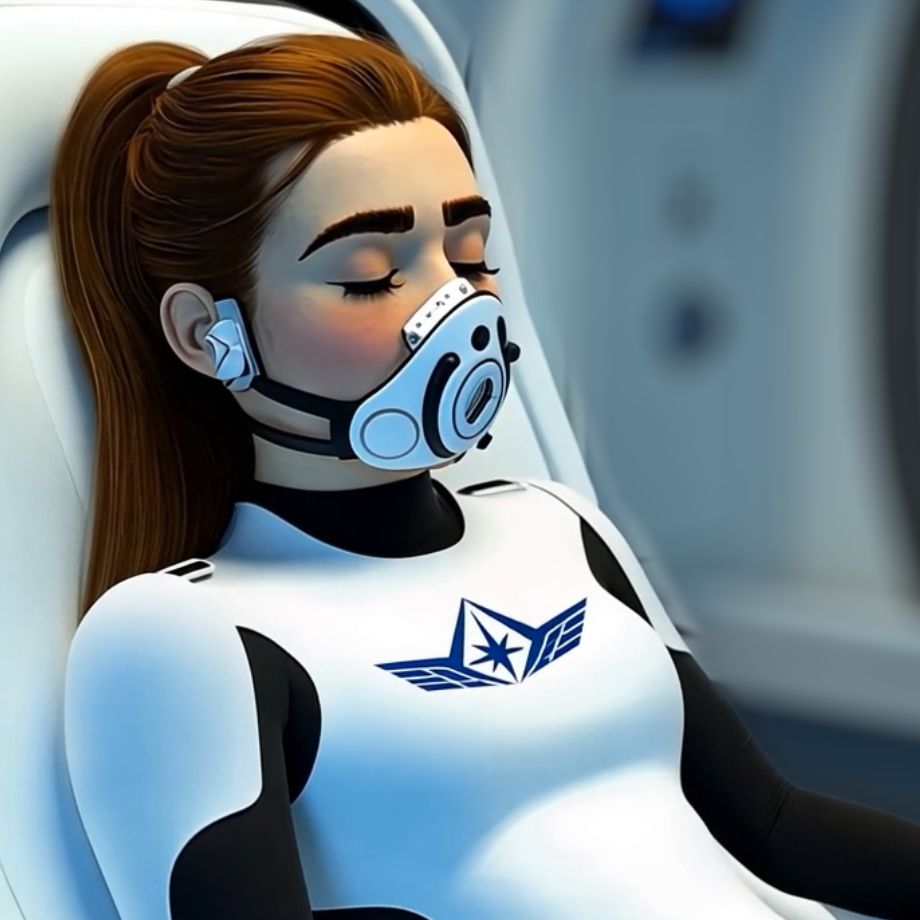
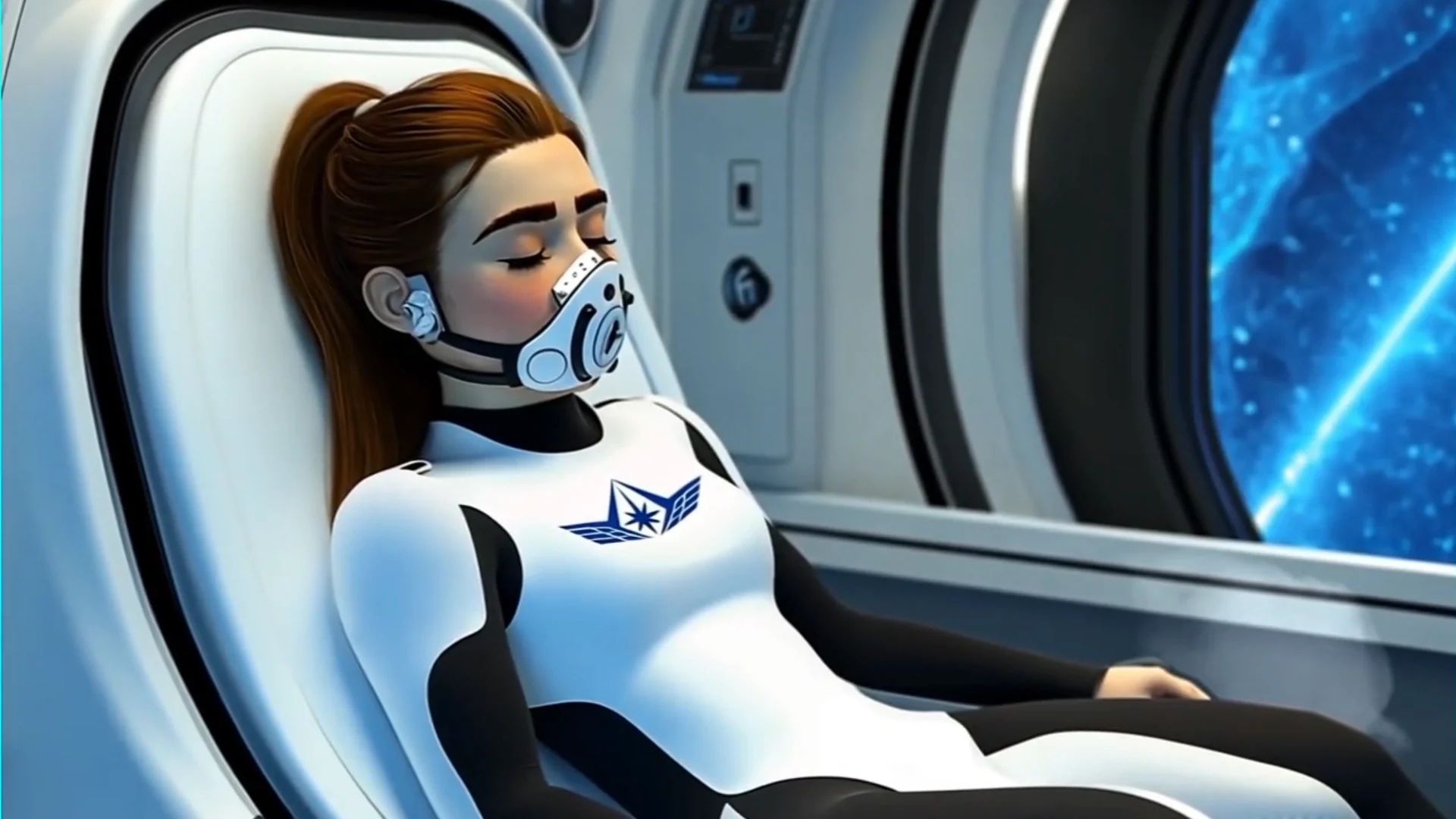
  2. An astronaut lies unconscious in a medical chair wearing an oxygen mask.

    2The crisis

    Dr. Ortiz was hurt in a rover crash, and an infection is spreading through the wound.

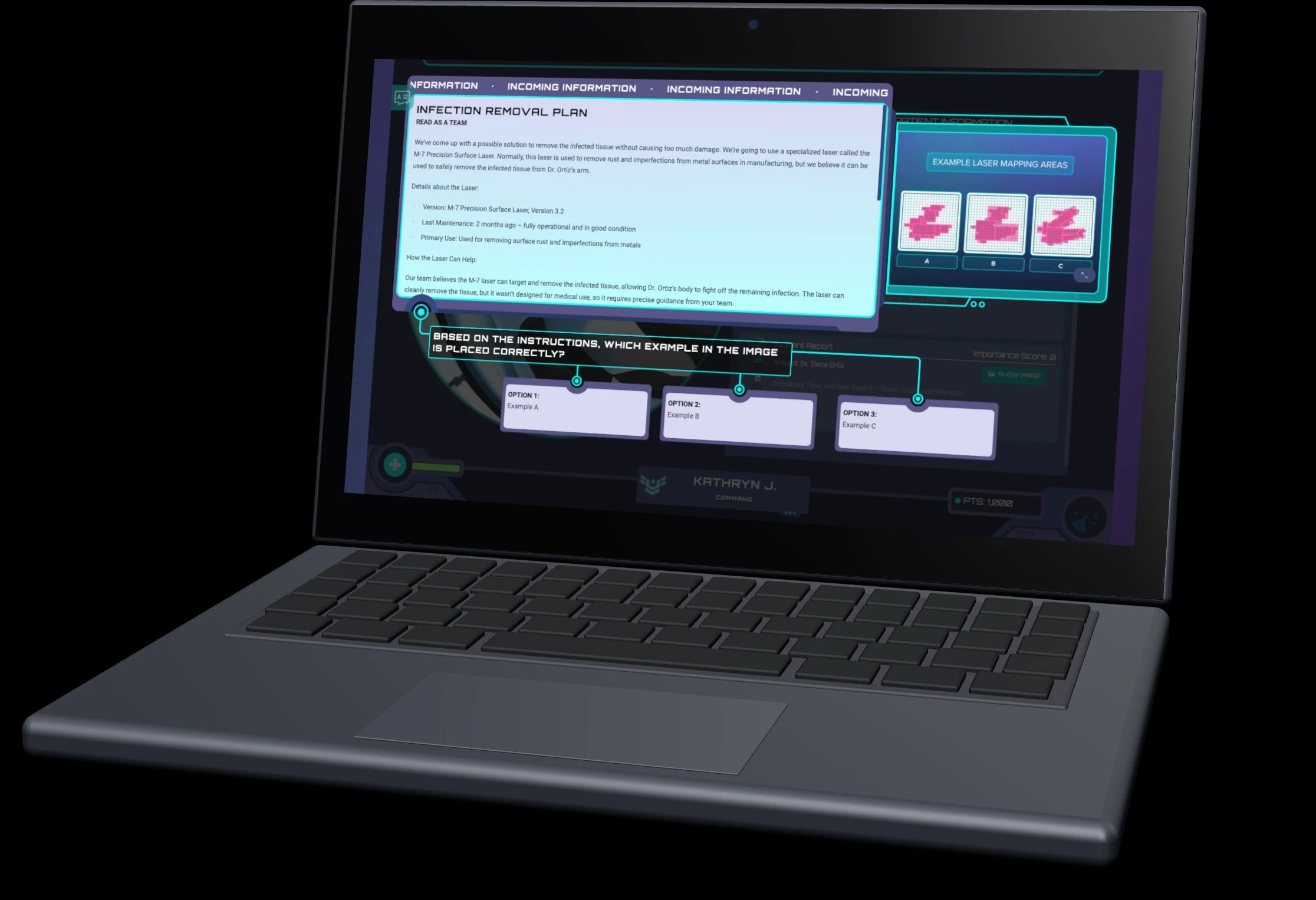
  3. A student’s screen shows a team’s plan for mapping the infected area with shapes.

    3Their job

    Teams use complex shapes to map the area of the infection.

  4. Three students at a team table talk through a decision, one pointing as she makes her point.

    4The call

    They cover it in shapes on a grid and add up the areas, so the laser removes only infected tissue.

The class saves the day with what they learned, or something goes spectacularly wrong and they work their way back. Either way, they come home with a story. Ask them which job they had.

“It allows students to test their knowledge using a new resource, while also working together to complete or sometimes fail, a mission. My class has had amazing discussions afterwards on what we can work on as a class...”
Briana Maxfield, Grovecrest Elementary, Alpine School District, UT

Your part at home

Our goal is for a Mission to be the first thing your child tells you about after school. When it is, that conversation is your chance to help them think back on it and get more out of it.

“Students who don’t like to participate and share in class often are the students that take the most initiative and share the most during missions.”
Jennifer Jellum, South Kearns Elementary, Granite School District, UT

When your child says

“We ran a Mission today.”

Ask:

Start with the story

  1. What was your Mission about? What problem did you have to solve?
  2. What information did you have to look at?
  3. What team were you on, and what was your job?
  4. What choices did your team have to make?
  5. Did you get it right the first time, or did something go wrong?

Then go deeper

  1. How do you feel about what you did?
  2. How did working with your team go? What made it hard or easy?
  3. Did anyone on your team do something impressive?
  4. Did you notice something nobody else did?
  5. Did you have to speak up about it?

Expect the answer to the first one to take twenty minutes.

Five everyday moves

In class, your child’s teacher uses Missions to build the human skills that prepare them for the future. The most meaningful moves still happen at home. Here are a few ideas.

  1. Hand them real decisions.

    Let them plan the route, the Saturday, or the grocery run, and let the call stand.

  2. Ask “what did you try?” before you rescue.

    Staying in a hard problem a little longer is the same muscle a Mission works.

  3. Make them back it up.

    When they tell you something they learned, ask how they know.

  4. Let them watch you work at it.

    Think out loud when you hit a hard call, including the part where you get it wrong.

  5. Name what they did.

    “You tried three ways before one worked” says more than “good job.”

Screen value over screen time

We’re on your side here. We ask the same question you do about every screen in your child’s day: what is it doing for them?

A Mission is a purposeful, teacher-led experience. We don’t believe technology should ever be a babysitter. We use it to create more meaningful connection between a teacher and their students.

  • Never alone behind a screen.

    Every Mission is a whole-class experience. The work happens between students, out loud.

  • The teacher leads every minute.

    The technology connects every student and moves the story along. The teacher asks the questions and pushes for evidence.

  • It ends when class does.

    No feed, no streak, nothing pulling them back after class.

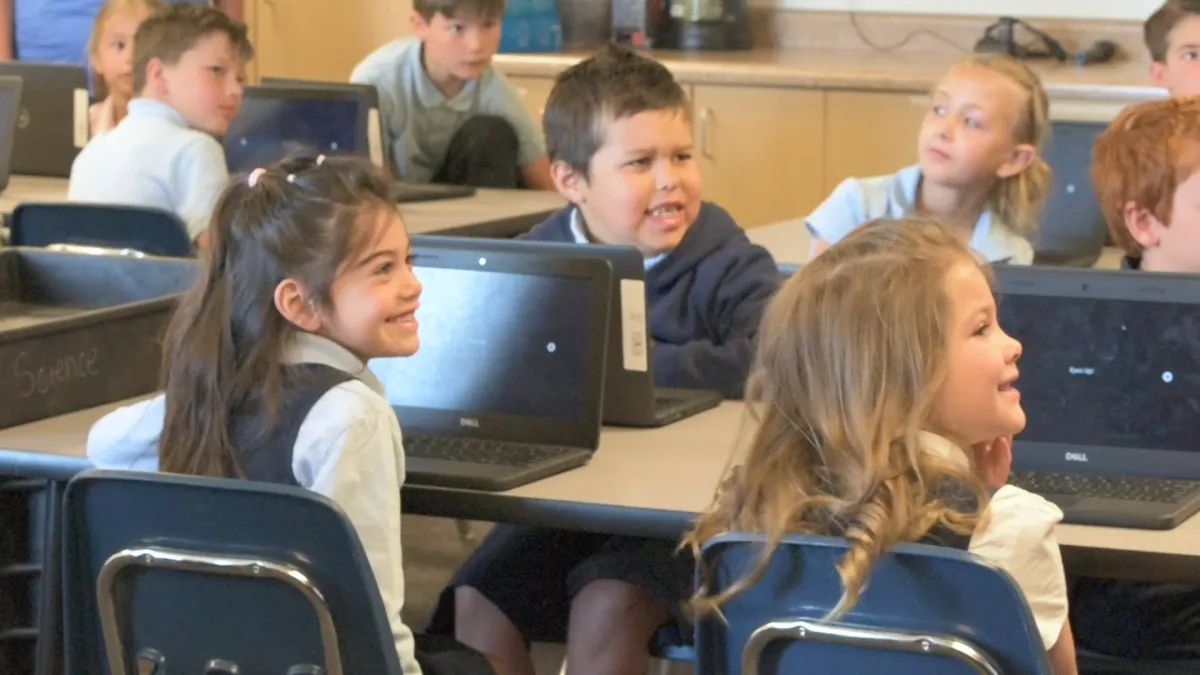
  • Young students at a row of Chromebooks look up toward the front of the room, two girls in front grinning.
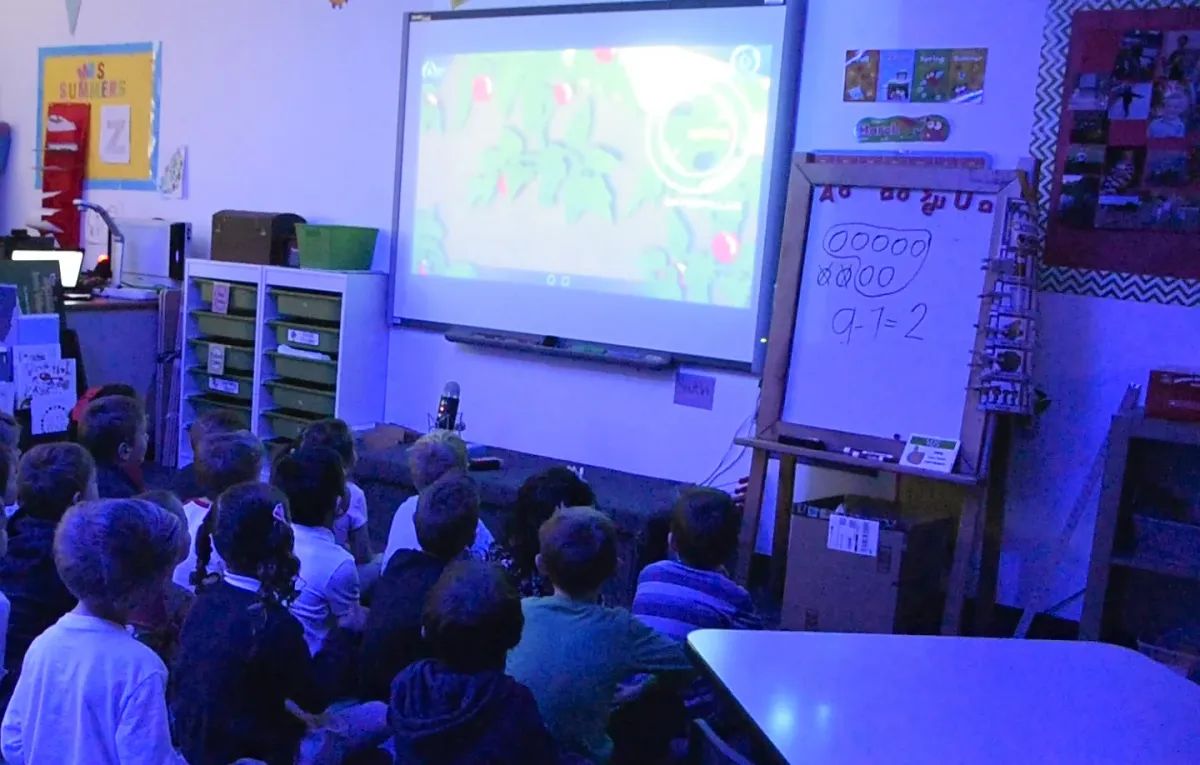
  • A class sits on the carpet in a dim room, every face turned up to the Mission on the projector screen.
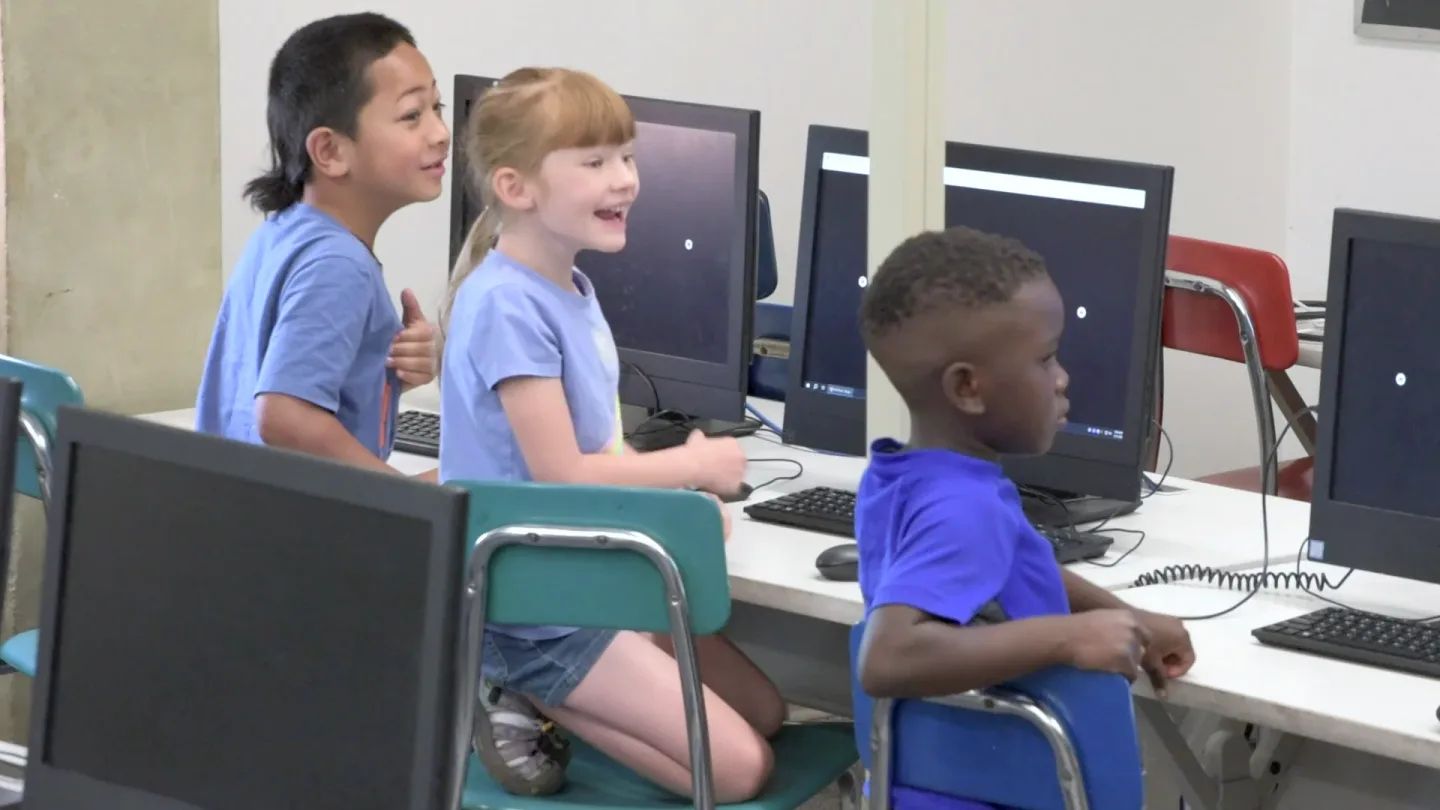
  • Three young students at lab computers look up at the wall screen, a girl laughing.
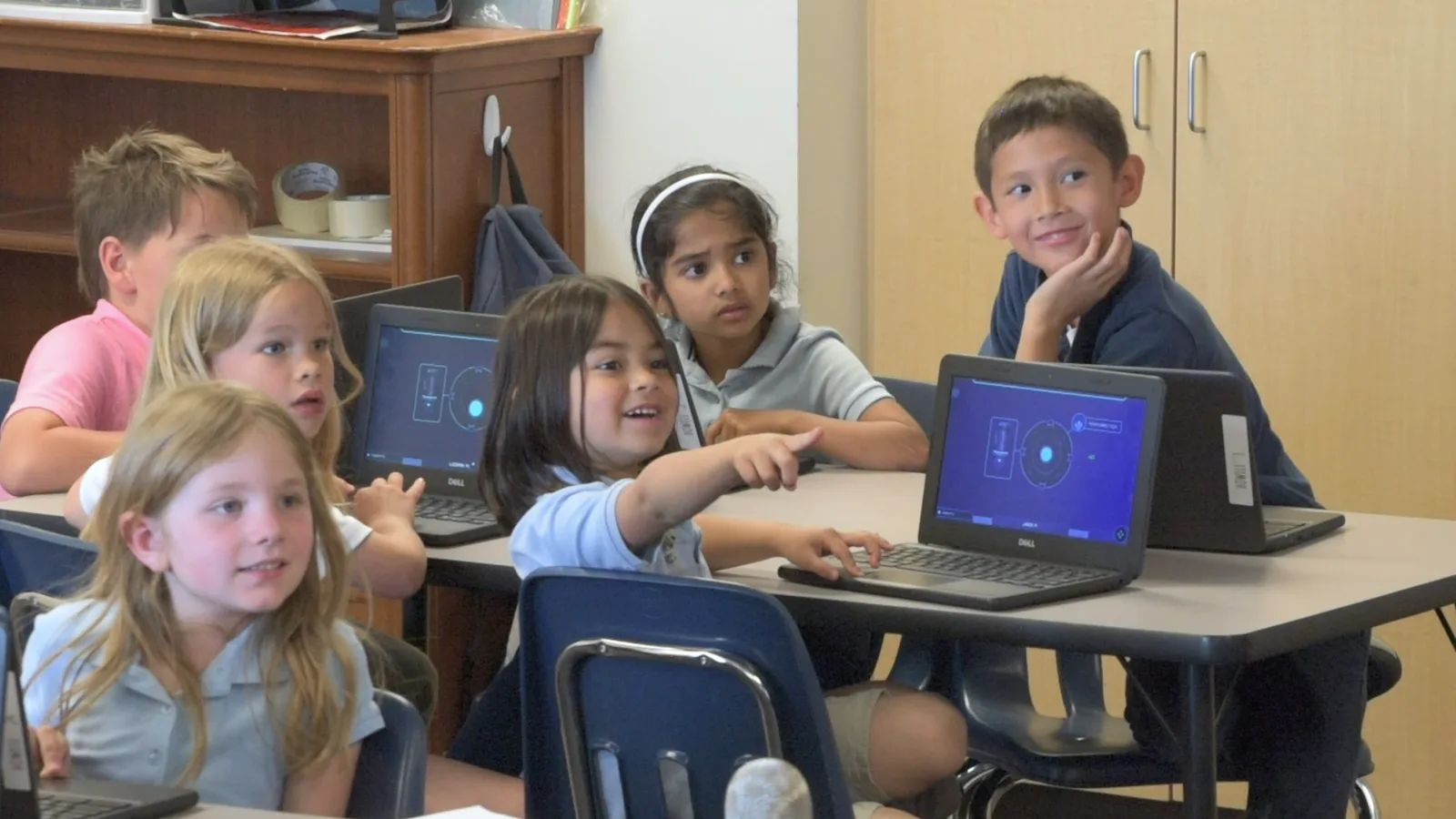
  • Young students look up from their Chromebooks, one pointing toward the front of the room as a classmate grins.

Count the children looking down at their own laptop. We’ll wait.

Questions parents ask us

Is Mission.io a game?

It feels like one, on purpose, and we love what that does: kids let a Mission push them further than they usually let themselves be pushed. But it’s built very differently from typical learning games. Instead of each kid alone on a screen chasing points, the whole class shares one experience and solves one problem together, using what they’re learning.

How much screen time is it?

We take screen time seriously, and we care even more about screen value. A Mission runs about 20 to 45 minutes, and the screens are there to get kids looking up as fast as possible: at each other, at the problem, at their teacher. The screen is the tool. The teamwork and the conversation are the point.

Does it actually work?

Yes, and the bar it clears is higher than most of the tools, games, and apps kids use at school. Mission.io meets ESSA Level II standards, as validated by Instructure. An independent study of 1,039 fifth graders across 53 classrooms found that students who ran Missions made significant gains in what they knew and how well they wrote, and the more Missions a class ran, the more students grew. Content knowledge g = 0.335, p < .001; writing g = 0.269, p = .015 (Bautista et al., 2026). SEE THE EVIDENCE →

My kid’s school doesn’t use Mission.io. Can it?

Yes. Teachers can start free and run their first Mission the same week. The easiest way in is your kid’s teacher, so send them our way.

MORE QUESTIONS →

Tell them it’s working.

If your child comes home with a story, tell their teacher, by email or in your class app. Teachers mostly hear from families when something’s wrong, and two lines of thanks travel further than you’d think.

A note you can send

Hi, my child came home talking about the Mission today. Thank you for bringing Missions into class.