Problem solving activities for students

Twelve classics and the fix each needs, what problem solving looks like at every grade from kindergarten to 8th, the six things that separate a problem from a worksheet with a story on top, a free observation sheet, and the Mission we’d point you to.

Who we are. Mission.io makes Missions: teacher-led, whole-class simulations where students use what they’re learning to work through a real scenario together. We build every one on the six things this page teaches, and every student gets a report on how well they did.

You don’t need us to use this page: the classics, the fixes, and the observation sheet all work on their own. But the Mission we’d point to for problem solving is waiting at the end, free. (No padlocks required. The asteroids bring their own clock.)

On this page

What is a problem solving activity?

Problem solving activities are classroom tasks that hand students a problem they don’t already know how to solve, so they have to work out what it’s asking, choose a way in, check whether it’s working, and change course when it isn’t. Most things called problem solving activities don’t meet that definition, and you know the worksheet where it shows. Twenty word problems, every one solved with the move from the example at the top. By number four nobody is reading the words, and the worksheet never notices.

Problem solving is a skill, and a skill means two things most practice forgets. It can be taught, so it has to be built into the activity on purpose instead of hoped for. And it can be seen, so you should be able to walk past any table and say who tried a strategy, who checked it, who explained it, and who borrowed someone else’s.

The standard asks for exactly that, every year from kindergarten to 8th: make sense of problems and persevere in solving them, which means explaining what a problem means, looking for a way in, planning a path instead of jumping in, checking progress, and changing course when it isn’t working (CCSS Mathematical Practice 1). This page is about the activities that make it happen, and each grade’s page shows you how to run one.

Six things that make an activity build problem solving

What separates a real problem from a worksheet with a story on top? The research is specific about it, and a little humbling.

Start with the study built for this question. 53 studies, 166 comparisons, and students who tried a problem before they were taught how beat students who were taught first (Sinha and Kapur, 2021). Most of those students were 12 to 18, and it worked less well with younger kids who didn’t have the background yet, so the younger the class, the more the knowledge has to come first. The rest of the research names what the activity has to look like.

  1. 1. A real problem with stakes the class can feel.

    “Solve for x” is an exercise. “The town’s water goes bad in 40 minutes” is a problem. Jonassen splits the two: well-structured problems have one right answer and a known procedure, ill-structured ones, the kind outside school, have more than one workable solution and take judgment, and he argues each needs its own kind of teaching (Jonassen, 1997).

  2. 2. Apply, don't recall.

    Students can know a method and still miss it on a new problem. In a classic experiment, students who had just read a story with the solution tucked inside solved a new problem far more often when someone hinted the story might help. Without the hint, far fewer made the connection (Gick and Holyoak, 1980). A page of look-alike problems never tests that.

  3. 3. Group goals with individual accountability.

    Every classic on this page misses it as it usually runs, and it’s the one the research is loudest about. Across the cooperative learning studies Slavin pulled together, methods with a group goal and each student answerable for a part found positive effects in 84% of studies. Methods without both: 17% (Slavin, 1991). Hand a group of four one problem and you’ll see why: the fast kid solves it, one checks, two copy.

  4. 4. The teacher leads the thinking.

    What moves achievement is the teaching around the problem: in Hattie’s 2017 synthesis, problem-solving teaching sits at d = 0.68, more than double problem-based learning at 0.26.

  5. 5. A debrief where the class argues it out.

    Getting the answer is the setup. The talk afterward, when the class lines up what it tried and says which method worked and why, is the lesson. The try-first research comes in two halves for a reason: problem solving, then instruction (Sinha and Kapur, 2021).

  6. 6. A way to see who did what.

    If you can’t tell which student found the way in and which one copied the answer, you can’t teach problem solving. You can only hope for it.

Worksheets have answers. Problems have consequences.

Every grade page on this site takes one classic and rebuilds it to hit all six, step by step, with a printable. Get the free observation sheet that works for any of them →

Find your grade: what changes from kindergarten to 8th

The skill changes shape every year, which is why the activity has to. Kindergartners have to be taught to retell the story before they answer it. Eighth graders have to be taught to say why a pattern holds, not just that it does. Same skill, nine different jobs. One line per grade, one page per grade, and the classic you’ll see rebuilt there.

  1. Kindergarten

    Thinking out loud before acting, and acting a story out with bodies or cubes before anyone writes a number.

    Act-it-out story problems, rebuilt. Kindergarten problem solving activities →

  2. 1st grade

    Six-year-olds go for the puzzle that’s too hard; the job is one that pushes back fairly, where the piece is what doesn’t fit, not the kid.

    Tangram puzzles, rebuilt. 1st grade problem solving activities →

  3. 2nd grade

    Seven-year-olds are bothered by mistakes, so the first move is saying what the problem is asking before a single number shows up.

    Numberless word problems, rebuilt. 2nd grade problem solving activities →

  4. 3rd grade

    Eight-year-olds are full of ideas; the work is deciding which information you actually need, and asking for only that.

    The three-act math task, rebuilt. 3rd grade problem solving activities →

  5. 4th grade

    Nine-year-olds want to know how and why, and big numbers are still hard, so they get there through a pattern built from small cases.

    The handshake problem, rebuilt. 4th grade problem solving activities →

  6. 5th grade

    Ten-year-olds like rules and logic and can concentrate for long periods, long enough to hold a budget for a whole class period.

    The party budget, rebuilt. 5th grade problem solving activities →

  7. 6th grade

    Eleven-year-olds enjoy brain teasers and challenge adult assumptions; give them a best answer to beat, then make them prove it.

    Open Middle, rebuilt. 6th grade problem solving activities →

  8. 7th grade

    Twelve-year-olds can plan and set short-term goals, and like arguing one side; a written assumption gives them something to defend.

    Fermi problems, rebuilt. 7th grade problem solving activities →

  9. 8th grade

    Thirteen-year-olds avoid risks and fourteen-year-olds love big ideas; a claim checked by hand first makes the big idea safe to try.

    The locker problem, rebuilt. 8th grade problem solving activities →

Developmental lines from Responsive Classroom’s Common Developmental Traits by Age (2024); the grade pages carry the sources.

Twelve problem solving classics, and the fix each needs

If you’ve ever handed out a rich task and gotten back one answer and twenty-seven copies of it, one of these twelve was probably involved. They’re on every list. Here’s how each one usually runs, what to change, and the grade page that rebuilds it start to finish.

A filled dot means the classic, as it usually runs, has that criterion; a ring means it usually misses it. Tap a number to read the criterion.

(Look down columns 3 and 6: all twelve usually miss both. Plenty of right answers, and no record of who found them.)

Twelve problem solving classics against the six criteria above, as they usually run.
#Activity1 Stakes2 Apply3 Accountability4 Teacher leads5 Debrief6 See who did whatSee it rebuilt
1Act-it-out story problemsK to 1Usually misses: stakes, accountability, seeing who did whatmisses Stakeshas Applymisses Accountabilityhas Teacher leadshas Debriefmisses See who did whatKindergarten
2Tangram puzzles1 to 2Usually misses: everything but applymisses Stakeshas Applymisses Accountabilitymisses Teacher leadsmisses Debriefmisses See who did what1st grade
3Numberless word problems2 to 3Usually misses: stakes, accountability, debrief, seeing who did whatmisses Stakeshas Applymisses Accountabilityhas Teacher leadsmisses Debriefmisses See who did what2nd grade
4Three-act math tasksK to 5Usually misses: accountability, seeing who did whathas Stakeshas Applymisses Accountabilityhas Teacher leadshas Debriefmisses See who did what3rd grade
5Classroom escape room3 to 8Usually misses: everything but stakeshas Stakesmisses Applymisses Accountabilitymisses Teacher leadsmisses Debriefmisses See who did whatFixed in its entry
6The handshake problem4 to 6Usually misses: stakes, accountability, seeing who did whatmisses Stakeshas Applymisses Accountabilityhas Teacher leadshas Debriefmisses See who did what4th grade
7The party budget5Usually misses: everything but applymisses Stakeshas Applymisses Accountabilitymisses Teacher leadsmisses Debriefmisses See who did what5th grade
8Math scavenger hunt1 to 5Usually misses: stakes, accountability, debrief, seeing who did whatmisses Stakeshas Applymisses Accountabilityhas Teacher leadsmisses Debriefmisses See who did whatNo page
9Open Middle6 to 8Usually misses: stakes, accountability, seeing who did whatmisses Stakeshas Applymisses Accountabilityhas Teacher leadshas Debriefmisses See who did what6th grade
10Fermi problems7 to 8Usually misses: stakes, accountability, seeing who did whatmisses Stakeshas Applymisses Accountabilityhas Teacher leadshas Debriefmisses See who did what7th grade
11The locker problem6 to 8Usually misses: stakes, accountability, seeing who did whatmisses Stakeshas Applymisses Accountabilityhas Teacher leadshas Debriefmisses See who did what8th grade
12STEM build challengesK to 8Usually misses: apply, accountability, debrief, seeing who did whathas Stakesmisses Applymisses Accountabilityhas Teacher leadsmisses Debriefmisses See who did whatEngineering
How many have it3 of 12 have Stakes10 of 12 have Apply0 of 12 have Accountability9 of 12 have Teacher leads6 of 12 have Debrief0 of 12 have See who did what

K to 2

1. Act-it-out story problems (K to 1)

Needs cubes or counters, or just bodies. Whole class. 25 minutes.

The teacher tells a story with numbers in it (“Eight birds were in the fountain. Three flew away.”) and children act it out with their bodies or cubes before anyone says a number sentence. Seeing the story before saying the math is right for five- and six-year-olds, and the teacher leads the thinking. As usually run, though, it’s a warmup: three children act, twenty watch, and the birds are fine either way.

The fix

  1. Make the story about the class, like whether there are enough chairs at the snack table.
  2. Give every child a job in the story, so nobody is only watching.
  3. Make the answer something the class has to do, like carrying over the chairs it counted.

See it rebuilt for kindergarten, where the class carries the chairs it counted →
2. Tangram puzzles (1 to 2)

Needs one tangram set per pair. Pairs. 30 minutes.

Seven flat pieces have to fill an outline exactly, with no gaps and no overlaps. Turning and flipping shapes until they fit is real geometry, and children put what they know about shapes to use. As usually run, though, it’s a center where one child works alone, or one solves while a partner watches.

The fix

  1. Split the seven pieces between two children, so neither can finish the outline alone.
  2. Make every placement a sentence before the piece goes down, like “the big triangle goes here.”

See tangrams rebuilt for 1st grade, with the pieces split so neither partner can finish alone →

3. Numberless word problems (2 to 3)

Needs a projector and prediction strips. Pairs, then fours. 35 minutes.

Brian Bushart’s routine shows a word problem with the numbers removed (“Some children were on the bus. Some more got on.”), reveals the numbers one at a time, and saves the question for last. It’s the standard answer to the kid who grabs every number and adds it, because children have to understand the story before there’s anything to compute. As usually run, though, it’s a whole-class routine where a few hands answer each reveal, and it ends at the answer.

The fix

  1. Make the story your class’s own field trip bus, so the seats matter to them.
  2. Before each reveal, every child writes a prediction on a strip, and nobody shares until every strip has one.

See numberless word problems rebuilt for 2nd grade, with a prediction from every child before every reveal →

3 to 5

4. Three-act math tasks (K to 5)

Needs a short video or photo, whiteboards. Groups of four. 45 minutes.

Dan Meyer’s structure, with free K to 5 tasks from Graham Fletcher: a short video raises a question with no numbers given, students decide what information they need, and then comes the reveal. Students put the math to work on a real situation, and the teacher leads the thinking. As usually run, though, it’s a whole-class lesson where a few voices carry Act 2, and the debrief is “who was closest?”

The fix

  1. Give Act 1 a consequence, something that goes wrong for someone if the answer is off.
  2. Give each group three asks for information, and no more.
  3. Before anyone raises a hand, the group argues for the ask and agrees it’s worth one of the three.

See a three-act task rebuilt for 3rd grade, where every ask for a number has to be argued for first →

5. Classroom escape room (3 to 8)

Needs a lockable box and four locks per group, or envelopes for the lockless version. Groups of four. 60 minutes.

A story, a locked box, and a chain of puzzles tied to the unit: groups crack them to find the combinations before the clock runs out. It’s the one teachers name first for problem solving, and the clock and the box are stakes a class feels. As usually run, though, it’s a worksheet with a padlock, because every lock puzzle is a review question with one right answer, what criterion 1 calls well-structured. The fast kid opens every lock, three hold the flashlight, and the lesson ends when the box does.

The fix

  1. Make one puzzle a decision with two defensible answers, which the group argues to you before you hand over the last number.
  2. Give each student a lock to own: only the owner turns it, and says out loud what its puzzle asked.
  3. Make every hint cost a minute off the clock.
  4. Hold the debrief: which puzzle was a worksheet with a lock, and which one made you think?

Get the observation sheet, to tally who solved what →

6. The handshake problem (4 to 6)

Needs nothing but bodies and a table sheet. Groups of four. 50 minutes.

Everyone in the room shakes hands with everyone else once. How many handshakes? Students act out small cases with three or four people and stretch the pattern to the whole class, and finding the rule is the math. As usually run, though, one kid finds the pattern, the table copies it, and the debrief is “who got 435?”

The fix

  1. Give the number a job, like whether there’s time for all those handshakes at the assembly.
  2. Give each group member a part to own: one acts out the cases, one keeps the table, one names the rule before row five, and one does the timing.

See the handshake problem rebuilt for 4th grade, where the office needs the number before the assembly →

7. The party budget

Needs a price list, budget sheets. Groups of four. 55 minutes.

Groups get pretend money and grocery flyers and plan a party for a set number of guests without going over. Adding and multiplying real prices puts decimals to work, and the flyers make it feel like shopping. As usually run, though, it’s a project: one student on the calculator, one reading flyers, two decorating the poster, and the poster is the ending.

The fix

  1. Make the money real, like what the class fundraiser raised for its own celebration.
  2. Give every student one line of the budget to own.
  3. Keep the calculator away until a Checker has checked every line by hand.

See the party budget rebuilt for 5th grade, with real money and a Checker who initials every line →

8. Math scavenger hunt (1 to 5)

Needs task cards taped around the room, a clipboard per pair. Pairs.

Problem cards are taped around the room, and pairs hunt them down and solve each one on a clipboard. It gets students out of their seats, and the cards can come straight from the unit. As usually run, though, it’s a worksheet that got up and walked, and one partner usually does the solving.

The fix

  1. Give each pair one pencil.
  2. Nothing gets written until both partners agree on the answer.

No page for this one; with that rule it’s a good warmup, and a warmup doesn’t need a page.

6 to 8

9. Open Middle (6 to 8)

Needs digit cards, whiteboards. Groups of four. 40 minutes.

Robert Kaplinsky’s problems have a closed beginning, a closed end, and an open middle: using the digits 1 to 9 at most once each, fill the boxes to make the largest, smallest, or closest result. There are many ways in and one best answer, so students keep testing candidates against each other. As usually run, though, it’s a warmup with hands up, and the debrief is “who got closest?”

The fix

  1. Give the problem before the lesson on the algorithm, so students work it with what they already know.
  2. Every student writes a candidate alone before the group compares.
  3. The group has to prove its best answer can’t be beaten.

See Open Middle rebuilt for 6th grade, where the group has to prove nothing beats its answer →

10. Fermi problems (7 to 8)

Needs a soap pump bottle, a measuring cup, chain sheets. Groups of four. 55 minutes.

Estimation questions with nothing to look up (“How many piano tuners are in Chicago?”) get answered by breaking the question into parts, stating assumptions, and multiplying. Every step is a rate or a ratio put to use, and the assumptions are where the arguing gets good. As usually run, though, it’s a discussion where one kid builds the chain, the group nods, and nobody needs the piano tuner count.

The fix

  1. Ask one the school will act on, like how much hand soap the building uses in a year.
  2. Write the chain with one assumption per line.
  3. The student who made each assumption signs that line.

See Fermi problems rebuilt for 7th grade, where every assumption carries a signature →

11. The locker problem (6 to 8)

Needs whiteboards, one marker per group, a locker grid. Groups of four. 55 minutes.

A hallway of closed lockers and as many students: student 1 opens every locker, student 2 changes every second one, student 3 every third, and so on. Which lockers stand open at the end, and how do you know? The surprise is a great one, and students earn it by working the pattern. As usually run, though, a few students spot it, the rest hear about it, and nothing records who found what.

The fix

  1. Give each student a block of lockers to own.
  2. Rotate the group’s one marker, so every owner writes up their own lockers.
  3. Make the claim about locker 1,000 a proof the group writes down.

See the locker problem rebuilt for 8th grade, where the group's claim has to survive three lockers it never checked →

12. STEM build challenges (K to 8)

Needs the supply closet. Groups of three or four.

Towers, bridges, egg drops, catapults, boats: a build, a test, a winner. The test gives the whole room something to cheer for, and the teacher is right there running it. As usually run, though, it’s test day, where the egg survives or it doesn’t and nobody asks why.

The fix

  1. Give the build a spec before anyone touches the supplies: what it has to do, and how you’ll test it.
  2. Plan a second round, so every group rebuilds after the first test.
  3. Debrief what failed, and why, before anyone is crowned.

See the build challenges rebuilt grade by grade, starting with engineering activities for students →

The observation sheet, for any activity in any grade

Free, emailed now, ready to print: the six as a checklist, with room to write how your activity hits each one, three questions to ask at the table (What is this problem actually asking? What have you tried that didn’t work, and why not? What would you do differently if you started over?), and the four-behavior tally (tried a strategy and said what it was, checked a result before committing, explained a method to a teammate, used a teammate’s method).

It’s on its way.

Check your inbox for the observation sheet.

Email me the sheet. It comes as a PDF, ready to print. Unsubscribe anytime.

  • Our part · We make Missions

    Or run all six as a Mission, in one class period

    Plenty of teachers rebuild these by hand every unit, and it works. A Mission is a teacher-led, whole-class simulation: your class can become the crew, the crisis is built from what you just taught, and the only way through is using it together. It does the same six things in one class period and carries the story, the setup, and the measuring. The thinking stays yours.

    You're at the helm, not on the hook.

    Reactor Revamp

    Engineering design · Grades 3 to 6 · About 45 minutes · One device per student, plus your projector · Free with a teacher account

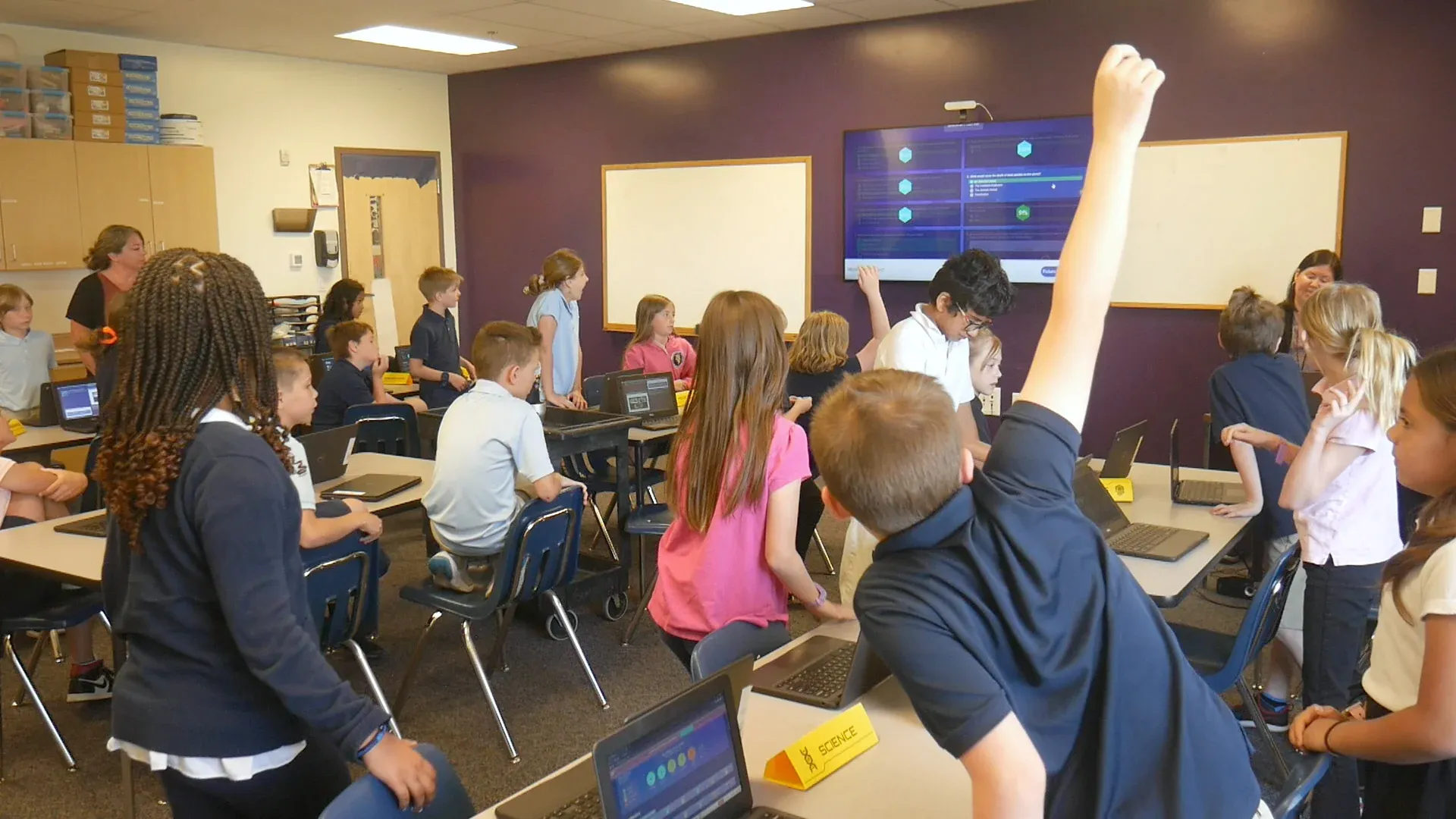
    A class of elementary students on their feet around their Chromebooks, one arm shooting up, the projector lit at the front of the room.
    What you'll see: kids out of their seats, one station telling another what its screen shows, and you moving between them instead of standing at the front.

    No single problem solving Mission runs K to 8, because every Mission asks for it. This is the one we’d point to first, an engineering Mission for grades 3 to 6 where the problem solving is the whole job. Your grade’s page names yours.

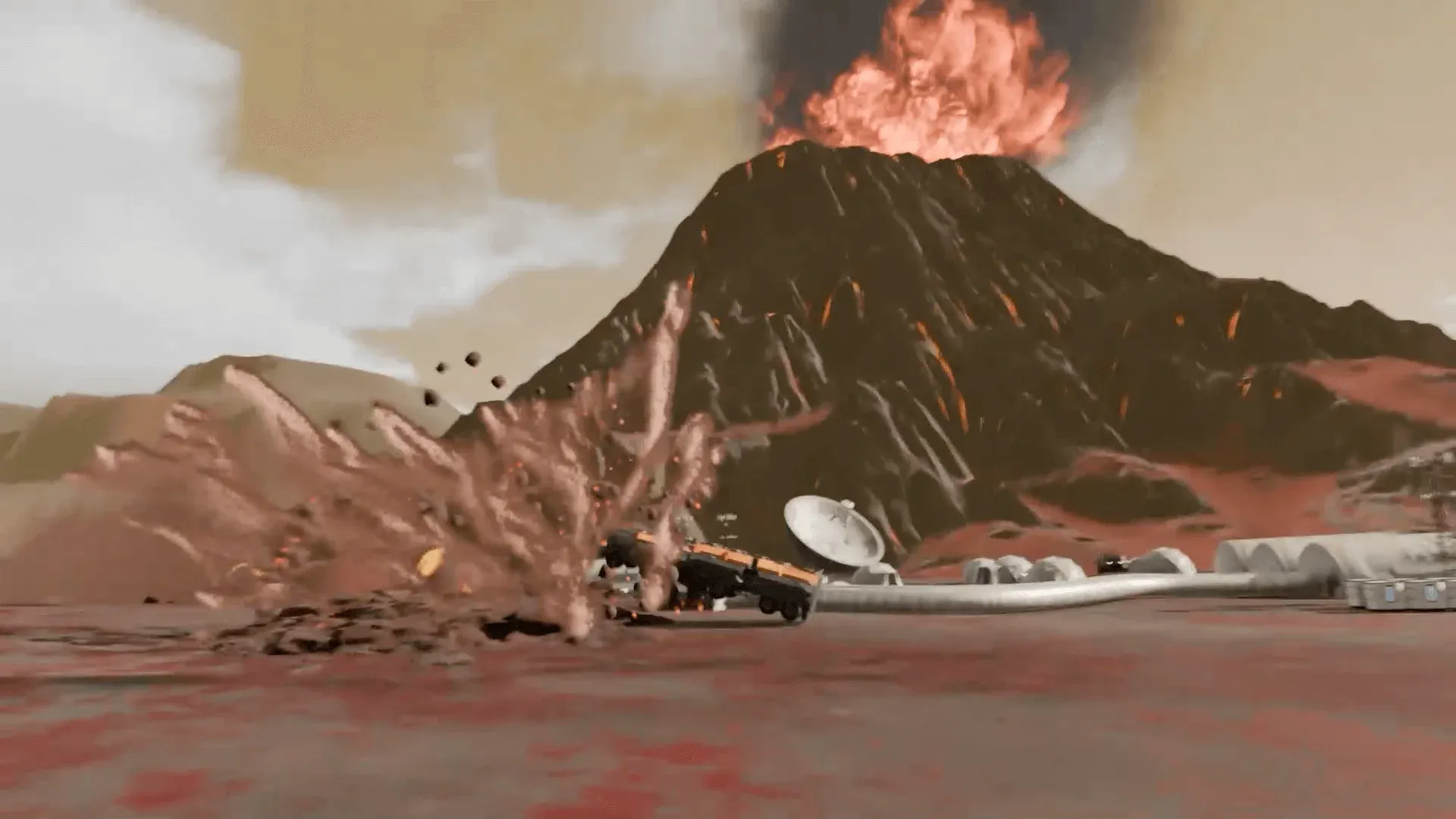
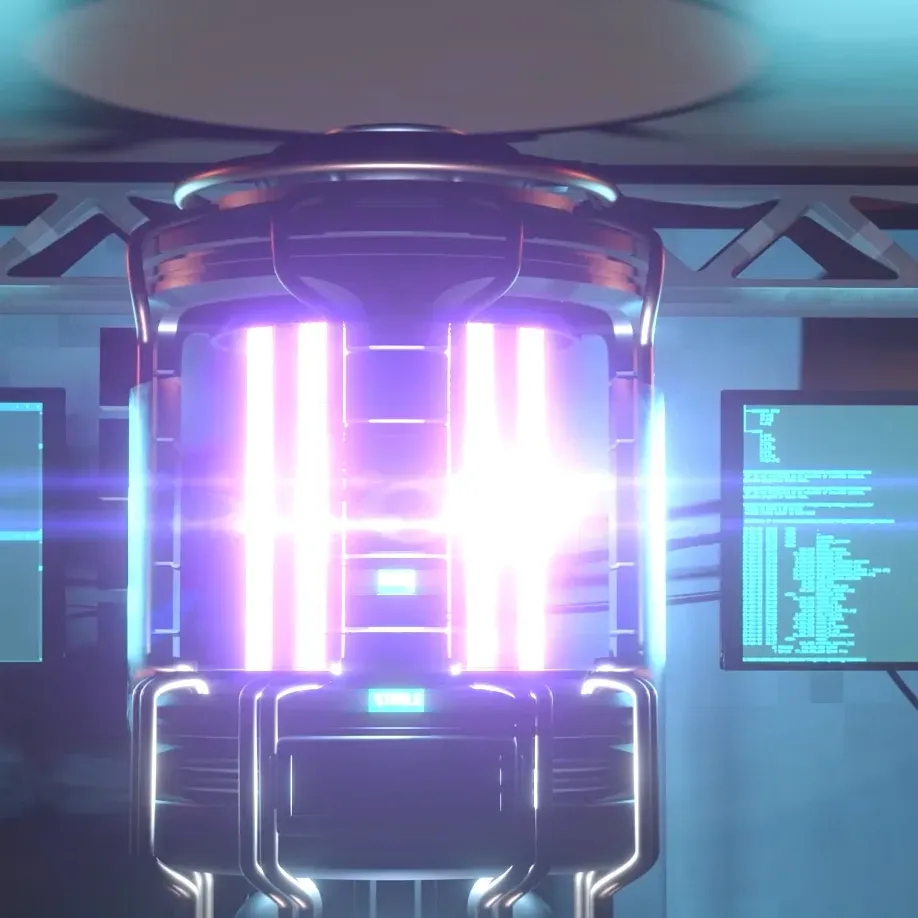
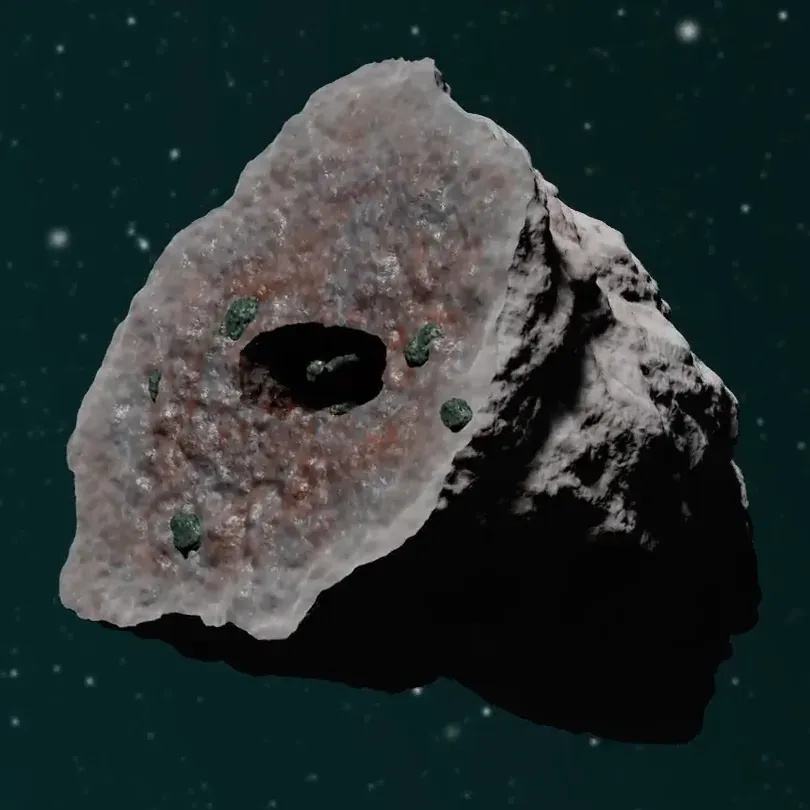
    An EMP has damaged the fusion reactor that powers Koré’s protective shield, and asteroids are coming. The crew has to design and build an improved reactor from the materials on hand, changing the original design until it puts out the power the shield needs. The story plays on the projector. The work happens at seven stations (Command, Engineering, Medical, Security, Science, I.T., Operations) and in the arguments between them.

    Every student is assigned to a team, and each team’s work is themed to it, from its own information and challenge to the same problem the rest of the crew is solving. The team gives a student a role in the story and people to lean on while you move between teams. You’re at the helm, asking what the last test told them.

    It’s built to the engineering design standard for grades 3 to 5 (NGSS 3-5-ETS1-3): plan and carry out fair tests in which variables are controlled and failure points are considered, to find what about a model or prototype can be improved. The two criteria that are hardest to build by hand, stakes the class can feel and a way to see who did what, come built in: the asteroids don’t wait, everyone works the problem on a team, and every student gets a report on how well they did when it’s over.

    “Observe a mission in another classroom. It will change the way you think about them.”

    Danica Puente, Teacher, Holbrook Elementary, UT

    Will it work in my room?

    Students join with a class code; no student accounts, no student email. Chromebooks, laptops, or tablets, plus your projector. Free for teachers, no credit card.

    START FREE →

    Four to start with

    Communication Mission briefs by grade: K to 1, 2 to 3, 4 and up.

    This is one Mission. There are more than 100 built the same way, from fossils to fractions, each one somewhere for a unit to go: a unit that ends this way, then the next one, then the one after that, with a report on every student each time. Every lesson finally has somewhere to go. Every grade page above names the Mission built for its grade.

    What the report shows

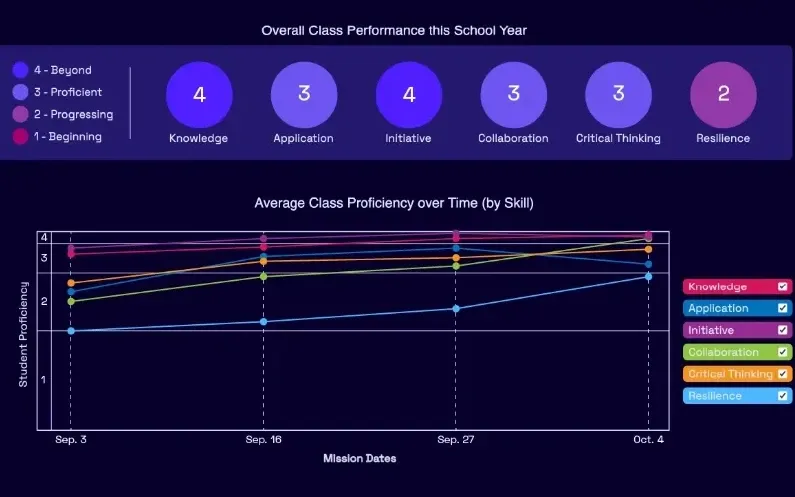
    A Mission.io class report: the class score in each of six skills, from knowledge and application to collaboration, critical thinking, and resilience, with the class chart across the year below.
    A class report from a real Mission: the class score in each of six skills, then each skill across the year.

    Every Mission produces a report for every student, built from what that student did across the whole Mission, on the skills the Mission captured. The six it can capture are Knowledge, Application, Initiative, Collaboration, Critical Thinking, and Resilience. The first two are what a test already sees. The other four are the human skills every school promises: collaboration, critical thinking, initiative, and resilience. There’s no row called problem solving, and we won’t pretend there is. It lives in the rows around it: whether a student could apply what they knew, think it through, and keep going when the first try failed. The test shows what they know. The report shows the rest. This is where problem solving gets practiced, and the only place the skills under it get measured. SEE THE EVIDENCE →

    You taught it. Now find out who can use it.

    Who's behind it

    Mission.io is a research and design organization with one job: make collaborative, active learning something a teacher can run every unit instead of once a semester, and put a report in your hands when it’s over. Over a million students have run a Mission. The research behind them is funded by the National Science Foundation and the U.S. Department of Education’s Institute of Education Sciences. Mission.io meets ESSA Level II standards, as validated by Instructure, and the work has won multiple national awards. Districts bring us in to elevate the curriculum they already own. The six criteria above are the ones we build to, in every one of the 100+ Missions.

    “What I love most is that it’s low-prep but high-impact.”

    Ginger Marsh, Middle school teacher, Cedar Middle School
    START FREEMISSION BRIEF →

    Free teacher account, no card. Your account opens on the Mission library, with the Communication Mission marked Start here. Run it, then Reactor Revamp for grades 3 to 6, each after its 5-minute Teacher Preview. Teaching K to 2? Tools of the Trade. Teaching 7 or 8? Unstoppable Force. Both are in the tiles above.

Questions teachers ask about problem solving

How do I stop one student from solving it for the whole group?

Give each student a piece of the problem only they hold, and make the owner the one who explains it. That is criterion 3, and it’s why the escape room above gives every student a lock and lets only the owner turn it.

Should I teach the method first, or let them struggle?

Struggle first, briefly, when they have the background for it. Most of the try-first research is with students 12 to 18, and it worked less well with younger kids who didn’t have the background yet (Sinha and Kapur, 2021). With younger classes, put the plan in their hands (cubes, bodies, a drawing) and keep the struggle short. Either way, the teaching comes right after, built on what they tried.

How do I grade problem solving fairly?

Grade the moves, and let the answer be one of them. Four countable things per student (tried a strategy and said what it was, checked a result before committing, explained a method, used someone else’s) over two or three activities gives you a pattern you can defend to a parent. A right answer copied from the fast kid shows up as a row with nothing in it.

Are puzzles and brain teasers problem solving activities?

Some are, and most are practice: one right answer, a known path, good for patience and pattern-spotting. Problem solving starts when students have to decide what the problem is asking and choose a way in, and it gets real when more than one answer can be defended. That’s why tangrams above get a page: the fix turns a center puzzle into the real thing.

Is problem solving the same as critical thinking?

They overlap, and they’re different jobs. Problem solving is getting from stuck to done. Critical thinking is judging whether a claim, a source, or a result holds up. Most good activities need both. Our critical thinking activities for students take the second one grade by grade.

My class has never done this. Where do I start?

One problem a day where every student writes down a first try before anyone shares, for a week. Then one of the twelve above, rebuilt the way your grade’s page shows. The grade pages start every grade where it actually is.

Sources