4th grade problem solving activities

One classic rebuilt so 4th graders find the pattern and say why it holds, five more fixed, a free sheet, and the whole-class Mission built for 4th grade.

Who we are. Mission.io makes Missions: teacher-led, whole-class simulations where students use what they’re learning to work through a real scenario together.

Everything on this page works without us. The Mission built for 4th grade waits at the end, free. (The strangers in it need fuel, not high fives.)

On this page

What problem solving looks like in 4th grade

Fourth grade problem solving activities give nine-year-olds a problem too big to count, so they have to start small, spot a pattern, and explain why it keeps going. That last part is the jump: plenty of kids can see the rule, and fewer can say why it’s the rule. This page rebuilds the classic rich task that teaches exactly that.

Nine-year-olds are competitive and look for explanations of how and why things work, their group work often involves arguing, and big abstractions like large numbers are still hard. The handshake problem is a how-and-why with bodies in it: four people, six handshakes, and a fierce argument about whether Sam shaking Ana’s hand counts twice. The big number comes from a pattern built out of small cases, not a formula, which is why it fits nine-year-olds and not seven-year-olds.

The standard asks them to generate a number pattern that follows a rule and spot features of the pattern the rule didn’t spell out (CCSS 4.OA.C.5). The practice standards ask them to start with a simpler case when a problem is too big (Mathematical Practice 1) and to notice regularity in repeated reasoning (Mathematical Practice 8). The activity below gives the number a deadline.

Six things that make a pattern worth the struggle

Group work earns its keep at this age. A review of face-to-face cooperative learning found it beat whole-class teaching on achievement with a medium effect, strongest in math and science and stronger in primary school than secondary (Kyndt et al., 2013). The catch is the structure: four nine-year-olds and one problem usually means one solver and three spectators. Here’s each of the six in 4th grade; the K to 8 problem solving guide has the studies.

  1. 1. A real problem with stakes the class can feel.

    “How many handshakes for 30 people?” is a puzzle nobody needs answered. “Is there time at the assembly, or does it run into lunch?” is one the office is waiting on, and nine-year-olds like being right in front of the office.

  2. 2. Apply, don't recall.

    The pattern has to be found, not handed over, so this one comes built in. The 4th grade twist is saying the rule in words and predicting the next row before anyone tests it.

  3. 3. Group goals with individual accountability.

    The usual run: one kid sees the pattern, the table copies, and four identical sheets come back. Slavin’s synthesis puts numbers on the fix: 84% of studies found positive effects when groups had a shared goal and each student answered for a part, and 17% when they didn’t (Slavin, 1991).

  4. 4. The teacher leads the thinking.

    Your job is the question that turns what into why: does your rule say why, or just what? Ask it at every table, and wait.

  5. 5. A debrief where the class argues it out.

    Skip “who got 435?” and debrief on why each row adds one more than the last. Fourth graders will argue about it for ten minutes if you let them.

  6. 6. A way to see who did what.

    If you can’t tell which student predicted row five and which one copied it, you can’t teach problem solving. A four-behavior tally tells you by the end of the period.

Four people, six handshakes. Now say why.

The handshake problem already hits two or three of the six. Here’s the rebuild that hits the rest. The table, the drawing frame, and the time box, ready to copy →

The handshake problem, rebuilt to hit all six

You know it. If everyone in the room shakes hands with everyone else exactly once, how many handshakes happen? Students act out small cases, find the pattern, and stretch it to the whole class. It’s in nearly every problem solving collection for a reason. As usually run, though, nobody needs the number, one kid finds the pattern while the table copies it, and the debrief is “who got 435?”

Give the number a job and give every student a case to own, and the whole table has to explain it.

Time
50 minutes: 5 for the scene, 15 for small cases and the table, 8 for the rule and the prediction, 7 for the time question, 5 for round two, 10 for the debrief. In a 45-minute block, cut round two and answer it in one sentence during the debrief.
Groups
Fours. With 27 students, make six fours and one three; in the three, the Timer also keeps the table.
Supplies
The table sheet and a timer. Printing only.
Standards
CCSS 4.OA.C.5 (generate a pattern that follows a rule), CCSS Mathematical Practices 1 and 8.
  1. The problemStakes

    The 4th grade is hosting the kindergarten buddies at the welcome assembly. Every 4th grader greets every other 4th grader, and every 4th grader also high-fives every kindergartner. The assembly is 20 minutes, and the office wants to know if there’s time. How long a high five takes is the group’s to decide and defend. If you’re wrong, the assembly runs into lunch.

  2. Small cases firstApply

    The Actor runs the cases with bodies: 2 people, then 3, 4, and 5, the group counting each handshake aloud. The Table Keeper writes people and handshakes side by side. That’s 4.OA.C.5 in a table: a rule, plus a feature it never announced, that each row adds one more than the row before.

  3. Four jobs, four casesAccountability

    One job each, written on the sheet, with the Actor rotating each case so three of the four act. The group has to show the pattern three ways before it’s done: the table, a dots-and-lines drawing, and the rule in words.

    • Actor

      Runs each small case with bodies while the group counts aloud.

    • Table Keeper

      Records people and handshakes, and may not write a number the group didn't count.

    • Pattern Finder

      Says the rule in words after four rows, and predicts row five before the Actor runs it.

    • Timer

      Owns the second question: how long a high five takes, and whether 20 minutes is enough, with the math shown.

  4. You lead the thinkingTeacher leads

    Three questions at the tables: What does the next row add, and why that many? Does your rule say why, or just what? What happens to your answer if a high five takes two seconds instead of one?

  5. Round twoApply

    Now the high fives: every 4th grader with every kindergartner, across the two groups, not within one. If your grade has 25 fourth graders and the buddies number 22, that’s 25 times 22. The group has to notice that the two problems are different, and say how.

  6. The debriefDebrief

    Ten minutes, whole class. Why does each row add one more than the last? Which group’s drawing made the rule obvious? Is there time, and what do we tell the office?

  7. See who did whatSee who did what

    Four marks per student: ran or recorded a case accurately, stated the pattern in words, predicted a row before testing it, explained why the pattern holds. The Actor’s cases are loud and the Pattern Finder has to speak before case five by rule, so you’ll catch about half the room in one period.

(Someone will insist that shaking your own hand counts. Rule on it once, out loud, and write the ruling on the board.)

Fourth graders will spot the same growing pattern the next time one turns up, and somebody will call it the handshake thing before you do.

The welcome assembly handshake problem, free

Emailed now, ready to copy: the teacher page, four job cards, the group sheet (the assembly scene, the people-and-handshakes table with a prediction column, and the rule-in-words line), the dots-and-lines drawing frame with round two and the time box, an answer key, and the four-behavior tally.

It’s on its way.

Check your inbox for the welcome assembly handshake problem.

Email me the sheet. It comes as a PDF, ready to print. Unsubscribe anytime.

Five more classics, and the fix each needs

Fourth grade math is full of rich tasks that end with one kid’s answer on the board. Here are five more that teachers run at this grade, and the fix each one needs.

Five more for 4th grade

1. Three-act math tasks (K to 5)

Needs a short clip on the projector. Whole class.

A short clip raises a question with no numbers given; the class decides what it needs to know, then sees the reveal. Applying the math and a teacher leading come built in, and so does the debrief, in principle. As usually run, though, the class asks for whatever it wants, and nothing shows who did the thinking.

The fix

  1. Name one Information Officer per group, the only one who can ask you for a number.
  2. Set a hard limit of three asks per group, so each one has to be argued for first.

See the three-act task rebuilt for 3rd grade, with three asks per group →

2. The party budget

Needs pretend money, grocery flyers, poster paper. Groups of four.

Groups plan a party with pretend money and grocery flyers, without going over. It’s usually a 5th grade project, and 4th graders can run it a year early, adding and multiplying real prices. As usually run, though, one student does the math while the rest make the poster, and the poster hides who did what.

The fix

  1. Give every student one line of the budget to own.
  2. Name a Checker, who checks every line by hand.
  3. The calculator comes out only after the Checker has checked every line.

See the party budget rebuilt for 5th grade →

3. Guess My Rule (3 to 5)

Needs a function machine on the board. Whole class.

You think of a rule, students feed you numbers, and they guess what the machine does to them. You lead it, and students put patterns to work. As usually run, though, nothing rides on the rule, and the fastest kid calls it after two numbers. It’s a critical thinking classic more than a problem solving one.

The fix

  1. Give each group a limited number of tests, so every input has to be chosen for a reason.
  2. Run a second machine with the same first outputs and a different rule, so a rule called too early gets caught.

See Guess My Rule rebuilt for 4th grade critical thinking →

4. KenKen and Sudoku

Needs a puzzle grid. Solo.

Students fill a grid using arithmetic clues and deduction, quietly and alone. Every cell takes reasoning. As usually run, though, it’s a worksheet, and you can’t see how anyone got there.

The fix

  1. Pair students up, and a partner has to justify every cell before it’s inked.
  2. Run it as a warmup, and save the lesson for the problem that comes after.

No page for this one; with a partner justifying each cell it’s a strong warmup.

5. Egg drop and catapult challenges

Needs the supply closet. Groups of three or four.

Groups build a container for an egg or a catapult, then test it, and the room cheers or groans. The test day gives it stakes 4th graders feel. As usually run, though, the egg survives or it doesn’t, and nobody asks why.

The fix

  1. Write a spec before the build: what it has to do, and how you’ll test it.
  2. Run a second round after the first test, so every group rebuilds.
  3. Debrief what failed, and why, before anyone wins.

See the build challenges for 4th grade →

  • Our part · We make Missions

    Or let a Mission keep the clock while you ask why

    Plenty of 4th grade teachers run rich tasks by hand every unit, and they work. A Mission is a teacher-led, whole-class simulation: we connect every student to a station, run the story, and keep the clock honest, so you can walk the room asking nine-year-olds why their number works.

    You're at the helm, not on the hook.

    Power Struggle: a Mission built for 4th grade

    Power Struggle · Built for 4th grade · About 28 minutes · One device per student, plus your projector · Free with a teacher account

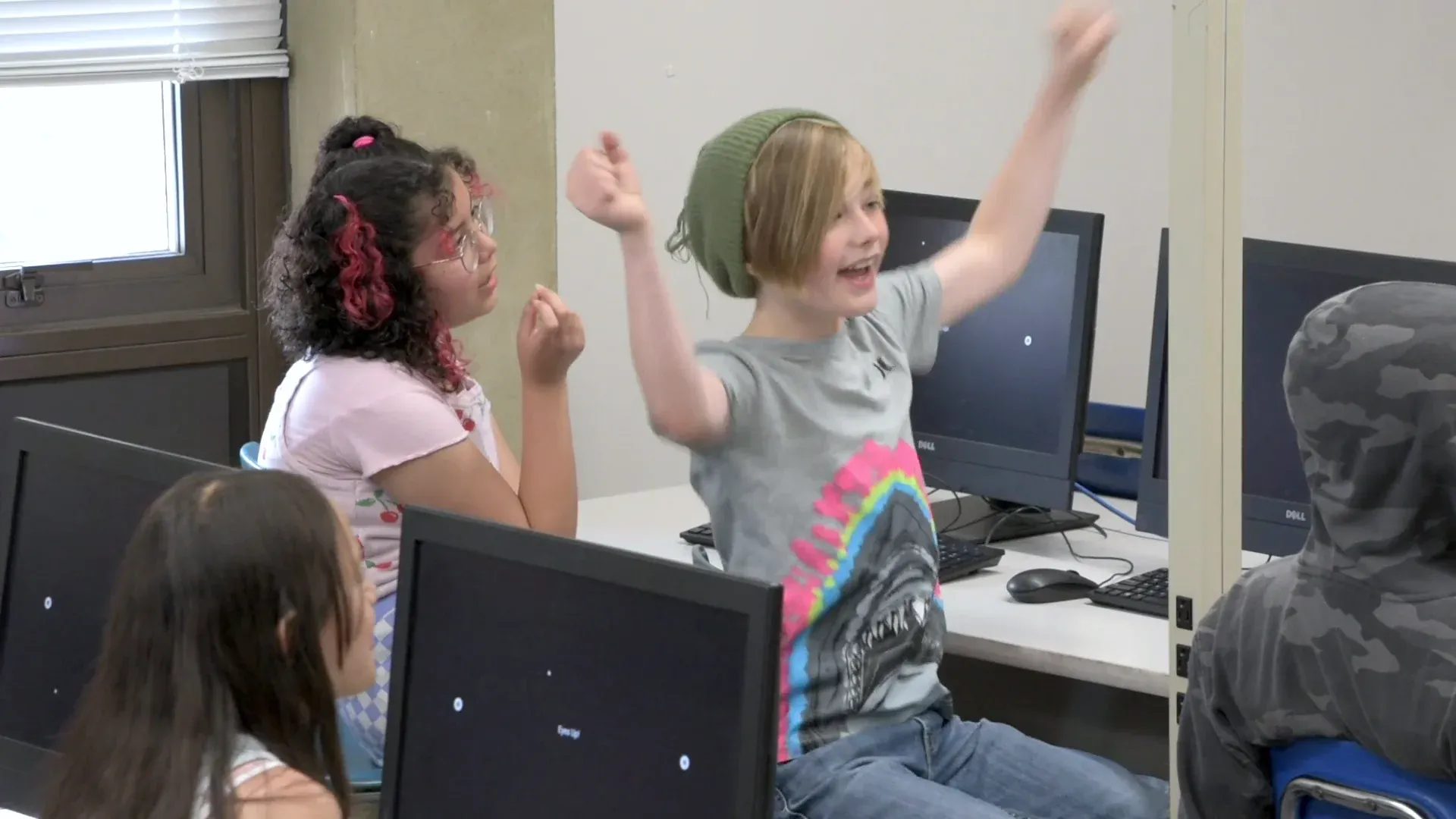
    A student in a green beanie throws both arms up at a computer station while a classmate in glasses looks on.
    What you'll see: a student throwing both arms up at a station that just came through, a classmate deciding whether to celebrate yet, and you nowhere near the front.

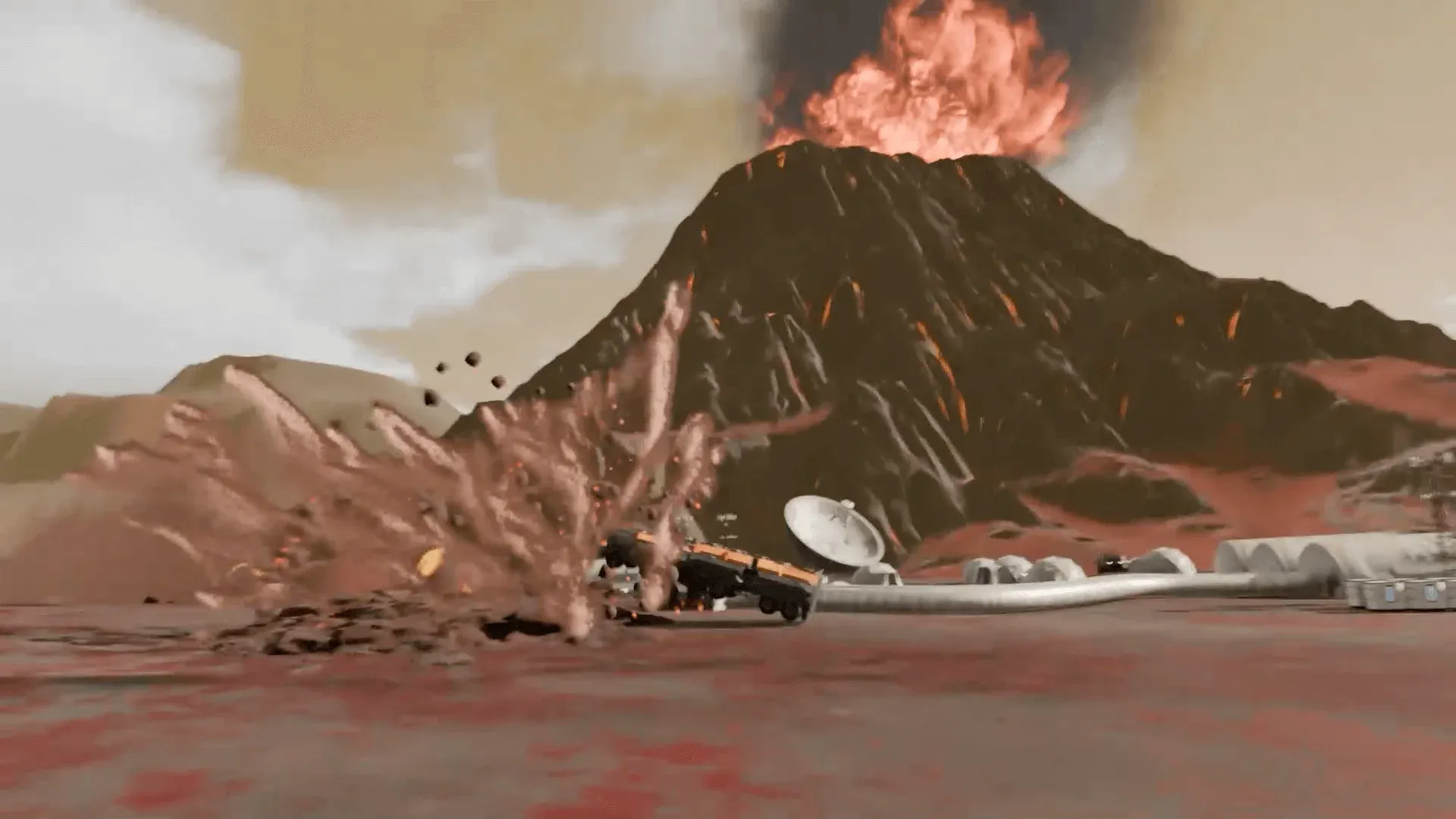
    Your crew stumbles on a group of Sarucians stranded on Areva, and they need help. The class uses the data to work out how much fuel it can share and still make the nearest fueling station, before a dust storm hits. The rescue plays on the projector. The math happens at seven stations (Command, Engineering, Medical, Security, Science, I.T., Operations).

    Every student is assigned to a team, and each team’s work is themed to it, from its own information and challenge to the same problem the rest of the crew is solving. The team gives a student a role in the story and people to lean on while you move between teams. You’re asking each team how much it can really spare.

    Against the six:

    • Stakes. A storm is coming, and sharing too much fuel strands the crew too.
    • Apply. The crew calculates from the data how much fuel it can share (CCSS 4.NBT.A.3 and 4.NBT.B.4, rounding and the standard algorithm).
    • Accountability. Every student is on a team, and each team’s work is themed to it.
    • Teacher leads. Watch the 5-minute Teacher Preview, press Start, and ask three: How much do we need to get there? How much can we spare? What if the estimate is off?
    • Debrief. The Mission Guide lists none for Power Struggle, so bring one question: which station’s number changed the decision?
    • See who did what. Every student gets a report on how well they did, shaped by what this Mission asked of them.

    “This is the only thing I’ve used in 24 years of teaching that I love just as much as my students do.”

    Evelyn Fowles, 6th grade teacher

    Will it work in my room?

    Students join with a class code: no student accounts, no student email, no passwords. Chromebooks, laptops, or tablets, plus your projector. Free for teachers, no credit card. Student data is covered by COPPA and FERPA, and we signed the Student Privacy Pledge. No projector or devices? The handshakes need neither, and the sheet still works.

    START FREE →

    Communication first, then this one

    This is one Mission. It’s one of more than 100 built the same way, from fossils to fractions, each with a report on every student at the end.

    What the report shows

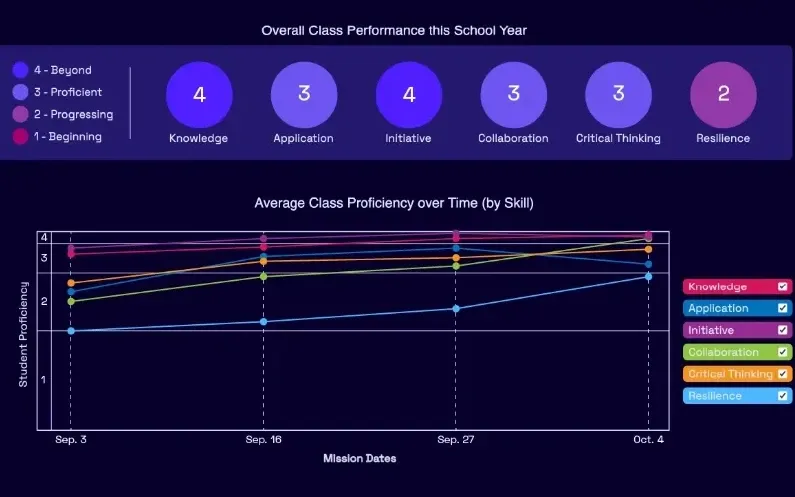
    A Mission.io class report: the class score in each of six skills, from knowledge and application to collaboration, critical thinking, and resilience, with the class chart across the year below.
    A class report from a real Mission: the class score in each of six skills, then each skill across the year.

    Every Mission produces a report for every student, built from what that student did across the whole Mission, on the skills the Mission captured. The six it can capture are Knowledge, Application, Initiative, Collaboration, Critical Thinking, and Resilience. The first two are what a test already sees. The other four are the human skills every school promises. There’s no row called problem solving, and we won’t pretend there is. It lives in the rows around it: whether a student could apply what they knew, think it through, and keep going when the first try failed. The test shows what they know. The report shows the rest. This is where problem solving gets practiced, and the only place the skills under it get measured. SEE THE EVIDENCE →

    You taught it. Now find out who can use it.

    Who's behind it

    Mission.io is a research and design organization with one job: make collaborative, active learning something a teacher can run every unit instead of once a semester, and put a report in your hands when it’s over. Over a million students have run a Mission. The research behind them is funded by the National Science Foundation and the U.S. Department of Education’s Institute of Education Sciences, and Mission.io meets ESSA Level II standards, as validated by Instructure.

    “At the end of the year last year, every group in my classroom listed Mission IO in the ‘Top 10 Things about Sixth Grade.’”

    Sharla York, 6th grade teacher, Heritage Elementary School
    START FREEMISSION BRIEF →

    Free teacher account, no card. Start with the Communication Mission, marked Start here in your library, then Power Struggle, each after its 5-minute Teacher Preview.

Questions 4th grade teachers ask

My 4th graders find the pattern but can't say why it works. Is that enough?

It’s halfway, and it’s the normal place for nine-year-olds to stall. Seeing that each row adds one more is the what. The why is in the bodies: the fifth person to walk in shakes hands with the four already there. Ask the Actor to show it, and let the group put that into words.

One student always sees the rule first. How do I stop the table from copying?

Give every student a case to own and a job only they can do, and make the Pattern Finder predict row five before anyone runs it. A copied rule can’t predict anything. If the fast kid is the Pattern Finder, they still have to explain it to a Table Keeper who won’t write a number the group didn’t count.

Why not just teach them the formula?

Because large abstractions are hard at nine, and a formula is about as abstract as it gets. A pattern built from small cases gets them to the big number honestly, and it’s what the 4th grade standard asks for (4.OA.C.5). The formula can wait until it means something.

Is the handshake problem a 4th grade task or a middle school one?

Both. It turns up in collections for grades 4 to 6 and beyond, which is why it works as a 4th grade stretch. The 4th grade version stops at the pattern and the reason, and the assembly gives the answer somewhere to go.