4th grade critical thinking activities

Guess My Rule, rebuilt so nine-year-olds test a rule before they trust it, five more classics and the fix each needs, a free printable, and a 4th grade Mission.

Who we are. Mission.io makes Missions: teacher-led, whole-class simulations where students use what they’re learning to work through a real scenario together.

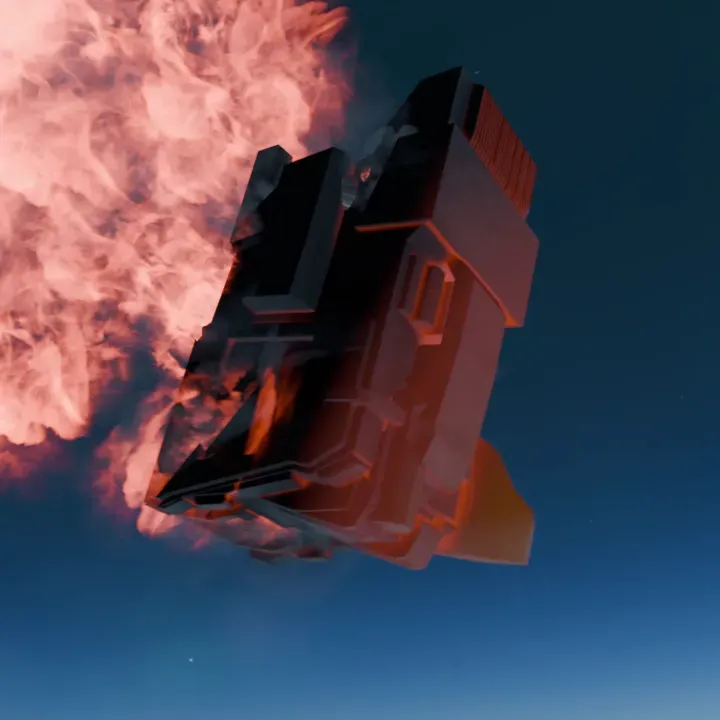
Everything on this page works without us. The Mission we built for 4th grade is at the end, free. (It asks the crew which falling chunks of an exploded space station to destroy. Nine-year-olds have opinions.)

On this page

What critical thinking looks like in 4th grade

Fourth grade critical thinking activities ask nine-year-olds to propose an explanation, test it on purpose, and drop it when the evidence says so. This page rebuilds the pattern game most 4th grade teachers reach for, Guess My Rule, so a group has to choose its tests and check its rule against every result before it commits.

Nine-year-olds want to know how things work, and why, they’re competitive, and their group work often turns into arguing. Large numbers and other abstractions still trip them up. A rule machine suits all of that: the argument is about which rule explains every pair, which is exactly the argument the standard wants, and the inputs stay small so the abstraction is the rule, not the size of the numbers.

The standard, 4.OA.C.5, asks students to generate a number or shape pattern that follows a given rule, and identify apparent features of the pattern that were not explicit in the rule itself. The math practices name the habits underneath: look for and express regularity in repeated reasoning (MP8), and construct viable arguments and critique the reasoning of others (MP3).

Six things that make 4th graders think critically

Of the ways to teach critical thinking compared in a 341-study review, the largest effect came from a mix: dialogue, an authentic problem, and mentoring, at g = 0.57 (Abrami et al., 2015). The review didn’t break out nine-year-olds, so it’s a recipe to follow rather than a promise about 4th grade. What each of the six looks like at this grade is below; the K to 8 guide has the studies.

  1. 1. A real problem with stakes the class can feel.

    A rule machine drawn on the board is a game. A vending machine overcharging the staff room is a repair job, and nine-year-olds want to be the ones who found the fault.

  2. 2. Apply, don't recall.

    The rule has to be inferred from pairs and then tested on a new one. That’s 4.OA.C.5, done with the evidence in front of them.

  3. 3. Group goals with individual accountability.

    Only the Tester talks to the machine, and the Checker has to try every rule on every pair. The fastest kid can’t call it alone anymore.

  4. 4. The teacher leads the thinking.

    You’re the machine, which means you answer only the Tester and ask everyone else why that input. It’s the best seat in the room.

  5. 5. A debrief where the class argues it out.

    Ten minutes on the group whose rule fit and was still wrong. Competitive nine-year-olds will argue about it; make the in-out table the evidence.

  6. 6. A way to see who did what.

    Tally who proposed an input with a reason and who broke a rule with a pair. Those are moves a test never sees.

Fitting the data isn’t proving the rule.

Most 4th grade favorites get part of the way there. Here’s the one already on your board, taken the rest of the way. The table, the jobs, and the tally come in one free printable →

Guess My Rule, rebuilt to hit all six

You know it. Numbers go into the machine and come out changed, and the class collects pairs until someone figures out the rule, then tries it on a new number. It’s a staple from 3rd through 5th, and kids love it. As usually run it’s light on critical thinking: the machine is a game, nobody has to justify a test, and the fastest kid calls the rule before anyone else has done the math.

Watch it run and you’ll see a rule announced after two pairs and believed by everyone. A machine built to fool that habit fixes it.

Time
40 minutes. The scene takes 5, round one 10, reporting rules 3, setting up round two 2, round two 10, and the debrief 10. That leaves five to spare in a 45-minute block.
Groups
Fours. With 27 students, that’s six fours and a group of three, where one student keeps the table and checks it.
Supplies
The in-out table, four job cards, and two sealed rule cards for you. Printing only.
Standards
CCSS 4.OA.C.5, with MP8 and MP3.
  1. The problemStakes

    The vending machine in the staff room is charging the wrong prices. Put in a 1-dollar snack and it charges 4. Put in a 2-dollar snack and it charges 7. The principal will let each group test three more snacks before she calls the repair company, and the group has to write down the rule the machine is using so the company can fix it. Three tests. Choose them well.

  2. Infer, then testApply

    Each group writes a candidate rule after every result, in words and as an expression, and tries it on a new input before trusting it. Noticing what the rule didn’t say (the outputs go even, odd, even, odd) is the second half of 4.OA.C.5.

  3. Four jobs with individual accountabilityAccountability

    One job each, rotated between rounds. You are the machine, and you answer only the Tester.

    • Tester

      Picks which input to try, and has to say why it will tell the group something new.

    • Recorder

      Keeps the in-out table, and nothing else.

    • Rule Writer

      Writes a candidate rule after every test, in words and as an expression.

    • Checker

      Tries the rule on every pair before the group commits, and names the pair that breaks it.

  4. You lead the thinkingTeacher leads

    Three questions, at the tables: Why that input? What rule fits so far, and does it fit every pair? What input would break your rule if it’s wrong? Then go back to being a machine. Machines don’t give hints.

  5. Two roundsApply

    Round one’s rule is times 3, then add 1 (1 makes 4, 2 makes 7, 3 makes 10). Round two’s machine gives the same first two outputs, but its rule is the number times itself, then add 3 (3 makes 12, 4 makes 19). A group that assumes the old rule is wrong, and only the Tester’s third input can show it. Two rules can fit the same data, and only a new test tells them apart.

  6. The debriefDebrief

    Ten minutes, whole class: Which input told you the most, and why? Which group had two rules that both fit, and what input broke the tie? What did you notice about the outputs that the rule didn’t say? The middle question is the lesson.

  7. See who did whatSee who did what

    The sheet’s tally tracks four moves per student: proposed an input with a reason, stated a candidate rule, checked a rule against the table, revised a rule with a reason. Expect to catch about half the class in a period, since no Tester gets an output without speaking to you. Rotate jobs between rounds and the Rule Writers show up too.

(Play the machine straight-faced. A buzz for every output is optional and highly recommended.)

The group that tested 3 in round two and got 12 instead of 10 just found out why scientists don’t stop at two data points.

The vending machine Guess My Rule, free

Emailed now, ready to copy: the teacher page, four job cards, the vending machine scene with the round one in-out table and rule line, a fresh table for round two, two sealed rule cards for you, and the four-behavior tally.

It’s on its way.

Check your inbox for the vending machine Guess My Rule.

Email me the sheet. It comes as a PDF, ready to print. Unsubscribe anytime.

Five more 4th grade classics and what each is missing

These five show up on every 4th grade list. Each one is close; here’s the piece it’s missing and how to add it.

Five more for 4th grade

1. Four corners (3 to 8)

Needs four corner signs, a statement. Whole class. A period.

You read a statement, students walk to the corner that matches their view and defend it, and anyone persuaded may move. By 4th grade the reasons are real, and you’re steering. As usually run, though, most of a corner hides behind one speaker, students switch corners without saying why, and nothing gets written down.

The fix

  1. Before anyone moves, every student writes a position and one reason on a card.
  2. Anyone who switches corners names the fact that moved them and adds it to their card.

See four corners rebuilt for 3rd grade →

2. Classroom debate (4 to 8)

Needs a resolution, two teams, a judge. A period or two.

Two teams take a resolution, give speeches, and a judge picks a winner. It looks like the hardest thinking on this list, and for the three speakers on each side it is. As usually run, though, everyone else waits to hear who won, and the scorecard ends up counting volume.

The fix

  1. Give every student one job on the team, like Opener, Evidence Keeper, Cross-Examiner, or Rebutter.
  2. Hand the judges a scorecard with a point for each piece of evidence, and none for volume.

See the classroom debate rebuilt for 5th grade →

3. Logic grid puzzles (3 to 8)

Needs a puzzle sheet. Solo. A quiet period.

Five people, five pets, a list of clues, and a grid to fill with X’s and checks. It’s real deduction. As usually run, though, students work alone in a quiet room, nothing rides on the answer, and there’s nobody to argue with.

The fix

  1. Pair students up with one grid between them.
  2. Before an X goes on the grid, the partner holding the pencil names the clue that rules it out.

No page; it stays a worksheet, just a better one.

4. Mystery number

Needs a number in your head. Whole class. 10 minutes.

“I’m thinking of a number between 1 and 1,000,” and the class narrows it down with yes-or-no questions like “Is it more than 500?” or “Is there a 7 in the tens place?” It applies place value, and you lead it. As usually run, though, a few students fire off guesses, nothing rides on them, and nothing gets written down.

The fix

  1. Give the class a budget of questions, and tally them on the board.
  2. Make a guess spend a question, just like a question does.
  3. Choose a new Asker for each question, so the questions come from all over the room.

See the question budget on the kindergarten mystery bag page →

5. Estimation jar

Needs a jar of something countable. Whole class. 5 minutes on a Friday.

A jar of something countable sits at the front, everyone guesses the count, and then you reveal it. It gets students estimating, and you get to ask how. As usually run, though, it’s a five-minute Friday guess where nothing rides on being close, nobody answers for a number, and nobody talks about how they got there.

The fix

  1. Put students in groups, and have each group agree on a strategy, like counting one layer and multiplying by the number of layers.
  2. Groups write their strategy down before anyone says a number.
  3. After the reveal, compare the strategies, and ask which one got closest and why.

Skip the page; the strategy comparison is the whole fix.

  • Our part · We make Missions

    Or let a Mission carry everything but the thinking

    Some 4th grade teachers keep a rule machine going by hand for months, and it works. A Mission is a teacher-led, whole-class simulation that covers the same six in under half an hour and takes on the plot, the stations, and the record of who did what. The reasoning stays yours.

    You're at the helm, not on the hook.

    Disaster Above Vespus: a whole-class Mission for 4th grade

    Disaster Above Vespus · 4th grade · About 26 minutes · One device per student, plus your projector · Free with a teacher account

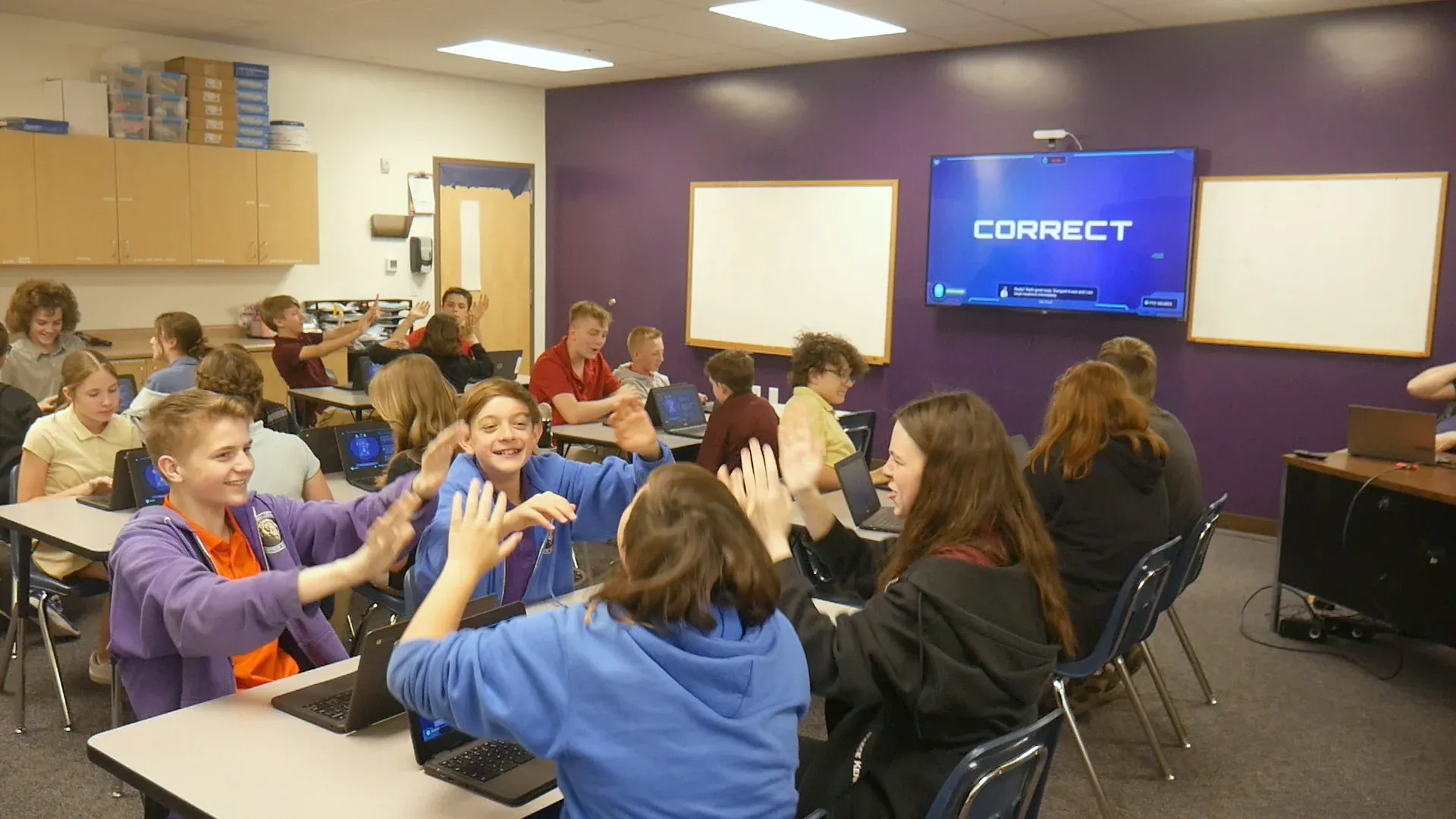
    Two students high-five across their laptops while a big screen at the front of the classroom reads CORRECT and classmates work at tables behind them.
    What you'll see: crews at their laptops, a CORRECT on the big screen, a high-five, and you heading for the table that isn't sure yet.

    On its way to help Mela reboot a space center, the crew watches the whole station explode. Mela got out in time, and the debris is falling toward Vespus. Your class analyzes the speed and composition of each piece to work out which ones carry the most energy and pose the greatest threat, then destroys them selectively. The story plays on the projector. The work happens at seven stations (Command, Engineering, Medical, Security, Science, I.T., Operations) and in the arguments between them.

    Every student is assigned to a team, and each team’s work is themed to it, from its own information and challenge to the same problem the rest of the crew is solving. The team gives a student a role in the story and people to lean on while you move between teams. You’re at the helm, asking which piece is fastest.

    Against the six:

    • Stakes. The debris is headed for the surface, and the crew has to decide which pieces to destroy.
    • Apply. Picking a target means relating speed to energy (NGSS 4-PS3-1, an explanation from evidence relating an object’s speed to its energy).
    • Accountability. Every student is assigned to a team, and each team’s work is themed to it.
    • Teacher leads. Preview it (5 minutes), press Start, and ask: Which piece is fastest? Does what it’s made of change your answer? Which one is the greatest threat, and why?
    • Debrief. The Mission Guide lists one debrief activity, Energy.
    • See who did what. Every student gets a report on how well they did, shaped by what this Mission asked of them.

    “Even my quiet or reluctant students participate because the missions are structured in a way where everyone’s voice matters.”

    Adriana Lopez, Junior high teacher, Clint Jr. High School

    Will it work in my room?

    Students join with a class code: no student accounts, no student email, no passwords. Chromebooks, laptops, or tablets, plus your projector. Free for teachers, no credit card. Student data is covered by COPPA and FERPA, and we signed the Student Privacy Pledge. No projector or devices? Guess My Rule needs neither, and the sheet still works.

    START FREE →

    Communication first, then this one

    This is one Mission. There are more than 100 built the same way, from fossils to fractions, each one somewhere for a unit to go, with a report on every student each time. Every lesson finally has somewhere to go.

    What the report shows

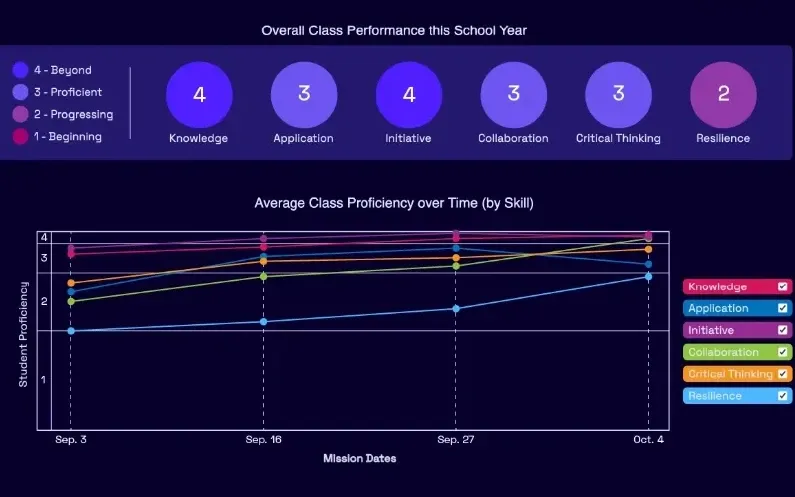
    A Mission.io class report: the class score in each of six skills, from knowledge and application to collaboration, critical thinking, and resilience, with the class chart across the year below.
    A class report from a real Mission: the class score in each of six skills, then each skill across the year.

    Every Mission produces a report for every student, built from what that student did across the whole Mission, on the skills the Mission captured. The six it can capture are Knowledge, Application, Initiative, Collaboration, Critical Thinking, and Resilience. The first two are what a test already sees. The other four are the human skills every school promises. The test shows what they know. The report shows the rest. This is where critical thinking gets practiced, and the only place it gets measured. SEE THE EVIDENCE →

    You taught it. Now find out who can use it.

    Who's behind it

    Mission.io is a research and design organization with one job: make collaborative, active learning something a teacher can run every unit instead of once a semester, and put a report in your hands when it’s over. Over a million students have run a Mission. The research behind them is funded by the National Science Foundation and the U.S. Department of Education’s Institute of Education Sciences, and Mission.io meets ESSA Level II standards, as validated by Instructure.

    “This is the only thing I’ve used in 24 years of teaching that I love just as much as my students do.”

    Evelyn Fowles, 6th grade teacher
    START FREEMISSION BRIEF →

    Free teacher account, no card. Start with the Communication Mission, marked Start here in your library, then Disaster Above Vespus, each after its 5-minute Teacher Preview.

Questions 4th grade teachers ask

One kid always shouts the rule before anyone else has done the math. How do I stop it?

Give the machine one door. The Tester is the only student who can ask you for an output, and the Checker has to try every candidate rule on every pair before the group writes it down. The fast kid still gets to be fast, just inside a job that makes the group check the speed.

What if a group finds the right rule by luck?

Round two exists for that group. Its machine matches round one’s first two outputs and then splits off, so a lucky guess about the old rule fails on the third test. The debrief question “what input broke the tie?” turns the luck into the lesson.

Is Guess My Rule math or critical thinking?

Both. The content is 4.OA.C.5, patterns that follow a rule. The thinking is choosing a test, checking a claim against every piece of evidence, and changing your mind when one pair breaks it, which is what MP3 and MP8 ask for. For the other half, getting from stuck to done, see our 4th grade problem solving activities.

Can my students who struggle with math do this?

Yes. The numbers are small, so the hard part is the rule, not the arithmetic, and a student who’s slower with facts can be an excellent Tester or Checker. Big numbers are hard at nine; keep inputs under 10 and the thinking stays on the pattern.

Rules you have to test before you trust

Two ways in this week: the machine and its four jobs, printed from the sheet, or Disaster Above Vespus right after its Teacher Preview.