Kindergarten critical thinking activities

The mystery bag, rebuilt so five-year-olds ask before they guess, the fixes for five more classics, one free sheet, and the Mission we built for kindergarten.

Who we are. Mission.io makes Missions: teacher-led, whole-class simulations where students use what they’re learning to work through a real scenario together.

Everything on this page works without us. The Mission we built for kindergarten is at the end, free. (Its emergency is a party that needs the right flowers. Five-year-olds agree this is serious.)

On this page

What critical thinking looks like in kindergarten

Kindergarten critical thinking activities are short, out-loud puzzles in which a class of five-year-olds has to work something out from clues and say why, before anyone gets to peek. This page takes the one every kindergarten teacher already owns, the mystery bag, and rebuilds it so the reasons count for more than the guesses.

A five-year-old does her thinking out loud, before she acts, hears words literally, and usually sees a single way to do a thing. That makes the rug the best place in the building to hear reasoning happen: every guess is a hypothesis said at full volume. Their working memory is still growing (it keeps maturing into the teen years, per Harvard’s Center on the Developing Child), so clues go on a chart the moment they arrive. And the objects come from a unit they know, because even very young children reason well about things they know something about (Willingham, 2007).

The standards ask for the same habit. Science wants K to 2 students to ask questions based on observations to find more information about the world (NGSS practice 1), and math wants young children to construct viable arguments and critique the reasoning of others, using objects, drawings, and actions (CCSS MP3). The bag does both before snack.

Six things that make kindergartners think critically

The teaching works, and it works best in a particular mix. Across 341 studies of teaching students to think critically, the overall effect was g = 0.30, and the largest, g = 0.57, came from dialogue, real problems, and mentoring used together (Abrami et al., 2015). The review gives no separate estimate for young children, so read it as the direction to build in, not a kindergarten result. Here’s how each one looks on the rug; the K to 8 guide has the studies.

  1. 1. A real problem with stakes the class can feel.

    A bag is a guessing game. A bag with the new class pet inside, and the wrong food waiting if we guess wrong, is a problem five-year-olds will sit still for.

  2. 2. Apply, don't recall.

    At five, applying means using the unit’s property words: hard or soft, legs or no legs, water or land. “Is it round?” is thinking. “Is it a ball?” is a coin toss.

  3. 3. Group goals with individual accountability.

    The usual version goes to the loudest guesser. Pass the question stick to a different child every turn, and the rug stops belonging to the same three voices.

  4. 4. The teacher leads the thinking.

    You already run this one, which is half of it. The other half is asking “what do we know for sure?” far more often than you reveal anything.

  5. 5. A debrief where the class argues it out.

    Five minutes after the reveal, on which question took the most pictures off the board. Kindergartners can argue about that, and they will.

  6. 6. A way to see who did what.

    A class list on a clipboard and a tally beside each name. Five-year-olds do their reasoning out loud, which makes this the easiest grade in which to hear it.

Guessing is fast. Asking is thinking.

Most rug-time classics cover a couple of the six at best. Here’s the one you already own, rebuilt to hit all six. The free printable has the chart, the job cards, and the tally →

The mystery bag, rebuilt to hit all six

You know it. Something from the unit goes into a cloth bag, a child reaches in, and the rug shouts guesses until you pull it out. It’s a lovely fifteen minutes. As usually run, it builds very little critical thinking: nothing rides on being right, “Is it a ball?” counts the same as “Is it round?”, and the reveal ends it.

Watch the rug and you’ll see the pattern: three children guess, and everyone else watches the bag. A question budget fixes that, because once a guess costs something, the asking gets smarter fast.

Time
25 minutes in all. Setup takes 3, the first bag 8, the reset 2, the second bag 7, and the debrief 5. Short on time? One bag plus its debrief is about 16.
Groups
The whole class, on the rug. The Asker changes every question, so eighteen children ask across two bags (ten, then eight), and the Feeler and Sorter turns cover the rest. With 22, everyone gets a job.
Supplies
A cloth bag, two objects from your unit (a toy frog, a pinecone, a seashell), a ten-box chart, picture cards. Under five dollars; the sheet has the chart.
Standards
NGSS practice 1 (ask questions based on observations), K-LS1-1 when the bag holds an animal, CCSS K.MD.B.3 when it holds a set to sort.
  1. The problemStakes

    A new animal moved into our classroom habitat, and the habitat is a bag. Before we open it, we have to work out what’s inside, because if we open it and we’re wrong, we’ll have the wrong food ready. Say it like it matters. To a five-year-old, it does.

  2. Ask, don't guessApply

    Draw ten boxes on the chart. A question has to be about a property (hard or soft, legs or no legs, lives in water or on land), and you write each answer next to its box. A guess is allowed, but it costs a box. That’s NGSS practice 1 sized for a five-year-old: ask from what you observe before you name the thing.

  3. Rug jobs with individual accountabilityAccountability

    Three jobs, and they move. The question stick passes to a new child after every question, so ten children ask in the first bag alone. Each child’s name goes on the class list next to what they did.

    • Feeler

      Reaches into the bag and answers the property questions, yes or no. A new Feeler every three questions.

    • Asker

      Holds the question stick and asks one property question. Then the stick moves on.

    • Sorter

      Moves the picture cards into could be and can't be after each answer, and says why.

  4. You lead the thinkingTeacher leads

    Your three questions, from down on the rug, not up in the chair: What do we know for sure now? Which pictures can we take down, and why? What question would help most next? Hold the reveal as long as you can. The reveal is the least interesting part.

  5. Two bagsApply

    A second bag with a different object and only eight boxes. Fewer questions means better ones, and you’ll hear children start telling each other which question to save for later.

  6. The debriefDebrief

    Keep everyone where they’re sitting for five more minutes. Which question took the most pictures down? Which guess came too early, and what should we have asked first? What does our new animal need? The second question is where the learning sits.

  7. See who did whatSee who did what

    The class list on a clipboard is your tally, four moves per child: asked a property question, gave a reason for taking a card down, built on an earlier answer, changed a guess with a reason. Tally as the stick moves. Each bag catches roughly half the class, and two bags catch nearly every child asking a property question.

(The Feeler will try to peek. Tape the bag shut and call it a seal.)

Somebody will ask about legs before anyone says frog, and the rug will learn that the question did more work than the guess.

The mystery bag, free

Emailed now, ready to copy: the teacher page, three rug job cards, the question charts (ten boxes for bag one, eight for bag two), the property questions in words (hard or soft, big or small, legs or no legs, water or land), the could be and can’t be signs, and the four-behavior tally.

It’s on its way.

Check your inbox for the mystery bag.

Email me the sheet. It comes as a PDF, ready to print. Unsubscribe anytime.

Five more rug-time classics, each with the fix it needs

These five turn up in every kindergarten plan book, usually as fillers between the real lessons. A couple of changes turn each filler into thinking you can hear. Here’s how each one usually runs, and what to change.

Five more for kindergarten

1. Would You Rather (1 to 5)

Needs two choices on the board. Whole class. 5 minutes.

You put two choices on the board, like the bear book or the frog book after lunch, and children pick one and say why. It’s a 1st grade classic and fine to run early, and it puts you in the asking seat while children use a little of what they know. As usually run, though, it’s a morning question with three hands up and a lot of shrugging. The pick changes nothing, and once one answer is heard, the class moves on.

The fix

  1. Offer two choices the class will really live with, like which of two books you read after lunch.
  2. Before anyone votes, call on three children to give a reason for their pick.
  3. Then take the vote, and read the winning book that afternoon.

See Would You Rather rebuilt for 1st grade, with numbers and a real snack →
2. Which One Doesn't Belong (K to 8)

Needs four pictures on the board. Whole class. 5 minutes.

Four pictures go up, maybe four animals from your unit, and children say which one doesn’t belong. Any of the four can be argued out, so the reasons are real, and you’re the one asking why. As usually run, though, it’s a quick warmup where one child answers and the rest of the rug nods along. Nothing rides on it, and nothing gets written down.

The fix

  1. Count to three, and every child points at a pick, all at once and without a word.
  2. Call on two children who pointed at different pictures, and have each one say why.

See Which One Doesn't Belong rebuilt for 2nd grade, Defender included →

3. Sorting with a secret rule

Needs two hoops or trays, a handful of objects. Whole class. 10 minutes.

You sort a handful of objects into two hoops, maybe things that roll and things that don’t, and the class guesses your rule. Every guess has children using what they notice about the objects. As usually run, though, the first child to say the rule ends the game, and most of the rug never had to commit to an idea.

The fix

  1. Whisper a rule to one child, and let that child do the sorting while you sit with the class.
  2. Hand out scrap paper, and have every child draw the rule in pictures before anyone says it out loud.

No page of its own; the mystery bag’s question budget works here too.

4. The science question of the day

Needs one question, a short video. Whole class. 10 minutes.

A question like “Why do leaves change color?” goes up, the class watches a short video, and you talk it over for a few minutes. It starts from the kind of wondering five-year-olds do all day. As usually run, though, nothing rides on the answer, and one child gives it. Nobody argues afterward, and nothing gets drawn or written down.

The fix

  1. Before the video, every child draws a prediction on a sticky note and sticks it on the board.
  2. Sort the notes into piles together, so children can see which ideas match.
  3. Only then play the video and hear the answer.

Skip the page; the sort is the activity.

5. What's wrong with this picture?

Needs a picture with mistakes in it. Solo. One worksheet.

Children get a picture full of mistakes, a fish in a tree or a snowman at the beach, and circle every error they find. It takes a little applying, since children have to know how the world works to spot what’s off. As usually run, though, it’s a solo worksheet. Nobody explains a circle, and nobody else hears the reasons.

The fix

  1. Put children in pairs with one picture between them.
  2. Before either partner circles anything, they tell the other why it’s wrong, like “fish live in water.”

Nothing to rebuild; a partner and reasons are the whole upgrade.

  • Our part · We make Missions

    Or let a Mission carry everything but the thinking

    Plenty of kindergarten teachers run the bag by hand from September to June, and it works. A Mission is a teacher-led, whole-class simulation in one short sitting: it brings the story, the screens, and a report on every child. The asking stays yours.

    You're at the helm, not on the hook.

    Blossoming Climates: a whole-class Mission for kindergarten

    Blossoming Climates · Kindergarten · About 17 minutes · One device per student, plus your projector · Free with a teacher account

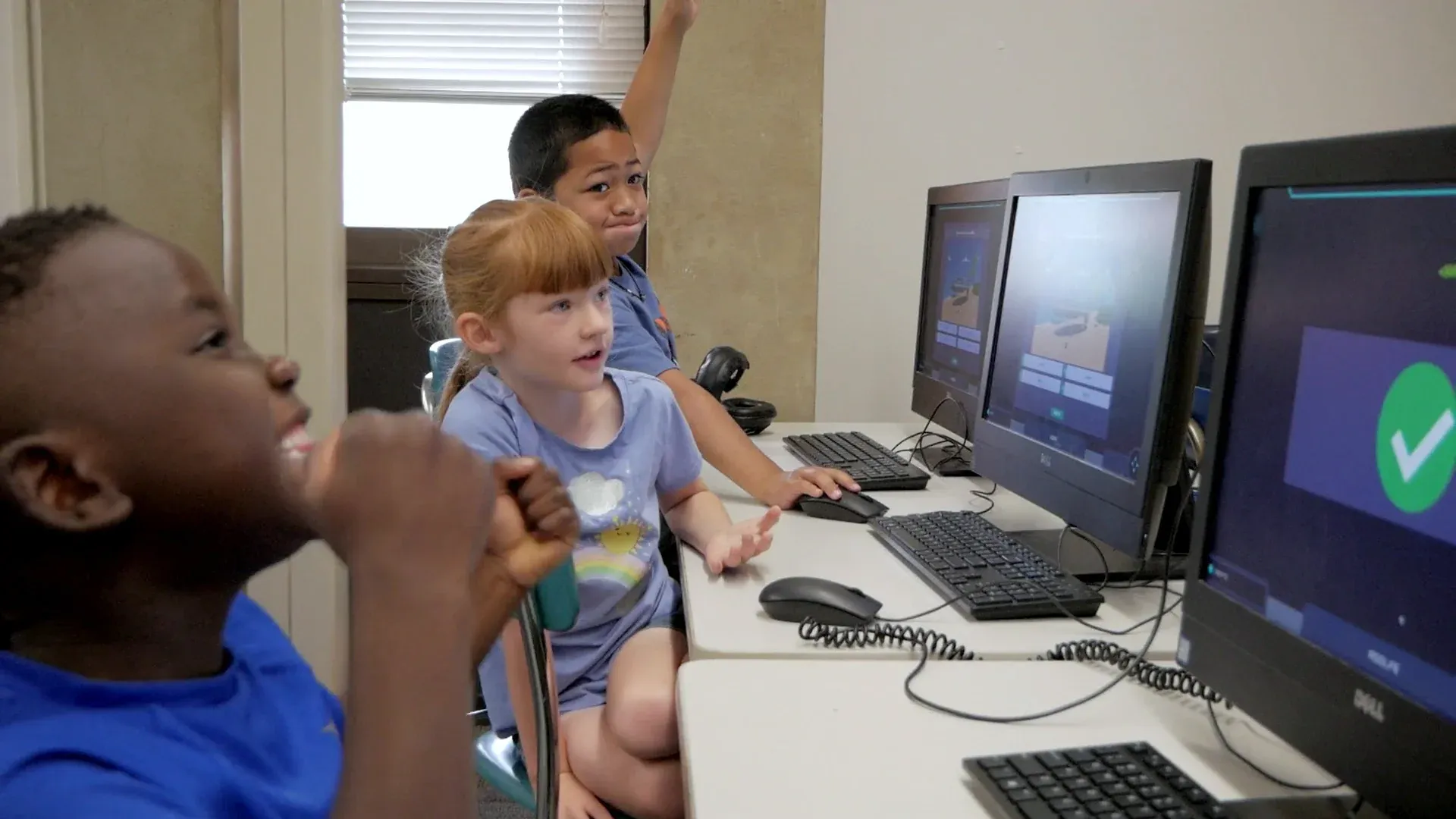
    At a row of desktop computers, a boy grins with his fists raised, a girl beside him smiles, and the boy behind her has his hand up, while a green check mark fills the nearest screen.
    What you'll see: every child on their own screen, reasons spilling out loud, and a cheer when the check mark lands.

    Miss Valerie is throwing a weather-themed party, and she needs two flowers that will thrive in the climates she’s featuring. Your class compares weather data from several places to choose the best two flowers for the party.

    Each child works on their own screen, and you’re on the rug with them, asking what each place’s weather looks like over time. The story goes the way most of the class chooses, and each child’s own choices and answers go into their report.

    Against the six:

    • Stakes. Miss Valerie’s party is counting on two flowers that will thrive in its climates.
    • Apply. The choice comes from comparing weather in several places (NGSS K-ESS2-1, use and share observations of local weather conditions to describe patterns over time).
    • Accountability. Every five-year-old answers on their own screen; the story follows the majority, and each child’s own answers go into their report.
    • Teacher leads. After the 5-minute Teacher Preview, start the Mission and ask your way around the room: What does this place’s weather look like over time? Which flower likes that? How do you know?
    • Debrief. The Mission Guide lists three debrief activities, starting with Forecast Fiasco.
    • See who did what. Every child gets a report on how well they did, built from their own choices and answers across the Mission.

    “Unprompted, the students all began to applaud like you see in the videos of NASA control rooms. It made my day.”

    Charity Perry, Kindergarten teacher, Pony Express Elementary, UT

    Will it work in my room?

    Students join with a class code: no student accounts, no student email, no passwords. Chromebooks, laptops, or tablets, plus your projector. Free for teachers, no credit card. Student data is covered by COPPA and FERPA, and we signed the Student Privacy Pledge. No projector or devices? The mystery bag needs neither, and the sheet still works.

    START FREE →

    Communication first, then this one

    This is one Mission. There are more than 100 built the same way, from fossils to fractions, each one somewhere for a unit to go, with a report on every student each time. Every lesson finally has somewhere to go.

    What the report shows

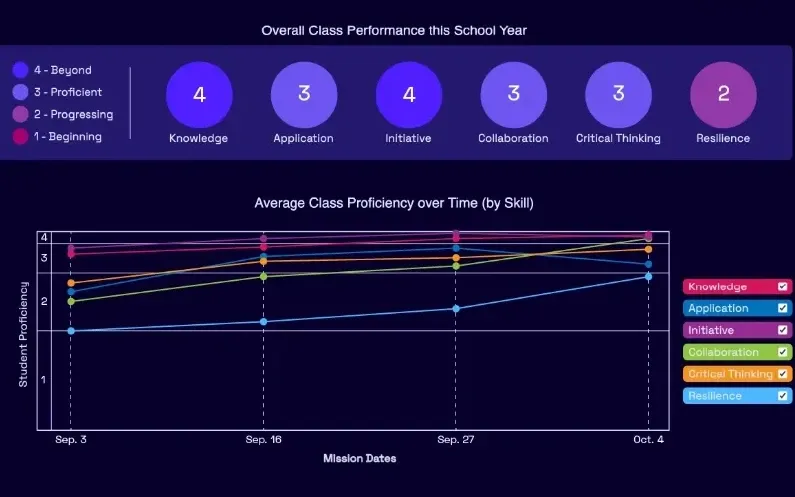
    A Mission.io class report: the class score in each of six skills, from knowledge and application to collaboration, critical thinking, and resilience, with the class chart across the year below.
    A class report from a real Mission: the class score in each of six skills, then each skill across the year.

    Every Mission produces a report for every student, built from what that student did across the whole Mission, on the skills the Mission captured. The six it can capture are Knowledge, Application, Initiative, Collaboration, Critical Thinking, and Resilience. The first two are what a test already sees. The other four are the human skills every school promises. The test shows what they know. The report shows the rest. This is where critical thinking gets practiced, and the only place it gets measured. SEE THE EVIDENCE →

    You taught it. Now find out who can use it.

    Who's behind it

    Mission.io is a research and design organization with one job: make collaborative, active learning something a teacher can run every unit instead of once a semester, and put a report in your hands when it’s over. Over a million students have run a Mission. The research behind them is funded by the National Science Foundation and the U.S. Department of Education’s Institute of Education Sciences, and Mission.io meets ESSA Level II standards, as validated by Instructure.

    “I even sent an email to my whole building encouraging everyone to try it.”

    Jen, Veteran teacher, OH
    START FREEMISSION BRIEF →

    Free teacher account, no card. Start with the Communication Mission, marked Start here in your library, then Blossoming Climates, each after its 5-minute Teacher Preview.

Questions kindergarten teachers ask

Are kindergartners too young for critical thinking?

No. Young children can reason through an if-then as long as they know something about the subject, so the limit is what they know, not how old they are. That’s why the bag holds objects from your current unit, not mystery junk from the closet.

My class just shouts guesses. How do I slow them down?

Make guessing cost something. With ten boxes on the chart and a guess using one up, the rug starts protecting its boxes, and the stick means one child talks at a time. By the second bag, children start talking each other out of guessing.

How do I assess critical thinking in kindergarten without a worksheet?

Listen and tally. The four moves on the class list (asked a property question, gave a reason, built on an answer, changed a guess with a reason) are things you can hear and mark as they happen. A few bags over a month gives you a pattern for each child, which is more than any worksheet will.

Can I run this with the whole class, or does it need small groups?

Whole class, on purpose. The rug keeps one shared focus with you right there, and the rotating jobs give a turn to more children than a small group could. Save small groups for later in the year, when you can hand a bag to a table.

Thinking you can hear from the rug

Two ways to begin this week: the bag and the chart, run by hand from the sheet, or Blossoming Climates, with its 5-minute Teacher Preview first.