1st grade critical thinking activities

Would You Rather, rebuilt so every six-year-old picks with a reason, five more classics and their fixes, a printable, and the Mission we’d run with 1st graders.

Who we are. Mission.io makes Missions: teacher-led, whole-class simulations where students use what they’re learning to work through a real scenario together.

Everything on this page works without us. The Mission we’d run with 1st graders is at the end, free. (Every card tower at an intergalactic stacking contest falls over at once, and your class has to work out why.)

On this page

What critical thinking looks like in 1st grade

First grade critical thinking activities are short choices with a reason attached, where every six-year-old has to pick, show the math or the evidence, and let a classmate check it. This page rebuilds the bell-ringer most 1st grade teachers already use, Would You Rather, so the reason gets checked instead of just said.

Six-year-olds are curious, ask many questions, and are competitive, and they’re also extremely sensitive to criticism. That pairing is why a choice works at this age: there’s no wrong side to be embarrassed about, only a reason to test, and the competitive streak turns into “my reason is better.” What holds reasoning back at six is mostly what a child knows about the topic, not age (Willingham, 2007), so the numbers stay inside 20 and the objects stay countable.

In grade 1, the practice standard to construct viable arguments and critique the reasoning of others (CCSS MP3) is met with objects, drawings, and actions. The content standard asks them to add and subtract within 20 to solve word problems, comparing included (1.OA.A.1). A choice between two snacks is both at once.

Six things that make 1st graders think critically

One finding from the research on teaching critical thinking is worth taping to your desk: talk, a real problem, and a coach work best together. In a review of 341 studies, that combination produced the largest effect (g = 0.57, against 0.30 overall) (Abrami et al., 2015). None of the review’s estimates is for six-year-olds, so treat it as a design rule rather than a 1st grade result. Below, the six in a 1st grade room; the K to 8 guide has the studies.

  1. 1. A real problem with stakes the class can feel.

    Nobody cares which bag of cookies wins on a slide. When the class actually eats what it picks, six-year-olds count twice.

  2. 2. Apply, don't recall.

    First grade math is the content: totals within 20, drawn as cubes or circles and compared out loud. The drawing is the thinking you can see.

  3. 3. Group goals with individual accountability.

    Every child circles a pick on paper before talking to anyone. A circled pick can’t drift toward the loudest friend.

  4. 4. The teacher leads the thinking.

    Get down to eye level at the table and ask how they know. It’s a different conversation from the one you’d get at the board.

  5. 5. A debrief where the class argues it out.

    Six minutes on the rug about whose drawing made the total easiest to see. First graders love being the example, so make the example a good reason.

  6. 6. A way to see who did what.

    Tally who drew, who counted a partner’s drawing, and who changed their mind. Sensitive kids show up here too, because checking a count isn’t criticizing a child.

A pick is easy. A reason is work.

Most 1st grade warmups get two of the six, three on a good day. Here’s the bell-ringer already on your board, rebuilt so it covers every one. Grab the option cards and the tally, free →

Would You Rather, rebuilt to hit all six

You know it. Two options with numbers in them (“Would you rather have 4 bags with 2 cookies, or 2 bags with 5?”), and the class picks and says why. It’s a good warmup. As usually run it teaches little critical thinking: nobody gets the cookies, three hands answer for twenty, and the lesson starts before anyone checks a single count.

Watch a room run it and half the class picks whatever their best friend picked. A drawing and a circle on paper before anyone talks fixes that.

Time
28 minutes for one round and the debrief: 3 to set the problem, 5 to draw and choose, 5 in pairs, 5 in fours, 4 to report, 6 to debrief. A second round adds 10 (2 to change a number, 8 to redo it), 38 in all. Short block? Run one round.
Groups
Pairs, then fours. With 23 children, that’s five fours plus a three, where one Checker counts for two Explainers.
Supplies
Half sheets, two option cards, and a real snack if you mean it (about six dollars of crackers). Otherwise printing only.
Standards
CCSS MP3 and 1.OA.A.1 (add and subtract within 20 to solve word problems, including comparing).
  1. The problemStakes

    We’re buying Friday’s snack with class points, and we’ll buy whichever option gives us more. Option A is 3 boxes with 6 crackers each. Option B is 2 boxes with 9 crackers each. Tell them the class will really buy it. Then really buy it.

  2. Draw it, then circle itApply

    Every child draws both options on a half sheet (cubes, circles, dots, anything countable), writes the totals, and circles a pick before partner time. Adding groups within 20 is 1.OA.A.1, and the drawing is the argument MP3 asks a first grader to make.

  3. Partner jobs with individual accountabilityAccountability

    Partners swap jobs halfway, so each child does both. Then two pairs join as a four, agree on one pick and one reason, and a Reporter tells the class.

    • Explainer

      Shows their drawing, says the total, and gives the reason for the pick.

    • Checker

      Counts the partner's drawing and says I agree, or I count differently, and why.

    • Reporter

      Gives the four's pick and reason to the class. A new Reporter each round.

  4. You lead the thinkingTeacher leads

    Kneel at the fours and ask three things: How many in Option A, and how do you know? What did your partner count differently? Which option gives us more, and by how many? Don’t confirm a total. That’s the Checker’s job.

  5. Round twoApply

    Change one number: what if Option B’s boxes held 10 crackers each? Everyone redraws, and somebody has to say out loud that the answer changed, and why.

  6. The debriefDebrief

    Six minutes on the rug: Which drawing made the total easiest to see? Did anyone change their pick after the Checker counted? Which option do we buy, and how many more crackers does it give us? The middle question is the one worth waiting for.

  7. See who did whatSee who did what

    The tally, four moves for each child: drew a model, gave a total with a reason, checked a partner’s count, switched picks for a reason. Mark it as you kneel. About half the class gets caught in one period, since each pair has a Checker and each four has a Reporter.

(Both options in round one make 18. Don’t tell them. The Checker who notices first gets the best moment of the morning.)

A six-year-old who says “they’re the same” and proves it with dots has just made the argument the standard asks for.

The snack Would You Rather, free

Emailed now, ready to copy: the teacher page, three job cards, the option cards for both rounds with the answers, the draw-and-choose half sheet, the Checker’s card (I agree because, I count differently because), and the four-behavior tally.

It’s on its way.

Check your inbox for the snack Would You Rather.

Email me the sheet. It comes as a PDF, ready to print. Unsubscribe anytime.

Five more classics for six-year-olds, each one fixed

Each of these is a fine five minutes, which is usually all it gets. Here’s how each one usually runs, and the couple of changes that make it earn the name.

Five more for 1st grade

1. Mystery bag (K to 1)

Needs one bag, one object from the unit. The rug. 15 minutes.

A hidden object sits in a bag, and the class guesses what it is from clues before you reveal it. It runs on the rug with you leading, which is the right start. As usually run, though, it’s circle time where the quickest voice wins, nobody has to use what they know about the object, and most children never get a turn.

The fix

  1. Put an object from your unit in the bag, and give the class a budget of questions, tallied on the board.
  2. Allow only questions about properties, like “Is it hard?” or “Does it have legs?”
  3. Make every guess cost one question, so children ask before they guess.

See the mystery bag rebuilt for kindergarten, with a ten-question chart →

2. Which One Doesn't Belong (K to 8)

Needs four shapes or numbers, a whiteboard. Whole class. 5 minutes as a warmup.

Four numbers or shapes go on the board, and each one has a case against it: in 4, 6, 9, and 12, the 9 is the only odd number and the 12 is the only one with two digits. Children apply the math, and you get to ask why. As usually run, though, one reason gets heard, and it’s often “it looks weird.” Nothing rides on it, and no one has to answer for a pick.

The fix

  1. Give everyone a few quiet seconds to choose.
  2. On your signal, every child points at a pick at once, without a word.
  3. Call on two children who chose different ones, and have each explain.

See Which One Doesn't Belong rebuilt for 2nd grade →

3. Notice and wonder

Needs a picture or a number, chart paper. Whole class. 10 minutes.

You show a picture or a number, and children say what they notice and what they wonder while you fill a two-column chart. You’re leading the thinking, and the wonders are often good ones. As usually run, though, the chart holds the first ten things said, mostly from the same few voices, and nothing decides which wonder gets chased.

The fix

  1. Hand every child two sticky notes with their name on them, one for a notice and one for a wonder.
  2. Give a quiet minute to write or draw before anyone talks, then put the notes on the chart.
  3. Read a few wonders aloud, and let the class vote on the one to chase.

No page needed; named sticky notes get it most of the way.

4. True or false number sentences

Needs one number sentence on the board. Whole class, thumbs up or down. A warmup.

You write a number sentence like “7 + 5 = 5 + 7” on the board, and the class shows a thumbs up for true or a thumbs down for false. Every child has to apply the math, which is the part it gets right. As usually run, though, a thumb costs nothing and is easy to copy from a neighbor. Nobody explains, and nothing gets written down.

The fix

  1. Give each pair a handful of linking cubes.
  2. Partners build both sides of the number sentence to prove it true or false.
  3. Walk the room with a class list, and tally which pairs proved it with the cubes.

Run it with the Checker card from the rebuild above.

5. Riddles and brain teasers

Needs a riddle book. Whole class. Friday afternoon.

You read a riddle from the book, the class shouts guesses, and somebody gets the thrill of being right. It’s a treat, and a good one, and you’re the one asking. Beyond that, nothing rides on it, and the right answer is usually a lucky guess. That’s fine for a Friday afternoon, as long as it doesn’t count as the week’s critical thinking.

The fix

  1. Save riddles for Friday afternoon or the last few minutes before the bell.
  2. Keep them off the week’s critical thinking plan, and put one of the rebuilt classics there.

No page; keep them for Fridays.

  • Our part · We make Missions

    Or let a Mission carry everything but the thinking

    First grade teachers run choices like this by hand all the time, and they work. A Mission is a teacher-led, whole-class simulation, about a quarter of an hour long, with the story, the devices, and each child’s report handled for you. The questions stay yours.

    You're at the helm, not on the hook.

    In the Cards: a whole-class Mission for 1st grade

    In the Cards · Grades K to 1 · About 17 minutes · One device per student, plus your projector · Free with a teacher account

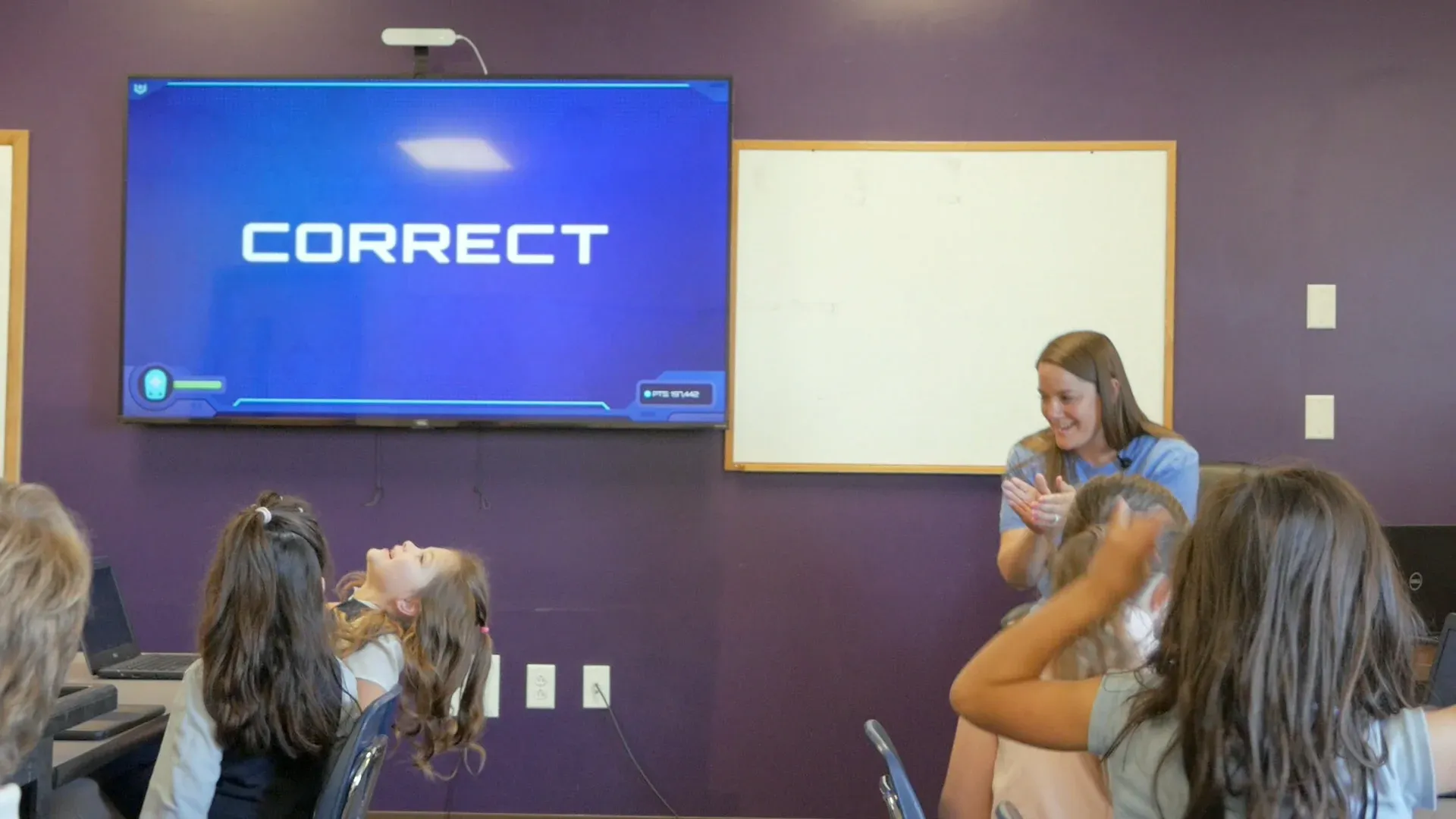
    A teacher claps beside a wall screen that reads CORRECT while young students in the front row cheer, one with her head thrown back laughing.
    What you'll see: first graders on their own screens, a verdict on the big one, and you clapping for the reason someone just gave.

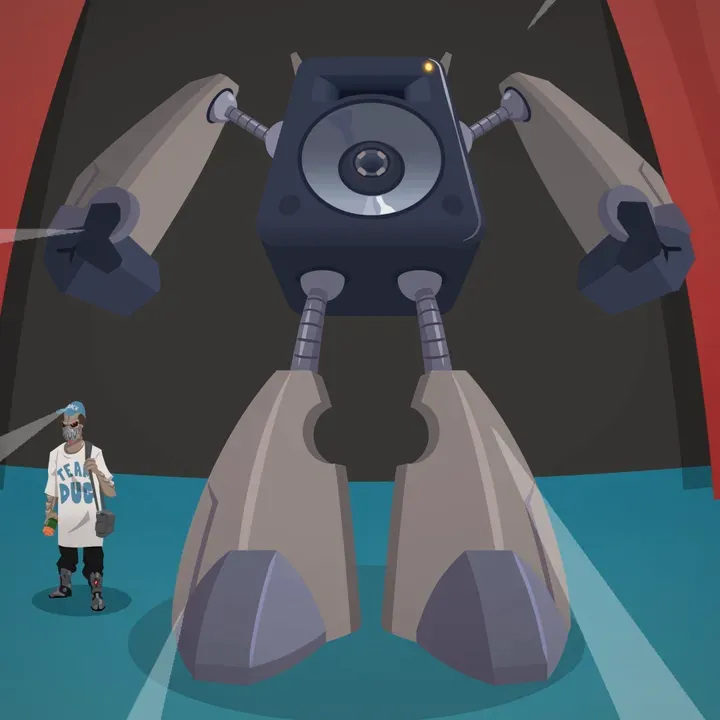
    Dug made the semi-finals of the Intergalactic Card Stacking Competition, and then every finalist’s cards fell over at once. The organizers need to know why. Is it a devious culprit, a daring case of sabotage, or some force of nature? Your class uses what it knows about sound and vibration to work out what’s knocking the cards down, and to help Dug avoid a catastrophe.

    Every first grader answers on their own device, and you move between them, asking what could make a card tower fall. The story goes the way most of the class chooses, and each child’s own choices and answers go into their report.

    Against the six:

    • Stakes. Every finalist’s tower fell, and the organizers need your class to find out why.
    • Apply. The answer comes from what the class knows about sound and vibration (NGSS 1-PS4-1, evidence that vibrating materials can make sound and that sound can make materials vibrate).
    • Accountability. Every child answers on their own device; the story follows the majority, and each child’s own answers go into their report.
    • Teacher leads. Once you’ve seen the 5-minute Teacher Preview, hit Start and circle the room asking: What could make a card fall over? Could a person have done that? What’s your evidence?
    • Debrief. The Mission Guide lists two debrief activities, Waves of Sound and The Science of the String Phone.
    • See who did what. Every child gets a report on how well they did, built from their own choices and answers across the Mission.

    “Observe a mission in another classroom. It will change the way you think about them.”

    Danica Puente, Teacher, Holbrook Elementary, UT

    Will it work in my room?

    Students join with a class code: no student accounts, no student email, no passwords. Chromebooks, laptops, or tablets, plus your projector. Free for teachers, no credit card. Student data is covered by COPPA and FERPA, and we signed the Student Privacy Pledge. No projector or devices? Would You Rather needs neither, and the sheet still works.

    START FREE →

    Communication first, then this one

    This is one Mission. There are more than 100 built the same way, from fossils to fractions, each one somewhere for a unit to go, with a report on every student each time. Every lesson finally has somewhere to go.

    What the report shows

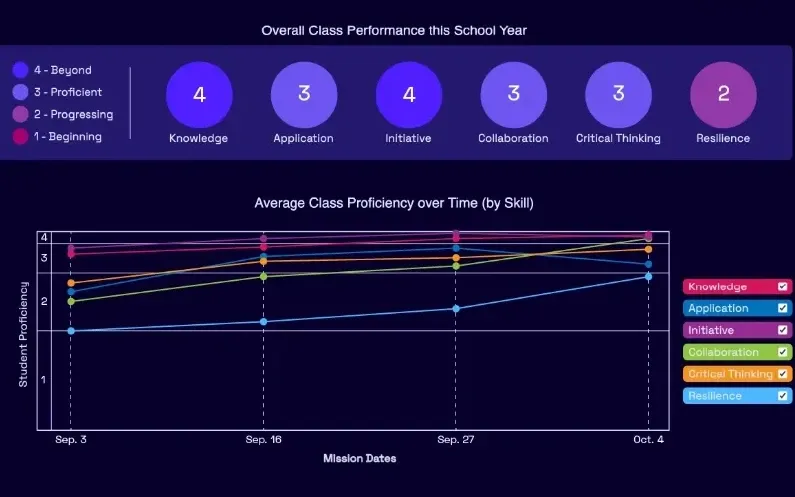
    A Mission.io class report: the class score in each of six skills, from knowledge and application to collaboration, critical thinking, and resilience, with the class chart across the year below.
    A class report from a real Mission: the class score in each of six skills, then each skill across the year.

    Every Mission produces a report for every student, built from what that student did across the whole Mission, on the skills the Mission captured. The six it can capture are Knowledge, Application, Initiative, Collaboration, Critical Thinking, and Resilience. The first two are what a test already sees. The other four are the human skills every school promises. The test shows what they know. The report shows the rest. This is where critical thinking gets practiced, and the only place it gets measured. SEE THE EVIDENCE →

    You taught it. Now find out who can use it.

    Who's behind it

    Mission.io is a research and design organization with one job: make collaborative, active learning something a teacher can run every unit instead of once a semester, and put a report in your hands when it’s over. Over a million students have run a Mission. The research behind them is funded by the National Science Foundation and the U.S. Department of Education’s Institute of Education Sciences, and Mission.io meets ESSA Level II standards, as validated by Instructure.

    “What I love most is that it’s low-prep but high-impact.”

    Ginger Marsh, Middle school teacher, Cedar Middle School
    START FREEMISSION BRIEF →

    Free teacher account, no card. Start with the Communication Mission, marked Start here in your library, then In the Cards, each after its 5-minute Teacher Preview.

Questions 1st grade teachers ask

My 1st graders get upset when they're wrong. Will this make it worse?

It’s built to make it better. Round one has no losing side (both options make 18), and the Checker’s line is “I count differently,” which is about a drawing, not a child. Six-year-olds take criticism hard, so aim it at the count and keep it there.

What if a child can't explain their reasoning in words yet?

Then the drawing explains it. In grade 1 the math standard counts objects, drawings, and actions as an argument, so a child who points at three groups of six dots and says “eighteen” has made one. The words come with practice, and the Explainer job is where they practice.

Do I have to buy the snack?

No, but the class should live with the choice somehow, or the stakes disappear. Extra minutes of something they like, the order of the lunch line, the next read-aloud: anything real works, as long as the better pick gets them more of it.

How do I stop partners from copying each other?

The circle on the half sheet happens before partner time, in crayon. Once a pick is on paper, copying shows up as a change, and a change needs a reason, which is one of the four moves on your tally.