1st grade STEM activities

The foil boat penny challenge rebuilt so 1st graders compare two tested hulls, five more build challenges fixed, a free printable, and every 1st grade Mission by subject.

Who we are. Mission.io makes Missions: teacher-led, whole-class simulations where students use what they’re learning to work through a real scenario together. We build every one on the six things in our STEM activities for students, K-8 guide, and every student gets a report on how well they did.

You don’t need us to use this page: the foil boat, the five challenges, and the sheet all work on their own. Every 1st grade Mission is at the end, by subject, free. (The one we’d run after the foil boat is also at the beach, but nothing sinks: a robot named RALF is overheating, and your class finds the design that keeps him cool.)

On this page

What 1st grade STEM looks like

1st grade STEM activities are challenges in which a small team builds something to do a job, tests it, changes one thing, and tests it again, with each student answerable for a part. This page rebuilds the foil boat penny challenge to the K to 2 engineering standard (K-2-ETS1-2 and K-2-ETS1-3: make a model that shows how an object’s shape helps it do its job, then compare two tested designs by their strengths and weaknesses), fixes five more build challenges, and lists every 1st grade Mission by subject. The year’s content (sound and light; how plants and animals use their parts, and how young ones resemble their parents; the patterns of the sun, moon, and stars; addition and place value) lives on the subject pages.

Most of what gets called a STEM challenge in 1st grade is a contest with a craft table attached. Kids fold, stack, and count, and we call it engineering. The foil boat stands in for all of it, and most years it goes the same way: a square of foil, a jar of pennies, a dishpan, and a cheer for whichever boat held the most.

Keep the pennies; first graders will count every one of them out loud. What goes missing is the thinking around them. Nobody predicted which shape would hold more, nobody tested a second design against the first, and afterward nobody can say why the winning boat won. The challenge below puts those back, with the same foil and the same pennies, in one period.

Six things that turn a build contest into engineering

We’ve run this check with STEM teams in the districts we work with, and the craft project skips the same three every time: a real problem, criteria for success, and any pressure to iterate. If the finished product is all the activity asks for, the learning is optional. The fix is a small step before the build and a small step after it, and nothing on the tray changes. One number is worth carrying down: when a group shared a goal and each student answered for a part, 84% of studies found a positive effect; without both, 17% (Slavin, 1991).

  1. 1. A real problem with stakes the class can feel.

    “How many pennies can it hold?” is a contest. “The ferry has one square of foil and a shipment of coins to get across the river” is a problem.

  2. 2. Apply, don't recall.

    Wide spreads the load; tall walls keep the water out. A team whose boat uses neither idea was guessing.

  3. 3. Group goals with individual accountability.

    The one most build challenges miss: one kid folds, one drops pennies, two watch the water. Three roles, one job each, a box each student signs, and a swap between rounds.

  4. 4. The teacher leads the thinking.

    The questions are yours, asked crouched at the tub while they load. The counting isn’t yours: the Loader counts by tens, and you listen for which team can say why its shape held.

  5. 5. A debrief where the class argues it out.

    Hulls on a tray at the front, and the question is what shape the strongest boats were.

  6. 6. A way to see who did what.

    If you can’t tell which student said “make the sides taller” and which one only watched the water, all you’ve measured is pennies.

Pennies are the score. The shape of the hull is the lesson.

The free printable at the end of the next section puts all six on the tray, ready to copy. Get the sheet →

The foil boat penny challenge, rebuilt for 1st grade

The foil boat penny challenge is the build challenge 1st grade teachers reach for because the hull takes two minutes to fold and the sinking is something the whole table can count: a square of aluminum foil becomes a boat, and the team loads pennies until it goes under. The way it usually runs is one fold, one kid with the pennies, and “how many did yours hold?” Here’s the version that hits all six.

Needs
For eight boats: a roll of foil cut into 6-inch squares, 300 pennies (borrow a jar), four dishpans or a water table, paper towels. Under $8 beyond the pennies.
Time
About 50 minutes, drying hands and mopping included. 45 with the foil squares pre-cut and round two kept to one change.
Groups
Threes. With 22 students, seven groups of three, and one student becomes the class Counter at the front, calling each team’s number for the chart.
Standards
K-2-ETS1-2 (a model that shows how shape helps an object do its job) and K-2-ETS1-3 (compare two tests). There’s no density standard before 5th grade, so the page says shape and load, not density.
  1. Teach first, 8 minutesApply

    Show three hulls you folded (a tall cup, a wide tray, a flat sheet) and ask the class to predict which holds the most. Chart the predictions. Then name the two ideas they’ll use: wide spreads the load; tall walls keep the water out.

  2. The problem, 2 minutesStakes

    A ferry has to carry a shipment of coins across the river in one trip, and the ferry company sent only one square of foil. If the boat sinks, the coins are at the bottom of the river. Say that out loud; first graders take lost treasure seriously.

    • Criteria: the boat floats with the coins on board, and the more it carries in one trip, the better.
    • Constraints: one square of foil, eight minutes, and pennies go on one at a time.
  3. Three roles, one job eachAccountability

    On the sheet, and everyone signs their role’s box. The Folder and the Loader swap between rounds, so neither one owns the boat.

    • Folder

      The only hands on the foil.

    • Loader

      Places pennies one at a time, spread out, and says "ten" every ten.

    • Recorder

      Draws the hull before the test and writes how many pennies it held.

  4. Fold and load, 8 minutesApply

    The Recorder draws the hull before the first penny goes in, so the team has a design to compare against later. Load until it sinks, and the Recorder writes the count.

  5. Your three questions, at the tubTeacher leads

    Crouch at the tub while they load and ask three (Is your boat wide or tall, and why did you pick that? Where did the water come in? What’s the one thing you’ll change?), then let the Loader keep counting and listen for a team that answers with a reason.

  6. Change one thing, 2 minutes, then load againApply

    Refold or fix one thing, swap the Folder and the Loader, and load again. The Recorder writes what changed and the new count, so the class can compare two tests of the same boat.

  7. The debrief, 8 minutesDebrief

    Hulls on a tray at the front. Which boats held the most, and what shape were they? Who changed one thing and got a bigger number? Who in your group said something the Folder used? Wait on the third question; first graders remember exactly who said “make the sides taller.”

  8. See who did whatSee who did what

    The observation sheet, four behaviors per student: proposed a change, used a teammate’s idea, gave a reason, recorded or counted carefully. You’ll catch about half the room in one period, because the tubs keep the groups close together; the signed role boxes and the Recorder’s two drawings catch the rest, at a glance, before you grade anything.

  9. Once a week, or four sections in a row

    The two-visit version, for a short block or a once-a-week lab: the hull demo, the problem, and round one on visit one, with each team’s boat and drawing in a labeled zip bag; the change, round two, and the debrief on visit two. Four sections in a row: pre-cut squares and counted cups of pennies packed the day before, one dishpan for every two teams, and a towel station by the door, because the next class shouldn’t sit down in the last one’s puddle.

(There’s usually one team that piles every penny in the middle. The boat explains why that’s a bad idea faster than you can.)

Keep the pennies. Put a prediction in front of them and a second round after them, and it’s engineering.

The foil boat penny challenge, free

Emailed now, ready to copy: the teacher page, three role cards, the team page (the guess-and-draw box and the two test rows), and the four-behavior tally.

It’s on its way.

Check your inbox for the foil boat penny challenge.

Email me the sheet. It comes as a PDF, ready to print. Unsubscribe anytime.

Five more 1st grade STEM challenges, fixed

Five more that every 1st grade list carries: what each one is, how it usually runs, and the couple of changes that fix it.

Five more for 1st grade

2. Paper airplane distance

Needs paper, a hallway, floor tiles or a tape measure. Groups of three.

Teams fold planes, throw them down the hallway, and measure how far each one flies in floor tiles or with a tape measure. The measuring puts 1st grade math to work, and the hallway gives it a goal. As usually run, though, everyone copies one fold, so there’s nothing to compare, and one student ends up throwing, measuring, and calling the score.

The fix

  1. Give each team three jobs: a Thrower, a Measurer who counts the tiles to each landing, and a Recorder who writes the number down.
  2. Have each team fold two different designs, so the numbers show which one flew farther.
See it rebuilt for 3rd grade →

3. The index card structure that holds a book

Needs five index cards per team, one book, no tape. Groups of three.

Teams get five index cards and one book, with no tape, and the challenge is a structure that holds the book up. When one holds, the whole room sees it, and every team wants to be next. As usually run, though, it’s a free build: students fold at random, nothing rides on it beyond the cheer, and once the book falls nobody remembers what they tried.

The fix

  1. Before anyone builds, teach one idea with one card: a fold makes a column, and a column can hold weight.
  2. Make one student on each team the Recorder, who draws each attempt before the book goes on.

No page for this one; the drawings are the record.

4. The Three Little Pigs house

Needs straws, craft sticks, blocks, a small fan. Groups of three.

Teams build a house from straws, craft sticks, or blocks, and a small fan plays the wolf. Most 1st graders did it in kindergarten, so it’s a quick repeat, and the story still makes them care whether the house stands. As usually run, though, it’s a free build where one student does the building, and the class moves on without asking why some houses stood.

The fix

  1. Give each student one of the kindergarten roles: a Builder, a Material Picker who says why each piece comes off the tray, and a Checker who gives the house a gentle push before the wolf comes.
  2. After the wolf, ask one question on the rug: what did the houses that stood have in common?

See the pigs' house rebuilt for kindergarten, wolf tests included →

5. The marble track on a paper plate

Needs a paper plate, Play-Doh, a marble. Pairs.

Each student presses Play-Doh walls onto a paper plate, then tilts the plate to steer a marble to the center. Getting the marble there is a real problem, and 1st graders will try it over and over. As usually run, though, it’s a solo craft, so nobody builds with anyone, and when the marble jumps a wall nobody stops to ask why.

The fix

  1. Pair students up: a Builder who shapes the walls, and a Tester who tilts the plate.
  2. Debrief together: what made the marble jump the wall, and what kept it in?

No page for this one; a Builder and a Tester per plate covers it.

6. The balloon across the room without hands

Needs balloons, a few sheets of paper for fanning. Small groups.

Small groups find three ways to move a balloon across the room without touching it, like fanning it with a sheet of paper or blowing on it. It’s a great brain break, and every student gets moving. As usually run, though, it doesn’t use anything they’ve learned, and nothing shows who found which way, which is fine for a warmup.

The fix

  1. Run it for a few minutes as the warmup before the day’s challenge.
  2. Call it a warmup when you start, and save the roles and the debrief for the challenge that follows.

No page for this one; it’s a warmup, not the lesson.

  • Our part · We make Missions

    Then the standard has somewhere to go

    Plenty of teachers rebuild these by hand every unit, and it works. A Mission is a teacher-led, whole-class simulation on the standard the unit was teaching: the story plays on your projector, every student has a part on their own screen, and the only way through is using what they just learned. Run the foil boat first, then the Mission on the same standard, and the engineering unit has a day two.

    You're at the helm, not on the hook.

    Beach Frenzy: the foil boat's standard, as a Mission

    Beach Frenzy · Grades K to 2 · About 15 minutes · One device per student, plus your projector · Free with a teacher account

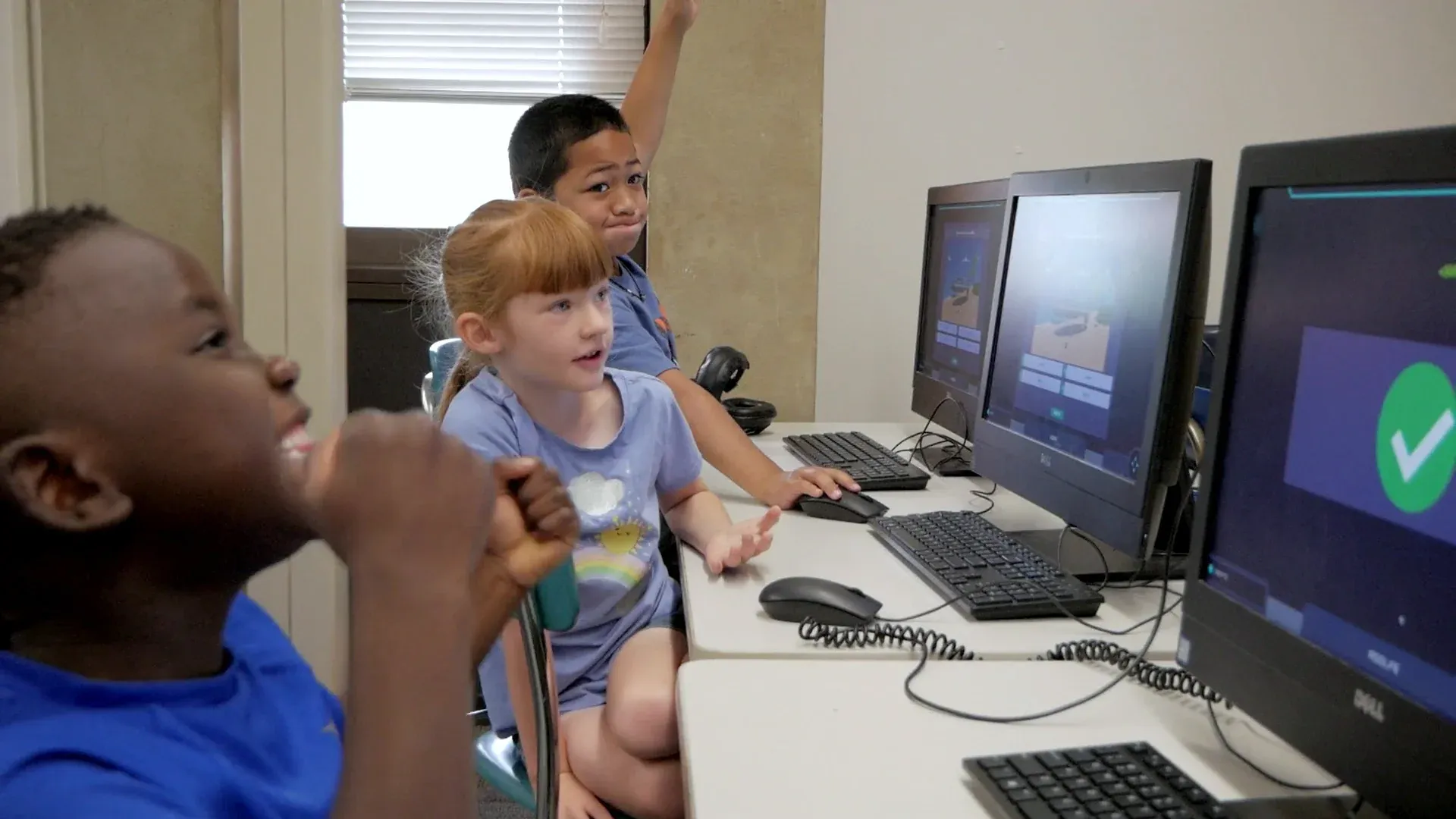
    Three young students at a row of desktop computers: a boy grins with his fists at his chin, a girl beside him talks with one hand open, and a boy behind her has his arm straight up, while a green check mark fills the nearest screen.
    What you'll see: a check mark on one screen, a hand in the air, and you asking which design worked and how they know.

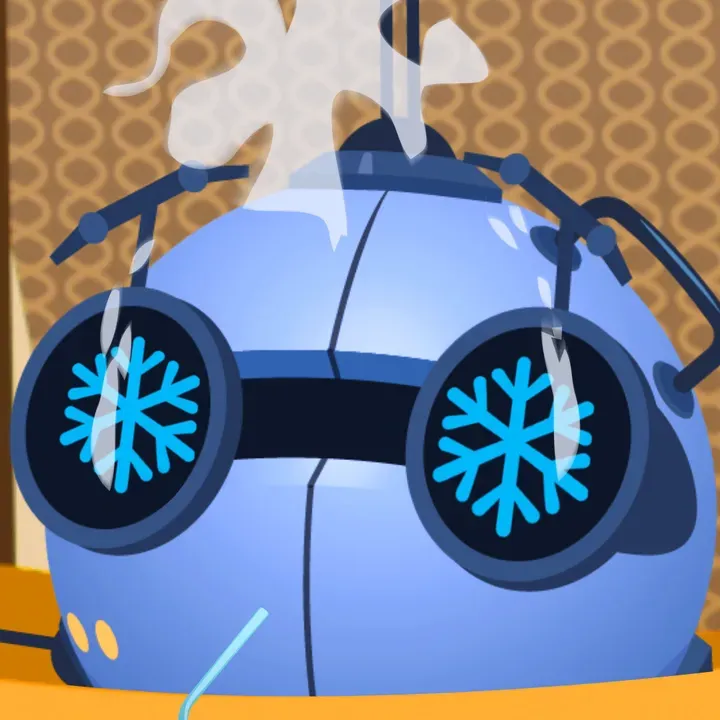
    RALF is overheating in the sun, and the class has to protect him from the sun’s warming effect: investigate several solutions and how each one changes his rising temperature, then compare the designs to find the one that best protects him from the sun and sand (K-2-ETS1-2, K-2-ETS1-3, 1-PS4-3). The story plays on the projector, and every student weighs the solutions on their own screen; there are no stations or crew teams in this one. The story goes the way most of the class chooses, and each child’s own choices and answers go into their report.

    We connect every screen and move the story forward. You get the part a first grader needs a grown-up for: walking the room, asking which design kept RALF coolest and what the two tests showed.

    Run the foil boat first, and tell the class why: they’re going to compare tested designs again, and this time the score is RALF’s temperature, not a pile of pennies. The lesson prepares them. The Mission is what they’re preparing for.

    “The missions are so engaging and entertaining my students don’t realize I am giving them an assessment.”

    Savannah Watson, Teacher, Orchard Elementary, UT

    Will it work in my room?

    Students join with a class code: no student accounts, no student email, no passwords. Chromebooks, laptops, or tablets, plus your projector. Free for teachers, no credit card. Student data is covered by COPPA and FERPA, and we signed the Student Privacy Pledge. See every class once a week in a lab? Then the lab is where the Mission runs and the classroom is where the unit runs: ask the 1st grade team what they just finished, pick that row below, and run it the week after.

    START FREE →

    Communication first, then two for 1st grade

    What the report shows

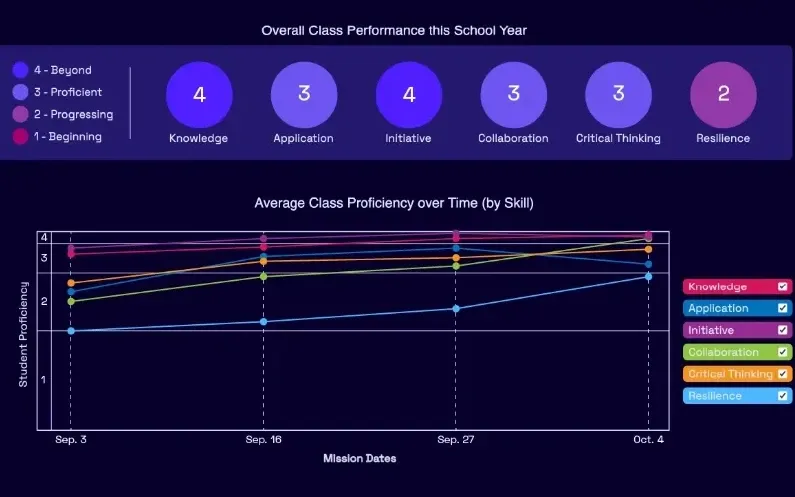
    A Mission.io class report: the class score in each of six skills, from knowledge and application to collaboration, critical thinking, and resilience, with the class chart across the year below.
    A class report from a real Mission: the class score in each of six skills, then each skill across the year.

    Every Mission produces a report for every student, built from what that student did across the whole Mission, on the skills the Mission captured. The six it can capture are Knowledge, Application, Initiative, Collaboration, Critical Thinking, and Resilience. The first two are what a test already sees. The other four are the human skills every school promises. The test shows what they know. The report shows the rest. SEE THE EVIDENCE →

    You taught it. Now find out who can use it.

    Who's behind it

    Mission.io is a research and design organization with one job: make collaborative, active learning something a teacher can run every unit instead of once a semester, and put a report in your hands when it’s over. Over a million students have run a Mission. The research behind them is funded by the National Science Foundation and the U.S. Department of Education’s Institute of Education Sciences, and Mission.io meets ESSA Level II standards, as validated by Instructure.

    “Observe a mission in another classroom. It will change the way you think about them.”

    Danica Puente, Teacher, Holbrook Elementary, UT

    Every 1st grade Mission, by subject

    Beach Frenzy is one. There are 18 STEM Missions at 1st grade, numbered 7 to 24 below, and each one is where a unit can end: the engineering unit ends at Beach Frenzy, light ends at Ocean Light Search, addition ends at The Flying Machine. Every lesson finally has somewhere to go. No 1st grade Mission carries a technology code; the 1st grade technology activities page has unplugged ones, and Technology activities for students has every grade, K to 8. Devices out this week and no unit in mind? Tools of the Trade is 10 minutes.

    Engineering

    Two on the K to 2 engineering design standard, both under 20 minutes: Beach Frenzy carries the foil boat’s codes, and Tools of the Trade carries the define-the-problem one. The 1st grade engineering activities page rebuilds a classic of its own. Engineering activities for students has every grade, K to 8.

    Engineering Missions at 1st grade, both on the NGSS K to 2 engineering design standard.
    NumberMissionTopic (code)Minutes
    7Beach FrenzyProtect a robot from the sun’s warming; compare tested designs (K-2-ETS1-1, K-2-ETS1-2, K-2-ETS1-3, 1-PS4-3, K-PS3-1, K-PS3-2; grades K to 2)15
    8Tools of the TradeWeigh rescue ideas and pick the one the materials allow (K-2-ETS1-1; grades K to 2)10

    Science

    Fourteen, from sound and light to the sky: the deepest shelf at the grade. The 1st grade science activities page sets each one against the investigation that teaches it. The first eight carry 1st grade codes, two carry kindergarten codes, and the last four carry 2nd grade codes and run through 2nd grade. Science activities for the classroom has every grade, K to 8.

    Science Missions at 1st grade, by NGSS code; two carry kindergarten codes and the last five carry 2nd grade codes.
    NumberMissionTopic (code)Minutes
    9In the CardsSound and vibration (1-PS4-1; grades K to 1)17
    11Botspace BoysBuild a light device to send a message when the ship’s communication fails (1-PS4-4; grades 1 to 2)18
    12Parents and OffspringHow young animals signal their needs and how their parents respond (1-LS1-2)15
    13A Pawfect PairYoung animals look like their parents, but not exactly (1-LS3-1)15
    14Dug's Beach PartyTrack daylight patterns to place the beach umbrellas (1-ESS1-1; grades K to 1)21
    15Dark Side of the MoonMoon phases (1-ESS1-1; grades K to 2)27
    17Tackling ToxinsPolluted water, the living things it hurts, and a fix (K-ESS2-2; grades K to 1)21
    18Forecast FiascoWeather forecasts and getting ready for severe weather (K-ESS3-2; grades K to 2)22
    19Playground PerilSort materials by their properties and patch the missing pieces of a playground (2-PS1-1, 2-PS1-2; grades 1 to 2)20
    20Botanical Break-InWhat plants need to grow (2-LS2-1; grades 1 to 2)21
    21Wind and WaterCompare ways to stop wind and water from changing the land (2-ESS2-1; grades 1 to 2)16
    22Treasure HuntLandforms and bodies of water as treasure-hunt clues (2-ESS2-2; grades 1 to 3)22

    Math

    One, on addition and place value, under 20 minutes. The 1st grade math activities page rebuilds a classic for measuring. Math activities for students has every grade, K to 8.

    The math Mission at 1st grade, by CCSS code.
    NumberMissionTopic (code)Minutes
    23The Flying MachineAdd within 20, count with tens, and compare two-digit numbers (1.OA.A.1, 1.NBT.B.2, 1.NBT.B.3, 1.NBT.C.4)18

    Creativity

    One that doesn’t belong to a unit: a creativity Mission for K to 5, and one of the few at this grade where students work in teams.

    The creativity Mission at 1st grade.
    NumberMissionTopic (code)Minutes
    24Sky's the LimitCreativity and imagination (grades K to 5; no codes listed)18
    START FREEMISSION BRIEF →

    Free teacher account, no card. Start with the Communication Mission, marked Start here in your library, then Beach Frenzy, each after its 5-minute Teacher Preview.

    Also at this grade

    The Collaboration and Critical Thinking Missions for K to 1 (15 minutes each; the 1st grade collaboration activities and 1st grade critical thinking activities pages build both skills by hand), the Communication Mission from the first tile (19 minutes at this grade), and two outside STEM: Dawn of the Scarecrow (K-3), a listening and writing Mission that ends with a scarecrow designed for RALF (SL.1.2, W.1.8), and Showstopper (K-2), which designs RALF a costume for the annual Robot Costume Contest.

Questions 1st grade teachers ask

I see my 1st graders once a week for STEM. What fits?

The balloon warmup and the index card structure are the short ones; the foil boat fits a 45-minute special with the squares pre-cut, or two visits with round two on the second. A Mission is one visit, and most at this grade run under 20 minutes (Tools of the Trade, 10; Beach Frenzy, 15; Parents and Offspring, 15; A Pawfect Pair, 15). Ask the classroom teacher what unit just ended and pick that row.

Isn't the foil boat a density lesson?

Not in 1st grade. There’s no density standard before 5th grade, so the boat teaches shape and load: a model that shows how shape helps an object do its job, and two tests compared (K-2-ETS1-2, K-2-ETS1-3). Wide spreads the load and tall walls keep the water out, and that’s plenty for six-year-olds.

How do I keep the foil boat from turning into a water fight?

Dishpans, not the sink; paper towels at every tub; and one job per student, so nobody’s hands are free. The Loader places pennies one at a time, and the Recorder holds the pencil, not the water. Count the borrowed pennies back into cups by team before anyone dries off.

How do I grade a 1st grade STEM challenge fairly?

Grade the drawings and the behaviors, not the penny count. The Recorder’s two drawings and the change written between them are one grade; the four-behavior tally over two or three challenges is the other. A boat that held the most with no prediction and no change is a lucky fold, and the sheet is what shows it.