
Math activities for students
What math looks like at every grade from kindergarten to 8th, by the Common Core standards and the math practices. Pick your grade for the classic rebuilt there and every Mission that fits it.
Who we are. Mission.io makes Missions: teacher-led, whole-class simulations where students use what they’re learning to work through a real scenario together.
Building them took years of research and development, and these pages share what we learned, free. Take whatever helps. (In the kindergarten one, shapes are what get a crane built and a dog named Pogi out.)
On this page
What math activities are, K to 8
Math activities for students are problems a class has to reason its way through: students make sense of the situation, choose a way to represent it, argue for a method, and check that the answer fits the world it came from. In K-8 classrooms they answer to each grade’s Common Core content standards and to the eight Standards for Mathematical Practice.
This hub is a map: each grade’s line links to its page. Then five marks of a good math activity, four Missions to start with, and the method guides.
Find your grade: math from K to 8th
The practices hold steady for nine years. The content climbs fast, from counting to twenty to writing linear functions.
Kindergarten
Counting to answer “how many?”, comparing numbers, and naming shapes and where they are (K.CC, K.G). All subjects: Kindergarten STEM activities.
Counting collections, rebuilt · 2 Missions. Kindergarten math activities →
1st grade
Adding and subtracting within 20, place value to 120, and measuring length in units (1.OA, 1.NBT, 1.MD). All subjects: 1st grade STEM activities.
Measure the room, rebuilt · 1 Mission. 1st grade math activities →
2nd grade
Adding and subtracting within 100, place value to 1,000, money, and time (2.OA, 2.NBT, 2.MD). All subjects: 2nd grade STEM activities.
Classroom store, rebuilt · 1 Mission. 2nd grade math activities →
3rd grade
Multiplication and division, fractions as numbers, area, and reading pictographs and bar graphs (3.OA, 3.NF, 3.MD). All subjects: 3rd grade STEM activities.
Paper airplane line plot, rebuilt · 3 Missions. 3rd grade math activities →
4th grade
Multi-digit arithmetic, equivalent fractions, angles, and converting measurements (4.NBT, 4.NF, 4.G, 4.MD). All subjects: 4th grade STEM activities.
Design a zoo, rebuilt · 4 Missions. 4th grade math activities →
5th grade
Decimals and operations with fractions, volume, and the coordinate plane (5.NBT, 5.NF, 5.MD, 5.G). All subjects: 5th grade STEM activities.
Cereal box redesign, rebuilt · 2 Missions. 5th grade math activities →
6th grade
Ratios and rates, the number line in all four quadrants, and expressions and equations (6.RP, 6.NS, 6.EE). All subjects: 6th grade STEM activities.
Lemonade ratios, rebuilt · 2 Missions. 6th grade math activities →
7th grade
Proportional relationships, operations with rational numbers, probability, and scale and area (7.RP, 7.NS, 7.SP, 7.G). All subjects: 7th grade STEM activities.
Carnival game design, rebuilt · 1 Mission. 7th grade math activities →
8th grade
Linear functions, the Pythagorean theorem, and systems of equations (8.F, 8.G, 8.EE). All subjects: 8th grade STEM activities.
Barbie bungee, rebuilt · 1 Mission. 8th grade math activities →
At 7th and 8th the one Mission is Brace for Impact, built on a 6th grade standard (6.NS.C.8) and listed for grades 6 to 8. Infection, on the area of polygons for 6th to 8th, also carries an engineering code, so it’s counted on the engineering activities for students hub.
What makes a good math activity
- The problem is worth sticking with. It has more than one way in, and the answer isn’t sitting in the first line (NCTM problem solving, MP1).
- Students argue for a method and critique each other’s. “How do you know?” is the question doing the teaching (NCTM reasoning and proof, MP3).
- The math models something real. A situation students have to simplify, with an answer they check against it (NCTM connections, MP4).
- There’s more than one representation. A table, a drawing, a number line, an equation, and the talk about how they match (NCTM representation, MP5).
- Precision is part of the answer. Units, labels, and words that mean one thing, said out loud to the group (NCTM communication, MP6).
These five are math’s view of the six things every page here checks for. A worksheet with a story on top usually stops at the first.
Our part · We make Missions
Math Missions to start with
A Mission is a teacher-led, whole-class simulation: the class can become the crew, the crisis is built from the unit you just taught, and the only way through is using it together. Here are four for math, from kindergarten to 8th. Start with the first one.
Communication first, then four for math
Communication Mission briefs by grade: K to 1, 2 to 3, 4 and up. One device per student, plus your projector. 5 minutes of prep, with the Teacher Preview.
- The Communication MissionRun this one first. It gives your class the training to run any Mission in the library.
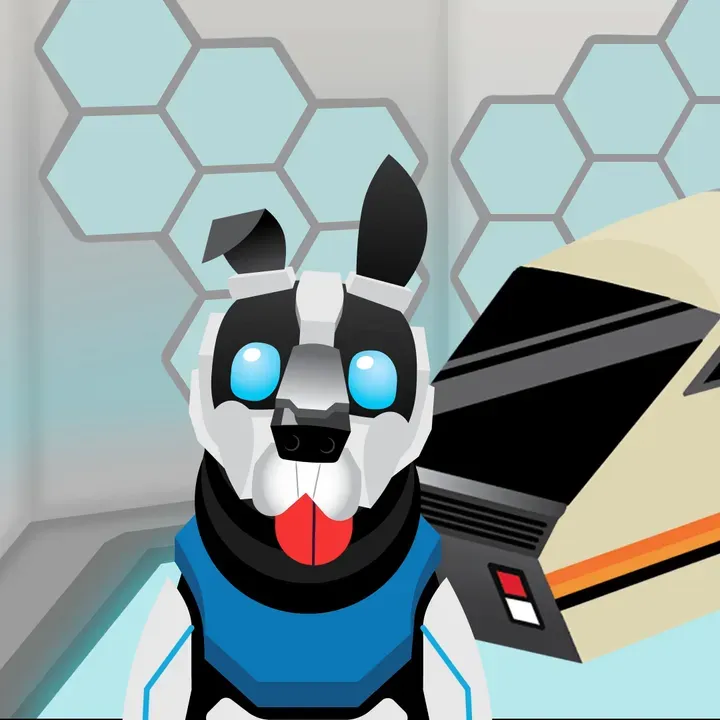
- Dug's Search and RescueDr. Marvin’s dog, Pogi, is trapped behind a pile of objects. The class uses shapes and where they sit to build a crane and clear the way (K.G.A.1, K.G.A.2).
- The Crooked SnakesA clue in Neon City leads to one floor of a tall building, and then Cobalt sets off a trip wire. Teams reason through pictographs and multi-step problems to find the off switch (3.MD.B.3, 3.OA.D.8).
- Power StruggleSarucians are stranded on Areva, and a dust storm is coming. Teams work out how much fuel the crew can share and still reach the next station (4.NBT.A.3, 4.NBT.B.4).
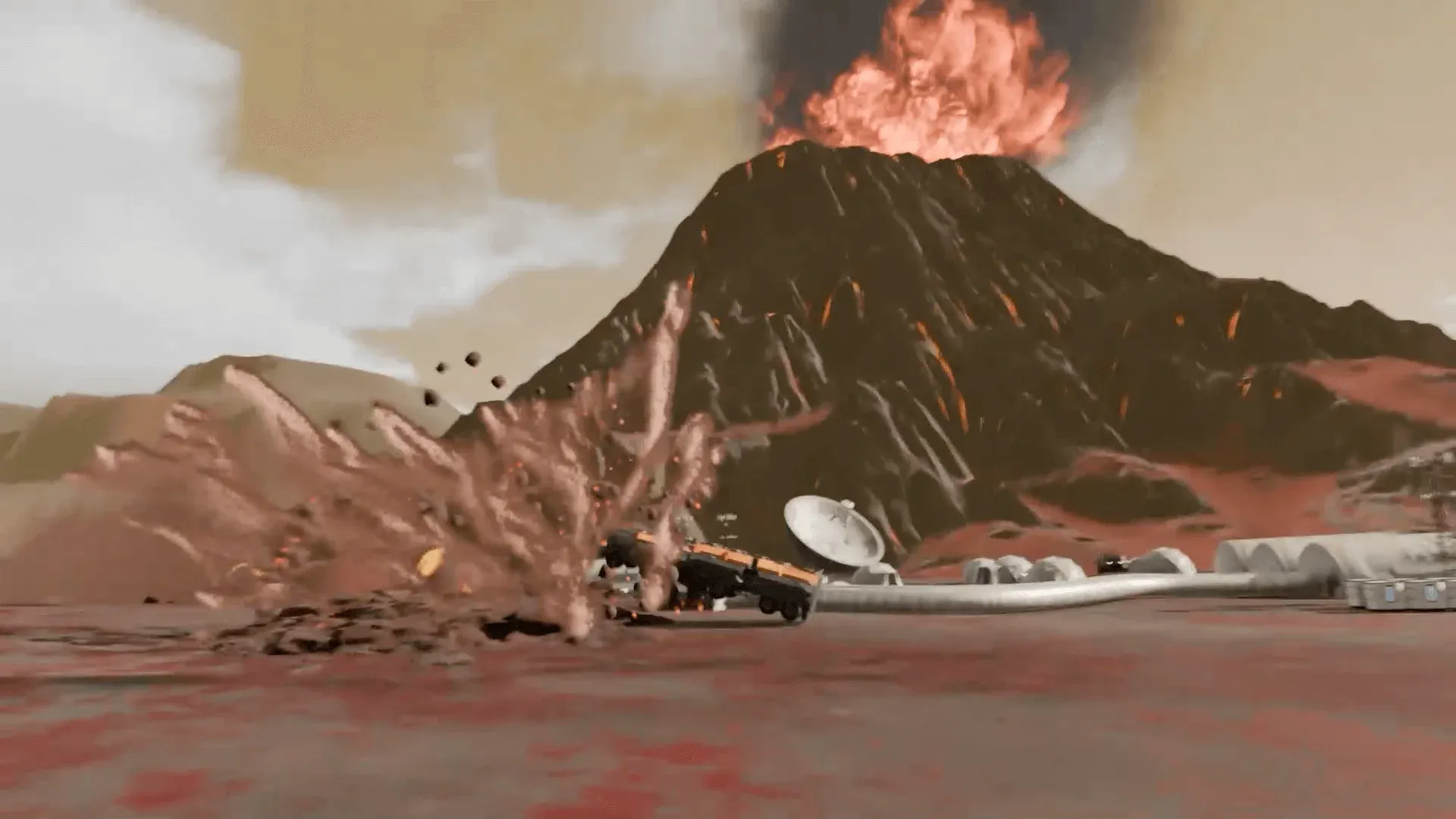
- Brace for ImpactAn abandoned asteroid mine is headed for the town’s power plant. Teams graph in all four quadrants to decide how to stop it (6.NS.C.8).
Will it work in my room?
Students join with a class code on Chromebooks, laptops, or tablets, with no student accounts or passwords, and their data is covered by COPPA and FERPA and by the Student Privacy Pledge we signed.
Who's behind it
Mission.io is the research and design organization behind them: over a million students have run a Mission, the research is funded by the National Science Foundation and the U.S. Department of Education’s Institute of Education Sciences, and Mission.io meets ESSA Level II standards, as validated by Instructure.
START FREEFree teacher account, no card. Run the Communication Mission first, after its 5-minute Teacher Preview.


Methods, skills, and the curriculum guide
By teaching method
The named structures, with steps, and where whole-class Missions fit (and where they don’t). For your whole staff, run one with adults: the Faculty Mission.
By human skill
A math problem worth arguing over is also a group-work problem. Each skill has its own hub, with a page for every grade, K to 8.
For science leaders choosing a curriculum
Eleven NGSS programs on one rubric, with EdReports by grade band, cost structure, and a verdict for each.
Start with your grade’s math page
Each one rebuilds a math classic teachers already run so it meets its standard, with a printable to run it and every Mission at that grade.