5th grade STEM activities

The egg drop challenge rebuilt so 5th graders design to criteria they wrote, five more build challenges fixed, a free one-page sheet, and every 5th grade Mission by subject.

Who we are. Mission.io makes Missions: teacher-led, whole-class simulations where students use what they’re learning to work through a real scenario together. We build every one on the six things in our STEM activities for students, K-8 guide, and every student gets a report on how well they did.

You don’t need us to use this page: the egg drop, the five challenges, and the sheet all work on their own. Every 5th grade Mission is at the end, by subject, free. (The one after the egg drop protects three islands from a tsunami. No eggs were harmed in its making.)

On this page

What 5th grade STEM looks like

5th grade STEM activities are challenges in which a team designs, builds, and tests something against criteria the standards name, argues from what the test showed, and leaves each student answerable for a part. This page rebuilds the egg drop challenge to the grade’s engineering standard (3-5-ETS1-1 to 3: define the problem with criteria and constraints, compare solutions, run fair tests and find the failure points), fixes five more build challenges, and lists every 5th grade Mission by subject. The year’s content (matter, gravity, ecosystems, Earth’s systems, and the sky; coordinates and multi-digit multiplication; digital citizenship) lives on the four subject pages.

Most of what gets called a STEM challenge is a contest, or a craft project with a STEM sticker on it. Kids cut, glue, decorate, and we call it engineering. The egg drop stands in for all of it, and most years it goes the same way: a tray of straws, twelve minutes of taping, a stepladder, and a cheer or a groan per team.

Keep the drop. It’s the best two seconds in the unit. Ask one question about it afterward: were they solving a real problem, or following directions really well? Those feel the same in the moment, because the room is busy and everyone is smiling. The contest is what’s left when nobody wrote down what the container had to do before it was built, and nobody can say afterward which change saved the egg. The challenges on this page put both of those back, with the same materials in the same period.

Six things that turn a build contest into engineering

We’ve run this check with STEM teams in the districts we work with, and the craft project skips the same three every time: a real problem, criteria for success, and any pressure to iterate. If the finished product is all the activity asks for, the learning is optional. The fix is a small step before the build and a small step after it, and nothing on the tray changes. One number is worth carrying down: when a group shared a goal and each student answered for a part, 84% of studies found a positive effect; without both, 17% (Slavin, 1991).

  1. 1. A real problem with stakes the class can feel.

    “Whose egg survives?” is a contest. “The only medical sample has to survive the airdrop” is a problem.

  2. 2. Apply, don't recall.

    A practice drop that changes the design. If a team can build the whole container without the idea you taught that morning, the idea wasn’t needed.

  3. 3. Group goals with individual accountability.

    The one most build challenges miss: two kids build, two kids hold the tape. Four roles, one job each, and a box each student signs.

  4. 4. The teacher leads the thinking.

    The questions are yours, asked at the tray while they’re still taping. The drop isn’t yours: the Tester drops, and you listen for which team can say why it went the way it did.

  5. 5. A debrief where the class argues it out.

    Containers open on the table, and the question is what the survivors had in common.

  6. 6. A way to see who did what.

    If you can’t tell which student argued for the cotton and which one taped what they were handed, you can’t teach the practice. You can only hope for it.

Engineering is the part of the egg drop that happens before the drop.

The one-page sheet at the end of the next section puts all six on the tray, with the five challenges after it on the back. Get the sheet →

The egg drop challenge, rebuilt for 5th grade

The egg drop challenge is the one build challenge a fifth grader asks for by name: a container that keeps a raw egg intact from a set height. The way it usually runs is a free build, a drop from the teacher’s hands, and “did it break?” Here’s the version that hits all six.

Needs
Per tray: 10 straws, a small bag, 6 cotton balls, a paper cup, an arm’s length of tape. A raw egg per team plus spares, seven ping-pong balls, a tennis ball and a folded towel for the demo, a lined bin or a tarp, a sturdy chair. About $8 for seven teams.
Time
60 minutes. 45 with trays pre-portioned and the drop from a chair onto a lined bin in the room, or two visits.
Groups
Fours. A team of five adds a Spotter, who calls the height and keeps the landing clear; a team of three gives the Tester the Recorder’s job.
Standards
3-5-ETS1-1 (criteria and constraints, written by the team) and 3-5-ETS1-3 (fair tests that find the failure points). 5-PS2-1 (gravity pulls down) is the content code the grade owns here; momentum is not.
  1. Teach first, 8 minutesApply

    Drop a tennis ball on the floor and on a folded towel; ask what the towel did to the stop. Name it once: a longer stop is a softer stop. Then name the three things a designer can change: what cushions, what slows the fall, what holds the egg still.

  2. The problem, 2 minutesStakes

    A medical sample (the egg) has to reach a flooded town by airdrop, and it’s the only sample. Say the stakes out loud: a broken egg is a town without the sample. Each team writes the criteria and constraints in the box before touching materials.

    • Criteria: the egg survives a drop from the marked height; the container opens in under 10 seconds, so the sample can be used.
    • Constraints: the materials on your tray, twelve minutes, no tape directly on the egg.
  3. Four roles, one job eachAccountability

    On the sheet, and everyone signs their role’s box.

    • Builder

      The only hands on the container.

    • Materials Lead

      Holds the tray and says why before releasing any item; owns the cleanup.

    • Tester

      Runs the practice drop, reports what moved, and drops the egg from the chair.

    • Recorder

      Sketches the design, writes the criteria check, and records the final drop.

  4. Build, 12 minutes, with the practice drop at 6Apply

    The Tester drops a ping-pong ball in the half-built container from half height and reports what moved. One egg per team, so the only drop that counts is the last one; the practice round is the ping-pong ball, and the sheet says so. A team that skips the practice drop finds out with the egg.

  5. Change one thing, 3 minutesApply

    The Recorder writes what changed and why.

  6. The real drops, 12 minutesTeacher leads

    The Tester drops from the chair. You ask three questions at the tray beforehand (What are your criteria, in your words? What did the practice drop tell you? What are you changing, and what failure are you protecting against?) and then you listen. You’ll want to tell them where the cotton goes. Don’t.

  7. The debrief, 10 minutesDebrief

    Containers open on the table. Which containers worked, and what did the survivors have in common? What did your practice drop change in your design? Who in your group argued for something the Builder didn’t use, and was it right? Wait on the third question.

  8. See who did whatSee who did what

    The observation sheet, four behaviors per student: proposed an idea, built on someone else’s idea, disagreed with a reason, changed their mind with a reason. Walk the trays during the build and skip the tally during the drops; the build is loud and the drop is a crowd. You’ll catch about half the room in one period; the signed criteria box and the Recorder’s sketch catch the rest, at a glance, before you grade anything.

  9. Once a week, or four sections in a row

    The two-visit version, for a short block or a once-a-week lab: criteria, build, and the practice drop on visit one with the design sketched and signed; the change, the real drop, and the debrief on visit two. The containers keep in a labeled bin; the eggs keep in a cooler under the desk, not a fridge down the hall. Four sections in a row: bags, not trays, pre-portioned the day before, and a lined bin per section with the bag swapped between periods. A word to the custodian before, not after; a raw egg on a hallway floor is how egg drops end up banned in a building.

(At most trays somebody argued for the cotton and lost the vote. The debrief is where the team finds out the quiet kid called it.)

Keep the drop. Put the criteria in front of it and the debrief after it, and it’s engineering.

The airdrop egg drop, free

Emailed now, ready to copy: the teacher page, four role cards, and one team sheet (the criteria and constraints, the design sketch, the practice drop, and the real drop), plus the four-behavior tally.

It’s on its way.

Check your inbox for the airdrop egg drop.

Email me the sheet. It comes as a PDF, ready to print. Unsubscribe anytime.

Five more 5th grade STEM challenges, fixed

Five more that every 5th grade list carries: what each one is, how it usually runs, and the couple of changes that fix it.

Five more for 5th grade

2. The straw bridge with a penny cup

Needs straws, tape, a cup, pennies. Groups of four. 40 minutes. Mess: low.

Teams tape straws into a 12-inch span, hang a cup in the middle, and load pennies into it until the bridge fails. The penny count is a real result, and 5th graders want to beat it. As usually run, though, it’s a strength contest with one number on the board, or a display: one district we visited had the bridges in glass cases down the hallway, built from the instruction “build a bridge,” beautiful, and never tested. Nobody can say who built what, or where any bridge broke.

The fix

  1. Give each team four roles: Builder, Materials Lead, Loader, and Recorder.
  2. Keep a load log: before each add, the team predicts, and the Recorder writes the penny count.
  3. Debrief on where every bridge broke, one bridge at a time.

The load log is on the sheet’s back; the fix above is the whole of it.
3. The index card tower that holds a book

Needs ten index cards, no tools. Groups of three. 6 to 10 minutes. Mess: none.

Teams of three fold and stack ten index cards, with no tools, until a book sits on top. It takes six to ten minutes, which makes it a good bell-ringer. As usually run, though, it’s a timed race: students fold before they think, and the next team starts without hearing why anything held.

The fix

  1. Give the team two minutes to sketch the tower before anyone folds.
  2. Name a Folder, who can only fold what the sketch shows.
  3. Ask one debrief question before the next team’s turn: what shape held, and why?

No page for this one; it’s a bell-ringer with a sketch.

4. The marble roller coaster

Needs paper plates, cardboard tubes, tape, a marble, a box to build on. Groups of four. Two sessions. Mess: medium.

Teams tape paper plates and cardboard tubes to a box so a marble runs from the top to a cup at the bottom. 5th graders throw themselves into it, and the marble shows right away whether the track works. As usually run, though, it’s a free build where the loudest loop wins and nobody tracks what each change did.

The fix

  1. Set a time target as the criterion: the marble must take at least five seconds to reach the cup.
  2. Make one student the Timer, with a stopwatch and a log of every run.
  3. The Builder can’t add a piece until the Timer reports the last run’s time.

No page for this one; the first session is mostly tape anyway.

5. The paper cup that holds water for 30 seconds

Needs one sheet of paper per student, a cup of water. Individual. 10 minutes. Mess: low.

Each student folds one sheet of paper into a cup that has to hold water for 30 seconds. It’s a quick solo puzzle with a clear test. As usually run, though, there’s no team to answer to and no talk afterward, which is fine for a bell-ringer, so don’t ask it to be more.

The fix

  1. Keep it as a bell-ringer, ten minutes at the start of class.
  2. Close with a 60-second share where each student names the fold that failed first.

No page for this one; it’s a solo warmup, and that’s fine.

6. The water zip line

Needs string, a cup, a paper clip, a measuring cup, a tub underneath. Groups of four. 30 minutes. Mess: medium.

Teams hang a cup of water from a paper clip on a 5-foot string and send it down the line, trying to spill as little as possible. The spill is a stake students can see, and getting the line right takes the whole team. As usually run, though, it’s one trip down the line and a wet floor, with no measure of the spill and no record of what changed.

The fix

  1. Measure the spill in milliliters, pouring what’s left into the measuring cup after each run.
  2. Record two runs, with one change between them.
  3. Before the team runs again, the Recorder says what the change did.

No page for this one; the sheet’s back has the spill log.

  • Our part · We make Missions

    Then the standard has somewhere to go

    Plenty of teachers rebuild these by hand every unit, and it works. A Mission is a teacher-led, whole-class simulation on the standard the unit was teaching: your class becomes the crew, the scenario is built from the unit you just taught, and the only way through is using it together. Run the egg drop first, then the Mission on the same standard, and the engineering unit has a day two.

    You're at the helm, not on the hook.

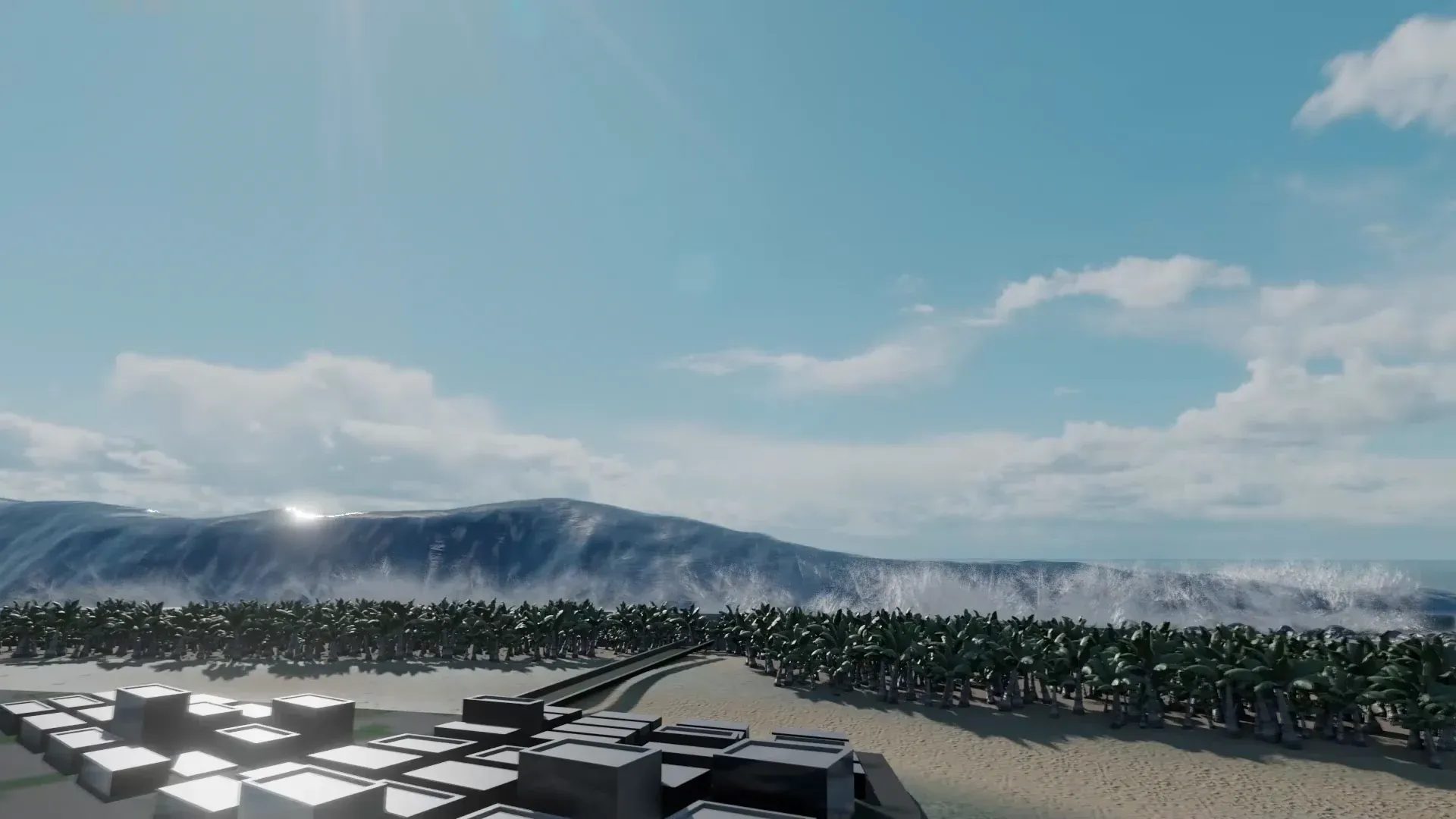
    Tsunami: the egg drop's standard, as a Mission

    Tsunami (5th) · Grades 5 to 8 · About 33 minutes · One device per student, plus your projector · Free with a teacher account

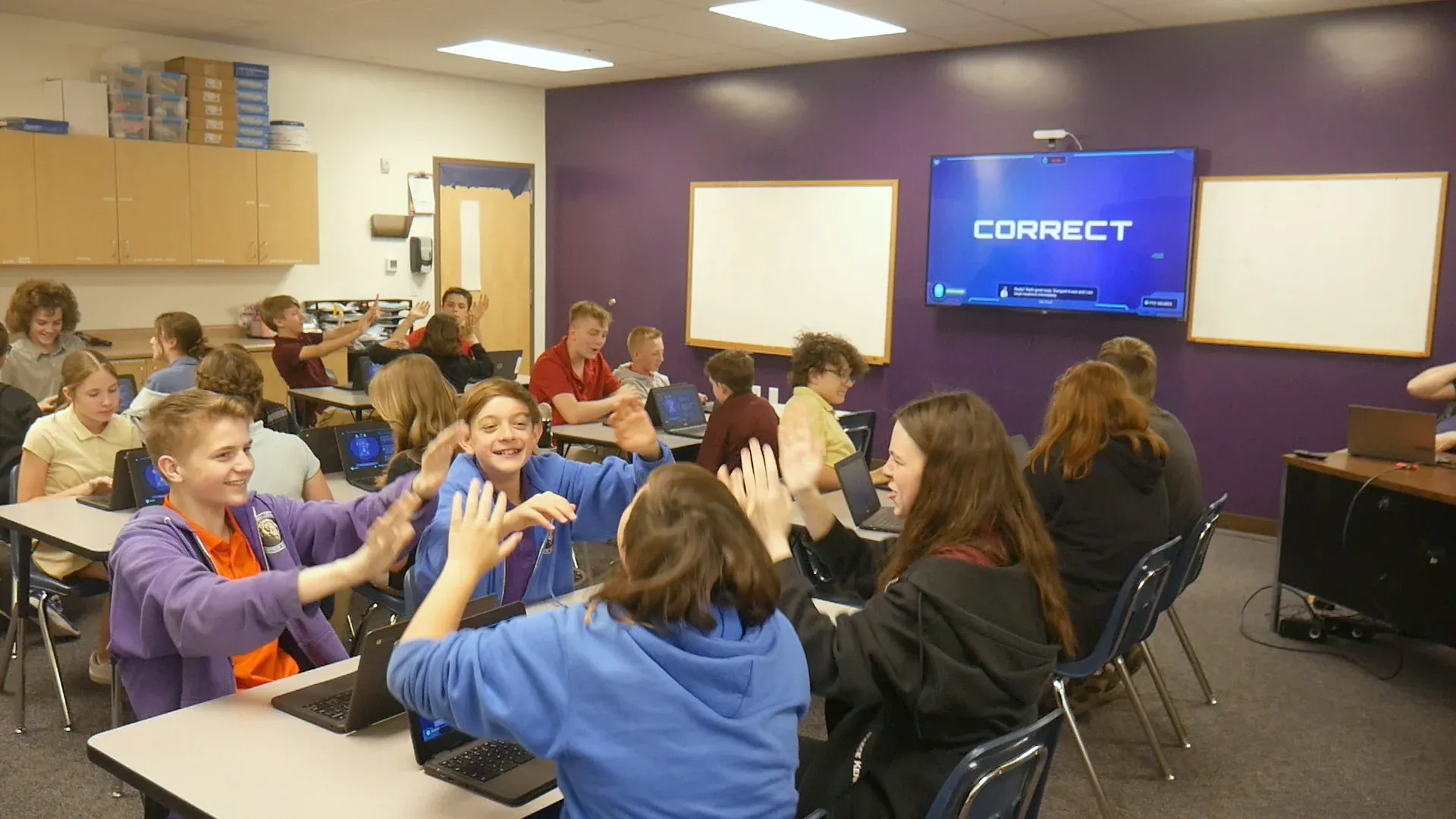
    Middle schoolers high-five across their Chromebooks while the screen at the front reads Correct.
    What you'll see: a crew that just got one right, and you asking which solution met the criteria before they move on.

    A deep-ocean earthquake has sent a tsunami toward three populated islands on Viper I, and the crew has to design an improvement to each island’s defenses based on the city and the island (3-5-ETS1-1, 3-5-ETS1-2). The story plays on the projector. The work happens at seven stations (Command, Engineering, Medical, Security, Science, I.T., Operations) and in the arguments between them.

    Every student is assigned to a team, and each team’s work is themed to it, from its own information and challenge to the same problem the rest of the crew is solving. The team gives a student a role in the story and people to lean on while you move between teams. You’re at the helm, asking what the criteria are in the crew’s words and which design meets them.

    Run the egg drop first, and tell the class why: they’re going to need the criteria they wrote when the wave is on the board. The lesson prepares them. The Mission is what they’re preparing for.

    “This is the most fun they have all week, and they’re learning the whole time. I’m not going back.”

    Lisa Free, Mission Lab specialist, Cook Elementary School, UT

    Will it work in my room?

    Students join with a class code: no student accounts, no student email, no passwords. Chromebooks, laptops, or tablets, plus your projector. Free for teachers, no credit card. Student data is covered by COPPA and FERPA, and we signed the Student Privacy Pledge. See every class once a week in a lab? Then the lab is where the Mission runs and the classroom is where the unit runs: ask the 5th grade team what they just finished, pick that row below, and run it the week after.

    START FREE →

    Communication first, then the egg drop's two

    What the report shows

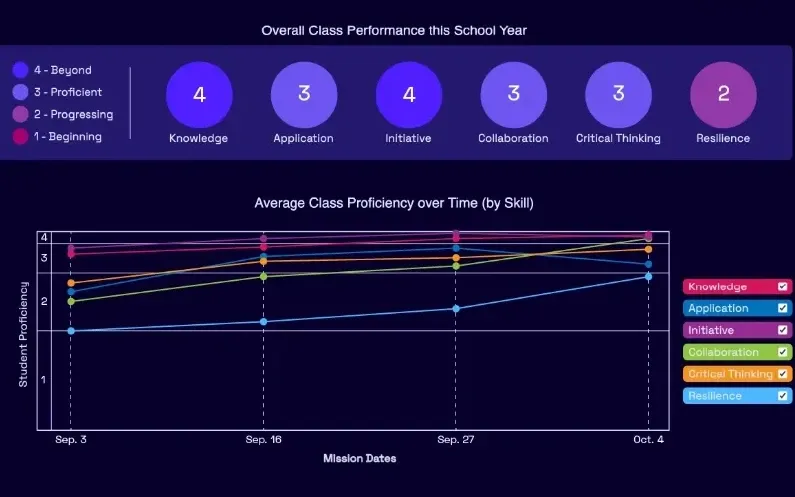
    A Mission.io class report: the class score in each of six skills, from knowledge and application to collaboration, critical thinking, and resilience, with the class chart across the year below.
    A class report from a real Mission: the class score in each of six skills, then each skill across the year.

    Every Mission produces a report for every student, built from what that student did across the whole Mission, on the skills the Mission captured. The six it can capture are Knowledge, Application, Initiative, Collaboration, Critical Thinking, and Resilience. The first two are what a test already sees. The other four are the human skills every school promises. The test shows what they know. The report shows the rest. SEE THE EVIDENCE →

    You taught it. Now find out who can use it.

    Who's behind it

    Mission.io is a research and design organization with one job: make collaborative, active learning something a teacher can run every unit instead of once a semester, and put a report in your hands when it’s over. Over a million students have run a Mission. The research behind them is funded by the National Science Foundation and the U.S. Department of Education’s Institute of Education Sciences, and Mission.io meets ESSA Level II standards, as validated by Instructure.

    “Unprompted, the students all began to applaud like you see in the videos of NASA control rooms. It made my day.”

    Charity Perry, Kindergarten teacher, Pony Express Elementary, UT

    Every 5th grade Mission, by subject

    Tsunami is one. There are 25 STEM Missions at 5th grade, numbered 7 to 31 below, and each one is where a unit can end: the engineering unit ends at Tsunami, matter ends at Into the Asteroid, the coordinate plane ends at The Sinister Sun. Every lesson finally has somewhere to go. Cart once this week and no unit in mind? Cliffhanger is 19 minutes.

    Engineering

    Three on the grade’s engineering design standard, two about the job rather than the standard. The 5th grade engineering activities page rebuilds a classic of its own. For every grade, K to 8, see Engineering activities for students.

    Engineering Missions at 5th grade: three on the NGSS engineering design standard, two career and technical.
    NumberMissionTopic (code)Minutes
    7Tsunami (5th)Define a problem with criteria and constraints; compare solutions (3-5-ETS1-1, 3-5-ETS1-2)33
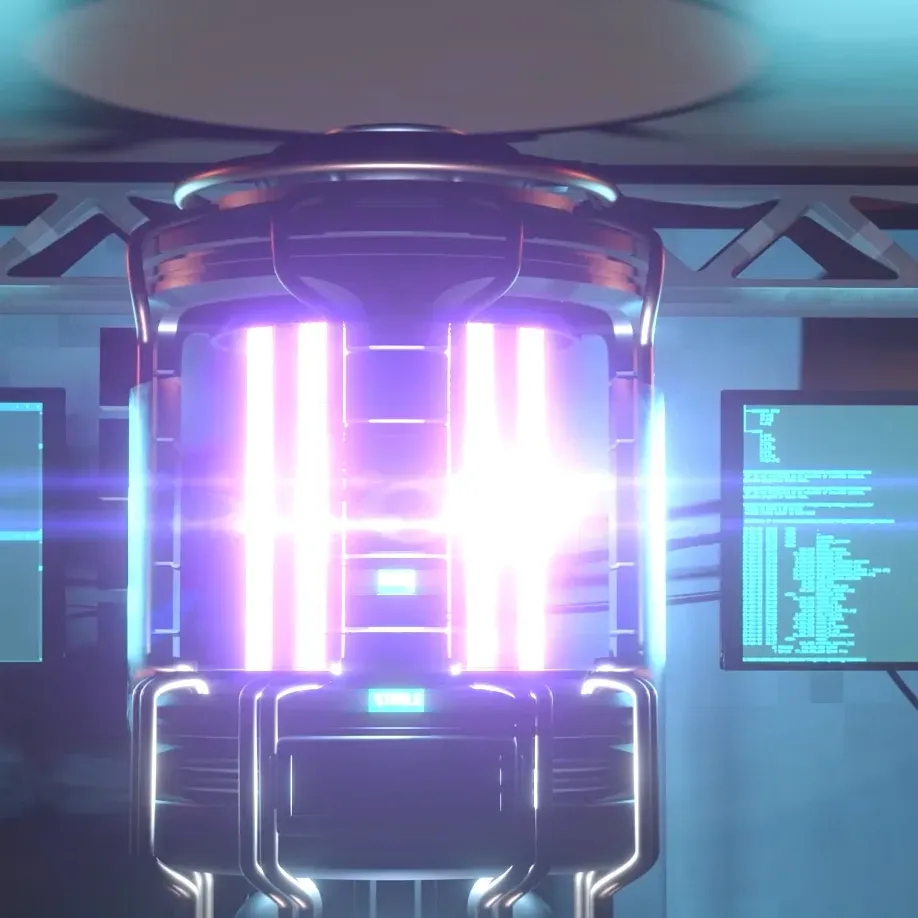
    8Reactor RevampTest and improve a prototype (3-5-ETS1-3)45
    9Engineering SolutionsReduce the damage from natural hazards (3-5-ETS1-1, 3-5-ETS1-2, 4-ESS3-2)17
    10Unstoppable ForceEngineering and problem solving (career and technical; no NGSS code)34
    11Mission to MarsSpace engineering (career and technical; no NGSS code)45

    Science

    Fifteen, from particles too small to see to what’s left to protect: the deepest shelf at the grade. The 5th grade science activities page sets each one against the investigation that teaches it. The last three carry middle school codes and run through 8th grade. For every grade, K to 8, see Science activities for the classroom.

    Science Missions at 5th grade, by NGSS code; the last three span grades 5 to 8.
    NumberMissionTopic (code)Minutes
    12Divide and ConquerParticles too small to see (5-PS1-1)40
    13Matter MattersThe sugar didn’t vanish: total weight is conserved (5-PS1-2)47
    14Into the AsteroidIdentify materials by their properties; does mixing make a new substance (5-PS1-3, 5-PS1-4)41
    15Defying Gravity (5th)Why down is down (5-PS2-1)25
    16Finding BalanceFood webs (5-LS2-1)42
    17Operation StarfallThe sun as a star; shadows, day length, and the seasons (5-ESS1-1, 5-ESS1-2)40
    18CliffhangerEarth’s spheres interact (5-ESS2-1)19
    19Hydro HeistWhere the water is (5-ESS2-2)34
    20On the Move (5th)What’s left to protect (5-ESS3-1)45
    21LandslideWeathering and erosion (4-ESS2-1; grades 4 to 5)38
    22Off the Rails (4th-5th)Forces and motion (grades 4 to 5; no NGSS code listed)30
    23Era of the UnknownFossils and rock layers (3-LS4-1, 4-ESS1-1; grades 3 to 6)44
    24System ShutdownBody systems (MS-LS1-3; grades 5 to 8)34
    25Laser LabyrinthForce, mass, and motion (MS-PS2-2; grades 5 to 8)32
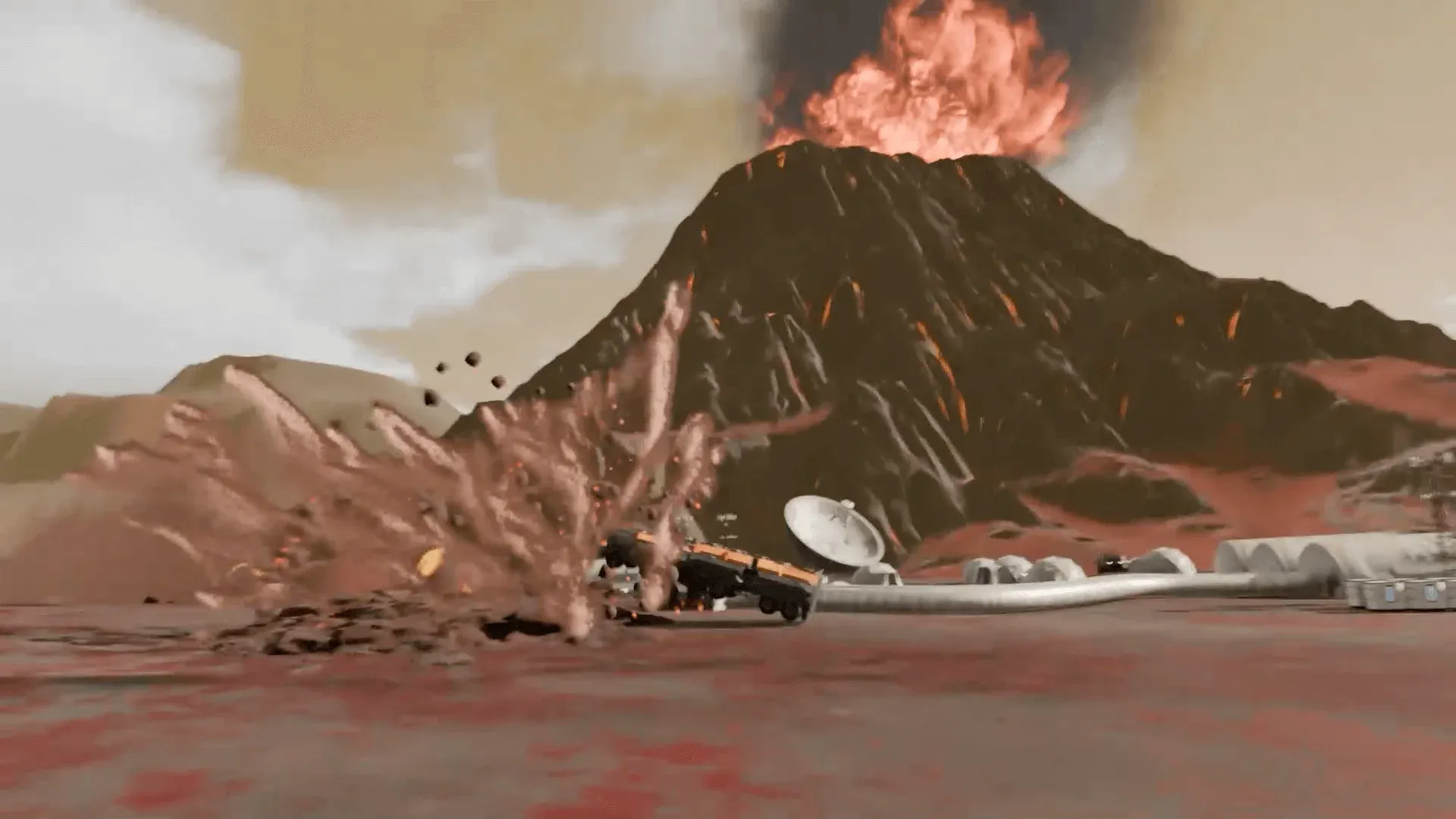
    26Mount KatastrofiHow geological events change the surface (MS-ESS2-2; grades 5 to 8)24

    Math

    Two, on the two units that take the most of 5th grade math, both under 40 minutes. The 5th grade math activities page rebuilds a classic for the coordinate plane. For every grade, K to 8, see Math activities for students.

    Math Missions at 5th grade, by CCSS code.
    NumberMissionTopic (code)Minutes
    27The Sinister SunGraph points on the coordinate plane and read them in context (5.G.A.1, 5.G.A.2)39
    28An Industrial SwarmMultiply multi-digit numbers (5.NBT.B.5)38

    Technology

    One at this grade; if the unit is digital citizenship, this is the week it points to. The 5th grade technology activities page carries activities a room can run without a lab. For every grade, K to 8, see Technology activities for students.

    The technology Mission at 5th grade.
    NumberMissionTopic (code)Minutes
    29Cyber Defense ForceDigital citizenship and cybersecurity (grades 4 to 12)37

    Careers and creativity

    Two that don’t belong to a unit: a veterinary case and a creativity Mission for K to 5.

    Career and creativity Missions at 5th grade.
    NumberMissionTopic (code)Minutes
    30Do No HarmVeterinary science (career and technical; grades 5 to 12)28
    31Sky's the LimitCreativity and imagination (grades K to 5)18
    START FREEMISSION BRIEF →

    Free teacher account, no card. Start with the Communication Mission, marked Start here in your library, then Tsunami, each after its 5-minute Teacher Preview.

    Also at this grade

    The Collaboration and Critical Thinking Missions for 4th grade and up (24 minutes each; they live on the 5th grade collaboration activities and 5th grade critical thinking activities pages), and the reading, writing, and social studies Missions: At Odds, Dawn of the Scarecrow, On the Edge of Tomorrow, Strokes of Genius, The Root of the Problem, Pave the Way, The Revolution, Parts 1, 2, and 3, Showstopper, and The Abyss, a deep-sea science story built for informative writing (RI.5.2, W.5.2).

Questions 5th grade teachers ask

I see my 5th graders once a week for STEM. What fits?

The card tower and the paper cup fit inside 15 minutes; the egg drop fits a 45-minute special with the bags pre-portioned, or two visits with the drop on the second. A Mission is one visit, and three on this page run under 20 minutes (Engineering Solutions, 17; Sky’s the Limit, 18; Cliffhanger, 19). Ask the classroom teacher what unit just ended and pick that row.

What turns the egg drop into an engineering design challenge?

Criteria and constraints the team writes before it builds, a practice drop whose result changes the design, and a debrief on where the survivors differed (3-5-ETS1-1 to 3). Without the first, it’s a contest; without the second, it’s a guess; without the third, nobody learns what the survivors had in common.

No eggs, no mess, no budget. What then?

The card tower (ten index cards), the paper cup (one sheet of paper), and the straw bridge (straws and pennies) cost nothing you don’t have, and the egg drop runs on about $8 for seven teams. The messy ones are on the list on purpose; the fix for each is the same four roles.

How do I grade a STEM challenge fairly?

Grade the criteria box and the behaviors, not whether the egg broke. The signed criteria and the Recorder’s log are one grade; the four-behavior tally over two or three challenges is the other. A team whose egg survived with no practice drop shows up on the sheet as a lucky build, and the sheet is what lets you say so.