
Engineering activities for students
What engineering asks at every grade from kindergarten to 8th, by the NGSS design standards. Pick your grade for the build challenge rebuilt there and every Mission that fits it.
Who we are. Mission.io makes Missions: teacher-led, whole-class simulations where students use what they’re learning to work through a real scenario together.
Building them took years of research and development, and these pages share what we learned, free. Take whatever helps. (The youngest one opens with RALF overheating on the beach. Shade, it turns out, is an engineering problem.)
On this page
What engineering activities are, K to 8
Engineering activities for students are design challenges: a team defines a problem with criteria and constraints, sketches more than one solution, builds and tests it, finds where it fails, and makes it better. In K-8 classrooms they answer to the NGSS engineering design standards (ETS1), set in three bands: K to 2, 3 to 5, and middle school.
This hub is a map: each grade’s line links to its page. Then five marks of a good engineering activity, four Missions to start with, and the method guides.
Find your grade: engineering from K to 8th
The design cycle is the same at five and at fourteen. Students get more precise about what success looks like, and more honest about testing against it.
Kindergarten
Asking what people want to change, then sketching or building a fix, like shade that slows the sun’s warming (K-2-ETS1-1, K-PS3-2). All subjects: Kindergarten STEM activities.
Ice cube shade structure, rebuilt · 2 Missions. Kindergarten engineering activities →
1st grade
Showing how an object’s shape helps it do its job, in a sketch or a model, and comparing two designs (K-2-ETS1-2, K-2-ETS1-3). All subjects: 1st grade STEM activities.
Tallest cup tower, rebuilt · 2 Missions. 1st grade engineering activities →
2nd grade
Testing two objects built to solve the same problem, and saying what each one does well and badly (K-2-ETS1-3). All subjects: 2nd grade STEM activities.
Index card bridge, rebuilt · 2 Missions. 2nd grade engineering activities →
3rd grade
The 3 to 5 band begins: criteria and constraints written before the build, often against a weather hazard (3-5-ETS1-1, 3-ESS3-1). All subjects: 3rd grade STEM activities.
Balloon-powered car, rebuilt · 3 Missions. 3rd grade engineering activities →
4th grade
Generating and comparing several solutions to cut the damage from a natural hazard, like an earthquake or a flood (3-5-ETS1-2, 4-ESS3-2). All subjects: 4th grade STEM activities.
Stop the erosion, rebuilt · 5 Missions. 4th grade engineering activities →
5th grade
Fair tests with controlled variables, and the failure points that show what to improve (3-5-ETS1-3). All subjects: 5th grade STEM activities.
Water filter, rebuilt · 5 Missions. 5th grade engineering activities →
6th grade
Middle school design starts with criteria and constraints precise enough to succeed, including the effects on people and the environment (MS-ETS1-1). All subjects: 6th grade STEM activities.
Shake-table tower, rebuilt · 6 Missions. 6th grade engineering activities →
7th grade
Evaluating competing designs against the criteria with a systematic process, so the best idea wins on evidence (MS-ETS1-2). All subjects: 7th grade STEM activities.
Cardboard and string hand, rebuilt · 5 Missions. 7th grade engineering activities →
8th grade
Combining the best parts of several tested designs, and modeling to iterate toward the best one (MS-ETS1-3, MS-ETS1-4). All subjects: 8th grade STEM activities.
Mousetrap car, rebuilt · 5 Missions. 8th grade engineering activities →
A Mission built for a span of grades counts at every grade it fits, so the nine numbers overlap. From 4th grade up, the counts include two career and technical Missions, Unstoppable Force and Mission to Mars, that carry no NGSS code.
What makes a good engineering activity
- The criteria and constraints are written down first. What counts as success, and what the team can’t do, before anyone touches the tape (K-2-ETS1-1, 3-5-ETS1-1, MS-ETS1-1).
- More than one solution gets drawn. A team that builds its first idea never had to choose between ideas (3-5-ETS1-2, MS-ETS1-2).
- The test is fair, and it hunts for failure. One change at a time, with the failure points written down (K-2-ETS1-3, 3-5-ETS1-3, MS-ETS1-3).
- The test changes the design. The second build is different because of what the first one showed; NGSS Appendix I calls it optimizing the design solution (MS-ETS1-4).
- There’s a science idea inside it. The build applies what the class just learned, which is why NGSS writes engineering into the science standards themselves (NGSS Appendix I).
These five are engineering’s view of the six things every page here checks for. The usual build contest skips the first and the fourth.
Our part · We make Missions
Engineering Missions to start with
A Mission is a teacher-led, whole-class simulation: the class can become the crew, the crisis is built from the unit you just taught, and the only way through is using it together. Here are four for engineering, from kindergarten to 8th. Start with the first one.
Communication first, then four for engineering
Communication Mission briefs by grade: K to 1, 2 to 3, 4 and up. Tsunami has three builds: 3rd, 4th, and 5th to 8th. One device per student, plus your projector. 5 minutes of prep, with the Teacher Preview.
- The Communication MissionRun this one first. It gives your class the training to run any Mission in the library.
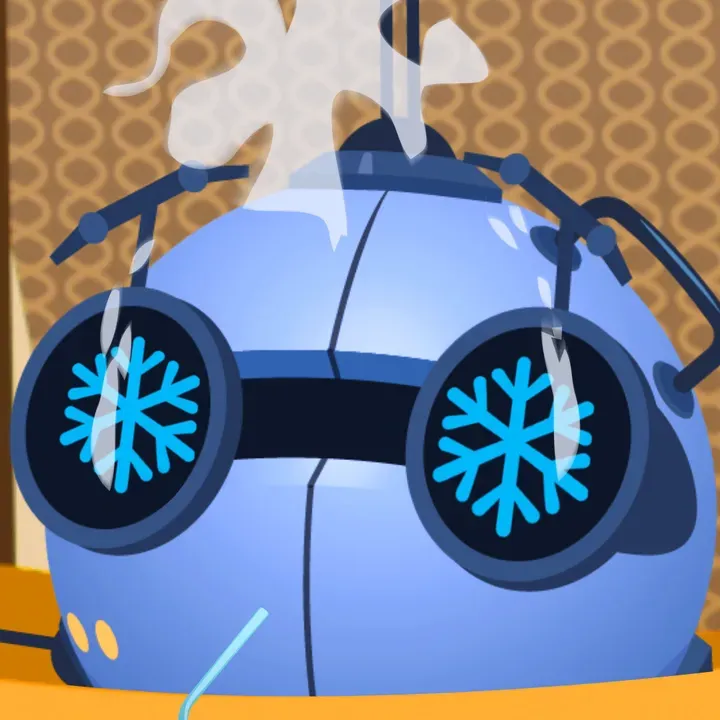
- Beach FrenzyRALF is overheating on the beach. The class weighs how each fix changes his temperature, then picks the design that protects him best (K-PS3-2, K-2-ETS1-3).
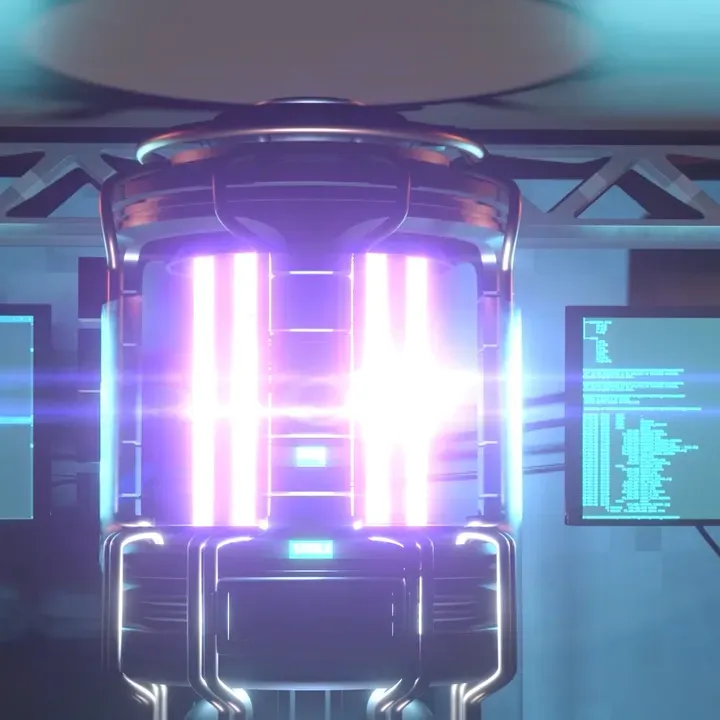
- Reactor RevampAn EMP damaged the fusion reactor that powers Koré’s shield, with asteroids incoming. Teams design and build a better reactor from the materials on hand (3-5-ETS1-3).
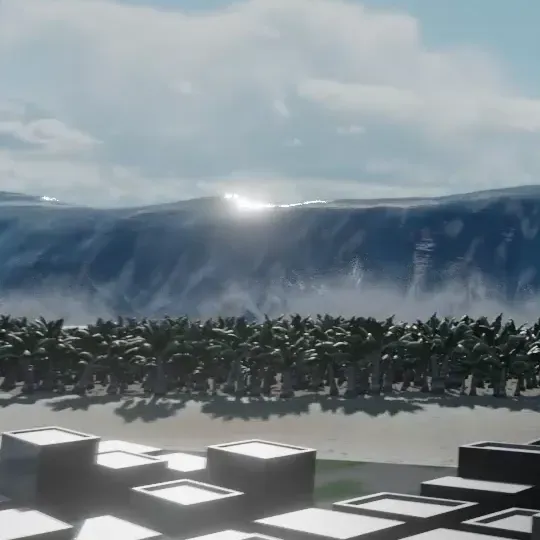
- Tsunami (5th)A tsunami is headed for three populated islands on Viper I. Teams design an improvement to each island’s defenses, fit to its city and its coast (3-5-ETS1-1, MS-ETS1-2).
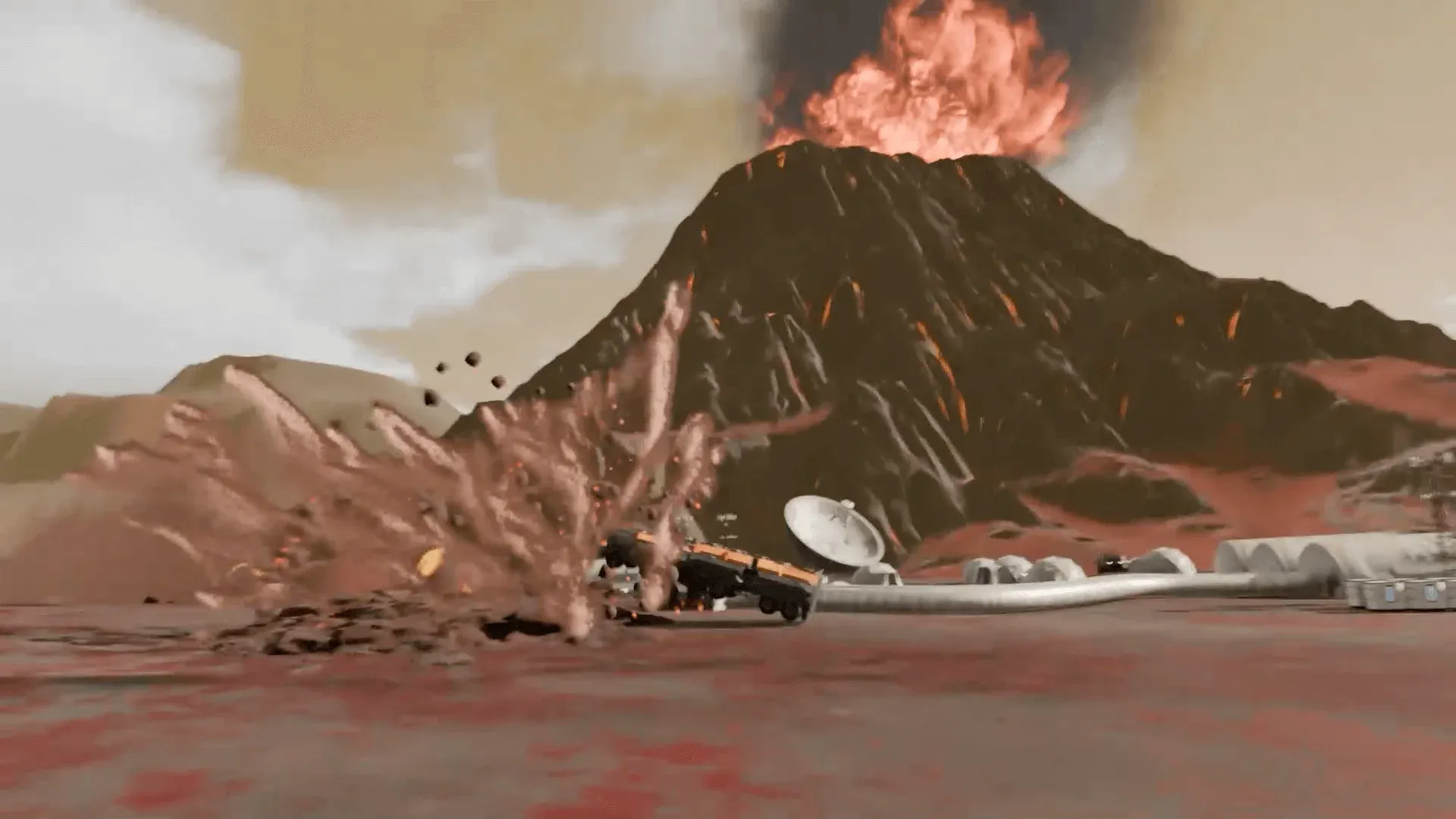
- Spine-Backed GlobsterAn invasive creature is wrecking a coral reef off the coast of Taipan. Teams work out from the data why, then write a proposal to end the infestation (MS-ETS1-1, MS-LS2-5).
Will it work in my room?
Students join with a class code on Chromebooks, laptops, or tablets, with no student accounts or passwords, and their data is covered by COPPA and FERPA and by the Student Privacy Pledge we signed.
Who's behind it
Mission.io is the research and design organization behind them: over a million students have run a Mission, the research is funded by the National Science Foundation and the U.S. Department of Education’s Institute of Education Sciences, and Mission.io meets ESSA Level II standards, as validated by Instructure.
START FREEFree teacher account, no card. Run the Communication Mission first, after its 5-minute Teacher Preview.
Methods, skills, and the curriculum guide
By teaching method
The named structures, with steps, and where whole-class Missions fit (and where they don’t). For your whole staff, run one with adults: the Faculty Mission.
By human skill
Every build challenge is also a group-work problem. Each skill has its own hub, with a page for every grade, K to 8.
For science leaders choosing a curriculum
Eleven NGSS programs on one rubric, with EdReports by grade band, cost structure, and a verdict for each.
Start with your grade’s engineering page
Each one rebuilds a build challenge teachers already run so it meets its design standard, with a printable to run it and every Mission at that grade.