Kindergarten engineering activities

The shade structure rebuilt so kindergartners test their designs against the sun, five more design challenges, a free printable, and the 2 kindergarten engineering Missions by standard.

Who we are. Mission.io makes Missions: teacher-led, whole-class simulations where students use what they’re learning to work through a real scenario together.

Everything on this page works without us. Every kindergarten engineering Mission is at the end, by standard, free. (Beach Frenzy stars RALF, a robot cooking on a beach. Kindergartners have strong opinions about how to shade a robot.)

On this page

What kindergarten engineering looks like

Kindergarten engineering activities are design challenges where the class looks at a problem, builds something to fix it, and tests two designs to see which one works better, with each child answerable for a piece. This page covers the K to 2 engineering design standards, K-2-ETS1-1 to K-2-ETS1-3, with a challenge and a Mission for each. The kindergarten science activities page carries the investigations.

Kindergarten is the first year of the K to 2 band, and the band asks for three moves. Ask questions and gather information to define a simple problem (K-2-ETS1-1). Sketch or build a model that shows how its shape helps it work (K-2-ETS1-2). Then compare two tested solutions to see what each one does well and badly (K-2-ETS1-3). Kindergarten adds a build of its own: a structure that reduces the warming effect of sunlight on an area (K-PS3-2). Pushes and pulls bring one more, checking whether a design changes an object’s speed or direction as intended (K-PS2-2).

You know the activity that usually stands in for all of that: straws, foil, a toy animal, and a sunny windowsill. Everyone admires the roofs, and nobody checks on the animal. Put an ice cube under each roof and one in the open sun, and the class finally has something to check.

Six things that turn a build into engineering

The standards set the bar on purpose: NGSS raised engineering design “to the same level as scientific inquiry,” and in K to 2 that means students use tools and materials, drawings, and physical models to solve simple problems and compare solutions (NGSS Appendix I). The catch is the clock. Engineering is written into the science standards, so it shares science’s time, and K to 2 classes average about 17 minutes a day on science (2018 NSSME+). A 45-minute build is more than two of those days, so it had better be engineering.

  1. 1. A real problem with stakes the class can feel.

    “Build a shade” is an art project. “The class lizard has to wait ten minutes in the sun” is a problem.

  2. 2. Apply, don't recall.

    A second round that only works with what the first check showed. If the build can be finished without checking anything, it isn’t engineering.

  3. 3. Group goals with individual accountability.

    The one most build challenges miss: one child with the tape, two children watching the tape. When the group shared a goal and each student answered for a part, 84% of studies found a positive effect; without both, 17% (Slavin, 1991).

  4. 4. The teacher leads the thinking.

    Kneel at the tray and ask three questions (where will the sun come from, is the lizard’s spot dark or bright, what will you change). Five-year-olds reason out loud when somebody asks them to.

  5. 5. A debrief where the class argues it out.

    The build is the setup. The talk afterward, about which ice cubes are biggest and what those structures had, is the practice the standards name.

  6. 6. A way to see who did what.

    If you can’t tell which child had the roof idea and which one only held the foil, you can’t teach the design process. You can only admire the roofs.

Build it at the table. Prove it in the sun.

The printable at the end of the next section puts all six on the tray, with every card and log the activity uses, ready to copy. Get the sheet →

The shade structure, rebuilt for kindergarten (K-PS3-2)

Paper, straws, and craft sticks built into something that keeps a toy animal in the shade, so its spot warms more slowly in the sun. It’s in nearly every NGSS kindergarten unit because it’s the one kindergarten standard that is itself a build (K-PS3-2), and teachers without the standard in front of them run its cousin, keep the ice cube from melting. The way it usually runs is a build in the sun, the teacher waiting, and no test at all. Here’s the version that hits all six.

Time
45 minutes, including the 10-minute sun test, if the sun cooperates. Have a lamp ready.
Groups
Threes. With 21 children, seven groups of three exactly; with 22, one pair, where the Builder also picks.
Supplies for eight structures
8 paper plates as bases, straws, craft sticks, construction paper, foil, masking tape, Play-Doh, 9 ice cubes, and 8 toy animals. Under $8.
Standards
K-PS3-2 (design and build a structure that reduces the warming effect of sunlight on an area) with K-2-ETS1-3 (compare two tested solutions).
  1. Teach first, 8 minutesApply

    Put one hand on a black paper square and one on a white square in the sunny window, and ask which is warmer. Then put a book over one square for a minute and feel again. Name it: sunlight warms things, and shade slows it down.

  2. The problemStakes

    The class pet, a toy lizard, has to wait outside in the sun for ten minutes while its cage is cleaned, and lizards overheat. The structure has to keep the lizard’s spot cooler than the open sun. The test: an ice cube sits in each structure and one sits in the open, and the cube that melts least wins the lizard a safe spot.

  3. Three roles, one job eachAccountability

    Names on the role cards. Builder and Shade Checker swap after the window check.

    • Builder

      The only hands on the structure.

    • Material Picker

      Chooses from the tray, and has to tell the Builder why.

    • Shade Checker

      Holds the structure up to the window light before the test and says whether the lizard's spot is dark or bright.

  4. You lead the thinkingTeacher leads

    Three questions, asked at the tray: Where will the sun come from? Is the lizard’s spot dark or bright right now? What will you change to make more shade?

  5. Two rounds, so the check has to be usedApply

    Build for 7 minutes, then the Shade Checker’s window check, then 2 minutes to change one thing. Then the real test: an ice cube in each structure in the sun for 10 minutes, and one in the open. The change has to answer what the window check showed.

  6. The debrief, 8 minutesDebrief

    Ice cubes on a tray. Which cubes are biggest, and what did those structures have? What did your team change after the window check? Who in your group had an idea the Builder used? Five-year-olds will name the kid who said “put the roof on top, not the side.”

  7. See who did whatSee who did what

    The observation sheet, four behaviors per child: tried an idea, used a teammate’s idea, said why, checked the shade before building more. With five-year-olds a tally catches about a third of the room, and the window check is the moment to look.

(Somebody will build a roof for the ice cube in the open. Call it a great idea and a broken test, in that order.)

If the sun doesn’t show, the lamp does the same job. Kindergartners don’t hold the weather against you.

The lizard shade structure, free

Emailed now, ready to copy: the teacher page, three role cards, the group card (the sun arrow, two window checks, and the ice cube), and the four-behavior tally.

It’s on its way.

Check your inbox for the lizard shade structure.

Email me the sheet. It comes as a PDF, ready to print. Unsubscribe anytime.

Five more kindergarten design challenges, by standard

Five more on every kindergarten list: what each one is, how it usually runs, and what it needs to be engineering, in the order the standards run.

Define, model, compare

2. The newspaper tent for a stuffed animal (K-2-ETS1-1)

Needs newspaper, tape, a stuffed animal.

Each team gets newspaper and tape and builds a tent big enough for a stuffed animal to sit under. Kindergartners take it seriously, because the animal is sitting right there waiting. As usually run, though, it’s a free build with nothing coming for the tent, so any pile of paper counts, and afterward nobody can say why one tent kept its shape or who built which part.

The fix

  1. Give the tent rain to keep out: a spray bottle, three squirts from the same spot for every tent, counted out loud.
  2. Make one child the Checker, who looks for gaps before the rain and feels the animal for wet spots after.
  3. Ask the Checkers which animals stayed dry, and what those tents had in common.

No page for this one; the spray bottle and the Checker are the fix.
3. The fence for toy animals (K-2-ETS1-1)

Needs craft sticks, Play-Doh, toy animals.

Teams press craft sticks into Play-Doh to build a fence around a handful of toy animals. It’s good work for small hands, and the animals give it a story. As usually run, though, it’s a craft: the fence only has to look like a fence, and nobody talks afterward about whether it would hold anyone in.

The fix

  1. Before anyone builds, set out the animals and ask which one would escape first, and how (the horse might jump it, the pig might push through).
  2. Chart the answers, and have each team pick the escape its fence has to stop.
  3. Test each fence with that animal, then ask the class which fences held and why.

No page for this one; the escape question is the fix.

4. The Three Little Pigs house (K-2-ETS1-2)

Needs straws, sticks, blocks, a fan for the wolf.

Teams build a house for a pig from straws, sticks, or blocks, and a small fan plays the wolf. It’s the wind version of the shade structure’s idea, that a structure’s shape decides whether it does its job, and the story is already in the room. As usually run, though, the teacher works the fan, every house gets a different huff, and the class ends on whose house stood up.

The fix

  1. Give each team three roles, so every child has a job in the house.
  2. Before the wolf comes, the Checker gives the house a gentle one-finger push and tells the Builder what wobbled.
  3. Then three huffs from the same spot for every house, counted out loud.

See it fixed on the kindergarten STEM page →

5. The penny bridge from sticks and tubes (K-2-ETS1-3)

Needs craft sticks, two tubes, pennies.

Teams lay craft sticks across two cardboard tubes and stack pennies on top until the bridge gives way. Counting the pennies is kindergarten math, and a falling bridge is a result every child can see. As usually run, though, it’s a stacking game where everyone grabs pennies at once, so no one knows how many it held or who did what.

The fix

  1. Give each team three jobs: a Builder who lays the sticks, a Loader who adds pennies one at a time, and a Counter who counts each one out loud.
  2. When the bridge falls, the Counter draws or writes the number, so the team has a count to hold up.
  3. Line up the counts and ask the Builders what the strongest bridge did differently.

No page for this one; the three roles are the fix.

6. The ramp that stops a car in a garage (K-PS2-2)

Needs toy cars, a ramp (a book on blocks), masking tape for the garage. Threes.

A toy car rolls down a ramp (a book propped on blocks) and has to stop inside a garage taped on the floor. As an engineering task, it’s the design half of the pushes and pulls standard: change the ramp or the push until the car does what you want. As usually run, though, it’s a free-play center, and nobody keeps track of which change got the car into the garage.

The fix

  1. Say the problem out loud: the car has to stop inside the garage, without stopping short or crashing through the wall.
  2. Give each group of three a Pusher, a Spotter who puts a sticky dot where the car stops, and a Recorder.
  3. After five pushes, the team changes one thing, the ramp height or the push, and does five more.

See ramps and toy cars rebuilt for kindergarten →

  • Our part · We make Missions

    Then the unit has somewhere to go

    Plenty of teachers rebuild these by hand every unit, and it works. A Mission is a teacher-led, whole-class simulation built to the shade structure’s own standard (K-PS3-2): the story plays on your projector, every child makes the calls on their own screen, and the only way through is using what the unit taught. After the shade structure, run Beach Frenzy, and the unit has a day two.

    You're at the helm, not on the hook.

    Beach Frenzy: the shade structure, as a Mission

    Beach Frenzy · Grades K to 2 · About 15 minutes · One device per student, plus your projector · Free with a teacher account

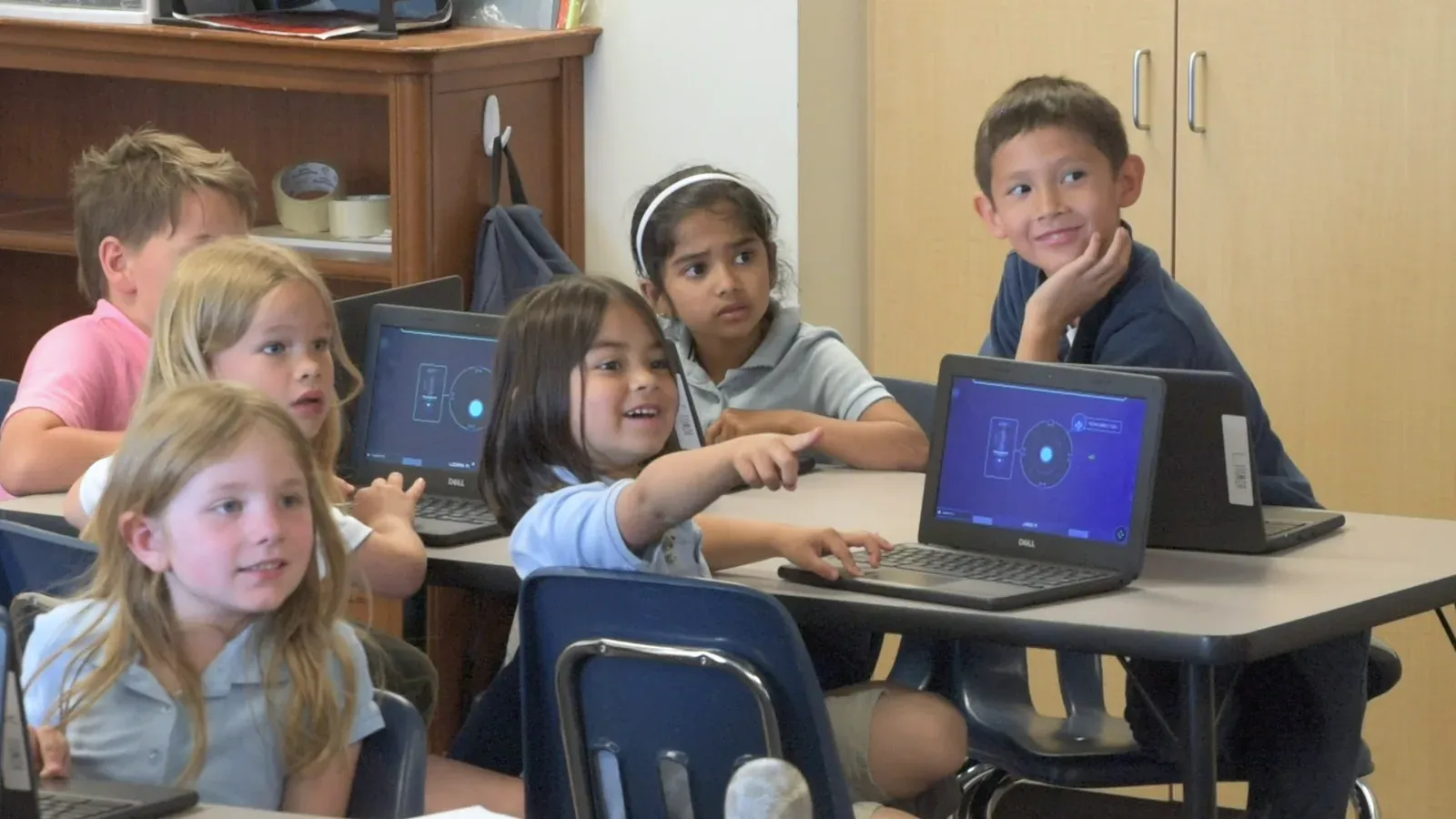
    Young students at a table of Chromebooks; one girl points at a classmate's screen while a boy beside her rests his chin on his hand and smiles.
    Young students at their Chromebooks, one pointing at a classmate's screen.

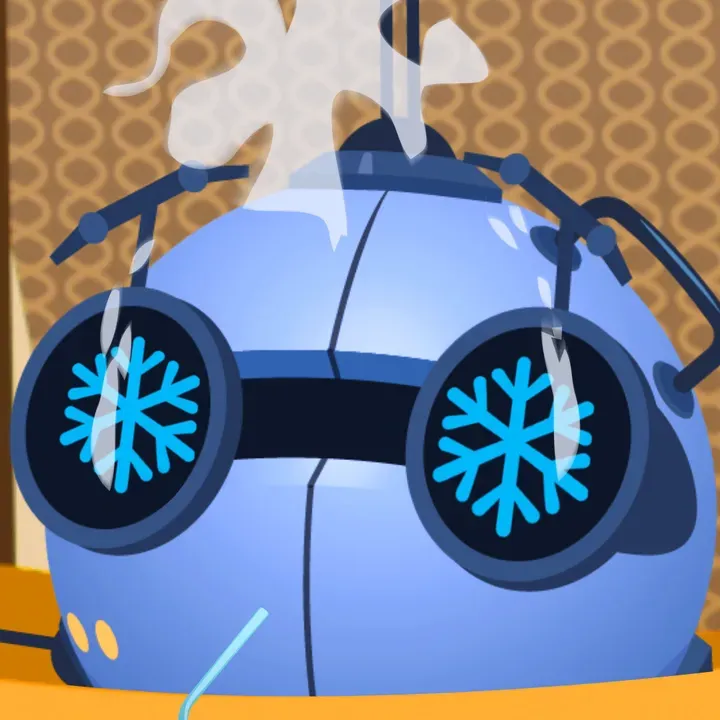
    RALF, the crew’s robot, is overheating from too much sun on the beach. The class investigates several solutions and how each one would change his rising temperature, then looks at designs to find the one that best protects him from the sun and sand. The story plays on the projector, and every child makes the calls on their own screen; there are no crews or stations in this one.

    Every child weighs the evidence and makes a choice. The story goes the way most of the class chooses, and each child’s own choices and answers go into their report. The screens carry the story, so you’re free to kneel beside them, asking which design kept RALF coolest and why that one worked.

    It’s built to the shade structure’s own standard (K-PS3-2), with K-PS3-1, 1-PS4-3, and all three K to 2 engineering codes alongside, and the vocabulary is the unit’s: sunlight, heat, temperature, material, design, transparent. Run the shade structure first, and tell the class why: RALF needs a crew that already knows shade slows the sun down. The lesson prepares them. The Mission is what they’re preparing for.

    “Unprompted, the students all began to applaud like you see in the videos of NASA control rooms. It made my day.”

    Charity Perry, Kindergarten teacher, Pony Express Elementary, UT

    Will it work in my room?

    Students join with a class code: no student accounts, no student email, no passwords. Chromebooks, laptops, or tablets, plus your projector. Free for teachers, no credit card. Student data is covered by COPPA and FERPA, and we signed the Student Privacy Pledge. At about 15 minutes, Beach Frenzy fits inside the average K to 2 science block of about 17 minutes.

    START FREE →

    Communication first, then the year's two

    What the report shows

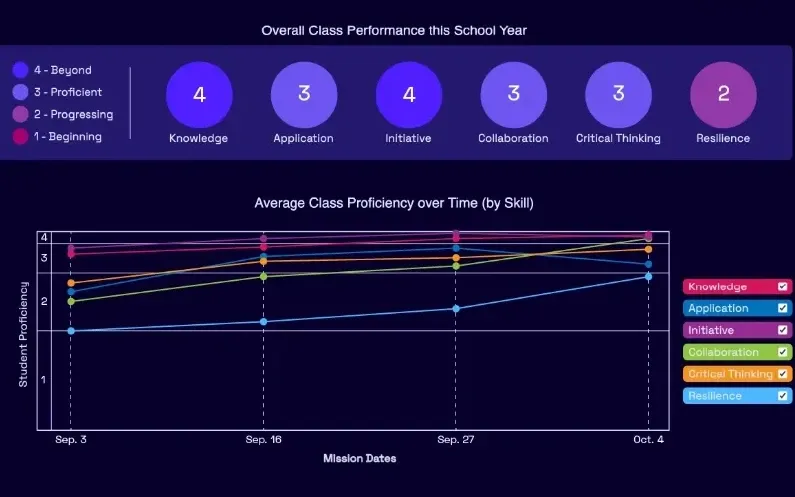
    A Mission.io class report: the class score in each of six skills, from knowledge and application to collaboration, critical thinking, and resilience, with the class chart across the year below.
    A class report from a real Mission: the class score in each of six skills, then each skill across the year.

    Every Mission produces a report for every student, built from what that student did across the whole Mission, on the skills the Mission captured. The six it can capture are Knowledge, Application, Initiative, Collaboration, Critical Thinking, and Resilience. The first two are what a test already sees. The other four are the human skills every school promises. The test shows what they know. The report shows the rest. SEE THE EVIDENCE →

    You taught it. Now find out who can use it.

    Who's behind it

    Mission.io is a research and design organization with one job: make collaborative, active learning something a teacher can run every unit instead of once a semester, and put a report in your hands when it’s over. Over a million students have run a Mission. The research behind them is funded by the National Science Foundation and the U.S. Department of Education’s Institute of Education Sciences, and Mission.io meets ESSA Level II standards, as validated by Instructure.

    Kindergarten engineering Missions by NGSS standard

    Beach Frenzy is one of two. There are 2 engineering Missions at kindergarten, numbered 7 and 8 below, both built to the K to 2 engineering design standards, and both run from kindergarten through 2nd grade. Every lesson finally has somewhere to go. Each code links to its standard on nextgenscience.org.

    Engineering design (K-2-ETS1)

    Every K to 2 design code has a Mission, and both Missions fit inside a 17-minute block.

    Engineering design Missions for kindergarten, by NGSS code.
    NumberThe standardMissionMinutes
    7K-2-ETS1-1 Define a simple problem, then pick the best way to solve it with the materials on hand: a fishy friend is tangled in seaweed (grades K to 2). On this page: 2. The tent and 3. The fence.Tools of the Trade10
    8K-2-ETS1-2, K-2-ETS1-3, K-2-ETS1-1, K-PS3-1, K-PS3-2, 1-PS4-3 Shade a robot from the sun: compare designs, and how each one changes his temperature (grades K to 2). On this page: 1. The shade structure, 2. The tent, 3. The fence, 4. The pigs’ house, and 5. The penny bridge.Beach Frenzy15
    START FREEMISSION BRIEF →

    Free teacher account, no card. Start with the Communication Mission, marked Start here in your library, then the Mission for your unit, each after its 5-minute Teacher Preview.

    Also at this grade

    The kindergarten science activities page maps 14 science and engineering Missions by NGSS code, these two among them, and rebuilds ramps and toy cars; the kindergarten STEM activities page rebuilds the Three Little Pigs house; the kindergarten problem solving activities page picks Tools of the Trade as its Mission; and for math, see kindergarten math activities.

Questions kindergarten engineering teachers ask

Kindergarten science gets about 17 minutes a day. Where does engineering fit?

The Missions fit inside that: Tools of the Trade takes about 10 minutes and Beach Frenzy about 15. The shade structure is the long one, 45 minutes with a 10-minute sun test in the middle, so it needs more of the day than the science block gives.

Which kindergarten engineering standards does this page map?

The three K to 2 design standards, which kindergarten starts: K-2-ETS1-1 (define a simple problem), K-2-ETS1-2 (a sketch or model that shows how shape helps), and K-2-ETS1-3 (compare two tested solutions). Each has a Mission and a challenge here. Beach Frenzy also carries the shade structure’s own kindergarten standard, K-PS3-2, and the ramp challenge covers pushes and pulls (K-PS2-2).

Can kindergartners really do engineering?

At their size, yes. The K to 2 band asks for simple problems, drawings and models, and a comparison of two tested solutions, and the shade structure does all three with an ice cube as the scoreboard. Keep groups to three, put pictures on the role cards, and let the ice cubes settle the arguments.

Do I need a makerspace or a budget for kindergarten engineering?

No. Eight shade structures run under $8 in straws, foil, and Play-Doh, plus toy animals from the room. The Missions need one device per student and your projector, and they’re free with a teacher account.

Do kindergarten Missions follow my state's standards, not just NGSS?

Each Mission page lists its NGSS codes and the state sets it maps to. Beach Frenzy maps to 28 state science sets, Utah’s SEEd, Colorado’s, and Florida’s among them, and Tools of the Trade maps to ten.