2nd grade engineering activities

The index card bridge rebuilt so 2nd graders compare two tested designs, five more design challenges, a free printable, and 2nd grade’s 2 engineering Missions by standard.

Who we are. Mission.io makes Missions: teacher-led, whole-class simulations where students use what they’re learning to work through a real scenario together.

Everything on this page works without us. Every 2nd grade engineering Mission is at the end, by standard, free. (In Beach Frenzy, the pennies turn into an overheating robot’s temperature. Same comparing, hotter stakes.)

On this page

What 2nd grade engineering looks like

Second grade engineering activities are design challenges where the class defines a problem, builds two ways to solve it, and compares the tests to see which design works better and why, with each child answerable for a piece. This page covers the K to 2 engineering design standards, K-2-ETS1-1 to K-2-ETS1-3, with a challenge and a Mission for each. The 2nd grade science activities page carries the investigations.

Second grade is the last year of the K to 2 band, and the band asks for three moves. Define a simple problem from observations and questions (K-2-ETS1-1). Sketch or build a model that shows how its shape helps it work (K-2-ETS1-2). Then compare two tested solutions to see what each one does well and badly (K-2-ETS1-3). Second grade adds two design tasks of its own: a model that does an animal’s job of spreading seeds or pollinating plants (2-LS2-2), and ways to slow wind or water from changing the shape of the land (2-ESS2-1). Second grade has no forces standard, so this page talks about shape and load, not force.

You know the activity that usually stands in for all of that, and it ends in applause: index cards across a gap between two books, pennies dropped on until it falls, and a winner for whichever bridge held the most. Ask where each bridge bent first, and the class has something to engineer.

Six things that turn a build into engineering

The standards set the bar on purpose: NGSS raised engineering design “to the same level as scientific inquiry,” and in K to 2 that means students use tools and materials, drawings, and physical models to solve simple problems and compare solutions (NGSS Appendix I). The catch is the clock. Engineering is written into the science standards, so it shares science’s time, and K to 2 classes average about 17 minutes a day on science (2018 NSSME+). A 45-minute bridge is nearly three of those days, so it had better be engineering.

  1. 1. A real problem with stakes the class can feel.

    “Hold 100 pennies” is a target. “The delivery truck has to cross tonight” is a problem.

  2. 2. Apply, don't recall.

    A second round that only works with what the first load showed. If the bridge can be finished without testing anything, it isn’t engineering.

  3. 3. Group goals with individual accountability.

    The one most build challenges miss: one folder, one taper, two kids dropping pennies. When the group shared a goal and each student answered for a part, 84% of studies found a positive effect; without both, 17% (Slavin, 1991).

  4. 4. The teacher leads the thinking.

    Three questions at the gap (which shapes are in it, where did it bend first, what’s the one change) turn a strength contest into a design, and they only work when you’re the one asking.

  5. 5. A debrief where the class argues it out.

    The build is the setup. The talk afterward, about which shapes held and where most bridges bent, is the practice the standards name.

  6. 6. A way to see who did what.

    If you can’t tell which child chose the fold and which one only dropped pennies, you can’t teach the design process. You can only count pennies.

Pennies keep the score. Shapes explain it.

The printable at the end of the next section puts all six on the table, with every card and log the activity uses, ready to copy. Get the sheet →

Index card bridge, rebuilt for 2nd grade (K-2-ETS1-3)

Index cards, folded and taped to span a gap between two books, then loaded with pennies until the bridge sags or falls. It shows up on STEM lists from 2nd grade to 5th because it needs a pack of cards and a jar of pennies, and it’s the bridge second graders can build in a period. The way it usually runs is one folder, one taper, two penny-droppers, and a round of admiring the winner. Here’s the version that hits all six.

Time
45 minutes; this one fits a period.
Groups
Fours. With 26 children, six groups of four and one of two, where the Taper also records.
Supplies for seven bridges
60 index cards (a pack is about $2), masking tape, 7 toy cars, 500 pennies (borrow them), and 14 books as piers.
Standards
K-2-ETS1-3 (compare two tested solutions) with K-2-ETS1-2 (how the shape helps it work). Second grade has no forces standard, so the bridge is about shape and load.
  1. Teach first, 8 minutesApply

    Lay one flat index card across two books and press it, then fold a card into a V and press again. Ask what changed. Name it: a fold makes a card stronger, and a flat card bends. Show one more shape, the tube. Three shapes go on the board: flat, folded, tube.

  2. The problemStakes

    The toy town’s river bridge washed out, and the delivery truck (a toy car with a load of pennies) has to cross tonight. The criteria: the bridge spans the 8-inch gap with nothing touching the river below, and it holds the truck plus 50 pennies for a count of five. The constraints: 6 index cards, 30 cm of tape, 8 minutes.

  3. Four roles, one job eachAccountability

    Each child signs their role’s box. Folder and Loader swap between rounds, so nobody owns the bridge.

    • Folder

      The only hands on the cards.

    • Taper

      Cuts and places tape only where the Folder points, and has to say why there.

    • Loader

      Places the truck, then the pennies, ten at a time, spread out.

    • Recorder

      Draws the bridge's shape before the test and writes down the pennies it held.

  4. You lead the thinkingTeacher leads

    Three questions, asked at the gap: Which shapes are in your bridge? Where did it bend first? What is the one thing you will change?

  5. Two rounds, so the test has to be usedApply

    8 minutes to build and load to failure (or to 100), 2 minutes to change one thing, then the second load. The Recorder’s first number is the one the change has to beat.

  6. The debrief, 8 minutesDebrief

    Bridges in a row at the front. Which bridges held the most, and what shapes were in them? Where did most bridges bend, the middle or the ends? Who in your group said something the Folder used? Second graders will name the kid who said “tubes underneath.”

  7. See who did whatSee who did what

    The observation sheet, four behaviors per child: proposed a shape, built on a teammate’s idea, gave a reason, recorded honestly (including a bridge that fell at 20). A tally catches about half the room; the load test is slow and public, and that’s when you walk.

(The bridge that falls at 20 pennies often has the best debrief answer. It knows exactly where it bent.)

Borrow the 500 pennies, and count them back before you return them. Second graders are honest. Pennies roll.

The toy town index card bridge, free

Emailed now, ready to copy: the teacher page, four role cards, one group page (the bridge drawing with the three shapes, and the two loads), and the four-behavior tally.

It’s on its way.

Check your inbox for the toy town index card bridge.

Email me the sheet. It comes as a PDF, ready to print. Unsubscribe anytime.

Five more 2nd grade design challenges, by standard

Five more on every 2nd grade list: what each one is, how it usually runs, and what it needs to be engineering, in the order the standards run.

Define, model, compare

2. The foil and straw marble track (K-2-ETS1-1)

Needs foil, straws, tape, a marble.

Teams shape foil and straws into a track and tape it so a marble rides from top to bottom. It’s the foil cousin of the paper-tube marble run, and when the marble flies off the track, kids want to try again right away. As usually run, though, whoever holds the tape builds the whole thing, and nobody writes down what made the marble stay on.

The fix

  1. Work in fours: a Taper, a Holder who places each piece and says why there, a Timer, and a Recorder.
  2. Run the marble first, and let the team name the problem from what it does, like flying off at the turn.
  3. Test two versions of the track, and have the Recorder draw each one so the team can compare them.
See the marble run rebuilt for 2nd grade →

3. The newspaper table that holds a cup of water (K-2-ETS1-2)

Needs newspaper, tape, a cup of water.

Teams roll and tape newspaper into a table that has to hold up a cup of water. The cup gives it a real test, and a spill is a result everyone can see. As usually run, though, it’s a free build with no idea about shape going in, nobody talks it over after, and no one can tell who built what.

The fix

  1. Start with one idea to use: a rolled tube stands up far better than a flat sheet.
  2. Have each child build and sign one leg of the table.
  3. Close by asking which tables held the cup and what their legs had in common.

No page for this one; those three misses are what it needs.

4. The straw raft with a sail (K-2-ETS1-3)

Needs straws, tape, paper for the sail, a fan, a tub of water.

Teams tape straws into a raft, add a paper sail, and use a fan to blow it across a tub of water. Second graders cheer the moment it moves. As usually run, though, it’s a float test with nothing on board, so the raft has no job to do, and the build usually belongs to one child.

The fix

  1. Give the raft cargo: a load of pennies that has to reach the far side.
  2. Split three jobs: a Loader who places the pennies, a Fanner who works the fan from the same spot each time, and a Recorder.
  3. The Recorder logs how many pennies made the trip, so the team can compare one raft with the next.

See it fixed on the 2nd grade STEM page →

5. The hand pollinator (2-LS2-2)

Needs pipe cleaners, cotton, a cup flower with powder for pollen.

Students build a tool from pipe cleaners and cotton that picks up “pollen” (a powder) from a paper cup flower, the way a bee does. The pollination science gets used, since the tool only works if it picks up the powder and carries it. As usually run, though, it’s a craft: the tool gets made but never measured, and no one can say what each child did.

The fix

  1. Pair a Builder, who makes the tool, with a Tester, who uses it on the flower.
  2. After each try, the pair counts how much pollen moved, like the specks the tool leaves on a sheet of dark paper.
  3. Put every pair’s count on one chart, and ask the Builders what the best tools had in common.

No page for this one; the Builder, the Tester, and the count are the fix.

6. Slow the water, a sandbox levee (2-ESS2-1)

Needs sticks, stones, a tray of sand, water.

Students push sticks and stones into a tray of sand, then pour water down it to see whether their barrier slows it. It already has a real problem and the science of water changing the land. As usually run, though, it’s a demo, with the teacher pouring and the class watching, so no one has a job and nobody marks what happened.

The fix

  1. Give each group three jobs: a Builder for the sticks and stones, a Pourer, and a Watcher.
  2. The Pourer uses the same cup from the same spot every time, so every barrier gets the same test.
  3. The Watcher marks where the water reached, with a toothpick or a line in the sand, so groups can compare.

No page for this one; the three roles are the fix.

  • Our part · We make Missions

    Then the unit has somewhere to go

    Plenty of teachers rebuild these by hand every unit, and it works. A Mission is a teacher-led, whole-class simulation built to the bridge’s own standard (K-2-ETS1-3): the story plays on your projector, every child makes the calls on their own screen, and the only way through is comparing tested designs, the way the bridge taught. After the bridge, run Beach Frenzy, and the unit has a day two.

    You're at the helm, not on the hook.

    Beach Frenzy: comparing designs, as a Mission

    Beach Frenzy · Grades K to 2 · About 15 minutes · One device per student, plus your projector · Free with a teacher account

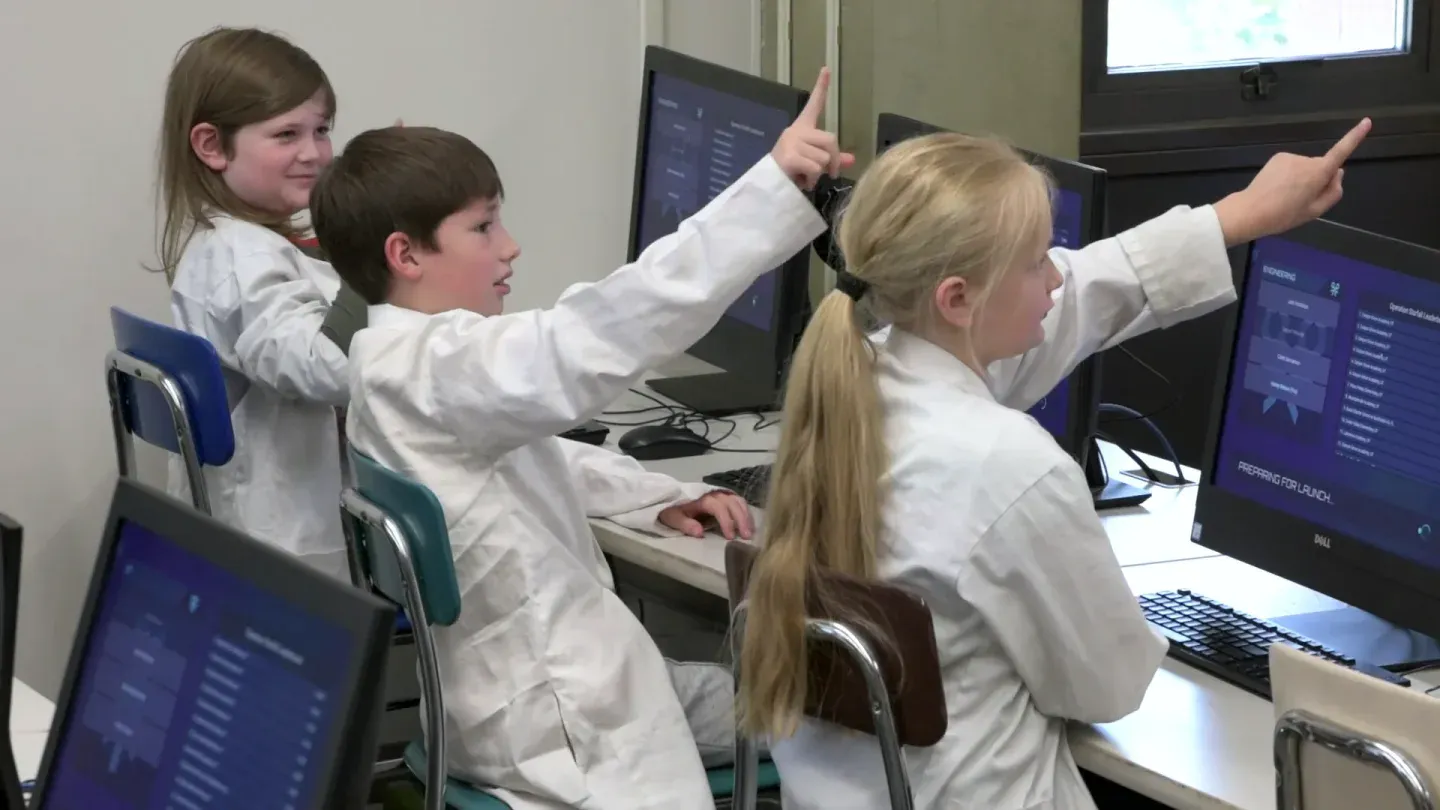
    Three young students in white lab coats at computer stations point at the same screen across the room.
    Three students in lab coats pointing at the same screen.

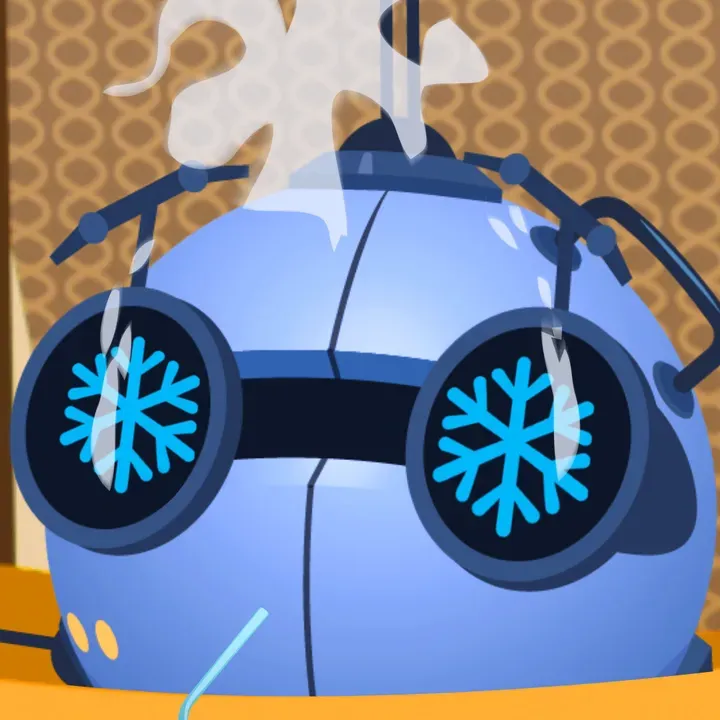
    RALF, the crew’s robot, has overheated from too much sun on the beach. The class tests several solutions against his rising temperature, then explores designs to find the one that best protects him from the sun and sand. The story plays on the projector, and every child makes the calls on their own screen; there are no crews or stations in this one.

    Every child weighs the evidence and makes a choice. The story goes the way most of the class chooses, and each child’s own choices and answers go into their report. The screens carry the story, so you’re free to lean in beside them, asking which design cooled RALF most and what the other one got wrong.

    It’s built to the bridge’s own standard (K-2-ETS1-3), with the other two K to 2 design codes and three content codes alongside (K-PS3-1, K-PS3-2, 1-PS4-3), and the vocabulary is the unit’s: design, material, heat, sunlight, temperature, transparent. Run the bridge first, and tell the class why: RALF needs a crew that can compare two tests and say which one won. The lesson prepares them. The Mission is what they’re preparing for.

    “I even sent an email to my whole building encouraging everyone to try it.”

    Jen, Veteran teacher, OH

    Will it work in my room?

    Students join with a class code: no student accounts, no student email, no passwords. Chromebooks, laptops, or tablets, plus your projector. Free for teachers, no credit card. Student data is covered by COPPA and FERPA, and we signed the Student Privacy Pledge. At about 15 minutes, Beach Frenzy fits inside the average K to 2 science block of about 17 minutes.

    START FREE →

    Communication first, then the year's two

    What the report shows

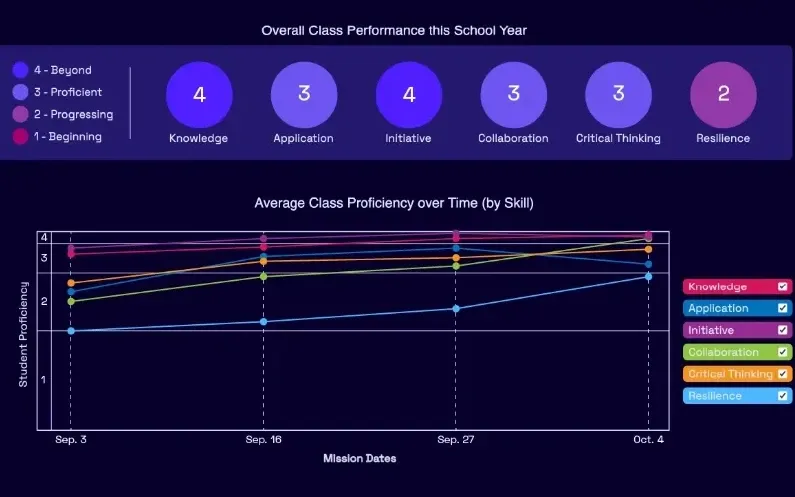
    A Mission.io class report: the class score in each of six skills, from knowledge and application to collaboration, critical thinking, and resilience, with the class chart across the year below.
    A class report from a real Mission: the class score in each of six skills, then each skill across the year.

    Every Mission produces a report for every student, built from what that student did across the whole Mission, on the skills the Mission captured. The six it can capture are Knowledge, Application, Initiative, Collaboration, Critical Thinking, and Resilience. The first two are what a test already sees. The other four are the human skills every school promises. The test shows what they know. The report shows the rest. SEE THE EVIDENCE →

    You taught it. Now find out who can use it.

    Who's behind it

    Mission.io is a research and design organization with one job: make collaborative, active learning something a teacher can run every unit instead of once a semester, and put a report in your hands when it’s over. Over a million students have run a Mission. The research behind them is funded by the National Science Foundation and the U.S. Department of Education’s Institute of Education Sciences, and Mission.io meets ESSA Level II standards, as validated by Instructure.

    2nd grade engineering Missions by NGSS standard

    Beach Frenzy is one of two. There are 2 engineering Missions at 2nd grade, numbered 7 and 8 below, both built to the K to 2 engineering design standards, and both run from kindergarten through 2nd grade. Every lesson finally has somewhere to go. Each code links to its standard on nextgenscience.org.

    Engineering design (K-2-ETS1)

    Every K to 2 design code has a Mission, and both Missions fit inside a 17-minute block.

    Engineering design Missions for 2nd grade, by NGSS code.
    NumberThe standardMissionMinutes
    7K-2-ETS1-1 Define a simple problem, then choose the best rescue with the materials on hand (grades K to 2). On this page: 2. The marble track.Tools of the Trade10
    8K-2-ETS1-3, K-2-ETS1-2, K-2-ETS1-1, K-PS3-1, K-PS3-2, 1-PS4-3 Compare designs that shade a robot from the sun, and what each one does well and badly (grades K to 2). On this page: 1. The index card bridge, 2. The marble track, 3. The newspaper table, and 4. The straw raft.Beach Frenzy15
    START FREEMISSION BRIEF →

    Free teacher account, no card. Start with the Communication Mission, marked Start here in your library, then the Mission for your unit, each after its 5-minute Teacher Preview.

    Also at this grade

    The 2nd grade science activities page maps 17 science and engineering Missions by NGSS code, these two among them; the 2nd grade STEM activities page rebuilds the paper-tube marble run; and for math, see 2nd grade math activities.

Questions 2nd grade engineering teachers ask

Will 2nd grade engineering fit a 17-minute science block?

The Missions will: Tools of the Trade is 10 minutes and Beach Frenzy is 15. The bridge won’t. It’s a 45-minute lesson with two loads and a debrief, so it needs a full period.

Which 2nd grade engineering standards does this page map?

The three K to 2 design standards, in the band’s last year: K-2-ETS1-1 (define a simple problem), K-2-ETS1-2 (a sketch or model that shows how shape helps), and K-2-ETS1-3 (compare two tested solutions). Each has a Mission and a challenge here. Second grade adds two design standards of its own, and each gets a challenge: 5. The hand pollinator (2-LS2-2) and 6. The sandbox levee (2-ESS2-1).

How do I grade a 2nd grade design challenge fairly?

Grade the comparison, not the most pennies. Can the Recorder show both load lines and say where the bridge bent? That’s one grade. The four-behavior tally over two or three challenges is the other. A bridge that fell at 20 with an honest record and a reason outscores one that held 100 while nobody knows why.

What does a 2nd grade bridge day cost?

About $2 a pack for index cards, and seven bridges use 60 of them. The rest is masking tape, 7 toy cars, 14 books as piers, and 500 borrowed pennies. The Missions need one device per student and your projector, and they’re free with a teacher account.

Do 2nd grade Missions follow my state's standards, not just NGSS?

Every Mission page lists the state sets it maps to next to its NGSS codes. Beach Frenzy lists 28 state science sets, Alabama’s through Wyoming’s, and Tools of the Trade lists ten.