Hands-on learning

Station rotation rebuilt so every station feeds one answer, six more strategies with steps and the fix each needs, the eight science practices and the research, and a free card to run it, K to 8.

Who we are. Mission.io makes Missions: teacher-led, whole-class simulations where students use what they’re learning to work through a real scenario together.

Everything on this page works without us. The place a whole-class Mission fits is near the end. (Dawn of the Scarecrow sends the crew to Ancient Egypt, Medieval Japan, and Europe in the Middle Ages for ideas before it designs a scarecrow for RALF.)

On this page

What hands-on learning is

Hands-on learning is learning by doing: students handle materials, run investigations, build, and measure, then think and talk about what happened. The idea runs back to John Dewey, who founded his Laboratory School at the University of Chicago to test ideas like it, and to David Kolb, whose experiential learning cycle gave it a modern shape; in science it goes by inquiry, and the National Research Council’s Framework for K-12 Science Education (2012) names the eight practices it should include.

The bulb lights, the table cheers, and the bell rings. Lighting it was the easy part; what turns a lit bulb into learning is a question the materials can answer, a job for every pair of hands, and a conversation afterward about why it lit, which is the part the research says hands-on can’t supply alone. This page is seven strategies with steps, and the fix each needs, because as usually run they miss the same two things: stakes the class can feel, and a way to see who did what. (Total cost of most of the fixes below: a question, and a pencil per student.)

How is hands-on learning different from inquiry?

A hands-on activity is materials and a task. Nobody has to ask a question, and nobody has to explain the result. It keeps hands busy.

Hands-on learning is materials with a question in front of them and a talk after them. The teacher sets it up: a question the materials can answer, a job and a record for every student, and a discussion where the class makes sense of what it saw. The strategies on this page are recipes for all three.

Inquiry-based learning is the investigating itself, and it comes in levels: from confirmation, where students follow a procedure to a known result, to open, where they pose the question and design the test. In a K-8 room the useful distinction is this one: hands-on is the materials, and inquiry is the thinking the materials are for (asking a question you can test, reading your own data, changing your mind when the evidence says to). You run the first so you can see the second. The thinking has its own guides, by grade, with the classics rebuilt: critical thinking activities for students and problem solving activities for students.

The three, side by side

A hands-on activity, hands-on learning, and inquiry-based learning compared.
MethodWhat it isWho asks the questionWhat each student doesWhat the research measuresWhat you watch for
A hands-on activityMaterials and a taskNobodyTouches the materials, or watchesHands-on alone, which wasn’t enough without discussion (Minner, Levy, and Century, 2010)Busy hands
Hands-on learningMaterials, a question, and a talk afterwardThe teacher, with a job for every studentA job and a recordAchievement, larger when the teacher leads the inquiry (Furtak and colleagues, 2012)Who measured, and who can say why
Inquiry-based learningAn investigation, from confirmation to openThe teacher at first, the students laterDesigns, tests, and explainsConceptual learning, best with active thinking (Minner, Levy, and Century, 2010)Did the evidence change anyone’s mind

The eight practices, and the six things to check

The researchers’ eight practices come first, then what the research says, then the six checks this guide runs on every strategy.

What are the eight science and engineering practices?

The National Research Council’s list, from A Framework for K-12 Science Education, which every strategy below is judged against:

  1. Asking questions (for science) and defining problems (for engineering).
  2. Developing and using models.
  3. Planning and carrying out investigations.
  4. Analyzing and interpreting data.
  5. Using mathematics and computational thinking.
  6. Constructing explanations (for science) and designing solutions (for engineering).
  7. Engaging in argument from evidence.
  8. Obtaining, evaluating, and communicating information.

The Framework’s brief names the gap these are meant to close: “the need for students to engage in doing science and engineering.” The eight are the test of whether the doing is science.

What the research says

Does hands-on learning work? Mostly. Across 37 studies, inquiry-based science teaching had a mean effect size of 0.50, and teacher-led inquiry activities had effect sizes about 0.40 larger than student-led ones (Furtak, Seidel, Iverson, and Briggs, 2012).

The finding that matters most for a teacher is Minner’s. Hands-on experience with science phenomena is “important for student conceptual learning,” and on its own it wasn’t enough: students also needed discussion to make sense of what they observed (Minner, Levy, and Century, 2010, 138 studies). In the same synthesis, 51% of studies showed positive impacts of inquiry instruction and 33% were mixed, instruction that emphasized active thinking predicted better conceptual learning, and the authors caution that the evidence “is not overwhelmingly positive.”

Six things that separate hands-on learning from busy hands

The eight practices are the researchers’ list of what students should be doing. The six below are six checks you can run on any hands-on lesson in its first minute, and they’re the lens this guide uses on every strategy. They’re ours, not the National Research Council’s: the practices name the doing, and the six tell you whether a lesson makes every student do it.

  1. 1. A real problem with stakes the class can feel.

    “Visit the four stations” is a tour. “Tell the facilities office what goes on the gym roof” is a problem. Students who wrestle with a problem before the teaching learn more from the teaching, in studies mostly with students 12 to 18 (Sinha and Kapur, 2021).

  2. 2. Apply, don't recall.

    If a group can finish the station without the unit, the station is a craft table.

  3. 3. Group goals with individual accountability.

    One tub, one sheet, and one writer leaves one name on the record. When the group shared a goal and each student answered for a part, 84% of studies found a positive effect; without both, 17% (Slavin, 1991).

  4. 4. The teacher leads the thinking.

    Teacher-led inquiry beat student-led in the meta-analysis above, by about 0.40 in effect size. Three questions asked at the table, while the meter is still in someone’s hand, do more than a worksheet of twenty.

  5. 5. A debrief where the class argues it out.

    Minner’s synthesis puts the learning in the discussion. Five minutes on “which measurement mattered, and which one told us nothing” is where the touching turns into science.

  6. 6. A way to see who did what.

    If you can’t tell which student read the meter and which one waited for the number, you’re grading the table, not the student.

Every strategy here starts with a question the materials can answer.

The station rotation below is the one to run first, and the card has everything students touch in it, ready to copy. Get the card →

1. Station rotation, rebuilt so every station counts

It’s the way plenty of K-8 rooms fit hands-on learning into one period. The name comes from blended learning, where the Clayton Christensen Institute defines it as students rotating through stations on a fixed schedule, one of them online; in a hands-on room the stations are tables of materials. As Ditch That Textbook’s teachers run it:

  1. Set up. Several stations around the room, each with a different hands-on task from the unit.
  2. Group. Small groups, one per station, with the routine taught first on a low-stakes task.
  3. Rotate. Groups move on a timer, and the teacher pulls a small group or one student as needed.
  4. Reflect. The period closes with a reflection.

As usually run, it’s four tables of touching with one sheet and one writer each, and a timer that ends the period: no stakes, a task instead of a question, no record of who did what, no debrief. The same teachers name the first fix, a deliverable at every station. The version here hits all six: the stations become evidence for one question, every student owns one station’s record, and the class argues the answer. It takes about 60 minutes.

Time
60 minutes, or 45 with three stations.
Groups
Groups of four, rotating through four stations.
Grades
Any grade. The example is 4th grade energy (4-PS3-2); the K to 2 version is in the rotate step.
Needs
The unit’s equipment at four stations, and the job cards and data cards from the printable.
  1. The problemStakes

    The school wants to know whether the new gym’s roof should get solar panels or a skylight, and it has sent four stations’ worth of equipment to test: a solar cell and a meter, a light sensor and lamps, a thermometer and two roof materials, and the district’s electricity bills. Each station answers one part. Say it out loud: the class’s recommendation goes to the facilities office with the class’s name on it, and it’s a real letter you can send.

  2. Four jobs, one turn eachAccountability

    The jobs move one seat at every station, so across four stations each student holds each job once and owns exactly one station’s data card: four students, four cards, one name each.

    • Operator

      Runs the equipment.

    • Measurer

      Reads and calls the numbers.

    • Recorder

      Owns this station's data card for the group.

    • Questioner

      Asks the station's "so what" question and writes the group's answer.

  3. Rotate, 9 minutes a station, 1 to moveApply

    Every station’s task needs the unit to finish: how energy moves by light, heat, and electric current is the only way to read any of the four. In K to 2, run two stations as a whole class on the carpet, with each child holding one measurement card and you as the Recorder.

  4. You lead the thinkingTeacher leads

    Three questions, asked at the stations: What did you measure, and what does it have to do with the roof? What would make this measurement wrong? What does this station tell you that the last one didn’t? The second one is the one that turns a number into evidence, so ask it twice if you have to.

  5. The station of stations, 10 minutesAccountability

    Each group lays its four data cards side by side and writes one recommendation that uses all four. The recommendation is the group goal, and a card with no number on it shows up on the table where everyone can see it.

  6. The debrief, 10 minutesDebrief

    Which station’s number mattered most? Which station was fun and told you nothing? What do we recommend, and which card carries it? The second question is the lesson.

  7. See who did whatSee who did what

    Four behaviors on the tally: took a measurement and said why, asked a station’s “so what” question, connected two stations’ results, revised a recommendation with data. The jobs put a voice at every station, so you’ll catch about half the room by ear; stand at one station for a full rotation and you catch every group once, and the data cards catch everyone, at a glance, not a grade.

The gym roof station rotation card, free

Emailed now, ready to copy: the teacher page, the four job cards, the facilities office’s question with the group’s recommendation frame, the four station cards with their “so what” questions, the data cards, the answer key, and the four-behavior tally.

It’s on its way.

Check your inbox for the gym roof station rotation card.

Email me the card. It comes as a PDF, ready to print. Unsubscribe anytime.

Six more strategies, with steps and the fix each needs

Which strategies earn the name? The six below are the canon: where each comes from, its steps as its originators publish them, how it usually runs, and the changes it needs. Numbered 2 to 7.

The canon

2. The 5E lesson (BSCS)

Needs Whole class, then small groups · Grades K to 8 · One lesson to a week · Materials to explore

BSCS built it in the mid-1980s from the Karplus and Thier learning cycle (BSCS, 2006), in five steps. Engage brings out what students already think, explore has them working with the materials while you coach, and in explain students go first before you give the scientific explanation, briefly; elaborate applies it to a new situation, and evaluate assesses each student’s understanding. The lesson puts the content to work, and you lead the thinking throughout. As usually run, though, nothing is at stake, and each group shares one sheet in the explore, so you can’t tell which student observed what.

The fix

  1. Make the engage a decision the class owes someone.
  2. In the explore, give each student a job card and one observation to record under their name.
  3. Make the evaluate that decision, argued with the observations.
3. Predict, observe, explain (White and Gunstone, 1992)

Needs Individuals, then pairs · Grades 1 to 8 · 10 to 15 minutes · One demonstration with a result students can see

Each student writes what will happen, and why; the demonstration runs while students record what they see; and then students explain the result and revise their reasons in light of the evidence. White and Gunstone built it to bring out each student’s prediction and the reasoning behind it (NZCER’s Assessment Resource Banks), so it puts the lesson to work with you leading, and written predictions show who thought what. As usually run, though, volunteers call out their predictions, and when the result surprises the room, the explain step gets squeezed.

The fix

  1. Collect written predictions, each with a reason, before the demo.
  2. Pair students who predicted differently to explain the result together.
  3. Spend two minutes on whose reason survived the evidence.

4. See, think, wonder (Project Zero)

Needs Whole class or pairs · Grades K to 8 · 5 to 15 minutes · An object, image, or short video from the unit

Students look at an object, image, or short video from the unit and answer three questions in turn: What do you see? What do you think about that? What does it make you wonder? Project Zero’s tips are to have students try it alone first, to ask “What do you see that makes you say that?”, and to post the responses (Project Zero). It keeps you leading the thinking by design. As usually run, though, it’s a warm-up, the wonders stay on a chart, and the unit never comes back to them.

The fix

  1. Have students write their “see” lines with their names on them.
  2. Choose the wonder the unit will answer, and put it on the board as the class’s question.
  3. Return to that question with the investigation.

5. Concrete, representational, abstract (after Bruner, 1966)

Needs Pairs with one set of manipulatives · Grades K to 5 · 15 to 30 minutes per stage · Base-ten blocks, fraction tiles, or counters

Students solve a problem with physical objects, then the same kind of problem with drawings, then with numbers and symbols alone, and each stage is taught with modeling, guided practice, and independent practice (LD@School). The sequence goes back to Jerome Bruner’s enactive, iconic, and symbolic modes (Bruner, 1966), and it puts the math to work when the problem needs the blocks. As usually run, though, one partner moves the blocks, free play stands in for the concrete stage, and nobody needs the answer.

The fix

  1. Give each pair one set of manipulatives.
  2. Set a rule: whoever moves a block says why, and the partner draws the move.
  3. Pose a problem somebody needs the answer to.

6. The inquiry levels, confirmation to open (Banchi and Bell, 2008)

Needs Groups of three to four · Grades 3 to 8 · The lab you already run · Nothing new to buy

The four levels differ in who asks the question, designs the procedure, and writes the conclusion (NSTA, on Banchi and Bell). In confirmation, students follow a procedure to a known result; in structured, you give the question and the procedure and students work out the explanation; in guided, you give only the question and students design the procedure; in open, students pose the question and design the procedure. As usually run, the cookbook lab sits at level one: students follow the steps to a known result, and nobody’s work stands on its own. Furtak’s finding says to move it up to guided, not straight to open.

The fix

  1. Take the lab you run now, and delete the procedure.
  2. Keep the question, so students design the steps themselves.
  3. Give each student one measurement with their name on it.

7. The engineering design process (Museum of Science, Boston)

Needs Teams of three to four · Grades K to 8 · 45 minutes to a week · Building materials and a test

The Museum of Science’s EiE team lays out five steps and calls them a cycle that can start at any step (EiE). Teams ask what the problem is and how to find out about it, imagine ways to approach it, plan by breaking the job into smaller steps, create and test a prototype, and improve by asking how they know it worked and what could be better. When the problem is real, it has stakes and puts the lesson to work. As usually run, though, it’s one build with two students building and two holding tape, and the team moves on without looking back at the data.

The fix

  1. Give the team a client with a constraint.
  2. Give each student one owned job, with a Tester who records every trial.
  3. Make the Improve round use the first round’s data.

See the water filter rebuilt for 5th grade →

Two that get called hands-on learning and aren't

The demonstration at the front, where the teacher’s hands are the only ones on the materials, becomes hands-on learning when it runs as predict, observe, explain. And the craft that rides along with a unit keeps the scissors busy and the science quiet. The station rotation above is the one to try first, and its card is free. Get the card →

What hands-on learning looks like, K to 8

K to 2. Science gets about 17 minutes a day in K to 2 classes, and only 18% of them get it all or most days of the week (Plumley, 2019, NSSME+), so the hands-on minutes have to count. Five-year-olds “think out loud before acting” and six-year-olds ask many questions (Responsive Classroom, 2024), so see, think, wonder and predict, observe, explain fit, with predictions drawn instead of written. The investigation to start with is ramps and toy cars, rebuilt for kindergarten.

3 to 5. Grades 3 to 5 average about 23 minutes of science a day, against 85 on reading (NSSME+, 2019). Nine-year-olds look hard for explanations of how things work (Responsive Classroom, 2024). The 5E lesson and the station rotation run here as written, guided inquiry is the level to aim for, and the investigation to start with is mystery powders, rebuilt for 5th grade.

6 to 8. In 2024, 38% of eighth graders scored below NAEP Basic in science, up 5 points from 2019 (NAEP, 2024). Twelve-year-olds can see both sides of an issue but like to argue one point, and fourteen-year-olds respond well to academic challenge (Responsive Classroom, 2024). Guided and open inquiry belong here, the design process’s Improve round is where the arguing pays off, and the naked egg, rebuilt for 7th grade is a week of measurements every student owns.

  • Our part · We make Missions

    Hands-on without the supply closet

    Plenty of teachers run these strategies every week by hand, and they work. Every one needs materials and a small group, where you can see who did what as long as you’re the one standing there.

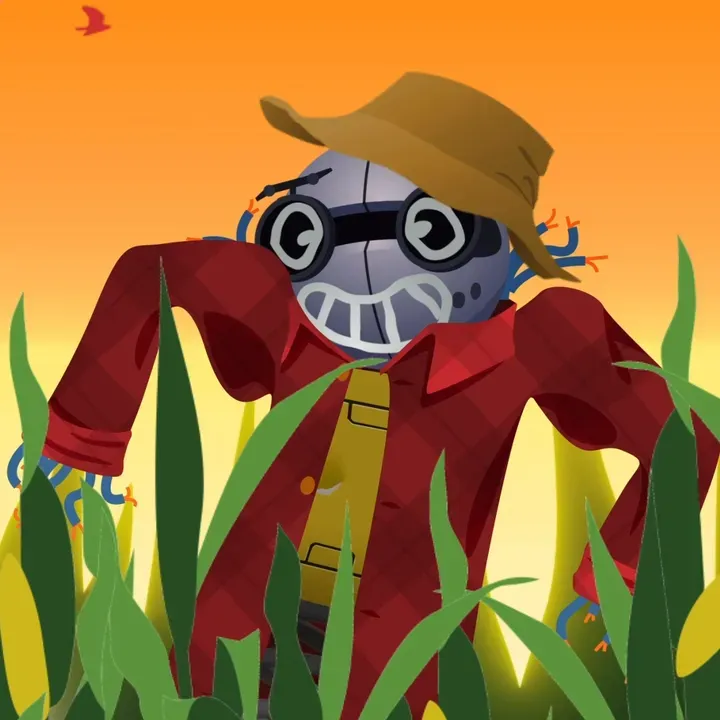
    A Mission is a teacher-led, whole-class simulation that runs the minds-on half at the scale of the room: your class can become the crew, the problem is built from the unit you just taught, and the only way through is using it together. Against the eight practices, here is Dawn of the Scarecrow:

    • Obtaining, evaluating, and communicating information. Built in. The crew travels to Ancient Egypt, Medieval Japan, and Europe in the Middle Ages to learn how each one built scarecrows, then the teams present their designs.
    • Designing solutions. Built in. The teams design a scarecrow for RALF that combines elements from the eras they explored.
    • Engaging in argument from evidence. Begun. The crew votes on the best design; asking each team which era backs its choice is yours.

    The others depend on the Mission (Riptide runs on unit conversions, the fifth practice), and one is always yours: planning and carrying out investigations with real materials. A Mission can’t put a meter in a student’s hand. The thinking stays yours.

    In K to 2 the class runs as one crew with you leading the talk and modeling the thinking. From 3rd grade up every student is assigned to a team, and each team’s work is themed to it, from its own information and challenge to the same problem the rest of the crew is solving. The team gives a student a role in the story and people to lean on while you move between teams.

    What it is, and what it isn’t. Most Missions run 30 to 45 minutes (Dawn of the Scarecrow runs about 34), once a unit, with one device per student and your projector. Not a multi-week project, not a lab, and no headsets. Teacher-led: you run the room while the Mission carries the story, and it doesn’t replace the strategies above.

    You're at the helm, not on the hook.

    The same structure in reading and in math

    Two Missions side by side, because the strategy is the point and the subject isn’t. In both, the two criteria that are hardest to build by hand in a small group, stakes the class can feel and a way to see who did what, come built in: the story sets the stakes, and the report is per student. The other four are in the scene.

    “Unlike other tech programs in the district that often have students working in isolation or in pairs, Mission.io emphasizes true collaboration.”

    Lorilee Johnson, District specialist, Alpine School District, UT

    Dawn of the Scarecrow

    Grades 4 to 8 · About 34 minutes · Reading and design · Free with a teacher account

    RALF has just discovered scarecrows and is fascinated by their strange history. With Anja’s help, the crew travels through time to Ancient Egypt, Medieval Japan, and Europe in the Middle Ages to learn how each one built scarecrows to protect its crops. Then the teams design a scarecrow for RALF that combines what they found, present their designs, and vote on the best one (RI.4.9, integrate information from two texts). It’s the 5E’s explain and elaborate at the scale of the room. Run see, think, wonder on a photo of a real scarecrow first, and tell the class why: RALF is going to need their best ideas.

    MISSION BRIEF →

    Riptide

    4th grade · About 40 minutes · Math · Free with a teacher account

    A toxic red substance has appeared in the current under Taipan. The crew investigates debris pieces with word problems to work out how much of it was released into the ocean, then uses unit conversions to figure out how much neutralizing chemical will counteract it (4.MD.A.1 and 4.MD.A.2). It’s concrete, representational, abstract with the abstract stage under pressure: run the measurement unit with the scales and the measuring cups first, and the Mission is where the conversions have to hold.

    MISSION BRIEF →

    A hundred more just like them

    These are two of more than 100 Missions, with new Missions added and in the works every week, across science, math, reading, writing, and social studies, each one built the same way and each one where a unit can end. Start with the Communication Mission, then Dawn of the Scarecrow for your band.

    What the report shows, for every student

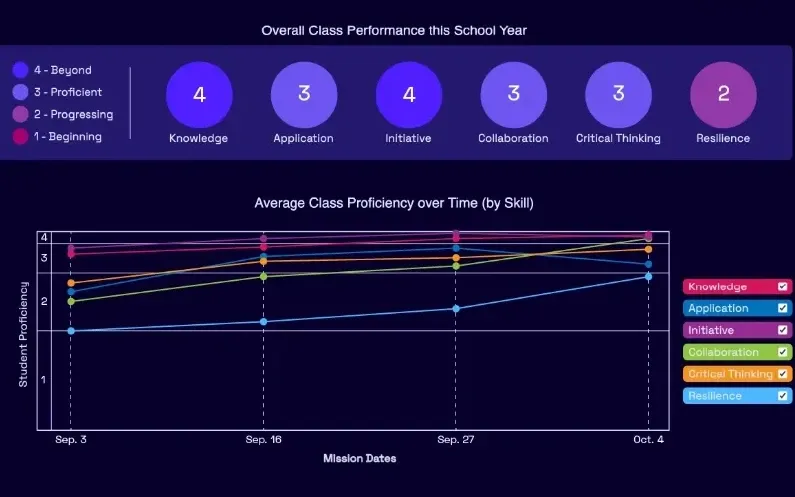
    A Mission.io class report: the class score in each of six skills, from knowledge and application to collaboration, critical thinking, and resilience, with the class chart across the year below.
    A class report from a real Mission: the class score in each of six skills, then each skill across the year.

    Every Mission produces a report for every student, built from what that student did across the whole Mission, on the skills the Mission captured. What it can show: what they knew about the standard, whether they could apply it as the problem unfolded, and the human skills every school promises (collaboration, critical thinking, initiative, and resilience). The test shows what they know. The report shows the rest. In the station rotation, your tally catches about half the room by ear and the data cards catch the rest of the record. A Mission is the only place collaboration gets measured for every student at once. SEE THE EVIDENCE →

    You taught it. Now find out who can use it.

    Will it work in my room?

    Students join with a class code: no student accounts, no student email, no passwords. Chromebooks, laptops, or tablets, plus your projector; on a shared cart, it’s the day you have the cart. Free for teachers, no credit card.

    Who’s behind it. Mission.io is a research and design organization with one job: make this kind of structured, whole-class learning something a teacher can run every unit instead of once a semester, and put a report in your hands when it’s over. Over a million students have run a Mission. The research behind them is funded by the National Science Foundation and the U.S. Department of Education’s Institute of Education Sciences, and Mission.io meets ESSA Level II standards, as validated by Instructure.

    START FREE

    Free teacher account, no card. Start with the Communication Mission, marked Start here in your library, then Dawn of the Scarecrow for your band or Riptide, each after its 5-minute Teacher Preview.

Questions teachers ask about hands-on learning

Which hands-on strategy should I start with?

Predict, observe, explain, because it needs one demonstration, fits any lesson, and the written predictions give you every student’s thinking before anything happens. Station rotation next, once the class can rotate without a discussion about it.

What's the difference between hands-on learning and inquiry-based learning?

Hands-on learning is the doing: materials in students’ hands, with a question before and a discussion after. Inquiry is the investigating, at a level from confirmation to open, depending on who asks the question and designs the procedure. A cookbook lab is both, at the lowest level. The comparison table has the plain hands-on activity beside them.

How do I do hands-on learning without a lot of supplies?

Start with the strategies that need one set: predict, observe, explain needs one demonstration, and see, think, wonder needs one object or photo. PhET’s free simulations put the equipment on a screen (PhET Interactive Simulations). The minds-on half costs nothing, and it’s the half Minner’s synthesis says the materials can’t do without.

Does hands-on learning work in math?

Yes, as concrete, representational, abstract: blocks, then drawings, then numbers, with explicit teaching at each stage. The blocks teach when the problem needs them and the student moving them has to say why.

How much should I guide a hands-on lesson?

More than the word “discovery” suggests. Teacher-led inquiry activities had effect sizes about 0.40 larger than student-led ones across 37 studies (Furtak and colleagues, 2012). Guide with questions, not answers: the three at each station in the rebuild are the model.

How do I grade hands-on work fairly?

Grade the record, not the table. Every strategy here has a piece with one name on it (the written prediction, the data card, the owned measurement), and that piece is the grade; the group’s product is the ticket to the debrief.

References and sources

The research

Seven strategies at the lab table, then a Mission without the supply closet

At the table first, by hand, with the station rotation card. Then a Mission, when the unit is ready: the Communication Mission first, then Dawn of the Scarecrow or Riptide, each after a 5-minute Teacher Preview. All free. Coaching a team on this, or building the PD?