Cooperative learning strategies

Think-pair-share rebuilt so both partners have to think, eight more structures with steps and the fix each needs, the five elements and the research, and a free one-page card, K to 8.

Who we are. Mission.io makes Missions: teacher-led, whole-class simulations where students use what they’re learning to work through a real scenario together.

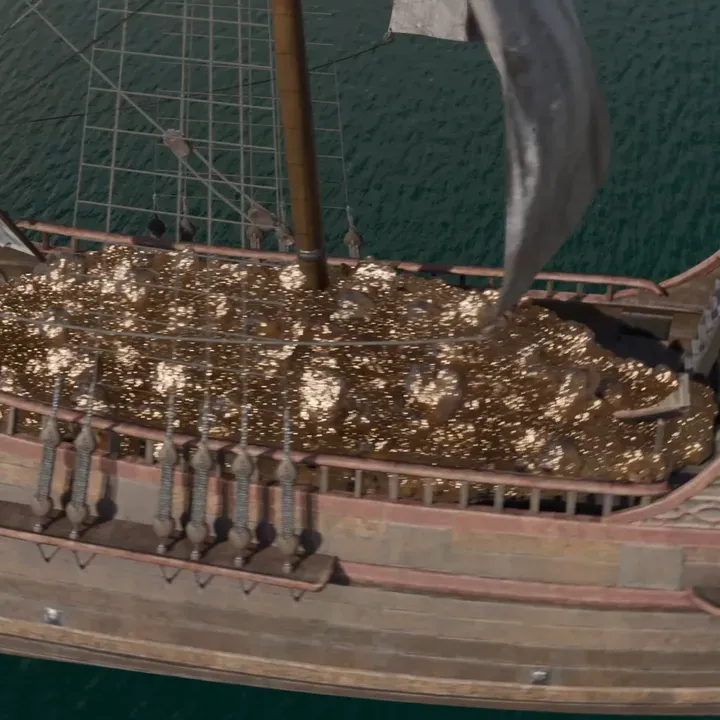
Everything on this page works without us. The place a whole-class Mission fits is near the end. (Pave the Way’s settlers sail for gold and adventure. Keeping them alive once they land is the crew’s job.)

On this page

What cooperative learning is

Cooperative learning is group work with a structure: students work in small groups toward a shared goal, each one answerable for a part, with the group’s success depending on every member. The term and the research come from David and Roger Johnson at the University of Minnesota, whose five elements (listed below) still define it, and from Spencer Kagan, whose named structures are what most teachers mean when they say the words.

Put four kids at a table and you’ve got a table. Give them one job with four parts and a name on each part, and you’ve got cooperative learning. Most of what runs under the name in a K-8 classroom is the first thing: a seating arrangement, a worksheet, one kid working while three watch. This page is the structures that make it the second thing, with steps, and the fix each needs, because the structures as usually run miss the same two things almost every time: stakes the class can feel, and a way to see who did what.

How is cooperative learning different from group work?

Group work is four students, one task, and no rule about who does what. The research on it is the research on the kid who did all of it.

Cooperative learning is group work with the five elements built in. The teacher structures it: the goal is shared, each student has a part nobody else can do, the group has to talk to finish, the talking is taught, and the group looks back at how it worked. The structures on this page are recipes for getting those five into a task, most of them in 12 to 15 minutes, one of them over three weeks.

Collaborative learning, in the literature, is the looser cousin: students direct the work and share authority over it, with no parts assigned. In a K-8 room the useful distinction is this one: cooperative learning is the structure, and collaboration is the skill the structure practices (building on another person’s idea, disagreeing with a reason, changing your mind when the evidence says to). You run the first so you can see the second. The skill has its own guide, by grade, with the classics rebuilt, and so does the thinking it depends on: collaboration activities for students and critical thinking activities for students.

The three, side by side

Cooperative learning, collaborative learning, and group work compared.
MethodWhat it isWho structures itWhat each student ownsWhat the research measuresWhat you watch for
Group workFour students, one taskNobodyNothing in particularThe kid who did all of itA seating chart
Cooperative learningA shared goal with a part for each studentThe teacher, with parts assignedA named partAchievement, when group goals and individual accountability are both present (Slavin, 1991)Did every part get done, and by whom
Collaborative learningShared work with shared authorityThe students, with roles emergingA share of the wholeThe quality of the joint reasoningDid anyone change their mind with a reason

The five elements, and the six things to check

The researchers’ five elements come first, then what the research says, then the six checks this guide runs on every structure.

What are the five elements of cooperative learning?

Johnson and Johnson’s list, which every structure below is judged against:

  1. Positive interdependence. The group sinks or swims together; nobody can finish without the others.
  2. Individual accountability. Each student is answerable for a part, alone.
  3. Face-to-face (promotive) interaction. The group has to talk to each other to get it done.
  4. Social skills. The talking is taught, not assumed.
  5. Group processing. The group looks back at how it worked.

What the research says

Why do some structures move learning and others just move chairs? The research is older than most of the structures, and it keeps saying the same thing. Across 117 studies, students in cooperative groups outscored students working alone or against each other (Johnson and Johnson, 2002, as summarized in Gillies, 2016). The strongest experimental evidence is at ages 12 to 15, where cooperative goals beat competitive and individual ones on achievement and on friendships across 148 studies and 17,000 students (Roseth, Johnson, and Johnson, 2008). The effect sizes are in the sources.

The finding that matters most for a teacher is Slavin’s, and it deserves its own line. Among methods with both a group goal and individual accountability, 84% of studies found positive effects. Without both, 17% (Slavin, 1991, 67 studies). Same label, same tables, opposite results, and the difference is whether each kid had to answer for a part.

Six things that separate cooperative learning from group work

The five elements are the researchers’ list. The six below are six checks you can run on any structure in its first minute, and they’re the lens this guide uses on every one. Two of them (stakes, and the teacher leading) are ours, not the Johnsons’; the other four are the five elements with the talking and the teaching folded into one.

  1. 1. A real problem with stakes the class can feel.

    “Discuss the reading” is a prompt. “Decide which explanation goes on the anchor chart we’ll study from” is a problem. Students who wrestle with a problem before the teaching learn more from the teaching, in studies run mostly with students 12 to 18 (Sinha and Kapur, 2021).

  2. 2. Apply, don't recall.

    If the group can finish without using the lesson, the structure is a quiz with company.

  3. 3. Group goals with individual accountability.

    The two elements Slavin’s finding turns on. One product the group signs, and one part each student can be asked about alone. Most structures as usually run have the first and skip the second.

  4. 4. The teacher leads the thinking.

    The structure carries the talk. The questions are yours, and the three on the card, asked while you walk, do more than a rubric read aloud.

  5. 5. A debrief where the class argues it out.

    Group processing is the fifth element and the one most often cut for time. Five minutes on “which reason moved the most groups” is where the structure becomes a habit.

  6. 6. A way to see who did what.

    If you can’t tell which student paraphrased a partner and which one waited for the answer, you can’t teach the skill. You can only hope for it.

Every structure on this page is a rule about who has to think.

The one-page card at the end of the next section has all nine structures with their steps and the fix each one needs. Get the card →

1. Think-pair-share, rebuilt so both partners think

It’s the first structure every teacher learns (Lyman, 1981), and it’s on every list because it fits anywhere and costs nothing. As usually taught:

  1. Think. The teacher poses a question; students think alone for a set time.
  2. Pair. Students turn to a partner and discuss.
  3. Share. Pairs share with the class.

The way it usually runs is a two-minute break in a lesson with hands up at the end, which means no stakes, a recall question, no record of who thought anything, and a share that samples the four kids who always volunteer. Kagan makes the same critique (no individual accountability, no equal participation), and his timed pair share and paraphrase passport are two of the fixes below. The version here hits all six. It takes about 15 minutes instead of two, and the extra thirteen is where the thinking happens.

Time
15 minutes, or 12 without the re-decide round.
Groups
Pairs.
Grades
Any grade. The example is 6th grade science; the K to 2 version is in the think step.
Needs
The decision card and the question card, from the printable.
  1. The problemStakes

    The class has to choose which of two explanations of the phenomenon goes on the anchor chart, and the chart is what the unit will be studied from. Pairs decide; the class votes on the pairs’ reasons, not on hands. Say the stakes out loud: whatever goes on the chart is what you’ll be tested on.

  2. Think, 90 seconds, aloneAccountability

    One sentence written, with a reason. The sentence is the individual accountability, and it’s what you collect. In K to 2 the sentence is a drawing, or one spoken sentence to you at the carpet before the pair.

  3. Pair, 3 minutes, two jobs swapped halfwayAccountability

    Two jobs, swapped halfway, and both on the card below. When both partners have spoken, the pair signs one decision card with one reason both accept, and a line for “what we disagreed about.” One minute to sign. The signed card is the group goal, and the disagreement line is the honest record.

    • Speaker

      Reads the sentence and the reason.

    • Paraphraser

      Says it back and asks one card question: "What's your evidence?" or "What would change your mind?" (Kagan's paraphrase passport, with a card.)

  4. Share, 4 minutesApply

    Cards are numbered; draw numbers from a cup, not hands, and the called student reports the partner’s reasoning, not their own. That one rule makes listening the thing that counts, and it ends the share that samples the same four kids.

  5. You lead the thinkingTeacher leads

    Three questions, walking during the pair phase: What did your partner say? What’s the evidence? What’s on your disagreement line? You’ll want to answer the first one for them. Don’t.

  6. Re-decide, 2 minutesApply

    After four pairs report, pairs get 60 seconds: did anyone’s reason beat yours? Cards are collected either way. A pair that changes its answer with a reason is the structure working.

  7. The debrief, 3 minutesDebrief

    Which reason moved the most pairs? Whose partner’s idea was better than their own, and said so? What goes on the chart? The second question is the lesson.

  8. See who did whatSee who did what

    Four behaviors on the tally: wrote a sentence before pairing, paraphrased a partner accurately, asked a card question, changed a decision with a reason. You’ll catch about a third of the room by ear during the pair phase; the written sentence and the signed card catch everyone, at a glance, not a grade.

The think-pair-share card, free

Emailed now, ready to copy: the teacher page, the two partner roles, the think strip (with a draw-it box for K to 2), the Paraphraser’s questions, the pair decision card with its disagreement line, the numbered share cards, and the four-behavior tally.

It’s on its way.

Check your inbox for the think-pair-share card.

Email me the card. It comes as a PDF, ready to print. Unsubscribe anytime.

Eight more structures, with steps and a fix for each

Which structures earn the name? The eight below are the canon: where each comes from, its steps as usually taught, how it usually runs, and the changes it needs. Numbered 2 to 9.

The canon

2. Jigsaw (Aronson, 1978)

Needs Groups of four to five · Grades 2 to 8 · 30 to 45 minutes · The material in four segments

Home groups of four form, and each member takes one segment of the material; expert groups, one per segment, work it together, then the experts go home and teach it, and an assessment covers all four segments. The meta-analysis on it finds a large average effect on achievement, with a caution: the effect shrinks in the larger studies, so read the big number with the asterisk attached (Cochon Drouet, Lentillon-Kaestner, and Margas, 2023, 43 studies). As usually run, though, nothing rides on it beyond the quiz, and there’s no way to tell who taught what.

The fix

  1. Give the home group a product it can only finish with all four parts.
  2. On the quiz, ask each student about a segment they didn’t study.
See the jigsaw rebuilt for 5th grade →

3. Numbered heads together (Kagan)

Needs Groups of four · Grades 1 to 8 · 5 to 10 minutes per question · Nothing to prepare

Students number off 1 to 4, you pose a question, and each student writes their own answer first, which is Kagan’s current step and the one most rooms skip. Then it’s heads together until every member can answer, and since you then call a number and that student answers for the group, every student has to be ready. As usually run, though, the questions are recall, and the called number turns to look at the kid who knew. Nobody records which numbers answered, and the room moves on without a look back.

The fix

  1. Ask an application question, like “Which of these two would you use, and why?”
  2. Keep a tally of which numbers were called and answered.
  3. Save two minutes at the end for which group’s explanation would have helped the others.

The card has the tally line.

4. Round robin and rally robin (Kagan)

Needs Teams of four, or pairs for rally robin (RoundRobin and RallyRobin in Kagan's spelling) · Any grade · 3 to 5 minutes · A prompt with many answers

You pose a prompt with many possible answers, and students contribute in a fixed order, one idea per turn, until time or ideas run out; rally robin alternates between two partners. The fixed order guarantees every student a turn. As usually run, though, it forces a turn without forcing a thought. The prompt seldom needs the lesson, and nobody writes down who said what.

The fix

  1. Choose a prompt that needs the lesson to answer.
  2. Have a recorder write a name beside each idea.
  3. On the last pass, each student builds on the idea before theirs instead of adding a new one.

The card has the build-on rule.

5. Reciprocal teaching (Palincsar and Brown, 1984)

Needs Groups of four on a text · Grades 3 to 8 · 20 to 30 minutes · A text in chunks, four role cards

The text is divided into chunks, and four roles rotate with each one: the Predictor says what comes next, the Questioner asks a question the chunk answers, the Clarifier flags what was confusing, and the Summarizer states the gist. (The original was a teacher-and-students dialogue; the four-role rotation is the classroom version.) The roles are real jobs, and the text has to be used to do them. As usually run, though, nothing is at stake beyond finishing the text, and there’s no record of who did which role.

The fix

  1. Give the group a decision the text forces, like “What does the author want us to believe, and which paragraph proves it?”
  2. Have the group sign its answer.
  3. Collect the role cards with names on them.

The card has the four roles.

6. Student teams-achievement divisions (Slavin)

Needs Teams of four, mixed by prior achievement · Grades 2 to 8 · One lesson cycle, three to five days · A quiz and a base score per student

You present the lesson, teams study together until every member is ready, and then each student takes the quiz alone, with no help. Team scores are built from each member’s improvement over their own earlier scores, and teams are recognized. It’s one of the structures behind Slavin’s 84%, and the improvement scoring is why the strong student needs the struggling one to improve. As usually run, though, the quiz is recall, and the class skips the look back.

The fix

  1. Put an application question on the quiz.
  2. After the scores, spend five minutes on which explanation in the team study actually worked.

The card has the improvement-scoring line.

Needs Groups of three to four · Grades 3 to 8 · 20 to 30 minutes · Posted work, sticky notes, a timer

Groups post their work around the room, rotate on a timer, and leave feedback on sticky notes, then return to their own work and read what was left. Every group’s work gets an audience. As usually run, though, it’s a walk with a clipboard and a sticky note that says “nice,” and no note has a name on it.

The fix

  1. Hand out a feedback card that requires one claim and one question.
  2. Put a name on every note, so the notes come back with names.
  3. Have each group answer the best note out loud.

See the gallery walk rebuilt for 7th grade →

8. Inside-outside circle (Kagan)

Needs Whole class in two concentric circles · Grades 1 to 8 · 10 minutes · A question card

Half the class forms an inner circle facing out and the other half an outer circle facing in, partners exchange answers to a question, and then one circle rotates and the exchange repeats. Every student has a partner at every turn. As usually run, though, nobody has a part, and the answers disappear as the circle turns.

The fix

  1. Write a question card with one application question.
  2. At each rotation, students report their previous partner’s answer before giving their own, so the answer that travels around the circle is the one that had to be listened to.

The card has the report-your-partner rule.

9. Group investigation (Sharan and Sharan)

Needs Groups of three to five · Grades 4 to 8 · One to three weeks · A topic that splits into subtopics

The class breaks a topic into subtopics, groups choose one and plan the inquiry, dividing the tasks, and then they carry it out and present while the class evaluates. The inquiry is real, and the lesson has to be used. Over the weeks, though, the division of tasks is where one student ends up with the work, and nothing shows who did what.

The fix

  1. Break each subtopic into subquestions, with a student’s name on each.
  2. Keep a weekly log the group signs.
  3. At the presentation, each member presents the subquestion they owned.

Project-based learning resources →

Two that get called cooperative learning and aren't

Turn and talk is a partner exchange inside a lesson with no part to own. It’s a fine routine, and the kindergarten page rebuilds it: turn and talk, rebuilt for kindergarten. And “group projects” is the seating chart with a due date. All nine real ones, with steps and fixes, are on the card. Get the card →

What cooperative learning looks like, K to 8

K to 2. Pairs, not groups; a part each child can hold in their hands (the picture, the pieces, the card); and a share where the child reports the partner’s idea, because seven-year-olds “dislike taking risks or making mistakes” and reporting someone else’s idea is safe (Responsive Classroom, 2024). Round robin with a talking piece and a picture jigsaw are the two that work; numbered heads together works once numbers are automatic.

3 to 5. Cooperative learning’s effects run larger in the elementary grades than in secondary school (Kyndt and colleagues, 2013). Eight-year-olds “enjoy group activities” and have a “growing awareness of fairness”; ten-year-olds “do well with cooperative learning” and “can appreciate others’ perspectives” (Responsive Classroom, 2024). Jigsaw, reciprocal teaching, and STAD all run here as written, and the fairness instinct polices the roles for you, which is why the groups are yours, not theirs.

6 to 8. The strongest experimental evidence is at exactly this age (Roseth, Johnson, and Johnson, 2008, ages 12 to 15). Thirteen-year-olds “argue in groups” and “often complain about fairness” (Responsive Classroom, 2024); the structures turn both into jobs. Think-pair-share with the paraphrase rule, STAD with improvement scoring, and group investigation with owned subquestions are the three that survive a middle school period, and the fishbowl, rebuilt for 8th grade, is where the arguing becomes the lesson: the fishbowl, rebuilt for 8th grade.

  • Our part · We make Missions

    Where whole-class Missions fit

    Plenty of teachers run these structures every week by hand, and they work. Every one of them runs in a small group, and a small group is where you can see who did what, as long as you’re the one standing there.

    A Mission is a teacher-led, whole-class simulation that runs the same elements at the scale of the room: your class can become the crew, the problem is built from the unit you just taught, and the only way through is using it together. Four of the five elements come built in:

    • Positive interdependence. Every station feeds one result.
    • Promotive interaction. The stations can’t finish without talking to each other.
    • Group processing. The debrief is built in.
    • Individual accountability. Every student gets a report on how well they did when it’s over.

    The fifth, the taught social skills, is yours: the structures above are how you teach it, and the Mission is where the class has to use it. The thinking stays yours.

    In K to 2 the class runs as one crew with you leading the talk and modeling the thinking. From 3rd grade up every student is assigned to a team, and each team’s work is themed to it, from its own information and challenge to the same problem the rest of the crew is solving. The team gives a student a role in the story and people to lean on while you move between teams.

    What it is, and what it isn’t. It’s 30 to 45 minutes, once a unit, with one device per student and your projector. It isn’t a multi-week project, and it doesn’t replace the structures above. It’s the day they’ve been building toward.

    You're at the helm, not on the hook.

    The same structure in social studies and in science

    Two Missions side by side, because the structure is the point and the subject isn’t. In both, the two criteria that are hardest to build by hand in a small group, stakes the class can feel and a way to see who did what, come built in: the clock is the Mission’s, and the report is per student. The other four are in the scene.

    “Unlike other tech programs in the district that often have students working in isolation or in pairs, Mission.io emphasizes true collaboration.”

    Lorilee Johnson, District specialist, Alpine School District, UT

    Pave the Way

    5th grade · About 44 minutes · Social studies · Free with a teacher account

    The crew is joining settlers bound for the New World. The class analyzes the early colonies, chooses the best fit for its settlers, and then does its part, station by station, to keep the colonists alive and thriving. It’s social studies on purpose: the C3 framework writes this kind of group work into a standard (D2.Civ.9.3-5, use deliberative processes when making decisions as a group), and this Mission is built to it, with SL.5.1 beside it. Run the structures on the colonies first, and tell the class why: when the ship lands, the whole crew has to decide at once, and nobody gets to wait for the answer.

    MISSION BRIEF →

    Finding Balance

    5th grade · About 42 minutes · Science · Free with a teacher account

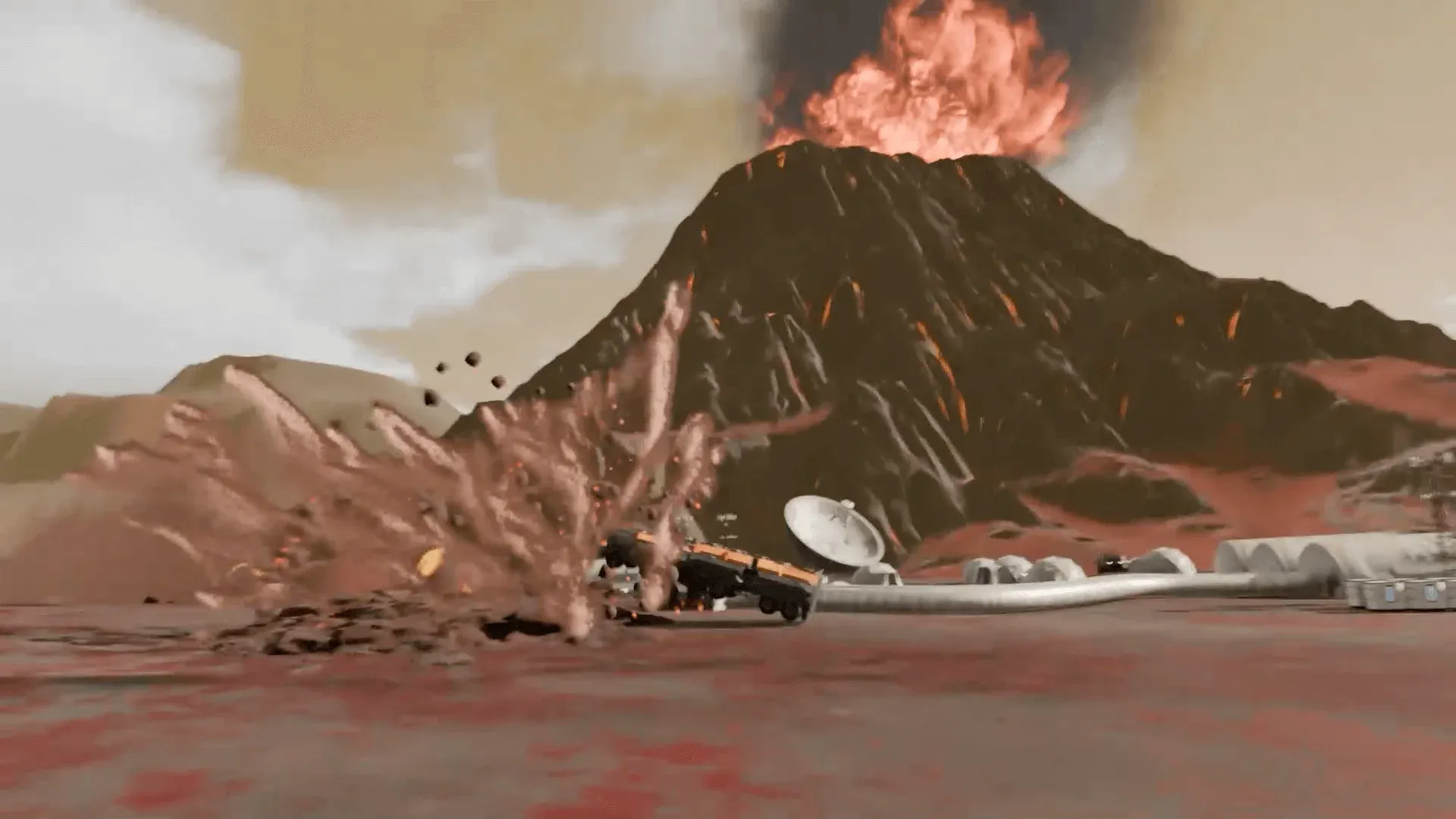
    The grass on Dejerria is dying off fast, and Anja’s team needs to know why. The crew investigates the ecosystem from eight teams, each with a piece of it nobody else has, and builds a corrected model of the food web that brings it back into balance (5-LS2-1). It’s jigsaw at the scale of the room: nobody’s piece is enough alone, the decision has to be argued from all of them, and you’re at the helm asking which piece changed the plan.

    MISSION BRIEF →

    A hundred more just like them

    These are two of more than 100 Missions, with new Missions added and in the works every week, across science, math, reading, writing, and social studies, each one built the same way and each one where a unit can end. Start with the Communication Mission, then the Collaboration Mission for your band.

    What the report shows, for every student

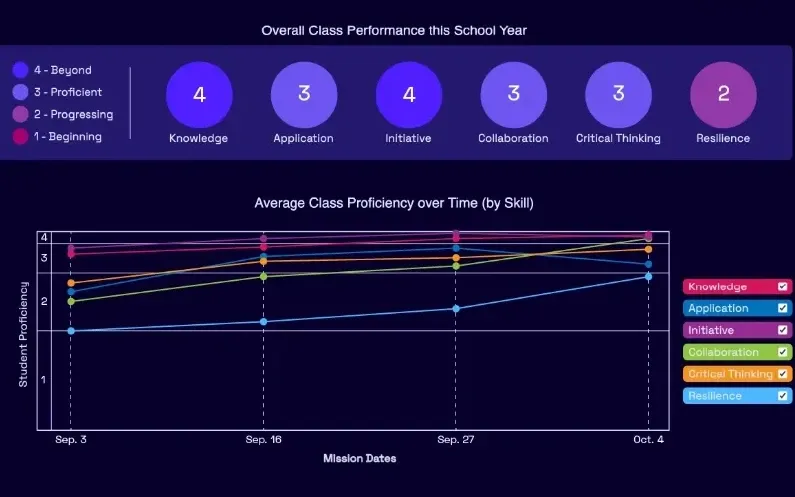
    A Mission.io class report: the class score in each of six skills, from knowledge and application to collaboration, critical thinking, and resilience, with the class chart across the year below.
    A class report from a real Mission: the class score in each of six skills, then each skill across the year.

    Every Mission produces a report for every student, built from what that student did across the whole Mission, on the skills the Mission captured. What it can show: what they knew about the standard, whether they could apply it as the problem unfolded, and the human skills every school promises (collaboration, critical thinking, initiative, and resilience). The test shows what they know. The report shows the rest. The structures above are where collaboration gets practiced, and the tally is you catching a third of the room. This is the only place it gets measured for every student at once. SEE THE EVIDENCE →

    You taught it. Now find out who can use it.

    Will it work in my room?

    Students join with a class code: no student accounts, no student email, no passwords. Chromebooks, laptops, or tablets, plus your projector; on a shared cart, it’s the day you have the cart. Free for teachers, no credit card.

    Who’s behind it. Mission.io is a research and design organization with one job: make this kind of structured, whole-class learning something a teacher can run every unit instead of once a semester, and put a report in your hands when it’s over. Over a million students have run a Mission. The research behind them is funded by the National Science Foundation and the U.S. Department of Education’s Institute of Education Sciences, and Mission.io meets ESSA Level II standards, as validated by Instructure.

    START FREE

    Free teacher account, no card. Start with the Communication Mission, marked Start here in your library, then Pave the Way or the Collaboration Mission for your band, each after its 5-minute Teacher Preview.

Questions teachers ask about cooperative learning

Which cooperative learning structure should I start with?

Think-pair-share with the paraphrase rule, because it costs nothing, fits any lesson, and runs three times a week without planning. Numbered heads together next, once the class can number off without a discussion about it.

What's the difference between cooperative and collaborative learning?

Cooperative learning is the structure: a shared goal, a named part for each student, and teaching that sets it up. Collaborative learning is looser, with the students directing the work and sharing authority over it. In a K-8 room, collaboration is the skill the structure practices. The comparison table has group work beside both.

How do I grade group work without punishing the kid who did all of it?

Grade the part. Every structure here has a piece with one name on it (the think sentence, the quiz, the owned subquestion), and that piece is the grade; the group product is the ticket to the debrief. STAD’s improvement scoring is the one exception that works, because the team score rewards each member’s own gain.

How big should the groups be?

Pairs in K to 2 and for any structure where talk is the product. Four in 3 to 8, because four is the largest group where every member can be asked about a part in one period, and the smallest where a jigsaw has enough segments. Five only for group investigation, and only with five owned subquestions.

What do I do about the student who won't participate, or the one who takes over?

Give each a part the other one needs. The structures do this by design (the called number, the Paraphraser, the segment only one expert studied), which is why they beat “make sure everyone contributes.” If the same student takes over across three runs, the tally shows it, and that’s a conversation with evidence instead of a feeling.

Does it work in math and science, or is it a reading thing?

The effect is larger in science and math than in languages and social sciences (Kyndt and colleagues, 2013). The structure needs a problem with a right answer the group has to reach, which math and science supply by the page.

References and sources

Nine structures by hand, then the whole room

Small group first, by hand, with the structures card. Then the whole room, when the unit is ready: the Communication Mission first, then Pave the Way or the Collaboration Mission for your band, each after a 5-minute Teacher Preview. Both free. Coaching a team on this, or building the PD?