7th grade collaboration activities

The gallery walk rebuilt so 7th graders build a case and sign their work, five more classics fixed, the case sheet free, and the Mission we’d run with 7th graders.

Who we are. Mission.io makes Missions: teacher-led, whole-class simulations where students use what they’re learning to work through a real scenario together.

Everything on this page works without us. The stations, the claim cards, and the sheet run fine on their own. The Mission we’d run with 7th graders is at the end, free. (It involves a swarm of malfunctioning robots. Your walls are safe.)

On this page

What collaboration looks like in 7th grade

A 7th grade collaboration activity asks a small group of twelve-year-olds to build a case out of evidence, disagree about it out loud, and still leave with one recommendation, each student’s part signed. This page rebuilds the gallery walk, the go-to middle school structure for moving groups through sources, so that it does exactly that.

For twelve-year-olds, peer opinions outweigh adult opinions. They can see both sides of an issue but like to argue one point, and they’re getting better at planning toward a short-term goal. Seventh grade collaboration is negotiating disagreements and adapting roles when the plan fails. A gallery walk puts the peer opinions on the wall, where they can be argued with, and the station clock gives the group a goal it can see. The middle school benchmark in New York names the move: “practice perspective-taking to infer understanding of others’ thoughts, feelings, and intentions.”

The standard asks 7th graders to come prepared with evidence, track progress toward goals, ask questions that draw out elaboration, and change their own views when new information warrants it (CCSS ELA SL.7.1). The objection round below is built for that last one.

Six things that make group work build collaboration

Active learning works, and a review of 225 college STEM course studies said so bluntly: lecture courses had 55% more failures than active ones (Freeman et al., 2014). Seventh graders sit right inside a review built on their age group: across 148 studies of students 12 to 15, working toward a cooperative goal beat competing or working alone, both on achievement and on how students got along (Roseth, Johnson, and Johnson, 2008). The six follow, written for a 7th grade room; the K to 8 guide holds every study.

  1. 1. A real problem with stakes the class can feel.

    Six posters to look at is a tour. Six pieces of evidence and a town council waiting on your recommendation is a case, and seventh graders love being the ones who decide.

  2. 2. Apply, don't recall.

    “What do you notice?” is recall with a marker. “What does this prove, and what can’t it prove?” is the practice NGSS calls engaging in argument from evidence.

  3. 3. Group goals with individual accountability.

    One kid writes the sticky note and three drift to the next poster. Slavin’s count is the reason to stop that: 84% of studies of methods with a shared goal and a named part for each student found gains, and only 17% of those without (Slavin, 1991).

  4. 4. The teacher leads the thinking.

    Let a timer run the clock. Your place is at the station that matters most, asking what it can’t prove on its own.

  5. 5. A debrief where the class argues it out.

    Twelve-year-olds like to argue one point. The debrief gives them a reason to argue it against another group’s plan, out loud, with evidence on the table.

  6. 6. A way to see who did what.

    Anonymous sticky notes are a gift to the kid who’s coasting. Put initials on the claim and you can see who’s carrying the group.

Sticky notes compliment. Evidence convicts.

Station activities usually manage two or three of these. The gallery walk is the one middle school teachers reach for with sources, so here it is carrying all six. The case sheet that follows has all six stations, ready to post →

The gallery walk, rebuilt to hit all six

You know it. Prompts, documents, images, or student work go up around the room; groups rotate from station to station, talk, and leave written responses; the class debriefs what it saw. It’s a good way to get bodies moving through sources. As usually run, though, the stations are things to look at, one student writes while the group drifts, and the notes are anonymous.

Read the walls afterward and you’ll find it: “nice job” and “I agree” in four different handwritings. The fix is to make every station evidence and every note a signed claim.

Time
55 to 60 minutes: 5 to set the scene, 6 stations at 5 minutes each including the move, 4 to draft a recommendation, 4 to swap and object, 10 to debrief, plus handing out cards. For a 45-minute period, cut to four stations at 4 minutes each (drop the two weakest pieces of evidence): 39 minutes. Keep the swap and the debrief.
Groups
Fours. With 29 students, make five groups of four and three of three; in a three, the Reader also Scribes. Eight groups and six stations means two groups share a station on some turns, so print two copies of each.
Supplies
Six station sheets in sheet protectors, one claim card per group, one marker color per group. Under five dollars, and the printable lists it.
Standards
CCSS SL.7.1c and SL.7.1d (pose questions that draw out elaboration; modify views when warranted), NGSS middle school practice 7, engaging in argument from evidence.
  1. The problemStakes

    The town’s river flooded, and the council can fund one of two fixes first. Six stations hold six pieces of evidence: a rainfall chart, a land-use survey, an inspection of the culvert, a newspaper clipping, a hydrograph, and a resident’s statement. Each group has to recommend a fix by the end of the period, and say why.

  2. Apply, don't recallApply

    At every station, the group leaves with two things: one claim the evidence supports, and one thing it can’t prove. That second line is the practice standard in a box, and it’s where most groups find out a clue isn’t a cause.

  3. Roles with individual accountabilityAccountability

    Four roles, each with one job, and the roles rotate one seat clockwise at every station, so everybody is the Skeptic at least once. Groups write on their own claim card in their own marker color, never on the station, so nothing is anonymous.

    • Reader

      Reads the evidence aloud. Nobody touches it until it's read.

    • Claimer

      Proposes the claim the evidence supports.

    • Skeptic

      Says what the evidence can't prove before anything gets written.

    • Scribe

      Writes the claim and the limit on the card, with the Claimer's and Skeptic's initials.

  4. You lead the thinkingTeacher leads

    Pick two stations and stay put; let the groups come to you. At each, three questions: What does this station prove on its own? What does it need another station to prove? Which station contradicts it? Every group rotates through your two stations, so you hear all of them instead of the one you followed.

  5. Recommend, then objectApply

    After the walk, groups get four minutes to draft a recommendation from their cards. Then they swap with another group, which has four minutes to write one objection. Reading an objection to your own plan and deciding whether it changes your mind is SL.7.1d, live.

  6. The debriefDebrief

    10 minutes, whole class, cards up. Three questions in order: Which station changed your recommendation? Which objection to your plan was hardest to answer? Who in your group was the Skeptic at the station that mattered most, and what did they say? The third is where the Skeptics get their credit.

  7. See who did whatSee who did what

    Four behaviors per student go on the tally: made a claim from evidence, named a limit of the evidence, asked another member to elaborate, modified a view with a reason. Two stations will get you roughly half the class in one period, and the initialed claim cards cover the rest.

(The Skeptic’s job is to say what the evidence can’t prove. Some seventh graders were born for this role.)

Ask which Skeptic mattered most, and the class will name a station, then a kid, then the exact sentence that changed the plan.

The flood case gallery walk, free

Emailed now, ready to copy: the teacher page, four role cards, the case card with the problem and the two fixes, the six station sheets with their evidence and the claim and limit prompts, the group claim card with initials boxes and the recommendation, the swap-and-object slip, an answer key, and the four-behavior tally.

It’s on its way.

Check your inbox for the flood case gallery walk.

Email me the sheet. It comes as a PDF, ready to print. Unsubscribe anytime.

Five more classics, and the fix each needs

Middle school group work has a reputation, and the kid who coasts through it has a strategy. Each of these five can take the strategy away with a couple of changes.

Five more for 7th grade

1. Jigsaw (3 to 8)

Needs four short readings. Groups of four. About 60 minutes.

Each student learns one piece in an expert group, then teaches it to their home group. Across 43 studies, the average effect on achievement is large, with wide variation and smaller effects in bigger studies (Cochon Drouet et al., 2023). Every student holds a piece nobody else has. As usually run, though, nothing is at stake and nothing gets recorded.

The fix

  1. Pick a question none of the four pieces can answer alone, so the home group needs every expert.
  2. Hand it to the home groups before the expert groups meet, so each expert reads for what the question needs.

See jigsaw rebuilt for 5th grade →

2. Fishbowl (6 to 8)

Needs chairs in two circles. Whole class. 30 minutes.

An inner circle of students discusses while an outer circle watches, then they swap. It puts a real discussion in front of the whole class. As usually run, though, the outer circle’s job is to sit, and nothing records who said what.

The fix

  1. Give every observer in the outer circle a tally sheet.
  2. Assign each observer one named speaker in the inner circle to tally.

See the fishbowl rebuilt for 8th grade →

3. Lost on the Moon (5 to 8)

Needs the 15-item list. Groups of four or five. 45 minutes.

A crew has crash-landed on the Moon with fifteen items. Each student ranks them alone, the crew agrees on one ranking, and both get scored against NASA’s key, so every student has a stake and a vote. As usually run, though, students rank on gut feelings, and nothing records who argued what.

The fix

  1. Teach the Moon first: no air, weak gravity, no magnetic field.
  2. Make every crew rank carry a fact, written next to it.

See Lost on the Moon rebuilt for 6th grade →

4. Silent sticky-note storm

Needs sticky notes, a wall. Groups of four.

Each student writes one idea per sticky note, posts it on the wall, and the group sorts the notes in silence. Every note has an author, so every student is on the wall. As usually run, though, it’s a brainstorm with no question behind it, you’re off to the side, and the group never talks about what the sort means.

The fix

  1. Write a question at the top of the wall that the sort has to answer.
  2. Once the notes are sorted, let the group talk it through.
  3. Tally the talk: who moved a note, and who gave a reason.

Give it a question to sort toward and it makes a strong first ten minutes; it doesn’t need a page.

5. Station rotation

Needs task tables. Small groups. A period.

Small groups rotate through task tables on a timer, a few minutes at each. It keeps everyone moving through hands-on work. As usually run, though, there are no stakes, no named parts, and no record, and each station stands on its own.

The fix

  1. Make the stations add up to one decision, the way the gallery walk above does, so each table hands the group a piece of evidence.
  2. At the last station, the group makes the decision with what every table gave them.

See station rotation on the hands-on learning guide →

  • Our part · We make Missions

    Or put the evidence on every screen, not the walls

    Some teachers run a gallery walk every unit, and it works. A Mission is a teacher-led, whole-class simulation that covers the same six in a single class period. We handle connecting every student, running each station’s work, and moving the story. You get the part that matters with twelve-year-olds: asking who’s been heard, and who hasn’t.

    You're at the helm, not on the hook.

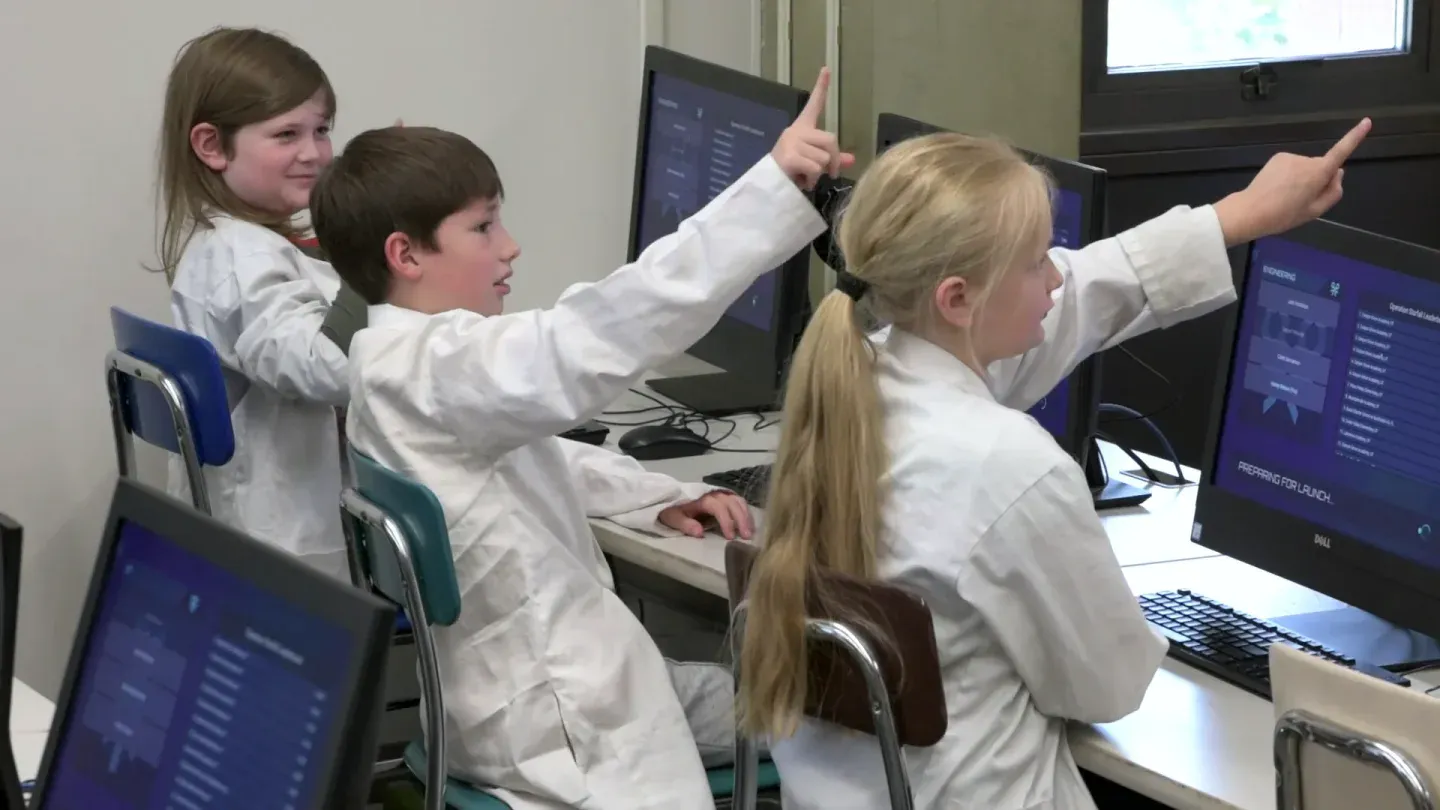
    The Collaboration Mission: the whole-class Mission we'd run with 7th graders

    Collaboration (4+) · Grades 4 to 9 · About 24 minutes · One device per student, plus your projector · Free with a teacher account

    Students in white lab coats at desktop monitors point up at the screen ahead of them; the screen beside them reads Preparing for launch.
    What you'll see: arms up and pointing at the projector when a station spots the rule, a crew talking over each other and then not, and you at the side of the room counting who got heard.

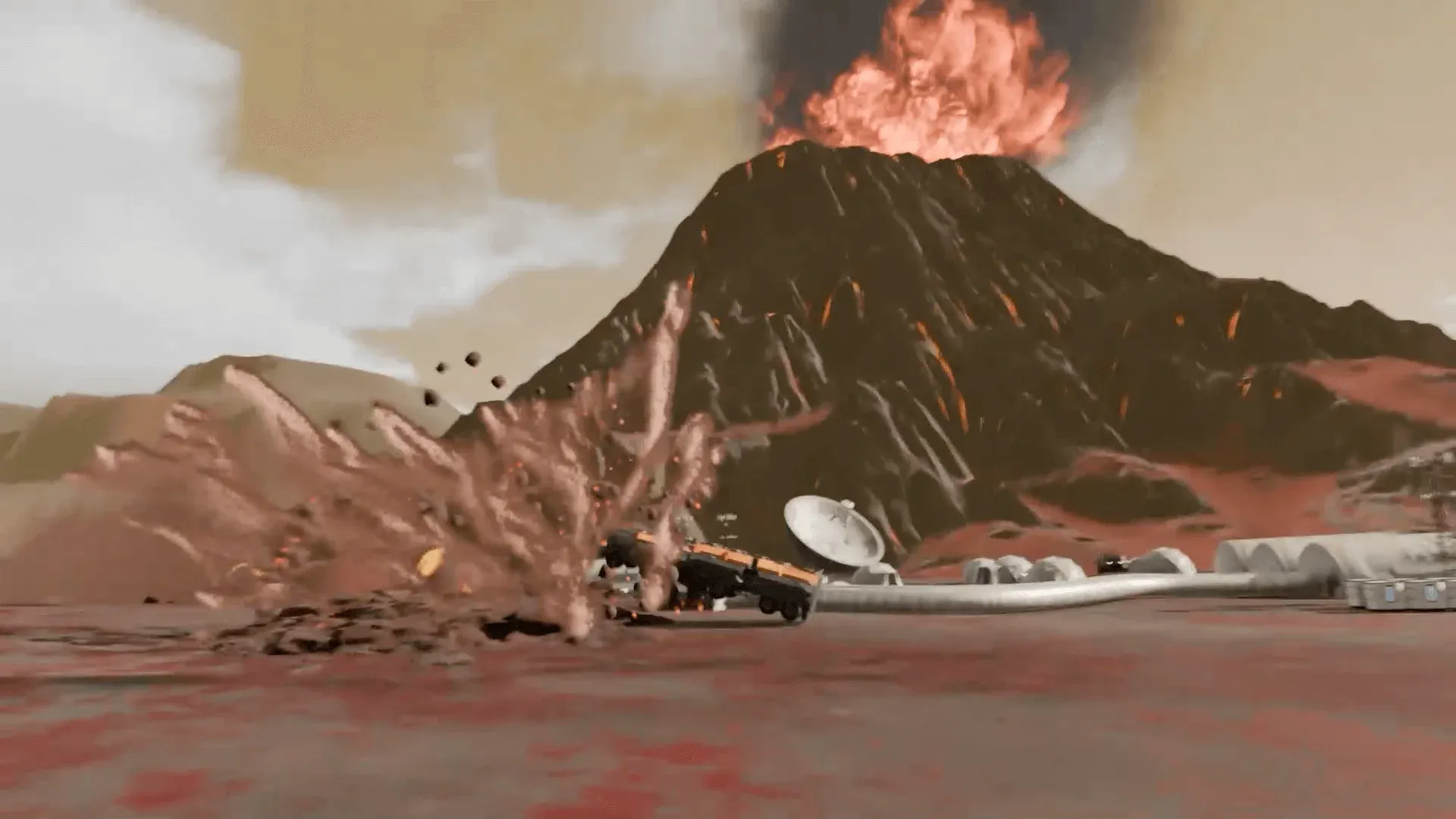
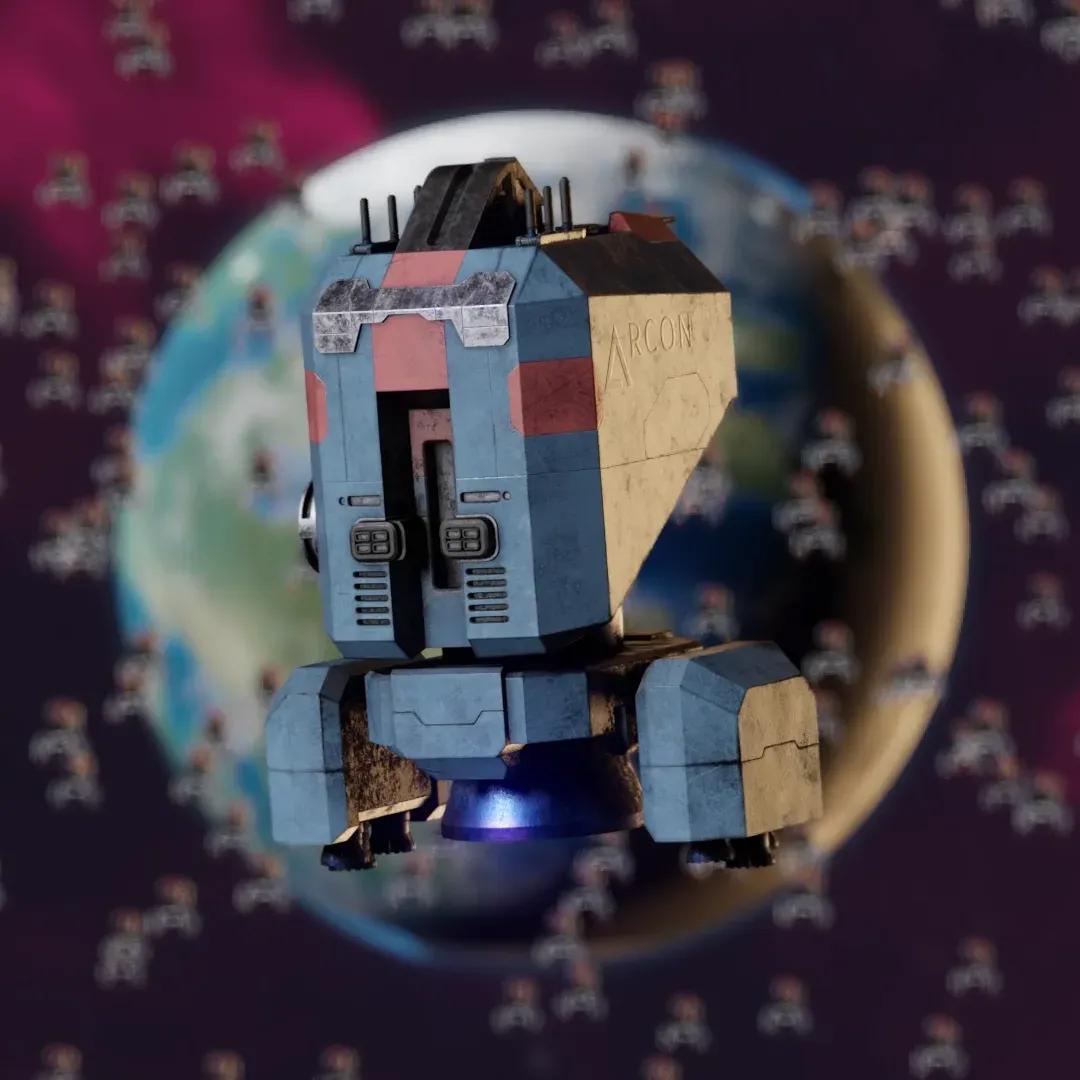
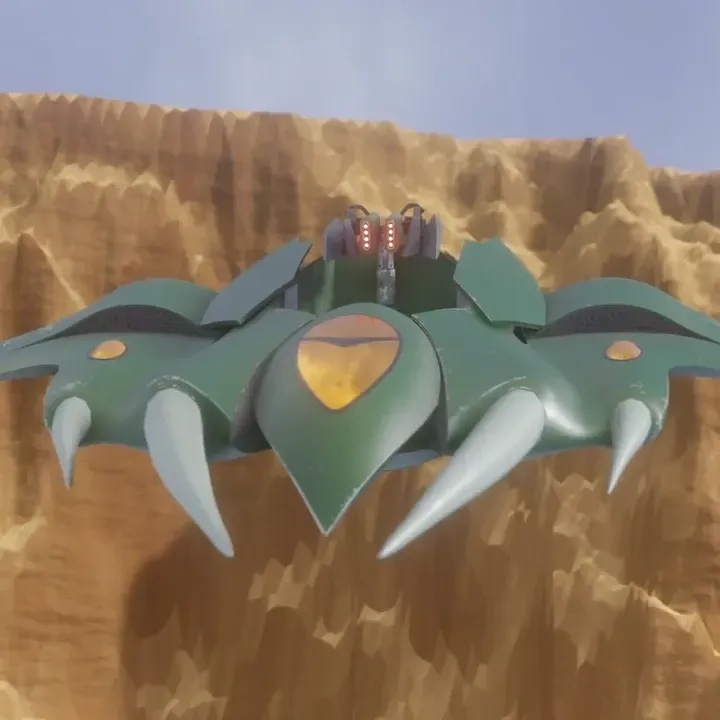
    A swarm of malfunctioning GAL-Delilah robots is attacking planets, and the crew’s chance is to re-program an old one to lead the swarm away. Breaking into its processor has rules, and the crew has to collaborate to break the code. The projector carries the story. The work is split across seven stations (Command, Engineering, Medical, Security, Science, I.T., Operations), and the arguments between those stations are part of it.

    Every student is assigned to a team, and each team’s work is themed to it, from its own information and challenge to the same problem the rest of the crew is solving. The team gives a student a role in the story and people to lean on while you move between teams. You’re the one asking who has the piece they need.

    Against the six:

    • Stakes. The swarm is attacking planets, and one old GAL-Delilah is the crew’s way to lead it off.
    • Apply. Breaking the code means collaborating by the processor’s rules, and the library ties the Mission to the collaborative-discussion standard (CCSS SL.7.1).
    • Accountability. Seven teams work the code together.
    • Teacher leads. Preview it in 5 minutes, start it, and ask: Who has the piece you need? Did everyone get heard before you moved? What did the rule cost you?
    • Debrief. The Mission Guide lists none, so borrow the gallery walk’s debrief questions.
    • See who did what. Every student gets a report on how well they did, shaped by what this Mission asked of them.

    “It’s been a while since students left my period saying that was the best class ever.”

    Will Crowther, Middle school teacher, Canyon View Middle School, UT

    Will it work in my room?

    Students join with a class code: no student accounts, no student email, no passwords. Chromebooks, laptops, or tablets, plus your projector. Free for teachers, no credit card. Student data is covered by COPPA and FERPA, and we signed the Student Privacy Pledge. No projector or devices? The gallery walk is paper and tape, and the sheet still works.

    START FREE →

    Communication first, then this one

    This is one Mission. Over 100 more run on the same design, and any unit you teach can end in one. Each run hands you a new report on every student.

    What the report shows

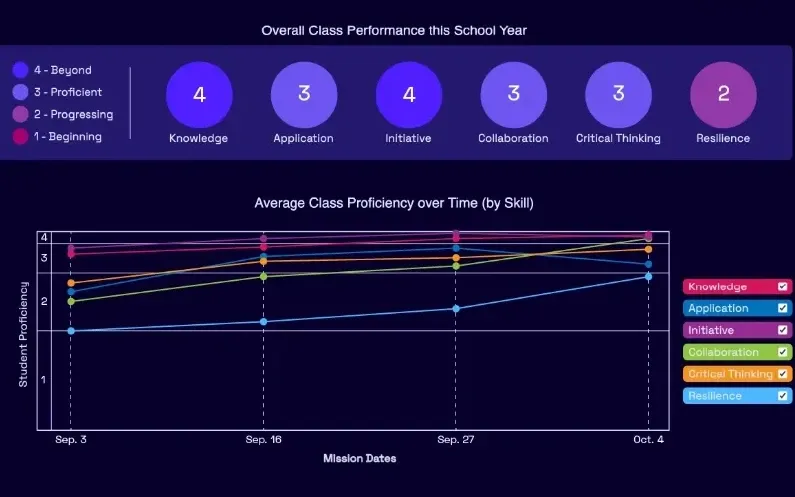
    A Mission.io class report: the class score in each of six skills, from knowledge and application to collaboration, critical thinking, and resilience, with the class chart across the year below.
    A class report from a real Mission: the class score in each of six skills, then each skill across the year.

    Every Mission produces a report for every student, built from what that student did across the whole Mission, on the skills the Mission captured. The six it can capture are Knowledge, Application, Initiative, Collaboration, Critical Thinking, and Resilience. The first two are what a test already sees. The other four are the human skills every school promises. The test shows what they know. The report shows the rest. This is where collaboration gets practiced, and the only place it gets measured. SEE THE EVIDENCE →

    You taught it. Now find out who can use it.

    Who's behind it

    Mission.io is a research and design organization with one job: make collaborative, active learning something a teacher can run every unit instead of once a semester, and put a report in your hands when it’s over. Over a million students have run a Mission. The research behind them is funded by the National Science Foundation and the U.S. Department of Education’s Institute of Education Sciences, and Mission.io meets ESSA Level II standards, as validated by Instructure.

    “What I love most is that it’s low-prep but high-impact.”

    Ginger Marsh, Middle school teacher, Cedar Middle School
    START FREEMISSION BRIEF →

    Free teacher account, no card. Begin with the Communication Mission, marked Start here in your library, then the Collaboration Mission; a 5-minute Teacher Preview comes ahead of each one.

Questions 7th grade teachers ask

My 7th graders argue for sport. How do I keep it about the evidence?

Give the arguing a rule it has to follow. Nothing goes on the claim card until the Skeptic has said what the evidence can’t prove, and every claim needs a station behind it. Twelve-year-olds will still argue one side. Now they have to point at something while they do it.

What do I do when a group's plan falls apart halfway through the walk?

Let it. A recommendation that dies at station four is the best thing that can happen in a gallery walk, because the group has to rebuild it with a new role in the Skeptic’s seat. Ask them at your station what changed their mind. That’s the adapting the grade is about.

Does this only work in social studies?

No. The flood case sits between science and civics on purpose, and the structure takes any six pieces of evidence that point in more than one direction: primary sources on a historical decision, data sets on a science question, two authors on the same issue.

Why not just let groups write on the posters, like a normal gallery walk?

Because a note on the poster belongs to nobody. A claim card in your group’s color with two sets of initials belongs to the Claimer and the Skeptic, and the class can compare cards at the end. That one change is most of the fix.

Every claim, signed

Run it your way this week: the flood case on paper with its claim cards, or the Collaboration Mission once you've seen its 5-minute Teacher Preview.