6th grade collaboration activities

NASA’s survival ranking rebuilt so 6th graders reason as a crew instead of averaging, five more classics fixed, a printable crew sheet, and the Mission we’d run with 6th graders.

Who we are. Mission.io makes Missions: teacher-led, whole-class simulations where students use what they’re learning to work through a real scenario together.

Everything on this page works without us. The ranking, the crew roles, and the sheet work on paper. The Mission we’d run with 6th graders is at the end, free. (No crash landing required. Its ecosystems are already on the brink.)

On this page

What collaboration looks like in 6th grade

In 6th grade, a collaboration activity is one where a crew of eleven-year-olds has to agree on one decision, and every member has to bring a reason the others can test. This page rebuilds the survival ranking middle schools run every fall, so the crew reasons its way to the list instead of voting.

Eleven is, in Responsive Classroom’s words, the common age for cliques. Eleven-year-olds also challenge rules and adult assumptions, need time to talk with peers, and enjoy a brain teaser. A survival ranking is a brain teaser with a peer argument built in, and NASA’s answer key is an adult assumption they get to push back on, with reasons. That’s the middle school work in New York’s state benchmarks: “demonstrate cooperation and teamwork to promote group well-being and collective efficacy.”

The standard asks 6th graders to come to discussions prepared and refer to evidence, set goals and define roles as needed, and show they understand other perspectives by paraphrasing them (CCSS ELA SL.6.1). Ranking alone first, then as a crew, asks for all three.

Six things that make group work build collaboration

Active learning works, and in college STEM the gap is plain: across 225 course studies, lecture classes saw 55% more students fail than active-learning classes did (Freeman et al., 2014). For middle school there’s a closer match: across 148 studies of students ages 12 to 15, cooperative goals beat competitive and individual ones on achievement and on peer relationships (Roseth, Johnson, and Johnson, 2008). Here is how each of the six looks with 6th graders; our K to 8 guide lists the research.

  1. 1. A real problem with stakes the class can feel.

    The crew lives or dies by the list, and Lost on the Moon already has that. Keep it loud: every item ranked in the wrong half costs the crew oxygen it doesn’t have.

  2. 2. Apply, don't recall.

    Most classes rank on gut feeling. Teach the Moon’s conditions first, and the content becomes the whole argument: no air, so the matches are useless; no magnetic field, so the compass is too.

  3. 3. Group goals with individual accountability.

    The exercise’s genius is its order, alone first and then as a crew. Slavin found that when a method had both a shared goal and a part each student answered for, 37 of 44 studies came out positive; without both, 4 of 23 (Slavin, 1991). Lost on the Moon has the structure. It just needs a record.

  4. 4. The teacher leads the thinking.

    Sit at a crew table and ask which fact would settle the item they’re stuck on. Reading the answer key aloud can wait until the end.

  5. 5. A debrief where the class argues it out.

    “Did your crew beat your own score?” is a number. The debrief is who moved the crew, and with what.

  6. 6. A way to see who did what.

    A crew score hides the kid who carried it and the kid who agreed with whoever spoke last. Eleven-year-olds know exactly who that was, and a tally lets you know it as well.

Gut feelings average. Reasons have to win.

Consensus games tend to land three or four of these. NASA’s is the consensus exercise of middle school, so it gets all six below. Every piece of it, NASA’s key included, comes on the free sheet →

Lost on the Moon, rebuilt to hit all six

You know NASA’s version. A crew has crash-landed on the Moon, far from base, with fifteen items. Each student ranks them alone, then the crew has to agree on one ranking, then both get scored against NASA’s. The structure is brilliant. As usually run, though, students rank on common sense, nobody records the crew’s talk, and the teacher’s part is reading the key aloud.

Listen to a crew without rules and you’ll hear it: four numbers read out, an average, done in three minutes. The fix is a rule against averaging and a fact sheet to argue from.

Time
Just over an hour: 5 to set the scene, 10 to rank alone, 25 to rank as a crew, 5 to check NASA’s key, 6 to argue back, 10 to debrief. NASA budgets two 50-minute periods. In a 45-minute block, assign the solo ranking as the night before’s homework, give the crew 20 minutes, and skip the argue-back round: 40 minutes with the scene. Keep the debrief whole.
Groups
Crews of four. With 30 students, make six crews of four and two of three; in a three, the Facilitator is also the Dissenter.
Supplies
Printing only: the item list and ranking sheet (one per student), the crew sheet, the Moon facts sheet, and NASA’s key, all included in the printable.
Standards
CCSS SL.6.1a, SL.6.1b, and SL.6.1d (come prepared with evidence; define roles; paraphrase other perspectives), with the Moon’s conditions from your Earth and space unit (NGSS MS-ESS1-1).
  1. The problemStakes

    Use NASA’s scenario and say the stakes out loud: every item the crew ranks in the wrong half is a decision that costs time, and the crew has oxygen for one walk. Then hand out the item list face down.

  2. Apply, don't recallApply

    Run it the day after your Moon lesson, not before. Give each crew the Moon facts sheet (six facts the class just learned) and one rule: every rank needs a reason, and every reason has to stand on a fact.

  3. Alone first, then the crewAccountability

    Each student ranks all fifteen alone and writes one reason per item, as NASA’s own lesson asks. That’s SL.6.1a: they arrive prepared. Nobody joins the crew talk without a full sheet.

  4. Crew roles, one job eachAccountability

    Four roles, written on the sheet. No averaging allowed: every crew rank needs a reason the Recorder can write down.

    • Facilitator

      Runs the order: one item at a time, every member's rank read aloud before anyone argues.

    • Scientist

      May veto any reason that contradicts the Moon facts sheet, and has to cite the fact.

    • Recorder

      Writes the crew's rank and the one reason the crew agreed on.

    • Dissenter

      Argues the strongest case against the crew's top three before they're final.

  5. You lead the thinkingTeacher leads

    Sit at crew tables, one at a time, and ask: Which item is your crew stuck on, and what fact would settle it? Whose reason changed the crew’s mind? What would a NASA scientist say about your number four? Then get up before they start asking you for the answer.

  6. Argue backApply

    After the key, crews get six minutes to pick the one item where they disagree most with NASA and write a case for their rank. Then read the NASA experts’ own reasons aloud.

  7. The debriefDebrief

    10 minutes, whole class, crew sheets in hand. Three questions in order: Which item moved furthest from your own list to the crew’s, and who moved it? Where did a Moon fact beat a gut feeling? Did the crew do better than its best member, and why or why not? The last one is the lesson in collaboration.

  8. See who did whatSee who did what

    Tally four behaviors per student on the sheet: gave a reason tied to a Moon fact, built on a crewmate’s reason, disagreed with a reason, changed a rank with a reason. Crews talk for twenty minutes, and the Facilitator’s round makes every voice audible, so two minutes at each table gets you about half the class by the bell.

(The matches are useless on the Moon, with no air to burn in. When a crew argues for them anyway, that’s the argument you want.)

Ask who changed the crew’s mind, and a kid who rarely talks will get named for the oxygen.

Lost on the Moon, free

Emailed now, ready to copy: the teacher page, four role cards, the scenario with the fifteen items, the solo ranking sheet with a rank and reason column, the Moon facts sheet, the crew sheet, the argue-back card, NASA’s ranking with the experts’ reasons, and the four-behavior tally.

It’s on its way.

Check your inbox for Lost on the Moon.

Email me the sheet. It comes as a PDF, ready to print. Unsubscribe anytime.

Five more classics, and the fix each needs

Sixth grade inherits every team-building game from elementary school and adds a few of its own. Most of them are fun. Each of these needs a couple of changes to become collaboration.

Five more for 6th grade

1. Back-to-back drawing

Needs one picture per pair, paper, pencils. Pairs.

Partners sit back to back: one describes a picture, and the other sketches it blind, then they compare. Each partner holds a job only they can do. As usually run, though, it’s a listening game with a random picture, so nothing rides on it and nothing from the unit gets used.

The fix

  1. Make the picture a diagram from the unit, like a food web from your ecosystems lessons.
  2. Give it a reason: somebody needs it rebuilt exactly, from the words alone.

See back-to-back drawing and its fix on the 5th grade page →

2. Zoom

Needs the wordless picture book, one page per student. Whole class.

Every student holds one page of the wordless picture book, and nobody may show it; the class has to put the pages in order by describing them. The puzzle gives it stakes, and every page has one holder. As usually run, though, there’s nothing to apply and nothing recorded.

The fix

  1. Before anyone speaks, each student writes a one-line description of their page.
  2. As the class works, tally whose description placed a page.

No page for this one; it’s a strong opener as is.

3. Classroom escape room (3 to 8)

Needs a lockable box or envelopes, a chain of locks, puzzles from the unit. Groups of four. 60 minutes.

Teams work through puzzles tied to the unit, and each one opens the next lock in a chain. The clock and the locks give it real stakes. As usually run, though, one kid tends to crack everything, so the rest of the team watches, and you’re left with nothing to ask and no record of who did what.

The fix

  1. Make one puzzle a decision with two defensible answers, like which of two habitats to protect first.
  2. Before that lock opens, the group has to argue its choice to you, with a reason from the unit.

See the escape room fixed on the problem solving guide →

4. Helium stick

Needs one light rod, like a tent pole. Small groups. 5 minutes.

A small group lowers a light rod, like a tent pole, to the floor with every finger touching it, and the rod rises instead. It’s a great laugh, and it carries a real lesson about pushing. As usually run, though, there’s nothing to apply, no debrief, and no record, so the lesson never gets said out loud.

The fix

  1. Keep it to five minutes, as the opener to a consensus lesson.
  2. Afterward, ask what the rod has in common with a crew vote.

No page for this one; it’s the opener, not the lesson.

5. Spaghetti tower

Needs twenty sticks of spaghetti, tape, string, one marshmallow. Groups of four. 18 minutes.

Teams get twenty sticks of spaghetti, tape, string, and a marshmallow, and the tallest freestanding tower in eighteen minutes wins. The clock and the marshmallow give it real stakes. As usually run, though, it’s a race, with nothing from the unit, no part anyone owns, and no talk once the towers fall.

The fix

  1. Put the criteria and constraints on paper before anyone touches the spaghetti.
  2. Give each team four roles, one job each.
  3. Test the tower before the second build, and let the test decide what changes.

See the tower rebuilt for 4th grade →

  • Our part · We make Missions

    Or let a Mission run the stations. You run the talk

    Plenty of teachers run a ranking like this by hand, and it works. A Mission is a teacher-led, whole-class simulation that builds the same six into one class period. Our part is connecting every student, running the work at every station, and moving the story forward. Yours is asking for the reason and not letting go until you get one.

    You're at the helm, not on the hook.

    Ecosystem Patterns: the whole-class Mission we'd run with 6th graders

    Ecosystem Patterns · Grades 3 and 6 to 8 · About 39 minutes · One device per student, plus your projector · Free with a teacher account

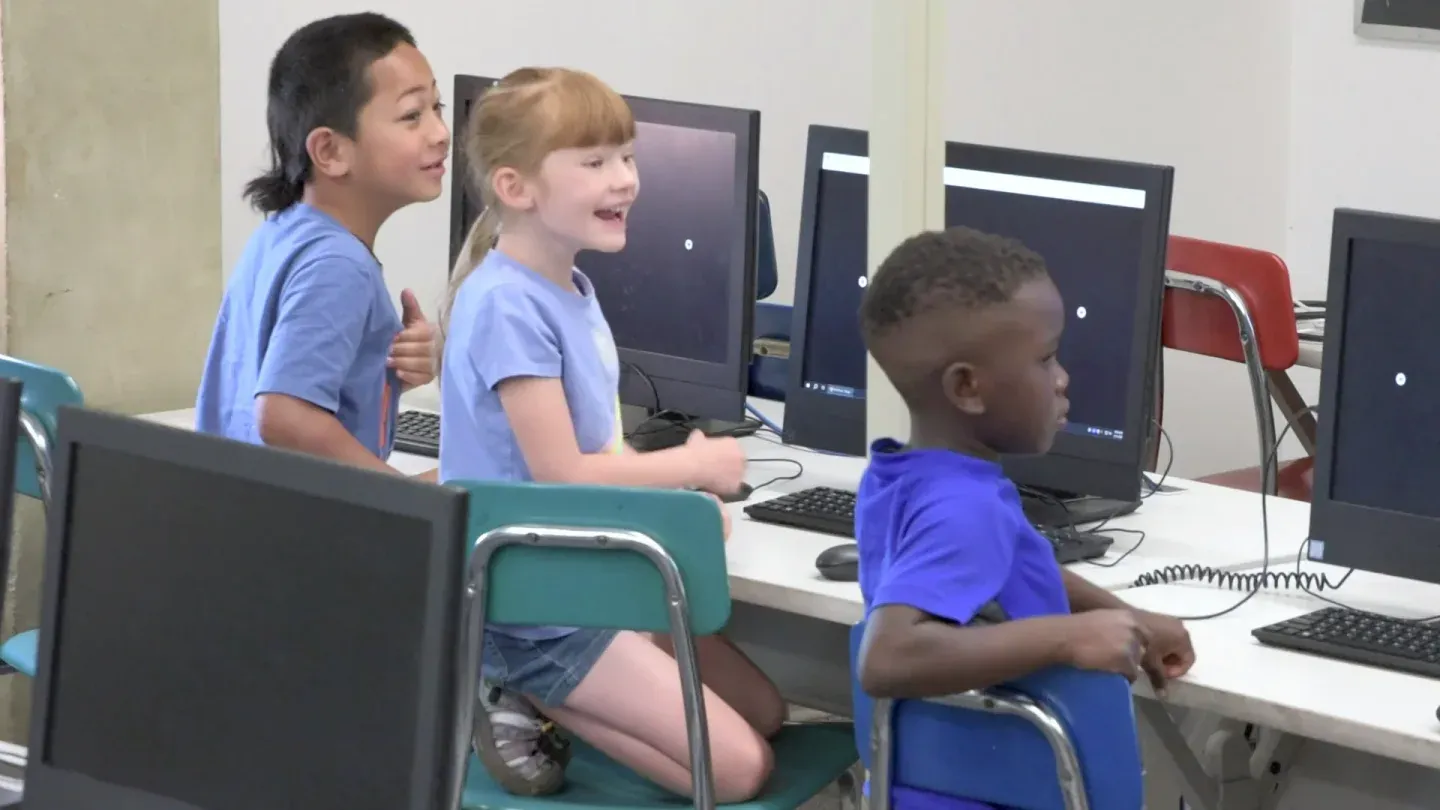
    Three students at desktop computers watch the front of the room; one gives a thumbs up and the girl beside him laughs.
    What you'll see: crews leaning across to the next station to check a pattern, a thumbs up when a fix holds, and you crouched at a table asking what's interacting with what.

    The plants and animals of the Industrial Sector should be thriving, and they’re on the brink instead. Something in the ecosystems is unstable, and the crew has to investigate and find the best fix. Your projector carries the story. Seven stations carry the work (Command, Engineering, Medical, Security, Science, I.T., Operations), and so do the arguments between them.

    Every student is assigned to a team, and each team’s work is themed to it, from its own information and challenge to the same problem the rest of the crew is solving. The team gives a student a role in the story and people to lean on while you move between teams. You’re the one asking which pattern broke.

    Against the six:

    • Stakes. The Industrial Sector’s ecosystems are teetering on the brink, and they need the crew to intervene.
    • Apply. Teams investigate the ecosystems and work out the best solutions to help the organisms thrive (NGSS MS-LS2-2, patterns of interaction among organisms across ecosystems).
    • Accountability. The crew investigates in teams, across seven stations.
    • Teacher leads. The 5-minute Teacher Preview comes first; once it’s running, ask: What’s interacting with what? Which pattern is broken? What does your team change?
    • Debrief. The Mission Guide lists three debrief activities, including a debrief discussion and one called Engage in Argument.
    • See who did what. Every student gets a report on how well they did, shaped by what this Mission asked of them.

    “At the end of the year last year, every group in my classroom listed Mission IO in the ‘Top 10 Things about Sixth Grade.’”

    Sharla York, 6th grade teacher, Heritage Elementary School

    Will it work in my room?

    Students join with a class code: no student accounts, no student email, no passwords. Chromebooks, laptops, or tablets, plus your projector. Free for teachers, no credit card. Student data is covered by COPPA and FERPA, and we signed the Student Privacy Pledge. No projector or devices? The ranking runs on paper, and so does the sheet.

    START FREE →

    Communication first, then this one

    This is one Mission. More than 100 others follow the same design across science, math, and ELA, so the next unit gets an ending too, and each student gets another report.

    What the report shows

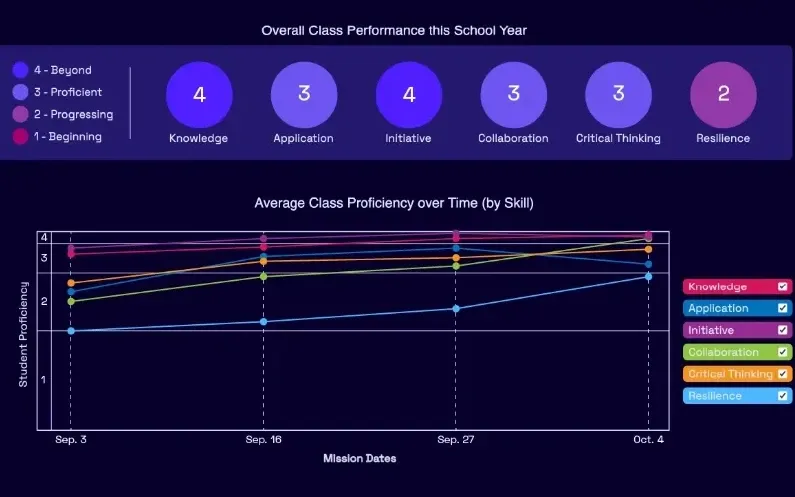
    A Mission.io class report: the class score in each of six skills, from knowledge and application to collaboration, critical thinking, and resilience, with the class chart across the year below.
    A class report from a real Mission: the class score in each of six skills, then each skill across the year.

    Every Mission produces a report for every student, built from what that student did across the whole Mission, on the skills the Mission captured. The six it can capture are Knowledge, Application, Initiative, Collaboration, Critical Thinking, and Resilience. The first two are what a test already sees. The other four are the human skills every school promises. The test shows what they know. The report shows the rest. This is where collaboration gets practiced, and the only place it gets measured. SEE THE EVIDENCE →

    You taught it. Now find out who can use it.

    Who's behind it

    Mission.io is a research and design organization with one job: make collaborative, active learning something a teacher can run every unit instead of once a semester, and put a report in your hands when it’s over. Over a million students have run a Mission. The research behind them is funded by the National Science Foundation and the U.S. Department of Education’s Institute of Education Sciences, and Mission.io meets ESSA Level II standards, as validated by Instructure.

    “This is the only thing I’ve used in 24 years of teaching that I love just as much as my students do.”

    Evelyn Fowles, 6th grade teacher
    START FREEMISSION BRIEF →

    Free teacher account, no card. The Communication Mission, marked Start here in your library, goes first and Ecosystem Patterns second, each with a 5-minute Teacher Preview to watch beforehand.

Questions 6th grade teachers ask

My 6th graders sort themselves into cliques. Who should be in each crew?

You pick, every time, and you mix the friend groups. Then let the roles carry the weight: a Scientist with a veto doesn’t need to be popular to be heard, and the Facilitator’s rule means every rank gets read aloud before the loudest voice gets going.

Do they have to end up agreeing with NASA?

No, and some of the best crews won’t. The argue-back round exists for that. A crew that can defend its rank with a Moon fact has done better work than a crew that matched the key by luck.

How do I grade a consensus activity fairly?

Grade the reasons, not the score. The solo sheet shows what each student brought; the gap between it and the crew sheet shows who moved and who got moved. Add the four-behavior tally and you’ve got something you can explain at a conference.

What kind of collaboration should 6th graders be doing?

Analytical collaboration: debating options, critiquing each other’s reasoning, and changing a decision because of it. That’s harder than taking turns, and it only happens when the task has a decision with a right and a wrong half. A survival ranking with a fact sheet is a good first one.

A crew that shows its reasons

Two ways to get there this week: Lost on the Moon on paper with the crew sheet, or Ecosystem Patterns once you've seen how it runs in its Teacher Preview.