6th grade critical thinking activities

Real or fake, rebuilt so 6th graders check a source the way fact-checkers do, five other classics repaired, a free verdict card, and the Mission we’d run with 6th graders.

Who we are. Mission.io makes Missions: teacher-led, whole-class simulations where students use what they’re learning to work through a real scenario together.

Everything on this page works without us. The Mission we’d run with 6th graders is at the end, free. (Its source is a scientist in hiding who can’t just say where she is, because the Crooked Snakes might be listening.)

On this page

What critical thinking looks like in 6th grade

A 6th grade critical thinking activity asks eleven-year-olds to decide what to believe, with reasons a classmate can check. For most 6th graders the hardest version of that question arrives on a screen: is this real? This page rebuilds the classic lesson built around it so a whole team has to answer it, out loud, before anything gets shared.

Eleven-year-olds challenge rules and adult assumptions, are more adept at abstract thinking, need time to talk with peers, and enjoy brain teasers. “Is this real?” is a brain teaser about an adult assumption, namely that a professional-looking page deserves trust, and questioning what adults assume is something eleven-year-olds already like to do.

The standards name the move directly. Middle school science wants students to gather, read, and synthesize information from multiple sources and assess the credibility, accuracy, and possible bias of each (NGSS practice 8). Reading asks 6th graders to trace an argument and tell the claims backed by reasons and evidence from the claims that aren’t (CCSS RI.6.8). Math has its own version, critiquing the reasoning of others (CCSS MP3), and a fact-check is that critique pointed at a stranger’s article.

Six things that make 6th graders think critically

For students aged 11 to 15, teaching critical thinking had an effect of g = 0.37 in Abrami’s review of 341 studies, against 0.30 across all ages. Overall, the largest effect came from talk, real problems, and an adult coaching the reasoning, all three at once (Abrami et al., 2015). Each of the six at 6th grade is below, with the citations a click away in the K to 8 guide.

  1. 1. A real problem with stakes the class can feel.

    “Would you share this?” sounds like stakes, yet nothing happens either way. A post going out on the morning announcements tomorrow is a deadline an eleven-year-old can feel.

  2. 2. Apply, don't recall.

    Source checking is a science practice in middle school (NGSS practice 8), so the article should come from your unit. A checklist teaches kids to grade a page on its looks; leaving the page teaches them to check what it says.

  3. 3. Group goals with individual accountability.

    Usually this lesson is solo work on a device, so nobody hears anyone reason. Here each student owns a third of one verdict card, and the team can’t vote until all three thirds are filled in.

  4. 4. The teacher leads the thinking.

    The Stanford lessons already get this one right. Your part is three questions asked at the tables, starting with what they found when they left the page.

  5. 5. A debrief where the class argues it out.

    Sixth graders need time to talk with peers, so give the verdicts their ten minutes and open with the job that found the deciding fact.

  6. 6. A way to see who did what.

    In one national survey of 499 teachers, 35% said critical thinking mainly benefits high-ability students (Reboot Foundation, 2020). Initials on a verdict card show you, student by student, who actually did the checking.

Looks aren’t evidence.

Most fake-news lessons get partway through the six. The one below covers all six. Get the verdict card and tally free →

Real or fake, rebuilt to hit all six

You know it. Put up a website, a post, or a video, and ask the class whether to trust it. Since 2016 it’s been a middle school staple. As usually run, it’s a checklist (does it have an About page? is there a date?), done alone on a device, which teaches the eye to judge how a page looks.

Fact-checkers do something else. They leave the page and read laterally: new tabs, other sources, what everyone else says about this one. The Stanford group’s free Civic Online Reasoning module for middle school teaches that move, and the rebuild below splits it into three jobs so a team has to do it together.

Time
52 minutes: 5 opening the scene and modeling the three questions, 15 for round one, 5 for verdicts, 12 for round two, 5 for verdicts, 10 for the debrief. In a 45-minute block, swap round two and its verdicts for a 5-minute demonstration on your projector, which brings it to 40.
Groups
Threes. With 28 students, make nine teams of three; the last student joins a team as a second evidence checker, the hardest job.
Supplies
One device per student, or one per team with the jobs taking turns. No devices? Print the article and three pages of search results, and it still works. Plus the verdict card. Printing only.
Standards
NGSS practice 8 (obtain, evaluate, and communicate information), CCSS RI.6.8 (separate claims backed by evidence from claims that aren’t).
  1. The problemStakes

    The student council wants to read an article on the morning announcements tomorrow. It claims a new study shows that starting school later raises test scores. Your class is the council’s fact-check team, with fifteen minutes and three tabs each. If they clear it and it’s wrong, the school just announced a fake; if they kill it and it’s right, the council loses a real argument. Use a Stanford task or a real article you’ve chosen; the sheet has a slot for it.

  2. Apply, don't recallApply

    Teach one move before the clock starts: leave the page. That’s practice 8 at the middle school level, judging a source’s credibility, accuracy, and possible bias, and it’s the opposite of the checklist most of them already know.

  3. Three jobs, one verdictAccountability

    Each student owns one third of the verdict card. The team can’t vote until all three thirds are filled, and the verdict needs all three sets of initials.

    • Who's Behind It

      Leaves the page, searches the publisher and the author, and writes what others say about them.

    • What's the Evidence

      Finds the study the article cites, opens it, and checks whether it says what the article says.

    • What Do Other Sources Say

      Searches the claim itself and lists two independent sources and what they say.

  4. You lead the thinkingTeacher leads

    At the tables, three questions: What did you find when you left the page? Does the study say what the article says it says? What would make you change your verdict? Skip any question about the font.

  5. Two roundsApply

    Round two flips the problem: a reliable source with an ugly design and a sensational headline. Teams that cleared the first page on its looks now have to judge this one on its evidence, and the class finds out the design was never the test.

  6. The debriefDebrief

    Ten minutes, whole class. Which job found the thing that settled it? Which team cleared the first page, and what did they miss? What do we tell the council, in one sentence with the evidence?

  7. See who did whatSee who did what

    Your tally has four moves for each student: left the page to check, cited a second source, named a limit of the evidence, revised a verdict with a reason. Every team turns in three written thirds, so the verdict cards are the record, and your tally will catch about half the room in one period.

(Someone will want to kill the ugly page in round two on sight. That’s the lesson, arriving on schedule.)

The next time a post goes around the cafeteria, at least one of your 6th graders will ask who’s behind it.

The morning announcements fact-check, free

Emailed now, ready to copy: the teacher page, three job cards, the verdict card (the council scene, a slot for your article, and an initials box for each job’s third), the “I left the page and found” log, and the four-behavior tally.

It’s on its way.

Check your inbox for the morning announcements fact-check.

Email me the sheet. It comes as a PDF, ready to print. Unsubscribe anytime.

Five more 6th grade classics and what each one needs

If your last fake-news lesson ended with thirty kids agreeing a page “looked legit,” the topic was fine and the structure let them down. Here are five more a 6th grade room runs, with the changes that make each one earn the name.

Five more for 6th grade

1. Classroom debate (4 to 8)

Needs a resolution, two teams, speeches, a judge. Two periods.

Two teams take a resolution, give speeches, and a judge picks the winner. There’s a real argument in it, and you can steer it. As usually run, though, a few strong speakers carry each side, citations go unchecked, and nobody can tell afterward who did the thinking.

The fix

  1. Give every student a role on the team, from Opener to Evidence Keeper.
  2. Throw out any citation that doesn’t have a source card behind it.
  3. Have the judges score evidence, so the side with backed-up claims wins.

The debate, rebuilt on the 5th grade page →

2. Mystery tube (6 to 8)

Needs a sealed cardboard tube, rope, tape. Fours. One period.

A sealed cardboard tube has rope ends poking out, and tugging one makes another twitch in a way that shouldn’t be possible. Groups have to explain what’s inside without opening it, which is real science thinking. As usually run, though, one kid does the pulling while the other three watch, and nobody keeps track of which pull showed what.

The fix

  1. Allow one pair of hands on the tube at a time, and rotate whose hands they are.
  2. Log every pull and its result before anyone proposes a model.
  3. Name one student the Skeptic, whose whole job is finding the pull that breaks the group’s model.

The tube, rebuilt on the 7th grade page →

3. Fact or opinion sort

Needs a stack of statement cards. Pairs. A center.

Partners sort statement cards, like “Egyptians built the pyramids at Giza” and “The pyramids are the greatest buildings ever made,” into a fact pile and an opinion pile. Sorting them takes a little applying. As usually run, though, it’s a worksheet cut into cards: nothing rides on it, partners sort without talking, and nobody hears a reason.

The fix

  1. Partners sort the stack on their own first, then lay their piles side by side.
  2. They pick one card they disagree on and argue it out loud.

No page here; arguing over one card is the whole fix.

4. Ad analysis

Needs one TV ad and a list of persuasive techniques. Usually solo.

Students watch a TV ad and name the persuasive techniques in it, like the bandwagon or the celebrity endorsement. It puts the vocabulary to work. As usually run, though, each student fills in a worksheet alone, and the verdict on the ad never matters to anyone.

The fix

  1. Give teams a real decision: whether the school store may run the ad.
  2. Make each technique on the list one student’s job to find.
  3. The team rules on the ad only after every job has reported.

No page for it; the real-or-fake jobs carry over.

5. Logic puzzles (3 to 8)

Needs a puzzle sheet. Solo. Quiet.

Students get a sheet of clues and a grid, and deduce who owns which pet or sits in which seat. The deduction is real. As usually run, though, students work in silence with nothing riding on it, nobody to argue with, and nothing to talk over afterward.

The fix

  1. Run one as a five-minute warmup at the start of class.
  2. Call it a warmup in your plans, and keep the period’s critical thinking for something students have to argue about.

Warmup only, so no page.

  • Our part · We make Missions

    Or let a Mission carry everything but the judgment

    Running this fact-check by hand, unit after unit, works fine. Encrypted Escape puts all six into a 30-minute class event: the story, the stations, and each student’s report come with it. Reading the evidence is still your class’s job, and asking why is still yours.

    You're at the helm, not on the hook.

    Encrypted Escape: a whole-class Mission for 6th grade

    Encrypted Escape · Grades 6 to 8 · About 30 minutes · One device per student, plus your projector · Free with a teacher account

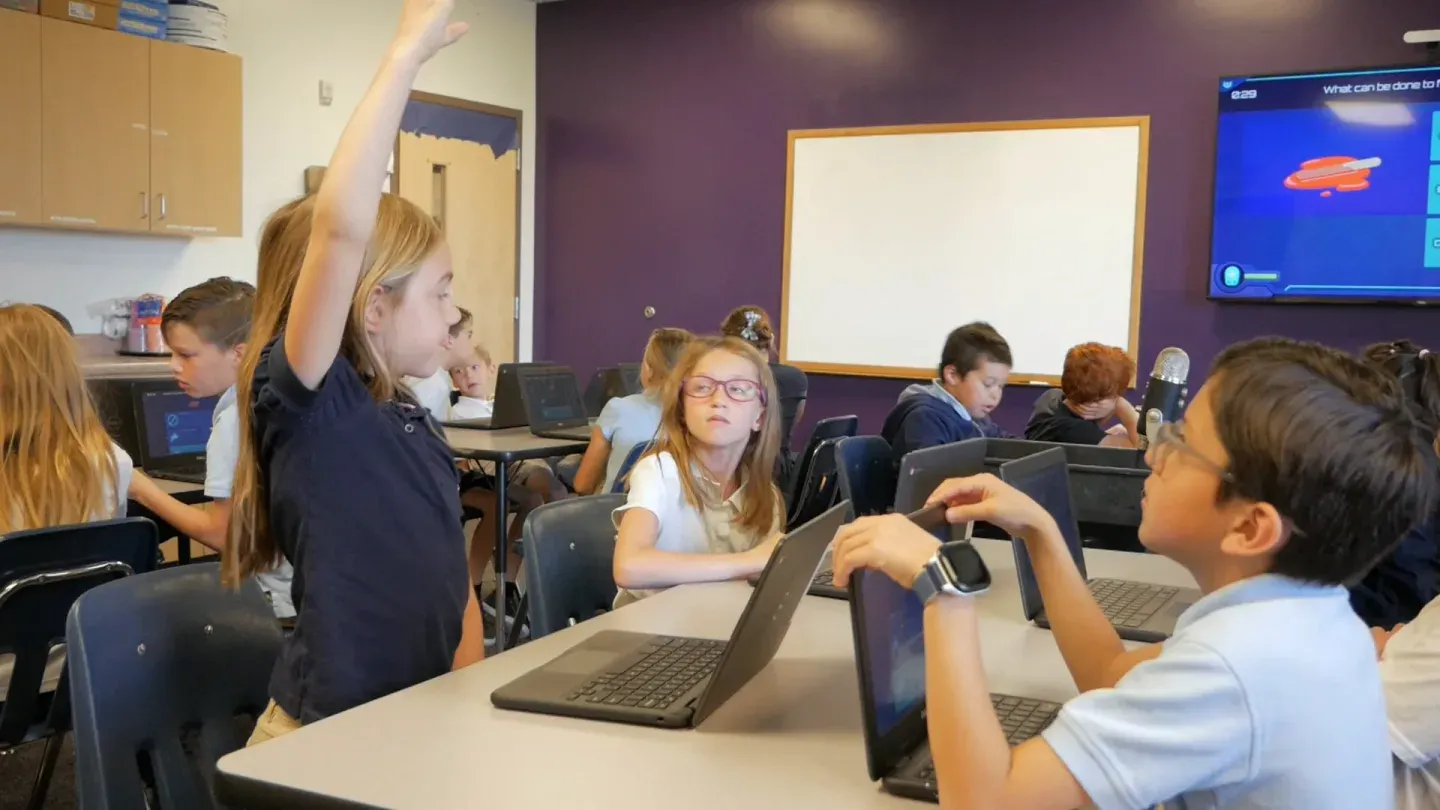
    A girl at a table of laptops stretches her hand high in the air while classmates work beside her and a question waits on the big screen at the front.
    What you'll see: one hand shooting up with an answer, the kid across the table not convinced yet, and a question on the big screen that the whole crew has to settle.

    Dr. Zyla, a leading time travel scientist, is hiding in the Princel Solar System, and the Crooked Snakes want her research. She needs evacuating, but a message with her location might be intercepted, so she sends cryptic questions about the properties and scale of the system’s celestial bodies. The answers open the encrypted file that holds her location. The story plays on the projector. The work happens at seven stations (Command, Engineering, Medical, Security, Science, I.T., Operations) and in the arguments between them.

    Every student is assigned to a team, and each team’s work is themed to it, from its own information and challenge to the same problem the rest of the crew is solving. The team gives a student a role in the story and people to lean on while you move between teams.

    Against the six:

    • Stakes. Dr. Zyla needs evacuating before the Crooked Snakes find her.
    • Apply. The code only opens if the crew reads the data right (NGSS MS-ESS1-3, interpreting data on the scale properties of objects in the solar system).
    • Accountability. Every student is assigned to a team, and each team’s work is themed to it.
    • Teacher leads. Once you’ve watched the 5-minute Teacher Preview, start it and ask: Which object has that property? What does the data rule out? Which answer does the evidence support?
    • Debrief. Its Mission Guide carries two follow-ups, including making a scale solar system.
    • See who did what. Every student gets a report on how well they did, shaped by what this Mission asked of them.

    “At the end of the year last year, every group in my classroom listed Mission IO in the ‘Top 10 Things about Sixth Grade.’”

    Sharla York, 6th grade teacher, Heritage Elementary School

    Will it work in my room?

    Students join with a class code: no student accounts, no student email, no passwords. Chromebooks, laptops, or tablets, plus your projector. Free for teachers, no credit card. Student data is covered by COPPA and FERPA, and we signed the Student Privacy Pledge. No projector or devices? Print the article and the search pages, and the fact-check still works.

    START FREE →

    Communication first, then this one

    This is one Mission. Its library siblings number more than 100, from fossils to fractions, and any of them can give a unit an ending worth preparing for, plus a report on every student. Every lesson finally has somewhere to go.

    What the report shows

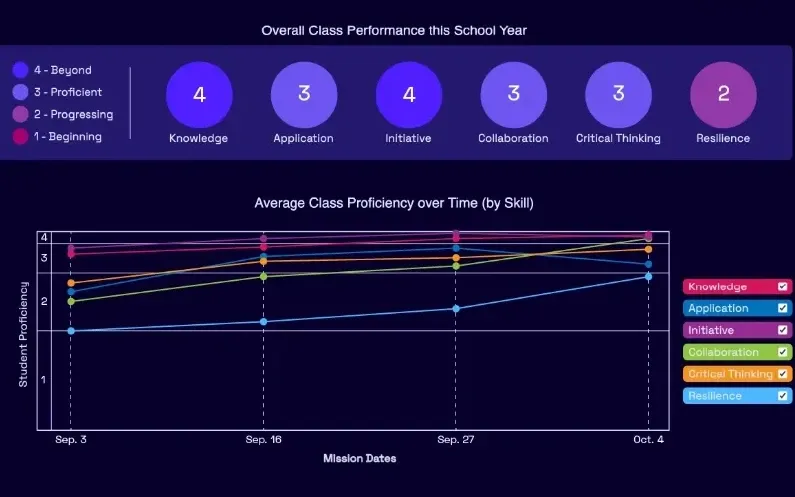
    A Mission.io class report: the class score in each of six skills, from knowledge and application to collaboration, critical thinking, and resilience, with the class chart across the year below.
    A class report from a real Mission: the class score in each of six skills, then each skill across the year.

    Every Mission produces a report for every student, built from what that student did across the whole Mission, on the skills the Mission captured. The six it can capture are Knowledge, Application, Initiative, Collaboration, Critical Thinking, and Resilience. The first two are what a test already sees. The other four are the human skills every school promises. The test shows what they know. The report shows the rest. This is where critical thinking gets practiced, and the only place it gets measured. SEE THE EVIDENCE →

    You taught it. Now find out who can use it.

    Who's behind it

    Mission.io is a research and design organization with one job: make collaborative, active learning something a teacher can run every unit instead of once a semester, and put a report in your hands when it’s over. Over a million students have run a Mission. The research behind them is funded by the National Science Foundation and the U.S. Department of Education’s Institute of Education Sciences, and Mission.io meets ESSA Level II standards, as validated by Instructure.

    “This is the only thing I’ve used in 24 years of teaching that I love just as much as my students do.”

    Evelyn Fowles, 6th grade teacher
    START FREEMISSION BRIEF →

    Free teacher account, no card. Go in this order: the Communication Mission, marked Start here in your library, then Encrypted Escape, each with its own 5-minute Teacher Preview.

Questions 6th grade teachers ask

My 6th graders say a page "looks legit." How do I get past that?

Show them a page that looks terrible and is right. That’s what round two is for: a reliable source with an ugly design and a loud headline. Once a team has nearly rejected a good source on looks, “it looks legit” stops sounding like a reason.

Do I need a device for every student?

No. One device per team works if the three jobs take turns, and with no devices at all you can print the article and three pages of search results. The checking moves to paper; leaving the page becomes turning the page.

How do I stop one student from doing all three jobs?

Split the card. Each job has its own third of the verdict card and its own initials box, and the team can’t vote until all three are filled. The student who wants to do everything can still help, but only by asking the other two what they found.

Is this media literacy or critical thinking?

Both, and in middle school science it’s also a standard: assessing the credibility, accuracy, and possible bias of a source is NGSS practice 8. The critical thinking part is the judgment at the end, a verdict from evidence that a classmate can check.

A verdict you can finally see

This week, pick one: run the council fact-check by hand with the verdict card, or run Encrypted Escape, which takes a 5-minute Teacher Preview to get ready for.