8th grade collaboration activities

The fishbowl rebuilt so the outer circle has real work and the inner circle a decision, five more classics fixed, job cards, and the Mission we’d run with 8th graders.

Who we are. Mission.io makes Missions: teacher-led, whole-class simulations where students use what they’re learning to work through a real scenario together.

Everything on this page works without us. The Mission we’d run with 8th graders is at the end, free. (Two friends of the crew back opposing fixes for a virus. Your class gets to referee.)

On this page

What collaboration looks like in 8th grade

Eighth grade collaboration activities are discussions where a group of thirteen-year-olds has to reach a decision on the evidence, while every other student in the room holds a job that makes the discussion count. This page rebuilds the fishbowl, the structure 8th grade teachers reach for when thirty students need one conversation, so nobody gets to just watch.

Thirteen-year-olds feel peer pressure hard, often complain about fairness, argue in groups, and hold strong opinions, and they’re reluctant to take risks. The fishbowl can use every bit of that. The outer ring is a low-risk seat, the fairness complaint becomes a job (the observer tracks who spoke), and a strong opinion has to survive a circle of peers. In the words of the New York middle school benchmarks, the outer ring is where students “practice respectful curiosity to better understand others’ lived experiences.”

The standard asks 8th graders to come prepared and draw on evidence, ask questions that connect several speakers’ ideas, and qualify or justify their own views in light of the evidence (CCSS ELA SL.8.1). Every job card below is one of those moves, with a student’s name on it.

Six things that make group work build collaboration

Active learning works: a 2014 review of 225 college STEM course studies counted 55% more failures in lecture classes than in active-learning ones (Freeman et al., 2014). Eighth graders don’t have to borrow from college, though. The strongest experimental evidence for cooperative goals is at exactly their age: 148 studies, students 12 to 15, higher achievement and better peer relationships than with competitive or individual goals (Roseth, Johnson, and Johnson, 2008). The six, as they play out in 8th grade, are below; the citations are in our K to 8 guide.

  1. 1. A real problem with stakes the class can feel.

    A question to discuss is an invitation to perform. A decision the committee has to announce by the bell, with the evidence that settled it, is a reason to listen.

  2. 2. Apply, don't recall.

    A good text carries this one. “What did you think?” throws it away. Every claim in the circle needs a line from the text behind it, and somebody outside is checking.

  3. 3. Group goals with individual accountability.

    In the usual fishbowl the inner circle shares nothing and the outer circle is an audience. Slavin’s synthesis is the case against that: where every student owned a piece of a group goal, 37 of 44 studies found positive effects, compared with 4 of 23 without (Slavin, 1991).

  4. 4. The teacher leads the thinking.

    Pose the opening question and then don’t vanish. Sit at the edge, and when the circle stalls, step in with a question and nothing more.

  5. 5. A debrief where the class argues it out.

    Thirteen-year-olds will complain the discussion wasn’t fair. Let the observers’ tallies settle it, out loud, in front of everyone.

  6. 6. A way to see who did what.

    Thirty students, one teacher, one clipboard: you can’t track a discussion alone. Give the clipboard to the outer circle and the whole room gets tracked.

Spectators watch. Observers keep score.

Discussion formats rarely get past two or three of these. The fishbowl is the discussion structure of 8th grade ELA and social studies, and below it gets all six. Its job cards and Tracker sheet come right after →

The fishbowl, rebuilt to hit all six

You know it. An inner circle discusses a text or a question while an outer circle watches and takes notes, and then the rings swap or the outer circle gives feedback. It’s how most teachers make a Socratic seminar work with thirty students. As usually run, though, the question is one to discuss rather than decide, the outer circle’s job is to sit, and the notes don’t count for anything.

Look at the outer ring ten minutes in and you’ll see two kids taking notes and a lot of kids taking a break. The fix is a decision for the inside and a named job for everyone outside.

Time
55 minutes with the text read the night before: 5 to hand out jobs, 15 for round one, 3 to swap rings, 15 for round two, 2 for the Closers, 10 to debrief, 5 to move the furniture. In a 45-minute block, run 12-minute rounds and set up the chairs before the bell: 44 minutes. Don’t shorten the debrief: it runs on the observers’ tallies.
Groups
An inner circle of ten and twenty outside, two observers on each speaker. With 30, a different ten go in for round two, and the ten who stayed out both rounds take the first seats next time.
Supplies
Printing only: the text you choose, plus the job cards, the Tracker sheet, the Evidence Checker log, and the Question Writer slip, all on the printable.
Standards
CCSS SL.8.1a, SL.8.1c, and SL.8.1d (come prepared with evidence; connect several speakers’ ideas; qualify or justify views in light of evidence).
  1. The decisionStakes

    The inner circle is the committee that has to decide, by the end of the round, whether the school adopts the policy in the text, and it has to say what evidence settled it. The outer circle is the record: nothing the committee says counts unless an observer wrote it down. It works for ELA, civics, or science; the structure doesn’t change.

  2. Apply, don't recallApply

    Everybody reads the text the night before. In the first three minutes, each Opener has to put one claim on the table with a line from the text behind it. That’s SL.8.1a: they come prepared, and the circle starts from evidence, not from whoever talks first.

  3. Jobs inside the circleAccountability

    The set is five cards: two Openers, a Connector, a Qualifier, and a Closer. Print it twice for a circle of ten and hand the cards out yourself, no volunteering. The two Closers have to agree before either one speaks.

    • Opener

      Puts one claim with a text line on the table in the first three minutes.

    • Connector

      Connects two speakers' points before adding anything new (SL.8.1c).

    • Qualifier

      At least once, says what would change their mind and whether anyone has said it (SL.8.1d).

    • Closer

      States the committee's decision and the two pieces of evidence it rests on.

  4. Jobs outside the circleAccountability

    Every observer is paired to one inner speaker by name. Every speaker gets a Tracker, and the second observer alternates between the other two jobs.

    • Tracker

      Tallies the partner's four moves, by name, on the Tracker sheet.

    • Evidence Checker

      Writes down every text line the partner cites and marks whether it says what they claimed.

    • Question Writer

      Writes one question the partner should have been asked.

  5. You lead the thinkingTeacher leads

    Sit at the edge of the circle, not in it, and speak only when the circle stalls. Three questions, one at a time: What evidence would settle this? Who has changed their mind, and on what? What has nobody said yet? If the circle is moving, your best move is silence.

  6. Two roundsApply

    Swap rings with a second question that depends on the first decision: if the policy is adopted, what’s the first exception? The new circle has to build on the old circle’s result, which is what a real committee does.

  7. The debriefDebrief

    10 minutes, whole class, Tracker sheets out. Three questions in order: Observers, what did your partner do most, and what did they never do? Which text line got cited most, and did it say what people claimed? What would the committee need to know that nobody brought? The second question is usually where the room gets loud.

  8. See who did whatSee who did what

    Here the Tracker sheet does the tallying: made a claim with evidence, connected two speakers, qualified or justified a view, asked a question that moved the discussion. Every inner speaker has a Tracker, and every observer’s own sheet is the record of their job, so this format catches the whole room in one period. Your own tally covers the Closers and any Tracker who drifted off.

(The outer circle holds the pencils, and with them the power. They notice.)

Read the Evidence Checker logs afterward and you’ll find the line everybody cited and nobody read closely.

The fishbowl discussion, free

Emailed now, ready to copy: the teacher page, the inner-circle job cards, the three outer-circle jobs (the Tracker sheet with the four moves by name, the Evidence Checker log, and the Question Writer slip, each with its job printed on it), the round questions with the second Opener card, and the four-behavior tally.

It’s on its way.

Check your inbox for the fishbowl discussion.

Email me the sheet. It comes as a PDF, ready to print. Unsubscribe anytime.

Five more classics, and the fix each needs

By 8th grade your students have seen every discussion format there is, and they know how to look busy in all of them. Here are five more, and the changes that stop the looking busy.

Five more for 8th grade

1. Socratic seminar (4 to 8)

Needs one text, read beforehand, and a circle of chairs. Whole class. A period.

The whole class sits in one circle to discuss a text everyone read beforehand, with you asking questions instead of telling. It runs on real text and real talk. As usually run, though, four students talk and twenty listen, so nothing is at stake, nobody has a named part, and nothing records who said what.

The fix

  1. Pick a decision the text bears on, and announce it before anyone reads.
  2. Collect a card from every student before the circle starts, with their position and one line from the text.

See the seminar fixed on the critical thinking guide →

2. Structured academic controversy

Needs one issue, a short reading for each side. Groups of four, as two pairs.

In groups of four, two pairs each argue one side of an issue, swap and argue the other side, then the four look for consensus. It runs well where it runs at all, with real content, a side for every student, and a built-in debrief. As usually run, though, nobody tracks who did what.

The fix

  1. Borrow the Tracker sheet from the fishbowl above.
  2. Assign one Tracker per pair, who tallies that pair’s moves by name.

The fishbowl’s Tracker sheet is the whole fix, so no separate page.

Needs posted work, sticky notes. Whole class. 20 minutes.

Groups rotate past work posted around the room and leave comments on sticky notes. It gets everyone up and reading each other’s work. As usually run, though, the notes are anonymous, so there’s no accountability and no record.

The fix

  1. Turn the stations into evidence, so each stop holds something to reason from.
  2. Have each group sign a claim card at every stop.

See the gallery walk rebuilt for 7th grade →

4. Lost on the Moon (or Lost at Sea) (5 to 8)

Needs the 15-item list. Groups of four or five. 45 minutes.

Each student ranks the survival items alone, the crew agrees on one list, and the expert key settles the score. Every student has a stake and a vote. As usually run, though, items get ranked on gut feel, and nothing records who argued what.

The fix

  1. Tie every item to science the class has already learned.
  2. Score the gap between each student’s solo list and the crew’s.

See Lost on the Moon rebuilt for 6th grade →

5. Group presentation

Needs a slide deck, four presenters. Groups of four.

Four students build one slide deck and present it together. Each student gets a turn at the front. As usually run, though, one student made all the slides, nothing is at stake, and only the slide-maker is answerable.

The fix

  1. Write one question for each presenter that the audience will ask only them, and hand it to someone in the audience before the group starts.
  2. Tally each presenter’s answer, by name.

The audience questions are all it needs; no page.

  • Our part · We make Missions

    Or let a Mission bring both sides into the room

    Teachers run fishbowls by hand all year, and they work. A Mission is a teacher-led, whole-class simulation that packs the same six into one class period. We connect every student, run the work at each station, and keep the story moving. You run what eighth graders actually need from an adult: the question that makes a strong opinion show its evidence.

    You're at the helm, not on the hook.

    At Odds: the whole-class Mission we'd run with 8th graders

    At Odds · Grades 5 to 8 · About 40 minutes · One device per student, plus your projector · Free with a teacher account

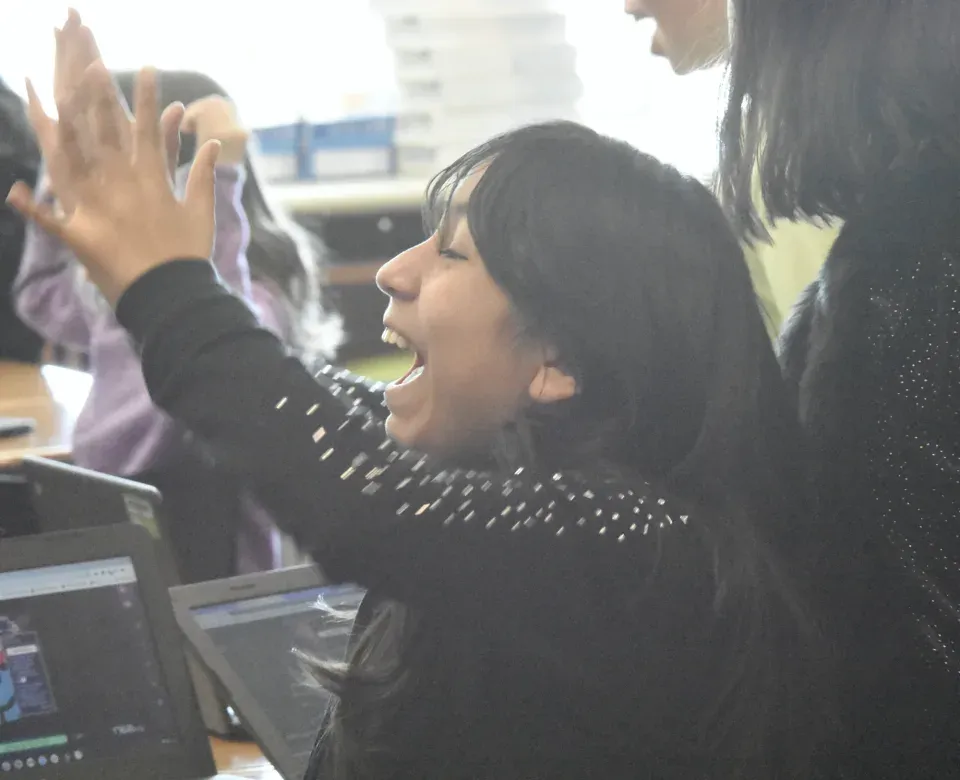
    A student throws both hands up and laughs, her laptop open in front of her, as classmates crowd in behind.
    What you'll see: a room split over two answers, a station reading the other side's evidence out loud, someone throwing both hands up when the crew lands on a decision, and you asking what would change their mind.

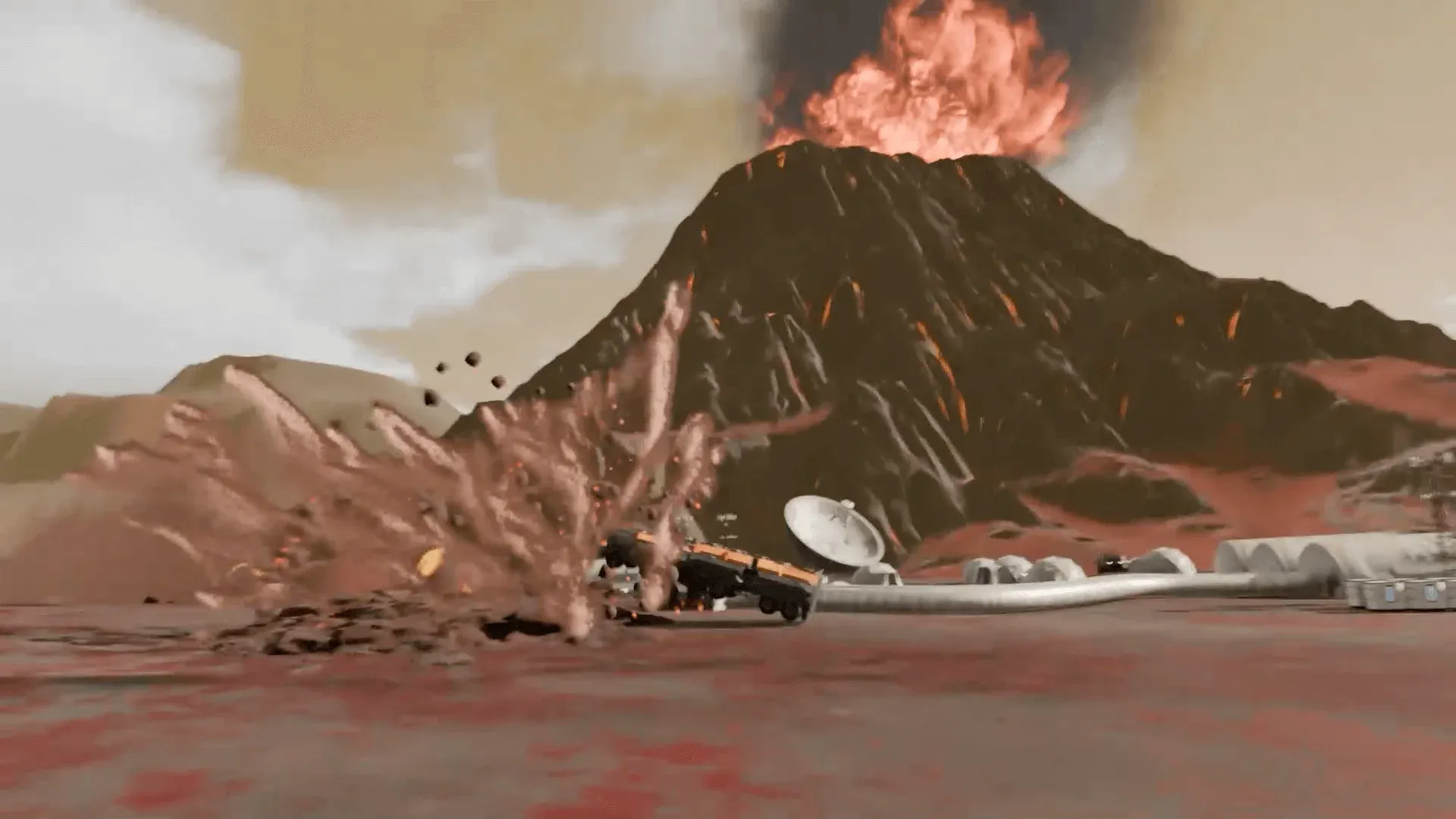
    An aggressive virus is spreading to other planets, and the zephyr population is at risk. Elijah and Anja, two friends of the crew, are leading voices for opposite solutions, and the crew has to analyze and debate both before it picks one. You run the story from the projector. The work happens at six stations (Command, Engineering, Medical, Security, Science, I.T.) and in the arguments between them.

    Every student is assigned to a team, and each team’s work is themed to it, from its own information and challenge to the same problem the rest of the crew is solving. The team gives a student a role in the story and people to lean on while you move between teams. Your question at each team: what would change your mind?

    Against the six:

    • Stakes. The virus is spreading, two trusted friends disagree, and the crew has to choose.
    • Apply. Students research, analyze, and debate the two positions to choose a course of action (CCSS SL.8.1 and W.8.1, arguments backed by reasons and evidence).
    • Accountability. Six teams research and debate their way to one decision.
    • Teacher leads. Once you’ve watched the Teacher Preview and started it, ask: What’s Elijah’s strongest evidence? What’s Anja’s? What would change your mind?
    • Debrief. The Mission Guide pairs it with a debate activity from TIME for Kids.
    • See who did what. Every student gets a report on how well they did, shaped by what this Mission asked of them.

    “Even my quiet or reluctant students participate because the missions are structured in a way where everyone’s voice matters.”

    Adriana Lopez, Junior high teacher, Clint Jr. High School

    Will it work in my room?

    Students join with a class code: no student accounts, no student email, no passwords. Chromebooks, laptops, or tablets, plus your projector. Free for teachers, no credit card. Student data is covered by COPPA and FERPA, and we signed the Student Privacy Pledge. No projector or devices? The fishbowl needs chairs and paper, and the sheet still works.

    START FREE →

    Communication first, then this one

    This is one Mission. It has over a hundred siblings, all built this way, so the argument your class has this unit can happen again in the next one, report included.

    What the report shows

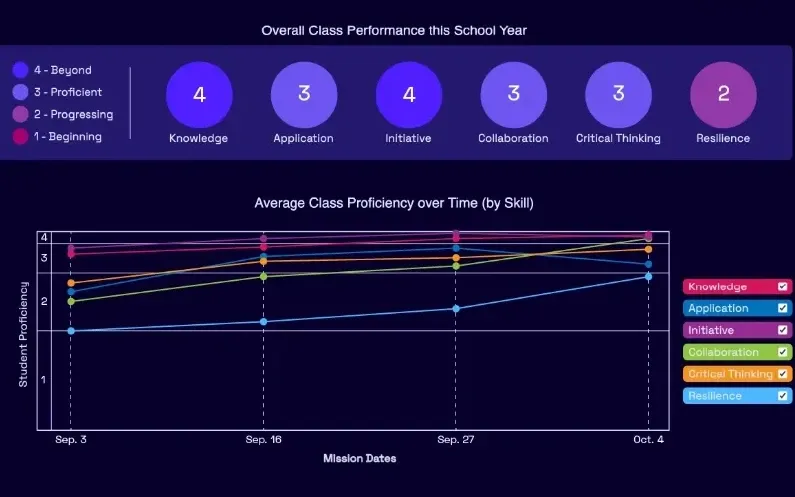
    A Mission.io class report: the class score in each of six skills, from knowledge and application to collaboration, critical thinking, and resilience, with the class chart across the year below.
    A class report from a real Mission: the class score in each of six skills, then each skill across the year.

    Every Mission produces a report for every student, built from what that student did across the whole Mission, on the skills the Mission captured. The six it can capture are Knowledge, Application, Initiative, Collaboration, Critical Thinking, and Resilience. The first two are what a test already sees. The other four are the human skills every school promises. The test shows what they know. The report shows the rest. This is where collaboration gets practiced, and the only place it gets measured. SEE THE EVIDENCE →

    You taught it. Now find out who can use it.

    Who's behind it

    Mission.io is a research and design organization with one job: make collaborative, active learning something a teacher can run every unit instead of once a semester, and put a report in your hands when it’s over. Over a million students have run a Mission. The research behind them is funded by the National Science Foundation and the U.S. Department of Education’s Institute of Education Sciences, and Mission.io meets ESSA Level II standards, as validated by Instructure.

    “I even sent an email to my whole building encouraging everyone to try it.”

    Jen, Veteran teacher, OH
    START FREEMISSION BRIEF →

    Free teacher account, no card. Open with the Communication Mission, marked Start here in your library, then At Odds, and give each one’s 5-minute Teacher Preview a look first.

Questions 8th grade teachers ask

Half my 8th graders won't speak in front of their peers. Doesn't a fishbowl make that worse?

It can, if the outer ring is an audience. Here the outer ring is a job with a pencil, and the quiet student can be an excellent Evidence Checker in round one before taking an Opener card in round two. Starting outside is a low-risk seat that still counts.

How is this different from a Socratic seminar?

A seminar is one circle and everyone in it; the fishbowl splits the room so thirty students can be in one conversation and every one of them has a job. Our critical thinking activities guide rebuilds the seminar itself.

Can I grade from the observers' Tracker sheets?

Use them as evidence, not as the grade. A Tracker sheet tells you what a speaker did, and its own completeness tells you what the Tracker did. Check a few against your own tally, and when an 8th grader says it wasn’t fair, the sheet is right there.

Why does collaboration matter so much in 8th grade?

Because the 8th grade standard asks for the moves a good discussion runs on: connect several speakers’ ideas, and change or defend a view on the evidence. Weighing more than one perspective and presenting evidence as a team is the work, and the fishbowl practices it with a record of who did it.

Nobody just watches

Two doors this week: the fishbowl on paper with the job cards and the Tracker sheet, or At Odds, which takes a 5-minute Teacher Preview to learn.