6th grade engineering activities

The shake table rebuilt so 6th graders write precise criteria before they build, five more design challenges, a free printable, and every 6th grade engineering Mission by standard.

Who we are. Mission.io makes Missions: teacher-led, whole-class simulations where students use what they’re learning to work through a real scenario together.

Everything on this page works without us. Every 6th grade engineering Mission is at the end, by standard, free. (Infection hangs an astronaut’s life on the area of a polygon. Nobody asks when they’ll use this again.)

On this page

What 6th grade engineering looks like

Sixth grade engineering activities are design challenges where the class defines a problem precisely, tests more than one solution, and combines what worked, with each student answerable for a piece. This page covers the four middle school engineering design standards, MS-ETS1-1 to MS-ETS1-4, with a challenge for each and a Mission where one exists. The 6th grade science activities page carries the investigations.

Middle school engineering is one 6 to 8 band of four expectations, and each state orders the band its own way. Define the criteria and constraints precisely, including the impact on people and the environment (MS-ETS1-1). Evaluate competing solutions with a systematic process (MS-ETS1-2). Analyze test data to combine the best features of several solutions (MS-ETS1-3). Develop a model that generates data for iterative testing toward an optimal design (MS-ETS1-4). Sixth grade typically pairs them with Earth’s hazards and resources (MS-ESS3).

You know the activity that usually stands in for all of that. Straws, tape, a tray on marbles, and the teacher shaking every tower until the class cheers the last one standing. Nobody wrote down what the tower was supposed to withstand, so nobody can say whether it passed. Put the shake level and the height on paper before the first straw goes up, and the shake becomes a test.

Six things that turn a build into engineering

The standards set the bar on purpose: NGSS raised engineering design “to the same level as scientific inquiry,” and at grades 6 to 8 that means defining the problem with greater precision, combining solutions, and testing and revising again and again (NGSS Appendix I). The catch is the period. A tower that runs past one of them had better be engineering.

  1. 1. A real problem with stakes the class can feel.

    “Build a tall tower” is a craft. “A school on a fault line, with a classroom on the top floor” is a problem.

  2. 2. Apply, don't recall.

    A second round that only works with the shake log from the first. If the tower can be finished without testing anything, it isn’t engineering.

  3. 3. Group goals with individual accountability.

    The one most build challenges miss: one kid taping, three kids watching it wobble. When the group shared a goal and each student answered for a part, 84% of studies found a positive effect; without both, 17% (Slavin, 1991).

  4. 4. The teacher leads the thinking.

    A teacher who shakes every table can’t ask much. Hand the shaking to a student, and ask three at the table (where’s your weakest story, what did the first shake tell you, what would you steal from another team). They beat a worksheet of twenty at the desk.

  5. 5. A debrief where the class argues it out.

    The build is the setup. The argument afterward, about what the survivors shared and how to combine them, is the practice the standards name.

  6. 6. A way to see who did what.

    If you can’t tell which student vetoed the extra story and which one only taped, you can’t teach the design process. You can only watch it fall.

Looks don’t survive a level-3 shake. Triangles do.

The printable at the end of the next section puts all six on the table, with every card and log the activity uses, ready to copy. Get the sheet →

The shake table, rebuilt for 6th grade (MS-ETS1-1)

A tower of straws, index cards, or craft sticks on a base, tested on a shake table (a tray on marbles or rubber bands, pulled back and released) until it fails. It’s on nearly every 6th grade list because sixth grade is where the shake table gets a real criteria box, and the way it usually runs is a free build, the teacher doing all the shaking, and a debrief that amounts to “whose is still up?” Here’s the version that hits all six.

Time
60 minutes. The 45-minute cut: pre-build one shake table per two teams the day before (a tray on 20 marbles in a lid, or a tray on two rubber bands), use 8-minute builds, and don’t cut the debrief.
Groups
Fours. With 30 students, seven groups of four and one of two, where the Structural Lead also records.
Supplies for eight teams
240 straws, masking tape, 8 washers, 8 cardboard base plates, and 4 shake tables (trays, marbles, lids, rubber bands). About $15 the first year.
Standards
MS-ETS1-1 (criteria and constraints, stated precisely, with the impact on people) with MS-ETS1-3 (combine the best features of tested designs). The hazards content it sits inside is MS-ESS3-2 (forecast natural hazards and inform the technologies that lessen their effects); the tower assesses the engineering.
  1. Teach first, 10 minutesApply

    Shake a tall narrow tower and a short wide one on the table. Then shake a square frame, and a square frame with a diagonal. Ask what changed. Name the idea: a wide base and triangles resist shaking, and a heavy top makes it worse. Then name the test: the shake table gives every tower the same shake, the same pull-back, the same release, counted the same.

  2. The problemStakes

    A city on a fault line needs a three-story school that stays standing through a level-3 shake (pulled back to the 10 cm mark, three releases) with a “classroom” (a washer) on the top floor, and the budget allows 30 straws and 1 meter of tape. The team writes its criteria with precision: three stories, at least 30 cm tall, the washer on top, and no story collapsing through three level-3 shakes. The constraints: 30 straws, 1 m of tape, 12 minutes, and the base plate provided. Then one line about who is inside.

  3. Four roles, one job eachAccountability

    On the sheet, and everyone signs their role’s box. Builder and Shake Operator swap between rounds.

    • Builder

      The only hands on the straws.

    • Structural Lead

      Approves each addition and says what it braces against, or vetoes it.

    • Shake Operator

      Same pull-back, same release, counted aloud, and no extra shakes.

    • Recorder

      Sketches the tower, writes which story moved first at each level, and whether it survived.

  4. You lead the thinkingTeacher leads

    Three questions, asked at the table: Where is your weakest story, and why? What did the first shake tell you about the base? Which feature from another team’s tower would you steal, and why? The hardest part is not pointing at the missing diagonal. Let the shake point at it.

  5. Two rounds, so the shake log has to be usedApply

    Build, then three shakes at level 3. Then 3 minutes to change one thing, which the Structural Lead chooses, and three more shakes, escalating to level 4 (15 cm) if the tower survives. A team that didn’t record which story moved first has nothing to change but its luck.

  6. The debrief, 10 minutesDebrief

    Every team’s survive or fail and its “story that moved first” on the board. What did the survivors share at the base and at the top? Combine the best features from two towers into one design on the board. Who on your team vetoed something, and was the veto right? The second question is the standard: combining tested designs (MS-ETS1-3), as a drawing.

  7. See who did whatSee who did what

    The observation sheet, four behaviors per student: proposed a brace with a reason, applied a criterion in a decision (said “that breaks the height rule”), disagreed with a reason, changed their mind with a reason. You’ll catch about half the room in one period. Shared shake tables mean teams queue, and the queue is where you tally.

(The first hand up will ask whether tape counts as a straw. It doesn’t.)

Whatever survives, end on the line each team wrote about who is inside. Did the tower keep its promise to them?

The fault-line shake table, free

Emailed now, ready to copy: the teacher page, four role cards, the criteria box with the tower sketch, the shake log with the combine-two-designs sketch, the shake table build note, and the four-behavior tally.

It’s on its way.

Check your inbox for the fault-line shake table.

Email me the sheet. It comes as a PDF, ready to print. Unsubscribe anytime.

Five more 6th grade design challenges, by standard

Five more on every 6th grade list: what each one is, how it usually runs, and what it needs to be engineering, in the order the standards run.

Define, evaluate, combine, iterate

2. The paper skyscraper (MS-ETS1-1)

Needs paper and tape.

Teams build the tallest freestanding tower they can from paper and tape. It’s cheap and fast, and every tower is easy to measure. As usually run, though, it’s a race for height: there’s no reason for the tower to stand, no idea about structure goes in, and one or two students do the building.

The fix

  1. Make a wind test the criterion: 10 seconds of a fan on low, and the tower has to stand.
  2. Give four roles, so every student has a job in the build and the test.
  3. Log where each tower gave out, so the next round starts from the weak spot.

See it fixed on the 6th grade STEM page →

3. The tsunami barrier in a tray (MS-ETS1-2)

Needs a tray shoreline model, water for the wave.

Students build a shoreline in a tray, add a barrier, and send a wave at it. The stakes are real, and they connect straight to the hazards unit. As usually run, though, it’s a demo tray: every wave is different, a few students do the building, and nothing records what happened.

The fix

  1. Give each team the stream tray’s four roles: a Builder, a Rainmaker who here makes the same wave every time, a Surveyor, and a Recorder.
  2. After each wave, the Surveyor measures how far the water and sand reached past the barrier.
  3. The Recorder sketches each barrier and writes the measurements, so teams can compare designs.

See the stream tray's roles on the 4th grade page →

4. The solar oven with reflectors (MS-ETS1-3)

Needs a box, foil reflectors, a thermometer, the sun.

Teams aim foil reflectors into a box in the sun and see how hot it gets inside. The problem is real and the design has to work. As usually run, though, it’s a treat day, every team builds roughly the same oven, and no one compares numbers.

The fix

  1. Assign each team one variable to change, like the reflector angle or the number of reflectors.
  2. Keep a thermometer log, with readings at the same times in every oven.
  3. Put every team’s temperatures side by side and ask which change mattered most.

No page for this one; one variable per team and the thermometer log are the fix.

5. The Rube Goldberg machine (MS-ETS1-4)

Needs whatever the chain reaction needs. A multi-day project.

Teams build a chain reaction over several days, with ramps, marbles, and dominoes setting off one step after the next. It already has a real problem and a design that has to work. As usually run, though, one or two students design most of it, and when the full run fails, nobody can say which step broke or why.

The fix

  1. Give each student one step to own and sign for.
  2. Before the full run, each student explains out loud what makes their step trigger the next one.
  3. When a run fails, start with the owner of the step that broke.

See it fixed on the 6th grade STEM page →

6. The straw rocket (MS-ETS1-4)

Needs paper, straws, tape, a marked hallway. Groups of four.

Students roll paper into a rocket, slide it over a straw, and blow it down a marked hallway. It’s quick and cheap, and distance is easy to measure. As usually run, though, it’s a distance contest where each student launches until one goes far, and nobody knows why it did.

The fix

  1. Launch three times a round, so one lucky shot doesn’t decide anything.
  2. Make one student the Data Lead, who logs every launch and works out the range of the three.
  3. Change one variable between rounds, like the fins or the nose, and compare the logs.

See it fixed on the 6th grade STEM page →

  • Our part · We make Missions

    Then the unit has somewhere to go

    Plenty of teachers rebuild these by hand every unit, and it works. A Mission is a teacher-led, whole-class simulation built from a unit you teach. The shake table is MS-ETS1-1 and MS-ETS1-3, and Infection is built to the band’s second standard, MS-ETS1-2. Spine-Backed Globster carries both of the table’s standards. After the shake table, run Spine-Backed Globster.

    You're at the helm, not on the hook.

    Infection: area and design, as a Mission

    Infection · Grades 6 to 9 · About 34 minutes · One device per student, plus your projector · Free with a teacher account

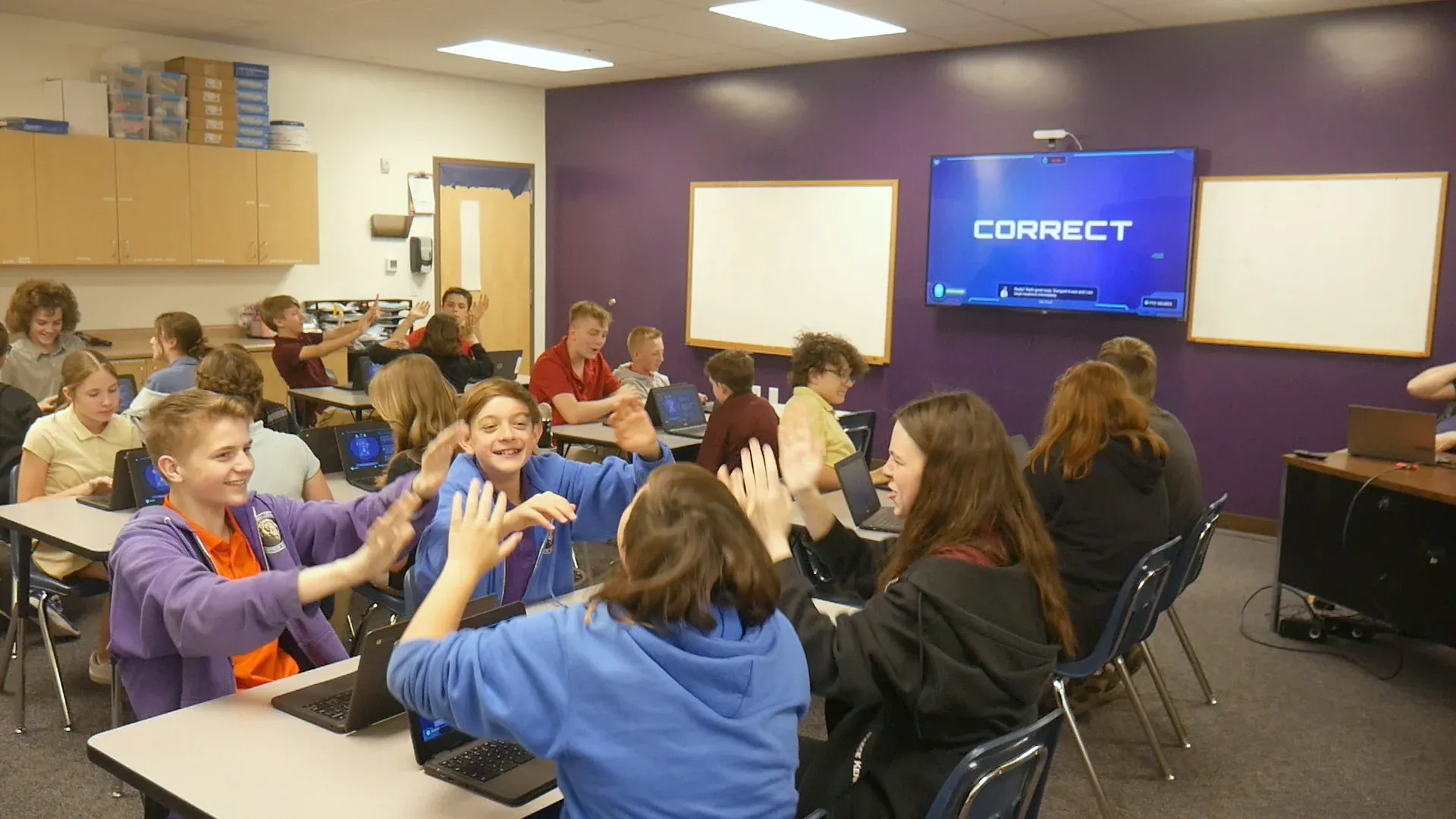
    A middle school class at laptops high-fives across a table while the screen at the front reads CORRECT.
    A table high-fiving while the screen at the front reads CORRECT.

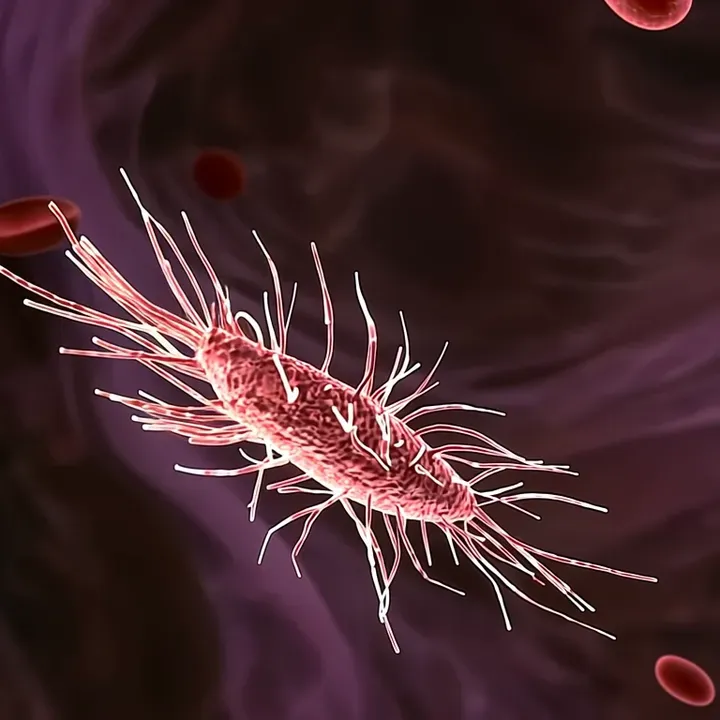
    One of the crew’s astronauts has been infected by a mysterious alien bacteria that is spreading fast and resisting every known treatment, and the infected tissue is growing close to vital organs. The crew has to map the infected zone with area and quadrilaterals, and calculate how to eliminate the bacteria without harming healthy tissue. The story plays on the projector. The work happens at seven stations (Command, Engineering, Medical, Security, Science, I.T., Operations) and in the arguments between them.

    Every student is assigned to a team, and each team’s work is themed to it, from its own information and challenge to the same problem the rest of the crew is solving. The team gives a student a role in the story and people to lean on while you move between teams. You’re at the helm, asking how big the infected region is, and how they know the plan spares the healthy tissue.

    It’s built to the area of polygons (6.G.A.1) and to evaluating competing designs (MS-ETS1-2), with reading and speaking codes alongside (RST.6-8.3, RST.6-8.7, SL.6.1), and the vocabulary crosses into life science: tissue, immune system, vital organs, cell membrane, nucleus, mitochondria. It belongs at the end of the area unit, where the infected zone is a polygon the class can break into shapes it already knows. The lesson prepares them. The Mission is what they’re preparing for.

    “This is the only thing I’ve used in 24 years of teaching that I love just as much as my students do.”

    Evelyn Fowles, 6th grade teacher

    Will it work in my room?

    Students join with a class code: no student accounts, no student email, no passwords. Chromebooks, laptops, or tablets, plus your projector. Free for teachers, no credit card. Student data is covered by COPPA and FERPA, and we signed the Student Privacy Pledge. At about 34 minutes, Infection fits inside a 45-minute period, with time left for the debrief.

    START FREE →

    Communication first, then two design Missions

    What the report shows

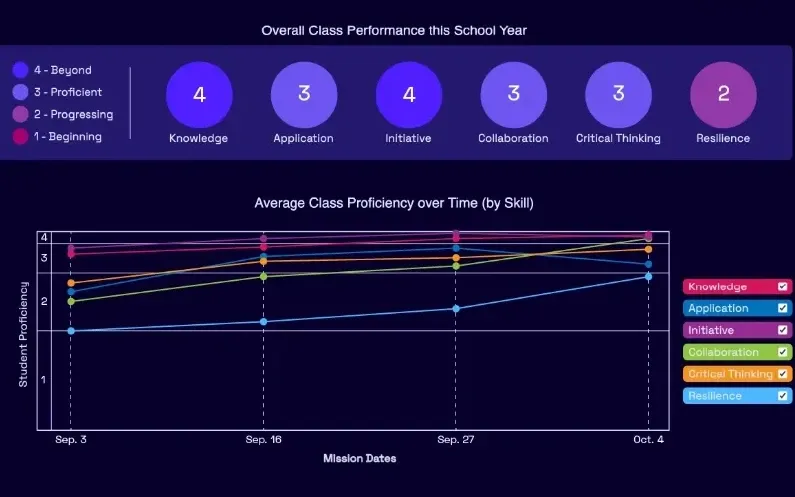
    A Mission.io class report: the class score in each of six skills, from knowledge and application to collaboration, critical thinking, and resilience, with the class chart across the year below.
    A class report from a real Mission: the class score in each of six skills, then each skill across the year.

    Every Mission produces a report for every student, built from what that student did across the whole Mission, on the skills the Mission captured. The six it can capture are Knowledge, Application, Initiative, Collaboration, Critical Thinking, and Resilience. The first two are what a test already sees. The other four are the human skills every school promises. The test shows what they know. The report shows the rest. SEE THE EVIDENCE →

    You taught it. Now find out who can use it.

    Who's behind it

    Mission.io is a research and design organization with one job: make collaborative, active learning something a teacher can run every unit instead of once a semester, and put a report in your hands when it’s over. Over a million students have run a Mission. The research behind them is funded by the National Science Foundation and the U.S. Department of Education’s Institute of Education Sciences, and Mission.io meets ESSA Level II standards, as validated by Instructure.

    6th grade engineering Missions by NGSS standard

    Infection is one. There are 6 engineering Missions at 6th grade, numbered 7 to 12 below: three built to the middle school engineering standards, one from the 3 to 5 band that runs through 6th grade, and two career Missions with no NGSS code. MS-ETS1-4 has no Mission, and two challenges on this page teach it. Each code links to its standard on nextgenscience.org.

    Engineering design (MS-ETS1)

    Three Missions across the band’s first three standards; Spine-Backed Globster carries all three. The fourth, MS-ETS1-4, is the Rube Goldberg machine and the straw rocket.

    Engineering design Missions for 6th grade, by NGSS code, with the standard that has none.
    NumberThe standardMissionMinutes
    7MS-ETS1-1, MS-ETS1-2, MS-ETS1-3, MS-LS2-4, MS-LS2-5 Define the problem precisely, then evaluate and combine solutions for a reef losing its biodiversity to an invasive species (grades 6 to 12). On this page: 1. The shake table, 2. The paper skyscraper, 3. The tsunami tray, and 4. The solar oven.Spine-Backed Globster36
    86.G.A.1, MS-ETS1-2 Use area and quadrilaterals to map infected tissue and remove it without harming healthy cells (grades 6 to 9). On this page: 3. The tsunami tray.Infection34
    93-5-ETS1-1, 3-5-ETS1-2, MS-ETS1-2, MS-ETS1-3 Design an improvement to each of three islands’ defenses before a tsunami arrives (grades 5 to 8). On this page: 1. The shake table, 3. The tsunami tray, and 4. The solar oven.Tsunami33
    MS-ETS1-4 Develop a model that generates data for iterative testing and modification, toward an optimal designOn this page: 5. The Rube Goldberg machine and 6. The straw rocket

    From the 3 to 5 band, through 6th grade

    One Mission built to an elementary design standard that keeps running in 6th grade.

    A 3 to 5 engineering design Mission that runs at 6th grade, by NGSS code.
    NumberThe standardMissionMinutes
    103-5-ETS1-3 Fair tests and failure points: improve a damaged reactor’s design from the data (grades 3 to 6)Reactor Revamp45

    Engineering careers, from 4th grade up

    Two Missions from the career set that run from 4th grade through 12th. Neither lists an NGSS code; each one is a design problem with real constraints.

    Engineering career Missions that run at 6th grade, with no NGSS code listed.
    NumberThe standardMissionMinutes
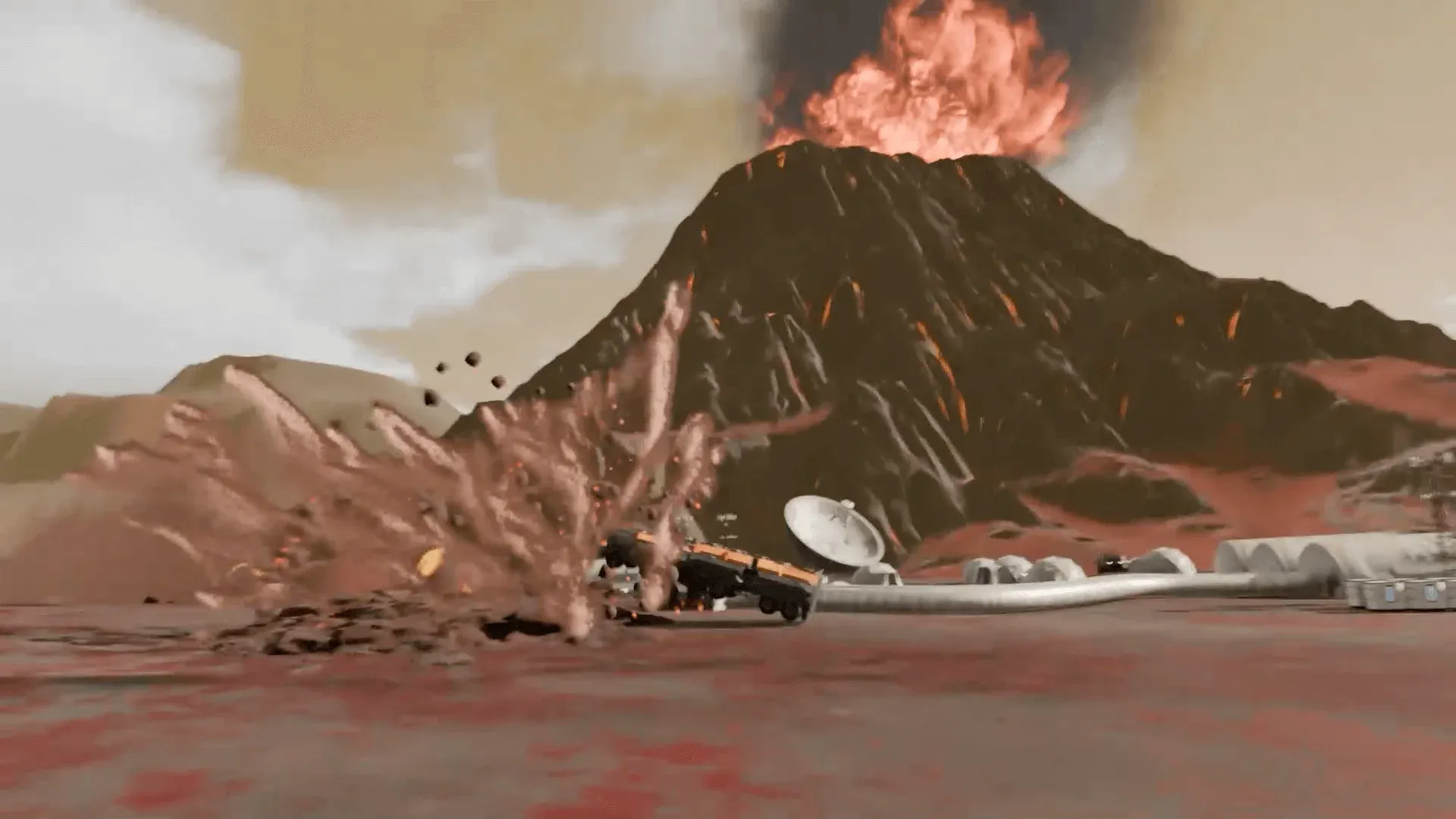
    11Tunnel through an asteroid with different drill bits before it hits a planet (grades 4 to 12; no NGSS code listed; made with US Synthetic)Unstoppable Force34
    12Pick a route, a landing point, and a first shelter on Mars (grades 4 to 12; no NGSS code listed; made with Hill Air Force Base)Mission to Mars45
    START FREEMISSION BRIEF →

    Free teacher account, no card. Start with the Communication Mission, marked Start here in your library, then Infection or Spine-Backed Globster, each after its 5-minute Teacher Preview.

    Also at this grade

    The 6th grade science activities page maps the grade’s science and engineering Missions by NGSS standard, these design Missions among them; the 6th grade STEM activities page rebuilds the straw rocket and fixes the paper skyscraper and the Rube Goldberg machine; and the 6th grade math activities page maps every 6th grade math standard, 6.G.A.1 among them.

Questions 6th grade engineering teachers ask

Will a 6th grade design challenge fit a 45-minute period?

The shake table runs 60 minutes, so use the 45-minute cut: shake tables built the day before and 8-minute builds. Four of the six Missions fit with time to spare: Tsunami at 33 minutes, Infection and Unstoppable Force at 34, and Spine-Backed Globster at 36. Reactor Revamp and Mission to Mars, at 45, fill the whole 45-minute period, with no time left for the debrief.

Which 6th grade engineering standards does this page map?

The whole middle school band: MS-ETS1-1, the shake table’s, plus MS-ETS1-2, MS-ETS1-3, and MS-ETS1-4. The first three have Missions. MS-ETS1-4 has none, so the Rube Goldberg machine and the straw rocket carry it. Reactor Revamp, built to the 3 to 5 band’s 3-5-ETS1-3, still runs in 6th grade.

Why does this 6th grade engineering page lead with a Mission about area?

Infection works in two subjects at once. It’s the one engineering Mission on a 6th grade math code (6.G.A.1, the area of polygons), and it’s built to evaluating competing designs (MS-ETS1-2), the band’s second standard. For the shake table’s own standards, run Spine-Backed Globster after the tower.

What does "with precision" mean in a 6th grade criteria box?

Numbers a test can check: three stories, at least 30 cm, the washer on top, and no story collapsing through three level-3 shakes, plus one line about who is inside. If two teammates could argue about whether the tower passed, the criterion needs another pass.

Do the 6th grade Missions here line up with my state's standards, not just NGSS?

Spine-Backed Globster maps to 21 state science sets, Utah’s SEEd, Florida, and New York among them. Infection maps to North Dakota’s math standards and to Utah’s and North Dakota’s ELA standards. Each Mission page lists the rest.