3rd grade critical thinking activities

Four corners, rebuilt so 3rd graders back every move with evidence, five more classics and what each misses, a free printable, plus the Mission we’d run with 3rd graders.

Who we are. Mission.io makes Missions: teacher-led, whole-class simulations where students use what they’re learning to work through a real scenario together.

Everything on this page works without us. The Mission we’d run with 3rd graders is at the end, free. (Its only clue is a fossil of RALF, the friend your class is there to rescue. Eight-year-olds have questions.)

On this page

What critical thinking looks like in 3rd grade

Third grade critical thinking activities put a concrete claim in front of eight-year-olds and ask them to take a side, back it with evidence from the unit, and change their minds in public when a better fact comes along. Here, the classic that gets 3rd graders out of their seats, four corners, is rebuilt so the walking follows the evidence instead of the friends.

Eight-year-olds come full of ideas and work hard at them, with a growing sense of fairness and a real liking for group activities. They also may not remember instructions. Four corners gives the ideas somewhere to go and the fairness instinct a job (every corner gets its turn), and the instructions are taped to the walls. Keep the claims concrete, like whether a cactus would survive in your schoolyard, rather than questions of values.

The standard fits it closely. NGSS 3-LS4-3 asks 3rd graders to construct an argument with evidence that in a particular habitat some organisms can survive well, some survive less well, and some cannot survive at all. Science practice 7 at grades 3 to 5 asks them to support an argument with evidence, data, or a model, and math says it in its own words: construct viable arguments and critique the reasoning of others (CCSS MP3).

Six things that make 3rd graders think critically

A review of 341 studies on teaching critical thinking found that whole-class guided discussion moved it by g = 0.42, and teacher questioning by g = 0.38 (Abrami et al., 2015; it has no separate estimate for the elementary grades). Four corners is already a whole-class discussion with a teacher asking. What it needs is the rest of the six. Here they are at 3rd grade; the K to 8 guide has the studies.

  1. 1. A real problem with stakes the class can feel.

    Opinions about pizza cost nothing. A garden the school will actually build for one animal gives every corner something to lose.

  2. 2. Apply, don't recall.

    The evidence is the habitat facts the class collected the day before. Without them, a corner is just a crowd.

  3. 3. Group goals with individual accountability.

    Every student writes a position card with a fact and a weakness before moving. Nobody arrives in a corner empty-handed.

  4. 4. The teacher leads the thinking.

    Walk the corners instead of calling on them from the front, and ask each one what its animal needs that the garden doesn’t have.

  5. 5. A debrief where the class argues it out.

    Ten minutes on which fact moved the most people. Third graders care about fairness, so let them judge which corner argued most honestly.

  6. 6. A way to see who did what.

    Tally the moves, not the volume: a fact used as evidence, a weakness named, another corner reported fairly, a move with a reason.

Walking is easy. Moving needs a reason.

Most 3rd grade favorites land half the six, if that. Next, the one that already gets them on their feet, rebuilt so nothing’s missing. The signs, the cards, and the tally come in one free printable →

Four corners, rebuilt to hit all six

You know it. You read a statement, students walk to the corner that matches their view (strongly agree, agree, disagree, strongly disagree), talk it over, and defend it to the class. Anyone persuaded can move. Movement, talk, and a reason to listen, all at once. As usually run, it’s thin on critical thinking: the statement is an opinion, nobody has to bring evidence, and the corner’s loudest kid speaks for ten.

Watch any class run it and children walk to their friends, not their positions. A card with a fact on it, written before anyone moves, fixes that.

Time
45 minutes: 5 to set the problem and post the corners, 5 for cards, 10 in corners, 8 for spokespersons, 3 for the new fact and the second move, 4 for second spokespersons, 10 to debrief. It fits 45 if the habitat facts were collected the day before. Shorter block? One round and the debrief run 38.
Groups
Four corners, uneven, and that’s fine. A corner of two shares the jobs. A corner of twelve splits into two sixes, each with the four jobs plus two extra Scouts.
Supplies
Four corner signs, position cards, four corner charts. Printing only.
Standards
NGSS 3-LS4-3 and practice 7 (support an argument with evidence), with CCSS MP3.
  1. The problemStakes

    The principal is choosing which animal the school garden should be built for: a monarch butterfly, a toad, a rabbit, or a hummingbird. The garden gets built for the one the class can best argue will survive here, using the habitat facts you collected. Each corner is one animal.

  2. Evidence before feetApply

    Each student writes a position card first: my animal, one habitat fact that says it survives here, and one thing it needs that we might not have. Then they move. That last line is the standard’s “survive less well” clause, written by an eight-year-old.

  3. Corner jobs with individual accountabilityAccountability

    Jobs go by card color, so every corner has all four. Anyone who moves has to tell the class which fact moved them.

    • Spokesperson

      Gives the corner's best fact, out loud, to the class.

    • Weakness Finder

      Names the one thing their own animal needs that the garden might lack.

    • Scout

      Visits another corner, listens, and reports back the strongest thing said there.

    • Recorder

      Writes the corner's two facts and one weakness on the corner chart.

  4. You lead the thinkingTeacher leads

    Walk the corners with three questions: What fact says your animal survives here? What does it need that we don’t have? What did your Scout hear that worried you? Don’t take sides, even if you love toads.

  5. The new factApply

    After the first round of spokespersons, give the class one fact they didn’t have: the garden has no water source. Let students move again. The second move is where “cannot survive at all” shows up in the room.

  6. The debriefDebrief

    Ten minutes, whole class: Which fact moved the most people? Which corner was most honest about its own weakness? Which animal do we build for, and what do we have to add to the garden? The second question gives their sense of fairness a job.

  7. See who did whatSee who did what

    Four moves per student on the tally: gave a habitat fact as evidence, named a weakness in their own claim, reported another corner’s argument accurately, moved with a reason. Corners talk at once, so you’ll catch about a third of the room per round; the cards catch everyone’s reason, and both moves happen where you can see them.

(Someone will defend the rabbit on cuteness alone. The Weakness Finder will handle it.)

When a third grader crosses the room and says “the water fact moved me,” that’s the standard, walking around in sneakers.

The school garden four corners, free

Emailed now, ready to copy: the teacher page, four job cards, the four corner signs (monarch butterfly, toad, rabbit, hummingbird), the position card (my corner, my fact, my weakness), the corner chart, the I moved because slip, and the four-behavior tally.

It’s on its way.

Check your inbox for the school garden four corners.

Email me the sheet. It comes as a PDF, ready to print. Unsubscribe anytime.

Five more classics 3rd graders know, each with its fix

Third graders have met most of these by now. Here’s what each one usually leaves out, and the changes that put it back.

Five more for 3rd grade

1. Which One Doesn't Belong (K to 8)

Needs four numbers or shapes, projected. A hands-up warmup.

Four numbers or shapes are projected, and there’s a case against every one: in 6, 9, 12, and 16, the 9 is the only odd number and the 16 is the only one that isn’t a multiple of 3. Students give real reasons, and you’re the one asking. As usually run, though, it’s still a hands-up warmup in 3rd grade, where one or two reasons get heard, nothing rides on them, and no one’s pick gets recorded.

The fix

  1. Before anyone talks, every student writes a pick and a reason on an index card.
  2. Find the number most of the class threw out, and name a Defender to argue that it belongs.

See Which One Doesn't Belong rebuilt for 2nd grade →

2. Guess My Rule (3 to 5)

Needs an in-out table and a rule only you know. Whole class. 10 minutes.

Numbers go into a machine and come out changed, 3 in and 12 out, 5 in and 20 out, and the class hunts for the rule. It puts multiplication to work, with you running the machine. As usually run, though, it’s a game on the board, and the fastest kid calls the rule before the rest of the room has done the math.

The fix

  1. Put students in groups, and give each group three test numbers to feed the machine.
  2. Before a test goes in, the group writes down what it expects that number to tell them.
  3. A group names the rule only after all three tests have run.

See Guess My Rule rebuilt for 4th grade, around a broken vending machine →

Needs posters around the room, sticky notes. Small groups. A period.

Posters go up around the room, and small groups rotate past each one, leaving comments on sticky notes. It’s a 5th to 8th grade classic that works fine a little early, with the content on the walls and the students on their feet. As usually run, though, the sticky notes are anonymous, so nobody answers for a comment, and the questions left on a poster never get answered.

The fix

  1. Every sticky note carries the writer’s name.
  2. When groups get back to their own poster, they pick the best question left on it.
  3. Each group answers that question for the class before the walk ends.

See the gallery walk rebuilt on the 7th grade collaboration page →

4. Fact or opinion sort

Needs a stack of statement cards, two piles. Pairs or a center. 15 minutes.

Students sort statement cards, like “Frogs are amphibians” and “Frogs make the best pets,” into a fact pile and an opinion pile. It asks for a little applying. As usually run, though, it’s a quiet center where partners sort side by side and never have to talk about a card.

The fix

  1. Partners sort the stack on their own first, then lay their piles side by side.
  2. They find one card they disagree about and argue it out loud.
  3. That card goes in a pile only once they agree.

There’s no page; the disagreement is the lesson.

5. Mystery science investigations

Needs mystery powders or a sink-or-float jar, recording sheets. Groups of four. A period.

Groups test mystery powders, or drop objects into a sink-or-float jar, and record what happens before the reveal at the end. The kit brings the stakes and the hands-on applying. As usually run, though, nobody at the table answers for a part, and nothing records what each student thought before the test.

The fix

  1. Give each student at the table a role, such as the one who reads the steps, the one who pours, the one who stirs, and the one who records.
  2. Before the first test, every student fills in a prediction card.

See the mystery powders rebuilt on the 5th grade science page →

  • Our part · We make Missions

    Or let a Mission carry everything but the thinking

    Many 3rd grade teachers build arguments like this by hand, unit after unit, and they work. A Mission is a teacher-led, whole-class simulation built on the same six, about a class period long, with the narrative, the stations, and the reports carried for you. The judgment calls stay yours.

    You're at the helm, not on the hook.

    Era of the Unknown: a whole-class Mission for 3rd grade

    Era of the Unknown · Grades 3 to 6 · About 44 minutes · One device per student, plus your projector · Free with a teacher account

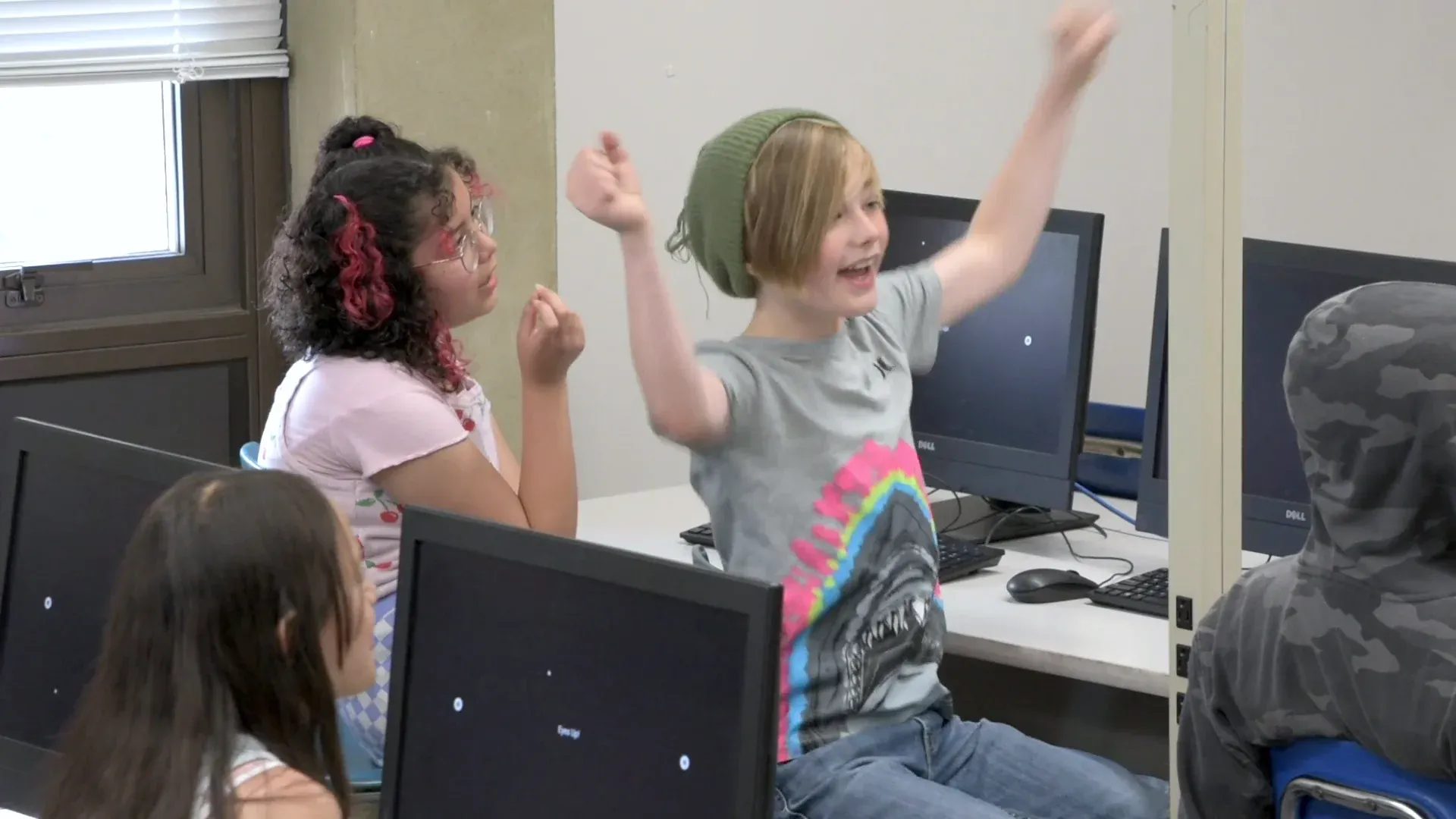
    Arms flung high, a student in a knit green hat celebrates at a desktop computer as a classmate beside them looks on.
    What you'll see: arms in the air from a crew that just made the right call, and the table beside it still arguing about rock layers.

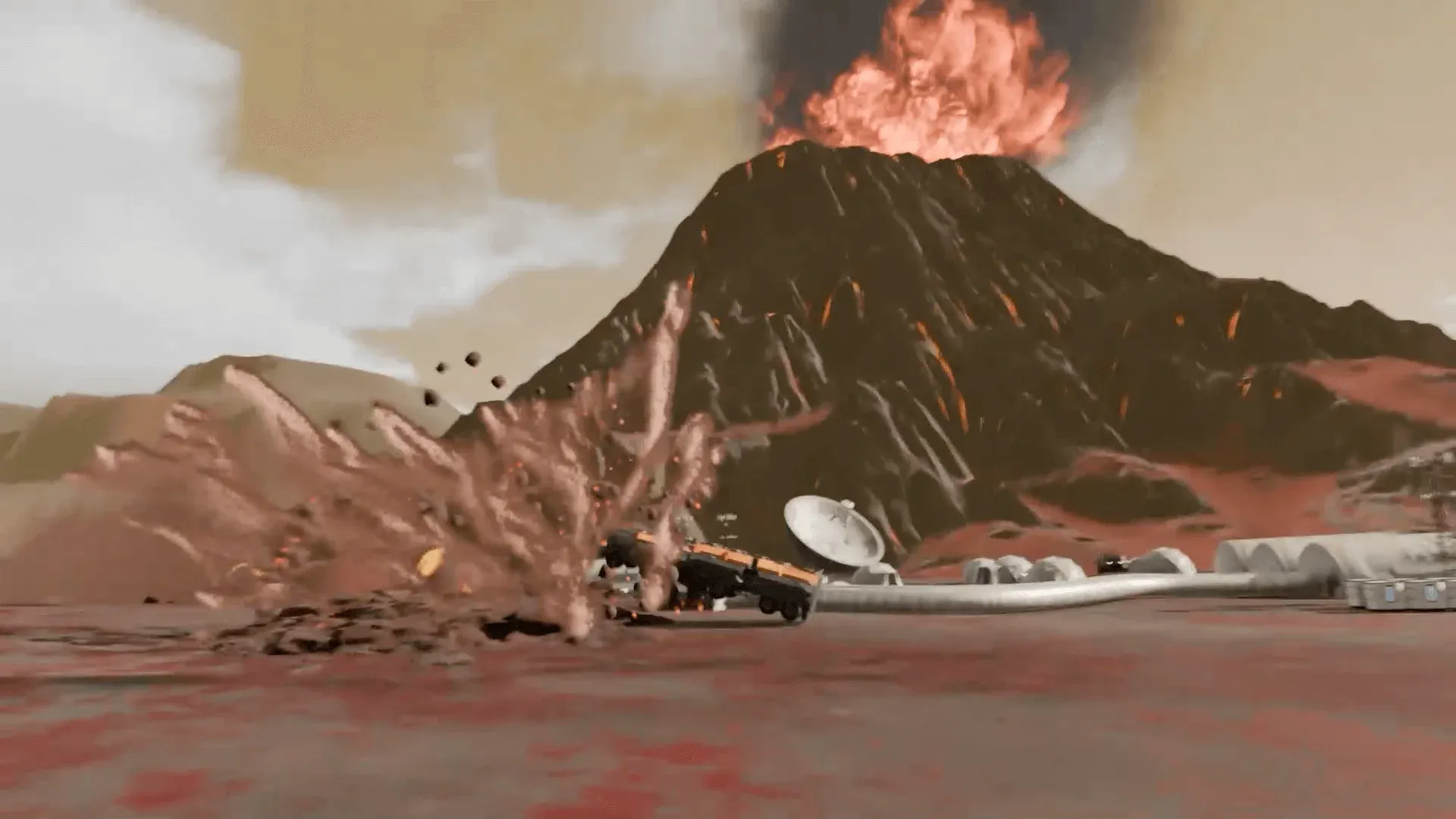
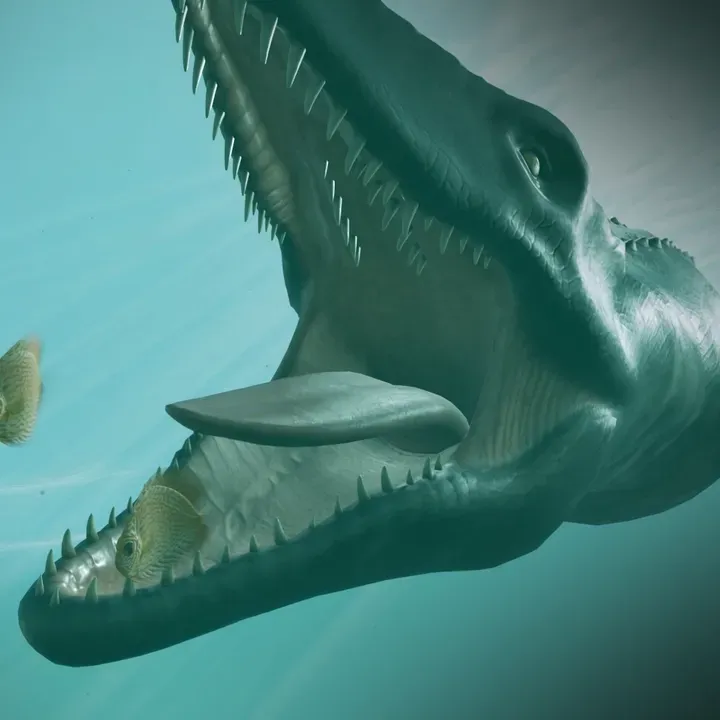
    An experiment went wrong, and RALF is trapped somewhere in an unknown geological period. Your class analyzes fossil data and rock layers from different periods to work out which one he was sent to, then goes back in time to get him. The story plays on the projector. The work happens at seven stations (Command, Engineering, Medical, Security, Science, I.T., Operations) and in the arguments between them.

    Every student is assigned to a team, and each team’s work is themed to it, from its own information and challenge to the same problem the rest of the crew is solving. The team gives a student a role in the story and people to lean on while you move between teams. You’re at the helm, asking what lived in this layer.

    Against the six:

    • Stakes. RALF is trapped in an unknown geological period, and a fossil of him is the only evidence.
    • Apply. The period has to come from the evidence (NGSS 3-LS4-1, analyze and interpret data from fossils to provide evidence of the organisms and the environments in which they lived long ago).
    • Accountability. Every student is assigned to a team, and each team’s work is themed to it.
    • Teacher leads. Watch the 5-minute Teacher Preview, launch it, and ask: What lived in this layer? What was the environment like? Which period matches the fossil?
    • Debrief. The Mission Guide has four debrief activities, starting with Engage in Argument.
    • See who did what. Every student gets a report on how well they did, shaped by what this Mission asked of them.

    “It’s been a while since students left my period saying that was the best class ever.”

    Will Crowther, Middle school teacher, Canyon View Middle School, UT

    Will it work in my room?

    Students join with a class code: no student accounts, no student email, no passwords. Chromebooks, laptops, or tablets, plus your projector. Free for teachers, no credit card. Student data is covered by COPPA and FERPA, and we signed the Student Privacy Pledge. No projector or devices? Four corners needs neither, and the sheet still works.

    START FREE →

    Communication first, then this one

    This is one Mission. There are more than 100 built the same way, from fossils to fractions, each one somewhere for a unit to go, with a report on every student each time. Every lesson finally has somewhere to go.

    What the report shows

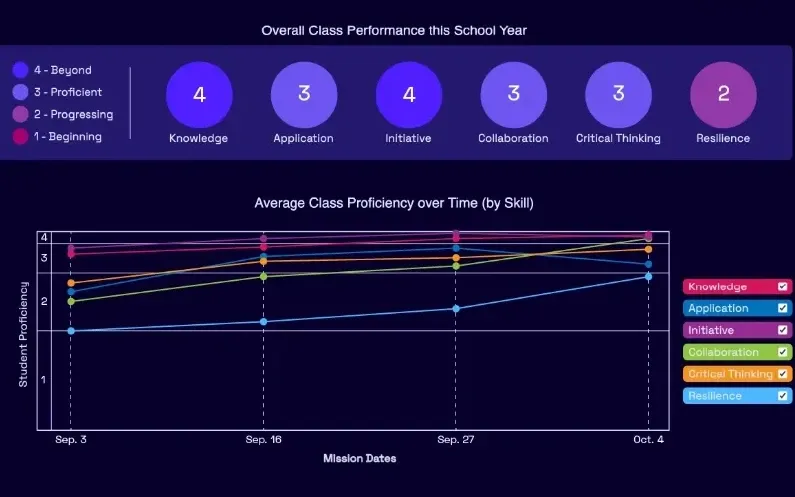
    A Mission.io class report: the class score in each of six skills, from knowledge and application to collaboration, critical thinking, and resilience, with the class chart across the year below.
    A class report from a real Mission: the class score in each of six skills, then each skill across the year.

    Every Mission produces a report for every student, built from what that student did across the whole Mission, on the skills the Mission captured. The six it can capture are Knowledge, Application, Initiative, Collaboration, Critical Thinking, and Resilience. The first two are what a test already sees. The other four are the human skills every school promises. The test shows what they know. The report shows the rest. This is where critical thinking gets practiced, and the only place it gets measured. SEE THE EVIDENCE →

    You taught it. Now find out who can use it.

    Who's behind it

    Mission.io is a research and design organization with one job: make collaborative, active learning something a teacher can run every unit instead of once a semester, and put a report in your hands when it’s over. Over a million students have run a Mission. The research behind them is funded by the National Science Foundation and the U.S. Department of Education’s Institute of Education Sciences, and Mission.io meets ESSA Level II standards, as validated by Instructure.

    “At the end of the year last year, every group in my classroom listed Mission IO in the ‘Top 10 Things about Sixth Grade.’”

    Sharla York, 6th grade teacher, Heritage Elementary School
    START FREEMISSION BRIEF →

    Free teacher account, no card. Start with the Communication Mission, marked Start here in your library, then Era of the Unknown, each after its 5-minute Teacher Preview.

Questions 3rd grade teachers ask

How do I keep four corners from turning into a popularity contest?

Make the card come before the feet. A student who has written down a fact and a weakness has a reason to stand somewhere, and the rule that anyone who moves must name the fact that moved them makes following a friend visible. Eight-year-olds care about fairness; tell them that’s the point.

What if everybody picks the same corner?

Then the claim was too easy, and the new fact is your friend. Give the class the one that breaks the favorite (the garden has no water source) and let them move again. A lopsided first round followed by a real second move teaches more than four even corners.

How do I grade a discussion where four corners talk at once?

Grade the cards and the moves, which you can see for every student, and tally the talk you hear as you walk. You’ll get about a third of the room’s talk per round. Over two or three rounds, that’s a fair picture of each student’s reasoning, not just the loud ones’.

Can I use four corners for opinion questions?

As a warmup, sure. It just isn’t critical thinking until each corner is a claim that evidence can support or sink. A good test for a 3rd grade statement: could a fact the class collected change someone’s mind? If not, save it for morning meeting.

Evidence that gets them out of their seats

Start this week one of two ways: tape up the corners and hand out the cards, or run Era of the Unknown once you've previewed it (5 minutes).