4th grade science activities

A circuit test rebuilt so 4th graders find which materials carry energy, five more investigations by NGSS standard, a free printable, and every 4th grade science Mission by standard.

Who we are. Mission.io makes Missions: teacher-led, whole-class simulations where students use what they’re learning to work through a real scenario together.

Everything on this page works without us. Every 4th grade science Mission is at the end, by standard, free. (The one we’d start with has two villains sending messages in wave patterns, which is a bold plan against a class that just learned amplitude.)

On this page

What 4th grade science looks like

Fourth grade science activities are investigations in which the class gathers evidence about something the standards name, has to argue from that evidence, and leaves each student answerable for a piece. This page covers the 4th grade performance expectations, 4-PS3-1 to 4-ESS3-2, with an investigation and a Mission for each where one exists. The 4th grade STEM activities page carries the build challenges.

The year is the one where energy turns into something you can follow: faster things carry more of it (4-PS3-1), it moves by sound, light, heat, and electric current (4-PS3-2), it changes when objects collide (4-PS3-3), and a device can turn one form into another (4-PS3-4). Then waves and their patterns (4-PS4-1), how light lets us see (4-PS4-2), and sending information with patterns (4-PS4-3). Then the structures plants and animals survive with (4-LS1-1) and the senses that feed the brain (4-LS1-2), rock layers as evidence (4-ESS1-1), weathering and erosion (4-ESS2-1), maps of Earth’s features (4-ESS2-2), energy resources (4-ESS3-1), and natural hazards (4-ESS3-2).

The activity that usually stands in for the energy part is a battery, a bulb, and a bag of odds and ends. One kid holds the wires, the bulb lights, the table says “ooh,” and the worksheet says “metal works.” That’s a demo with extra steps. Science is what happens when the class has to explain why the key lit the bulb and the eraser didn’t, then use it to build something.

Six things that turn a demo into an investigation

Inquiry-based science teaching outperformed traditional instruction across 37 studies, and the surprise inside the finding is who leads it: teacher-led inquiry beat student-led by a clear margin (Furtak, Seidel, Iverson, and Briggs, 2012). Hands-on helped most when students also had to think and talk about what they saw (Minner, Levy, and Century, 2010). The uncomfortable part is the clock: grades 3 to 5 average about 23 minutes a day on science, against 85 on reading (2018 NSSME+). That’s a master schedule, not a choice, and it means the 23 minutes have to be an investigation.

  1. 1. A real problem with stakes the class can feel.

    “Test which materials conduct” is a checklist. “Pick the parts for the open-house model before anyone flips the switch” is a problem.

  2. 2. Apply, don't recall.

    A second round that only works with the data from the first. If the activity can be finished without the science, it isn’t a science activity.

  3. 3. Group goals with individual accountability.

    The one most science classics miss: one kid holds the wires, three kids say “ooh.” When the group shared a goal and each student answered for a part, 84% of studies found a positive effect; without both, 17% (Slavin, 1991).

  4. 4. The teacher leads the thinking.

    The inquiry finding above settles it. Three questions asked at the table, while the bulb is still dark, do more than a worksheet of twenty.

  5. 5. A debrief where the class argues it out.

    The test is the setup. The argument afterward, about which objects belong on the parts list, is the practice the standards name: engaging in argument from evidence.

  6. 6. A way to see who did what.

    If you can’t tell which student predicted with a reason and which one just watched the bulb, you can’t teach the practice. You can only hope for it.

A lit bulb is a result. A parts list is a decision.

The sheet at the end of the next section has the circuit ready to run on the table: the role cards, the team’s prediction grid and parts list, the switch sketch, and the tally. Get the sheet →

Build a circuit, rebuilt for 4th grade (4-PS3-2)

A battery, a bulb, and wires, then a bag of objects (paper clip, penny, eraser, pencil, foil, key) tested in the gap to see which ones close the circuit and light the bulb. Fourth grade owns it because 4-PS3-2 names electric currents, and the way it usually runs is one kid holding the wires, a checklist of lit and dark, and a debrief that’s mostly “metal works.” Here’s the version that hits all six.

Time
55 minutes. The 45-minute cut: test six objects instead of eight, and keep the switch round to one working switch, not three toggles. The two-day version for a 23-minute block: the idea and the eight objects on day one, with the grid signed before the bell; the switch round and the debrief on day two.
Groups
Fours. With 27 students, six groups of four and one group of three where the Predictor also records.
Supplies for seven teams
7 D batteries with holders, 7 bulbs with holders, 21 wires with clips, and 7 bags of eight objects (paper clip, penny, eraser, pencil, foil strip, plastic spoon, rubber band, key). About $35 if bought new, and often already in a kit.
Standards
4-PS3-2 (energy moves from place to place by electric current); the switch round serves 4-PS3-4 (design, test, and refine a device that converts energy from one form to another).
  1. Teach first, 10 minutesApply

    Light a bulb with one battery and two wires in front of the class, then break the loop and ask why it went out. Name the idea once: electric current carries energy around a complete loop, and when the loop breaks, no energy arrives. Then name the question: which materials can be part of the loop?

  2. The problemStakes

    The class is wiring a model house for the 4th grade open house, and the only supplies left in the drawer are odds and ends. Each team has to find out which of eight objects could serve as a wire and which could serve as a switch handle that’s safe to touch, and write it up as a parts list. Say the stakes out loud: in a real house, a wrong call means a dark room or a shock.

  3. Four roles, one job eachAccountability

    On the sheet, and everyone signs their role’s box. Wirer and Tester swap between rounds.

    • Wirer

      The only hands on the battery and the wires.

    • Tester

      Puts each object in the gap, one at a time, and says "lit" or "dark."

    • Predictor

      Calls lit or dark before every test, out loud, with a reason.

    • Recorder

      Writes the prediction, the result, and what the object is made of.

  4. You lead the thinkingTeacher leads

    Three questions, asked at the table: Where is the gap in your loop right now? What do the materials that lit have in common? Which object would you use for a switch handle, and why is it safe? Let a student be the one who says “metal” first.

  5. Two rounds, so the grid has to be usedApply

    The eight objects first. Then each team builds a switch from one conductor and one insulator that turns the bulb on and off three times without anyone holding it together (4-PS3-4). The switch only comes together from the team’s own grid: a team that guessed its way through round one finds out in round two.

  6. The debrief, 10 minutesDebrief

    The class chart of all eight objects on the board. Which objects lit the bulb for every team, which for none, and where did teams disagree? What’s the pattern in the materials that lit? Whose prediction on your team was wrong in an interesting way? The second question is the standard: the pattern is the evidence that energy travels through some materials and not others.

  7. See who did whatSee who did what

    The observation sheet, four behaviors per student: predicted with a reason, recorded honestly, disagreed with a reason, changed their mind with a reason. You’ll catch about half the room in one period. The object test is fast and loud, so tally during the switch round, which is slower.

(The pencil usually starts an argument: the wood doesn’t conduct and the graphite inside does, so it depends on where the clip touches. Let that argument run; it’s the lesson.)

One rule before the first wire: batteries from the kit only, never anything that plugs into the wall. Say it out loud before anyone picks up a wire.

The circuit materials test, free

Emailed now, ready to copy: the teacher page, four role cards (Wirer, Tester, Predictor, Recorder), the team’s eight-row prediction grid with a “made of” column and the parts list box, the switch sketch box, a key to what usually lights, and the four-behavior tally.

It’s on its way.

Check your inbox for the circuit materials test.

Email me the sheet. It comes as a PDF, ready to print. Unsubscribe anytime.

Five more 4th grade investigations, by standard

Five more on every 4th grade list: what each one is, how it usually runs, and the fix, in the order the standards run.

Energy, waves, life, and Earth

2. Marble energy transfer (4-PS3-3)

Needs marbles. Whole class, as a demo. One minute.

A line of marbles sits touching in a ruler’s groove, one more marble gets flicked into the end, and the marble at the far end rolls away. In one minute, fourth graders see energy pass through a line of marbles that barely move. As usually run, it’s a one-minute demo with no stakes, no jobs, and no debrief, and that’s the right size for it.

The fix

  1. Run it in the first minute of the circuit lesson, before anyone touches a wire.
  2. Ask where the first marble’s energy went, write the guesses up, and come back to them once the circuit lights up.

No Mission on this standard; keep it as the opener for the circuit.
3. Solar oven s'mores (4-PS3-4)

Needs a box, foil, and a thermometer per team, the s'mores, a sunny day. Teams, one oven and one variable each.

Teams line a box with foil, set a s’more inside, and leave it in the sun until the chocolate melts. The stakes are a treat, and the box turns light into heat, which is the standard. As usually run, though, it’s a treat day: every team builds the same oven, and nobody can say which part made it work or who figured that out.

The fix

  1. Give each team one variable to change from the basic oven: the flap angle, the cover, or the color inside.
  2. Put a thermometer in every oven, and log the reading at the same times for every team.
  3. Line the logs up and let the class argue which change mattered.

No Mission on 4-PS3-4; the switch round in the circuit is the other way in.

4. Slinky waves (4-PS4-1)

Needs a slinky and a measuring tape per pair. Pairs: a Shaker and a Counter.

Partners stretch a slinky along the floor and send waves down it, side to side for transverse waves and push-pull for longitudinal ones. Fourth graders can see wavelength right there in the coils. As usually run, though, it’s a demo: one slinky, one pair at the front, and no numbers.

The fix

  1. Give each pair a slinky and two jobs: a Shaker who makes the wave, and a Counter who measures the wavelength with the tape, from one crest to the next.
  2. Swap jobs and measure again, so both partners bring a number.
  3. Put every pair’s wavelength on the board, and argue why the numbers differ.

Read Between the Waves is the Mission on this standard.

5. The animal structure mystery (4-LS1-1)

Needs photos of animal structures. Pairs.

Fourth graders look at photos of animal structures, like a beak, a shell, or a set of claws, and match each one to what it does. It puts the standard’s idea in front of them: structures help animals survive. As usually run, though, it’s a worksheet with one right answer per box, so nobody has to argue anything or show why they think it.

The fix

  1. Put students in pairs, with the photos in place of the worksheet.
  2. Each partner picks a structure and writes a claim: what it does, and how it helps the animal survive.
  3. Each partner defends that claim with what the photo shows, and the other partner pushes back.

Relocation Round-Up and The Abyss are the Missions on this standard.

6. Stream table erosion (4-ESS2-1)

Needs a foil pan of sand on a slope, water, a paper cup for the house, stones, cloth, toothpicks. Groups of four.

Water poured down a foil pan of sand on a slope cuts channels, and the class watches erosion happen in minutes. The teacher leads it, and the class applies what it knows about water and land. As usually run, though, it’s a demo tray with one pour, and you can’t see who did what.

The fix

  1. Put a paper-cup house at the bottom of the slope.
  2. Each group builds a barrier from stones, cloth, and toothpicks to slow the water before it reaches the house.
  3. Run two rounds, so the group changes its barrier after the first pour shows where it failed.

See stream table erosion rebuilt for 4th grade →

  • Our part · We make Missions

    Then the unit has somewhere to go

    Plenty of teachers rebuild these by hand every unit, and it works. A Mission is a teacher-led, whole-class simulation built from a unit you teach. The circuit belongs to your energy unit, and Read Between the Waves to the waves unit, with the slinky. No Mission carries the circuit’s standard (4-PS3-2), so the energy unit’s Mission is Disaster Above Vespus (4-PS3-1), row 7 below.

    You're at the helm, not on the hook.

    Read Between the Waves: the waves unit, as a Mission

    Read Between the Waves · 4th grade · About 27 minutes · One device per student, plus your projector · Free with a teacher account

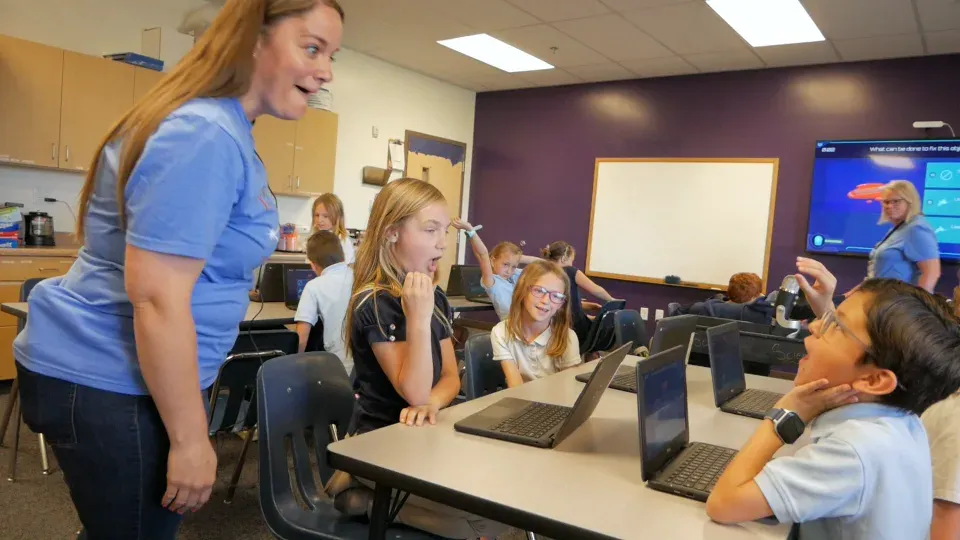
    A teacher leans toward a table of students at their laptops, all of them open-mouthed with surprise, while a second teacher stands by the Mission screen at the front.
    A table of students reacts at their laptops as a teacher leans in, with a second teacher by the screen at the front.

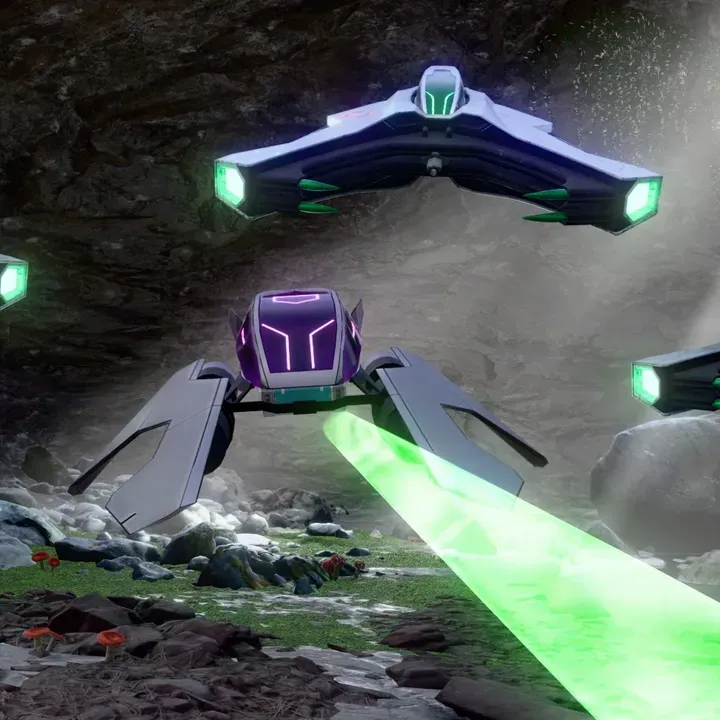
    The Crooked Snakes and Deja are about to hijack a bio-farm on Dejerria, the galaxy’s only source of the Persepha plant, a critical ingredient in life-saving medicines. The crew, led by Agent Cobalt, has to decipher wave patterns, amplitude, and wavelength to intercept and interpret the villains’ communications, then use models to pinpoint their hideout. The story plays on the projector. The work happens at seven stations (Command, Engineering, Medical, Security, Science, I.T., Operations).

    Every student is assigned to a team, and each team’s work is themed to it, from its own information and challenge to the same problem the rest of the crew is solving. The team gives a student a role in the story and people to lean on while you move between teams. You’re at the helm, asking what the amplitude is and which pattern matches.

    It’s built to 4-PS4-1, the waves standard, the one the slinky teaches by hand. Run it once the class has the wave model: its prerequisites ask that students can identify the parts of a wave model and describe how amplitude and wavelength relate.

    “The missions are so engaging and entertaining my students don’t realize I am giving them an assessment.”

    Savannah Watson, Teacher, Orchard Elementary, UT

    Will it work in my room?

    Students join with a class code: no student accounts, no student email, no passwords. Chromebooks, laptops, or tablets, plus your projector. Free for teachers, no credit card. Student data is covered by COPPA and FERPA, and we signed the Student Privacy Pledge. On a shared cart it’s the day you have the cart, and that’s fine, as long as the class knows all unit long that the cart day is where the unit is headed. At about 27 minutes, Read Between the Waves runs four minutes past the average 3 to 5 science block. Borrow them, or run it on cart day.

    START FREE →

    Communication first, then waves and energy

    What the report shows

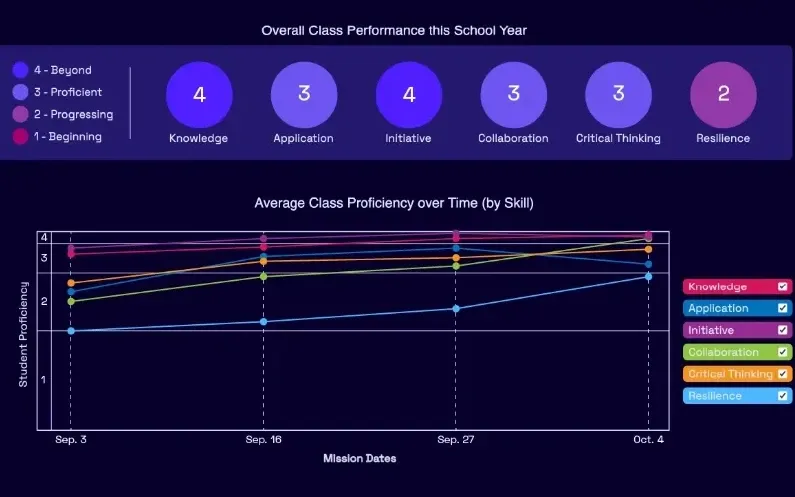
    A Mission.io class report: the class score in each of six skills, from knowledge and application to collaboration, critical thinking, and resilience, with the class chart across the year below.
    A class report from a real Mission: the class score in each of six skills, then each skill across the year.

    Every Mission produces a report for every student, built from what that student did across the whole Mission, on the skills the Mission captured. The six it can capture are Knowledge, Application, Initiative, Collaboration, Critical Thinking, and Resilience. The first two are what a test already sees. The other four are the human skills every school promises. The test shows what they know. The report shows the rest. SEE THE EVIDENCE →

    You taught it. Now find out who can use it.

    Who's behind it

    Mission.io is a research and design organization with one job: make collaborative, active learning something a teacher can run every unit instead of once a semester, and put a report in your hands when it’s over. Over a million students have run a Mission. The research behind them is funded by the National Science Foundation and the U.S. Department of Education’s Institute of Education Sciences, and Mission.io meets ESSA Level II standards, as validated by Instructure.

    4th grade science Missions by NGSS standard

    Read Between the Waves is one. There are 14 science and engineering Missions at 4th grade, numbered 7 to 20 below, and each one is where a unit can end: energy ends above Vespus, structures end at Relocation Round-Up, erosion ends at Landslide. Seven standards have no Mission, and their rows say so, with the investigation on this page that covers them where there is one. Each code links to its standard on nextgenscience.org.

    Energy (4-PS3)

    One Mission and three standards with none, so this is where the investigations do the work.

    Energy Missions for 4th grade, by NGSS code, with the three standards that have no Mission.
    NumberThe standardMissionMinutes
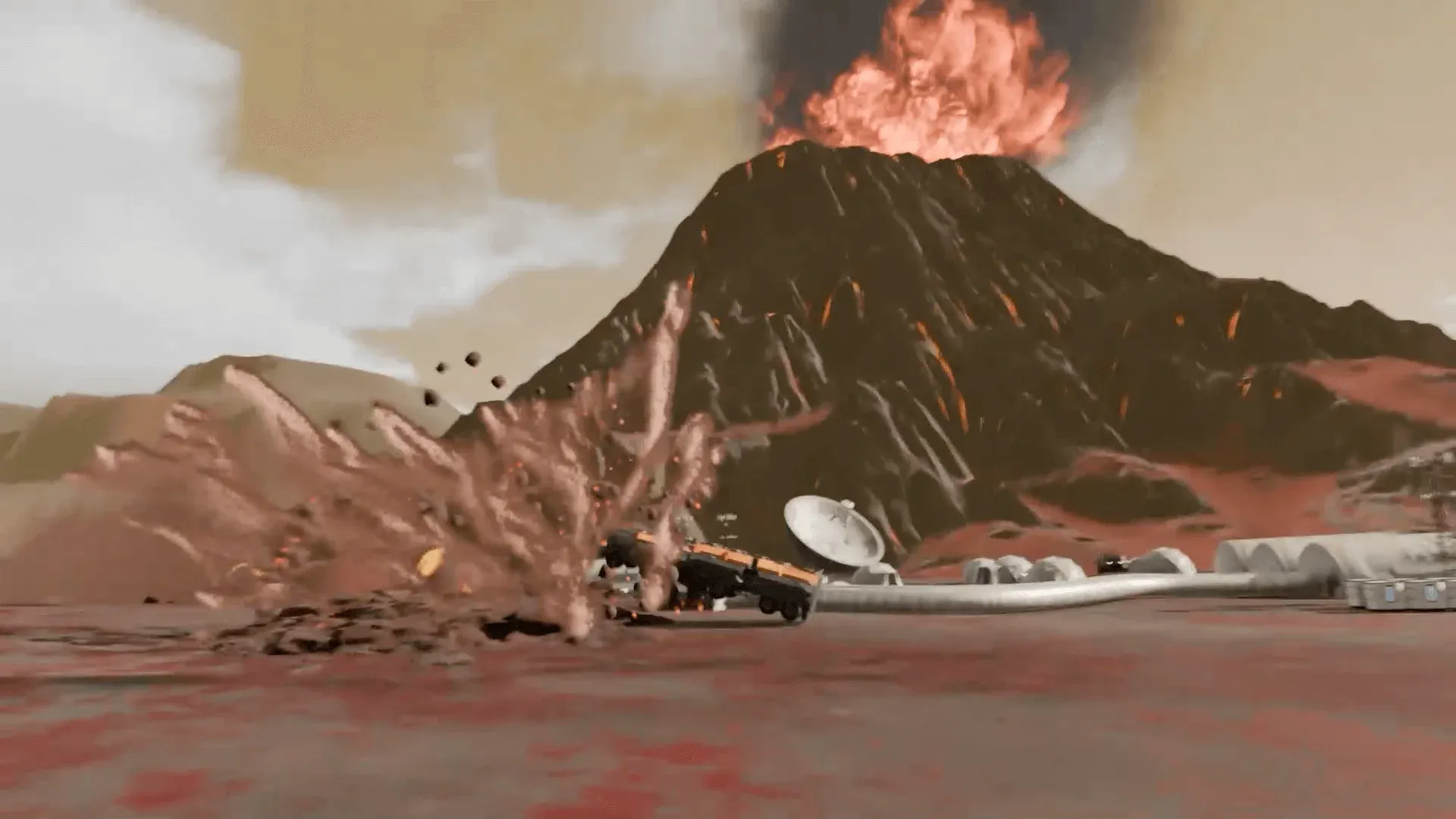
    74-PS3-1 Faster objects carry more energy: which debris poses the biggest threatDisaster Above Vespus26
    4-PS3-2 Energy moves from place to place by sound, light, heat, and electric current. A Mission for this standard is in development. On this page: 1. Build a circuit.No Mission
    4-PS3-3 What changes in energy when objects collide. A Mission for this standard is in development. On this page: 2. Marble energy transfer.No Mission
    4-PS3-4 Design a device that turns one form of energy into another. A Mission for this standard is in development. On this page: 3. Solar oven s’mores and the switch round in 1. Build a circuit.No Mission

    Waves and information (4-PS4)

    Two Missions, both under 40 minutes; how we see (4-PS4-2) has none.

    Waves Missions for 4th grade, by NGSS code, with the standard that has no Mission.
    NumberThe standardMissionMinutes
    84-PS4-1 A model of waves: amplitude, wavelength, and waves that can move objects. On this page: 4. Slinky waves.Read Between the Waves27
    4-PS4-2 Light reflecting off objects and into the eye is how we see themNo Mission
    94-PS4-3 Use patterns to send information, and compare ways of doing itExtraction35

    Structures and senses (4-LS1)

    Two Missions on the same standard: Relocation Round-Up at 26 minutes, The Abyss at 50 with paragraph writing built in.

    Life science Missions for 4th grade, by NGSS code, with the standard that has no Mission.
    NumberThe standardMissionMinutes
    104-LS1-1 Internal and external structures help living things survive in their environments. On this page: 5. The animal structure mystery.Relocation Round-Up26
    114-LS1-1 Bizarre deep-sea creatures and the structures they survive with, with paragraph writingThe Abyss50
    4-LS1-2 Animals take in information through their senses, process it, and respond. A Mission for this standard is in development.No Mission

    Earth's systems and hazards (4-ESS1, 4-ESS2, 4-ESS3)

    The deepest shelf at 4th grade. Engineering Solutions at 17 minutes is the shortest Mission on the page.

    Earth science Missions for 4th grade, by NGSS code, with the two standards that have no Mission.
    NumberThe standardMissionMinutes
    124-ESS1-1, 3-LS4-1 Rock layers and fossils as evidence of how a landscape changed (grades 3 to 6)Era of the Unknown44
    134-ESS2-1 Weathering and erosion by water, ice, wind, and plants (grades 4 and 5). On this page: 6. Stream table erosion.Landslide38
    4-ESS2-2 Reading maps for patterns in Earth’s features. A Mission for this standard is in development.No Mission
    4-ESS3-1 Energy and fuels come from natural resources, and using them affects the environmentNo Mission
    144-ESS3-2, 3-5-ETS1-1, 3-5-ETS1-2 Design and compare solutions that protect populated islands from a tsunamiTsunami43
    153-ESS3-1, 4-ESS3-2, 3-5-ETS1-1, 3-5-ETS1-2, MS-ETS1-2 The same tsunami story in 17 minutes: the best solutions to reduce the damage (grades 3 to 5)Engineering Solutions17

    Engineering design (3-5-ETS1)

    Built to the 3-5 engineering standard, which runs from 3rd to 5th grade; Reactor Revamp runs through 6th. The two tsunami Missions above carry the other 3-5 engineering codes. The 4th grade engineering activities page maps these standards with the design challenges that teach them.

    The engineering Mission for grades 3 to 5, by NGSS code.
    NumberThe standardMissionMinutes
    163-5-ETS1-3 Test and improve a prototype (grades 3 to 6)Reactor Revamp45

    Also at 4th grade, on other grades' standards

    Four more that run at 4th grade: two with no NGSS code listed, and two built on 3rd and 5th grade codes.

    Science Missions that run at 4th grade on another grade's standards, or on none.
    NumberThe standardMissionMinutes
    17Forces and motion (grades 4 and 5; no NGSS code listed)Off the Rails30
    18Magnetic interactions (4th grade; no NGSS code listed)Polar Opposites28
    195-ESS1-1, 5-ESS1-2 Shadows, stars, and the patterns they make (grades 4 and 5)Operation Starfall40
    203-ESS2-1, 3-ESS2-2 Weather and climate (grades 3 and 4)Melting Point41
    START FREEMISSION BRIEF →

    Free teacher account, no card. Start with the Communication Mission, marked Start here in your library, then the Mission for your unit, each after its 5-minute Teacher Preview.

    Also at this grade

    On the Move (animal migrations) and The Root of the Problem (a dying orchard), two science stories built for paragraph writing (RI.4.1, W.4.2); the 4th grade STEM activities page lists the math, technology, and career Missions; and the Collaboration and Critical Thinking Missions live on the 4th grade collaboration activities and 4th grade critical thinking activities pages.

Questions 4th grade science teachers ask

My science block is 23 minutes. What fits?

The marble line is a one-minute opener. The circuit needs the 45-minute cut, or the two-day split: the eight objects on day one, the switch and the debrief on day two. Most of the Missions here run 40 minutes or less, and one fits inside your block: Engineering Solutions at 17 minutes. Four more run just past it: Disaster Above Vespus and Relocation Round-Up at 26, Read Between the Waves at 27, and Polar Opposites at 28.

Which 4th grade NGSS standards does this page map?

It maps all 17: energy (4-PS3), waves (4-PS4), structures and senses (4-LS1), Earth’s systems and hazards (4-ESS1, 4-ESS2, 4-ESS3), and the 3-5 engineering standards. The tables map each code to its Mission and to the investigation on this page that teaches it. Seven have no Mission: 4-PS3-2, 4-PS3-3, 4-PS3-4, 4-PS4-2, 4-LS1-2, 4-ESS2-2, and 4-ESS3-1.

Do I need to buy a circuit kit?

Check the science closet first; it’s often already there. Seven teams need 7 D batteries with holders, 7 bulbs with holders, 21 wires with clips, and seven bags of the eight objects. Bought new, that’s about $35.

How do I grade a circuit lab without grading the bulb?

Grade the parts list and the behaviors. The parts list (which objects can be a wire, which can be a safe handle, and why) is one grade; the four-behavior tally over two or three investigations is the other. A team with a working switch and a parts list that just says “metal” shows up as a weak explanation, and now you can say why.

Is Read Between the Waves on the circuit's standard?

No. The circuit is 4-PS3-2, and no Mission carries it. Read Between the Waves is on 4-PS4-1, the waves standard, which is why it pairs with the slinky. For the energy unit, the Mission is Disaster Above Vespus, on speed and energy.