3rd grade science activities

Magnet strength rebuilt so 3rd graders find out what stops the pull, five more investigations by NGSS standard, a free printable, and every 3rd grade science Mission by standard.

Who we are. Mission.io makes Missions: teacher-led, whole-class simulations where students use what they’re learning to work through a real scenario together.

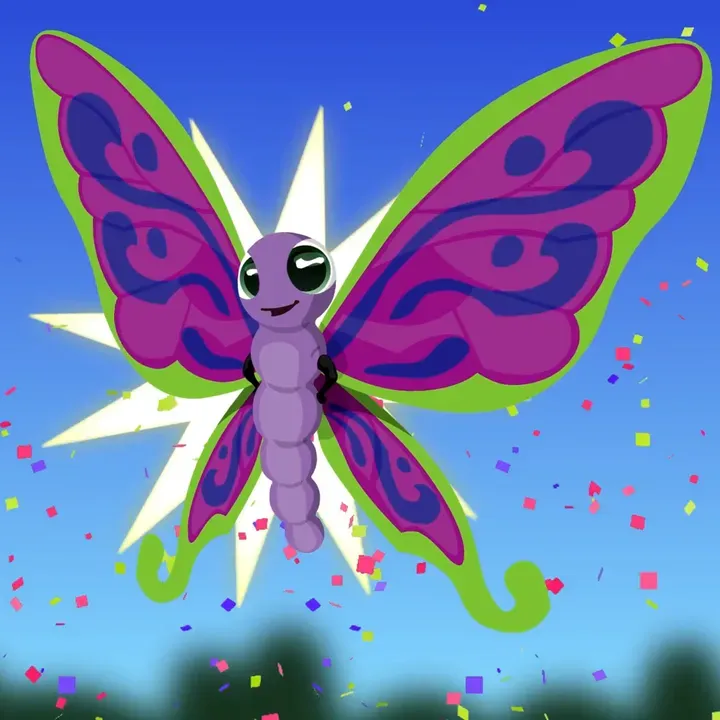
Everything on this page works without us. Every 3rd grade science Mission is at the end, by standard, free. (The life cycles Mission introduces a caterpillar named Growl. He’s on the crew’s side, despite the name.)

On this page

What 3rd grade science looks like

Third grade science activities are investigations in which the class gathers evidence about something the standards name, has to argue from that evidence, and leaves each student answerable for a piece. This page covers the 3rd grade performance expectations, 3-PS2-1 to 3-ESS3-1, plus the 3-5 engineering standards, with an investigation and a Mission for each where one exists. The 3rd grade STEM activities page carries the build challenges.

The year is forces and living things. Balanced and unbalanced forces (3-PS2-1), motion with a pattern you can predict (3-PS2-2), and magnets and static electricity that push and pull without touching (3-PS2-3, 3-PS2-4). Then life cycles (3-LS1-1), animals that live in groups (3-LS2-1), traits from parents and from the environment (3-LS3-1, 3-LS3-2), fossils (3-LS4-1), how differences in traits help an animal survive (3-LS4-2), who survives in a habitat and who doesn’t (3-LS4-3), and what happens when the habitat changes (3-LS4-4). Weather across the seasons, climates around the world (3-ESS2-1, 3-ESS2-2), and designs that reduce weather hazards (3-ESS3-1) round it out.

You know the activity that usually stands in for the magnets part. A magnet, a box of paper clips, and a contest for who can pick up the longest chain. That’s a fine five minutes. Science starts when the class has to say what made the clip drop, and prove it.

Six things that turn a demo into an investigation

Inquiry-based science teaching outperformed traditional instruction across 37 studies, and the surprise inside the finding is who leads it: teacher-led inquiry beat student-led by a clear margin (Furtak, Seidel, Iverson, and Briggs, 2012). Hands-on helped most when students also had to think and talk about what they saw (Minner, Levy, and Century, 2010). The uncomfortable part is the clock: grades 3 to 5 average about 23 minutes a day on science, against 85 on reading (2018 NSSME+). That’s a master schedule, not a choice, and it means the 23 minutes have to be an investigation.

  1. 1. A real problem with stakes the class can feel.

    “How many clips can it hold?” is a contest. “How thick can the lunchbox lid be before the latch fails?” is a problem.

  2. 2. Apply, don't recall.

    A second round that only works if the first round’s number was real. If the activity can be finished without the science, it isn’t a science activity.

  3. 3. Group goals with individual accountability.

    The one most science classics miss: one kid holds the magnet, three kids count along. When the group shared a goal and each student answered for a part, 84% of studies found a positive effect; without both, 17% (Slavin, 1991).

  4. 4. The teacher leads the thinking.

    The inquiry finding above settles it. Three questions at the desk beat a worksheet of twenty in the folder.

  5. 5. A debrief where the class argues it out.

    The investigation is the setup. The argument afterward is the practice the standards name: engaging in argument from evidence.

  6. 6. A way to see who did what.

    If you can’t tell which student asked the cause-and-effect question and which one wrote down someone else’s number, you can’t teach the practice. You can only hope for it.

Picking up paper clips is a trick. Knowing when they drop is a finding.

The sheet at the end of the next section has the magnet test ready to run on the desk: the role cards, the team’s record grid and lunchbox report, and the tally. Get the sheet →

Magnet strength, rebuilt for 3rd grade (3-PS2-3)

How many paper clips can a magnet lift through one sheet of paper, then two, then three, and what finally stops the pull? Third grade is the NGSS magnets grade (3-PS2-3, 3-PS2-4), and the way this one usually runs is one kid holding the magnet, numbers charted and never argued about, and nobody asking why the clip dropped. Here’s the version that hits all six.

Time
50 minutes. The 45-minute cut: pre-cut the cardboard squares and run only one magnet in round two. The two-day version for a 23-minute block: the teach-first and round one on day one, with the drop layers on the sheet before the bell; round two, the debrief, and the latch sentence on day two.
Groups
Fours. With 26 students, six groups of four and one of two, where the Layer Adder also watches the clip.
Supplies for seven teams
14 magnets in two strengths, 100 paper clips, 70 paper squares, 35 cardboard squares, 7 plastic lids. About $10 if you have to buy the magnets.
Standards
3-PS2-3 (ask questions to determine cause and effect relationships of magnetic interactions between two objects not in contact). The closing latch sentence serves 3-PS2-4 (define a simple design problem that can be solved by applying ideas about magnets).
  1. Teach first, 10 minutesApply

    Hold a magnet above a paper clip on the desk and raise it until the clip drops. Ask what changed. Name it once: a magnet pulls without touching, and the pull gets weaker with distance. Then ask the question they’re about to test: does what’s between the magnet and the clip matter, or only the distance?

  2. The problemStakes

    A toy company wants a magnetic latch for a lunchbox, and it needs to know how thick the lid can be before the latch fails, and whether a plastic lid or a cardboard lid changes that. Too weak, and lunch ends up on the floor. Too strong, and a first grader can’t open it. Each team owes the company a one-page report with a number: how many sheets before the clip drops, for two materials.

  3. Four roles, one job eachAccountability

    On the sheet, and everyone signs their role’s box. Magnet Holder and Clip Watcher swap between rounds.

    • Magnet Holder

      The only hands on the magnet. Holds it flat and still.

    • Layer Adder

      Adds one sheet at a time and says the count.

    • Clip Watcher

      Calls "holding" or "dropped" at each layer, and never touches the magnet.

    • Recorder

      Writes the drop layer for each material and which magnet.

  4. You lead the thinkingTeacher leads

    Three questions, at the desk: What’s between the magnet and the clip right now, and is that the only thing that changed? At what layer did it drop, and was it the same for both materials? What’s your lunchbox number, and how sure are you? The hardest part is not giving them the number.

  5. Two rounds, so the number has to holdApply

    Round one: paper layers until the clip drops, then cardboard layers until it drops. Round two: both tests again with the second magnet, to see whether the number holds. A team whose number only works for one magnet finds out in round two, which is the point.

  6. The debrief, 10 minutesDebrief

    Every team’s numbers on the board. Did the material matter, or only the thickness? Why did two teams get different numbers with the “same” magnet? Which lid would you sell the toy company, and what’s your evidence? The second question is where 3rd graders find out that measuring needs a rule.

  7. Close with the latch, 5 minutes (3-PS2-4)

    Each team writes one sentence that defines the latch problem in criteria words: “The latch must hold through ___ and open with ___.” That sentence is the simple design problem 3-PS2-4 asks for.

  8. See who did whatSee who did what

    The observation sheet, four behaviors per student: asked a cause-and-effect question, recorded a result honestly, disagreed with a reason, changed their mind with a reason. Desks are close and the test is quiet, so a tally catches about half the room in one period. The Recorder’s grid is what you check at the desks you didn’t reach.

(Somebody will test the magnet on the whiteboard, the desk legs, and a classmate’s zipper before round one starts. Budget a minute for it.)

The lunchbox report line and the latch sentence frame are both on the sheet, so the team that finishes first still has something to write.

The magnet strength test, free

Emailed now, ready to copy: the teacher page, four role cards (Magnet Holder, Layer Adder, Clip Watcher, Recorder), the team’s record grid (material, drop layer, magnets A and B) with the lunchbox report line and the latch sentence frame, and the four-behavior tally.

It’s on its way.

Check your inbox for the magnet strength test.

Email me the sheet. It comes as a PDF, ready to print. Unsubscribe anytime.

Five more 3rd grade investigations, by standard

Five more on every 3rd grade list: what each one is, how it usually runs, and the fix, in the order the standards run.

Forces, life, and Earth

2. Balloon rockets on a string (3-PS2-1)

Needs balloons, straws, string, tape, a measuring tape. Groups of three: a Launcher, a Measurer, and a Recorder.

A balloon taped to a straw rides a string stretched across the room, and when it’s let go it zips along until the air runs out. The pushes and pulls are right there for third graders, and it has real stakes the moment there’s a target to hit. As usually run, though, it’s a race, with one launch per group and no numbers to argue from.

The fix

  1. Set a target the group has to hit, like a tape mark on the string.
  2. Give each group a Launcher, a Measurer, and a Recorder.
  3. Run three trials, record every distance, and have the class argue about the forces with the numbers in hand.

Off the Rails (2nd-3rd) is the Mission on this standard, row 7.
3. Pendulum swings (3-PS2-2)

Needs a washer and a string per student, a timer. Individual, one length each, then one shared class table.

A washer hangs from a string, and the class counts how many times it swings in 10 seconds as the string gets shorter or longer. It asks third graders to find a pattern in motion and use it, which is what the standard is about. As usually run, though, it’s a demo at the front, with one string and a pattern the class hears announced.

The fix

  1. Give each student a washer and a string cut to their own length.
  2. Each student counts their swings in 10 seconds and adds the count to one shared class table, next to their length.
  3. Sort the table by length, so the pattern shows up once everyone’s count is on it, and ask what it predicts for a length nobody tried.

Off the Rails (2nd-3rd) carries this standard too, row 7.

4. The butterfly or mealworm life cycle (3-LS1-1)

Needs caterpillars or mealworms, a class journal. A daily Observer who rotates. Weeks.

The class raises caterpillars or mealworms and keeps a journal as they change from larva to pupa to adult. It runs over weeks, the change is real, and the teacher usually leads the talk well. As usually run, though, a few eager kids do all the watching, and nobody has to guess what comes next.

The fix

  1. Rotate a daily Observer, who draws or writes that day’s entry in the class journal.
  2. At each change, ask the class to predict the next stage and write the prediction in the journal.
  3. When the next stage arrives, the Observer reads the prediction back, and the class checks it.

Chrysalis is the Mission on this standard, row 9, and this is the one to run before it.

5. Fossil layers in a jar (3-LS4-1)

Needs sand, gravel, small objects to stand in for fossils, a jar per group.

Sand, gravel, and small objects standing in for fossils get layered in a jar, which shows how fossils end up buried at different depths. It’s a model third graders can hold, and it sets up the standard’s question about what lived where, long ago. As usually run, though, it’s a demo with one jar and one builder, and nobody has to say what the layers mean.

The fix

  1. Give each group a jar, and have each student add one layer, bury one fossil in it, and write down which layer is theirs.
  2. Swap jars with another group, which has to say which fossil went in first and how they know.

Era of the Unknown is the Mission on this standard, row 11.

6. The weather graph by season (3-ESS2-1)

Needs a thermometer, graph paper. A Recorder who rotates. A month of readings.

The class reads a thermometer every day for a month and graphs the temperatures. It asks third graders to work with real data, which is what the standard on weather by season wants. As usually run, though, it’s calendar math: the graph answers no question, and the same few students take the readings.

The fix

  1. Give the graph a question to answer before the first reading, like when recess is coldest.
  2. Rotate the Recorder, so every student reads the thermometer and logs some days of the data.
  3. At the end of the month, answer the question from the graph, with each Recorder pointing to their own days.

Melting Point is the Mission on this standard, row 14.

  • Our part · We make Missions

    Then the unit has somewhere to go

    Plenty of teachers rebuild these by hand every unit, and it works. A Mission is a teacher-led, whole-class simulation built from a unit you teach. The magnets belong to your forces unit; Chrysalis belongs to life cycles, the butterfly journal’s unit (number 4 above). The Mission on the magnets’ own standard is Polar Opposites (3rd), row 8 in the forces table below.

    You're at the helm, not on the hook.

    Chrysalis: the life cycles unit, as a Mission

    Chrysalis · 3rd grade · About 31 minutes · One device per student, plus your projector · Free with a teacher account

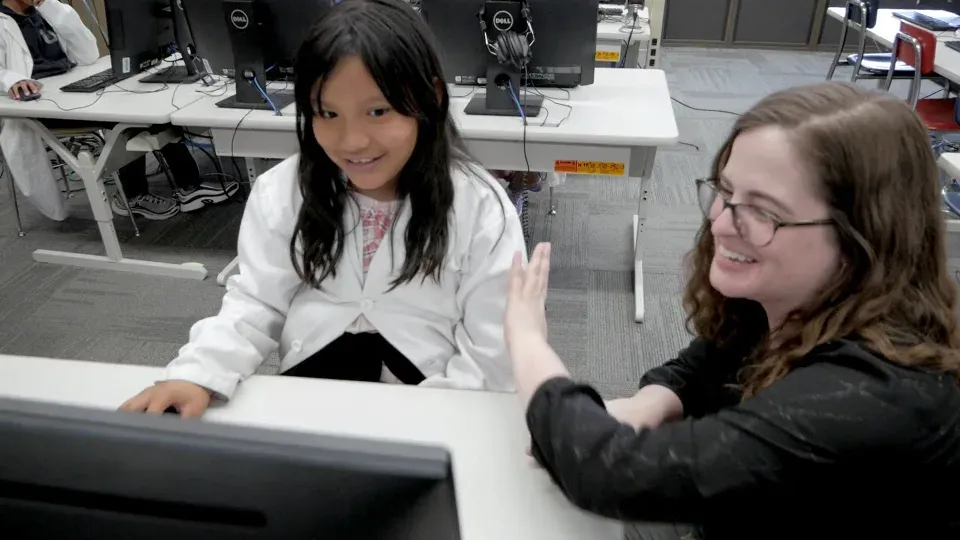
    A student in a white lab coat smiles at her computer screen while her teacher, laughing beside her, raises a hand for a high five.
    A student in a lab coat at her computer, and her teacher beside her with a hand up for a high five.

    Miss Valerie has noticed holes in the leaves and fruit of her greenhouse plants, and she needs the crew to find out what’s causing the damage. Along the way the crew meets a caterpillar named Growl, who helps them get to the bottom of it. The story plays on the projector. The work happens at seven stations (Command, Engineering, Medical, Security, IT, Operations, Science) and in the arguments between them.

    Every student is assigned to a team, and each team’s work is themed to it, from its own information and challenge to the same problem the rest of the crew is solving. We connect every student and move the story forward; you’re the one asking what stage this is, what comes next, and how that explains the holes.

    It’s built to 3-LS1-1 (organisms have unique and diverse life cycles, and all of them share birth, growth, reproduction, and death), with reading, writing, and speaking codes alongside (RI.3.1, RI.3.2, RI.3.7, W.3.2, W.3.4, W.3.6, W.3.8, SL.3.1, SL.3.2). Run the life cycle journal first, and tell the class why: when they meet Growl, they’ll need to know what a caterpillar turns into. The lesson prepares them. The Mission is what they’re preparing for.

    “This is the most fun they have all week, and they’re learning the whole time. I’m not going back.”

    Lisa Free, Mission Lab specialist, Cook Elementary School, UT

    Will it work in my room?

    Students join with a class code: no student accounts, no student email, no passwords. Chromebooks, laptops, or tablets, plus your projector. Free for teachers, no credit card. Student data is covered by COPPA and FERPA, and we signed the Student Privacy Pledge. At about 31 minutes, Chrysalis runs eight minutes past the average 3 to 5 science block. Borrow them from reading: Chrysalis carries nine reading, writing, and speaking codes, which makes the borrowing easy to defend.

    START FREE →

    Communication first, then life cycles and magnets

    What the report shows

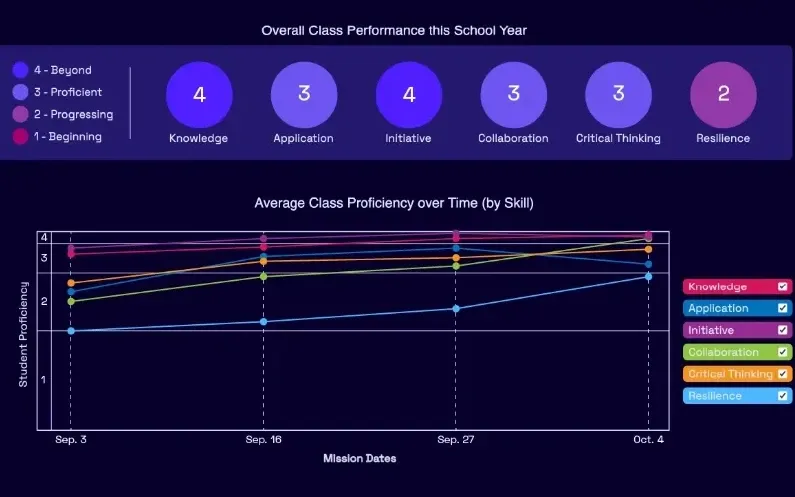
    A Mission.io class report: the class score in each of six skills, from knowledge and application to collaboration, critical thinking, and resilience, with the class chart across the year below.
    A class report from a real Mission: the class score in each of six skills, then each skill across the year.

    Every Mission produces a report for every student, built from what that student did across the whole Mission, on the skills the Mission captured. The six it can capture are Knowledge, Application, Initiative, Collaboration, Critical Thinking, and Resilience. The first two are what a test already sees. The other four are the human skills every school promises. The test shows what they know. The report shows the rest. SEE THE EVIDENCE →

    You taught it. Now find out who can use it.

    Who's behind it

    Mission.io is a research and design organization with one job: make collaborative, active learning something a teacher can run every unit instead of once a semester, and put a report in your hands when it’s over. Over a million students have run a Mission. The research behind them is funded by the National Science Foundation and the U.S. Department of Education’s Institute of Education Sciences, and Mission.io meets ESSA Level II standards, as validated by Instructure.

    3rd grade science Missions by NGSS standard

    Chrysalis is one. There are 16 science and engineering Missions at 3rd grade, numbered 7 to 22 below, and each one is where a unit can end: forces end at the train tracks, magnets end in Moodoo’s stronghold, weather and climate end at the ice sculpture festival. Every lesson finally has somewhere to go. Each code links to its standard on nextgenscience.org.

    Forces and interactions (3-PS2)

    Every standard has a Mission. Polar Opposites (3rd) at 21 minutes fits inside a 23-minute block; Off the Rails (2nd-3rd) at 23 runs just past it.

    Forces Missions for 3rd grade, by NGSS code.
    NumberThe standardMissionMinutes
    73-PS2-1, 3-PS2-2 Balanced and unbalanced forces, and predicting how far a train rolls from a pattern. On this page: 2. Balloon rockets and 3. Pendulum swings.Off the Rails (2nd-3rd)23
    83-PS2-3, 3-PS2-4 Magnets and static electricity push and pull without touching. On this page: 1. Magnet strength.Polar Opposites (3rd)21

    Life cycles, traits, and survival (3-LS1 to 3-LS4)

    The deepest shelf on the page. Two standards have no Mission, and three of the five Missions carry a paragraph to write.

    Life science Missions for 3rd grade, by NGSS code, with the two standards that have no Mission.
    NumberThe standardMissionMinutes
    93-LS1-1 Every life cycle is different, and all of them have birth, growth, reproduction, and death. On this page: 4. The life cycle journal.Chrysalis31
    3-LS2-1 Some animals form groups that help their members surviveNo Mission
    103-LS3-1, 3-LS3-2 Traits come from parents and from the environment; invent new traits for an animal that’s strugglingAnimal Architects38
    113-LS4-1, 4-ESS1-1 Fossils and rock layers as evidence of life and environments long ago (grades 3 to 6). On this page: 5. Fossil layers in a jar.Era of the Unknown44
    3-LS4-2 Differences in traits can help an animal survive, find a mate, and reproduceNo Mission
    123-LS4-3, 3-LS3-2 In a habitat, some organisms survive well and some can’t: deep-sea creatures, then a paragraph about oneThe Abyss (3rd)49
    133-LS4-4 Judge a solution for when an environment changes: animal migrations through a construction site, then a written planOn the Move (3rd)41

    Weather, climate, and hazards (3-ESS2, 3-ESS3)

    Melting Point covers both weather standards. The two tsunami Missions tell the same story, and Engineering Solutions is the 17-minute cut.

    Earth science Missions for 3rd grade, by NGSS code.
    NumberThe standardMissionMinutes
    143-ESS2-1, 3-ESS2-2 Weather by season, and climates around the world (grades 3 and 4). On this page: 6. The weather graph.Melting Point41
    153-ESS3-1, 3-5-ETS1-1, 3-5-ETS1-2 Design and judge solutions that protect three islands from a tsunamiTsunami (3rd)43
    164-ESS3-2, 3-ESS3-1, 3-5-ETS1-1, 3-5-ETS1-2, MS-ETS1-2 The same tsunami, short: compare wave defenses for one city (grades 3 to 5)Engineering Solutions17

    Engineering design (3-5-ETS1)

    Built to the 3-5 engineering standards, which run from 3rd to 5th grade. The two tsunami Missions above carry the first two; Reactor Revamp carries the third. The 3rd grade engineering activities page maps these standards with the design challenges that teach them.

    Engineering Missions for grades 3 to 5, by NGSS code.
    NumberThe standardMissionMinutes
    173-5-ETS1-3 Test a prototype, find where it fails, and improve it (grades 3 to 6)Reactor Revamp45

    Also at 3rd grade, on other grades' standards

    Five more that run at 3rd grade on another grade’s code, or on none: Ecosystem Patterns carries a middle school code, and Defying Gravity lists no NGSS code.

    Science Missions that run at 3rd grade on another grade's standards.
    NumberThe standardMissionMinutes
    181-ESS1-2 How the hours of daylight change with the seasons (grades K to 3)Season Search18
    192-ESS2-2 Identify landforms and bodies of water from models (grades 1 to 3)Treasure Hunt22
    202-PS1-4 Heating and cooling cause changes, and some can be undone and some can’t (grades 2 and 3)Hot and Cold Changes17
    21MS-LS2-2 Ecosystems out of balance, and the best fix to help the organisms thrive (grades 3 and 6 to 8)Ecosystem Patterns39
    22Gravity as a downward force (3rd grade; no NGSS code listed)Defying Gravity (3rd)19
    START FREEMISSION BRIEF →

    Free teacher account, no card. Start with the Communication Mission, marked Start here in your library, then the Mission for your unit, each after its 5-minute Teacher Preview.

    Also at this grade

    The Root of the Problem (3rd), a dying orchard investigated through tree rings and leaves, built for informative writing (RI.3.1, W.3.2); the 3rd grade STEM activities page lists the math Missions; and the Collaboration and Critical Thinking Missions live on the 3rd grade collaboration activities and 3rd grade critical thinking activities pages.

Questions 3rd grade science teachers ask

I get 23 minutes for science. Which of these fits?

The magnets need the 45-minute cut or the two-day split: round one on day one, round two and the debrief on day two. Six Missions on this page fit inside 23 minutes: Engineering Solutions and Hot and Cold Changes (17 each), Season Search (18), Defying Gravity (3rd) (19), Polar Opposites (3rd) (21), and Treasure Hunt (22). Off the Rails (2nd-3rd), at 23, runs just past it.

Which 3rd grade NGSS standards does this page map?

It maps the 3rd grade performance expectations across forces (3-PS2), life science (3-LS1, 3-LS2, 3-LS3, 3-LS4), weather and hazards (3-ESS2, 3-ESS3), and the 3-5 engineering standards. The tables map each code to its Mission and to the investigation on this page that teaches it; 3-LS2-1 and 3-LS4-2 have no Mission.

What magnets do I need for the magnet strength test?

Two strengths, two magnets per team: 14 for seven teams, about $10 if you have to buy them. The second strength is what round two runs on, so a box of identical magnets skips the part where the number has to hold.

My students aren't reading at grade level. Can they do this?

The magnet test is a count and a word (“holding” or “dropped”), and the Recorder writes one number per material. Chrysalis carries reading and writing codes, so there’s reading in it, but the story is narrated aloud and shown as text on the main screen, and the text on each student’s own screen can be read aloud to them.

Is this aligned to my state's standards, not just NGSS?

Each Mission page lists its NGSS codes and the state sets it maps to. Chrysalis maps to 3-LS1-1, to Common Core reading and writing codes, and to state science standards including Texas, Florida, Ohio, and Virginia.