
STEMscopes Review (2026)
STEMscopes is Accelerate Learning’s K-12 digital science program of 5E lessons, with optional print and kits and a Texas edition. Its 6-8 edition did not meet EdReports’ first gateway (15%, 2020); K-5 has never been reviewed. Part of our Best NGSS science curriculum (2026) guide, eleven programs on one rubric.
Who we are. Mission.io makes Missions, not a curriculum: teacher-led, whole-class simulations built to the same NGSS standards these programs teach. Districts bring us in to get more out of the science curriculum they already own, which is why we know this shelf.
For STEMscopes we read the EdReports report and the publisher’s response, the Texas and Louisiana state records, the Texas state contract’s prices, the Evidence for ESSA entry, Accelerate Learning’s own review guides, and the teacher forums. No publisher funds us or gains from a verdict. Our one interest: helping you get more out of whichever program you choose, which is what we already do for districts across the country.
On this page
Is STEMscopes a good curriculum? The verdict
STEMscopes · reviewed October 2026 · Mission.io
A resource for every step of every lesson, and someone has to choose.
Best for
Districts that want a daily digital platform with a lab or activity in most lessons, teachers who like to choose and adapt, and a plan for what each grade teaches. Texas districts get an adopted TEKS edition.
Not for
Districts that shortlist on EdReports or state reviews, that want one storyline taught as written, or whose students need lighter reading, since teachers report the reading level runs high.
- State adoption
- Texas, K-8 (Proclamation 2024, November 2023)
Key facts, as of October 2026
| Fact | STEMscopes | Source and date |
|---|---|---|
| Publisher | Accelerate Learning Inc., Houston. STEMscopes began at Rice University as STEMscopes Texas Science (2011) and spun out as Accelerate Learning in 2013; the NGSS edition, STEMscopes NGSS 3D, came in 2017. The same publisher sells Collaborate Science (K-5 in 2023, middle school in 2024) and Kide Science (PreK) | Accelerate Learning, About, Jul 2026 |
| Editions and grades | STEMscopes Science NGSS 3D, sold as K-12: K-5 by grade; middle school as an integrated grade 6, 7, 8 sequence or as Life, Earth and Space, and Physical Science courses; high school Chemistry. STEMscopes Science TX is the Texas (TEKS) edition, with Spanish K-5 titles. State editions exist, such as STEMscopes Louisiana 3D | STEMscopes NGSS, Feb 2026; middle school review guides, Jan 2024 |
| State adoptions | Texas adopted STEMscopes Science TX for K-8 under Proclamation 2024 (November 2023), on the state contract through 2031-2032. Louisiana rated its grade 4 Louisiana edition Tier III, “Not representing quality” (October 2021). California’s 2018 panel reviewed STEMscopes CA NGSS 3D; we couldn’t confirm the State Board’s decision. Check your own state’s list | tea.texas.gov, Nov 2023; Louisiana review, Oct 2021.pdf?sfvrsn=df2a6418_0) |
| Time as written | Each bundle (unit) has one to five scopes and runs about six to eight weeks; each scope runs one to three weeks. Grade 5 has four bundles of 6 to 10 weeks. The publisher calls the bundle order “suggested but not required” | Elementary review guide, Jan 2024 |
| Digital | The STEMscopes platform, with single sign-on and grade passback for Schoology, Skyward, Clever, and Google Classroom, and rostering by OneRoster, ClassLink, and Ed-Fi. PhET simulations, Tuva datasets, and BBC video are built in. The technical page says an internet connection is required; the product page advertises an offline mode that syncs later. Enhancements made since January 2023 are built to WCAG 2.1 AA | STEMscopes NGSS, May 2026; technical specifications, May 2026 |
| Materials | Print Student Notebooks, STEMscopedia readers, and Teacher Guides are optional. The Hands-On Kit is a starter kit of the most essential reusable and consumable items for one class of 24 (K-4) or 32 (grades 5-8), without common supplies such as paper and glue; the publisher recommends a Consumable Replenishment Kit for each additional section | STEMscopes NGSS, Feb 2026; kits, May 2026 |
| Professional learning | Through the National Institute for STEM Education, which Accelerate Learning formed in 2016: webinars, in-person workshops, and blended options, from on-demand training to STEM certification. No public prices | Accelerate Learning, professional learning, May 2026; Evidence for ESSA, Sep 2026 |
| Scale | The publisher’s figure, across all its products: more than 9 million students and 750,000 teachers (July 2026). We found no count for science alone | Accelerate Learning, About, Jul 2026 |
What EdReports says about STEMscopes, by gateway
| Review | Designed for NGSS | Coherence and scope | Usability | Report |
|---|---|---|---|---|
| STEMscopes NGSS 3D grades 6-8, discipline courses (2019 edition) | Does Not Meet, 15% | Not eligible | Not eligible | EdReports, Apr 2020 |
| STEMscopes NGSS 3D grades 6-8, integrated sequence | Not reviewed | Not reviewed | Not reviewed | EdReports reports list, Oct 2026 |
| STEMscopes NGSS 3D K-5 | Not reviewed | Not reviewed | Not reviewed | EdReports reports list, Oct 2026 |
Inside Gateway 1, the 6-8 report scored three-dimensional learning at 25% and phenomena and problems at 0%, so Gateways 2 and 3 went unscored. It used EdReports’ first science tool (v1.0; EdReports now uses v2.0). The publisher “vehemently disagrees with the findings” and argued that the rubric “focuses very little on alignment to NGSS standards and almost completely on phenomena” (publisher response, 2020). The “top marks” Accelerate Learning cited in January 2020 came from Learning List, a paid review service, not from EdReports. Louisiana’s state review reached the same conclusion as EdReports for its grade 4 edition (Tier III, October 2021). Not reviewed is not a failure and not a pass: for K-5, a pilot is yours.
What do teachers say about STEMscopes?
Teachers split on STEMscopes along one line: the menu. Those who praise it praise the choice, the labs, and the kits; those who criticize it describe the work of choosing from it, and what’s still missing once they have. The praise and the criticism below are real, dated, and linked; we’ve kept the harshest ones because a buyer will find them anyway.
Where teachers see value
The flexibility and the hands-on pieces. Teachers who like STEMscopes say they can pick what to use from each scope, that the labs and literacy connections earn their place, and that the kits come close to complete. Some who moved from Amplify say they prefer it. Even mild fans hedge: one teacher called it “not great, but nice on the way that you choose what you want to use.”
“It’s very NGSS aligned, follows the “Five E’s” process, and breaks down standards into broader “essential questions”. That was so helpful as a jumping off point.”
“I’ve never used LabAids but we have Stemscopes and it’s fine. I was at another school that had amplify last year and it’s about a million times better than that! ... I mostly like the way units are set up and appreciate the labs and literacy connections.”
“The kits are kind of nice (they come with pretty much everything you need for all the labs) and at my previous district they also got the individual booklets for each kid.”
“Unpopular opinion but I actually like STEMScopes ... PBL opportunities in every bundle, good anchoring phenomenon, and a variety of activities to choose from ...”
Common concerns
The same menu, from the other side: supplementing, the most common complaint in the comments we read; a sequence one high school biology teacher said “makes no sense whatsoever”; a reading level teachers call too high; and a website another called “completely counterintuitive and useless.” Teachers don’t even agree on the labs: some say there’s one in nearly every lesson and no time to set it up, and one high school teacher found “Few real labs.”
“STEMscopes is hot garbage, and I would stay away at all costs. It’s the curriculum my school purchases, and I can’t stand it. I’ve never heard anyone say something good about it.”
“Omg this post right here. I agree, stemscopes is HORRIBLE. It’s not a proper replacement for a good science textbook. Stemscopes is designed for a dedicated STEM class on the fine arts wheel, not a regular in-class science lesson. Nearly every lesson, for example, has some kind of hands-on component like an experiment, demonstration, etc. It’s an amazing way to teach science but it’s not realistic at all to do a lab every day. Like she said above, the lessons themselves don’t always align to the standard so you end up skipping so many of them in the first place. Sorry OP, your district got duped.”
“For science it’s experiments every single day. Occasionally there’s a video. But mostly stations and hands on every single day. It’s ridiculous. I know hands on learning is beneficial. But we do not have the time in our schedule to set it up.”
“Online platform is difficult ... It assumes a lot of prior knowledge that my students just don’t have, and the reading level is also too high for most of my students.”
Nearly every one is about the menu, and who has to choose from it.
STEMscopes pros and cons, with the evidence
Pros
- Room to choose. Each scope carries more than 25 resources across its 5E sections, and the publisher calls the bundle order “suggested but not required”; teachers who like STEMscopes name the pick-and-choose first. [Elementary review guide, Jan 2024; the quotes above]
- Hands-on activities built in, with kits labeled lesson by lesson; the publisher says STEMscopes “was written with the hands-on activities first,” and a teacher who has used the kits says they come with nearly everything. [Kits page, May 2026; the quotes above]
- A published outcome study with an effect size. Evidence for ESSA rates STEMscopes Science “Promising” from one 2023-24 quasi-experimental study of 990 5th graders in one Texas district: +0.17 on the state science test, significant for students but not at the school level. [Evidence for ESSA, Sep 2026]
- Literacy in every scope: the STEMscopedia reader, a Student Notebook, leveled readers in K-2, and vocabulary, reading, and writing pieces in each scope’s Explain and Elaborate. [STEMscopes NGSS, Feb 2026; grade 6 sample, Jun 2023]
- A Texas fit: the TEKS edition is adopted for K-8 and on the state contract through 2031-2032, with Spanish K-5 titles. [TEA, Nov 2023 and Oct 2026]
Cons
- The alignment record. EdReports rated the 6-8 edition Does Not Meet at Gateway 1 (15%, with phenomena at 0%; 2020, v1.0), Louisiana rated its grade 4 edition Tier III (2021), and neither K-5 nor the integrated 6-8 sequence has an EdReports review; the publisher disputes the method. [EdReports; Louisiana; publisher response, 2020]
- More than a class can teach, and the choosing falls to teachers. In the comments we read, supplementing or rewriting is the most common complaint, followed by labs too heavy to prep daily and a sequence that doesn’t build. [r/ScienceTeachers and r/TexasTeachers, 2022 to 2026]
- One study, one state. The Promising rating rests on a single grade 5 study in one Texas district, scored on the Texas state test, so it most likely tested the Texas edition; the Evidence for ESSA page gives no p-value, and the result was not significant at the school level. [Evidence for ESSA, Sep 2026]
- Reading and the platform. Teachers report a reading level too high for many students, wordy lab directions, extra clicks to find things, and, for one teacher, assessments that couldn’t be found. [r/ScienceTeachers, Apr and May 2024; r/TexasTeachers, Sep 2026]
- Prices by quote outside Texas. The publisher posts none; its figure to Evidence for ESSA starts at $10.45 per license, and only the Texas edition has an itemized public list. Kits are extra, with a replenishment kit for each additional section. [Evidence for ESSA, Sep 2026; TEA, Oct 2026]
How it teaches
Instructional model
Each bundle opens on an anchoring phenomenon and a driving question, then works through one to five scopes. Each scope is a 5E sequence: Engage, one to five Explores, Explain, Elaborate, and Evaluate, plus Intervention and Acceleration, with more than 25 resources to draw on. Each bundle ends in a performance task STEMscopes calls a “Mission” and an “Action Plan,” the bundle’s culminating assessment. That’s the strength and the lift in one design: the menu is generous, so someone has to decide what a class actually does with the minutes it has.
Assessment and reporting
Each scope’s Evaluate section has a claim-evidence-reasoning task, an open-ended response, and a multiple-choice assessment; in the SEP Simulations, the teacher gets a report once a student finishes. The bundle’s Action Plan is the summative piece. We found no public description of a district or administrator view, so ask for a demo of one. Teachers differ here too: one praised the short assessments’ “very high level thinking questions” (August 2020); a Texas teacher couldn’t find them at all (September 2026).
Materials
The platform carries the lessons; print and kits are optional purchases. A Hands-On Kit equips one class of 24 or 32 with the essential items, and each additional section needs a replenishment kit. The publisher’s own pages differ on how complete that is: the kits page says “all materials needed,” the product page says “most essential” items, without common supplies. One teacher warns that many activities need cards made, and laminated if you want them again (April 2024).
Implementation lift
Moderate, and mostly planning: a plan for which scopes and Explores each grade teaches in its block, devices every day, kits and refills for the sections that need them, and time for teachers to build the supplements they’ll add anyway. Training comes through the publisher’s National Institute for STEM Education.
How much does STEMscopes cost?
STEMscopes is a district digital license with optional print and kits: the publisher’s figure starts at $10.45 per teacher or student license, $7.32 on an eight-year deal (Evidence for ESSA, September 2026; the term isn’t printed), the Texas edition’s grade 5 kit with one license is $2,402.35 (Texas state contract, October 2026), and training has no public price. Accelerate Learning posts no price list, and we found no district board record with a STEMscopes Science total, so the example below uses the Texas contract, the one itemized public list. It prices the Texas edition, not the NGSS one; every price is in the table below the example.
A worked example, from the Texas state contract: one school's 5th grade, four classrooms of 25 students, five years
- Student bundles, five years$8,300100 students x $83.00, the five-year bundle of online license and consumable Student Notebook
- Hands-On Kitsabout $9,600one per classroom: 4 x $2,402.35, each with one online license for a year
Five-year total, before replenishment, training, and shippingroughly $17,900
That’s about $36 per student per year for 100 students. It can run lower if one kit and three replenishment kits serve the four classrooms, as the publisher recommends, and higher once you add replenishment in later years, teacher licenses past the kits’ first year, training, and shipping. None of those has a public price, and the list doesn’t say whether the five-year bundle carries a new notebook each year; ask Accelerate Learning.
Ask for the replenishment price before you sign.
Prices as of October 2026. Prices drift; tell us if one has.
STEMscopes list prices, October 2026
| Item | List price | What it includes |
|---|---|---|
| Online license (publisher’s figure, Sep 2026) | From $10.45; $7.32 on an eight-year deal | One teacher or student; kits, print, and training priced separately |
| Grade 3 or 5 student bundle, Texas edition | $25.40 for one year; $83.00 for five; $99.60 for six | Online license plus the consumable Student Notebook |
| Grade 8 student bundle, Texas edition | $28.40 for one year; $109.50 for six | Online license plus the consumable Student Notebook |
| Hands-On Kit, Texas edition | $1,202.35 (K) to $2,602.35 (grade 8); $2,402.35 for grade 5 | Materials for one class of 24 (K-4) or 32 (grades 5-8), with one online license for a year |
| K-2 Science Readers box set, Texas edition | $2,365.35 | The readers, with one online license for a year |
| NGSS edition kits, print, replenishment, and training | No public price | By quote from Accelerate Learning |
STEMscopes against five NGSS programs, on one chart
| Program | EdReports, K-5 and 6-8 | Instructional model | Lesson architecture | Hands-on intensity | Assessment and reporting | Implementation lift | Cost structure |
|---|---|---|---|---|---|---|---|
| STEMscopes | K-5 not reviewed6-8 Does Not Meet, Gateway 1 (15%; 2019 edition, 2020 report) | 5E with simulations and labs; a Texas edition | 5E scopes in bundles on a digital platform | High | Scope assessments and a bundle Action Plan; simulation reports to the teacher | Moderate; planning, daily devices, and kits | District digital license from $10.45 per license (the publisher’s figure; term not printed), plus optional print and kits |
| Amplify Science | K-5 Meets, every grade (2022 edition; 2023 report)6-8 Meets, all gateways (2018 edition; 2019 review) | Literacy and modeling routines; simulations plus investigations | Repeatable daily routines | Moderate | Embedded unit assessments; class reports in 6-8 | Moderate; routines scaffold year one | Per-student license plus kits: $13 K-5 (NYC), $25 6-8 (Louisiana) |
| OpenSciEd | Meets, all gateways (2022 edition; 2023 report) | Phenomenon storylines, open license | Extended storylines with scripted pacing | High | Embedded, teacher-managed; dashboard via partner platform | Moderate to high; train first | No license; kits, print, training |
| FOSS Next Generation | K-5 not reviewed6-8 Does Not Meet, Gateway 1 (30%; 2019 edition, 2019 report) | Investigation-centered kit labs | Investigations in 45-minute parts | Very high (kits) | Embedded checks and I-Checks; FOSSmap reports in grades 3-8 | Moderate; materials management and refills | Kits with five-year digital seats, plus refills |
| HMH Into Science | K-5 Partially Meets, every grade (2022 edition; 2024)6-8 not reviewed | Platform with centralized pacing | Centralized pacing | Moderate | Class and student reports by standard on HMH Ed | Low to moderate; platform and kit reorders | Per-student six-year packages, kits in the higher tiers; K-5 digital $49.20 per student (Yonkers, NGSS edition, 2023 to 2028) |
| Inspire Science | K-5 not reviewed6-8 Does Not Meet, Gateway 1 (11%; 2020 edition, 2020 report) | Structured 5E, print plus digital | 5E lessons; 30- or 45-minute K-5 tracks | Moderate | Formative probes and lesson and module assessments; a teacher dashboard | Low to moderate; platform setup and kit refills | Per-student bundles plus classroom kits and yearly refills (grade 3 to 5 student bundle $157.68 for six years; grades 3 to 5 classroom kit $2,608 to $5,129; 6-8 up to $6,139) |
STEMscopes head to head with five programs
STEMscopes vs Amplify Science
On the public record, Amplify is the lower-risk adoption; in some teachers’ rooms, STEMscopes is the preferred one. Amplify Science meets EdReports’ expectations at every K-5 grade (2023) and at 6-8 (2019), and a WestEd randomized trial in grade 7 physical science found g = 0.36 (p < .001, 1,780 students) on an assessment the study developed (initial results, January 2022). STEMscopes 6-8 did not meet Gateway 1 (15%, 2020), its K-5 is unreviewed, and its one study shows +0.17 on Texas’s grade 5 state test. Teachers lean the other way: in Perris Union High School District’s 2020 middle school pilot in California, STEMscopes took 28% of teachers’ first-choice votes and Amplify none (Discovery Education took 72%), and two forum teachers who had used both preferred STEMscopes, one for its labs. Amplify runs on repeatable routines; STEMscopes on a menu teachers pick from.
STEMscopes vs OpenSciEd
For coherence and the review record, OpenSciEd; for teacher choice on a platform, STEMscopes. OpenSciEd is free, openly licensed, all-green at EdReports for 6-8 (2023) and high school, and complete from K to 12 in 2026, though its K-5 isn’t rated yet. Its storylines are scripted to build in one order; STEMscopes’ bundle order is optional, and each scope offers more than a class will use. Some teachers want exactly that: one middle school teacher said their district’s science teachers “prefer STEMscopes with supplements” to OpenSciEd, for the labs (February 2025). OpenSciEd costs kits, print, and training; STEMscopes is a license with kits beside it.
STEMscopes vs FOSS
Both put materials in students’ hands; FOSS starts from the kit and STEMscopes from the screen. FOSS is a kit program with digital seats bundled in; STEMscopes is a digital license with kits as an option. Their EdReports records are close: FOSS 6-8 did not meet Gateway 1 (30%, 2019), STEMscopes 6-8 did not meet it (15%, 2020), and neither has a K-5 review. STEMscopes holds a Promising rating at Evidence for ESSA from one grade 5 study; FOSS Next Generation is listed as No Evidence (2024). STEMscopes Science TX is on Texas’s 2024 adoption list; FOSS isn’t. Choose FOSS for materials first and fewer screens, and STEMscopes for a platform teachers live in every day.
STEMscopes vs HMH Into Science
HMH has the stronger elementary review and the lighter lift; STEMscopes asks for more hands-on time. HMH Into Science K-5 partially meets EdReports’ Gateway 1 at every grade and meets Gateway 2 (2024); it has no 6-8 report, and HMH’s separate Science Dimensions program, still sold, partially met Gateway 1 at 6-8 (50%, 2019). STEMscopes K-5 is unreviewed and its 6-8 did not meet Gateway 1 (15%, 2020). Both run on a platform, HMH with centralized pacing and class and student reports by standard, STEMscopes with a menu and kits beside it. On the Texas state contract (October 2026), HMH’s six-year digital package comes to $12.94 per student per year in K-5, and STEMscopes Science TX’s six-year grade 5 bundle, with a consumable notebook, to $16.60.
STEMscopes vs Inspire Science
Two 5E programs with similar records: Inspire is the more structured, STEMscopes the more open. Inspire Science 6-8 did not meet EdReports’ Gateway 1 (11%, 2020), STEMscopes 6-8 did not meet it either (15%, 2020), and neither K-5 is reviewed. Inspire runs centralized pacing, with Page Keeley formative assessment probes in its K-5 lessons and Spanish materials in K-5 and middle school; STEMscopes leaves more of the sequence to teachers, with Spanish K-5 titles in its Texas edition. Inspire suits a large rollout where one pacing guide matters; STEMscopes suits teachers who want to choose.
When STEMscopes fits, and when to think twice
Often a strong fit when a district:
- Wants a platform with a lab or activity in most lessons, and devices to run it every day
- Has teachers who want to choose and adapt, and time to plan what each grade teaches
- Is in Texas, where STEMscopes Science TX is adopted for K-8 through 2031-2032
- Can budget kits, and a replenishment kit for each additional section
- Wants a published outcome study with an effect size, and accepts that it’s one study in one state
Think twice when a district:
- Shortlists on EdReports results or state reviews
- Wants one storyline teachers follow as written
- Has many students reading below grade level
- Can’t give teachers time to choose, prep, and supplement
- Needs it to work offline (the publisher’s own pages disagree on whether it can)
Most districts that adopt it budget for three or four things alongside it. The next section lists them.
What districts pair with STEMscopes
STEMscopes arrives with its platform, its assessments, and kits if you buy them. Most of what districts put beside it is planning and operations: someone to decide what each grade teaches from each scope, kits budgeted with their refills, and training that lasts past the launch. One addition on this list is instructional, and it’s ours. Read that entry knowing who wrote it.
- A plan for what each grade teaches. Each scope offers more than a class can do in its block, so someone picks the Explores and the order. District of Columbia Public Schools, for one, published its own grades 3 to 5 scope and sequence on STEMscopes NGSS 3D for 2023-24, set to a 30-minute daily block.
- Kits, and the refills behind them. The Hands-On Kit equips one class; the publisher recommends a Consumable Replenishment Kit for each additional section, and teachers in the forums say setup time is what they run short of.
- Training that lasts past the launch. The National Institute for STEM Education’s webinars, workshops, or blended options, then time for teachers to build and share the supplements they’ll add anyway.
Our entry · We make Missions
A Mission, at Elaborate
At a scope’s Elaborate, a Mission gives the scope somewhere to go: one class period where students land in a scenario they haven’t seen and use what the Explores built to work through it together, with a report on every student when it’s over. (Yes, STEMscopes has Missions too. Ours take one class period and end with a report on every student.)
Four rows from the 5th grade map, one where no Mission fits: placements from STEMscopes NGSS 3D’s public grade 5 bundles Bundle Mission (code; minutes) Where it sits Observing Our Sky Operation Starfall (5-ESS1-1, 5-ESS1-2; 40 min) At Observing the Stars' Elaborate, before its Evaluate Human Impact on the Earth's Systems Hydro Heist (5-ESS2-2; 34 min) At Water Sources' Elaborate, before its Evaluate Interactions in Matter Into the Asteroid (5-PS1-3, 5-PS1-4; 41 min) At Mixtures' Elaborate, before the Action Plan Matter and Energy Flow in an Ecosystem, Scopes 1 and 2 No Mission fits Energy Transfer and Matter and Energy in Plants, where food's matter and energy come from The STEMscopes NGSS 3D 5th grade pairing map. STEMscopes NGSS 3D’s four 5th grade bundles, scope by scope: the Mission that fits, the Elaborate it sits in, and the scopes where no Mission fits. One page, free, emailed now.
It’s on its way.
Check your inbox for the pairing map.
That didn’t send. Try again, or write to info@mission.io and we’ll send the map.
Email me the 5th grade map. It comes as a PDF, ready to print. Unsubscribe anytime.
What it adds
- The moment the Explores get used. STEMscopes builds each idea through its Explores and Explain. A Mission fits at the scope’s Elaborate, before its Evaluate, when students have enough to reason with, so the transfer happens out loud, together, first.
- The skills every unit leans on. Every district plan promises collaboration, critical thinking, initiative, and resilience, and the curriculum’s assessments don’t report on them. A Mission’s report does, for every student, on the skills that Mission captured.
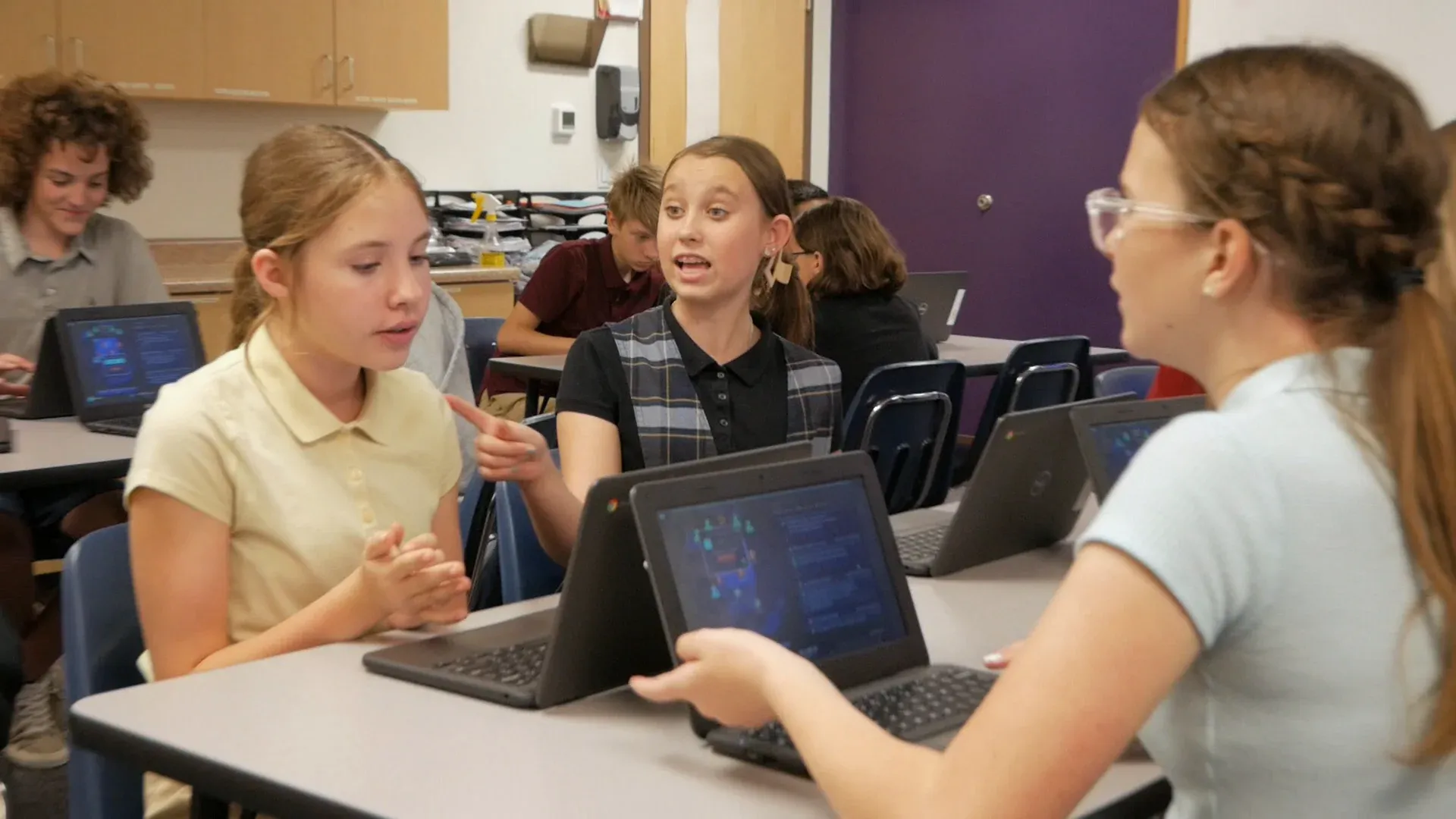
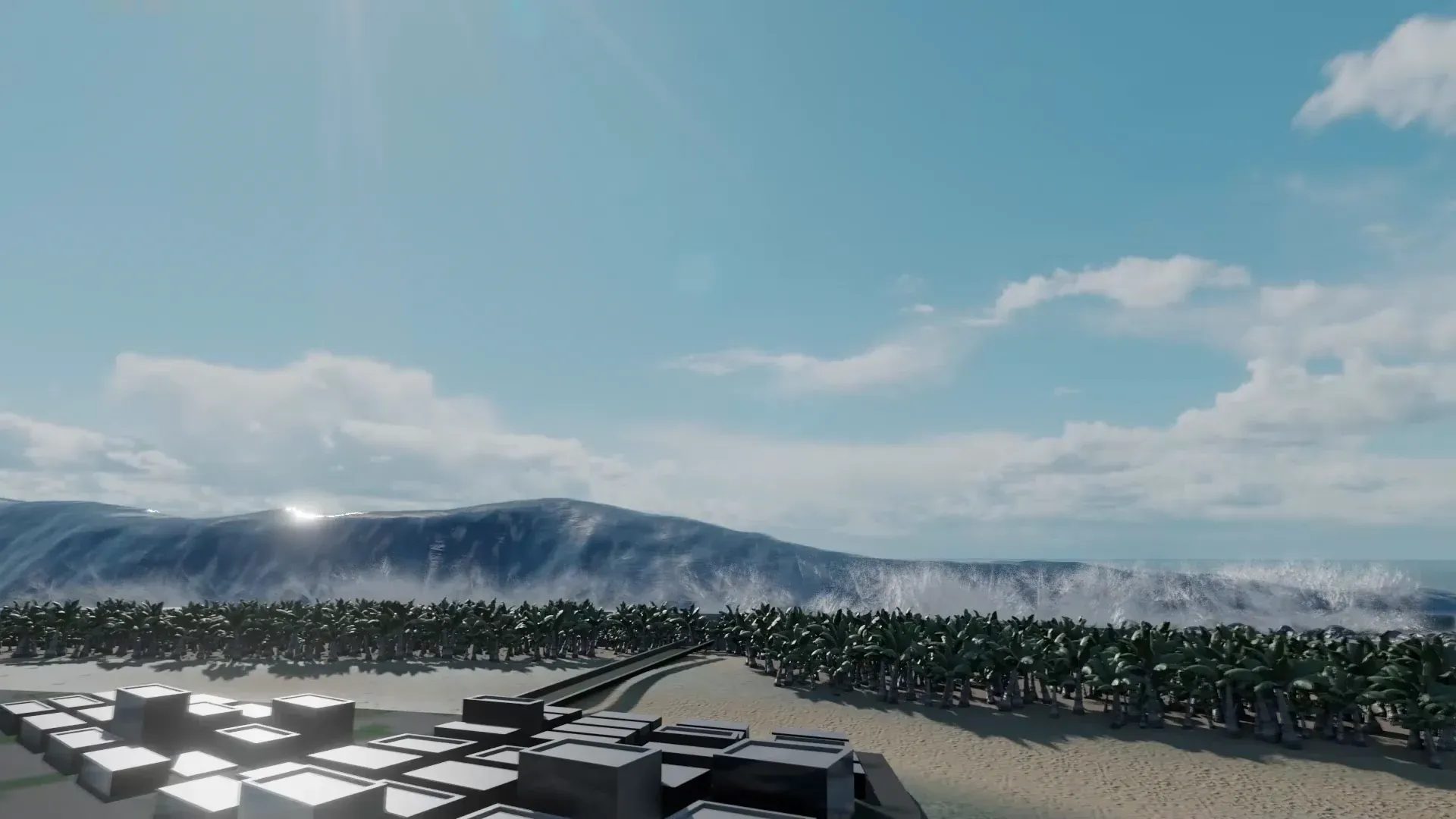
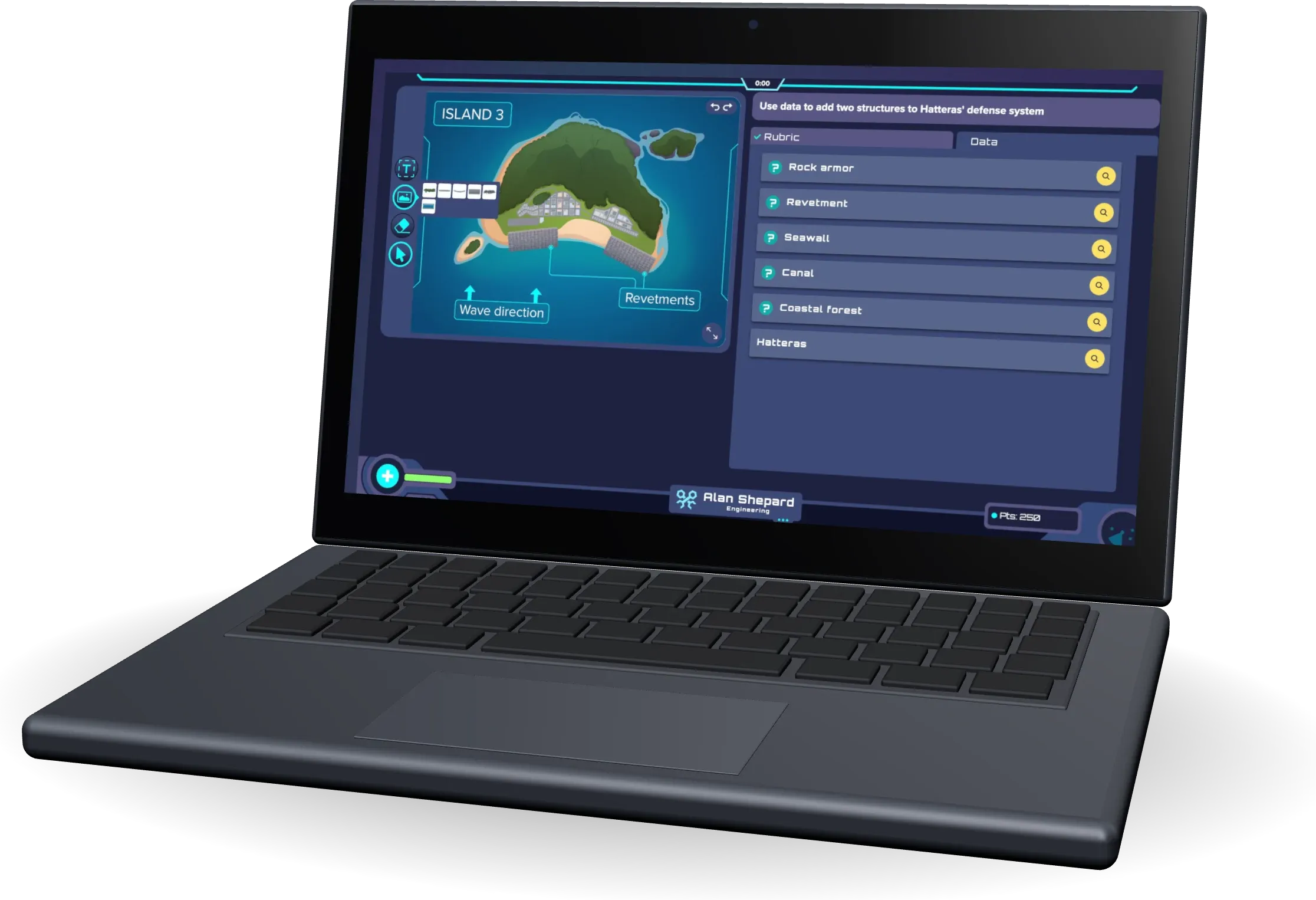
Every Mission puts the class inside a standards-aligned scenario where students analyze data, make decisions, and work together to solve a real problem. How it runs
- Every student is assigned to a team, and each team’s work is themed to it, from its own information and challenge to the same problem the rest of the crew is solving.
- The Mission connects every station and moves the story forward.
- The teacher leads the discussion and pushes for evidence. The teacher stays at the helm.
- One device per student and a projector for that period, 30 to 45 minutes a Mission, 5 minutes of prep.
- Any teacher can run one free; districts bring us in when they want it in every science classroom, with district-level reporting across all of them.
What the report shows
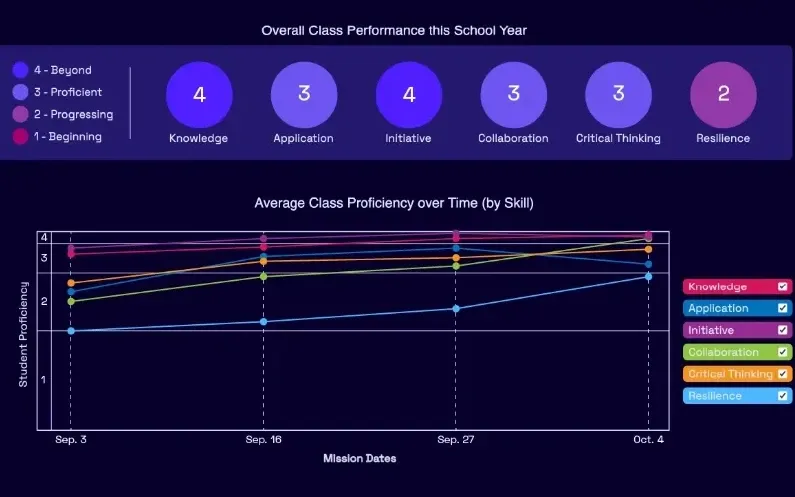
A class report from a real Mission: the class score in each of six skills, then each skill across the year. Every student gets a report on how well they did, built from what they did across the whole Mission: what they knew, whether they could apply it, and the human skills that Mission captured. The test shows what they know. The report shows the rest.
The evidence
+0.94percentage points of content knowledge for each Mission a class runs (p < .001)
Content-knowledge gain, percentage points Bar chart of content knowledge rising with the number of Missions run, from one Mission to twenty, a roughly 17.9-percentage-point separation.Students who ran about 20 Missions scored roughly 17.9 percentage points higher than students who ran one.
The more Missions a class runs, the more students grow. In Instructure’s 2025-26 study of more than a thousand fifth graders across 53 classrooms, funded by the U.S. Department of Education’s Institute of Education Sciences, students who ran Missions scored higher on content knowledge (g = 0.335, p < .001), rising about 0.94 percentage points with each Mission (p < .001), and on writing (g = 0.269, p = .015), rising about 0.035 rubric points with each Mission (p = .049). Mission.io meets ESSA Level II standards, as validated by Instructure.
Bautista et al. (2026), Instructure · content knowledge g = 0.335, p < .001; +0.94 pp per Mission, p < .001 · writing g = 0.269, p = .015; +0.035 rubric points per Mission, p = .049
Teaching the Texas edition, or your own order?
Some districts teach STEMscopes Science TX, whose scopes follow the TEKS, or reorder the bundles, which the publisher allows. Bring us your scopes and we’ll work out together where a Mission fits in each one.
Questions leaders ask about STEMscopes
- Is STEMscopes aligned to NGSS?
The publisher says it’s “100% aligned.” The independent reviews disagree: EdReports rated the 6-8 edition Does Not Meet at its first gateway (15%, 2020, on its first science tool), and Louisiana rated its grade 4 edition Tier III (2021). EdReports hasn’t reviewed K-5 or the integrated 6-8 sequence. The publisher disputes the EdReports method.
- How much does STEMscopes cost?
Accelerate Learning doesn’t post prices. Its figure to Evidence for ESSA starts at $10.45 per teacher or student license, $7.32 on an eight-year deal (September 2026). On the Texas state contract, the Texas edition’s grade 5 student bundle with a notebook is $25.40 for a year and a grade 5 kit with one license is $2,402.35 (October 2026). The worked example above lands four 5th grade classrooms at roughly $17,900 over five years.
- Is there research showing STEMscopes works?
One study. Evidence for ESSA rates STEMscopes Science Promising on a 2023-24 quasi-experimental study of 990 5th graders in one Texas district, 8 schools against 8: students scored higher on the state science test (effect size +0.17), a result that was not significant at the school level, and the Evidence for ESSA page gives no p-value. Johns Hopkins’ Center for Research and Reform in Education wrote it (Grant, Cook, and Ross, 2025). The publisher says it has three independent studies and a meta-analysis showing significant gains; we couldn’t read them, so nothing here rests on them.
- How does STEMscopes compare to Amplify?
Amplify meets EdReports’ expectations at K-5 and 6-8 and has a randomized trial behind it; STEMscopes 6-8 doesn’t meet Gateway 1, and its K-5 is unreviewed. STEMscopes gives teachers more to choose from and more labs, and some teachers who have used both prefer it. The head-to-head above has the rest.
- What do districts add to STEMscopes?
A plan for what each grade teaches, kits with their refills, training past the launch, and, at a scope’s Elaborate, a Mission where the whole class has to use what the Explores built on a scenario it hasn’t seen. The pairing map lists the fit scope by scope.
How we reviewed this
We read the EdReports report for STEMscopes NGSS 3D 6-8 and the publisher’s response, Accelerate Learning’s review guides and its product, kit, and technical pages, Texas’s Proclamation 2024 list and its 2026-2027 state contract bulletin, Louisiana’s grade 4 review, the Evidence for ESSA entry (2026), and r/ScienceTeachers and r/TexasTeachers comments mentioning STEMscopes from 2020 to October 2026, read through an archive, from which we quote only comments we could date and link, as posted, with spelling and punctuation tidied where a typo would distract and nothing else changed; the link shows the original. We couldn’t read G2’s reviews, the publisher’s research listing, or California’s and New Mexico’s review documents, so nothing here rests on them. Prices are as of the dates shown and will drift; tell us if one has. We make Missions, districts pair them with STEMscopes, and we said so at the top. Mission.io is not affiliated with or endorsed by STEMscopes or Accelerate Learning. Everything is linked in Sources.
Sources
EdReports
- STEMscopes NGSS 3D 6-8 (Apr 2020)
- STEMscopes NGSS 3D 6-8, Gateway 1 detail (Apr 2020)
- Publisher response to the STEMscopes 6-8 report (2020)
- The under-review list
- Amplify Science K-5 (2022 edition; May 2023)
- Amplify Science 6-8 (2018 edition; 2019 review)
- OpenSciEd grades 6-8 (Feb 2023)
- FOSS Next Generation 6-8 (Dec 2019)
- HMH Into Science K-5 (May 2024)
- HMH Science Dimensions 6-8 (Feb 2019)
- Inspire Science 6-8 (Nov 2020)
STEMscopes, Accelerate Learning, and the states
- Accelerate Learning, About (Jul 2026)
- STEMscopes Science NGSS (May 2026)
- STEMscopes NGSS, explore the program (Feb 2026)
- STEMscopes NGSS 3D Elementary Review and Digital Navigation Guide (Jan 2024)
- STEMscopes NGSS 3D Middle School (Integrated) guide (Jan 2024)
- STEMscopes NGSS 3D Middle School (Discipline) guide (Jan 2024)
- STEMscopes Science grade 6 sample scope (Jun 2023)
- Accelerate Learning, kits (May 2026)
- Accelerate Learning, digital (May 2026)
- Accelerate Learning, technical specifications (May 2026)
- Accelerate Learning, professional learning (May 2026)
- STEMscopes pilot and pricing request
- Learning List rating release, Business Wire (Jan 2020)
- Texas Proclamation 2024 adopted materials (Nov 2023)
- Texas EMAT current adoption bulletin, 2026-2027 (Oct 2026)
- Louisiana, STEMscopes Louisiana 3D grade 4 review (Oct 2021)
- Louisiana science instructional materials reviews
- District of Columbia Public Schools, grade 5 science scope and sequence (2023-24)
- Perris Union High School District, middle school science pilot (2020)
Evidence reviews
Reddit and other teacher forums
- r/ScienceTeachers, opinions from actual science teachers (May 2024)
- r/ScienceTeachers, STEMscopes vs LabAids middle school adoption (Apr 2024)
- r/ScienceTeachers, we are adopting STEMscopes (Jan 2023)
- r/ScienceTeachers, why is STEMscopes so popular if many hate it? (Apr 2022)
- r/ScienceTeachers, 7th grade curriculum (Feb 2025)
- r/ScienceTeachers, STEMscopes Biology (Oct 2024)
- r/ScienceTeachers, breaking into high school teaching (Jul 2026)
- r/ScienceTeachers, OpenSciEd and high school science (Dec 2025)
- r/ScienceTeachers, advice for starting STEMscopes (Aug 2020)
- r/TexasTeachers, STEMscopes implementation (Sep 2026)
(And yes, we scoured the deepest, darkest corners of Reddit and the teacher forums, and luckily came out alive, to see what teachers were actually saying.)
Other programs and research
Teacher comments are linked where they are quoted; read through the Arctic Shift archive of r/ScienceTeachers and r/TexasTeachers, linked to their reddit.com permalinks.
Every scope is a menu. Plan early what each grade teaches
Going through an adoption? We're always glad to talk through your choices and show you how a Mission makes whichever one you pick go further. Already running STEMscopes? Same conversation, about the year ahead.