
Discovery Education Science Techbook Review (2026)
Discovery Education Science Techbook is a K-12 core science curriculum built on a digital platform, with print editions and kits, from Discovery Education. Its 6-8 edition met EdReports’ first gateway and partially met the second (2021); its K-5 has no review. Part of our Best NGSS science curriculum (2026) guide.
Who we are. Mission.io makes Missions, not a curriculum: teacher-led, whole-class simulations built to the same NGSS standards these programs teach. Districts bring us in to get more out of the science curriculum they already own, which is why we know this shelf.
For Science Techbook we read both EdReports reports and Discovery’s responses to them, the state adoption lists, Florida’s contract prices, the studies behind Discovery’s evidence claims, a district’s pilot report, and the teacher forums. No publisher funds us or gains from a verdict. Our one interest: helping you get more out of whichever program you choose, which is what we already do for districts across the country.
On this page
Is Science Techbook a good curriculum? The verdict
Discovery Education Science Techbook · reviewed October 2026 · Mission.io
Built to be rearranged, and someone has to do the arranging.
Best for
Middle schools with a device for every student that want to set their own unit order, with a deep video library, text students can switch to Spanish or a lower reading level, and a Gateway 1 result from EdReports behind it.
Not for
Districts that want a sequence teachers can follow straight through, since EdReports found gaps from unit to unit and teachers report rebuilding lessons; buildings with uneven devices; and districts that want published outcome studies.
Key facts, as of October 2026
| Fact | Science Techbook | Source and date |
|---|---|---|
| Publisher | Discovery Education, Inc. (Charlotte, North Carolina), which develops and publishes it in house. Majority-owned by Clearlake Capital since 2022. Discovery also owns Mystery Science, a separate K-5 product, bought in November 2020 | EdReports, Sep 2021; EdWeek Market Brief, 2022; EdSurge, Nov 2020 |
| Editions and grades | Sold as “a K-12 core science curriculum.” Middle school: Science Techbook for Middle School, 16 modular units on an integrated or a domain-specific pathway; a new middle school edition is due in fall 2027. Elementary: three to five units a grade today, and a new edition, Science Techbook Phenomena in Action, for 2026-27 (four units a grade, in limited pilot). High school courses and state editions for Florida, Texas, Indiana, Oregon, and California | Discovery, Science Techbook, Oct 2026; Chart Your Course, Sep 2024; Discovery, Jan 2026 |
| State adoptions | Florida adopted Science Techbook for Florida, K-5 and the middle school courses, in July 2024 (Florida’s standards). Oregon approved it for K-12 in October 2023, and Indiana added its 6-8 edition to the state’s advisory list in May 2025. Texas published quality reviews of its K-8 edition (August 2023), and it is not on Texas’s Proclamation 2024 list. California’s 2018 review panel recommended it for K-8. Check your own state’s list, and which edition it names | Discovery, Jul 2024; Discovery, Oct 2023; EdTech Chronicle, May 2025; TEA, Aug 2023; CDE, 2018 |
| Time as written | Middle school units run 20 to 45 days; the integrated pathway adds up to 167 days in grade 6, 165 in grade 7, and 183 in grade 8. Grade 3 to 5 units run 42 to 69 sessions of about 20 minutes | Chart Your Course, middle school, Sep 2024; Chart Your Course, elementary, Sep 2024 |
| Digital | The Techbook platform in English and Spanish, with a Teacher Dashboard; it works with Canvas, Clever, Google, Microsoft, Schoology, and Brightspace, and assessments connect to Renaissance DnA and School City. The new K-5 edition adds Immersive Reader, which translates lessons into more than 100 languages | Discovery, Science Techbook, Oct 2026; Discovery, Apr 2026 |
| Materials | A consumable write-in Student Edition and a spiral-bound Teacher Edition, usable alongside the digital version. Hands-On Activity Kits are sold by unit or course: a middle school kit equips one class section in eight groups, with refills of consumables for each unit | Discovery, middle school, Apr 2025; Indiana reviewer guide, Dec 2022 |
| Professional learning | Included with the licenses and scaled by how many you buy: on the Indiana adoption, online support under 100 licenses, 2 hours of virtual sessions from 100, 4 hours from 250, and two on-site days per 500 | Indiana reviewer guide, Dec 2022 |
What EdReports says about Science Techbook, by gateway
| Review | Designed for NGSS | Coherence and scope | Usability | Report |
|---|---|---|---|---|
| Discovery Education Science, grades 6-8 (2020 edition; the current middle school edition) | Meets, 84% | Partially Meets, 73% | Not eligible | EdReports, Sep 2021 |
| Science Techbook for California NGSS, grades 6-8 (2017-18 digital-only version) | Does Not Meet, 30% | Not eligible | Not eligible | EdReports, Feb 2019 |
| Science Techbook K-5, current and 2026-27 editions | Not reviewed | Not reviewed | Not reviewed | EdReports reports list, Oct 2026 |
The 2021 report scored three-dimensional learning at 87% and phenomena at 80%, then found that “not all unit objectives are addressed by the summative assessments” and, at Gateway 2, “missed opportunities” to use elements from seven practices and two crosscutting concepts and to connect the units to each other. Discovery’s response says the modular design is a choice: the program “prioritizes schools’ need for the flexibility of a modular program over the value of this criterion” (publisher response, 2021). Discovery called the 2019 California review “deeply flawed,” saying it scored a beta version (publisher response, Feb 2019). Both reports used EdReports’ earlier tools (v1.0 and v1.5), which EdReports says “may not fully align with our current instructional priorities.” Not reviewed is not a failure and not a pass: for K-5, a pilot is yours.
What do teachers say about Science Techbook?
Teachers split on Science Techbook along one line: the media against the lessons. Those who praise it name the videos, the leveled text, and the Spanish; those who criticize it describe lessons they rebuilt before students could use them. Most of what we found dates from 2020 to 2024. Every quote below is real, dated, and linked, and we’ve kept the harshest ones because a buyer will find them anyway.
Where teachers see value
The media and the reading support. Teachers who like Science Techbook name the video library and text that switches to Spanish or a lower reading level. The strongest vote we found came from a district’s own pilot: in 2020, testing it against STEMscopes and Amplify, 72% of one California district’s middle school teachers put Discovery first (Perris Union High School District, 2020).
“Discovery Ed virtual textbook is worth looking into. I was leery of the fact that it’s virtual, but it can translate itself into Spanish or a lower reading level with the click of a button. And my students seem to like exploring the games and videos if they finish reading early.”
“We’ve been using Discovery Education, their NGSS aligned curriculum is pretty close.”
“I’ve only seen a few curriculum providers I actually like. TCI, Discovery, STEM Scopes, Amplify, and Gizmos do a decent job.”
“Engage, explore, and elaborate are the best parts of the lessons. In my opinion.”
Common concerns
The lessons themselves: open-ended work that leaves students who need structure behind, reading assignments that run long, and units teachers rebuild by hand. One teacher summed it up as “their videos are great, but their lessons, not so much.” The pressure can come from the district too: a September 2026 thread asks how to teach it with fidelity when “no outside sources or substitute labs” are allowed.
“I teach 6th grade and my district has us using Discovery Education for our curriculum. At first it seemed great, but after trying it out with my students, not so much. The lessons are very open ended and rely on self motivated learning, which only really works for like 10 of my 135 students.”
“As usual with almost every curriculum I’ve encountered, I always end up picking out only what I like and creating custom assignments. Every time I’ve tried to just follow the techbook straight through it’s been a bore and students don’t learn as much. ... DE is great for its video segments and full length documentaries. I can search for a 2 min clip of a specific topic and I don’t have to search and scroll through a 45 min episode.”
“Discovery looked great at the outset but I’ve come to realize that it’s a paper tiger with many components missing from the curriculum.”
“Discovery gave you online text and allowed you to modify the Lexile score on it. On the other hand, any reading assignment was 7 or 8 pages worth of text in a single HTML doc.”
Ask your pilot teachers what they had to rebuild.
Science Techbook pros and cons, with the evidence
Pros
- A Gateway 1 result at 6-8. The current middle school edition met EdReports’ Designed for NGSS gateway (84%), with three-dimensional learning at 87% and phenomena at 80%; its weaker marks came at Gateway 2. [EdReports, Sep 2021]
- Reading support built in: text students can switch to a lower reading level or to Spanish, Spanish in print as well as digital, and, in the new K-5 edition, Immersive Reader in more than 100 languages. [Discovery, Apr 2025 and Apr 2026; the quotes above]
- A video library teachers praise even when they criticize the rest, with clips short enough to drop into any lesson. [r/ScienceTeachers, Sep 2022]
- Flexibility by design: 16 modular middle school units on either of two pathways, print and digital that work interchangeably, and kits organized by unit. [Chart Your Course, Sep 2024; Indiana reviewer guide, Dec 2022]
- Teachers have picked it head to head. In one California district’s 2020 pilot, 72% of middle school teachers ranked it first, over STEMscopes (28%) and Amplify (0%). [Perris Union High School District, 2020]
Cons
- Coherence. EdReports rated Gateway 2 Partially Meets (73%, 2021), citing missed practices and crosscutting concepts, missed connections from unit to unit, and summative assessments that skip some unit objectives; Discovery says the modular design puts flexibility first on purpose. [EdReports; publisher response, 2021]
- Lessons teachers rebuild. Teachers describe open-ended lessons that work for a handful of students, reading assignments of seven or eight pages, and units they restructure before students can use them. [r/ScienceTeachers, Apr 2020 to Dec 2024]
- Outcome evidence is thin and mostly commissioned. Discovery claims ESSA Tier 3 and Tier 4. Tier 3 rests on one correlational study it commissioned (McREL, July 2023), which found small but significant links between days logged in and post-test scores and reported no effect sizes; Tier 4 is a logic model prepared for Discovery by LearnPlatform by Instructure (August 2023), with a study planned. Its other studies were run in house or commissioned. We found no What Works Clearinghouse review, no Evidence for ESSA listing, and no published effect size. [McREL; LearnPlatform; Discovery research pages]
- Edition timing. A new middle school edition arrives in fall 2027, and the new K-5 edition is in limited pilot with no public unit list or review, so a district buying now buys an edition near its end or one with no record. [Discovery, Oct 2026]
- Devices every day. The core is digital; in the Sahuarita study, teachers named “time scarcity” and “the lack of 1-to-1 student computing resources” as barriers, and the survey found “a slight degree of dissatisfaction” with navigation. [McREL, Jul 2023]
How it teaches
Instructional model
Each middle school unit opens on an anchor phenomenon (a rocket sled splitting a car, a zebra population in decline, a fish kill in the Mississippi delta), collects students’ questions, and works through lessons of numbered activities on what Discovery calls “a simplified 5E model,” ending in a Unit Project and digital performance tasks. The units are modular: Discovery publishes an integrated pathway and a domain-specific one, and districts can build their own order. That’s the strength and the lift in one design. The units travel well, and the connections between them are left to whoever sets the order, which is the gap EdReports scored at Gateway 2. Elementary units run in sessions of about 20 minutes, organized into concepts that each follow the 5E cycle.
Assessment and reporting
Formative checks, summative tests, and three-dimensional performance-based assessments sit in each unit, with technology-enhanced items that give students immediate feedback, a Unit Project scored by rubric, and a Teacher Dashboard with real-time data; results connect to Renaissance DnA and School City. EdReports found gaps inside those tasks: some unit objectives go unassessed, and some performance tasks skip the practice or crosscutting concept of their target expectation (in Levitating Forces, “only one of the PBAs” assesses the full expectation). The new K-5 edition ends each concept in a summative assessment that feeds the dashboard, answered by recording, performing, or finding.
Materials
The digital Techbook carries the readings, videos, and assessments, in English and Spanish. Print Student and Teacher Editions carry QR codes and work interchangeably with the digital version. Hands-On Activity Kits, sold by unit or course, supply the investigations the units name (a paper cup telephone, frozen coils, a sticky-tape lab), with walkthrough videos for many labs and refills for each unit. A district that buys the kits takes on storage and refills like any kit program; a district that buys digital only leaves the materials to each school.
Implementation lift
Moderate. Digital only, the lift is a device for every student most days and a network that holds up, plus the planning time teachers report spending to restructure lessons. Add the kits and you add storage and refills. Training is included and scales with license count, so a large adoption gets more of it.
How much does Science Techbook cost?
Discovery publishes no national prices, so these are Florida’s state contract prices for its Florida edition (adopted July 2024): a digital student license is $23 for one year or $68 for five, digital plus print is $153 per middle school student for five years, a middle school course kit is $1,500 with refills of $395 to $795, and training comes with the licenses, scaled by license count, on the Indiana adoption (December 2022). We found no 2024 to 2026 district board item with a Science Techbook dollar total. The figure on our old page, $45 to $60 per student for six years, came from Oregon’s March 2016 price sheets and a 2017 review.
A worked example, from Florida's contract prices: one middle school, 300 students in grades 6 to 8, six science teachers, five years
- Digital plus print licenses$45,900300 students x $153, the five-year middle school bundle
- Hands-On Activity Kits, year one$9,000one $1,500 course kit for each of six teachers, two per grade
- Kit refills, years two to fiveabout $14,300assuming one refill a year for each kit: 2 x ($595 + $395 + $795) x 4, using Florida's three integrated middle school course refills
- Training$0 listedincluded with the licenses on the Indiana adoption (4 hours of virtual sessions at 250 to 499 licenses)
Five-year total, before shippingroughly $69,000
That’s about $46 per student per year. The honest floor is $20,400, five-year digital licenses alone with no print or kits. The ceiling rises with more kits (the Indiana guide says each kit is designed for single-section use, so a teacher with five sections may need more than one) and with shipping. These are one state’s prices for one state’s edition; ask for yours.
Price the devices before you price the seats.
Prices as of October 2026. Prices drift; tell us if one has.
Science Techbook contract prices, Florida, July 2024
| Item | Contract price | What it includes |
|---|---|---|
| Digital student license, any grade K-5 or middle school course | $23 one year; $60 four years; $68 five years | Digital access for one student |
| Middle school digital plus print bundle | $62.13 one year; $137 four years; $153 five years | Digital access plus Student and Teacher Edition sets, per student |
| Middle school print bundle | $38.13 one year; $77 four years; $85 five years | Student and Teacher Edition sets, per student |
| Middle school Teacher Edition | $160 per course; $40 per unit | Spiral-bound teacher guide |
| Middle school Student Edition | $36 per course set; $9 per unit | Consumable write-in book |
| Middle school Hands-On Activity Kit | $1,500 per course | Materials for one class section in eight groups |
| Middle school kit refill | $395 to $795 per course | Consumables for the next round |
| Elementary digital plus print bundle | $56.60 one year; $119 four years; $133 five years | Per student |
| Elementary science kit | $900 (K and grade 1); $1,500 (grades 2 to 5); refills $195 to $595 | Materials for one grade |
| K-2 Story Cards | $180 per class set | One classroom set |
Science Techbook against five NGSS programs
| Program | EdReports, K-5 and 6-8 | Instructional model | Lesson architecture | Hands-on intensity | Assessment and reporting | Implementation lift | Cost structure |
|---|---|---|---|---|---|---|---|
| Discovery Education Science Techbook | K-5 not reviewed6-8 Partially Meets (Gateway 1 Meets, 84%; Gateway 2 Partially Meets, 73%; 2020 edition, 2021 report) | Multimedia platform; 5E concepts | Modular units of lessons on a simplified 5E | Moderate; kits sold by unit or course | Performance-based assessments in each unit; a Teacher Dashboard | Moderate; daily devices and lesson rework | Per-student license plus optional print and kits: $68 for five years digital (Florida, July 2024) |
| Amplify Science | K-5 Meets, every grade (2022 edition; 2023 report)6-8 Meets, all gateways (2018 edition; 2019 review) | Literacy and modeling routines; simulations plus investigations | Repeatable daily routines | Moderate | Embedded unit assessments; class reports in 6-8 | Moderate; routines scaffold year one | Per-student license plus kits: $13 K-5 (NYC), $25 6-8 (Louisiana) |
| OpenSciEd | Meets, all gateways (2022 edition; 2023 report) | Phenomenon storylines, open license | Extended storylines with scripted pacing | High | Embedded, teacher-managed; dashboard via partner platform | Moderate to high; train first | No license; kits, print, training |
| FOSS Next Generation | K-5 not reviewed6-8 Does Not Meet, Gateway 1 (30%; 2019 edition, 2019 report) | Investigation-centered kit labs | Investigations in 45-minute parts | Very high (kits) | Embedded checks and I-Checks; FOSSmap reports in grades 3-8 | Moderate; materials management and refills | Kits with five-year digital seats, plus refills |
| HMH Into Science | K-5 Partially Meets, every grade (2022 edition; 2024)6-8 not reviewed | Platform with centralized pacing | Centralized pacing | Moderate | Class and student reports by standard on HMH Ed | Low to moderate; platform and kit reorders | Per-student six-year packages, kits in the higher tiers; K-5 digital $49.20 per student (Yonkers, NGSS edition, 2023 to 2028) |
| Mystery Science | K-5 not reviewed; no 6-8 program | Short video-anchored lessons | One video-led lesson and activity per session | Moderate; household materials | Lesson and unit assessments; a usage dashboard, no score reporting found | Low | Per-school subscription: $2,199 a year at list, every teacher; supplies extra |
Science Techbook head to head with five programs
Discovery Education vs Amplify Science
On the public record, Amplify is ahead at both bands: Amplify Science meets EdReports’ expectations at every K-5 grade (2023) and at all three 6-8 gateways (2019), while Science Techbook 6-8 met Gateway 1 (84%) and partially met Gateway 2 (73%, 2021), and its K-5 has no review. Both are platforms with kits beside them. Amplify runs repeatable literacy and modeling routines in a set sequence; Techbook runs modular units a district can put in its own order, with a bigger video library and text students can switch to Spanish or a lower reading level. Teachers don’t always vote with the ratings: in one California district’s 2020 middle school pilot, 72% put Discovery first and none put Amplify first (Perris Union, 2020). For the alignment record and one sequence across many schools, Amplify is the lower-risk adoption. For flexibility and media, Techbook earns its pilot.
Discovery Education vs OpenSciEd
OpenSciEd is all-green at EdReports for 6-8 (2023) and free to download; Science Techbook 6-8 met the first gateway and partially met the second (2021). The difference is the sequence. OpenSciEd’s storylines run in a scripted order, and that coherence is what EdReports scores at Gateway 2; Techbook’s units can run in any order, which Discovery told EdReports it chose on purpose. OpenSciEd costs kits, print, and training; Techbook is a per-student license ($68 for five years digital on Florida’s contract, July 2024) plus optional print and kits, with a dashboard OpenSciEd’s free version lacks. A district that wants one coherent sequence and can train for it leans OpenSciEd. One that wants a platform and its own order leans Techbook.
Discovery Education vs FOSS
FOSS 6-8 did not meet EdReports’ Gateway 1 (30%, 2019); Science Techbook 6-8 met it (84%, 2021), and neither has a K-5 review. FOSS is a kit program with a platform beside it, and Techbook is a platform with kits beside it. Both sell kits with refills (Techbook’s middle school course kit is $1,500 on Florida’s contract, July 2024), so storage and refills come with either once you buy the kits, and FOSS needs far fewer devices. Where students should handle materials in most lessons, FOSS is built for it. Where the district wants media, leveled text, and a dashboard first, Techbook fits better.
Discovery Education vs HMH Into Science
Two platform programs, each reviewed at only one band. HMH Into Science K-5 partially meets at every grade (2024) and has no 6-8 report (HMH’s separate Science Dimensions program, still sold, partially met Gateway 1 at 6-8 in 2019); Science Techbook has a 6-8 report (Gateway 1 Meets, Gateway 2 Partially Meets, 2021) and no K-5 one. HMH sells six-year per-student packages, about $13 to $16 a year digital on the Texas contract (TEKS edition, October 2026); Techbook’s public prices are Florida’s, $68 per student for five years digital (July 2024). HMH is built for consistency across many campuses, and Techbook for a modular order and its media. Buying K-5, HMH has the review. Buying 6-8, Techbook does.
Discovery Education vs Mystery Science
Same company, different jobs. Discovery Education has owned Mystery Science since November 2020: a K-5 subscription of short video-anchored lessons at $2,199 per school per year (Science Only list, October 2026), with a low lift and limited formal reporting. Science Techbook is a full K-12 core program with print, kits, dashboards, and a 6-8 EdReports report; neither has a K-5 review. A district shopping elementary science from Discovery is choosing between them: Mystery Science for short blocks and light prep, Techbook (its new K-5 edition is in limited pilot for 2026-27) for a core program with built-in assessments.
When Science Techbook fits, and when to think twice
Often a strong fit when a district:
- Has a device for every student most days, and a network that holds up
- Wants to set its own middle school unit order, integrated or by domain
- Values a video library and text students can switch to Spanish or a lower reading level
- Will give teachers planning time to connect and adapt the lessons
- Is in Florida, Oregon, or Indiana, where an edition is on the state’s list, or has checked its own
Think twice when a district:
- Wants a sequence teachers can follow straight through
- Wants published outcome studies before it adopts
- Has uneven device access or bandwidth
- Is buying K-5 now and wants a public review (the new edition is in limited pilot)
- Is buying middle school now and doesn’t want to adopt again when the fall 2027 edition arrives
Most districts that adopt it budget for three or four things alongside it. The next section lists them.
What districts pair with Science Techbook
Science Techbook arrives with its platform, its dashboard, and its own assessments. Most of what districts put beside it is what a platform program runs on: devices and bandwidth, time for teachers to build the sequence, and a plan for the kits if they buy them. One addition on this list is instructional, and it’s ours. Read that entry knowing who wrote it.
- A device for every student, and a network that holds. One device per student on most days, and bandwidth for a full class at once; in the Sahuarita study, teachers named the lack of one-to-one computing as a barrier.
- Time to build the sequence. Common planning time and a district pathway through the 16 middle school units, so the connections from unit to unit that EdReports found missing get made on purpose.
- Kits, and someone who refills them. If you buy the Hands-On Activity Kits, a storage and refill plan for each unit, the same as any kit program.
Our entry · We make Missions
A Mission, after the lesson that builds the idea
After the lesson that builds a unit’s key idea, a Mission gives the unit somewhere to go: one class period where students land in a scenario they haven’t seen and use what the lessons built to work through it together, with a report on every student when it’s over.
Four rows from the middle school map, one where no Mission fits: placements from the 16 units EdReports reviewed in 2021 Unit Mission (code; minutes) Where it sits Rocket Sled Laser Labyrinth (MS-PS2-2; 32 min) After Lesson 2, before Lesson 4 Ever-Changing Moon Encrypted Escape (MS-ESS1-3; 30 min) After Lesson 5, Objects in Space Zebra Survival Ecosystem Patterns (MS-LS2-2; 39 min) After Lesson 3, before Lesson 4 Levitating Forces, Lessons 2 to 6 No Mission fits Gravity, magnetic, and electric forces The Science Techbook for Middle School pairing map, grades 6 to 8. All 16 units of Science Techbook for Middle School, lesson by lesson: the Mission that fits, the lesson it follows, each unit’s grade on both pathways, and the units where no Mission fits. One page, free, emailed now.
It’s on its way.
Check your inbox for the pairing map.
That didn’t send. Try again, or write to info@mission.io and we’ll send the map.
Email me the middle school map. It comes as a PDF, ready to print. Unsubscribe anytime.
What it adds
- The moment the lessons get used. Science Techbook builds an idea through videos, readings, and investigations, often with each student on their own screen. A Mission fits after the lesson that carries the idea and before the unit project, when students have enough to reason with, so the transfer happens out loud, together, first.
- The skills every unit leans on. Every district plan promises collaboration, critical thinking, initiative, and resilience, and the curriculum’s assessments don’t report on them. A Mission’s report does, for every student, on the skills that Mission captured.
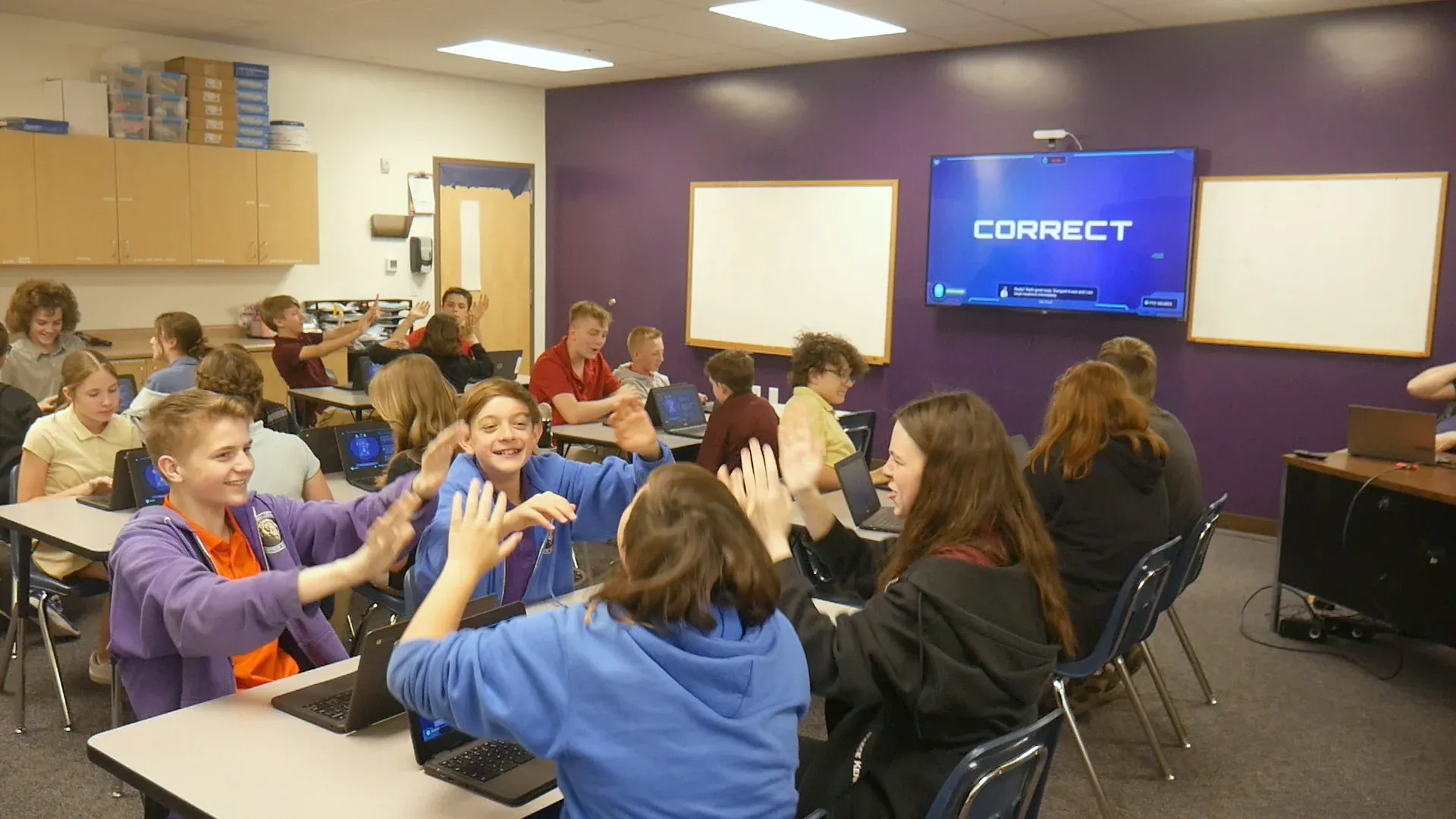
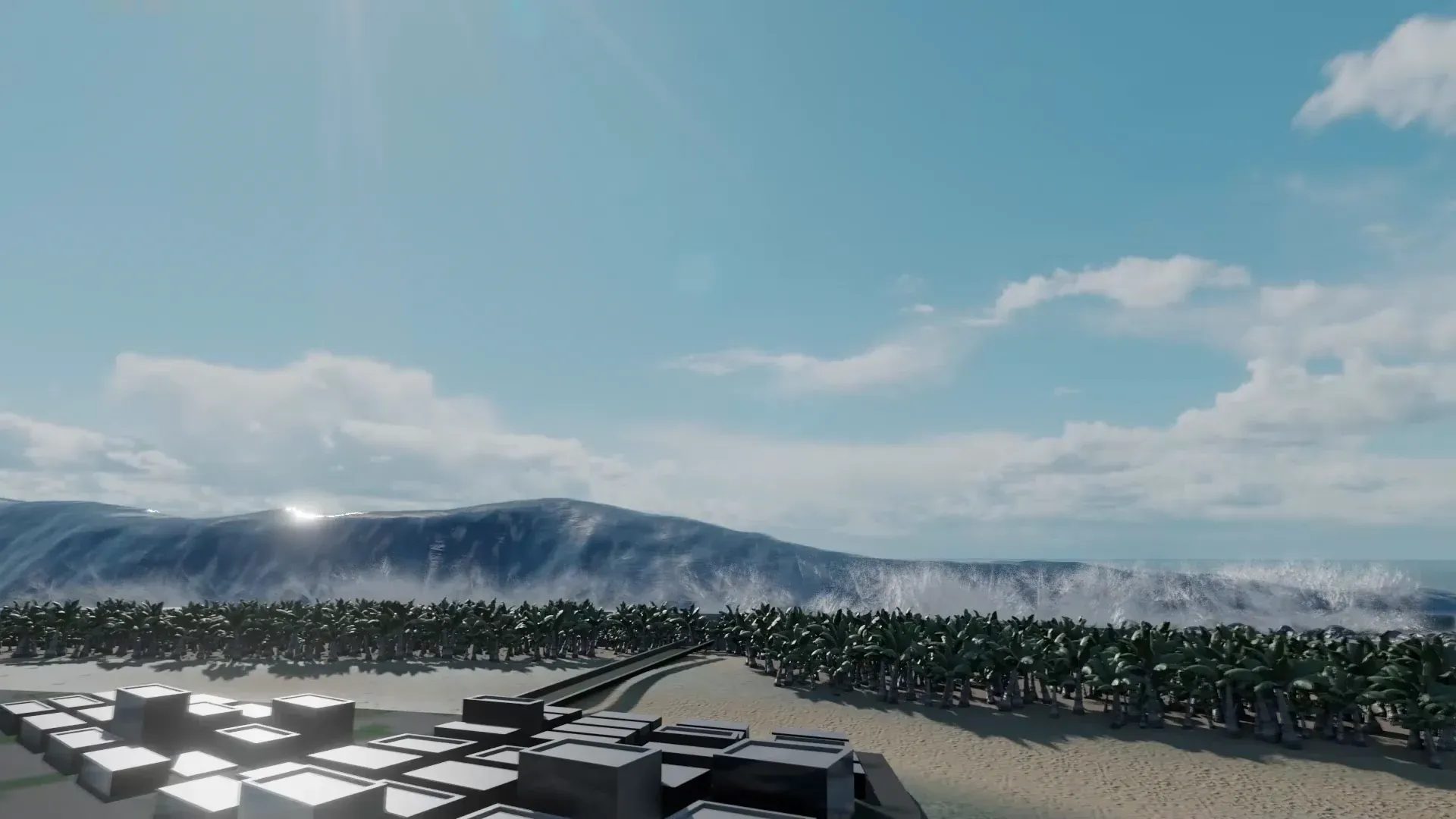
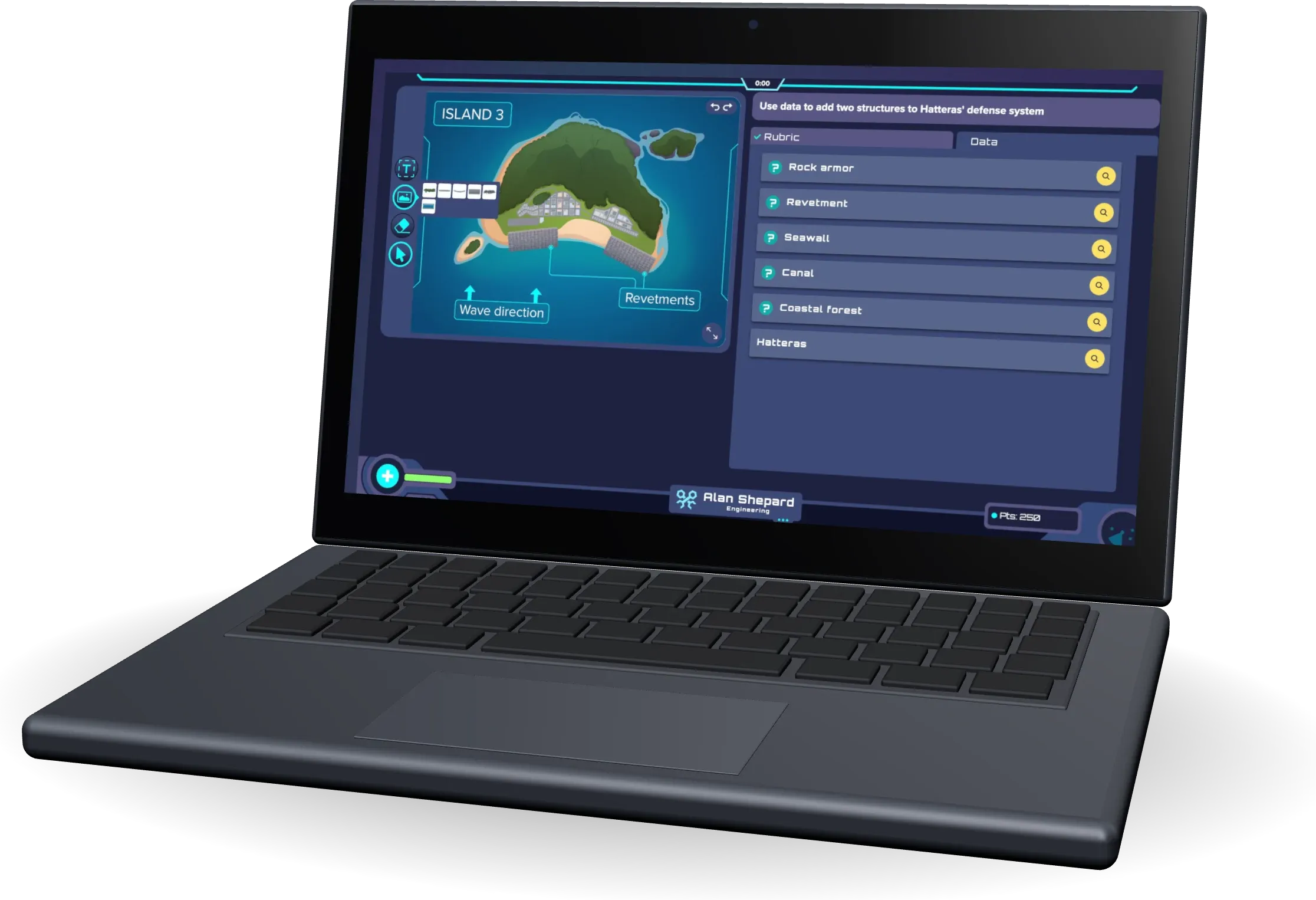
Every Mission puts the class inside a standards-aligned scenario where students analyze data, make decisions, and work together to solve a real problem. How it runs
- Every student is assigned to a team, and each team’s work is themed to it, from its own information and challenge to the same problem the rest of the crew is solving.
- The Mission connects every station and moves the story forward.
- The teacher leads the discussion and pushes for evidence. The teacher stays at the helm.
- Where a classroom has a device for every student, a projector is all a Mission adds; most run 30 to 45 minutes, with 5 minutes of prep.
- Any teacher can run one free; districts bring us in when they want it in every science classroom, with district-level reporting across all of them.
What the report shows
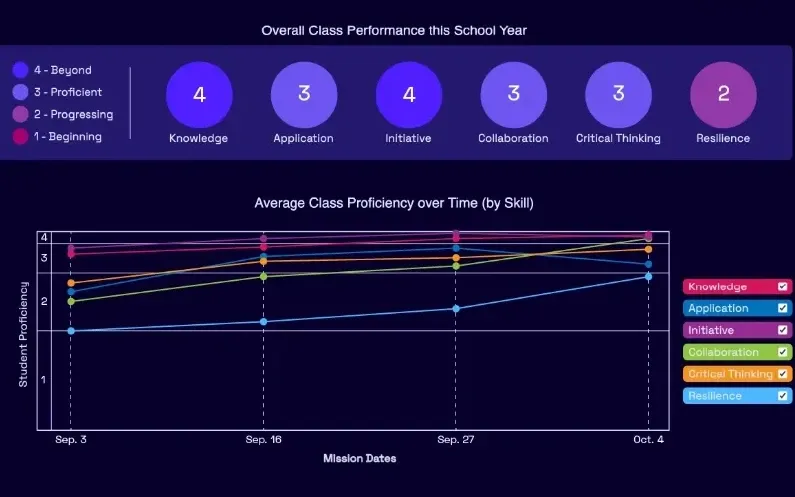
A class report from a real Mission: the class score in each of six skills, then each skill across the year. Every student gets a report on how well they did, built from what they did across the whole Mission: what they knew, whether they could apply it, and the human skills that Mission captured. The test shows what they know. The report shows the rest.
The evidence
+0.94percentage points of content knowledge for each Mission a class runs (p < .001)
Content-knowledge gain, percentage points Bar chart of content knowledge rising with the number of Missions run, from one Mission to twenty, a roughly 17.9-percentage-point separation.Students who ran about 20 Missions scored roughly 17.9 percentage points higher than students who ran one.
The more Missions a class runs, the more students grow. In Instructure’s 2025-26 study of more than a thousand fifth graders across 53 classrooms, funded by the U.S. Department of Education’s Institute of Education Sciences, students who ran Missions scored higher on content knowledge (g = 0.335, p < .001), rising about 0.94 percentage points with each Mission (p < .001), and on writing (g = 0.269, p = .015), rising about 0.035 rubric points with each Mission (p = .049). Mission.io meets ESSA Level II standards, as validated by Instructure.
Bautista et al. (2026), Instructure · content knowledge g = 0.335, p < .001; +0.94 pp per Mission, p < .001 · writing g = 0.269, p = .015; +0.035 rubric points per Mission, p = .049
Teaching your own pathway?
Science Techbook’s middle school units run on either of two pathways or in an order you build, and the state editions have units of their own. Bring us your units and we’ll work out together where a Mission fits in each one.
Questions leaders ask about Science Techbook
- Is Discovery Education Science Techbook aligned to NGSS?
Partly, on EdReports’ measure. The current 6-8 edition met the first gateway, Designed for NGSS (84%), and partially met the second, Coherence and Scope (73%), in September 2021. An earlier California digital-only edition did not meet the first gateway (30%, February 2019). Neither K-5 edition has been reviewed. The Florida, Indiana, and Texas editions are written to those states’ standards, so check which edition a rating describes.
- How much does Science Techbook cost?
Discovery publishes no national prices. On Florida’s state contract (July 2024), a digital student license is $23 for one year or $68 for five, middle school digital plus print is $153 per student for five years, and a middle school course kit is $1,500. The worked example above lands one middle school of 300 students at roughly $69,000 over five years.
- Does Science Techbook have hands-on activities?
Yes. Its units name hands-on investigations throughout (a paper cup telephone, frozen coils, a sticky-tape lab), and Discovery sells Hands-On Activity Kits by unit or course, each equipping one class section in eight groups, with refills. The kits are an option, so a digital-only purchase leaves the materials to each school.
- Is Science Techbook suitable for elementary schools?
It has two elementary editions and no public review of either. The current one runs three to five units a grade in sessions of about 20 minutes. The new Science Techbook Phenomena in Action, for 2026-27, has four units a grade organized into 5E concepts, each ending in an assessment that feeds the dashboard, and is offered as a limited pilot. Discovery’s lighter K-5 product is Mystery Science; the head-to-head above compares them.
- What do districts add to Science Techbook?
Reliable devices, planning time to build the unit sequence, a plan for the kits if they buy them, and, after the lesson that builds a unit’s key idea, a Mission where the whole class has to use it on a scenario it hasn’t seen. The pairing map lists the fit unit by unit.
How we reviewed this
We read EdReports’ two reports on Discovery’s middle school science (February 2019 and September 2021) and Discovery’s response to each, the Florida, Oregon, Indiana, and Texas adoption records and California’s 2018 panel recommendation, the Florida Department of Education’s 2023-24 bid report for prices, Oregon’s 2016 price sheets and a 2017 pricing report for the older figures, Discovery’s product pages, Chart Your Course pathways, and Indiana reviewer guide, the studies behind Discovery’s ESSA claims (McREL’s 2023 Sahuarita study, the 2023 logic model, Decisive Data’s Sahuarita study, Discovery’s North Carolina analysis, and Merola Research’s Rock Hill study), a California district’s 2020 pilot report, and r/ScienceTeachers comments mentioning Discovery Education or Techbook, read through an archive. The archive let us search comments fully from 2018 to 2022 and only partly after that, which is why most quotes are older. We quote only comments we could date and link, as posted, with spelling and punctuation tidied where a typo would distract and nothing else changed; the link shows the original. Prices are as of the dates shown and will drift; tell us if one has. We make Missions, districts pair them with Science Techbook, and we said so at the top. Mission.io is not affiliated with or endorsed by Discovery Education Science Techbook or Discovery Education, Inc. Everything is linked in Sources.
Sources
EdReports
- Discovery Education Science 6-8 (Sep 2021)
- Discovery Education Science 6-8, Gateway 1 detail (Sep 2021)
- Publisher response to the 6-8 report (2021)
- Science Techbook for California NGSS Middle School, 2017-18 (Feb 2019)
- Publisher response to the California report (Feb 2019)
- Science review tools (v1.0, v1.5, v2.0)
- Amplify Science K-5 (2022 edition; May 2023)
- Amplify Science 6-8 (2018 edition; 2019 review)
- OpenSciEd grades 6-8 (Feb 2023)
- FOSS Next Generation 6-8 (Dec 2019)
- HMH Into Science K-5 (2022 edition; 2024)
- HMH Science Dimensions 6-8 (2019)
Discovery Education and the states
- Discovery, Science Techbook (Oct 2026)
- Discovery, Science Techbook for Middle School (Apr 2025)
- Discovery, Science Techbook Phenomena in Action for Middle School (Oct 2026)
- Discovery, Science Techbook for Elementary (Jan 2026)
- Discovery, new K-5 Science Techbook announcement (Jan 2026)
- Discovery, new K-5 Science Techbook webinar (Apr 2026)
- Discovery, Science Techbook pilot (Sep 2026)
- Chart Your Course, middle school (Sep 2024)
- Chart Your Course, elementary (Sep 2024)
- Indiana middle school reviewer guide (Dec 2022)
- Florida Department of Education, 2023-24 K-12 science bid report
- Discovery, Florida statewide approval (Jul 2024)
- Discovery, Oregon statewide approval (Oct 2023)
- EdTech Chronicle, Indiana approval (May 2025)
- Texas Education Agency, quality reviews, science K-8
- Texas Proclamation 2024 adopted materials (Nov 2023)
- California Department of Education, 2018 review panel recommendation
- Oregon price sheet (Mar 2016)
- Tech & Learning, Discovery Techbook review (Apr 2017)
- Perris Union High School District, middle school science adoption (2020)
- EdWeek Market Brief, Discovery Education acquired (2022)
- EdSurge, Discovery Education acquires Mystery Science (Nov 2020)
Evidence
- McREL International, Science Techbook implementation study, Sahuarita (Jul 2023)
- LearnPlatform by Instructure, Science Techbook logic model, ESSA Tier 4 (Aug 2023)
- Decisive Data Insights, Sahuarita and Freeport-McMoRan Foundation study (Jan 2021)
- Discovery Education, North Carolina statewide study (2016-17 data)
- THE Journal, Rock Hill study coverage (May 2014)
Reddit and other teacher forums
- r/ScienceTeachers, Discovery Education curriculum thread (Sep 2022)
- r/ScienceTeachers, MS textbooks (Sep 2021)
- r/ScienceTeachers, MN science educators (Nov 2020)
- r/ScienceTeachers, high school textbooks thread (Mar 2022)
- r/ScienceTeachers, Discovery Techbooks or (Apr 2020)
- r/ScienceTeachers, Discovery Education and fidelity (Sep 2026)
(And yes, we scoured the deepest, darkest corners of Reddit and the teacher forums, and luckily came out alive, to see what teachers were actually saying.)
Other programs and research
Teacher comments are linked where they are quoted; read through the Arctic Shift archive of r/ScienceTeachers, linked to their reddit.com permalinks.
Map the units, whether you’re weighing Techbook or teaching it
Going through an adoption? We're always glad to talk through your choices and show you how a Mission makes whichever one you pick go further. Already running Science Techbook? Same conversation, about the year ahead.