
HMH Into Science Review (2026)
HMH Into Science is HMH’s K-8 science program: 5E lessons with leveled readers and a Spanish edition, on the HMH Ed platform. EdReports rates K-5 Partially Meets on NGSS design (2024); 6-8 is unreviewed. Part of our Best NGSS science curriculum (2026) guide, eleven programs on one rubric.
Who we are. Mission.io makes Missions, not a curriculum: teacher-led, whole-class simulations built to the same NGSS standards these programs teach. Districts bring us in to get more out of the science curriculum they already own, which is why we know this shelf.
For HMH Into Science we read the EdReports reports, HMH’s program pages and brochures, the Texas adoption list and state contract prices, one New York district’s contract, HMH’s research pages, and the teacher forums. No publisher funds us or gains from a verdict. Our one interest: helping you get more out of whichever program you choose, which is what we already do for districts across the country.
On this page
Is HMH Into Science a good curriculum? The verdict
HMH Into Science · reviewed October 2026 · Mission.io
Every lesson is laid out, and the reading drives more than phenomena.
Best for
Districts that want every science lesson laid out on one platform, with reading built in and a Spanish edition, and that will fund the lab support and the training on HMH Ed that teachers say the program needs.
Not for
Districts that shortlist on EdReports, that want phenomena driving each lesson, or whose students need a lighter reading load in science, since teachers report heavy reading and vocabulary, a barrier for students learning English.
- State adoption
- Texas, the TEKS edition, K-8 (November 2023)
Key facts, as of October 2026
| Fact | HMH Into Science | Source and date |
|---|---|---|
| Publisher | HMH (Houghton Mifflin Harcourt; brochures from late 2024 carry “HMH Education Company”), which develops the program in house. Named 6-8 authors include Marjorie Frank, Michael DiSpezio, Bernadine Okoro, and Cary I. Sneider | HMH Into Science, Oct 2026; 6-8 overview brochure, May 2021 |
| Editions and grades | Into Science K-5 (the 2022 edition EdReports reviewed): five units in grades 3 and 4, six in grade 5. Into Science 6-8: one grade 6 to 8 band of 24 units in four disciplines, sold in Discipline-aligned and Integrated versions, with every unit on HMH Ed whatever you buy in print. A Spanish edition, HMH ¡Arriba las Ciencias!, and a separate Texas (TEKS) edition, K-8 | K-5 scope and sequence, Oct 2024; 6-8 scope and sequence, Sep 2024 |
| State adoptions | Texas adopted HMH Into Science Texas, K-8, and ¡Arriba las Ciencias! Texas, K-6, under Proclamation 2024 (November 2023), each at 100% TEKS coverage. California’s 2018 adoption reviewed HMH Science Dimensions, not Into Science. Louisiana’s reviewed-materials page lists no Into Science price list (October 2026). Check your own state’s list | tea.texas.gov, Nov 2023; cde.ca.gov, Aug 2018; doe.louisiana.gov, Oct 2026 |
| Time as written | 6-8 is paced on a Core Path for a daily 45-minute class period. K-5 can run in a science block or inside ELA time; HMH publishes no days per unit for K-5 | 6-8 overview brochure, May 2021; HMH Into Science, Oct 2026 |
| Digital | HMH Ed, with Teacher and Student eBooks and reports by class and student on the standards; in 6-8, read-aloud, videos, You Solve It simulations, and an NGSS Trace Tool. HMH now advertises curriculum-aligned AI tools for K-5 and 6-8. Samples and a reviewer login on HMH Ed; no free classroom pilot is posted | HMH Into Science 6-8, Oct 2026; 6-8 overview brochure, May 2021; K-5 sample, Oct 2026 |
| Materials | In 6-8, print Student Activity Workbooks and Teacher Activity Guides; in K-5, Student Activity Guides. Equipment kits sold separately or in higher package tiers. A 6-8 Consumable Equipment Kit holds materials for 14 groups, and HMH advises one a year for every two or three sections, plus one Non-Consumable Kit per teacher for the life of the adoption. HMH says the labs also use easy-to-source materials | 6-8 equipment guide, Oct 2026; 6-8 overview brochure, May 2021 |
| Professional learning | HMH Coachly one-on-one coaching on HMH Ed, program courses, on-demand Teacher’s Corner and Leader’s Corner sessions, and The Center for Model Schools for leaders. No public prices | HMH Into Science, Oct 2026 |
What EdReports says about HMH Into Science, by gateway
| Review | Designed for NGSS | Coherence and scope | Usability | Report |
|---|---|---|---|---|
| HMH Into Science K-5 (2022 edition) | Partially Meets, 57% to 75% | Meets, 97% to 100% | Not eligible | EdReports, May 2024 |
| HMH Into Science 6-8 | Not reviewed | Not reviewed | Not reviewed | EdReports reports list, Oct 2026 |
| HMH Science Dimensions 6-8 (2018), a separate HMH program | Partially Meets, 50% | Meets, 85% | Not eligible | EdReports, Feb 2019 |
Inside Gateway 1, the K-5 report scored three-dimensional learning at 75% to 87%, and phenomena and problems at 33% in five of six grades (58% in grade 1). Its grades 3 to 5 summary says phenomena and problems “rarely drive learning and use of the three dimensions at the lesson or sequence level” (EdReports, May 2024). Gateway 2 met at every grade; for grades 3 to 5, EdReports found every disciplinary core idea covered. Because Gateway 1 partially met, EdReports didn’t score usability, so it has no rating of the assessments or teacher supports. The report says it used an earlier review tool. Science Dimensions is a different HMH program, still sold for K-12; its 6-8 rating is not a rating of Into Science. For 6-8, the Texas adoption covers the TEKS edition only, so the public check on the NGSS edition is yours: a pilot.
What do teachers say about HMH Into Science?
Teachers split on HMH Into Science along one line: the structure. Those who praise it praise how complete it is, a program a new teacher or a long-term sub can follow; those who criticize it describe the reading load, the labs, and the platform. Where a comment says only “HMH,” we say so, since HMH also sells Science Dimensions. The praise and the criticism below are real, dated, and linked; we’ve kept the harshest ones because a buyer will find them anyway.
Where teachers see value
The structure and the scaffolding. Teachers who like it say the lessons and pacing hold up, the readings scaffold hard ideas, and the program is complete enough for a teacher without a science degree. Even the fans add a caveat: a teacher in an r/ScienceTeachers thread on Into Science says “you’re going to have to do the heavy lifting to make the lessons engaging and accessible for your students.”
“HMH Into Science is what we use and I feel like it’s great for after I have taught, too advanced for when I just start, because middle school.”
“It’s so self contained they’re thinking of retaining it in some schools with long term subs because it’s well suited to teachers with limited experience or no content degree.”
“It’s a great program. We almost adopted it in our district. The only reason we didn’t was because some teachers didn’t think the navigation interface was user friendly enough.”
“I really like HMH. I don’t use it to a T; it’s more like a resource I use for lesson planning.”
Common concerns
The reading, the labs, and the platform. Teachers describe “so much reading” and heavy academic vocabulary, hardest on students learning English; labs they call weak or confusing; and a platform where resources are hidden and, for one teacher, student answers don’t always save. Two teachers in a September 2026 thread also report “numerous science mistakes in the text.”
“1) Their “teacher activity guides” are useless. 2) As u/fromthealtuniverse said, there are numerous scientific mistakes in the online text. 3) Even when you “assign” chapters from the online text in the web app, it doesn’t always save student answers. ... 5) The hands-on labs are mediocre, and the materials they provide to do them are just tossed into three boxes without packing manifests.”
“It’s perfect for new teachers and substitute teachers, but students will most likely hate science by the end of the year.”
“HMH is also a reading program disguised as a science program.”
“Oh yeah, to put it bluntly, their labs suck. I ended up using all my old labs updated for NGSS.”
Have your teachers run one full lesson on HMH Ed before you sign.
HMH Into Science pros and cons, with the evidence
Pros
- Structure a new teacher can follow: a Core Path for a daily 45-minute period in 6-8, and lessons teachers call solid and self-contained enough for long-term subs and teachers without a content degree. [HMH 6-8 brochure, May 2021; the quotes above]
- Full content coverage. EdReports found Gateway 2, coherence and scope, met at every K-5 grade (97% to 100%) and, in grades 3 to 5, every disciplinary core idea covered. [EdReports, May 2024]
- Literacy and language support built in: FUNomenal Readers in K-5, read-aloud and supports for students learning English on HMH Ed, the option to teach science inside ELA time, and a full Spanish edition. [HMH program pages, Oct 2026]
- A wide assessment set: readiness checks, lesson quizzes, unit, modified, cumulative, and performance-based tests in 6-8, online, in print, and in editable Word, with reports by class and student on the standards. [HMH 6-8 components and overview brochures]
Cons
- The alignment record. EdReports rated K-5 Partially Meets on NGSS design at every grade, with phenomena and problems at 33% in five of six grades; 6-8 has never been reviewed. [EdReports, May 2024]
- Outcome evidence is thin: HMH labels its own evidence for K-5 and for 6-8 “Demonstrates a Rationale,” the ESSA Tier 4 label for a research-based logic model, and we found no outcome study on HMH’s research pages and no published Into Science effect size. We didn’t check the What Works Clearinghouse or Evidence for ESSA. [HMH research pages, Oct 2026]
- Heavy reading. Teachers describe reading passages and academic vocabulary that crowd out the science, a barrier for students learning English. [r/ScienceTeachers, Aug and Nov 2025]
- The platform. Teachers report resources hidden on HMH Ed, navigation that cost one district’s vote, student answers that didn’t save, and scientific mistakes in the online text. [r/ScienceTeachers, Aug 2025; r/Teachers, Sep 2026]
- The labs and kits take work. Teachers call the labs weak or confusing, one reports kits arriving without packing lists, and the 6-8 consumable kit is a yearly reorder for every two or three sections. [HMH equipment guide; the quotes above]
How it teaches
Instructional model
Every unit runs on the 5E model (engage, explore, explain, elaborate, evaluate). In K-5, most lessons open on a phenomenon HMH names (in grade 5, a water-powered rocket, or a coastline where lava meets the sea) and work through two hands-on activities, with a Hands-On Unit Project and a Unit Performance Task to close the unit. FUNomenal Readers, leveled “factual fiction,” sit beside the lessons. In 6-8, units come in four disciplines and follow a Core Path, with You Solve It simulations on HMH Ed. That’s the strength and the lift in one design: the lesson is written out for you, and EdReports found the phenomena rarely drive the learning, so making a lesson pull students in is left to the teacher.
Assessment and reporting
K-5 has embedded formative and summative assessments: digital quizzes, end-of-unit tests, and hands-on performance tasks. 6-8 adds Beginning-of-Year and Unit Readiness Checks, Lesson Quizzes, Unit and Modified Unit Tests, Cumulative and End-of-Module Tests, and Performance-Based Assessments, all online, in print, and in editable Word, with rubrics for constructed responses. HMH Ed reports by class and by student on the standards; we found no school or district dashboard described in HMH’s materials. EdReports found the grades 3 to 5 assessments “consistently measure the three dimensions,” and the K-2 formative ones do so inconsistently.
Materials
Print Student Activity Workbooks and Teacher Activity Guides sit beside the eBooks. Kits come separately or in the higher package tiers: in 6-8, a consumable kit serves 14 groups and HMH advises one a year for every two or three sections, plus a non-consumable kit per teacher. HMH says labs also run on easy-to-source materials. One teacher reports kits arriving in three boxes without packing lists.
Implementation lift
Low to moderate. The pacing and the planning are built in, which is why teachers new to science lean on it. The work is in the platform, where teachers report hidden resources, and in the labs: someone reorders kits, checks the boxes, and preps labs that run longer than advertised. HMH sells coaching and on-demand sessions on HMH Ed; plan them past the launch.
How much does HMH Into Science cost?
HMH publishes no list prices for the NGSS edition, so the numbers here come from two public records: one New York district’s contract for the NGSS edition, at $49.20 per six-year student license, $14.25 per six-year activity guide, and $196 to $895 per K-5 replacement kit bundle (Yonkers, 2023 to 2028 schedule), and the Texas state contract for the TEKS edition, at $77.65 to $277.50 per student for six years from digital only to print, digital, and kits (October 2026); training has no public price. One Yonkers school is paying $49,956 for Into Science over six years for 486 K-8 students, about $17 per student per year (Yonkers board attachment, 2023 to 2028); its prices look negotiated, so read them as a floor.
A worked example, from the Yonkers prices: one elementary school, two classrooms in each of grades 3 to 5, six years
- Student digital licensesabout $8,900180 students x $49.20, one six-year license each
- Student Activity Guidesabout $2,600180 x $14.25, six-year print
- Replacement kit bundlesabout $3,200two per grade, as Yonkers bought them: six of Yonkers' replacement bundles at its K-5 average of about $537 ($196 to $895 each)
- Teacher licenses$0six at $450 list, billed at $0 in Yonkers
Six-year total, before training and shippingroughly $14,600
That’s about $14 per student per year for 180 students. The honest range is $14,600 to $50,000: at the Texas contract’s prices the same school pays about $20,300 for the print and digital package ($112.70 per student) and up to about $50,000 for the premium package with kits (as much as $277.50 per grade 5 student). Training is extra and has no public price.
Ask what the kits cost in year two before you sign for year one.
Prices as of October 2026. Prices drift; tell us if one has.
HMH Into Science prices on the public record, October 2026
| Item | Price | What it includes |
|---|---|---|
| K-5 student license, Yonkers (NGSS edition) | $49.20 per student | Six years of digital access |
| K-5 Student Activity Guide, Yonkers | $14.25 per student | Six-year print |
| K-5 kit bundle, Yonkers | $196.36 to $894.96 per bundle | Replacement kit bundles, two per grade |
| 6-8 student license and kits, Yonkers | $58.56 per student; kits $1,083.20 to $3,110.40 each | Six years of digital access; physical and earth science kits |
| K-5 package, Texas contract (TEKS edition) | $77.65 digital; $112.70 with print; $151.50 to $219.85 with kits; $192.85 to $277.50 premium | Per student, six years; premium adds print, digital, and kits |
| 6-8 package, Texas contract (TEKS edition) | $94.15 digital; $126.10 with print; $142.20 to $167.95 with kits; $168.40 to $194.15 premium | Per student, six years |
| Teacher license | $450 list (billed $0 in Yonkers) | Teacher access on HMH Ed |
HMH Into Science against five NGSS programs, on one chart
| Program | EdReports, K-5 and 6-8 | Instructional model | Lesson architecture | Hands-on intensity | Assessment and reporting | Implementation lift | Cost structure |
|---|---|---|---|---|---|---|---|
| HMH Into Science | K-5 Partially Meets, every grade (2022 edition; 2024)6-8 not reviewed | Platform with centralized pacing | Centralized pacing | Moderate | Class and student reports by standard on HMH Ed | Low to moderate; platform and kit reorders | Per-student six-year packages, kits in the higher tiers; K-5 digital $49.20 per student (Yonkers, NGSS edition, 2023 to 2028) |
| Amplify Science | K-5 Meets, every grade (2022 edition; 2023 report)6-8 Meets, all gateways (2018 edition; 2019 review) | Literacy and modeling routines; simulations plus investigations | Repeatable daily routines | Moderate | Embedded unit assessments; class reports in 6-8 | Moderate; routines scaffold year one | Per-student license plus kits: $13 K-5 (NYC), $25 6-8 (Louisiana) |
| Savvas Experience Science | K-5 under review, no report6-8 not reviewed | 5E, print or digital, on Realize | 5E Experiences inside Topics; K-5 stations | Moderate | Teacher performance views and custom tests (Realize) | Low on the platform; kits add work | Texas edition, Texas contract (Oct 2026): six-year digital $12.42 per student per year K-5, $14.25 for 6-8; print packages $19.25 to $21.50; kits extra; no national price |
| Inspire Science | K-5 not reviewed6-8 Does Not Meet, Gateway 1 (11%; 2020 edition, 2020 report) | Structured 5E, print plus digital | 5E lessons; 30- or 45-minute K-5 tracks | Moderate | Formative probes and lesson and module assessments; a teacher dashboard | Low to moderate; platform setup and kit refills | Per-student bundles plus classroom kits and yearly refills (grade 3 to 5 student bundle $157.68 for six years; grades 3 to 5 classroom kit $2,608 to $5,129; 6-8 up to $6,139) |
| FOSS Next Generation | K-5 not reviewed6-8 Does Not Meet, Gateway 1 (30%; 2019 edition, 2019 report) | Investigation-centered kit labs | Investigations in 45-minute parts | Very high (kits) | Embedded checks and I-Checks; FOSSmap reports in grades 3-8 | Moderate; materials management and refills | Kits with five-year digital seats, plus refills |
| OpenSciEd | Meets, all gateways (2022 edition; 2023 report) | Phenomenon storylines, open license | Extended storylines with scripted pacing | High | Embedded, teacher-managed; dashboard via partner platform | Moderate to high; train first | No license; kits, print, training |
HMH Into Science head to head with five programs
HMH Into Science vs Amplify Science
For the alignment record, Amplify is the lower-risk adoption. Amplify Science meets EdReports’ expectations at every K-5 grade (2023) and at 6-8 (2019); HMH Into Science K-5 partially meets at every grade (2024), and its 6-8 has never been reviewed. Both put reading at the center. Amplify runs literacy and modeling routines with simulations beside the investigations; HMH runs 5E lessons with leveled readers, and EdReports found its phenomena rarely drive the learning. Prices are close on public contracts: Amplify K-5 digital was $13 per student per year in New York City (2024-25), and HMH K-5 digital works out to $12.94 a year on the Texas contract (October 2026), though that price is for the TEKS edition; Yonkers pays $8.20 a year for the NGSS edition (2023 to 2028). Kits are extra in both. Where a district wants a program a new teacher can pick up and follow, HMH deserves the evaluation.
HMH Into Science vs Savvas Experience Science
HMH has a public alignment record now, and Savvas, the closest match on this list, doesn’t yet. Savvas Experience Science and HMH Into Science are both digital-first K-8 programs from large publishers, sold as per-student six-year packages, with Texas editions on the state’s 2024 list. On the Texas contract their prices are close: K-5 digital is $12.42 a year for Savvas and $12.94 for HMH, and 6-8 is $14.25 and $15.69 (October 2026). HMH has a K-5 EdReports report (Partially Meets, 2024); the national Savvas edition, announced in March 2025, has none yet, with K-5 under review. A district that would rather wait for Savvas’s report can; the two are close enough on price and design that the report may decide it.
HMH Into Science vs Inspire Science
For K-5, HMH has an EdReports record and Inspire has none; for 6-8, neither has a passing one. Both are large-publisher 5E programs with centralized pacing, built for rollout. Inspire Science is McGraw Hill’s K-8 program; its 6-8 edition did not meet EdReports’ Gateway 1 (11%, 2020) and its K-5 is unreviewed. HMH’s K-5 partially meets (2024) and its 6-8 is unreviewed, so neither has a public rating at both levels. Both carry Spanish materials; HMH’s ¡Arriba las Ciencias! is a full Spanish edition. Inspire is print plus an online subscription with kits beside it; HMH is a per-student package with kits in the higher tiers.
HMH Into Science vs FOSS
Choose FOSS for materials in students’ hands, and HMH for a program any teacher can follow from day one; they sit at opposite ends of the shelf. FOSS is a kit program where students investigate with materials in most lessons and the logistics are the job; HMH Into Science is a platform program where the reading and the pacing carry the lesson and the labs are lighter. Neither has a full EdReports record: FOSS 6-8 did not meet Gateway 1 (30%, 2019) and FOSS K-5 is unreviewed, while HMH K-5 partially meets (2024) and HMH 6-8 is unreviewed. Teachers’ complaints run the same way: FOSS teachers describe refills and setup, HMH teachers describe reading load and weak labs.
HMH Into Science vs OpenSciEd
For phenomena that drive the learning, OpenSciEd is the program built for it. OpenSciEd is free to download, all-green at EdReports for 6-8 (2023), and builds each unit as a storyline students revise with evidence; its K-5, completed in 2026, isn’t rated yet. HMH Into Science sets out each lesson for the teacher, and EdReports found its phenomena rarely drive learning at grades 3 to 5. OpenSciEd asks more of teachers and needs training first; HMH asks less on day one and more on the platform. Districts with a coaching culture tend to lean OpenSciEd; districts staffing science with teachers new to it tend to lean HMH.
When HMH Into Science fits, and when to think twice
Often a strong fit when a district:
- Wants every lesson laid out and paced, the same way across campuses
- Staffs science with new teachers, long-term subs, or teachers without a science background
- Wants reading built into science, or teaches K-5 science inside ELA time
- Needs a full Spanish edition
- Is in Texas, where the TEKS edition is on the 2024 adopted list, or has checked its own state’s list
Think twice when a district:
- Shortlists on EdReports results
- Wants phenomena to drive each lesson
- Has many students learning English, for whom reading-heavy science is a barrier
- Wants published outcome studies before it adopts
- Can’t support the labs: kit reorders, prep, and teachers who’ll revise weak labs
Most districts that adopt it budget for three or four things alongside it. The next section lists them.
What districts pair with HMH Into Science
HMH Into Science arrives with its pacing, its readers, and its own assessments. Most of what districts put beside it is support for the parts teachers say need it: the labs, the reading load, and the platform. One addition on this list is instructional, and it’s ours. Read that entry knowing who wrote it.
- Lab support and a kit calendar. Someone who reorders the consumable kits each year, checks the boxes against the lessons, and preps the labs; teachers in the forums name weak or long labs among the first things that go wrong.
- A plan for the reading load. Read-aloud and HMH’s supports for students learning English on HMH Ed, the Spanish edition where it fits, and time set aside for the heaviest reading lessons.
- Training that lasts past the launch. HMH Coachly coaching and the on-demand Teacher’s Corner, then a teacher on each campus who knows where HMH Ed keeps things.
Our entry · We make Missions
A Mission, after a key lesson
After a key lesson, a Mission gives the unit somewhere to go: one class period where students land in a scenario they haven’t seen and use what the lessons built to work through it together, with a report on every student when it’s over.
Four rows from the 5th grade map, one where no Mission fits: placements from HMH Into Science’s public grade 5 scope and sequence Unit Mission (code; minutes) Where it sits Matter Into the Asteroid (5-PS1-3, 5-PS1-4; 41 min) After Lesson 3, before the unit test Earth Interactions and Resources Hydro Heist (5-ESS2-2; 34 min) After Lesson 2, Water in Earth's Systems Patterns in the Sky Operation Starfall (5-ESS1-1, 5-ESS1-2; 40 min) After Lesson 3, before the unit test Energy and Matter in Organisms, Lessons 1 and 2 No Mission fits How plants grow and where food energy comes from The HMH Into Science NGSS edition 5th grade pairing map. HMH Into Science’s six 5th grade units, lesson by lesson: the Mission that fits, the lesson it follows, and the lessons where no Mission fits. One page, free, emailed now.
It’s on its way.
Check your inbox for the pairing map.
That didn’t send. Try again, or write to info@mission.io and we’ll send the map.
Email me the 5th grade map. It comes as a PDF, ready to print. Unsubscribe anytime.
What it adds
- The moment the reading gets used. HMH Into Science builds understanding one lesson at a time, through readings, hands-on activities, and the unit project. A Mission fits after a key lesson and before the unit test, when students have enough to reason with, so the transfer happens out loud, together, first.
- The skills every unit leans on. Every district plan promises collaboration, critical thinking, initiative, and resilience, and the curriculum’s assessments don’t report on them. A Mission’s report does, for every student, on the skills that Mission captured.
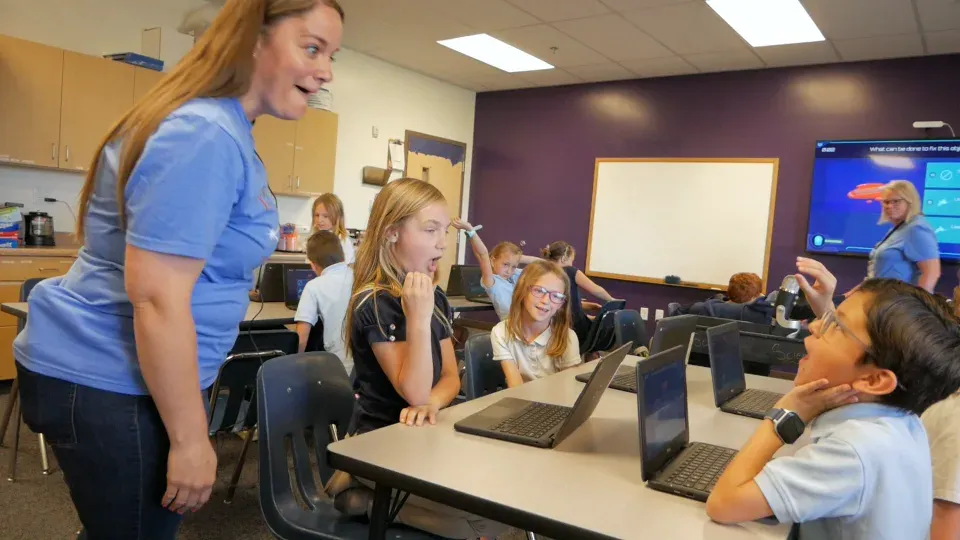
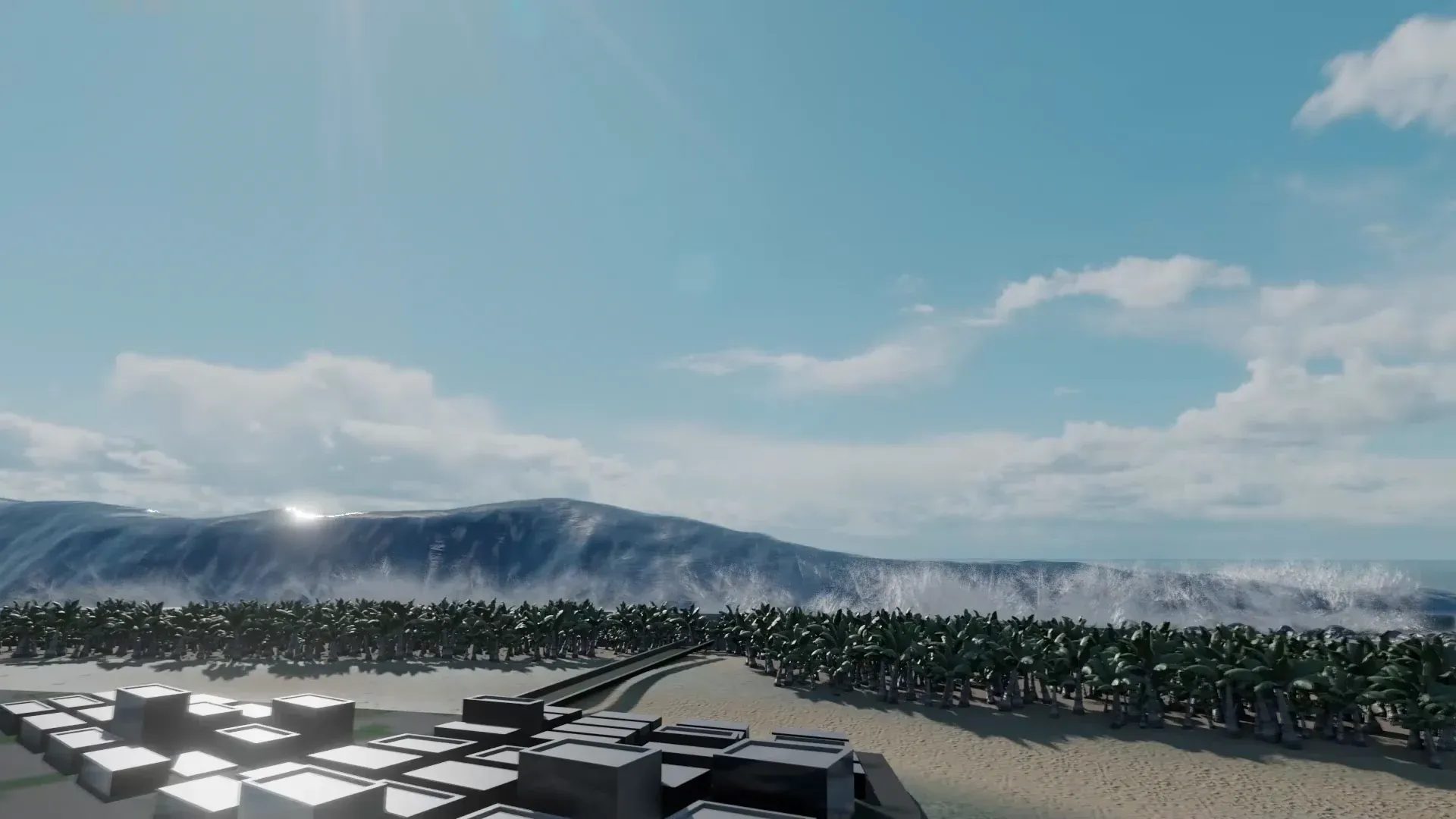
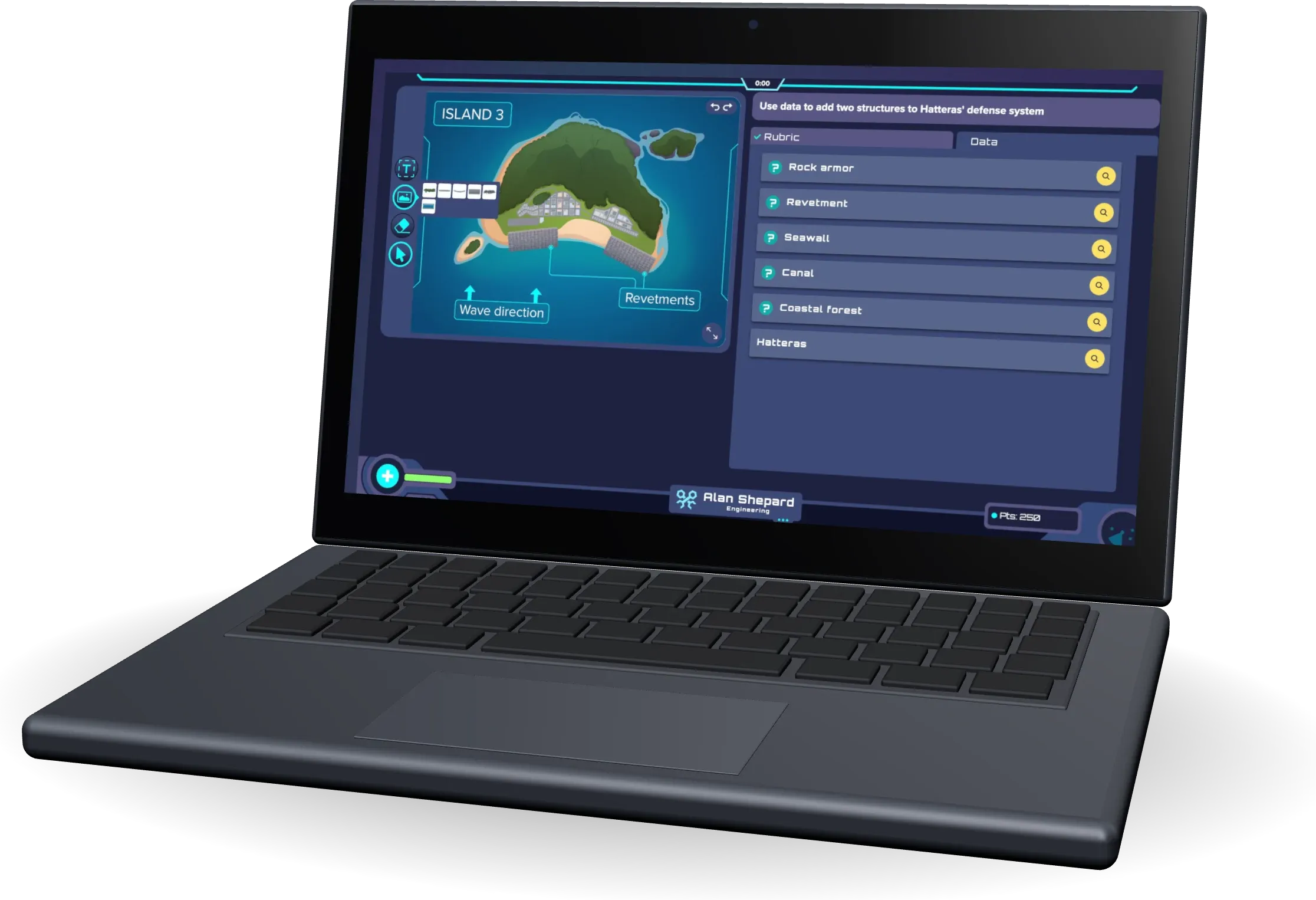
Every Mission puts the class inside a standards-aligned scenario where students analyze data, make decisions, and work together to solve a real problem. How it runs
- Every student is assigned to a team, and each team’s work is themed to it, from its own information and challenge to the same problem the rest of the crew is solving.
- The Mission connects every station and moves the story forward.
- The teacher leads the discussion and pushes for evidence. The teacher stays at the helm.
- One device per student and a projector for that period (the devices students use for HMH Ed work, if every student has one), 30 to 45 minutes a Mission, 5 minutes of prep.
- Any teacher can run one free; districts bring us in when they want it in every science classroom, with district-level reporting across all of them.
What the report shows
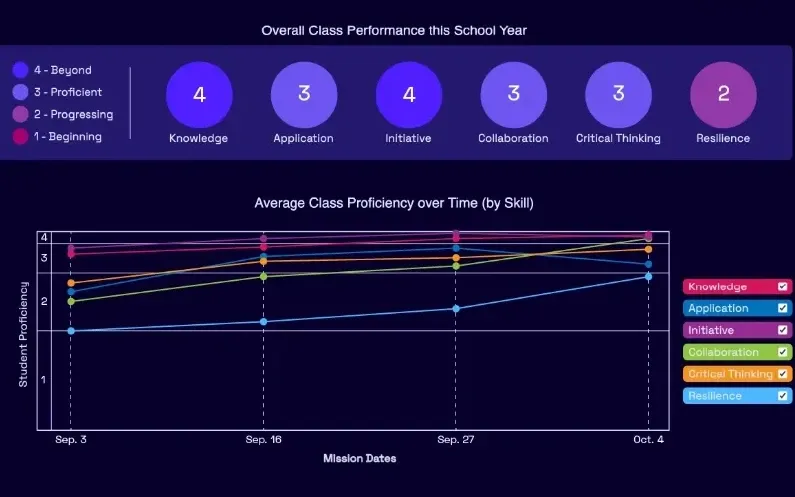
A class report from a real Mission: the class score in each of six skills, then each skill across the year. Every student gets a report on how well they did, built from what they did across the whole Mission: what they knew, whether they could apply it, and the human skills that Mission captured. The test shows what they know. The report shows the rest.
The evidence
+0.94percentage points of content knowledge for each Mission a class runs (p < .001)
Content-knowledge gain, percentage points Bar chart of content knowledge rising with the number of Missions run, from one Mission to twenty, a roughly 17.9-percentage-point separation.Students who ran about 20 Missions scored roughly 17.9 percentage points higher than students who ran one.
The more Missions a class runs, the more students grow. In Instructure’s 2025-26 study of more than a thousand fifth graders across 53 classrooms, funded by the U.S. Department of Education’s Institute of Education Sciences, students who ran Missions scored higher on content knowledge (g = 0.335, p < .001), rising about 0.94 percentage points with each Mission (p < .001), and on writing (g = 0.269, p = .015), rising about 0.035 rubric points with each Mission (p = .049). Mission.io meets ESSA Level II standards, as validated by Instructure.
Bautista et al. (2026), Instructure · content knowledge g = 0.335, p < .001; +0.94 pp per Mission, p < .001 · writing g = 0.269, p = .015; +0.035 rubric points per Mission, p = .049
Teaching your own sequence?
Some districts teach HMH Into Science Texas, whose units follow the TEKS, or run the 6-8 units in their own course order. Bring us your units and we’ll work out together where a Mission fits in each one.
Questions leaders ask about HMH Into Science
- Is HMH Into Science aligned to NGSS?
HMH calls it a program designed for the NGSS. EdReports rated the K-5 edition Partially Meets on NGSS design at every grade (2024), with full coverage of the content (Gateway 2 Meets) and phenomena that rarely drive the learning. The 6-8 edition has no EdReports review.
- How much does HMH Into Science cost?
HMH posts no list prices. One New York district paid $49.20 per six-year K-5 student license (2023 to 2028), and the Texas contract runs $77.65 to $277.50 per K-5 student for six years for the TEKS edition (October 2026). The worked example above lands six classrooms in grades 3 to 5 at roughly $14,600 over six years, before training.
- What's the difference between HMH Into Science and HMH Science Dimensions?
They’re two HMH programs, and HMH still sells both. Into Science (K-5 and 6-8) is the newer one, with FUNomenal Readers in K-5 and a Spanish edition. Science Dimensions is the earlier program, sold for K-12; EdReports rated its 6-8 edition Partially Meets on NGSS design (50%, 2019). California’s 2018 adoption covered Science Dimensions, not Into Science.
- How does HMH Into Science compare to Amplify?
Amplify meets EdReports’ expectations at K-5 and 6-8; HMH K-5 partially meets, and HMH 6-8 is unreviewed. Public per-student prices are close, about $13 a year for K-5 digital on each one’s contract. HMH’s $12.94 is for the Texas TEKS edition; Yonkers pays $8.20 a year for the NGSS edition. HMH lays out more for a new teacher; Amplify’s routines carry more of the modeling. The head-to-head above has the rest.
- What do districts add to HMH Into Science?
Lab support and a kit calendar, a plan for the reading load, training past the launch, and, after a key lesson, a Mission where the whole class has to use what the unit built on a scenario it hasn’t seen. The pairing map lists the fit lesson by lesson.
How we reviewed this
We read the EdReports reports for HMH Into Science K-5 and HMH Science Dimensions 6-8, the EdReports sitemap (which lists no Into Science 6-8 report), HMH’s program, sample, and research pages, the K-5 and 6-8 scope and sequence, overview, and equipment brochures, Texas’s Proclamation 2024 list and its state contract bulletin, California’s 2018 review of Science Dimensions, Louisiana’s reviewed-materials page, a Yonkers Public Schools board attachment, and r/ScienceTeachers and r/Teachers comments mentioning HMH from 2023 to October 2026, read through an archive, from which we quote only comments we could date and link, as posted, with spelling and punctuation tidied where a typo would distract and nothing else changed; the link shows the original. We found no outcome study for HMH Into Science and did not check the What Works Clearinghouse or Evidence for ESSA. Prices are as of the dates shown and will drift; tell us if one has. We make Missions, districts pair them with HMH Into Science, and we said so at the top. Mission.io is not affiliated with or endorsed by HMH Into Science or HMH Education Company. Everything is linked in Sources.
Sources
EdReports
- HMH Into Science K-5 (2022 edition; May 2024)
- HMH Into Science grade 5, Gateway 1 detail (May 2024)
- HMH Science Dimensions 6-8 (Feb 2019)
- EdReports sitemap (Oct 2026)
- The under-review list
- Science review tools (v1.0, v1.5, v2.0)
- Amplify Science K-5 (2022 edition; May 2023)
- Amplify Science 6-8 (2018 edition; 2019 review)
- OpenSciEd grades 6-8 (Feb 2023)
- FOSS Next Generation 6-8 (Dec 2019)
- Inspire Science 6-8 (Nov 2020)
- K-12 Dive on EdReports' first science reviews (Mar 2019)
HMH, the states, and districts
- HMH Into Science K-5 (Oct 2026)
- HMH Into Science 6-8 (Oct 2026)
- HMH Into Science K-5 sample (Oct 2026)
- HMH Into Science 6-8 sample (Oct 2026)
- HMH Into Science K-5 scope and sequence (Oct 2024)
- HMH Into Science 6-8 discipline-aligned scope and sequence (Sep 2024)
- HMH Into Science 6-8 overview brochure (May 2021)
- HMH Into Science 6-8 equipment guide (Oct 2026)
- Texas Proclamation 2024 adopted materials (Nov 2023)
- Texas Education Agency, EMAT current adoption bulletin (Oct 2026)
- California Department of Education, 2018 review of California HMH Science Dimensions (Aug 2018)
- Louisiana Department of Education, instructional materials reviews (Oct 2026)
- Yonkers Public Schools, HMH proposals and payment schedule (2023 to 2028)
Evidence
Reddit and other teacher forums
- r/ScienceTeachers, HMH Into Science thread (Feb 2025)
- r/ScienceTeachers, thoughts on HMH for 8th grade science (Aug 2025)
- r/ScienceTeachers, textbook or curriculum for 8th grade (Jan 2024)
- r/ScienceTeachers, new middle school science teacher tips (Sep 2023)
- r/ScienceTeachers, having a hard time with HMH science (Sep 2026)
- r/ScienceTeachers, elementary science programs (Nov 2025)
- r/Teachers, I hate HMH thread (Sep 2026)
(And yes, we scoured the deepest, darkest corners of Reddit and the teacher forums, and luckily came out alive, to see what teachers were actually saying.)
Teacher comments are linked where they are quoted; read through the Arctic Shift archive of r/ScienceTeachers and r/Teachers, linked to their reddit.com permalinks.
Know what the lessons leave to your teachers
Going through an adoption? We're always glad to talk through your choices and show you how a Mission makes whichever one you pick go further. Already running HMH Into Science? Same conversation, about the year ahead.