Gamification in Education: Turn Learning into an Experience
Ryann Garland
I’m going to share a secret with you guys. Lean in close and promise you won’t laugh, alright?
I thought The Minecraft Movie was absolutely hilarious.
I know what you’re thinking: wasn’t that movie meant for like… twelve-year-old boys? Yes, you’re probably right. And hopefully my humor and intellect are beyond that of a twelve-year-old boy at this point, but still. Something about the silliness of it all and the ultimate quest had me and my friends (in a theater full of kids less than half our age) busting up laughing.
These goofy characters made me realize something important. Games can be more than silly distractions. The good ones pull you in, make you think, and keep you coming back for more. That is the same magic that makes gamification in education so effective. It turns passive learning tasks into an active adventure. It makes lessons feel like a quest worth embarking on, where students live the experience instead of only memorizing facts.
What Is Gamification in Education?
Gamification is the incorporation of gaming elements into a task or experience in order to make it more engaging. In the classroom, game-based learning could look like points given to a team when they answer a question correctly, a reward for the class if they complete a quest together, or different challenges or tasks as they work towards a bigger goal. There are so many pieces of games that make them addicting, and adding any of these elements in the classroom is a sure way to get students more involved. When they’re more involved, they’re learning more.
Now, don’t get us wrong, we’re not telling you to ditch your math lesson and spend the day playing Monopoly or to skip your science experiment on plants for an afternoon of Minecraft farming. Gamification is not about replacing learning with gaming; it’s about enhancing the learning experience with interactive games.
And if you’re not sure where to start? Begin with Mission.io, where we pair a story worth playing with essential academic standards and lifelong skills. Mission.io Missions are teacher-led, whole-class simulations that make any lesson an experience students remember. Whether you’re focused on science or social studies, there’s something here for you, and we’re always updating our Mission Library with new Missions, standards, and experiences.
Why More Classrooms Are Turning to Gamified Learning
Gamified learning turns traditional classrooms into spaces where students actively engage with content and collaborate with peers. By actively doing, students learn the material and actually retain it. According to the Smithsonian, researchers found that learning activities had more student engagement when presented in a gamified way in an educational setting. Plus, gamified learning adds more structure to the classroom. There are clear tasks and a clear end goal. The National Institute of Health reports that students who learned in a gamified setting (versus those who did not) were more challenged and showed greater concentration.
Gamified learning is entertaining, certainly, but it gives the learning process much more than that. Gamification is about engaging the entire classroom in a learning experience, which allows students to work together, solve problems, and build their critical thinking skills. Students complete tasks, quests, and challenges along the way, which ultimately reinforces their learning and makes them masters of the subject at hand. A challenge with the light at the end of the tunnel will motivate students to push themselves a little harder and dig a little deeper.
How Gamification Reinforces Learning
Gamification also helps by showing students how to take their knowledge from the textbook or a quiz and put it into practice. For example, students can use their knowledge of fractions to work together and figure out the best way to plant seeds in someone’s greenhouse. Or they can use their knowledge of animal migrations to help a group of animals pass safely through a construction site. Through active participation, students work together to put their knowledge into practice, discuss it with their classmates, and maybe even learn something new. Gamified learning is effective at encouraging collaboration as students work together to solve real-world problems.
Gamification also teaches students another important life skill: being comfortable with failure. Thomas Edison famously said, “I have not failed. I’ve just found 10,000 ways that don’t work.” This mindset is exactly what students today need. Every failure and every mistake isn’t the end of the road, because either way, the student did learn something. Maybe they learned that planting all the seeds in a greenhouse in a single corner isn’t the most effective method for an abundant garden. Or maybe they learned that helping whales migrate straight through a construction zone isn’t exactly a five-star migration plan. When students fail, they can use that knowledge to try again (and sometimes again and again and again) until they get it right.
And when they do get it right, oh man, those are the moments that the students cherish. Those are the moments where their confidence grows. Those are the moments that are remembered.
Key Gamification Features That Support Teaching
Not sure where to start with gamifying your classroom? That’s okay, neither were we for a little while. But after a lot of trial and error (ask Skyler about how he used to have a voice changer to sound like an alien for Missions), we’ve found the best game features that create a mixture of fun and learning. Incorporating specific game design elements such as missions, badges, and real-time feedback helps promote active participation and critical thinking in the classroom. Here are a few game elements that will take your classroom from a chaotic gameboard to an adventure where every player is levelling up.
Missions and Quests
It’s true what they say: it’s not about the destination; it’s about the journey. But in order for students to have a successful journey, they need to know where they’re headed. Turn lessons into immersive, scenario-based challenges. Quests, adventures, and Missions will help students feel like the work they’re doing is important, and not just about the grade. By having a clear end goal, students will develop their collaborative skills and practice real-world problem-solving.
Badges and Status Rewards
We’ve talked before about how gamification is more than a leaderboard, and it’s true. But gamification is recognizing growth. Gamification should reward consistent effort. While a leaderboard for students who answer questions the fastest isn’t always the most effective, there are other ways to track student progress. Gamification elements can help students see the benchmarks they’re hitting along the way. Students could earn badges (such as “Pro Problem Solver” or “Courageously Creative Thinker”), or you can reward the class after they successfully complete 5, 10, 15 Missions and so on. Either way, provide those larger benchmarks so students can see their progression beyond the game.
Real-Time Feedback and Data
Sometimes it’s good to let students sit in the struggle, and sometimes they need some more hands-on guidance. For example, if you’re completing one of our Missions, teachers can pause and discuss with the class. “Is there another way you can do that?” “What do you think will happen to X if we do Y?” Giving real-time feedback will push students to dig a little deeper and be a little more creative. Going back to helping students be okay with failure, real-time tests, feedback, or data can help students find their errors and make those small adjustments along the way.
Choice and Autonomy
Students thrive when they feel like they’re in control. Another element of gamification is handing the theoretical remote control over to the students. Let them play to their strengths and let them explore new roles or tasks. When students feel heard, they will be more comfortable taking initiative. Give students a chance to make a choice, and they will feel much more invested in the learning process.
What Makes Mission.io Different
If you haven’t noticed already, we’re big believers in what games can do for learning here at Mission.io. We want your students to succeed with learning that sticks. Mission.io will support your learning goals and standards without any of the hassle of set-up or tech issues. Just check out our Mission Library, add in your class roster, and let the learning begin. Mission.io supports both in-class and online learning environments, so Missions work no matter where students are.
You don’t have to take our word for it. You can see the results for yourself: every student gets a report on how well they did, including human skills like collaboration, initiative, and critical thinking. We’re constantly doing studies on how our program is benefiting schools (read our latest case study here). These Missions adapt to any subject or lesson plan. From science to writing to math to social studies, there are options for all types of students and classrooms. Missions do more than fill up your time or give you a break in that last hour before the weekend comes. Mission.io creates real experiences for your students, not scripted games.
Read more about how Mission.io will empower your students here.
Tips for Getting Started with Gamification
If you’re not a regular Dungeons and Dragons player or Mario Bros extraordinaire, don’t turn away just yet. You don’t have to be a video game expert or a Pinterest-perfect teacher to make gamification happen in your classroom.
Here are our top tips to help you get started:
-
Start small: Don’t turn every lesson of every unit of every day into a gamified adventure. Start with a single lesson once a week. Take it step by step. You’ve got this!
-
Keep the learning objective clear: Remember, it’s not just about saving the princess and defeating the dragon (although that is pretty cool). Keep your students focused on the end goal while letting them take the lead.
-
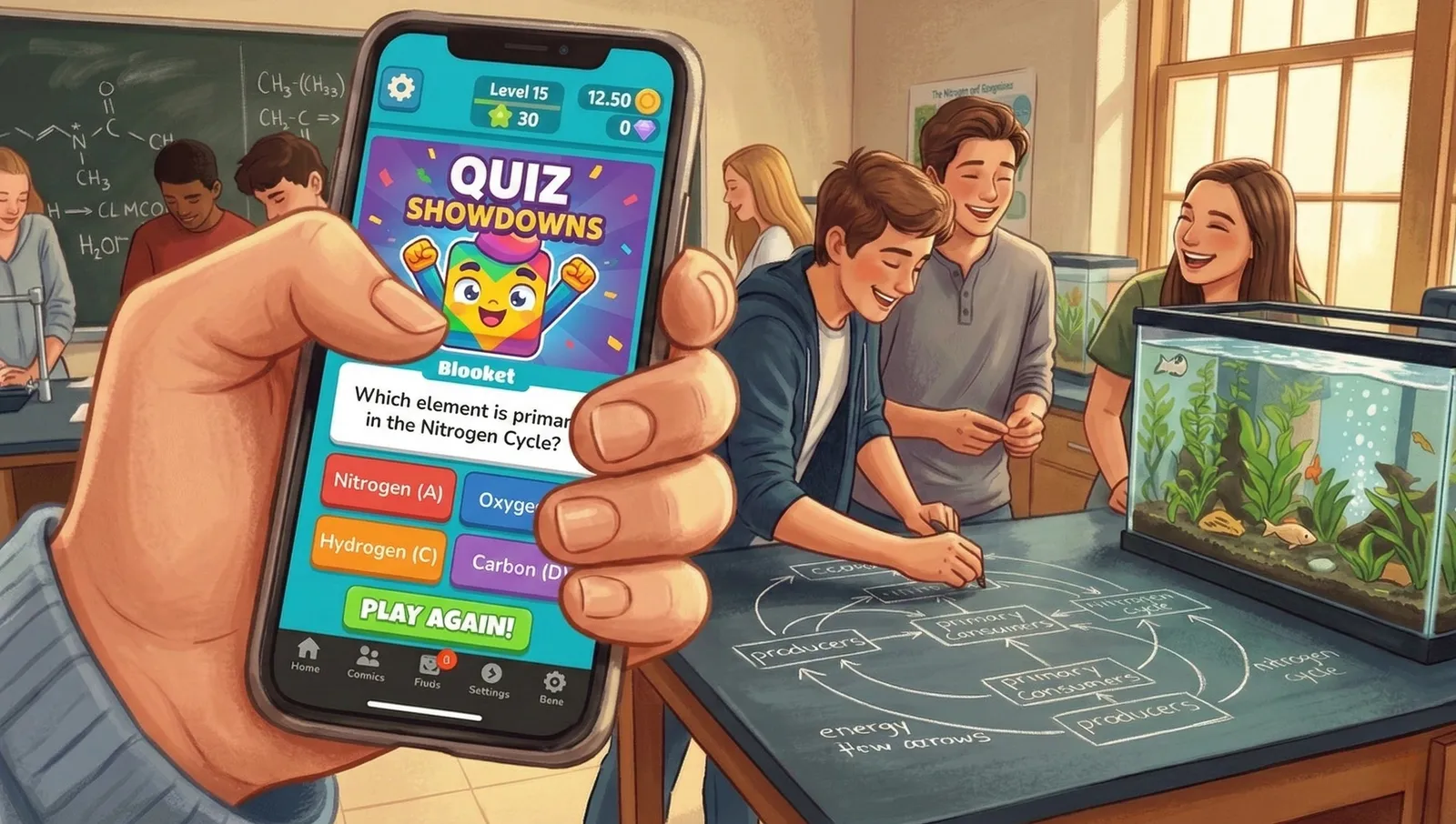
Use simple tools: Tools like Mission.io, Kahoot!, Blooket, and Gimkit take off the major load of planning and prep. Let us carry the prep while you lead your students through the fun!
-
Debrief: Get feedback from your students. What was their experience like? What worked and what didn’t? This feedback will give you a better idea of how to move forward. And remember, every class is different! Make sure to constantly seek feedback to find the best way to support your students’ learning.
Final Thoughts
Gamification in education helps students get excited about learning again. While grades and tests are important, gamification helps students see beyond the short-term of their school experience. They’ll see how what they’re learning builds upon itself and applies to the real world. It shifts the focus from finishing an assignment to building real skills. Incorporating gamified activities into your curriculum can raise student engagement and make learning more meaningful.
Good gamified learning entertains, and it teaches by making lessons more engaging and meaningful. With tools like Mission.io, teachers can create experiences students will remember. The goal isn’t to “play a game” in class, it’s to build classrooms that students want to be part of. Start building that classroom today!