Empower Students with Mission.io
Mission.io
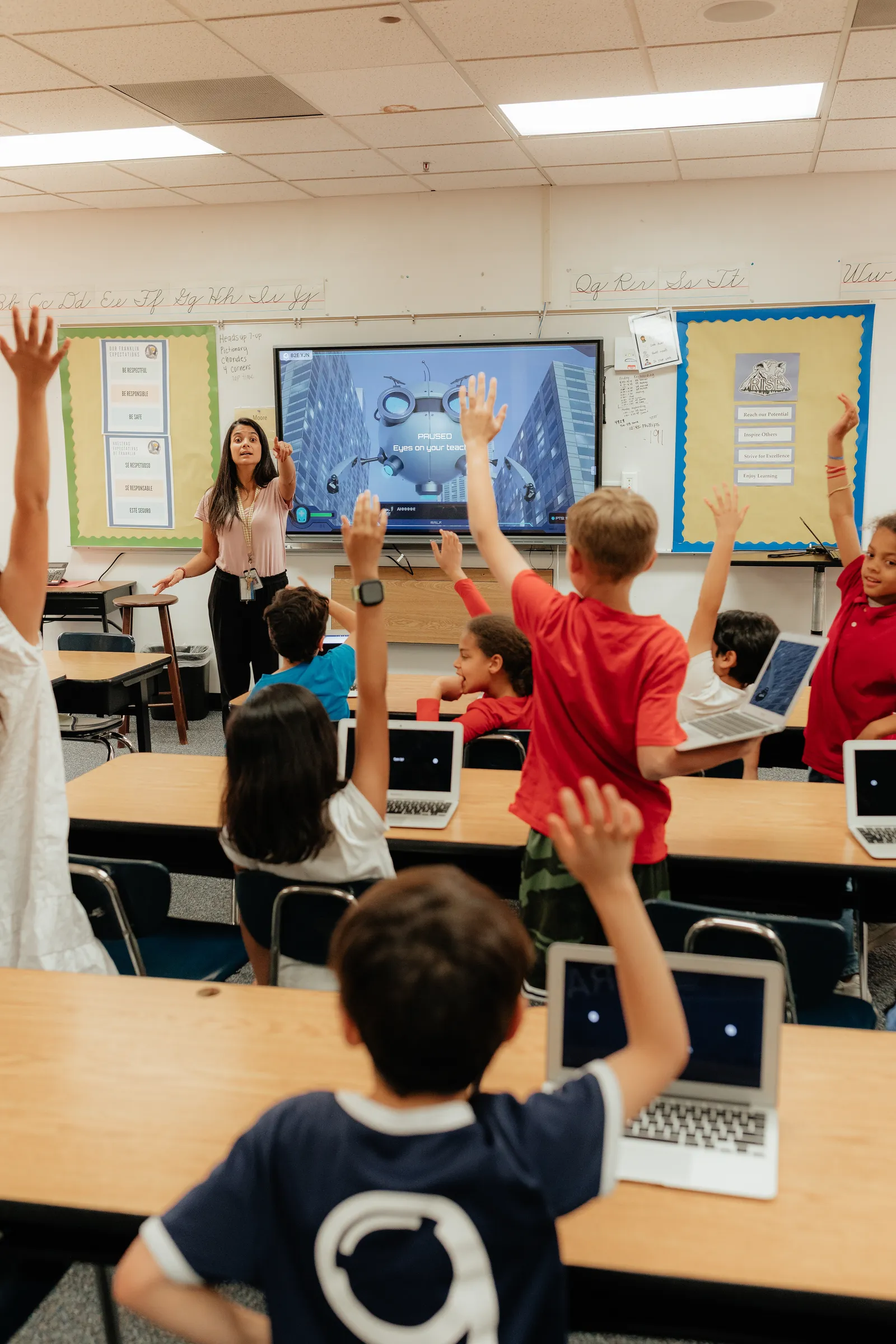
At Mission.io, our passion is simple: we want to equip students with the critical thinking, collaboration, and problem-solving skills they need to thrive in the future. We’ve spent years refining our program, iterating on our technology, and figuring out how to make Missions fun and also make them count for learning.
Teachers are the ones who make this vision real. That’s why we’ve outlined our core philosophy and best practices here to help you get the most out of every Mission: our vision, why it matters, and five best practices (with pro tips) for student engagement and learning.
Our Vision: More Than Just Fun
When we first started Mission.io, we focused on making it an engaging experience. We experimented. Teachers even used voice changers, microphones, and scripts back in the day. (If you’ve been around since then, thank you for sticking with us!) But engagement alone wasn’t enough. We realized that fun without meaningful outcomes was a failure.

That’s why we started over, twice. We examined real-world data, classroom observations, and student performance to fine-tune an experience that excites students and also pushes them to think deeper, work together, and apply their knowledge in fresh ways.
Mission.io is about preparing students for the real world. The rise of AI, shifting job markets, and evolving STEM opportunities mean that today’s students need to be problem solvers, adaptable thinkers, and team players. Every Mission is designed to challenge students with a real-world problem they want to solve, beyond simply completing a task.
We don’t want students to engage just because a teacher told them to. We want them to feel so compelled by the Mission, so invested in the outcome, that they push themselves further than they normally would. That’s the sweet spot, and it’s why we constantly refine and adapt our program.
We also expect our teachers to push us in return. Your feedback shapes the program, and we promise to keep listening and improving so the time you invest in Mission.io is worth it.
Why It Matters
We’ve seen tangible results in schools that implement our best practices. In Alpine School District, for example, schools that engaged with Mission.io at its highest fidelity saw twice the improvement in RISE science scores compared to low-usage and low-adoption schools within the same district. Read the full case study here.
The difference? Active participation from teachers.
Mission.io isn’t another educational game or a passive tech tool that sidelines teachers. Think of it as a co-teacher that provides structure and problem-solving scenarios, while you, the teacher, guide students and challenge them to dig deeper.
If you approach each Mission as a learning opportunity where students think critically, collaborate, and defend their reasoning, the impact reaches past that one lesson. It can change the way students approach learning as a whole.
Mission.io Best Practices: Five Ways to Maximize Impact
Through our research and many classroom observations, we’ve identified five best practices that help students (and teachers) get the most from Mission.io. Treat them as essential steps: they are what separate an average Mission from a great one.
1. Teaching Doesn’t Stop When You Press Start
Mission.io is not a set-it-and-forget-it program. It’s not designed for you to just press play and catch up on grading at your desk. Think of it as a co-teacher that sets the stage so you can jump in and create the teaching and learning moments that stick.
✅ What to do:
-
Stay engaged.
-
Pause when students are missing key ideas and clarify in real time.
-
Ask probing questions to challenge student assumptions.
-
Encourage students to defend their choices and explain their reasoning.
💡 Pro Tip: The best classrooms are those where students AND teachers are equally invested.
2. Use the Teacher Station
The Teacher Station is one of the most useful tools in Mission.io. We’ve packed it with real-time insights and teacher tips built with YOU in mind.
✅ What to do:
-
Monitor student progress live.
-
Jump in when students are struggling.
-
Use the mobile Teacher Station to move freely around the room and engage with students.
-
Interrupt the Mission when necessary to reinforce or redirect thinking.
💡 Pro Tip: If you have access to an iPad, it offers the best experience for using the Teacher Station. You’ll have a full view of student progress and can engage with teams more effectively.
3. Ask Lots of Questions and Push Students to Justify Their Thinking
One of the most powerful ways to deepen student learning is to ask “Why?” A lot.
✅ What to do:
-
Challenge students to explain their reasoning.
-
Ask, “How do you know?”
-
Get students to justify their answers or decisions with evidence.
-
Push for deeper, higher-order thinking, not just quick responses.
💡 Pro Tip: The more you challenge students to explain and justify their decisions, the more they develop critical thinking and problem-solving skills, which are key to STEM success.
4. Check in with Each Team at Least Once During Collaboration Station Time
During the Collaboration Station, students are deep in discussion, designing solutions, and problem-solving together. This is where the real magic happens, but only if they’re engaging at the right level.
✅ What to do:
-
Visit each team at least once.
-
Ask what they’re working on.
-
Challenge their assumptions and push them to think deeper.
-
Reinforce strong teamwork and highlight great discussions.
💡 Pro Tip: If students are just working in parallel (individually but without real discussion), interrupt and model what collaboration should look like.
5. Set Expectations and Coach Students on Teamwork
Collaboration is not automatic. Many students don’t have real experience working on a team. That’s why teachers need to explicitly model and reinforce proper teamwork behaviors.
✅ What to do:
-
Watch for teams that are either too silent or too argumentative.
-
Step in and say, “This is how we work together in this classroom.”
-
Praise teams that are sharing, discussing, and problem-solving well together.
-
Teach students how to respectfully disagree, share ideas, and collaborate.
💡 Pro Tip: Strong collaboration skills developed in Mission.io carry over into other subjects and classroom culture as a whole. Setting these expectations now and reinforcing them regularly during Missions helps students develop teamwork skills that will serve them for life.
Conclusion: Your Role in Making Missions Transformative
Mission.io is a tool to push students beyond their comfort zones as they think, collaborate, and solve real-world problems together.
But the success of each Mission depends on you, the teacher.
By actively engaging in Missions, using the Teacher Station, asking tough questions, checking in with teams regularly, and setting strong teamwork expectations, you get the most out of Mission.io for your students.
We believe in this program because we’ve seen it work. And we believe in YOU to make it work even better.
🚀 Ready to take your next Mission to the next level? Let’s go!