Dreams and Deadlines: How Setting Goals Boosts Student Success
Ryann Garland
What Is Goal Setting for Students?
Goal setting and achievement in education is more than shooting for that perfect attendance award and prizes for academic achievement. Goal setting is the process of identifying clear and measurable objectives. In the case of education, goals for students should cover their academic and personal growth. An effective goal raises motivation and stretches students just outside of their comfort zone.
Specific and challenging goals will help students improve their focus, give them direction, and strengthen their academic performance. When there is a clear direction, students experience the intrinsic motivation that will push them to work harder and be more excited.

Why Goal Setting Matters in Academic and Personal Lives
We all love a gold star or a pat on the back when we achieve our goals, and the benefits go far beyond that.
Goal setting can support student learning, well-being, and mental health. Goals can give students structure for their learning by giving them specific areas of focus, which will build their self-regulated learning skills. These goals, when broken down into manageable pieces, will feel more achievable and thus reduce stress and anxiety as well.
As students practice with the goal-setting process, the skills they gain will strengthen their academic lives as well as their personal lives. For example, goal-oriented planning teaches students how to prioritize, plan their day, and use their time well. They also build resilience and grit. Specific and challenging goals will naturally come with roadblocks, struggles, and bumps. But as students learn to face these challenges for the sake of their ultimate goal, they’ll come out on the other side with greater grit and confidence.
Students who can set effective goals are set up for long-term success, with more confidence, self-awareness, and a forward-facing mindset.
How Can Goal Setting Help with Academic Performance?
If students can set clearly defined, precise goals, it’s like their mindset shifts from a weak flashlight to a powerful spotlight. Attainable goals reduce decision fatigue, allowing students to focus on what really matters to them. No more flipping haphazardly through a textbook like a kid lost in a maze!
This clarity improves their performance across subjects and keeps stress from piling up in an overwhelming mound. Research suggests that smaller benchmarks towards a larger goal help lower stress while increasing motivation. Another study found that elementary students with low math skills improved their academic performance when setting short-term goals.
Goals will provide students with a sense of pride and accomplishment as they achieve them, which is the secret sauce needed to motivate them to keep doing their best.
SMART Goals Framework for the Classroom
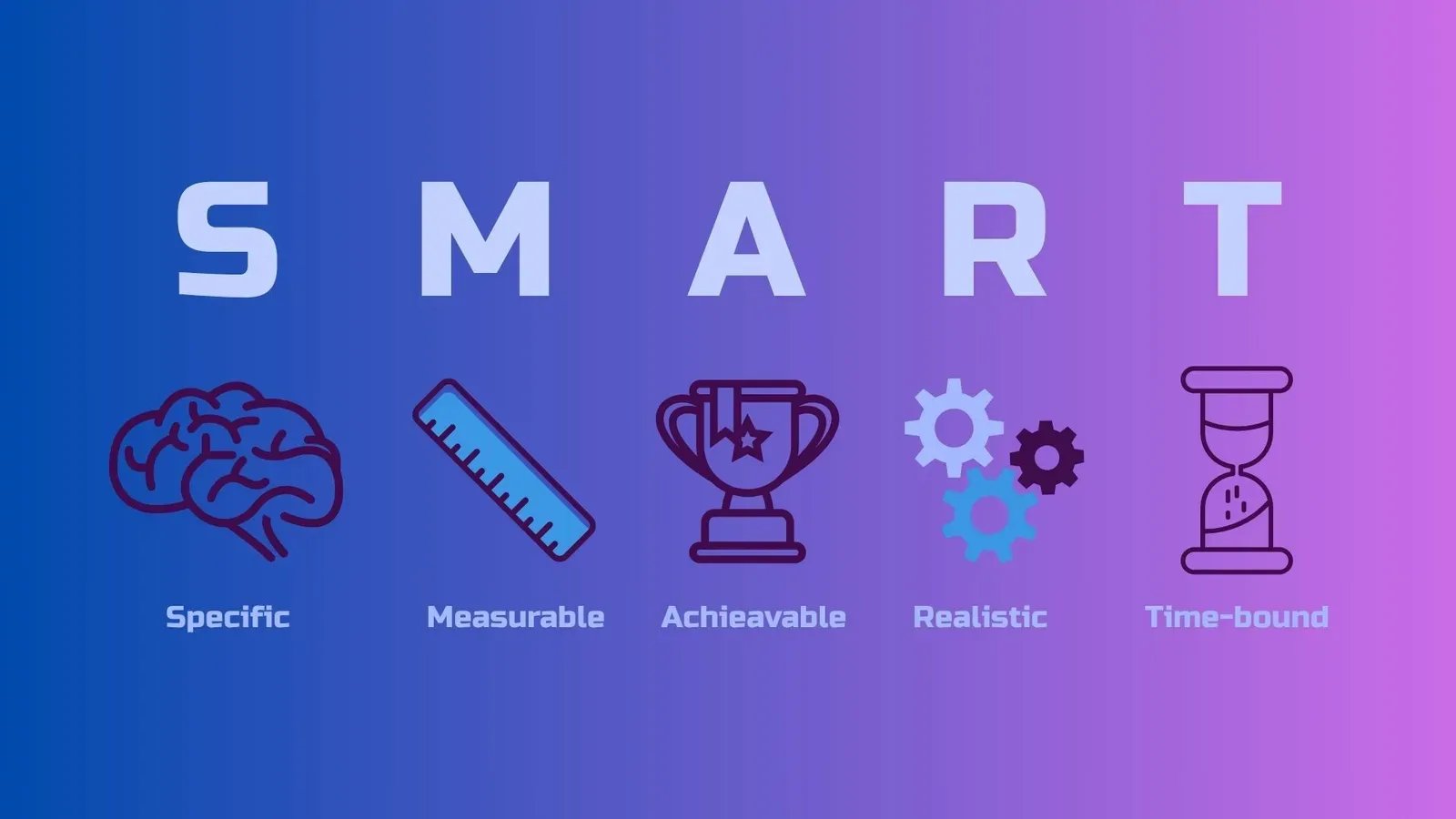
SMART goals are a classic framework that gives structure to goal achievement. They work better than vague intentions because they give clear direction and achievable benchmarks, and they help students (and us) use our resources well. Let’s review the five aspects of a SMART goal:
-
Specific: SMART goals need to have a clear definition of what a student wants to achieve or how they want to improve. For example, a student might say, “I want to be a better writer.” But a student with a SMART goal could say, “I want to have a clear topic sentence with supporting details in each paragraph of my essay.”
-
Measurable: The benefit of SMART goals is that students are measuring progress every step of the way. This helps students achieve their goals in the long term because they are motivated by their micro-wins. To make our previous example measurable, a student may add, “Each paragraph will have at least 3 supporting details on 80% of my assignments.”
-
Achievable: Achievable goals are essential for academic success. When a student knows they can achieve something, they will be more motivated to work at their goal, even if there are road bumps. Consider asking the student: Do we have the resources to achieve this goal? Do you have the skills to achieve this goal, or can we acquire the right skills?
-
Realistic: While the achievable aspect of a SMART goal is highly grounded in intrinsic motivation, the realistic aspect is tied more so to external factors. Is the goal achievable in the time frame set? Are there significant factors that will prevent you from reaching the goal?
-
Time-bound: Seeing the finish line helps students have consistent motivation as they work towards their goal. Without a time-bound goal, students may feel like there is no end in sight, and that can become exhausting. In a school setting, try using small chunks of time for this aspect of the goal. Set goals that are time-bound by the current unit, the school term, the week, etc.
SMART goals are effective tools in all areas: personal growth, academics, sports, and more. Help students create their own SMART goals with guiding questions. Don’t force your own vision for their success. Students should create SMART goals based on activities and areas that are important to them and not just what is expected of them.
Use SMART goals as a tool, not a means of control. And most important of all, help students have fun with it.
Setting Specific and Challenging Goals
Truthfully, telling students to “do your best” is a sweet idea, but it doesn’t really light the fire under anyone. Students thrive when they know exactly what the big picture is and when a goal will stretch them enough to grow.
Specific and challenging goals keep students engaged because they require greater focus, more planning, and concentrated effort. Instead of a goal like “be a better reader,” use a SMART framework to help students say something like “I want to read for 15 minutes every night for a month and write down one thing I learned.” Now, they have a clear direction and a way to track progress.
Tools to Support Goal Achievement
Technology is a major part of the classroom now and gets students excited. Use that to your advantage with student goals. Apps like Seesaw, ClassDojo, or even something as simple as a Google Doc can help students monitor their progress and build strong habits, all in one place. With Seesaw, students can create graphs that monitor their progress, including a built-in feedback loop from their teacher. Similarly, teachers can award students points on ClassDojo for habits they’re trying to build, such as staying focused during a lesson or completing their homework. A Google Doc can even be a simple and accessible place for students to fill in a SMART goal template. Any of these keeps students’ academic goals top of mind.
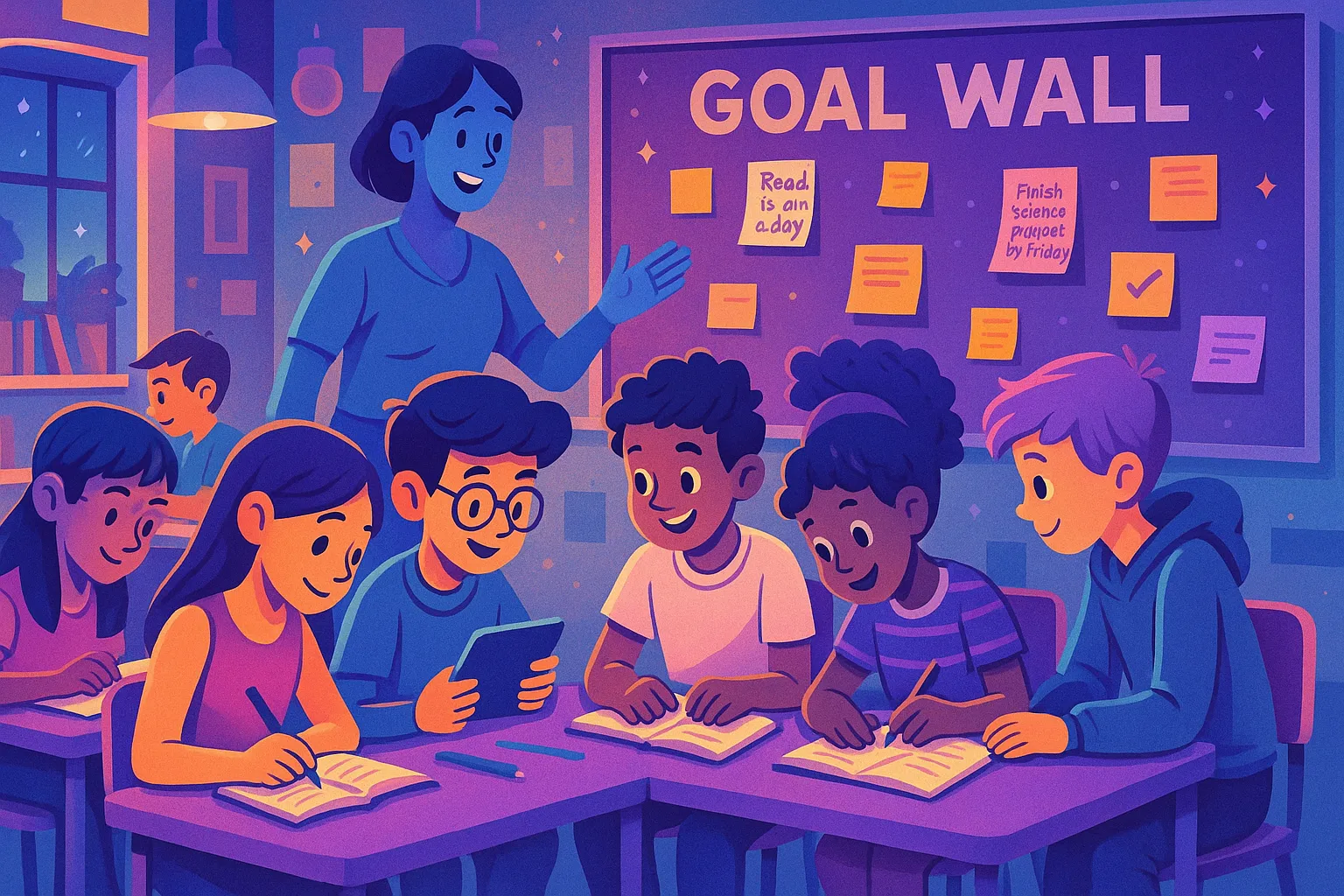
Visuals are a powerful tool too. A class goal wall can help students visually track their goals and provide progress updates. Seeing their peers work towards a goal can create a culture of encouragement and accountability. Providing students with a “goal buddy” can also add another layer of accountability. Having someone who can check in, cheer them on, and offer support makes goals a lot more manageable. Plus, everything is more fun (and achievable) with a teammate.
Achieving goals doesn’t have to feel impossible. Get creative with how you use these platforms and resources!
How Goal Setting Improves Study Habits and Time Management
Time management isn’t a natural skill for all of us (ask me about the time I spent four hours making a 30-minute Betty Crocker box cake). More often, it’s learned. When students have time-bound goals, they start thinking in terms of deadlines and next steps. This kind of planning will help students stay organized and avoid the last-minute procrastination panic that we’re all too familiar with.
Before long, these small adjustments will create better study habits, stronger routines, and less, “Wait, there was homework?” on a Monday morning.
Final Thoughts: The Importance of Goal Setting in Education
Teaching effective goal setting is one of the most powerful tools in a teacher’s belt. Effective goals reach past academic milestones: they build habits, confidence, and a growth mindset. When students can set meaningful goals and work toward them, they also learn how to dream, plan, and persist, even when things are tough.
With your support and a few SMART strategies, students will set stronger goals, become more capable of reaching them, and learn every step of the way.