15 Ways to Build Relationships With Students
Jake Mitchell
Building Positive Relationships with Students
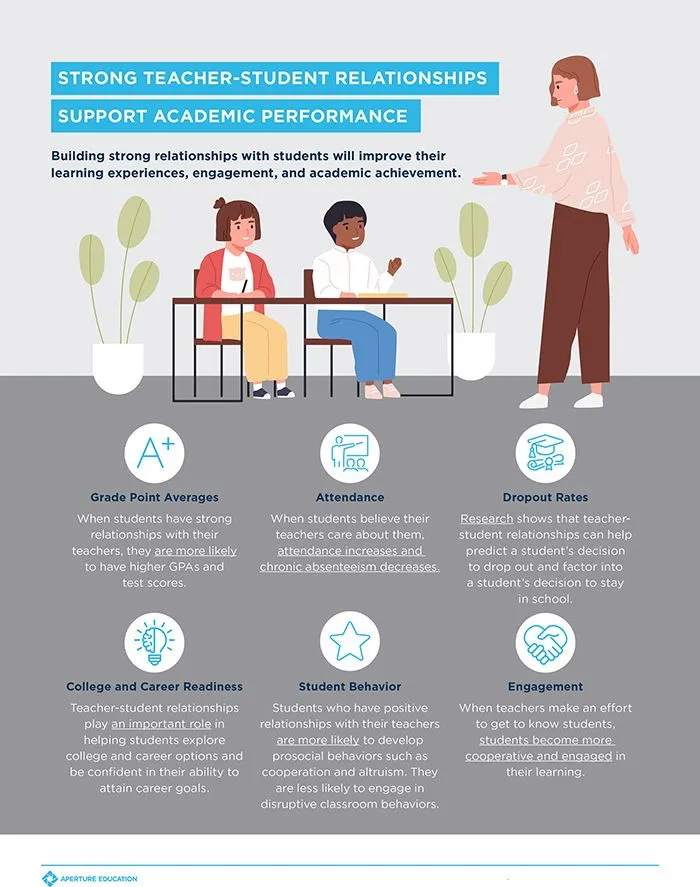
Strong relationships are the foundation of any successful classroom. They are also the “backbone” of culture in schools and communities (PBIS, n.d.). When students feel seen, heard, and respected by their teachers, their confidence and motivation grow. As the teacher, you have a wonderful responsibility, and a real opportunity, to build relationships with your students.
Positive teacher-student relationships do more than manage behavior. They help students feel safe and encourage academic growth. Building relationships is a daily commitment to showing students that they matter. No doubt it takes a lot of conscientious, intentional work. But it is the most important work. That is why you are here! From your consistent efforts to build strong relationships of trust and unity with your students, you will see a stronger classroom community, improved academic outcomes, and greater intellectual engagement.
Getting to Know Your Students
Every student relationship starts with one simple step: getting to know your students as individuals. Getting to know your students is the foundation of a classroom community. With a new group of kids every year, the task might seem overwhelming, and you might ask yourself: “Where do I even begin?” Learning names, interests, and hobbies can be a great start! Students will be enlivened as you reinforce and validate their unique personal contributions and talents. But beyond cordial commonalities, each student desires to feel understood, “seen and known” (Boryga, 2023). Taking the time to learn about their families, hobbies, challenges, and dreams helps you tailor your support and build positive relationships that last. What are some questions, activities, or lessons that will allow you to learn about your students?
This supportive classroom community fosters trust and belonging; when students feel understood, cared for, and respected, they are more prone to grow. It helps students take academic risks, collaborate, and feel part of something bigger than themselves. These characteristics also “develop student engagement” and a strong classroom community. Begin each day with connection: simple routines like morning meetings or greeting students by name at the door can make a big difference (Tu, 2021). Layer in team-building activities and opportunities for peer support to deepen classroom bonds (Wright, 2014). Students who feel connected to their teacher and peers are more likely to engage, participate, and help each other succeed.
Effective Communication Strategies for Developing Positive Relationships
Communication is key to building relationships with students that are rooted in respect and empathy. Every interaction matters, whether it’s giving feedback, managing behavior, or hearing an update about the weekend. When students are spoken to with kindness and listened to without judgment, they feel safe opening up. Using language of affirmation creates a positive experience and a space of trust. Constructive criticism and more direct feedback can come once this foundation is secured. It improves student engagement and sets the tone for how students treat one another.
Modeling respectful communication helps students see what positive relationships look like. Sharing small stories from your own life, like times you struggled, made mistakes, or overcame challenges, can help build a sense of classroom community. It reminds students that learning and growing is a shared journey, not a performance. What are some positive experiences between you and a teacher that you remember from being a child? What did that teacher or adult do or say that made you feel respected?
Creating a Positive Classroom Culture
Creating a positive classroom culture is essential for building a safe, productive, and effective learning environment. Within a classroom that has a positive culture, students are motivated to learn, ask, develop, and grow. As a teacher, you are in the position to create this ideal space where students progress not just academically but “socially and emotionally” (Starkey, 2023). You have incredible power to mold [classroom] culture into an environment of positivity and success” (Arencibia, 2023).
This may seem daunting at first. It may seem like hard work. But remember, a positive classroom culture doesn’t happen overnight. Rather, with a conscious, intentional focus, relationships, routines, and results will occur. Below are some strategies to help you build a strong, supportive classroom culture. Another great resource is the library of interactive Missions at Mission.io!
Top 15 Ways to Build Relationships with Students for Better Engagement:
Relationship-Building Activities to Try in the Classroom
A great way to build student relationships is through fun, intentional activities. When these activities help students feel heard and valued, their motivation, ownership, and participation grow. Invite input on classroom decisions, learning activities, and routines. It shows students that their ideas matter, and it builds real-life leadership skills. Giving students a voice strengthens engagement and helps them feel like partners in their learning (Tu, 2021). These activities will “help students love your class,” which will help them “follow directions more accurately, work harder, and treat each other [with more] kindness” (Edunators, 2025).
1. Greet Students at the Door
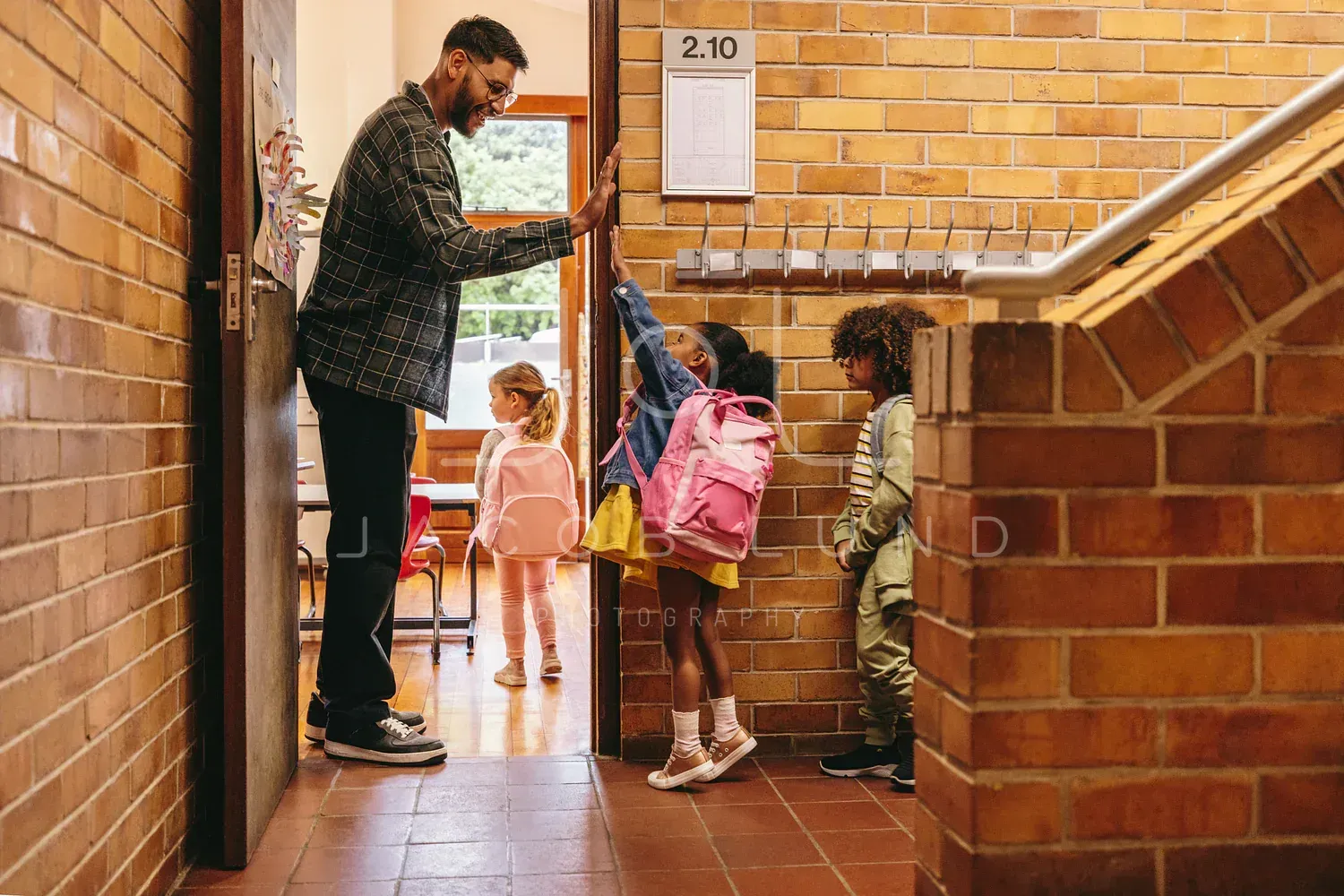
- Start each day with a warm and welcoming greeting. A greeting helps students feel that they are known by name, and therefore, important. “Being greeted by an adult who is happy to see them can start a student’s school day on a positive note” (Relationship-Building Strategies For the Classroom, n.d.).
2. Learn and Use The Names of Your Students
- There is not a more important word in spoken or written language than one’s own name. Making an intentional effort to learn students’ names sends the message that they are important. Using their names during instruction and interactions helps establish trust. Avoid using unnamed addresses like “you,” or “you two” when referring to students.
3. Have “Get to Know You” Activities
- Everyone, including adults, loves to share about themselves! Everyone is unique and comes from a different background; most, given the right circumstances, would be eager to share about themselves. These activities create entry points for students to feel recognized and to learn about one another, adding to the overall camaraderie of the class.
4. Prioritize One-on-One Check-Ins
- Rapport builds slowly: “trust grows over time through multiple positive verbal and non-verbal interactions“ (AERO, 2024). Frequent individual “check-ins” create opportunities for appropriate individual relationships. Whether brief or in-depth, these moments build trust and show that you care about students’ thoughts, concerns, and performance.
5. Incorporate Student Interests
- Bringing in student interests makes learning more relevant and helps students feel seen. When students recognize themselves in the material, their attention and motivation often increase. It’s an investment in their success! By investing in your students, you can change “the way you view your students, and it can help your students to see one another as individuals” (Building Relationships with Students: 8 Ways to Connect, n.d.).
6. Celebrate Student Achievement
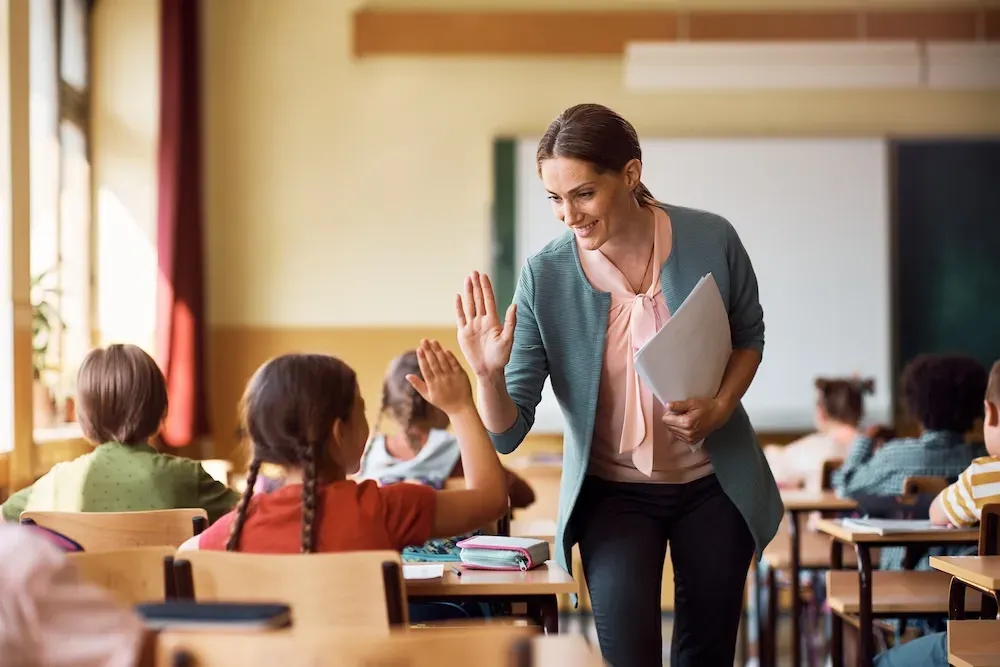
- Acknowledging achievements, big or small, reinforces student effort and builds confidence. Celebrations can be simple and still carry significant emotional impact.
7. Share About Yourself
- Sharing parts of your journey builds connection; “never underestimate what it can mean to share what is going on in your life” (Building Relationships with Students: 8 Ways to Connect, n.d.). When students see that you also face challenges, it builds mutual understanding. It can deepen respect, too.
8. Create a Welcoming Classroom Environment
- Designing your classroom as a welcoming space for learning helps students feel at ease and increases their readiness to learn. Promoting a welcoming classroom environment can increase overall unity: “students with strong adult relationships reported increased peer relationships” (Relationship-Building Strategies For the Classroom, n.d.).
9. Be Consistent, Fair, and Honest
- Students can thrive when they understand what the expectations are. Set clear rules and routines from day one and stick with them consistently. Use visual reminders, class discussions, and positive reinforcement to help students internalize these expectations. “Helping students understand expectations” allows them to increase in ownership (Wright, 2014).
10. Use Positive Reinforcement and Encouragement
- Recognizing effort and encouraging growth supports a strengths-based mindset. Positive reinforcement reinforces the behaviors you want to see and helps build self-esteem. Encouraging words can shift a student’s entire outlook, especially during moments of self-doubt.
11. Offer Student Choice
- Providing choice, even in small ways, gives students agency. This signals that their voice matters and promotes deeper engagement with the learning process. Showing trust towards your students will “promote their desire to learn and draw [them] into the learning process” (Rimm-Kaufman, 2025). When students feel ownership, they are more invested in outcomes and more motivated to contribute.
12. Incorporate SEL (Social Emotional Learning)
- Social-emotional learning supports the development of skills like empathy, self-awareness, and emotional regulation. SEL is best developed by consistent and continual social interaction. Kožuh notes that it is the “intensity of social interaction” that directly is “connected to a student’s academic success” (Kožuh, 2015). Intentional awareness and implementation of these attributes can strengthen relationships and classroom culture.
13. Respect Cultural and Familial Backgrounds
- Caring teachers nurture students with “warmth, intimacy, unity, continuity, safety, and security” while “building confidence, courage, courtesy, compassion, and competence among students from different ethnicities and cultural communities (Pruitt-Britton, 2023).
14. Be Present Outside the Classroom
- Being visible at school events or in shared spaces signals care beyond academics. Attending lunch, recess, or extracurricular activities provides extra chances to connect. Your presence helps reinforce relationships and shows investment in students as whole people. One guide even suggests you “be visible” by supporting “sports, choir, band, debate, quiz bowl, and the other countless activities students are passionate about” (15 Ways to Build Positive Relationships with Students, 2025).
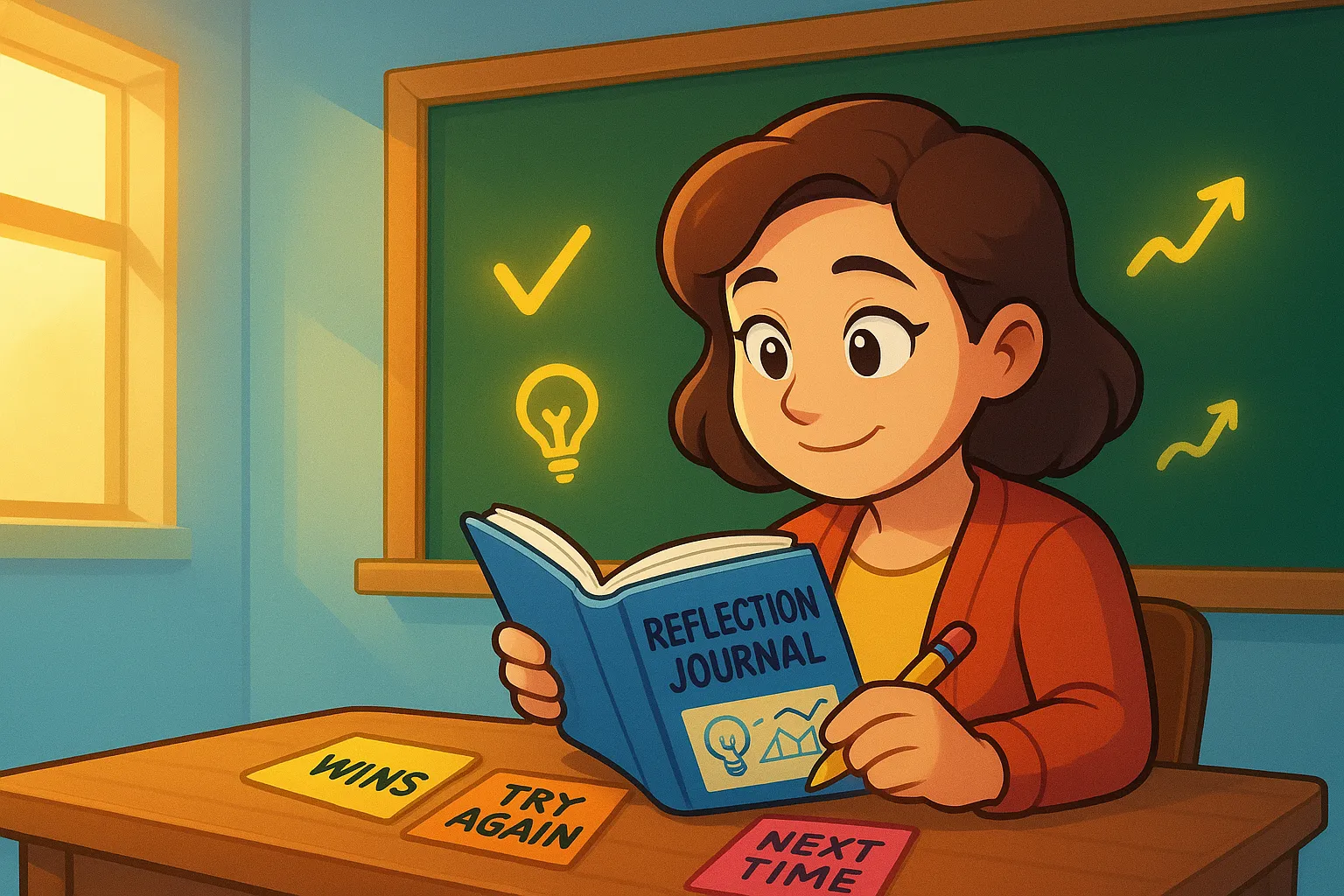
15. Reflect and Adapt Your Approach
- Reflection helps you grow as an educator and better serve your students. Seek feedback, notice patterns, and adjust your practices accordingly. Stay flexible, and adjust your strategies as your classroom changes.
Conclusion: Why Building Relationships with Students Matters
At the end of the day, strong student-teacher relationships shape everything else in the classroom. They impact how students behave, how they learn, and how willing they are to engage. They make for a peaceful classroom, and more important, they help students believe in themselves and their ability to learn. When students trust that their teacher cares about them, real growth becomes possible. But remember, “it takes time and deliberate effort for these caring relationships to become part of the DNA of the school community” (Cultivating Caring Relationships At School: 15 Activities that Promote Staff and Student Connection, 2023). Looking for a great place to start? Again, check out the Mission library at Mission.io!
References:
15 Ways to Build Positive Relationships with Students (2025). *EduNators: Overcoming *
*Obstacles; Focus on Learning. *https://www.edunators.com/becoming-the-edunator/step-2-culture-for-learning/15-ways-to-build-positive-relationships-with-students
Arencibia, D. (2023). Building Positive School Culture: Seven Steps to Success. *National *
Association of Secondary School Principals: December 2023. https://www.nassp-digital.com/prik/0823_december_2023/MobilePagedArticle.action?articleId=1932028&app=false&cmsId=4152242#articleId1932028
Boryga, A. (2023). 23 Ways to Build and Sustain Classroom Relationships. *Edutopia: Classroom *
*Engagement. *https://www.edutopia.org/article/23-ways-to-build-and-sustain-relationships/
Building Relationships with Students: 8 Ways to Connect. (n.d.) PBISRewards.
https://www.pbisrewards.com/blog/building-relationships-with-students-8-ways-connect/
Cultivating Caring Relationships At School: 15 Activities that Promote Staff and Student
Connection. (2022). California Center for School Climate: Toolkit. https://ca-safe-supportive-schools.wested.org/wp-content/uploads/2022/11/CCSC_Toolkit_Cultivating-Caring-Relationships-at-School.pdf
Kožuh, I., Jeremić, J & Sarjaš, A. (2015). Social Presence and Interaction in Learning Environments: The
Effect on Student Success. Journal of Educational Technology & Society, 18(1), 223-236. http://www.jstor.org/stable/jeductechsoci.18.1.223
Pruitt-Britton, T., Wilhelm, A. G., & Wilson, J. (2022). Nurturing students through social interactions. The Phi Delta Kappan, 103(5), 18-23.https://www.jstor.org/stable/27116704
Starkey, J. (2023). Effective Strategies for Building and Sustaining a Positive School Culture and
Climate. *Academy of Educational Leadership Journal, 27(S2), 1-3. *
https://www.abacademies.org/articles/Effective-strategies-for-building-and-sustaining-a-positive-school-culture-and-climate-1528-2643-27-S2-004.pdf[](https://www.abacademies.org/articles/Effective-strategies-for-building-and-sustaining-a-positive-school-culture-and-climate-1528-2643-27-S2-004.pdf)
Relationship-Building Strategies For the Classroom (n.d). *Office of the State Superintendent of *
Rimm-Kauffman, S. & Sandilos, L. (2025).* Improving Students’ Relationships with Teachers to *
*Provide Essential Supporters for Learning. American Psychological Association: *
Parents, Families, and Relationships. https://www.apa.org/education-career/k12/relationships[](https://www.apa.org/education-career/k12/relationships)
The Importance of Building Positive Relationships with Students (2024). *Australian Education *
Research Organisation: Positive Teacher-Student Relationships. https://www.edresearch.edu.au/summaries-explainers/explainers/positive-teacher-student-relationships-their-role-classroom-management
Tu X. (2021). The Role of Classroom Culture and Psychological Safety in EFL Students’
Engagement. Front. Psychol. 12:760903. https://www.frontiersin.org/journals /psychology/articles/10.3389/fpsyg.2021.760903/full
Wilson, C. (2024?). Tradition Meets Innovation: The Research Base for Mission.io.
*Mission.io. *https://drive.google.com/file/d/1O7wSLawbZEBu4OflfFTE-QpQBksk80dX/view[](https://drive.google.com/file/d/1O7wSLawbZEBu4OflfFTE-QpQBksk80dX/view)
Wright, A. (2014). Creating a Positive Classroom Culture: Minute by Minute. *Educational *
Horizons, 92(4), 12-15. http://www.jstor.org/stable/42927313[](http://www.jstor.org/stable/42927313)