Socratic Seminar: A Teacher’s Guide to Deeper Learning
Ryann Garland

If you’ve ever dreamed of a classroom where students lead the conversation, push each other’s thinking, and use evidence to back up their ideas, the Socratic seminar might be your new favorite strategy (even more than the day the students actually did the reading).
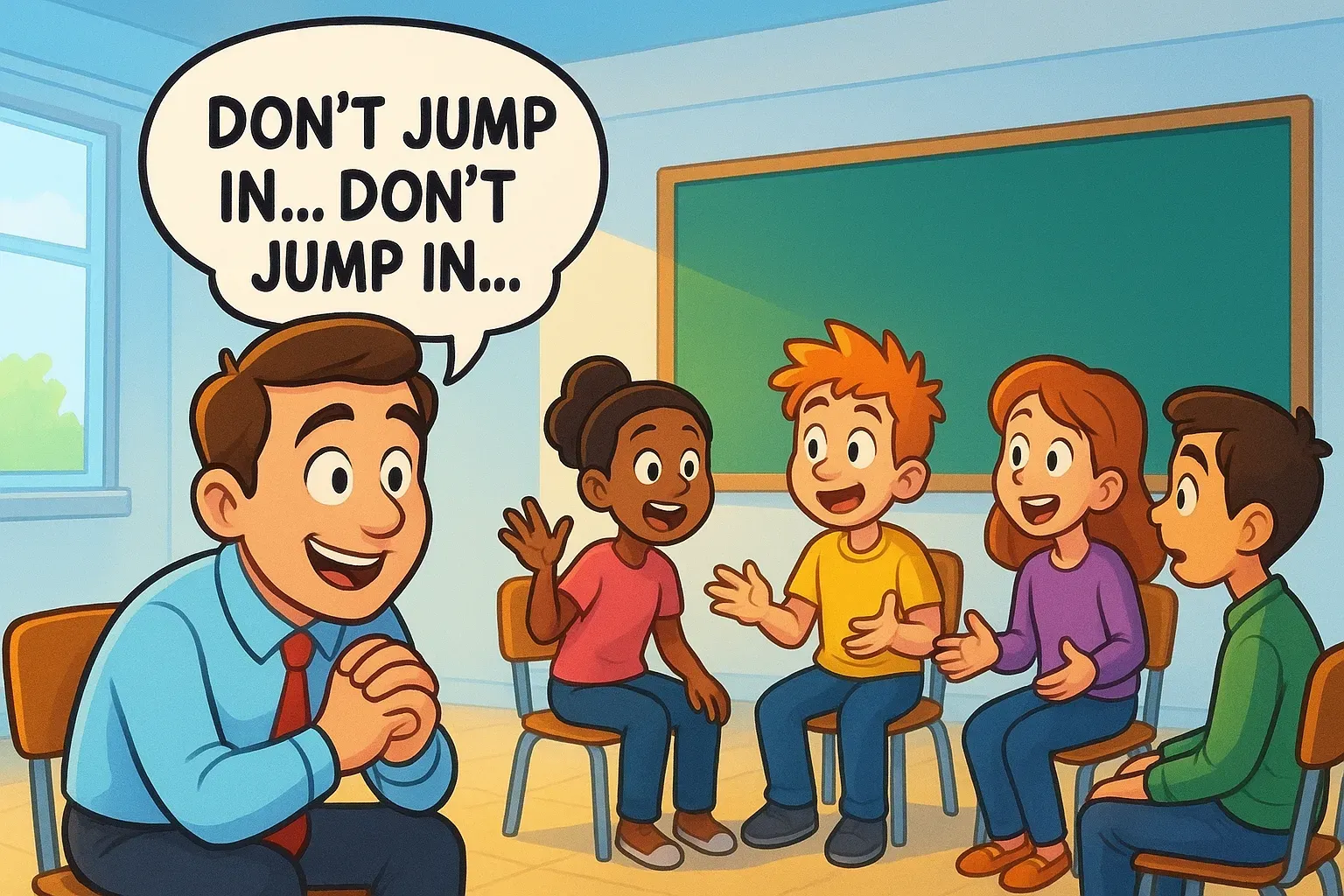
This formal discussion method trades the teacher’s lecture for student-led discussion, with room for critical thinking and student inquiry. It also includes the fine art of teachers not jumping into the conversation every five seconds. Sit back and observe: you’ll be amazed where students can take the conversation.
Why Socratic Seminars Matter
The Socratic seminar is about asking better questions instead of giving perfect answers (which none of us have, anyway). Students learn to explore ideas and respectfully challenge their peers. Along the way, they make real-world connections.
Unlike traditional Q&A, Socratic seminars acknowledge that learning is collaborative. Students rise to the occasion when they know their voices matter. For many, this is the first time they’ve felt their opinion truly counts in class. “Because I said so” won’t cut it anymore, and that’s a good thing!
The Teacher’s Role
Your role is to guide, not dominate. In an effective Socratic seminar, you’re the discussion leader, but not a participant.
This means crafting open-ended questions, modeling active thinking, and then stepping back to let students take ownership.
And yes, it takes restraint. You might want to jump in with your own insights, but resisting the urge gives students the space to think deeply and direct the flow.
Establishing Student Expectations
Before diving in, spend time establishing student expectations. Clear guidelines help students arrive prepared, listen actively, and engage respectfully.
Some teachers create a short “seminar norms” chart with reminders like “cite textual evidence” or “address peers by name.”
Others hand out role cards, one for the inner circle participants and another for the outer circle coach, so expectations are clear from the start. This way, everyone gets to experience the hot seat and being a coach. Feel free to bring a clipboard, backwards cap, and whistle for dramatic effect.
Preparing Students Ahead of Time
Socratic seminars take planning, and it starts well before class.
Give students a particular text, maybe a short story, a set of contrasting primary documents, or an article about an ongoing scientific problem. Ask them to highlight big ideas and prepare rebuttals in advance.
When students arrive with questions already in mind, the discussion runs richer and smoother.
The Inner Circle and Outer Circle
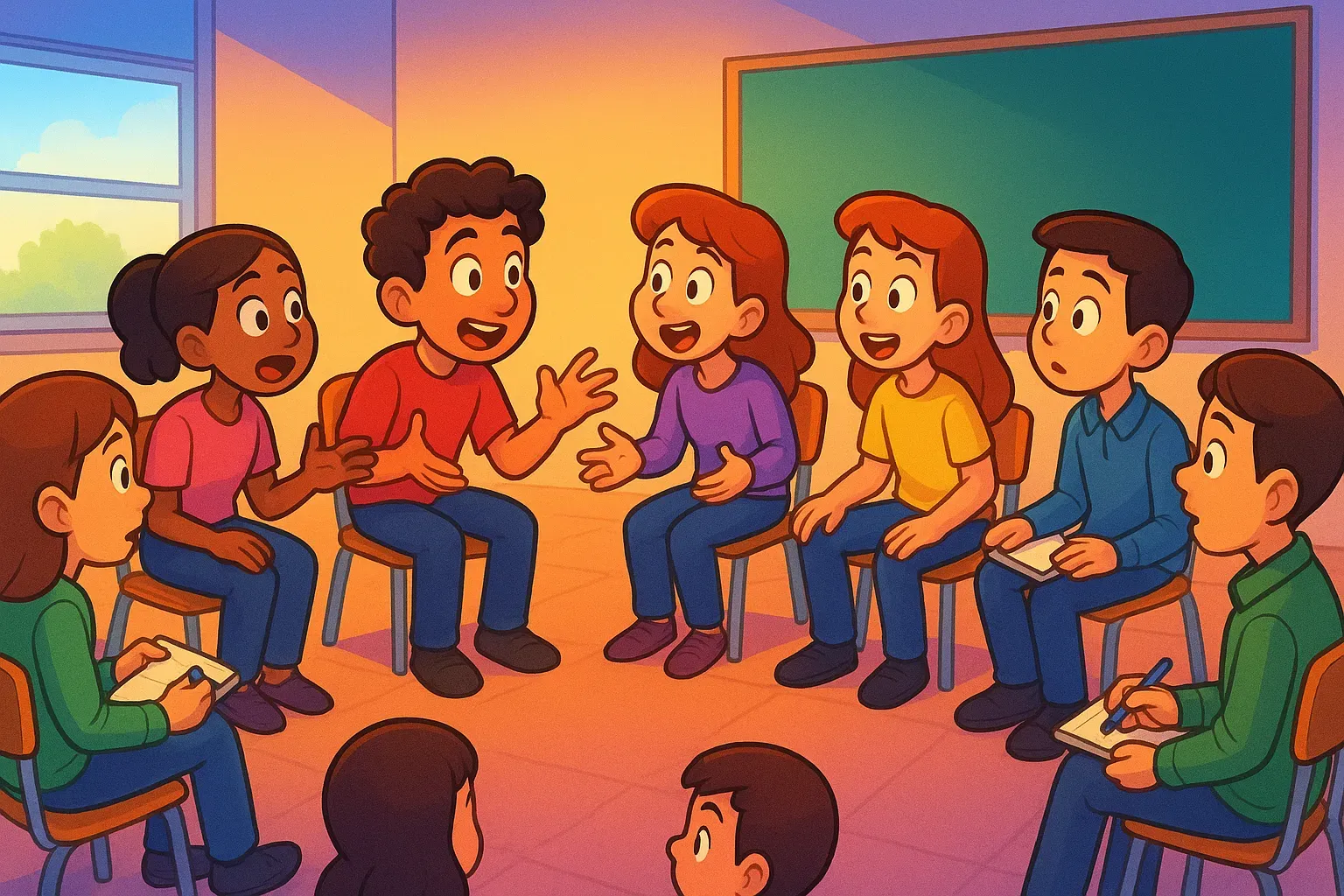
Many teachers use the inner circle/outer circle format to keep everyone engaged.
The inner circle drives the entire conversation. The outer circle coach listens, tracks participation, and offers feedback afterward.
Switch roles halfway through so every student experiences both positions.
Asking Open-Ended Questions
The magic of the Socratic seminar comes from the questions you ask. Open-ended questions spark debate and invite more than one perspective.
Avoid yes/no prompts. Instead, try:
-
“What might the author be suggesting about human nature?”
-
“How does this connect to students’ lives today?”
-
“What evidence supports a different interpretation?”
Text-Centered Student Talk
An effective Socratic seminar keeps conversation grounded in the Socratic seminar text. Students use textual evidence to strengthen their points.
The habit improves comprehension and teaches students to base arguments on evidence instead of opinion alone.
Student-Led, Not Teacher-Led
As we’ve mentioned a couple of times, a true seminar is student-led. That means letting moments of silence breathe and encouraging students to respond to other students. You’ll need to sit back and resist the urge to “fill the gaps” in the dialogue. The silence is part of what makes this kind of discussion work. Stop thinking of it as “awkward silence” and view it as “academic suspense.”
Over time, even the quietest students begin to contribute when they see their peers owning the discussion.
Strategies to Engage Reluctant Voices
Not every student jumps in right away. For those who need a nudge, you might:
-
Give them sticky notes for jotting their own thoughts
-
Let them serve as a significant participant in the second round
-
Match them with a particular text connected to their own interests
Sometimes it’s about lowering the pressure while still inviting their voice. Translation: sometimes they just need one successful comment to realize, “Wait… I can sound smart in front of my friends.”
Connecting to Real World Issues
Linking seminar topics to real-world issues keeps engagement high. In science class, that might mean discussing ethical questions about AI in medicine.
In history, it could involve debating a controversial approach to policy using primary documents.
When students see that the issues they’re discussing affect the world they live in, participation goes up. Before you know it, they’ll be debating like future senators. Or at least… people who watch a lot of rage bait clips on TikTok.
Reflective Writing After the Seminar
Follow up with reflective writing. Ask students to summarize their own understanding and list different perspectives they heard. They should end the reflection period by setting their own goals for improvement.
This step helps students process the conversation and prepares them for future seminars.
Assessment in Socratic Seminars
Yes, Socratic seminars require assessment, but not in the traditional “right/wrong” sense. You can have students self-assess, use peer rubrics, or track student performance on criteria like listening, questioning, and supporting ideas with evidence.
The focus is on growth in critical thinking skills and collaborative dialogue.
Mission.io Tools for Socratic Seminars
At Mission.io, we create engaging Missions on anything from using fractions to contrasting primary documents. Our content helps you engage students while saving prep time. Try combining our resources and a Socratic seminar with our Missions. Both get students asking questions and arguing from evidence, and the understanding they build carries into the real world. We’ve done the hard part so you can look like the effortlessly prepared teacher we all aspire to be.
Looking Toward Future Seminars
Every seminar builds on the last. Encourage students ahead of time to prepare questions on a different aspect of the text or bring examples from their lives.
That keeps future seminars fresh and challenging.
Final Thoughts on Using the Socratic Seminar in Your Classroom
The Socratic seminar turns your classroom into a space where students truly listen, think critically, and lead.
When you trust them to take charge, they often surprise you. And as they grow into confident, thoughtful communicators, you’ll see what student inquiry looks like in action.