Great Ways to Do Formative Assessments
Ryann Garland
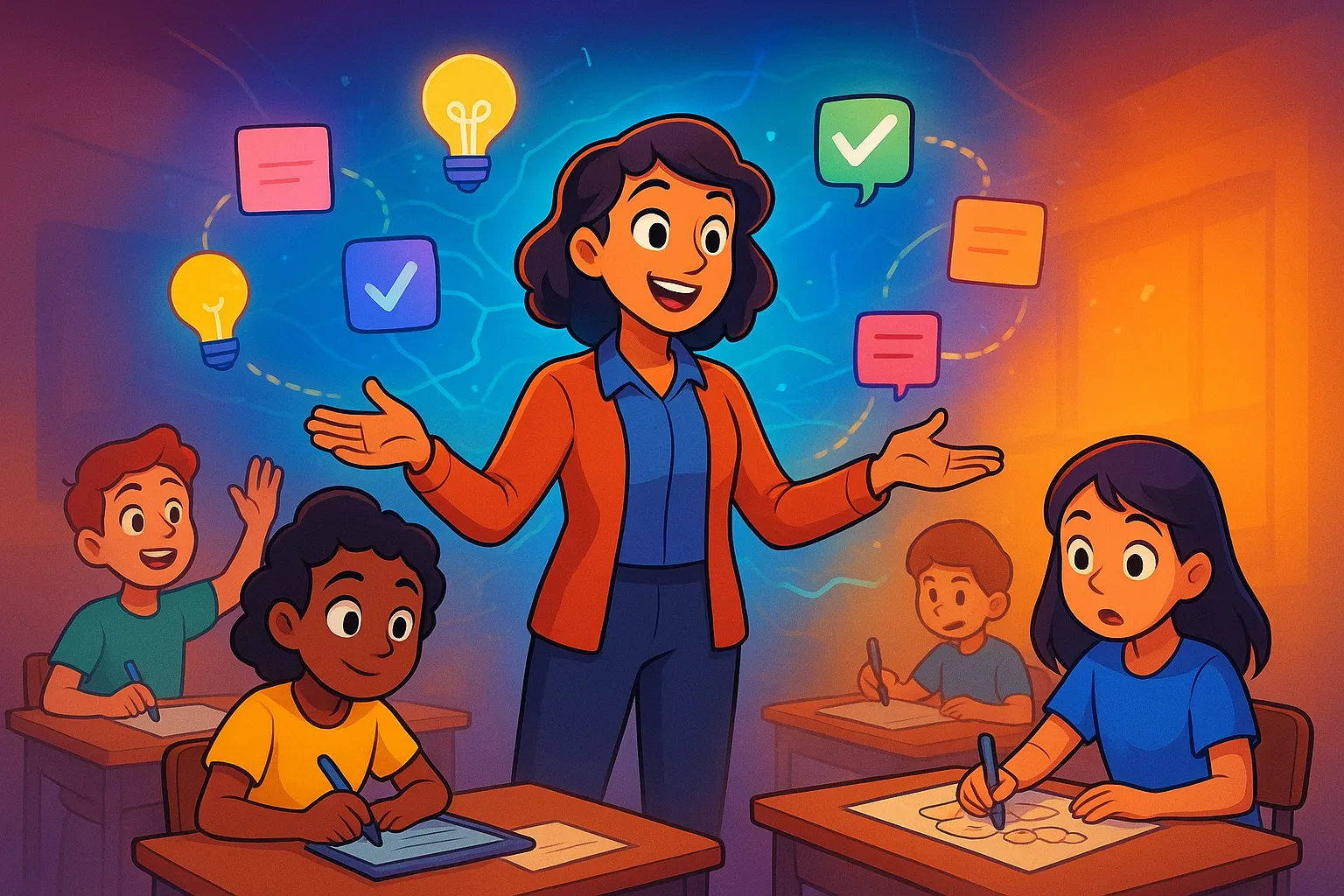
Formative assessments seem simple: a few check-ins, maybe a quiz. In practice they’re an ongoing process that helps teachers monitor student learning in real time and adjust right when students need it. Summative assessments evaluate student learning at the end of a unit. Formative assessments guide learning as it happens.
Why Formative Assessment Matters
If you’re only assessing learning after instruction ends, you’re missing the most valuable window to impact student outcomes. It’s like checking the weather forecast after your camping trip: it still rained, and it’s really only helpful for next time. Formative assessment gives you the power to act before it’s too late. It tells you what students understand and where they’re struggling, so you can make the adjustments that might help.
The Goal: Promote Learning, Not Just Measure It
While summative assessments sort students, formative assessment supports them. Summative assessments are basically the ultimate Sorting Hat, minus Voldemort trying to off your students every school year. Formative assessment treats learning as a process. With every check-in, you’re collecting data you can use to shape each student’s path.
What Does the Research Say?
Formative assessment improves student motivation, deepens understanding, and increases achievement. According to research from Black and Wiliam, consistent use of formative assessment techniques has a greater impact on student progress than many other interventions. Apparently, teaching with backed-up research beats out teaching based only on vibes.
The payoff comes from using the results to decide what happens next. When students understand the success criteria and receive actionable feedback, they become more invested in their own learning.
The Formative Assessment Process
This isn’t a one-and-done technique. The formative assessment process is a flexible loop:
-
Clarify learning goals
-
Elicit evidence of student thinking
-
Provide ongoing feedback
-
Adjust instruction
Think of it as a conversation between teacher and student that never quite stops. Like jazz, except more whiteboards, less saxophones.
Examples of Formative Assessment in Action
-
Exit tickets with one or two sentences identifying the main point
-
Quick writes to analyze a key concept
-
Polling tools to check for understanding mid-lesson
-
Concept maps to visually represent connections
-
Student-generated questions during class discussion
Each one shows you what students are thinking while there’s still time to adjust.
Practice Formative Assessment Daily
Formative assessment doesn’t require new worksheets or more grading. (Translation: leave the stack of paper at work and keep your weekend plans!) It’s a mindset you can build into your daily flow, like starting with a warm-up that reveals prior knowledge or ending with a reflection that shows what stuck.
Even brief strategies like a thumbs up/down or a one-minute write can shift the direction of a lesson. Try just one, consistently. You’ll see a difference.
Formative Assessment Tools You’ll Actually Use
The best formative assessment tools don’t require hours of setup. A few to try:
-
Padlet for collaborative brainstorming
-
Google Forms for quick checks with automatic feedback
-
Kahoot/Quizizz to engage students while gathering data
-
Whiteboards (digital or analog) for fast visual feedback
Choose one that fits your students and your classroom energy.
Self Assessment and Peer Feedback
When students assess their own work, they get more self-aware and take more responsibility for it. Ask students to rate their understanding or reflect on their learning goals.

Peer feedback is another win. Students often listen more closely to each other than they do to us. With modeling and structure, they can learn to give specific, kind, and actionable feedback, a skill they’ll use for life.
Learning Goals and Success Criteria
Learning goals belong on the board as well as in your lesson plans, written in student-friendly language. When students know what they’re aiming for, they’re more likely to hit the target.
Success criteria clarify what success looks like. “Use two textual examples to support your argument” is better than “Write a strong paragraph.”
Monitoring Student Learning in Real Time
Ever plan a great lesson only to realize halfway through that students are totally lost? That’s where formative assessment saves the day. Asking mid-lesson questions, using a pulse-check poll, or pausing to let students summarize what they’ve learned can reveal a lot.
Make sure students understand that this type of assessment is not about catching mistakes. It’s about catching moments where learning can grow.
Student Thinking on Display
Create space for student thinking to be seen and heard. Sometimes, the best teaching moments come from the bravest wrong answer. Use sentence starters. Encourage students to explain their process. Use protocols like “I notice, I wonder.”
It also helps other students learn to think aloud and spot gaps in their own understanding.
From Formative to Summative
Formative assessments build the foundation. Summative assessments test the structure. One leads into the other. Think of formative assessment as the training ground for summative success.
Let’s keep it simple:
-
Formative = for learning
-
Summative = of learning
Formative is your coach. Summative is your scoreboard. Both matter. But only one can shift the direction of a lesson before it’s too late.
Providing Feedback That Works
Good feedback is timely, focused, and actionable. Avoid generic praise. Be specific and forward-moving.
-
“You clearly stated your main idea. Now expand with more detail.”
-
“Double-check your math on step 2. What strategy might work better here?”
A grade alone doesn’t tell students what to do next, and they deserve feedback they can act on. Think of it like this: if your feedback could also double as a fortune cookie message, it’s probably too vague.
Adjusting Learning Strategies Based on Data
Once you gather feedback, use it. Group students by need. Reteach concepts that didn’t land. Offer challenge tasks to those ready to move ahead.
Treat formative data as a bridge to what you teach next.
Student Reflection as Assessment
Ask students to pause and reflect:
-
What did you find challenging today?
-
What strategy worked for you?
-
What questions do you still have?
Reflections can be quick and informal and still tell you a lot. They give students a voice, and you, a window into their thinking.
Evaluate Student Learning Without a Test
Not all learning needs a rubric. Listen to small group discussions. Read learning journals. Watch how students explain their thinking to others. Sometimes you can ditch the scantrons and use your outstanding eavesdropping skills instead.
Formative Assessment in Elementary Education
Even your youngest students can assess their own understanding. Use emojis, traffic lights, and visuals to help them express how they feel about their learning.
You can turn partner talk, drawing, or thumbs-up/down into age-appropriate assessment tools that work.
Instructional Resources That Support Formative Assessment
Looking for ways to make formative assessment easier? Mission.io builds formative checks into every Mission.
Student reflections, checkpoints, and prompts surface evidence of student learning across the whole Mission, so you can act on it.
Applying Feedback to Future Tasks
Feedback matters most when it leads somewhere. Build in revision time. Let students use your feedback to improve the work instead of checking it off their list.
This helps students build grit and see their own growth.
Success Stories from the Classroom
Teachers who commit to formative assessment report fewer surprises on summative tests, stronger classroom relationships, and increased student confidence.
The more students see assessment as part of learning, the better they perform.
Why Formative Assessment Supports All Learners
Formative assessment levels the playing field. It identifies learning needs early, offers support where it’s needed, and challenges advanced students to go deeper.
Think of it like this: It’s not one-size-fits-all, it’s one-size-fits-them. Custom learning without the chaos? Sign us up!
Where Mission.io Fits In
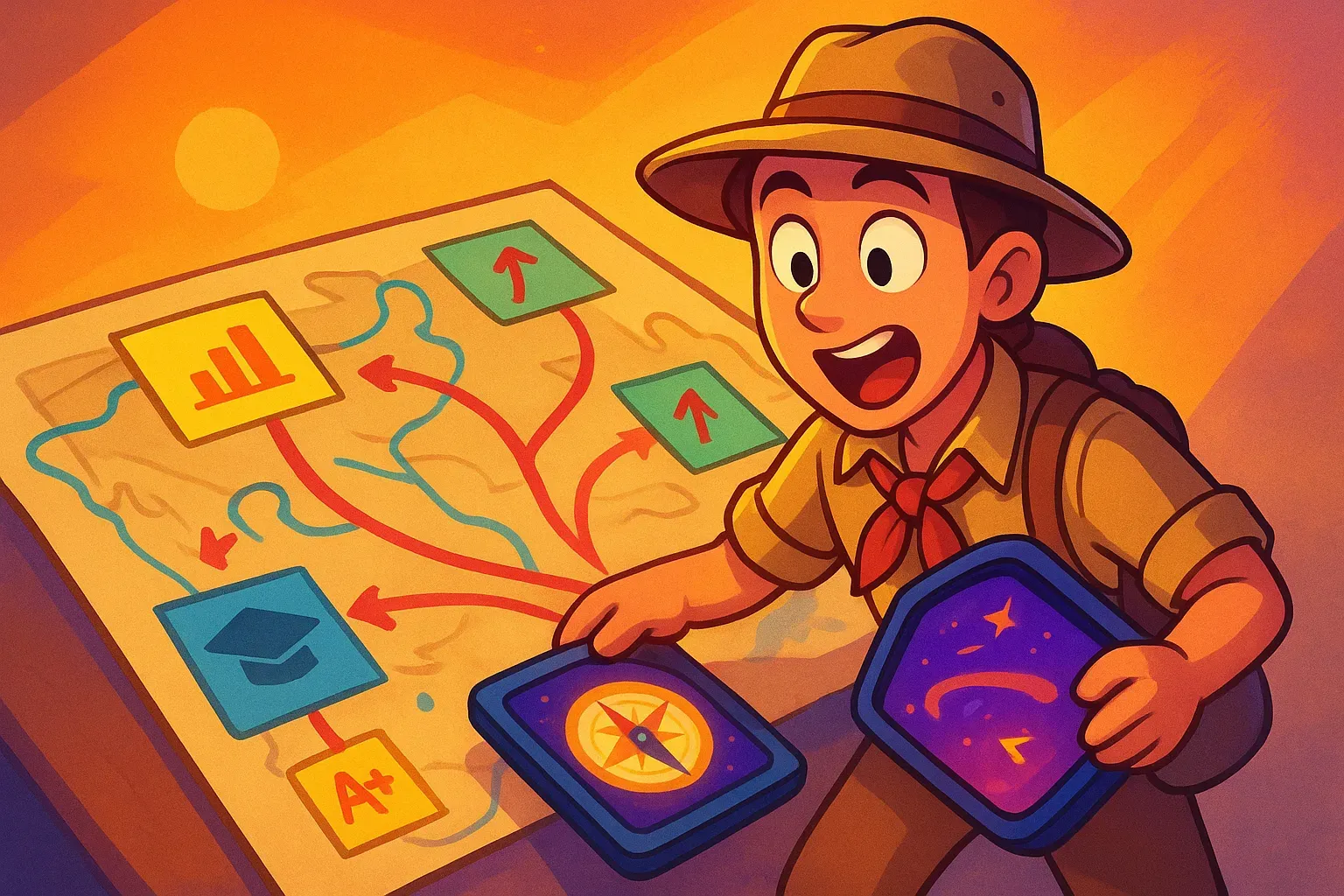
At Mission.io, we take formative assessment seriously. That’s why our digital Missions include check-ins, open-ended tasks, and reflection prompts designed to gather authentic evidence of learning.
You get insight, and students get support. The formative assessment is built into the larger learning goals. Because teaching shouldn’t feel like detective work (unless you’re into that sort of thing).