How Conceptual Knowledge Can Help Your Classroom
Jake Mitchell
How Can Conceptual Knowledge Change Learning?
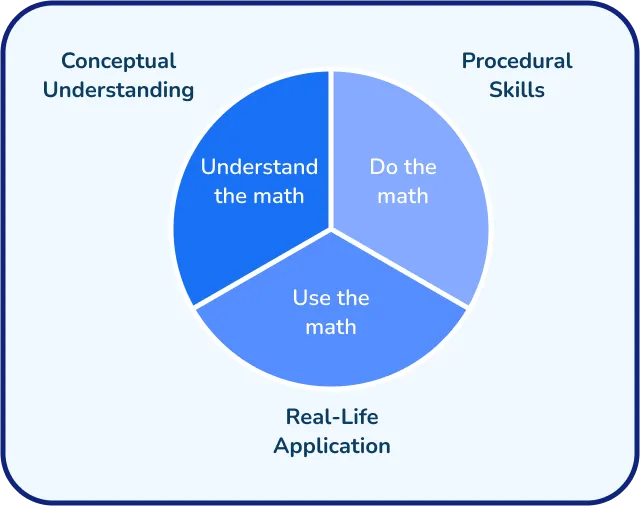
Conceptual understanding is an important part of learning. It is how we teach students to think critically and apply their knowledge in situations beyond the classroom. Knowledge and understanding go beyond remembering facts or memorizing equations to why things work the way they do. When students understand conceptually, they grasp deeply; they connect ideas, confidently approach challenges, and creatively find solutions (Digital Promise).
This blog post will explore the importance of conceptual knowledge for students. It will also explore how conceptual knowledge differs from the more traditional “procedural knowledge” and how you can quickly bring conceptual understanding to your classroom. Students who understand deeply can take on real-world problems creatively and keep learning for life.
What Is Conceptual Knowledge?
Conceptual knowledge is based on the “relationships and interconnections of ideas that explain and give meaning to procedures” (Eisenhart, 1993). Rather than just memorizing rules or formulas, students who develop conceptual knowledge understand the relationships between ideas and can explain why a certain principle works. Conceptual knowledge is “designed to build on prior understanding” and flourishes in settings of “active engagement with subject matter content” (Stofflet, 1994). This deeper level of understanding allows students to transfer knowledge across contexts and apply it to “real-world situations” (Stofflet, 1994).
Conceptual knowledge lets students move beyond simple memorization and connect cross-disciplinary concepts into a web of conceptual understanding. For example, a student who understands the deeper concept of a math or science problem can creatively adapt their interconnected knowledge to new problems. Students with strong conceptual understanding can think flexibly, turning conceptual math knowledge into budget balancing or effective time management.
Conceptual vs. Procedural Knowledge
In education, knowledge can be divided into procedural and conceptual. Procedural knowledge is about knowing how to do something (Nahdii, 2020). It involves consistent and memorized rules to get an anticipated outcome. An example from the classroom could be learning the correct mathematical order when multiplying: Parenthesis, Exponents, Multiplication, Division, Addition, and Subtraction. Conceptual knowledge, by contrast, is about understanding why these procedures work and how they are related to other situations and contexts (Nahdi, 2020). Students are led to see the big picture, make sense of the rules they are being taught, and apply their learning.
Conceptual knowledge and procedural knowledge are not necessarily competitive. Both types of knowledge are essential for “abstract, sophisticated, and deep knowledge” (Schoenfield, 1979). Procedural knowledge helps students gain confidence and consistency in equations and facts; conceptual knowledge is essential for comprehending why those procedures work. Teaching with both helps students turn practical knowledge into a connected web of understanding, so they can “solve problems across diverse contexts” (Nahdi, 2020).
How Conceptual Knowledge Helps Problem-Solving
One of the benefits of conceptual knowledge is that it helps students feel confident and capable when thinking critically about a challenge. Instead of relying on memorization or following steps, students with a strong conceptual foundation are able to adapt and look at problems from multiple angles. This is problem-solving. For example, a student who understands the facts and processes in a scientific experiment can apply that knowledge to solve problems in other subjects, such as basic engineering or technology.
Conceptual knowledge lets students transfer their learning to a wider variety of contexts. Rather than being confined to one set of procedures, they can apply their understanding to unfamiliar situations, problem-solving on the fly, and coming up with innovative solutions. Conceptual knowledge grows important “21st-century skills” that lead to solv[ing] real-world problems” (Wilson, 2024).
Teaching Methods to Develop Conceptual Understanding
There are many strategies that can be used to support students’ development of conceptual knowledge. Here are a few methods that Third-Space Learning says can help bring conceptual understanding to the classroom:
-
Use Hands-On Activities: Activities that encourage students to work with materials or objects are helpful for developing conceptual understanding. For example, manipulatives like physical blocks and shapes help students see geometry in a tangible way. These hands-on experiences allow them to explore conceptual applications in a way that procedural knowledge alone cannot.
-
Encourage Questions: Encourage students to ask questions. Set them up for success. Help them explore topics on their own. Environments of investigation can lead to new ideas and experimentation. This approach builds a deeper understanding of the subject matter and lets students take “ownership in the[ir] learning process (Lee, 2010).
-
Make real-world connections: Show students how their learning applies outside school. For example, math can be seen in a completely new light as students can learn about budget balancing or calculating coupon discounts. Relating learning to real-life situations helps students see how their learning is meaningful and that it helps “develop organization,” preparing them for “hands-on,” real-world application (Hurrel, 2021).
-
Use visual aids: Students benefit from visualizing what they are learning. Diagrams, flow charts, and concept maps are helpful for showing complex ideas in a more manageable way.
-
Promote collaboration: When students work together to solve problems they are exposed to new ways to explain their thinking, listen to others, and refine their understanding. Collaboration activities help engagement and give opportunities for students to learn from one another.
How Prior Knowledge Supports Conceptual Learning
To build conceptual knowledge, connect new learning with students’ prior knowledge. If students have a solid foundation of basic facts and ideas, they can more easily grasp new concepts. However, simply having prior knowledge is not enough. Teachers can help students make connections between what they already know and the new information they are encountering. “Once foundational understanding is in place, educators can build students’ conceptual understanding by providing opportunities to articulate their knowledge and determine the appropriate use of a concept in specific situations” (Nahdi, 2020).
For example, when teaching fractions, students who already understand the concept of division will find it easier to understand how fractions work. By drawing connections between their prior knowledge of division and new learning about fractions, they can form a more comprehensive understanding of the process. Making connections between prior and new knowledge helps students to build a more complete framework of understanding.
Building Conceptual Understanding Through Interactive Learning
Active learning is fundamental for students developing conceptual understanding. Active educational strategies and activities can include “animations, and technology-enhanced activities” (Gardner, 2012). These promote deeper conceptual knowledge.
A teacher who points out patterns and relationships between subjects and ideas can also go a long way in developing conceptual understanding. As “facts are connected into meaningful patterns” students’ minds begin to see how their learning is much more integrated than isolated (Garnder, 2012).
Assessing Conceptual Understanding in Your Students
Assessing conceptual knowledge is different from traditional testing. Instead of focusing on what is right or wrong, assessments should focus on how well students can apply their understanding to new situations. Open-ended questions and projects that require students to explain their reasoning are excellent tools for gauging conceptual understanding. “Rather than assessing “routine expertise,” effective assessments evaluate “creative and flexible” habits (Hurrell, 2021).
Here are a few activities that can help assess conceptual understanding in students:
-
Define key concepts: Can the student explain a concept or an idea in their own words?
-
Connect ideas: Can students see the connection between what they are learning?
-
Use the right concept in the right situation: Could they apply their conceptual knowledge to a real-world situation?
-
Mission.io, a “groundbreaking educational technology platform,” gives students a place to transfer conceptual knowledge to real-world scenarios through collaborative, teacher-led Missions (Wilson, 2024).
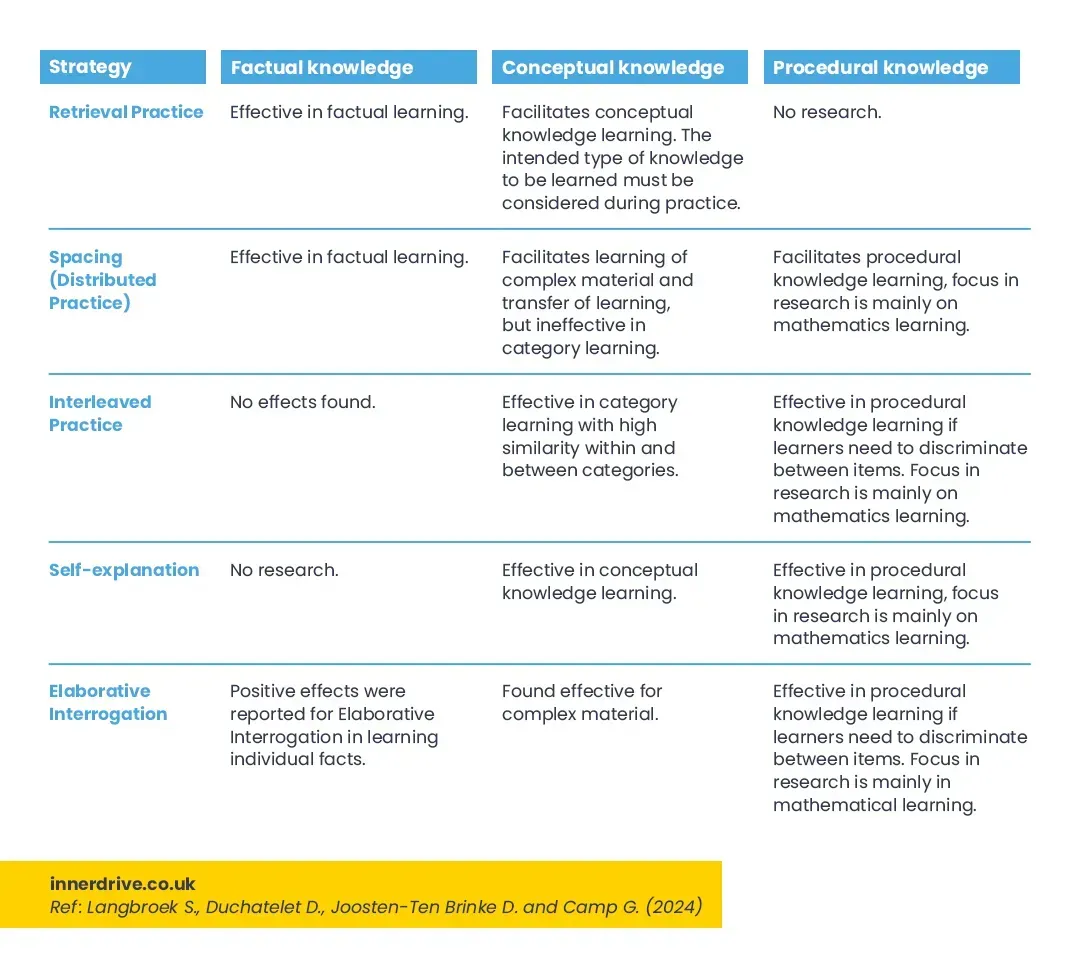
The table below displays additional and similar ways of assessing conceptual understanding:
Why It’s Important for Your Classroom
When students develop a strong conceptual understanding, they see connections between facts instead of holding them in isolation, and they can creatively apply them. In a classroom where conceptual understanding is taught, students think critically and creatively, they “grasp the big-picture” and can apply their knowledge outside the classroom (Hurrell, 2021). Conceptual understanding sets students up to keep learning long after school. Conceptually engaging students impacts growth in the classroom, influences career readiness, and can lead to competent contributions in the real world. This is the best education that a student can be provided with!