Implementing Cross-Curricular Literacy in the Classroom
Cameron Milien

I’m still an English teacher at heart even though I’ve taught so many other courses than just English-Language Arts over the years. But you know what’s stayed the same whether I was teaching English to a classroom of squirrely seventh graders or AP Psychology to a group of college-bound high school seniors?
Reading. Writing. Speaking. Listening.
The core components of literacy transcend disciplines. And I love that. I love that I could teach argumentation in Utah History and informational reading in a neuroscience unit.
Education shouldn’t be compartmentalized like a toddler’s dinner plate, each subject in its own little box and never mixing, because real learning happens in the overlap. Cross-curricular literacy is how students get to deeper understanding in every subject area.
Need some ideas on how to get started? Here are seven.
1. Inquiry-Based Learning
Cross-curricular literacy should be grounded in inquiry-based learning, where students explore topics through guided questioning and evidence-based analysis. Literacy and content learning happen together: students read, write, and discuss to deepen their understanding of a subject, especially in science and social studies. The inquiry method aligns with national frameworks such as the Next Generation Science Standards (NGSS) and the C3 Framework for Social Studies, which call for higher-order thinking, problem-solving, and literacy skills in the context of compelling, real-world problems. Authentic, inquiry-driven tasks ask students to think critically, and they come away with a fuller understanding of the content and stronger reading and writing.
Quick Tip: Start every lesson with a compelling question or intriguing phenomenon to spark student curiosity and get students hooked.
2. Align Content-Specific Activities with ELA Standards
The ELA standards highlighted in the Common Core State Standards (CCSS) can be integrated into almost any science and/or social studies activity. Even if you’re not an ELA teacher, be intentional about helping your students grow in their reading, writing, speaking, and listening skills across all disciplines. No more silos!
Quick Tip: In your content area standards, look at the verbs. That’s where your ELA connections will be found. For example, if your science standard is saying to “craft an argument” or to “describe” something, that’s an ELA connection. Or if your social studies standard is saying to “use evidence” or “make an evidence-based claim,” that’s an ELA connection. Literacy overlap is already baked into almost all content-area standards these days. Press into those areas of overlap.
3. Scaffolded Literacy Instruction
Teachers should provide scaffolded support to help students develop literacy skills across disciplines. This should include using graphic organizers, sentence starters or sentence frames, and guided questions to support writing and reading tasks. The Science Writing Heuristic (SWH), for example, uses structured writing prompts to help students articulate scientific concepts. As teachers gradually reduce the scaffolding, students move toward independent reading and writing, and complex literacy tasks become more approachable over time.
Quick Tip: Plan backwards (this is called “backwards design” in the curriculum development world). Think about what the culminating task is of your lesson or unit. (Is it an essay? A paragraph? A research project? Etc.) Consider what scaffolding students need along the way to be successful on that final task. Having discussions along the way and/or having students complete a graphic organizer prior to putting their essay into a final draft helps students feel ready and makes success more likely.
4. Multimodal Tasks
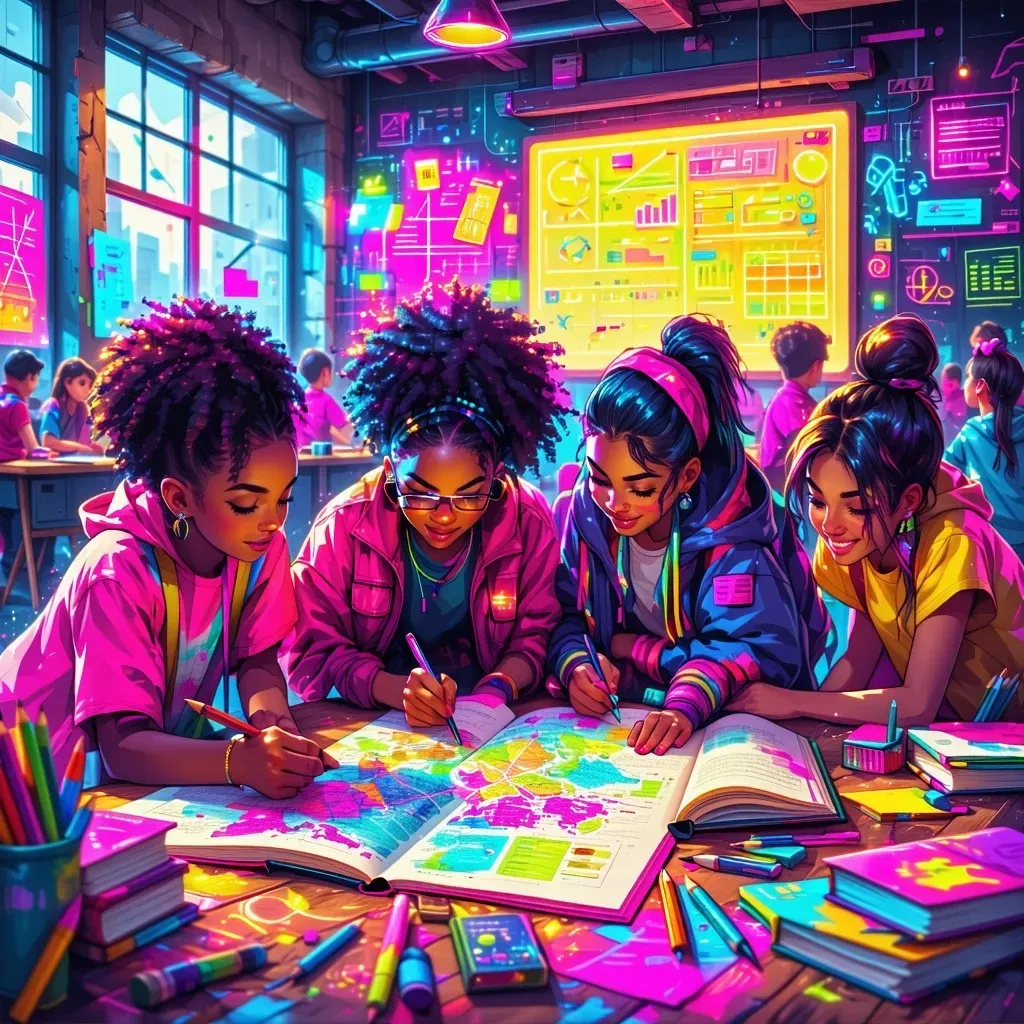
Effective cross-curricular literacy strategies often include multimodal literacy tasks, where students combine written text with visual elements such as diagrams, graphs, and maps. These tasks, especially useful in science and social studies, allow students to express their comprehension of concepts through multiple forms of representation, which strengthens both literacy and content mastery.
Quick Tip: Aim to always have students synthesize material and/or communicate knowledge about a topic in at least two different ways. For example, if you’re studying migration, have students read an informational text about humpback whale calving season, watch a video about Australian crab migrations, and analyze a map showing migration patterns. Then, have them give a presentation about what they learned. Variety is the spice of life!
5. Interdisciplinary Curriculum Mapping
Teachers should work with colleagues in other subject areas to develop interdisciplinary units or lessons. That way literacy practices live inside science, social studies, math, and even the arts instead of sitting apart as isolated exercises. For instance, a unit on ecosystems in science can be paired with reading and analyzing environmental case studies in English or writing persuasive essays on conservation in social studies. Mapping units this way makes student learning more coherent and reinforces literacy skills across content areas.
Quick Tip: Don’t plan your units in a vacuum. Look for ways to blend content areas into cohesive, intriguing units that will allow students to see how all content areas are relevant to real life. Collaborate closely with teachers in other subject areas. If you feel rusty teaching writing, go talk to the teacher across the hall who loves teaching writing. Learn from your colleagues!
6. Content-Aligned Reading and Writing
Cross-curricular literacy practices should focus on using authentic, content-aligned texts. Teachers can curate a selection of texts that include both fiction and nonfiction related to topics in their subject areas. For example, history teachers can assign readings from historical documents or primary sources and science teachers can provide access to scientific journals, case studies, or informational texts on high-interest science topics. Writing tasks, such as argumentative essays, research reports, or creative writing based on scientific phenomena, give students more practice using literacy skills in content-specific contexts.
Quick Tip: The Internet is a vast resource of content. You can find articles, information, and texts on so many topics these days and can now even use artificial intelligence like ChatGPT or Diffit to write informational texts for you if you can’t find something online on the topic you’re looking for. Just make sure all texts are at the appropriate reading level for your students.
7. Collaborative Strategic Reading (and Writing)
Collaborative Strategic Reading (CSR) integrates reading comprehension strategies with cooperative learning to support diverse students, particularly English Language Learners (ELLs) and students with learning difficulties. Students take on different roles, lead discussions with their peers, and work together to comprehend complex texts. Pairing CSR with collaborative writing projects gives students structured chances to work through texts and content with others, building literacy and collaboration skills at the same time.
Quick Tip: Get students talking about what they are reading and/or learning! Ask compelling questions and get students working with each other on text-based reading and writing tasks. The engagement levels will soar.
Wrap Up
Cross-curricular literacy is how students learn best. When we integrate reading, writing, speaking, and listening into every subject, we help students make real-world connections, deepen their understanding, and build essential skills they’ll use for a lifetime. So, whether you’re a history teacher just starting to incorporate primary source analysis, a science teacher guiding students through inquiry-based and data-driven writing, or a math teacher encouraging problem-solving discussions, literacy belongs in your classroom. Let’s break down the silos and build bridges between disciplines, because literacy is everyone’s job.