Digital Literacy in the Classroom
Ryann Garland

Tools, Challenges, and Strategies for Today’s Educators
I remember learning to type when I was in third or fourth grade, and let me tell you, I thought I was the stuff when I could type 50 words a minute on typing racer games. For me, this experience was one of my first exposures to developing my digital literacy.
The definition and scope of digital literacy keep changing. A few decades ago, digital literacy meant accomplishing tasks such as creating a Word document or adding effects to a slideshow. Nowadays, digital literacy can be anything from sending an email to programming a website to launching a social media ad campaign.
As education and technology grow more intertwined, educators face new challenges and advantages at every turn. In these uncharted waters, how can we make sense of what works and what doesn’t? Stick around as we discuss some of the challenges of digital literacy and how to overcome them.
The Need for Digital Literacy
In a post-COVID world, hybrid and remote jobs are still prevalent, with the United States having the highest average number of remote working days per week. Skills like navigating Zoom, Microsoft Teams, and other digital team management platforms are no longer niche. Many employers expect them.
The BBC recently reported that the skill of digital literacy has only been on the rise since the 1980s, with the need for other skills like numeracy plateauing. Even in roles outside of the tech sector, from doctors to teachers, digital literacy matters. It’s not about knowing every programming language or how to use every platform, though. In order for workers and students to become “digitally confident,” they must be willing to try new technology and embrace digital tools.
Challenges with Digital Literacy in Education
Digital literacy is an important skill for students to develop, but educators face plenty of challenges in teaching it.

When students read digital texts, they are engaging different cognitive skills than they do while reading printed texts. Because of this, comprehension is often lower in digital texts than in printed (Ben-Yehudah & Eshet-Alkalai, 2014). The non-linear format of digital texts and other distractions can also lead to superficial processing and reduced comprehension (Mason et al., 2023).
Digital texts often include great tools such as annotation and highlighting features. However, research shows that students tend to engage less deeply with digital texts (Ben-Yehudah & Eshet-Alkalai, 2014). Other challenges students face with digital literacy include text fragmentation, disorientation, and a higher cognitive load, all of which hurt student comprehension (Mason et al., 2023).
Digital literacy still belongs in every classroom. Students need it to find their way online, think critically about what they read there, and take part safely and responsibly in digital spaces. Educators should look for technology programs that teach these skills and support deeper processing of digital texts.
Overcoming the Challenges of Digital Literacy in Education
All is not lost. Technology in the classroom still has plenty of advantages, and it can build digitally confident students. Never fear, because Mission.io is here to help.
Here are a few of our favorite tools that improve student comprehension and digital literacy:
-
*Digital graphic organizers. *Digital graphic organizers help students organize and integrate information, which improves comprehension (Ponce and Mayer 2014a). Try a Venn-diagram that compares and contrasts two protagonists of a book or a mind-map where students organize their ideas from a discussion on their latest science experiment.
-
*Real-time formative assessments. *These formative assessments provide immediate feedback to students and help them self-monitor their understanding (Yeh, Hung, & Chiang, 2016).
-
*Close reading and evidence-based comprehension strategies. *Seek out opportunities for students to create arguments and form conclusions. Students can record a video or voice recording to summarize their findings in a text or collaborate on a close reading task with a digital whiteboard.
Another one of our favorite tools is gamification. Done right, gamification can do a lot for your students’ engagement and help them understand class content better.
Incorporating Gamification into Your Classroom
Honestly, some gamification education tools are nothing more than a reward on a Friday afternoon. Some gamification tools don’t appear to offer much educational value beyond entertaining students. Read some of our other hot takes on gamified education here.
Gamification can look like nothing more than fun and games, but it can increase motivation and make the digital reading process more engaging for students (Ponce & Mayer, 2014). Our Missions have helped increase student engagement, collaboration, and STEM test scores. In a Mission, students work hands-on: crafting arguments, explaining their reasoning, and gathering evidence.
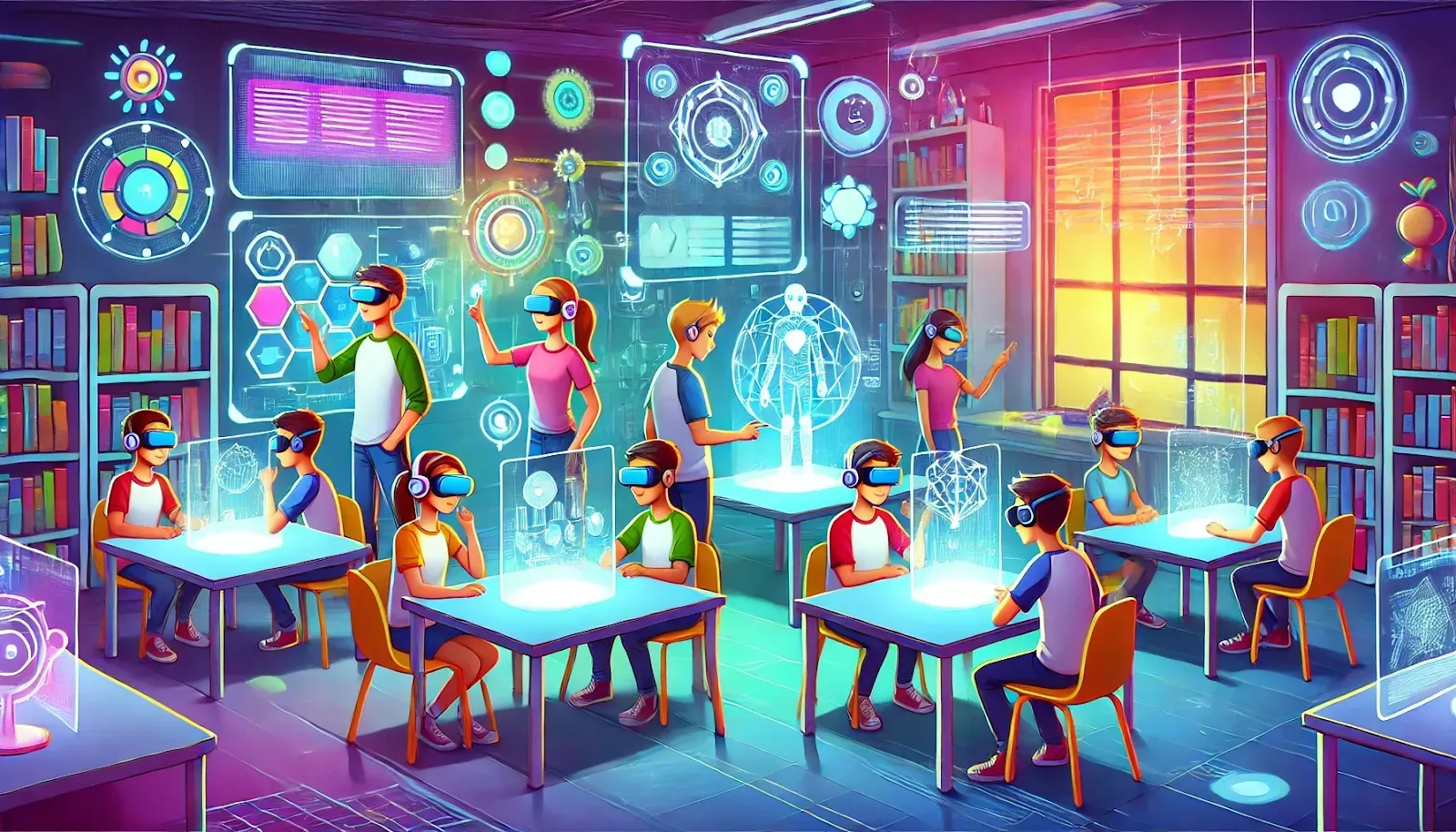
Digital literacy can feel daunting, with so many programs, websites, and options at your fingertips. Making it a priority prepares your students for a world that runs on technology, and Mission.io is here to help.
Bring your students into a Mission today at Mission.io.
References:
Ben-Yehudah, G., & Eshet-Alkalai, Y. (2014). The Influence of Text Annotation Tools on Print and Digital Reading Comprehension. Proceedings of the 9th Chais Conference for Innovation in Learning Technologies, 28-35. https://www.researchgate.net /publication/312549391_The_influence_of_text_annotation_tools_on_print_and_digital_reading_comprehension
Mason, L., Ronconi, A., Carretti, B., Nardin, S., & Tarchi, C. (2023). Highlighting and Highlighted Information in Text Comprehension and Learning from Digital Reading. Journal of Computer Assisted Learning, 40(2), 637-653.https://doi.org/10.1111/jcal.12903